
Sermon preached at Good Shepherd, Pocatello and Emanuel, Blackfoot.
Matthew 14:13-21
13Now when Jesus heard this, he withdrew from there in a boat to a deserted place by himself. But when the crowds heard it, they followed him on foot from the towns. 14When he went ashore, he saw a great crowd; and he had compassion for them and cured their sick. 15When it was evening, the disciples came to him and said, “This is a deserted place, and the hour is now late; send the crowds away so that they may go into the villages and buy food for themselves.” 16Jesus said to them, “They need not go away; you give them something to eat.” 17They replied, “We have nothing here but five loaves and two fish.” 18And he said, “Bring them here to me.” 19Then he ordered the crowds to sit down on the grass. Taking the five loaves and the two fish, he looked up to heaven, and blessed and broke the loaves, and gave them to the disciples, and the disciples gave them to the crowds. 20And all ate and were filled; and they took up what was left over of the broken pieces, twelve baskets full. 21And those who ate were about five thousand men, besides women and children.
Meggan Manlove
Grace to you and peace from God our Father, and the Lord Jesus Christ. Amen. This morning we have texts about feasts and abundance and more than enough. Fittingly, the texts also give the preacher an abundance of themes and entry points. They are also so rich in imagery that they ask for little interpretation.
For my part, after reading these texts and then going on walks in my neighborhood, I kept giving thanks for the birthday party I was able to attend last Sunday evening. This new call of bishop has introduced me to amazing new people, from my sisters and brothers in the Conference of Bishops to our amazing synod staff to the many faithful people showing up in congregations. But all of these relationships are new and take energy. I am energized by this work but it’s a new rhythm and I have needed nourishment, just as I did as a parish pastor for 18 years.
I had my friend’s birthday party on my calendar, but I sent a quick text Sunday afternoon just to make sure it was still on. She replied, “I’m serving chicken and sweet corn so come hungry.” This friend is particularly gifted at pulling together kind, fun, and interesting people. Most of us at this event have known each other for many years, through our birthday friend or because of our own relationships.
Can you recall a dinner party where the food was not gourmet, but it left you so satisfied? When the conversation just flowed? Where friends were genuinely curious about one another’s lives? Where you felt completely seen but also cared for, not because of what you do or what you’ve accomplished but because of who you are? That’s how my friend’s parties feel to me.
I walked in Sunday evening and the food was being prepared. I hadn’t realized how hungry I was. My senses were awakened. As I saw kind and familiar faces I began to relax. The conversation flowed as we caught up on one another’s lives. These are all people who when they ask “How have you been?” I trust that they are genuinely curious; it’s not an expression of mere politeness. After our feast on summer harvest and chicken, we started playing games. My old Lutheran camp director used to say that we were not facilitating recreation, but re-creation. That’s how I felt around the board game table that evening. As we laughed at ourselves and the game, as the conversation flowed, as I continued to feel loved just for who I am, there was re-creation. I was nourished in so many ways.
My experience at my friends’ many dinner parties and games nights, I think that’s something of what happened when Jesus fed the multitude. He sees, first, a real human need. The people are hungry, and they need something to eat. He feeds them out of compassion, and that is important.
It is important in contrast to what has just happened. Herod has just had a dinner party quite different than the one I told you about. It was a banquet whose mood was shaped by power and fear and ended with John the Baptist’s head on a platter. Herod provided food for those who are not without food as a demonstration of his power. In sharp contrast, Jesus feeds the five thousand because he has compassion for them. It is an alternative to the envy and greet the Herods of this world cannot avoid.
It can be tempting to dwell here on Jesus meeting the crowds’ physical needs and that being an inspiration for us to feed the hungry. I am grateful that so many congregations in our synod have taken up feeding ministries and that ELCA World Hunger encourages such outreach and does its own amazing work globally. But there is so much more to this passage.
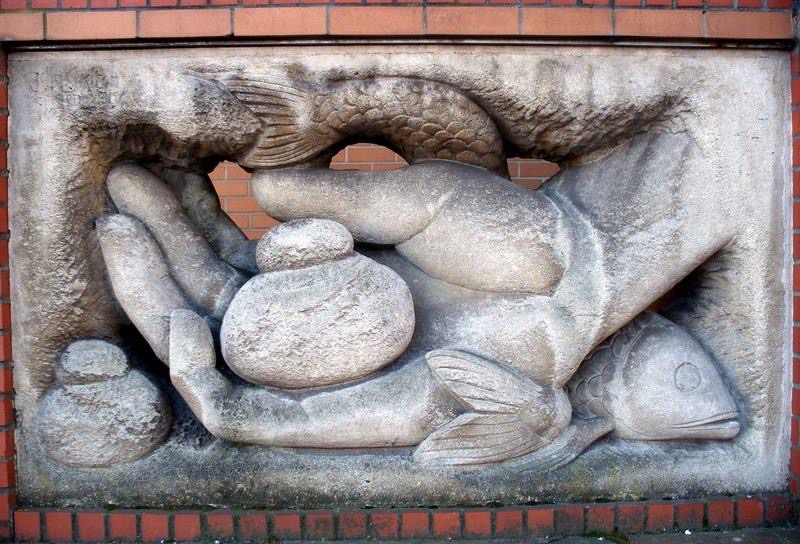
There is rich symbolism in the bread and fish. Five loaves of bread would remind that crowd, and maybe us, of the five books of Moses. Two fish help us recall the pillars of the Old Testament: the law and the prophets. In other words, food and scripture are rightly tied together. As my friend’s birthday party reminded me, there can be no strict separation between body and would. The words we read in scripture are the words of life, every bit as essential for our ability to live as bread and fish. After all the work my former congregation did in affordable housing, it was natural for me to ponder a move in that direction—going full time into the nonprofit world. But I still believe so strongly that the words of the gospel have the power to give life. The message about God’s love poured out abundantly through Jesus’ life, death, and resurrection is a world so many people still need to hear. So, here I am.
Beyond my friend’s dinner parties, the other meal that sustains me is the Lord’s Supper, Holy Communion, the Eucharist, the foretaste of the feast to come. And this morning’s passage, the feeding of the five thousand, directs our attention to Jesus’ feeding of his disciples with his body and blood. Jesus break bread in our lesson this morning. He anticipates that his body will be broken. Jesus feeds the five thousand with bread and fish provided by the disciples, but he will become for us the bread itself. Just as the bread that fed the five thousand will be more than was needed, recall the twelve baskets of leftovers, so Jesus’ body will never be exhausted. Today we will feast on the meal once again, as the followers of Jesus have done for millennia.
Every time we gather for worship we pray “give us this day our daily bread,” the fourth petition of The Lord’s Prayer. In his Small Catechism, Martin Luther writes that God gives daily bread, even without our prayer, to all people, though sinful, but we ask in this prayer that he will help us to realize this and to receive our daily bread with thanks. The word daily cautions us against worrying about the future and reminds us to be content with what the Lord provides.
The feeding of the 5,000 in Matthew’s Gospel is representative of the meaning of the Christ-event as a whole. The story portrays God’s act in Jesus Christ in meeting human need. The story shows the disciples’ involvement in meeting those needs. Jesus’ charges his disciples: “You give them something to eat.” The source of the feeding is God, but the resources are human. The work of the disciples, the “bread” of human effort, is honored, used, and magnified by Jesus.
The story illuminates God’s unqualified mercy. The feeding of the crowds is not contingent on the crowd’s obedience. They hear and follow but make no other continuing commitment. To Jesus’ disciples, the people who do commit, there is the command to give something to eat. God provides all that is daily bread. We are called to be instruments of the feeding.
Every time gather around the altar, we remember that we are recipients of God’s unqualified mercy. We eat together, friends and strangers, just as the people on the hillside who were served by the disciples. Everyone is welcomed at the Lord’s table. There is always an abundance of bread and wine, forgiveness and new life. We sometimes call the Lord’s Supper the Eucharist, which means thanksgiving. We give thanks for what God gives us through this meal. Leaving this place, we trust that with God’s help we will obey Christ’s instruction, “you give them something to eat,” whether that is food for the body or food for the soul, “you are seen and you are loved.”


 A Place at the Table