
Meggan Manlove
Emmanuel, Moscow– Oct. 15, 2023
Exodus 32:1-14, Matthew 22:1-14
I will confess that when I first read this passage from Exodus, I thought I would focus on the first half of the passage, during which the Israelites go astray. Later I supposed I would focus on Moses’ conversation with God. I never really planned to spend much time on God’s anger, right there in the middle. But eventually I came to see that the entire narrative has much to say to us today, and not necessarily because we are installing a pastor, though I’ll address that later, but simply because this is a word we always seem to be in need of hearing.
God giving the commandments on Mt Sinai was a high point in Israel’s story. It was a gift, the beginnings of God’s vision for community. Despite having those commandments, the Israelites fell into chaos and apostasy. It all happens as they wait for Moses to return from the mountain. We are left wondering, how did the relationship between God and Israel go so wrong?
Aaron is Moses’ brother and helper. Moses is the go-between for the people and God. 40 days seemed to be too long for the people. Aaron is left to lead the people during Moses’ absence and what happens could be described as a failure in leadership. Reading different translations and commentaries, it is hard to say if the people end up worshiping another god, altogether, one formed for them out of gold, or a replica of the one true God. Either way, false god or false image of God, they are breaking the commandments.
It is easy to criticize the Israelites with our perspective, and yet I know that idolatry is something I easily fall into. We may not think of it as worship, but we surely put our trust into material things, systems, and even people. It is much easier to point at others far away and critique their worship of idol, authoritarian leaders worshiping power or billionaires worshiping wealth.
In our individual daily lives, we are offered opportunities to put our trust in all sorts of other idols: power, material possessions that make us feel powerful, money, things that give a sense of security. Some of those things can actually be helpful tools. But they can also all become idols.
A piece of the Exodus 32 story that I find fascinating, is how one particular phrase gets repeated but with slight changes: “brought us up out of the land of Egypt.” The first time the phrase is uttered, it is by the people, complaining to Aaron. They say, “Come, makes gods for us, who shall go before us; as for this Moses, the man who brought us up out of the land of Egypt.” Perhaps this should have been our first clue that something was amiss. The Israelites have forgotten that is God who delivered them. Yes, Moses led the way through the Sea, but God was the deliverer. Is it just a slip of the tongue, “This Moses, the man who brought us out of the land of Egypt”? I do not think so.
Before I leave for Tanzania I will need to receive and submit my mail-in ballot. How easy it is to turn human beings into our idols or gods! Or maybe that is just something I do. How do I know when I have turned a human into an idol? Usually about the time they disappoint me and what I feel is not just disappointment but utter heart break. How could they let me down this way? It is like I have temporarily forgotten that God alone is the redeemer of my life.
I am speaking about this with a little humor, in part because this is such a fabulous story. But worshiping idols is no small thing. And if we needed a reminder, just feel the anger from God in verses 7-10. After unleashing on go-between Moses, who has not even been down there with the disobedient people, God finishes, “Now let me alone, so that my wrath may burn hot against them and I may consume them; and of you I will make a great nation.”
To be sure, this is not the Great Flood. God is not destroying the cosmos, but God does seem okay with starting over with another group of people, so long as Moses is their human leader. God goes so far as to deny God’s own people by saying, “Your people, whom you brought up out of the land of Egypt, have acted perversely.” Clearly worshiping a false god or creating a false image of god stir up God’s anger.
God’s seemingly resolute behavior makes it even more shocking when Moses can change God’s mind. He does so by reminding God that it was God who brought the people out of the land of Egypt. He reminds God of God’s power and might. Moses reminds God of God’s promise to Abraham, Isaac, and Israel to multiply their descendants. Killing the Israelites now would not foster offspring and certainly would give the Egyptians the edge. Moses’ threefold imperative — “Turn from your wrath,” “Change your mind,” “Do not bring disaster on your people” — is bold and effective. God does change God’s mind.
I wonder who we need to intervene on our behalf. I wonder if in our impatience we have bowed to more tangible, accessible, and shinier gods rather than relying on the one who brought us out of the power of sin, death, and the devil. And sometimes I wonder how God quells God’s anger at such atrocities.
Nearly every day in the news we are reminded that as humanity we collectivelyfall short of God’s will for us. That is not shocking news anymore. I do not want to minimize the depth of our idolatrous tendencies. Still, I do think the more shocking and profoundly hopeful news here is that God sticks with us. God continues to claim us as God’s own despite it all. Instead of God’s wrath burning hot against us and consuming us, God the Father’s beloved son Jesus reminds us there is joy when even one sinner repents (Luke 15:10).
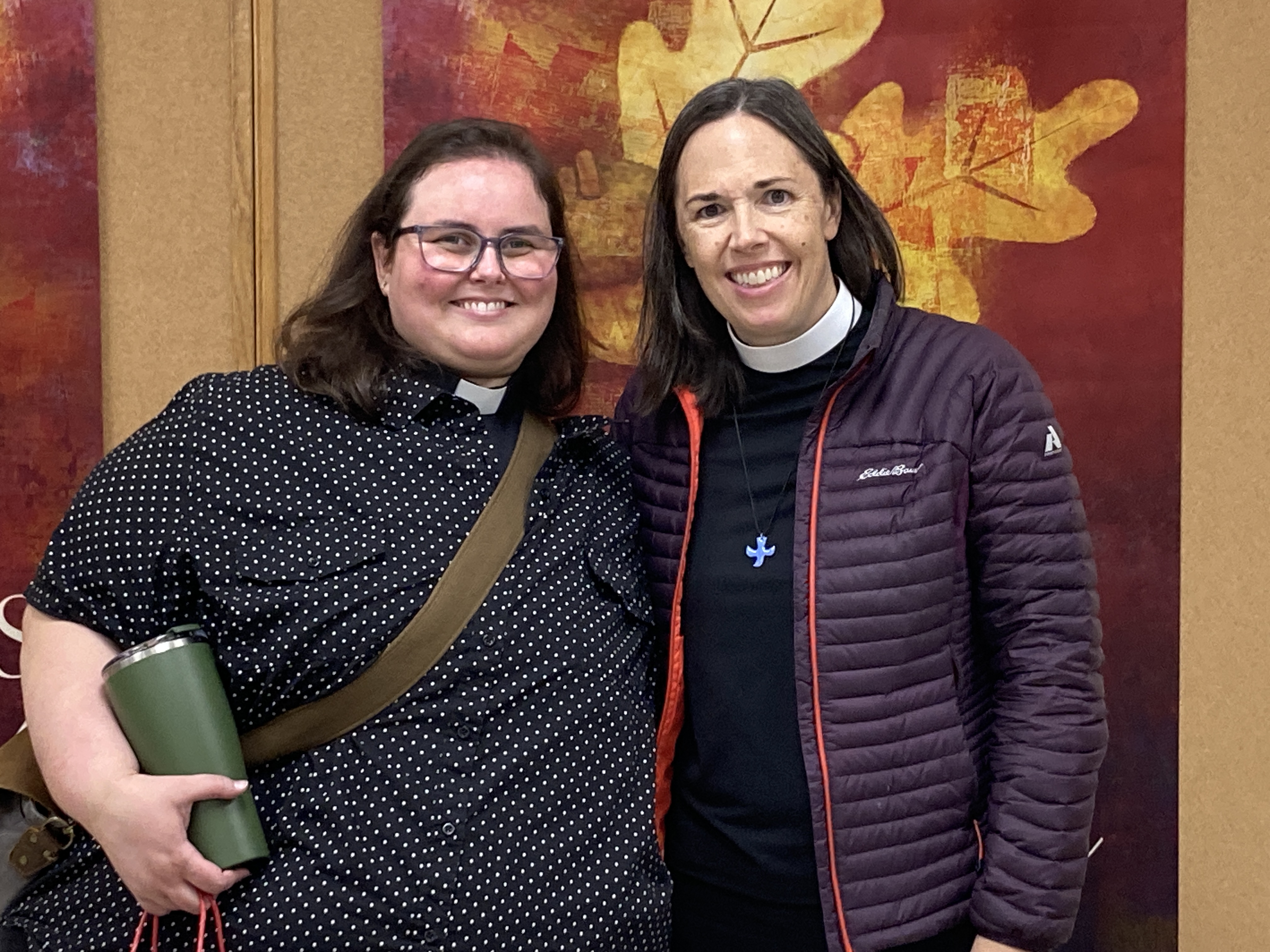
This congregation, not completely unlike the Israelites, has been through its ups and downs, many times of discernment, some conflict, but you are hear today still proclaiming the gospel to a larger community, a community that needs the message more than ever. God has already created new beginnings through and with you. Now one more chapter begins with this mutual ministry with Pastor Sierra.
You have known and know that what never changes is God’s presence and steadfastness. On God’s own, sometimes hearing the cries of God’s children, occasionally with the help of a prophet, God remains a God of promises. We worship a God of promises. We will hear promises today, promises about the life of pastor and people and your life together. All of those promises can be traced back to the promises made at the font as well as the covenants God made with people and all of creation. Those promises come down to the unwavering truth that you are loved, and God will not let you go.


 A Place at the Table