
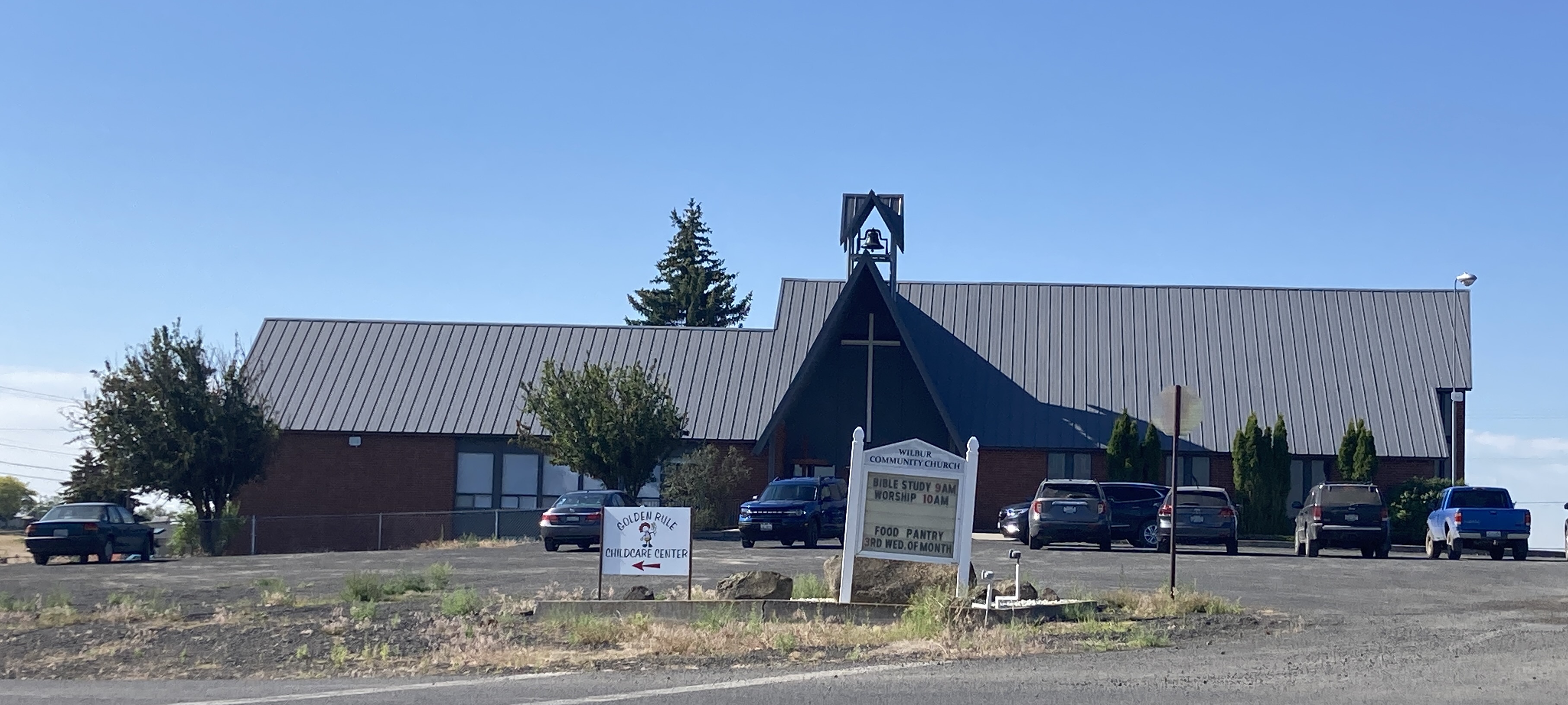
Wonderful morning with the saints of Wilbur Community Church in Wilbur, WA this morning. Wilbur is a federated Presbyterian USA/ELCA Congregation–meaning fully a member of both denominations. This became official in around 2020. They are currently served by Pr. Steven Nicholls (PCUSA). The congregation houses Golden Rule Childcare Center and Preschool, the only licensed daycare in Lincoln County, WA. They also host a Food Pantry on the third Wednesday of the month. We filled the sanctuary with great songs/hymns and then had a Q and A after worship. This happens to be the former ELCA building. The Presbyterian building was sold to an individual who rents it out as a venue and maybe has some classes there.
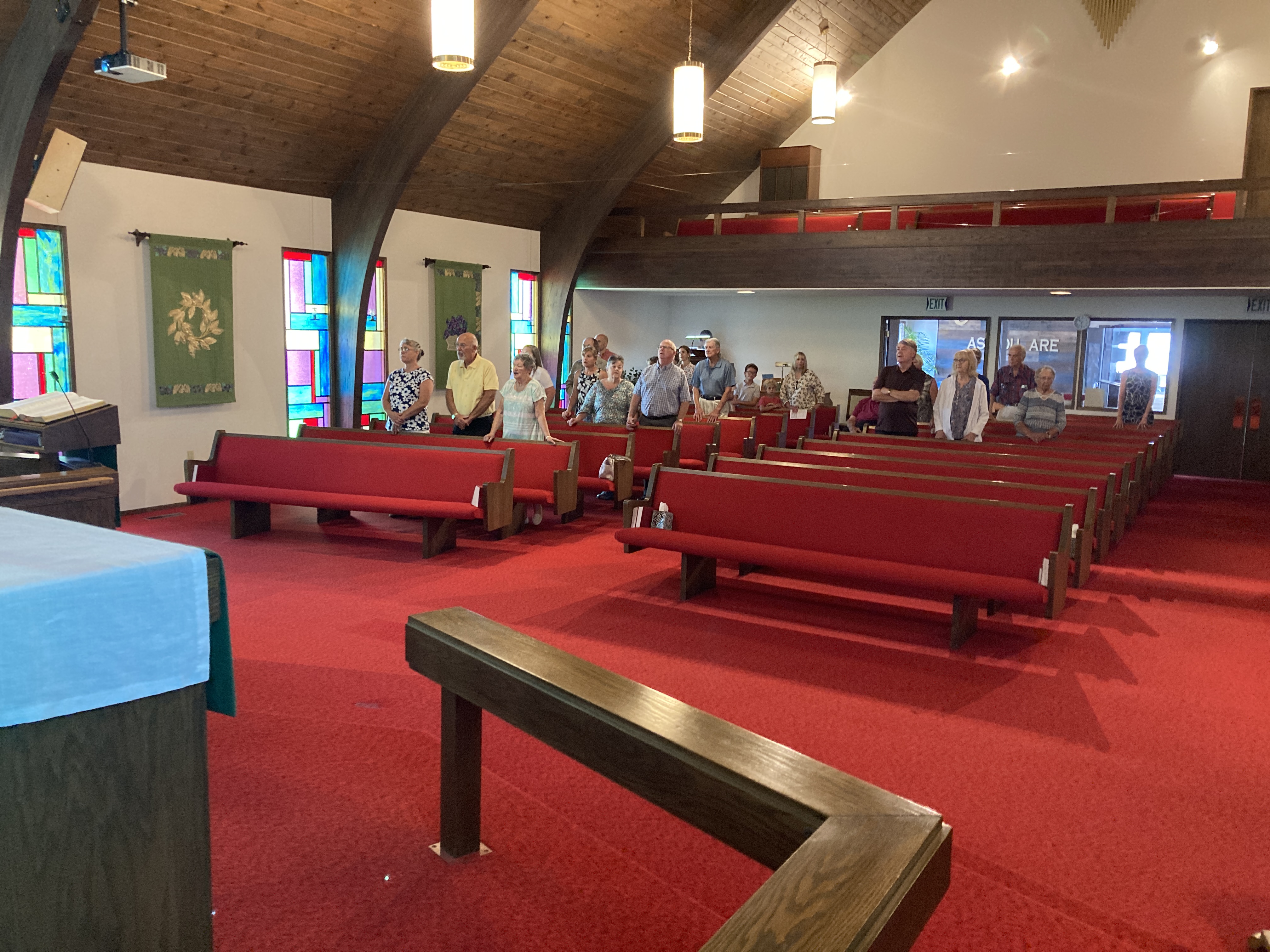
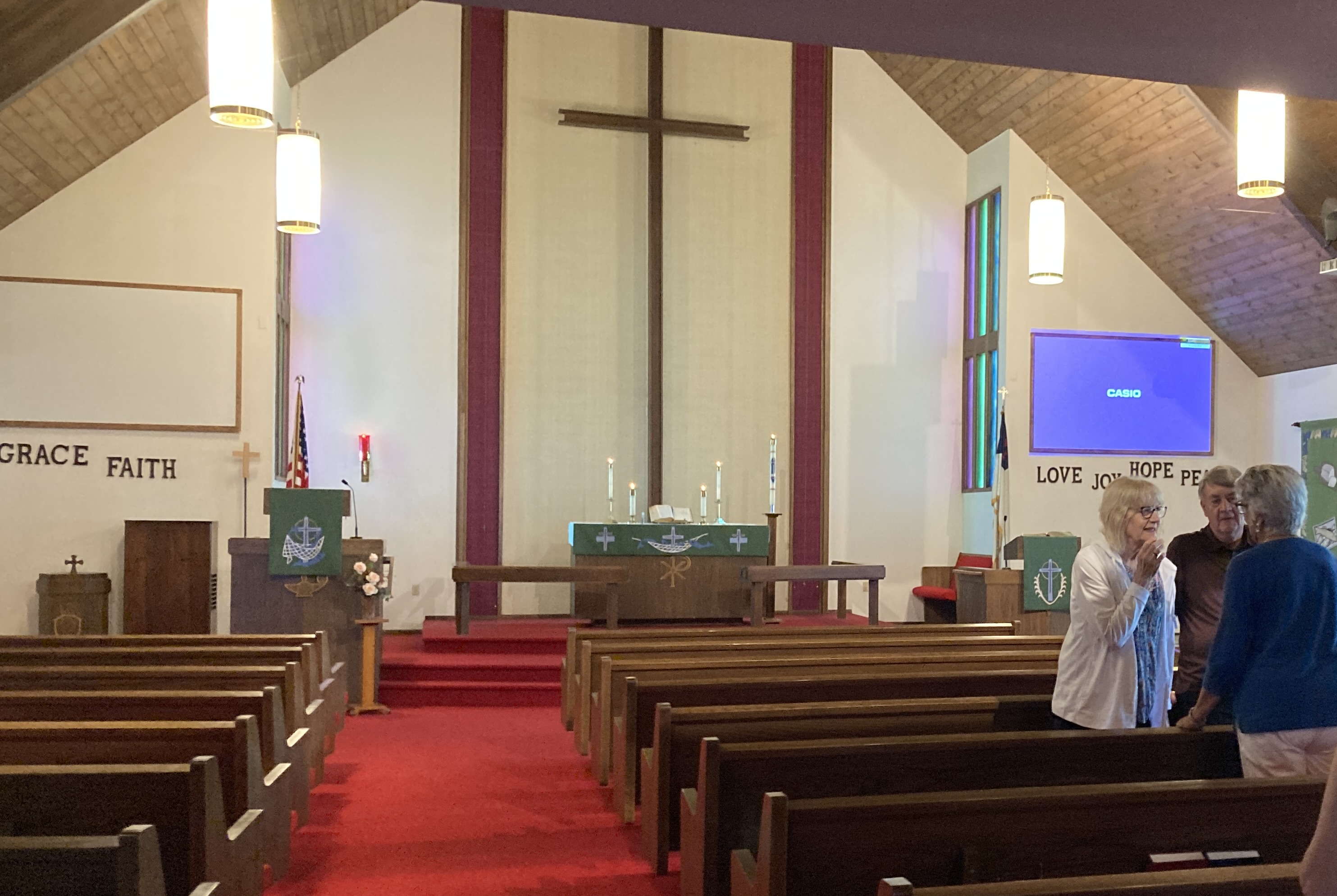
Last week I was in Stanley, Idaho and former bishop Martin Wells commented on my FB post that it was one of 100 beautiful places in our synod. He’s of course correct. Driving out through the plains this morning from Spokane to Wilbur I was reminded of the vastness of my home state of South Dakota and how, though I really do love the mountains, wide open spaces are also beautiful and do something special for my soul. We prayed for all of the wheat farmers this morning in worship.
Pastor Niccolls told me in advance that he was doing a series on freedom and so I asked if I could preach on Galatians 5. He said he’d thought about it but something had made him leave it off his list–must have been my love for Gal. 5:13. I was fine skipping the beheading of John the Baptist (RCL gospel for today).
Galatians 5:1, 13-25
51For freedom Christ has set us free. Stand firm, therefore, and do not submit again to a yoke of slavery.
13 For you were called to freedom, brothers and sisters; only do not use your freedom as an opportunity for self-indulgence, but through love become slaves to one another. 14For the whole law is summed up in a single commandment, ‘You shall love your neighbour as yourself.’ 15If, however, you bite and devour one another, take care that you are not consumed by one another.
16 Live by the Spirit, I say, and do not gratify the desires of the flesh.17For what the flesh desires is opposed to the Spirit, and what the Spirit desires is opposed to the flesh; for these are opposed to each other, to prevent you from doing what you want. 18But if you are led by the Spirit, you are not subject to the law. 19Now the works of the flesh are obvious: fornication, impurity, licentiousness, 20idolatry, sorcery, enmities, strife, jealousy, anger, quarrels, dissensions, factions, 21envy, drunkenness, carousing, and things like these. I am warning you, as I warned you before: those who do such things will not inherit the kingdom of God.
22 By contrast, the fruit of the Spirit is love, joy, peace, patience, kindness, generosity, faithfulness, 23gentleness, and self-control. There is no law against such things. 24And those who belong to Christ Jesus have crucified the flesh with its passions and desires. 25If we live by the Spirit, let us also be guided by the Spirit.
“You shall love your neighbor as yourself.” Following Jesus by loving our neighbor is not a part-time job. It is not something we fit into our schedules. It is not one obligation among several others in our hurried lives. Following Jesus involves a radical reorientation and redirecting of ourselves, our obligations, and our loyalties.
What’s more, following Jesus is not the key to having it all. Following Jesus involves leaving it all behind. It is a way of living and relating to others that permeates into every aspect of our being. The call to discipleship seeps into our economics. As disciples of Jesus, we address how we earn and spend our money. We ask how actions impact God’s creation. We take time to find out where and how our clothes are made. When we prepare to dispose of materials, we think about where the old ones will go and how the natural world and other humans will be impacted.
Loving our neighbor seeps into our life together—our life in family, friendship, and communities. In St. Paul’s letter to the Galatians, he lists the fruits of the Spirit. As followers of Jesus, we open ourselves up to the Holy Spirit and embrace these gifts—love, joy, peace, patience, kindness, generosity, faithfulness, gentleness, and self-control. When we lapse in these fruits of the Spirit, we help one another up; forgive one another; and encourage one another.
Love of neighbor is the ultimate call to discipleship. That neighbor may be your family member or best friend who is overwhelmed by grief. Your neighbor maybe the woman experiencing homelessness in Wilbur. Yes, our neighbors, by every biblical definition, are refugees and immigrants all over the globe. What does it look like to love a neighbor when you have never met? When I was a parish pastor, it often began by imagining one of the beloved members of my congregation in the footsteps of someone I read about in a news story. Following Jesus is not a part-time gig. It happens whenever we catch up on the daily news.
What will loving the neighbor look like through this next year for each of you this year? I don’t know. It is not one thing and there is not one magic checklist. It’s a million little acts from showing kindness to the grocery store clerk to voting your conscious at the ballot box to being gentle with yourself and those closest to you. It means making sure Wilbur Community Church remains a wellspring of God’s unconditional love. After a year in this call as bishop I think sometimes our congregations do not know how profound a gift their genuine and abundant welcome to strangers actually is.
The call to discipleship means living out the gifts of the spirit in whatever job you find yourselves in. Discipleship is the privilege of following Jesus into the streets and institutions of the world. Sometimes it is a daunting way of life. It is truly impossible even for the saintliest of people to carry out the call to discipleship without wavering. Today’s text from Galatians reminds us of how discipleship is even possible.
It is the cross and resurrection. St Paul writes that for freedom Christ has set us free. We are freed from sin and death. He writes to the Galatians that they were called to freedom, but instructs them, “do not use your freedom as an opportunity for self-indulgence, but through love become slaves to one another. For the whole law is summed up in a single commandment, ‘You shall love your neighbor as yourself.’”
My life of faith is wound up tight with this passage from Galatians because every time I hear these verses I am transported to the study room where I first read Martin Luther’s Treatise on Christian Liberty, sometimes called Freedom of a Christian. Luther wrote, “I shall set down the following propositions concerning the freedom and bondage of the spirit: A Christian is perfectly free lord of all, subject to none. A Christian is perfectly dutiful servant of all, subject to all.”
It’s one thing to read these words from Galatians and Luther on the page. It is an altogether different thing to experience them and live them, to actually experience being free from sin and death and all that binds us as human beings, to surrender to God’s love and trust that only by God’s grace can I actually love my neighbor.
Where and how have you felt or experienced such freedom as an individual or as a whole community? Perhaps it was in the natural world—the beauty of it all so overwhelmed you and somehow reminded you that you too are wonderfully made only by the grace of God. There is something beautifully humbling about the natural world.
Perhaps in a worship like this one, following words of confession, the words of forgiveness or absolution seemed spoken just to you and you, for the first time in a long time, you were reminded of the power of God’s forgiveness and life in your life. It all washed over you like a flood.
Maybe the words and tune of a piece of music resonated with you—you felt the freedom that is yours because of Jesus Christ’s life, death, and resurrection. Music can surely be used to manipulate, but it can also be an altruistic gift. Some of my most free feeling, transcendent, knowing God’s love moments are intricately tied to music.
Whatever the experience, your body, heart, and mind, hopefully have felt the freedom that is ours when we trust the love of Jesus Christ, not in a manipulated or fabricated way, but in a very real way you can point to. It is such a counter-cultural thing to trust something besides ourselves for the penultimate, and yet that is the gift of faith. You, every one of you, is beautifully and wonderfully made by God, a God so much bigger than any of us can imagine and yet that same God came and lived among us. That same God gives us new life and mercy each day. You, each of you, is freed from sin, death, shame, brokenness, and whatever else binds you.
Likewise, you are freed for something. Knowing that there is nothing we can do to earn the love of God in Jesus Christ, how can we not spontaneously love our neighbor? Or as, the old hymn asks, “since love is lord of heaven and earth, how can I keep from singing?” We cannot help ourselves. We are not only freed from somethings but freed for something—love of our neighbor.


 A Place at the Table