
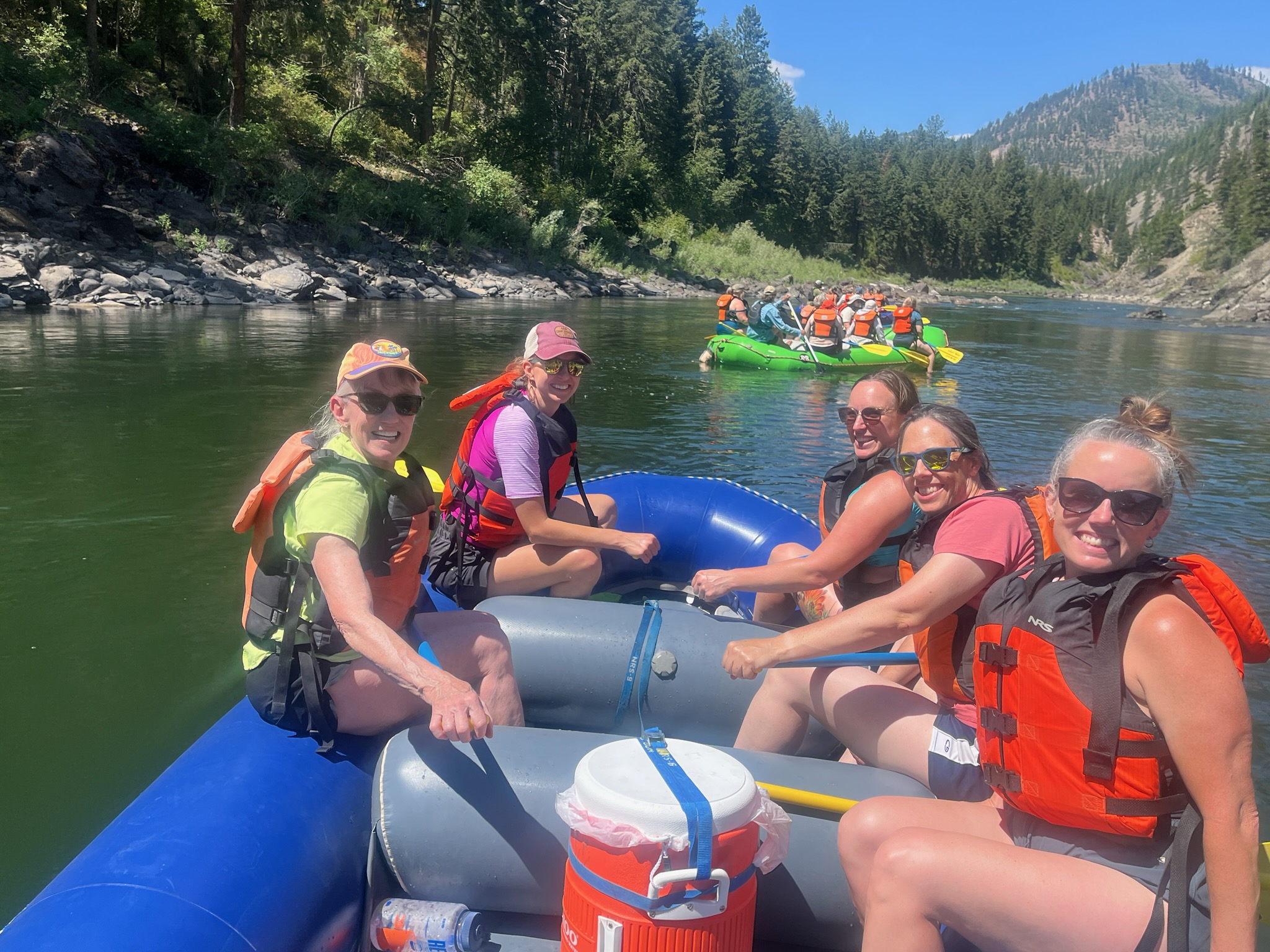
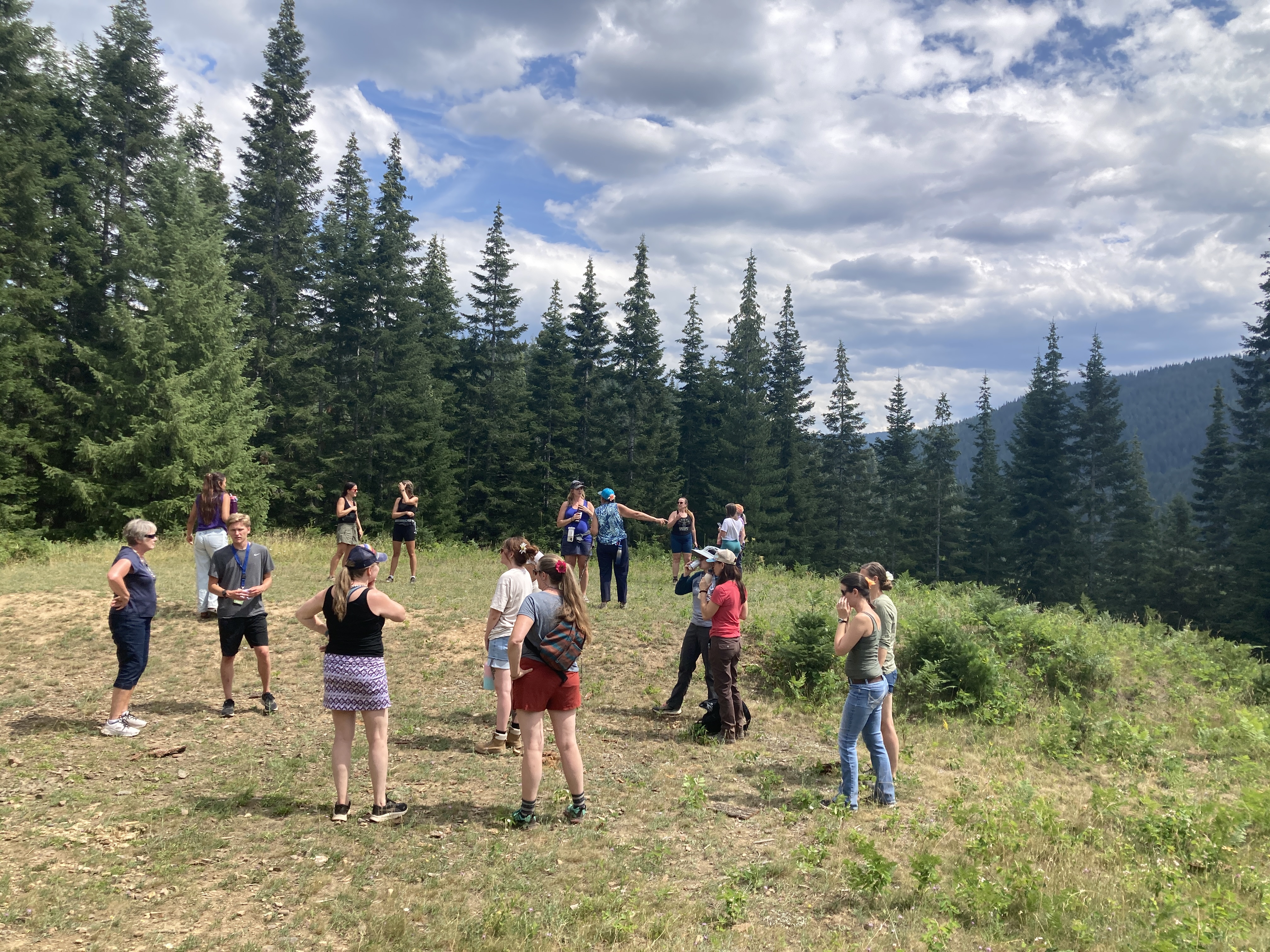
This past weekend I led devotions for the Wild Women Retreat at Shoshone Mountain Retreat, part of Lutherhaven Ministries. 38 women from WA, ID, and MT, ranging in age from 20s to 80s, rafted on the Clark Fork in Montana, rode the zip line at Shoshone, hiked, rested, water colored, prayed, and built relationships.
Lutherhaven’s summer theme is Story so I adapted my storytelling workshop and paired different pieces with the Bible stories chosen for the summer, so Kim Barnes memoir Zacchaeus (belonging), Bonhoeffer’s Life Together and the Great Commission (community and discipleship), Good Samaritan as a text for Saturday’s Compline around the campfire, and then I gave a message for Sunday morning worship.
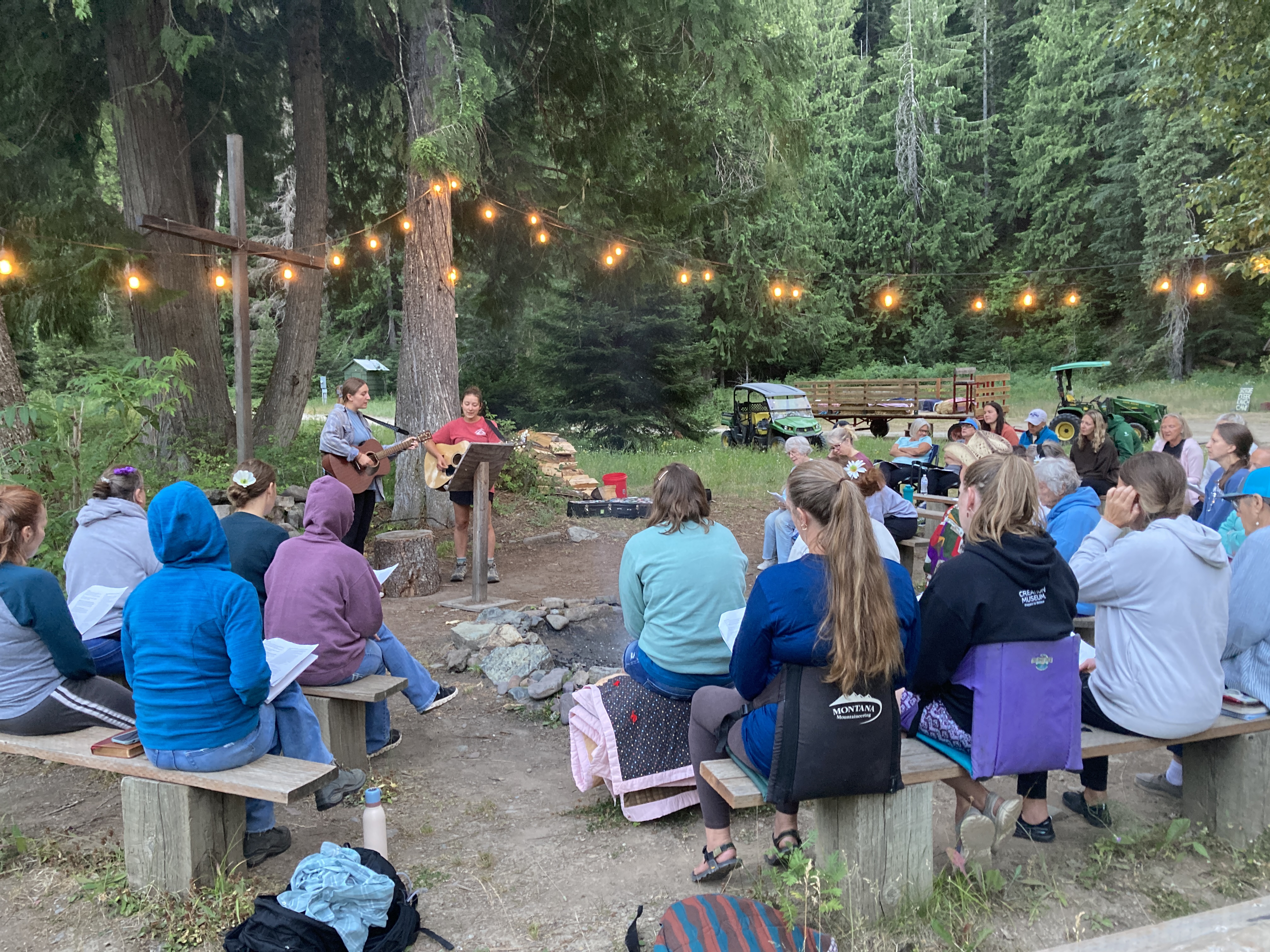
Shoshone Mountain Retreat – July 20, 2025
Wild Women Retreat
Matt. 4:12-23 – Call of Disciples
Grace to you and peace from God our Father and the Lord Jesus Christ.
There is general agreement that Jesus turning water into wine at Cana is the first miracle, but I believe it is in today’s scene that we witness the first miracle–Jesus’ word. After seeing Peter and Andrew he says simply, “Follow me, and I will make you fish for people.” The first disciples don’t even blink. Immediately they leave their nets and follow him. The Word has great power.
Galilee is a strange place for a Messiah to work. It was not just geographically far from Jerusalem; it was considered spiritually and politically far as well. Galilee was the most removed of the provinces. Furthermore, Judeans thought Galileans sat rather loose with the law. They were less biblically pure than those in or near Jerusalem. Galilee was notorious as a nest of revolution. Jesus sets up shop among the outcast.
Our gospel writer, Matthew, wants to show that Jesus’ career in Galilee, far from being proof against Jesus’ Messiahship, is proof of it. By Jesus living in Galilee, particularly by his moving right next to the Sea of Galilee to begin his public ministry, the Word spoken through Isaiah is truly fulfilled. “Land of Zebulun, land of Naphtali, on the road by the sea, across the Jordan, Galilee of the Gentiles–the people who sat in darkness have seen a great light.”
The tool Jesus and his new disciples will use in Galilee has its own significance. There is no manipulation. They will not use any kind of bait to lure the people in. Following Jesus means being caught up in and then using a net.
At a certain level of reality, it is undoubtedly true that we choose Jesus as our master or teacher. We choose to be present where he is proclaimed, and his words studied. We choose to read the Gospels and ponder their significance. We choose to go on a retreat at a Lutheran Christian camp where our faith might be nurtured. At a deeper level of our being, however, we acknowledge that the reverse has been true. In all our searching we were being sought. The one whom we choose is the one who first chose us.
God chooses us, and we respond. The gift is abundant life. Things do not stay the same. If we are to accept Jesus’ offer, we must also accept some measure of risk. James Baldwin wrote, “Any real change implies the break-up of the world as one has always known it…the end of safety.” Spiritual growth implies change. And change suggests risk. We clutch those behaviors and beliefs that make us feel safe. Christian spirituality calls this “attachment.” The word comes from old European roots meaning “staked” or “nailed to.” It implies that what makes us feel safe may also place us spiritually in peril. Our souls remain tethered to something other than the love of God. We hold ourselves back from what we were meant to become.
Jesus chooses us once and for all. We are chosen people. But following him is a daily undertaking. Letting go and following Jesus is not something we do once. We follow daily. Each day we are invited to follow him and take the risks that might be involved. We embark on an adventure, just as the first disciples did.
Andrew and Peter left their nets immediately and followed Jesus. Likewise, James and John left their boat with their father and followed Jesus. Unlike us, they did not know the rest of the story. But they seem to have been prepared to take a great risk in response to those simple words, “Come, follow me.”
The first disciples reorient themselves. Jesus had preached, “Repent, for the kingdom of heaven is near.” “Repent” does not picture sorrow or remorse, but a change in the direction of one’s way of viewing the world. Get yourself a new orientation, a new perspective for the way you live, then act on it.
Why repent? Why do we need a different perspective? Something new is on the horizon, perhaps in our midst. Jesus proclaims that the kingdom of heaven is near. He echoes John the Baptist, who came preaching, calling for repentance, “for the kingdom of heaven has come near.” This morning, Jesus imitates that call. The Sermon on the Mount will come next. In it, Jesus interprets discipleship and God’s blessings in terms of kingdom talk, or reign of God talk. Later, the disciples will be sent out with the same message. Further into his ministry, when Jesus begins using parables, he will paint a picture of the reign of God including images of the treasure hidden in a field or the precious pearl or the Samaritan who showed neighbor love.
Through it all, beginning with his invitation today, what is clear is that it begins first and foremost with God. God, through Jesus, proclaims that the kingdom of heaven is near. Emmanuel, God with us, in Jesus, is living proof that God’s reign is indeed breaking into the world.


 A Place at the Table