
Grace, Wenatchee – Nov. 2, 2025
Luke 6:20-31, Ephesians 1:11-23
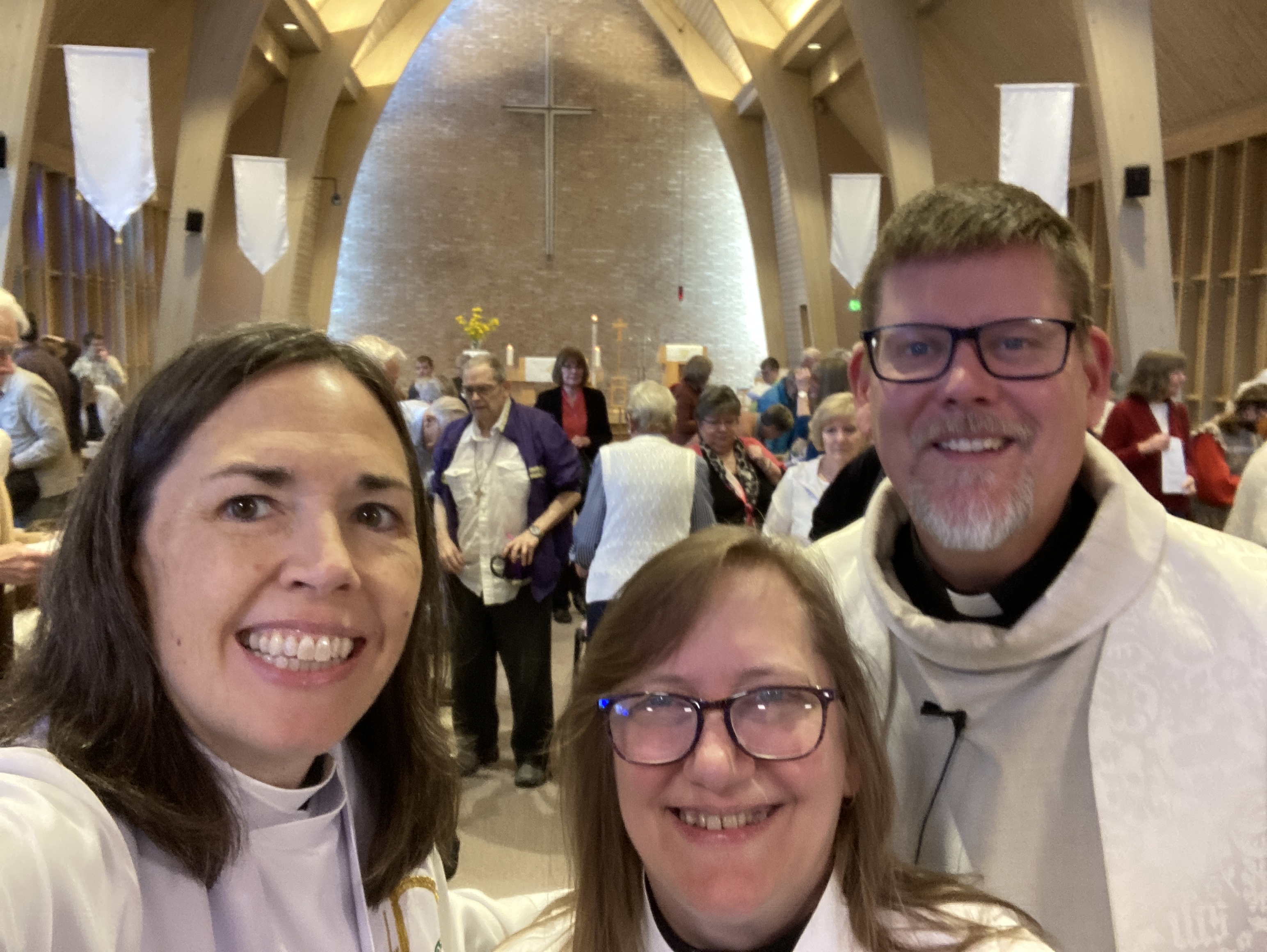
Pastor James’ 25th Anniversary of Ordination
I want to begin with today’s beautiful passage from Ephesians, particularly the verses often titled as the author’s prayer. “I have heard of your faith in the Lord Jesus and your love toward all the saints, and for this reason I do not cease to give thanks for you as I remember you in my prayers.” The sentence always makes me think of the saints in my own life and to give thanks for their lives and what they have given me.
I have remembered with deep gratitude week people like Jane Olsen, who was my fifth-grade teacher as well as a beloved member of the congregation I grew up in. Mrs. Olsen was that upper elementary teacher who was born to work with children and made so many of us life-long learners. But because she sat in the pews with us at church, because she knelt at the same Communion rail, we knew that her life was shaped by being a follower of Jesus.
I am convinced Mrs. Olsen taught me that an inquisitive mind and a love of learning were part of what it meant to be a disciple of Jesus. She never said this in words that I remember. But her very life displayed that a love for learning, far from being antithetical to the gospel, was totally consistent with the gospel and following Jesus. So, I give thanks for those gifts from this saint.
I also thought about Don and Dorothy Delicate, a couple in my congregation that my parents and everyone else’s parents deeply respected and admired. If my parents looked up to them, then they were people I was also meant to give respect to and learn from. They were loving, salt of the earth people, who epitomized the word generosity. They were generous with their time and skills and love and resources.
When I was in high school, they welcomed a college student from Uganda into their home. Simon became part of their family and part of the church family. Dorothy traveled with him back to Uganda twice. Don and Dorothy Delicate modeled the boundary crossing that Jesus himself modeled and taught. And they showed the whole community what it means to truly accompany someone. Simon was in their lives not just for a few weeks, not just for a good phot, but for the rest of their lives, messy as I am sure it sometimes was, and they learned as much from Simon as he learned from them. Don and Dorothy modeled love and real relationships throughout the entire community.
Today we celebrate Pastor James’ 25th anniversary of ordination. Anniversaries are a time to give thanks for the person or people, but also for the every day saints who have nurtured those we are celebrating. I have a hunch you have been a bit introspective this week—giving thanks for so many people who were part of your call to public ministry and the mentors along the way (pastors, deacons, and your parishioners) who have mentored you.
For all of you gathered here today, who are the saints in your lives and what inheritance have you received from them? Take a moment and bring to mind one or two saints from your own lives. Pause.
To remember the people who were saints in our lives is a gift. This is part of why funerals are one of the things I treasure doing as a pastor. Yes, we should of course honor and thank people while they are alive and not wait for their deaths. It’s a both/and. Thank people in life but also pause and give thanks to God after their death.
A Christian funeral is a holy pause. It makes us slow down and recognize the life that was lived and God’s working through that person’s life. We might even be encouraged to face our own mortality—perhaps uncomfortable but a good exercise.
To give thanks to God for the life that was lived, even if imperfect, to reflect on the gifts that life bestowed, to entrust the person to God’s keeping, to remember that this person remains part of the communion of saints, that is such a helpful practice for the living. We who are left behind need to pause and remember. We also need the ritual to help us begin moving through our grief. We need the holy pause to ponder, in the words of Lin-Manuel Miranda, “who lives, who dies, who tells our stories.”
A saint is one who we look to for how to live, how to bring in God’s reign. A saint is also one who is blessed by God. Jesus’ teaching in our gospel lesson underscores the peculiar, even radical understanding of blessing that animates the Christian tradition. According to Jesus, blessing is not about material abundance. Blessing is to enjoy the regard and favor of God. And the God of Israel to whom Jesus bears witness reserves special regard for the poor, the maligned, the downtrodden. This God shows particular favor to those in need.
While this may at first seem threatening to those of us who enjoy so much of the world’s bounty, it also clarifies our calling to identify and help those in need. And it promises that God stands also with us in our moments of loss, distress, and poverty. The heart of the God we hear described in these verses is full of mercy and compassion, abounding in steadfast love.
In today’s gospel, Jesus identifies the blessed in stunning particularity. Jesus’ words stand at the beginning of his “Sermon on the Plain.” This is Jesus’ second major policy statement of his reign. His direct speech compels the listener to ask, “Who me?” Jesus focuses first on his disciples within a great crowd. With the crowds, we overhear his words, wondering if he means it only for the twelve disciples.
Then we find ourselves specifically included in verse 27 among “you that listen.” Jesus is not delivering an abstract definition of discipleship or sainthood. He is not listing the qualifications to “get into heaven.” He is calling all who hear to become faithful and effective agents of God’s reign here and now.
The problem is not that Jesus’ words are hard to understand. The problem is that their clear meaning is so challenging. The “rules of engagement” of Jesus’ reign stand in sharp contrast to the presumed rights of the prosperous to wealth and good times, “because I earned it!” In their practice of non-violence, Tolstoy, Gandhi, and Martin Luther King Jr. enacted Jesus’ words as a social critique and strategy for change. Gandhi admired Jesus, but when asked his opinion of Christianity, he reportedly said, “Oh, it would be wonderful!” In hearing Jesus’ words, rich and poor alike glimpse a realm at odds with the way things are.
What do we make of the “woe” statements? One scholar [Skinner] says a better translation might be, “Yikes! … Jesus urges his hearers to reassess their lives in light of God’s unfolding reign. It seems to me that Jesus’ woe statements are revealing something—that the things we assume are advantages are actually illusory. What if money, comfort, self-won security, respectability, and the like are things that kill our souls—not just in some far-off afterlife but right here, right now? What a tragedy to mistake them for benefits given by God, then. As the passage continues, we get a better sense of how to keep our souls alive and not be tricked by counterfeit blessings.”
All Saints Day is a witness to God’s way of blessing the world. It is not simply reinforcing the entitlement of the privileged to the way things are. It reveals God’s justice fulfilled in mercy—right here and now. The Saints we recognize as the church and those we remembered today in our mind’s eye likely blessed the world with their very lives. We say, “thanks be to God.”
I love our hymn of the day by Ray Makeever. The first verse came to him in a dream after his own dearly departed wife died. He celebrates the saints and provides the crucial reminder that resurrection is real and certain, a promise affirmed by the bodily resurrection of Christ, “We walk in light of countless faces bright as beams of rising sun, certain as the morning chases night in endless ages run. Turning eyes to their shining mem’ry, to their faithful past, saints be now the truth divining: death be now but never last.”
In the third voice he offers thanks and praise, “When joy returns with laughter singing thanks to God for life’s sweet song, let us follow after bringing thanks to God for those now gone.” We cannot replace the saints who have gone before us. But we can remember those lives who blessed others, some who blessed our own lives. Thanks be to God.


 A Place at the Table