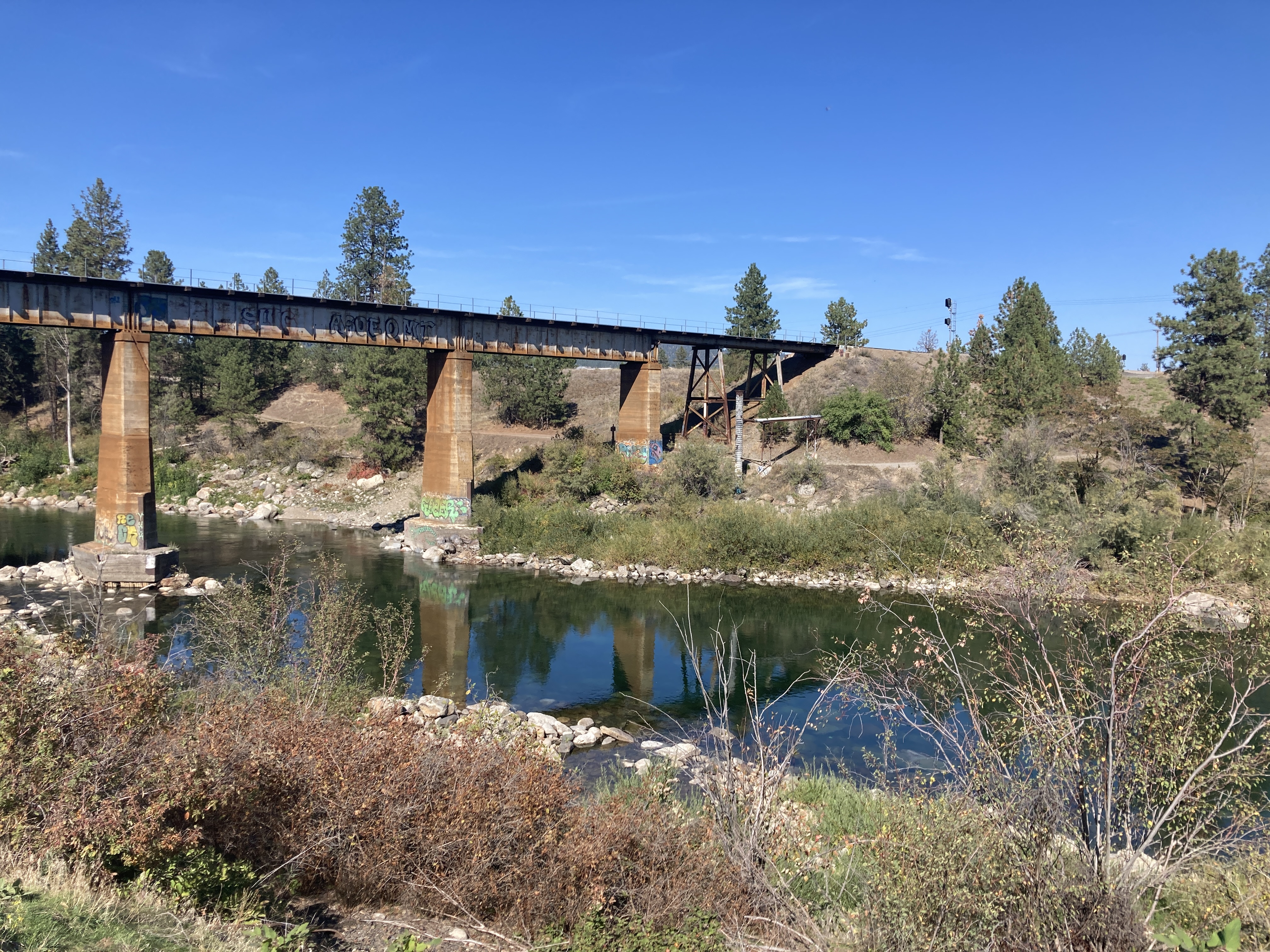
When I was up in Spokane in August the air quality was so bad from the Canadian fires and the Eastern Washington fires that I barely wanted to be outside. What a difference a few weeks makes. I flew up early on a Monday morning and will fly back to Boise tomorrow. I think I have had around seven one-on-one conversations with pastors in the area. I spoke with a retired pastor connected to One River, Ethics Matter about the Columbia River Treaty. I met individually with two of our chaplains and heard about hospital chaplaincy coming out of the global pandemic. On Monday afternoon I sat in on the Eastern Washington/Greater Spokane Lutheran Campus Ministry Board Meeting with our brand new campus pastor. I love when a meeting can be a walk-and-talk and one person was willing to meet out by the Spokane River on a beautiful Pacific Northwest afternoon. Life and ministry are hard but ministers are also resilient. The conversations are holy and humbling; feels so similar to the humble work of pastoral care in the congregation and I am grateful that some skills are transferable. There is plenty that is new and there were moments in the office this week when I was reminded again and again of how steep my learning curve is. Fortunately there remain many friends, mentors, and co-workers willing to help me get caught up and equipped.
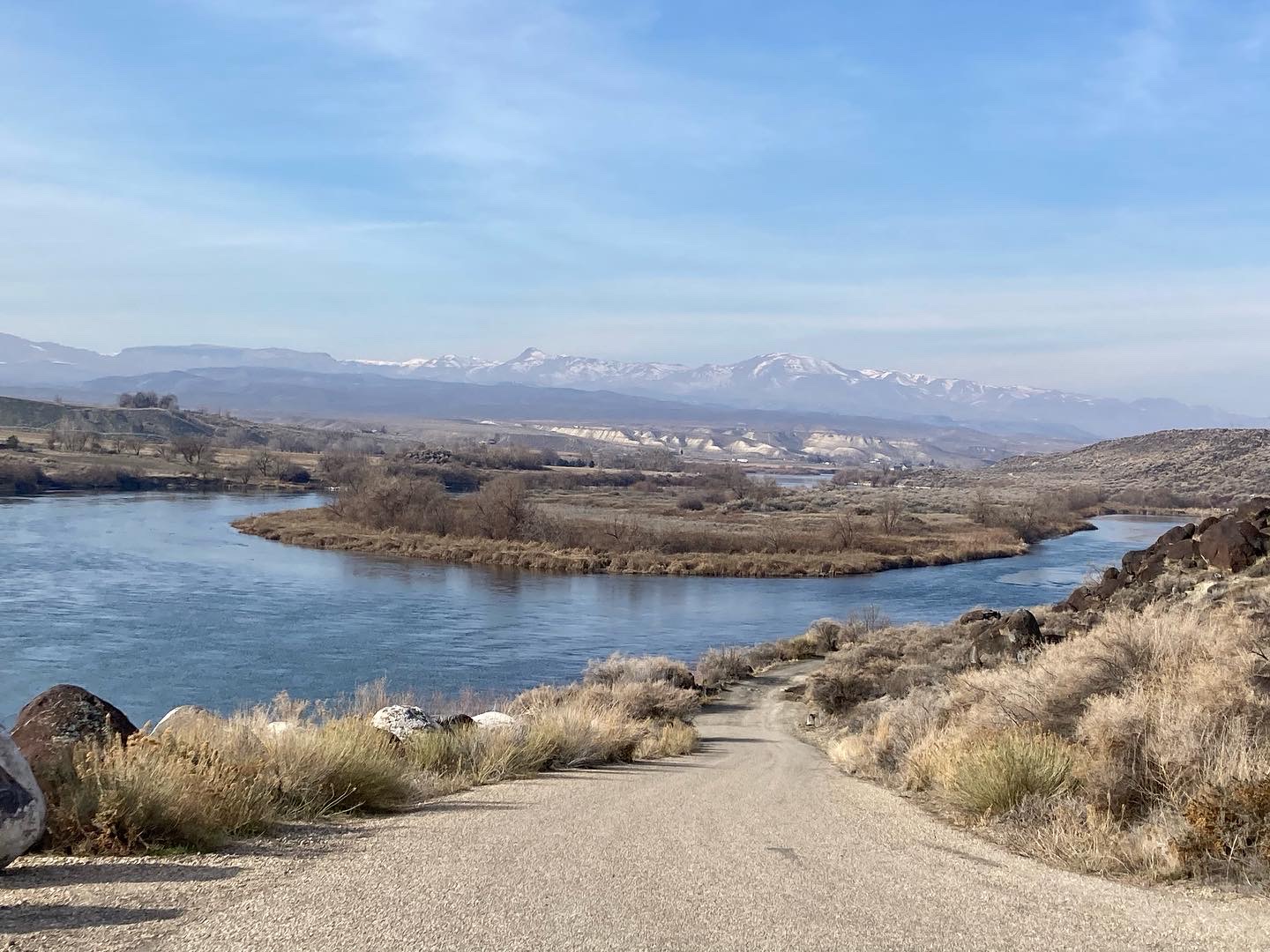
Spokane River
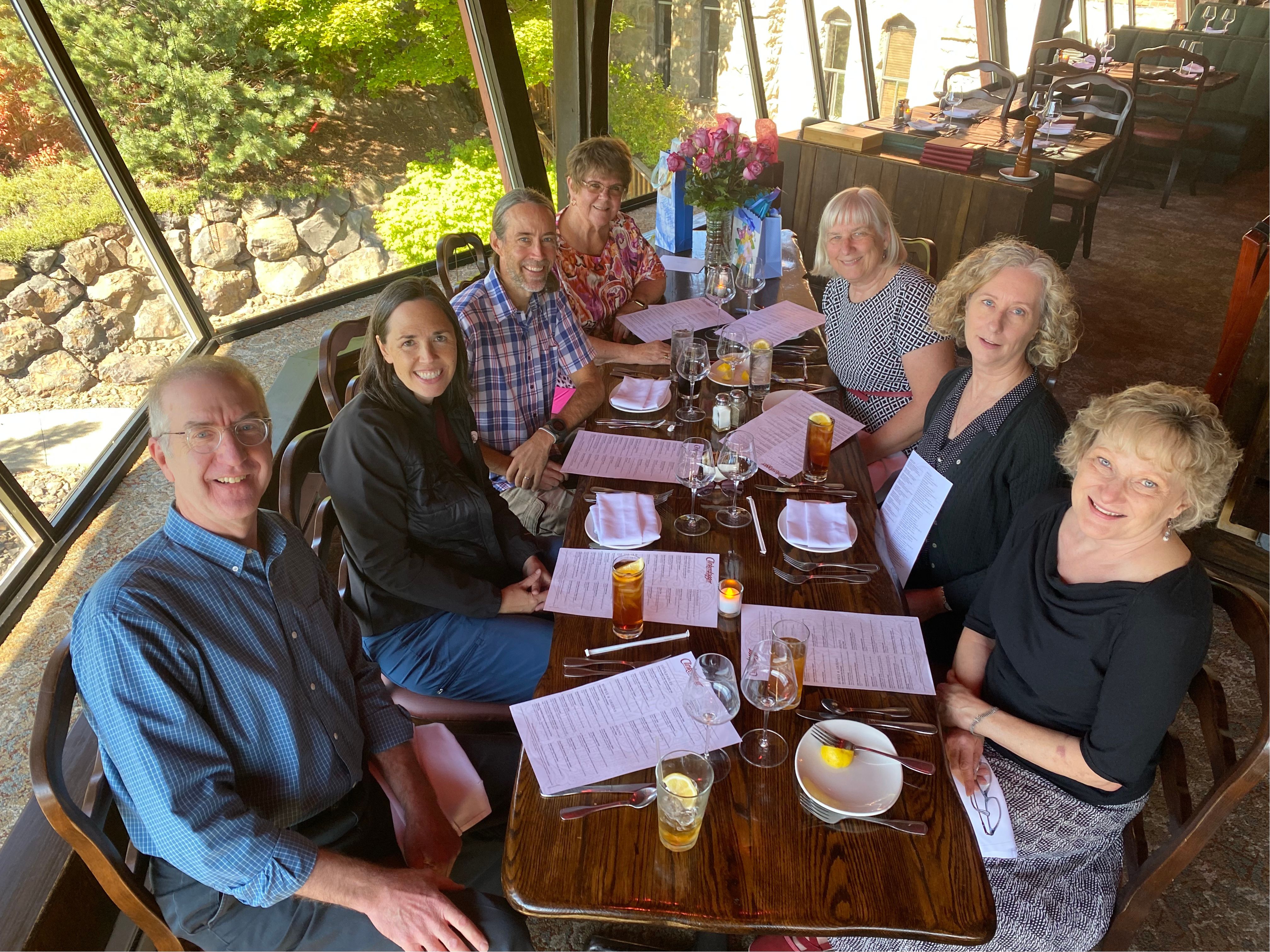
One of those co-workers has been outgoing Director for Evangelical Mission (DEM) Mary Morrow. Friday was Mary’s last day and I remain so grateful for her work for our synod and churchwide these past five years and our many conversations since my election. Synod staff and a few synod council executive committee members took Mary and husband Bob out for lunch Friday as part of our thank you.
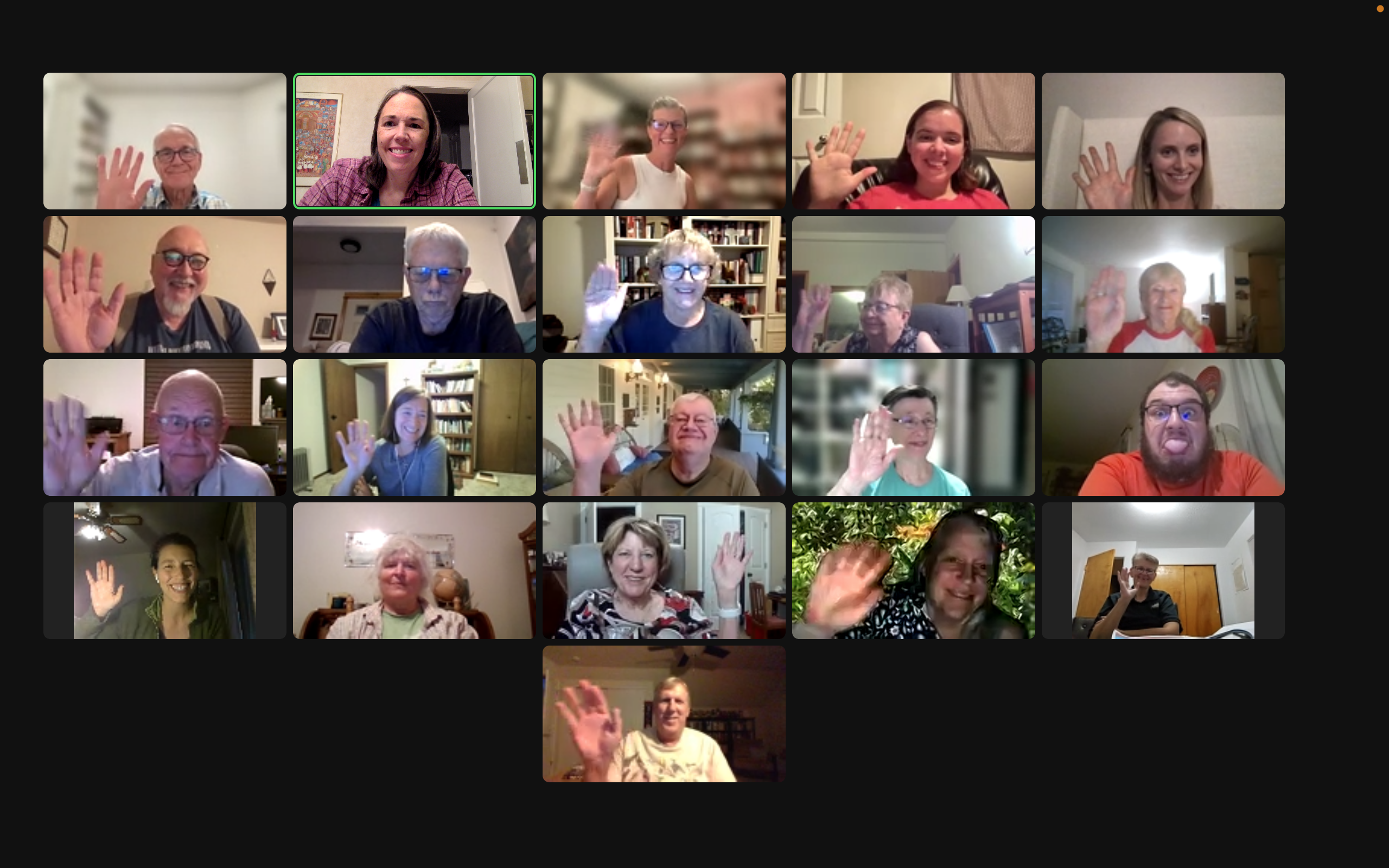
Earlier in the week, I finished up my six-week series on Martin Luther’s treatise Freedom of a Christian. We started with more people than we ended with, but I was impressed with how many individuals came for the entire series. I am more convinced than ever that in a geographically large synod like ours, video-conferencing can be a great way to connect and help people grow in Christian discipleship. Always the church camp counselor at heart, I will never give up in-person encounters. Incoming DEM Pastor Liv Larson Andrews will lead a discussion of Vine Deloria Jr’s God is Red beginning in Advent. Stay tuned.
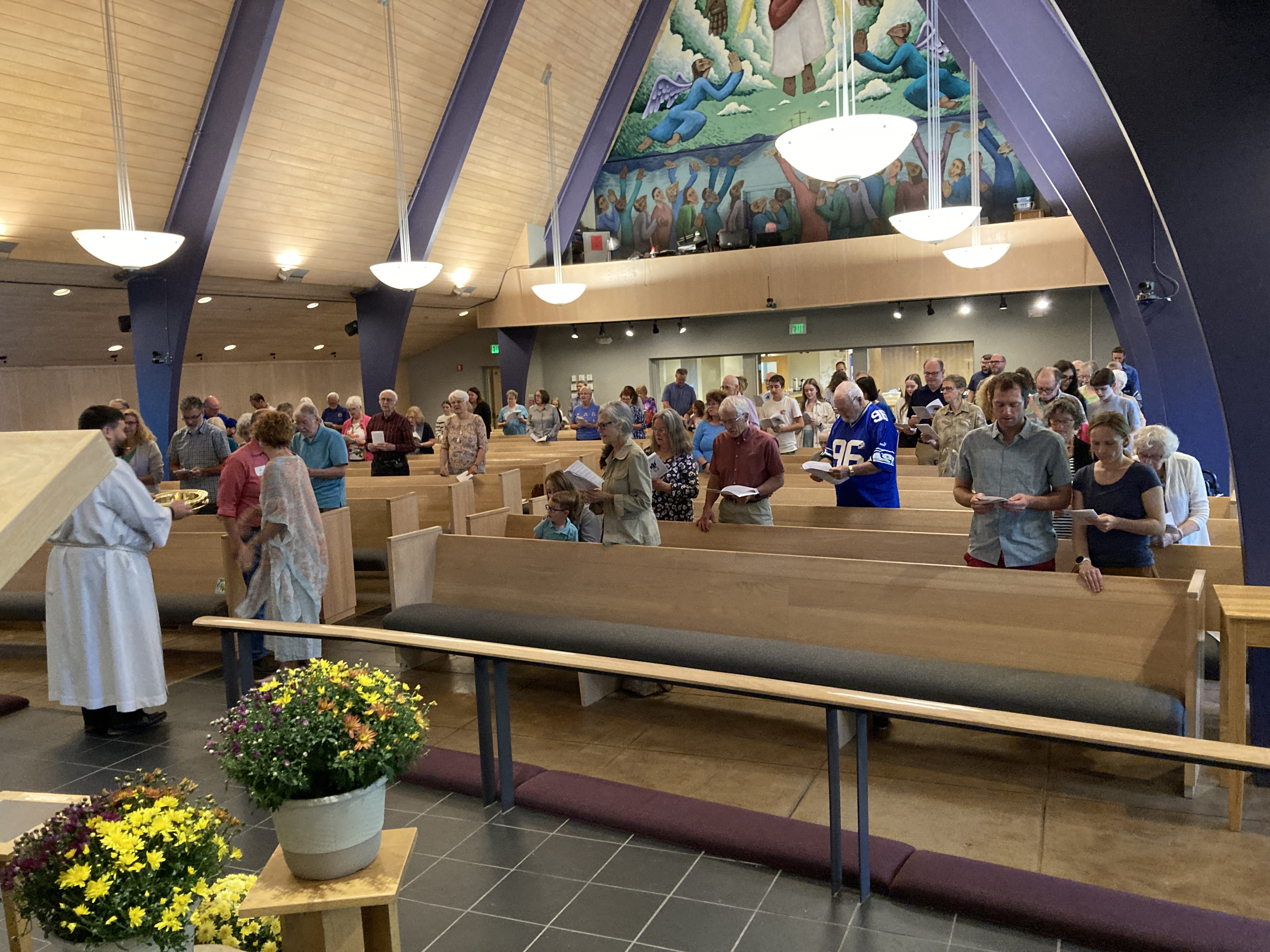
As I drove around Spokane and Spokane Valley under clear blue skies, I had a flood of memories of my internship year (2003-2004). I was down the road in Cheney, WA with now closed Emmanuel Lutheran and LCM at Eastern Washington. My memories started with the LCM board meeting Monday. They continued as I remembered days off and cluster gatherings around Spokane. Then on Saturday night I preached the first of three worship services at St. Mark’s Lutheran. I had not been in that sanctuary since an evening worship service during my internship year. The last person to exit the sanctuary was retired professor Dave Haugen who was part of the weekly mens group at Emmanuel, Cheney. I have always remembered Dave’s kindness and encouragement and it was such a delight to talk with him this many years later. He and his wife moved to Spokane from Cheney several years ago. Sunday morning at St. Mark’s included two more worship services and a forum in-between during which we had a wonderful conversation about the synod and life and ministry today.
Sermon preached at St. Mark’s Lutheran, Spokane. This was the second sermon in a series titled “Work of the People.” Last week’s sermon was on the Gathering and Confession and Forgiveness.
Acts 8:26-40
26 Then an angel of the Lord said to Philip, ‘Get up and go towards the south to the road that goes down from Jerusalem to Gaza.’ (This is a wilderness road.) 27So he got up and went. Now there was an Ethiopian eunuch, a court official of the Candace, queen of the Ethiopians, in charge of her entire treasury. He had come to Jerusalem to worship 28and was returning home; seated in his chariot, he was reading the prophet Isaiah.29Then the Spirit said to Philip, ‘Go over to this chariot and join it.’ 30So Philip ran up to it and heard him reading the prophet Isaiah. He asked, ‘Do you understand what you are reading?’ 31He replied, ‘How can I, unless someone guides me?’ And he invited Philip to get in and sit beside him. 32Now the passage of the scripture that he was reading was this: ‘Like a sheep he was led to the slaughter, and like a lamb silent before its shearer, so he does not open his mouth. 33 In his humiliation justice was denied him. Who can describe his generation? For his life is taken away from the earth.’ 34The eunuch asked Philip, ‘About whom, may I ask you, does the prophet say this, about himself or about someone else?’ 35Then Philip began to speak, and starting with this scripture, he proclaimed to him the good news about Jesus. 36As they were going along the road, they came to some water; and the eunuch said, ‘Look, here is water! What is to prevent me from being baptized?’ 38He commanded the chariot to stop, and both of them, Philip and the eunuch, went down into the water, and Philip baptized him. 39When they came up out of the water, the Spirit of the Lord snatched Philip away; the eunuch saw him no more, and went on his way rejoicing. 40But Philip found himself at Azotus, and as he was passing through the region, he proclaimed the good news to all the towns until he came to Caesarea.
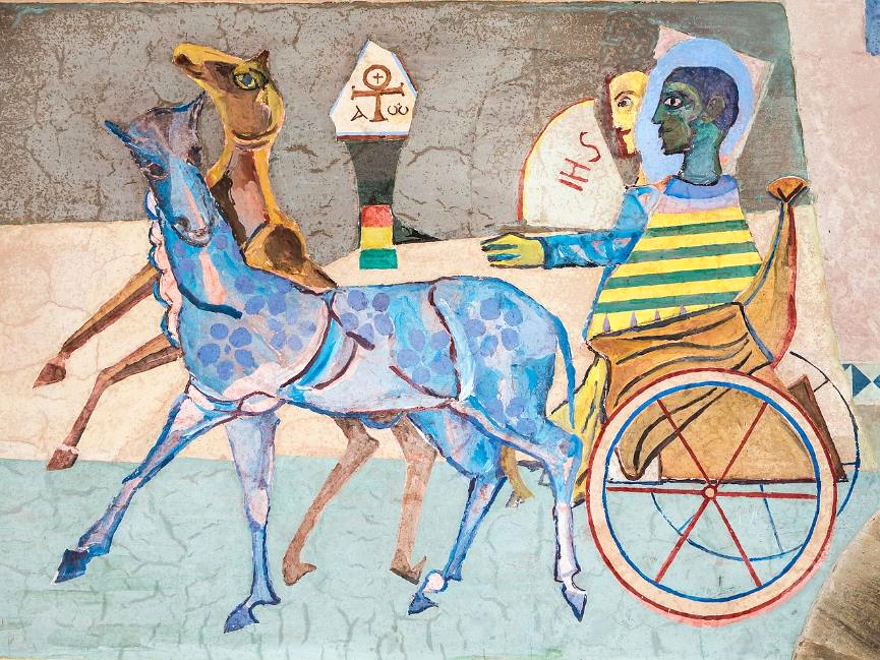
The Ethiopian and Philip, Angel’s Chapel, Seckau Abbey, Styria, Austria
Sermon – Bp Meggan Manlove
When Pastor Lori first mentioned that by preaching today, I had drawn the sermon on sermons card, I went back on my heels a bit. Fortunately, my week in Spokane began with a conversation about the United States-Canada Salmon Treaty. This led me to a series of linkages: Columbia flood plains, memories of my junior year at Concordia, Moorhead and the 1997 Red River Flood; then the 1997 Youth Gathering in New Orleans at the mouth of the Mississippi River.
The Youth Gathering theme was River of Hope and everyone working on a Hotel Life team, including me, was charged not only with providing hospitality to Youth Gathering participants, but of telling a story or two for morning worship. Despite several years giving messages as a counselor at Camp Christikon in Montana, this is what I always remember as my first sermon. I have loved writing (poems, essays, stories) from a young age, but exploring this oral communication was quite new. To proclaim love and hope with my voice, not just my pen was humbling.
I don’t remember my whole message, but I know I talked about the joy of going on a Habitat for Humanity trip to rural Mississippi and the warmth and hospitality my friends and I experienced. After that morning worship in the hotel ballroom in New Orleans, an African American man, a chaperone for a youth group, approached me and said that he had grown up in a community like the one I described.
This many years later, I might have had a more nuanced response to him, but my twenty-year-old self was struck by the sense of connection; that in a sermon one can connect the story of scripture with one’s own life and in turn connect with another human being. This act of witness, pointing to Jesus Christ, is of course something followers of Jesus have been doing since the beginning of the movement.
I have loved the story of Philip and the eunuch for a long time. Growing up in the Black Hills, where distances are vast, I appreciate that the story takes place on a road, which is, as one scholar [WJ Jennings] says, a place of “survival, moving from one place to the next and searching for life possibilities or at least running from the forces of death. . . . This is a God who wills to be found on the road in order to transform it, collapsing near and far, domestic and foreign onto the body of the Son. There on the road that leads from Jerusalem to Gaza, from the near and known to the distant and unknown, Philip will again witness a God whose love expands over every road and transgresses every bordered identity. The Spirit is Lord of the road.”
In a way, you have, like all of our congregations from Leavenworth to Jackson, been on a road coming out of the pandemic and now you will be on a road with your pastor, living with a hard diagnosis. I assume that you are also on all sorts of other roads as well—the road of grief, the road of my loved one is several states away and I feel helpless, the road of job searching, the road of coming-of-age, the road of your own changing health. And, chances are, we all know someone who is on the road, searching, transforming, discovering. Can you picture those friends, neighbors, relatives in your mind this morning?
Bring those people along with you as we enter our story from Acts Chapter 8, a powerful story of witness, of pointing to a God of love, of providing hope, of interpreting Scripture, of yes, a brief sermon. Philip demonstrates with his words and actions how one can make a passage of Scripture deeply relevant and meaningful to another person.
The Holy Spirit brings Philip to a road in the wilderness where he encounters an Ethiopian riding a chariot. He was well employed—a minister of Candace, the queen of Ethiopia. He is educated enough to be reading Greek. He has dark skin. And he had come to Jerusalem to pray. But he could never have gone into the inner temple. Deuteronomy 23 makes it plain that no eunuch could be admitted to the assembly of the Lord.
This is who Philip meets on the road. The encounter is what Gloria Anzaldúa “would call a borderland moment, where people of profound difference enter a new possibility of life together in a shared intimate space and a new shared identity.” His ethnicity, his blackness, and his sexuality made the eunuch an outsider. “This Ethiopian eunuch is the outer boundary of the possibility of Jewish existence, and there at that border God will bring that difference near, very near, to hearth of home in the Spirit.”
The eunuch wonders about the passage from Isaiah, who is this person in pain and suffering, humiliation and shame? And Philip preaches an intimate sermon in which he brings the eunuch into what one scholar writes is “a future promised especially for him, one in which he will not be in the shadows or at the margins of the people of God, but at a center held together with strong cords that capture our differences, never despising them but bring them to glorious light and life.”
“God has come for the eunuch precisely in his difference and exactly in the complexities of his life. He matters, not because he is close to worldly powers and thus a more appealing pawn. He simply matters, and he is being brought close.”
If the eunuch had only the written words of Scripture, how could he know what is true? Is it Deuteronomy or Isaiah? Is he in or out? How can he understand unless someone guides him? What he needs is someone who knows the God of Scripture. He needs someone to teach him who has felt the embrace of God, who can read the cold ink on the page in the warm light of God’s Spirit. He needs Philip and Philip needs the Holy Spirit.
Finally, the eunuch asks Philip, “What’s to prevent me from being baptized?” Philip could have answered, “Everything!” You are a foreigner, not from the land of Israel. You are a eunuch, a violation of purity codes. You’re a member of the queen’s cabinet, so you’re loyal to the wrong sovereign—wrong nation, wrong sexuality, and wrong job.
But Philip heard the Holy Spirit speak a different answer, “Absolutely nothing.” So, the eunuch commanded the chariot to stop. He was baptized on the spot. Walls of prejudice and prohibition that had stood for generations came tumbling down, blown down by the breath of God’s Holy Spirit.
We cannot tether the Holy Spirit. Philip is a servant of the Spirit, not a gatekeeper. Which role do we choose? Philip was attuned to the Holy Spirit. He was a great evangelist who got sent to the wilderness road. But when the Spirit snatched him up, he didn’t fight it. And what fruit the encounter bore. The Ethiopian eunuch goes on his way rejoicing.
We need the Spirit to empower us and guide us still today. It is the Spirit that will help us discern how we should be the church for the world in 2023. Discernment will happen through Bible Studies, prayer, listening, getting to know our neighbors near and far, and with the help of sermons preached by pastors, deacons, and lay people. I am left to cling to the hope that it is the Spirit-filled church that continues to do the work of God; to bring wholeness to our lives.
My mom came to visit last week and I think the universe decided to mock me. We woke up to wet carpet and something wrong with the HVAC condenser line. Since I started as bishop, I have mentioned several times that I am grateful to not be dealing with a church HVAC system. I had to bleed to system in rural Iowa on Sunday mornings. The heat pumps at Trinity, Nampa were temperamental. But now here I am dealing with my home system. But I am eternally grateful for people to call and to be a home owner. And it turns out that it’s great mom is in town when service people need a two-hour window to stop by.
This week I also got to connect with the head of Lutheran Community Services Northwest, a Presbyterian pastor friend back from sabbatical, the United Church of Christ United Pacific Coast Conference Minister (whose geography goes from the Oregon Coast to the Idaho/Wyoming border), our fabulous Luther Heights camp staff, and the Episcopal Bishop here in Southern Idaho. I also got to reconnect on Zoom with the Idaho Nonprofit Leaders I was with in May. We had two mornings on Conflict with Professor Michelle Bennett from Boise State University. Bennett will, coincidentally, be on the panel at my former congregation’s Tough Conversation event at the end of October. To say I appreciate the connections with these other Idaho nonprofit leaders would be a drastic understatement.
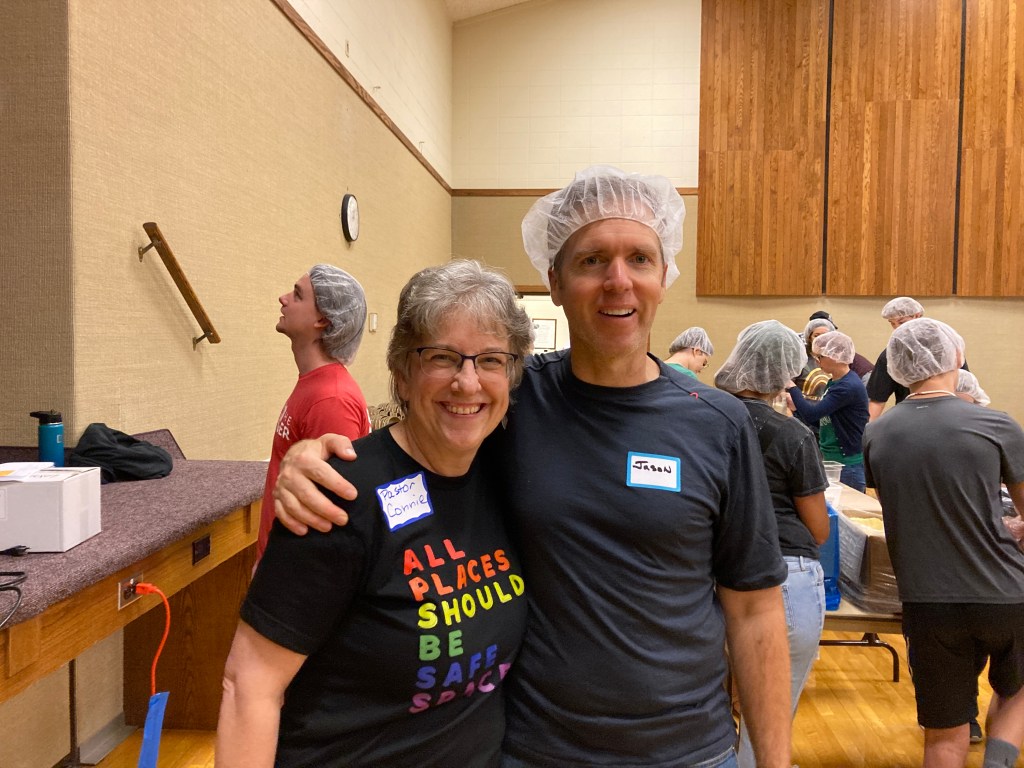
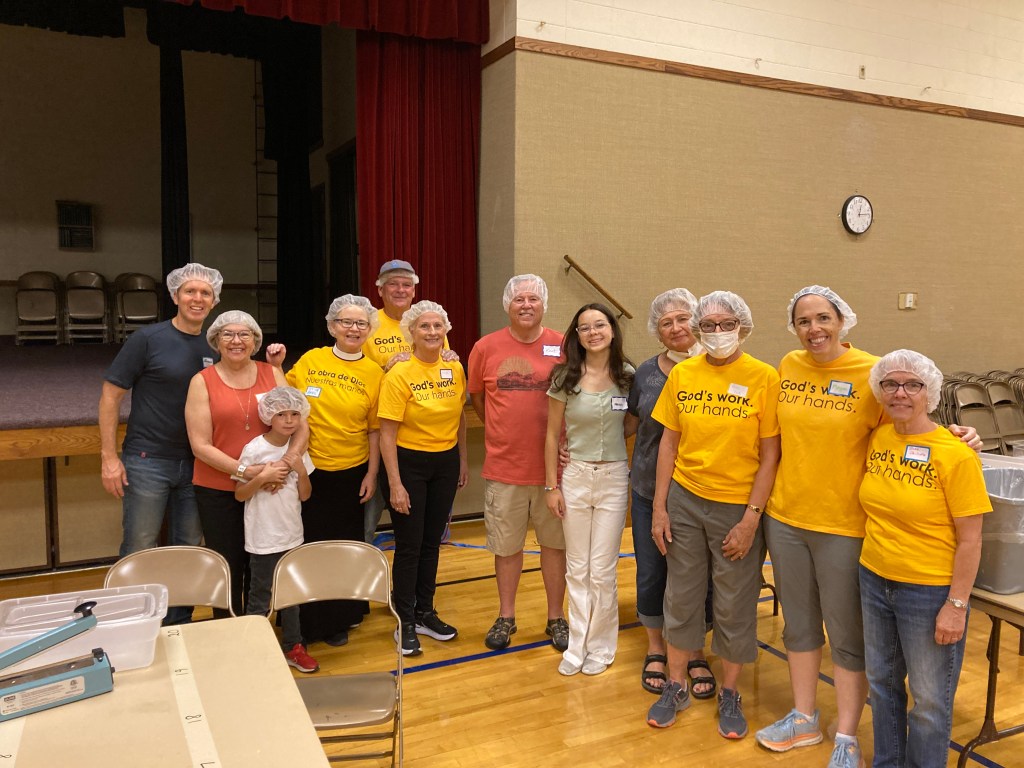
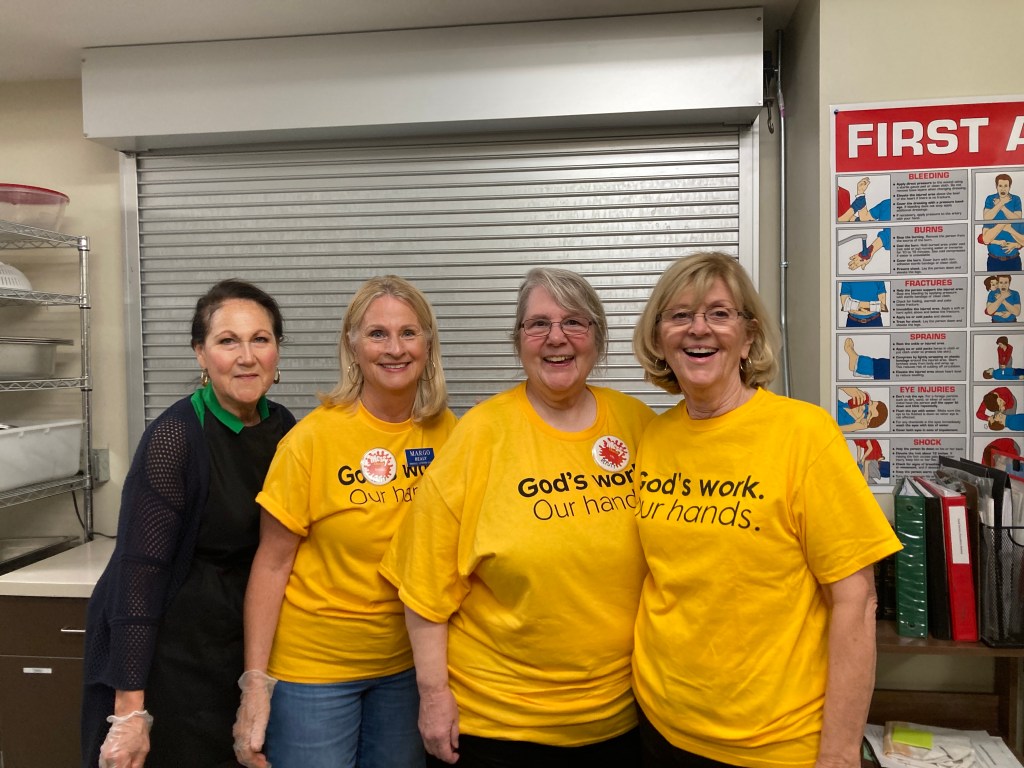
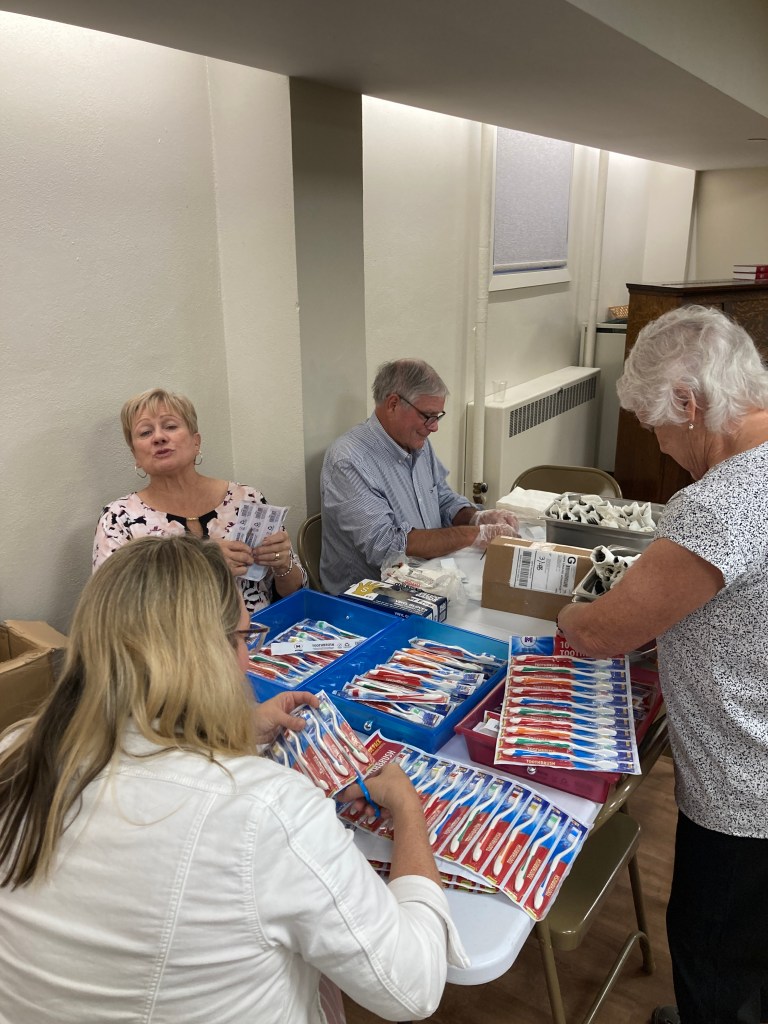
Saturday I spent the morning with members of Immaneul Lutheran and King of Glory Lutheran, Boise at a Feed the Hunger event coordinated by the Multi-Faith Action Project (MAP). The many workers also included LDS, Presbyterians, and Baptists. I got to work alongside Pastor Michael Ross (St. Paul Baptist) and his wife and it was fun to reconnect after having served on the MAP advisory team together last year.
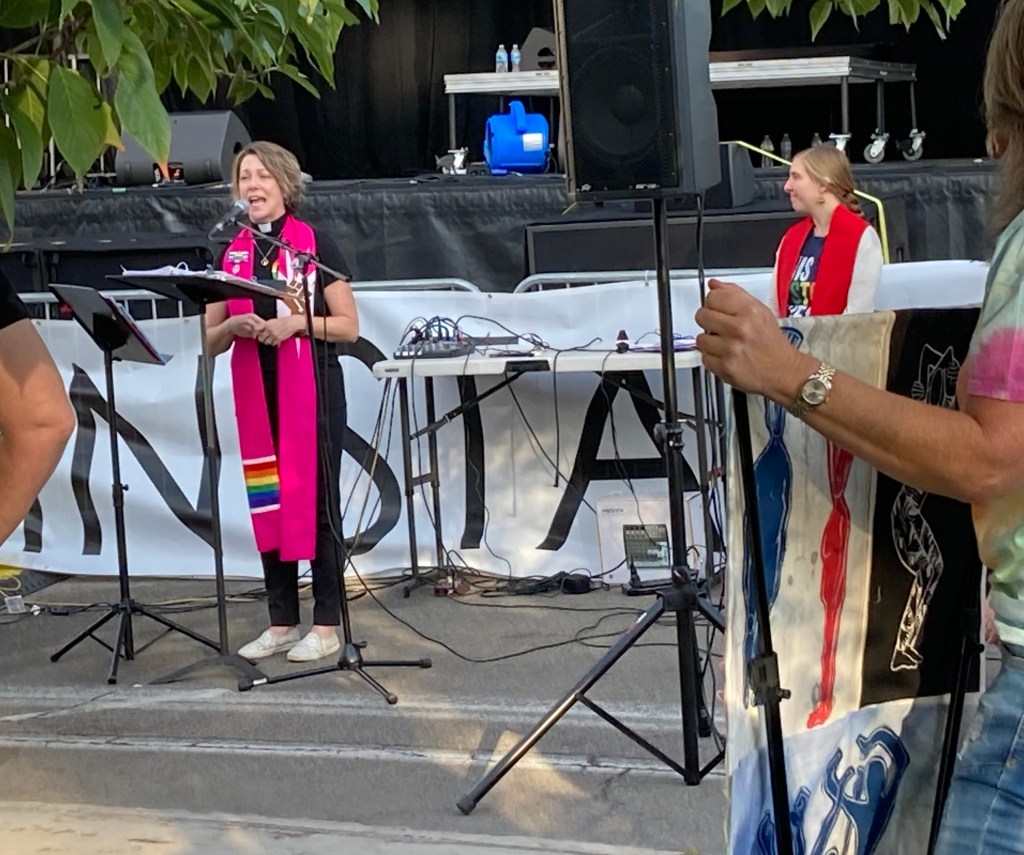
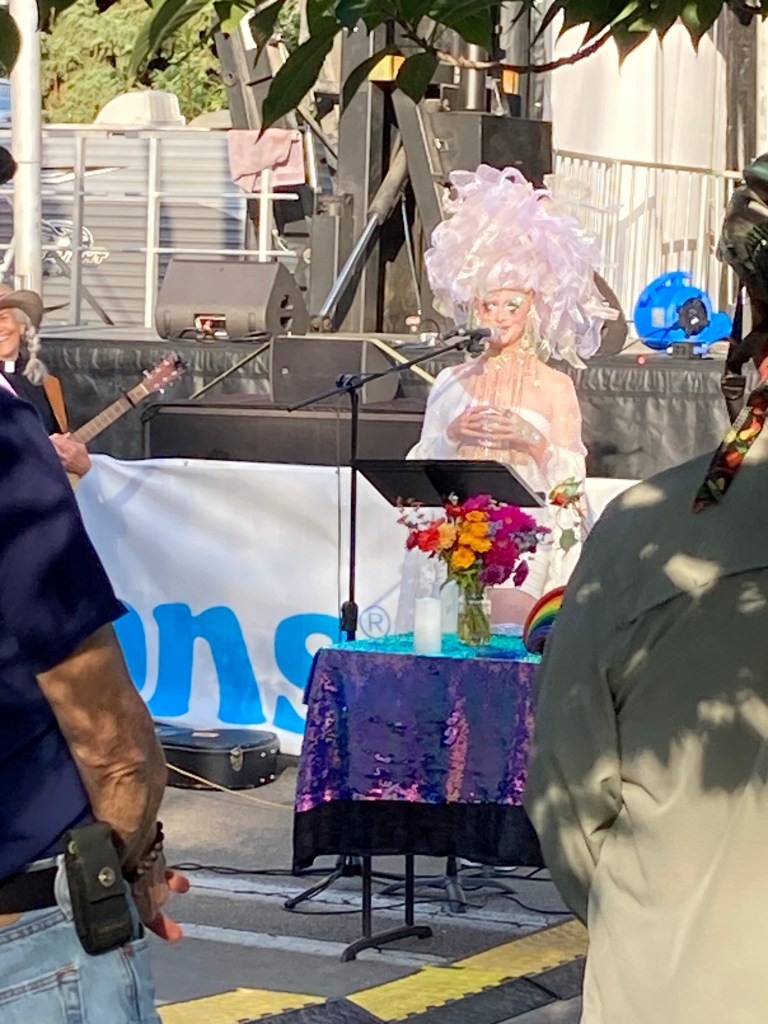
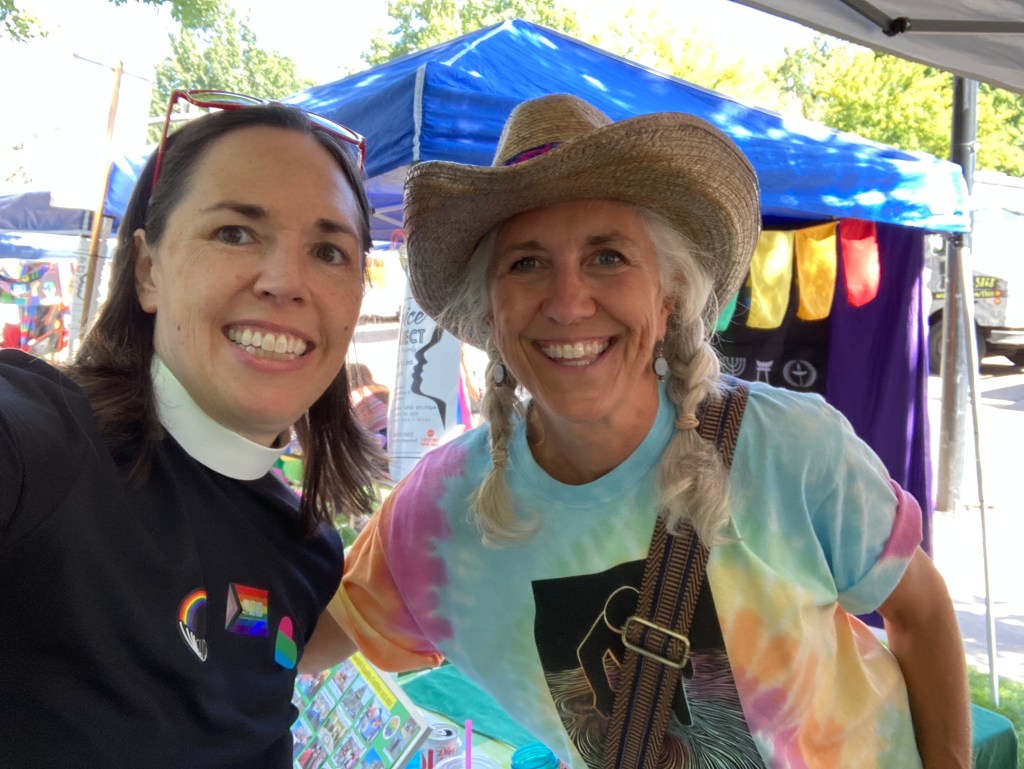
Sunday morning I drove early to Boise for the first Interfaith Worship at Boise Pride Festival. I went back to the festival after worship to visit booths and say hello to many friends.
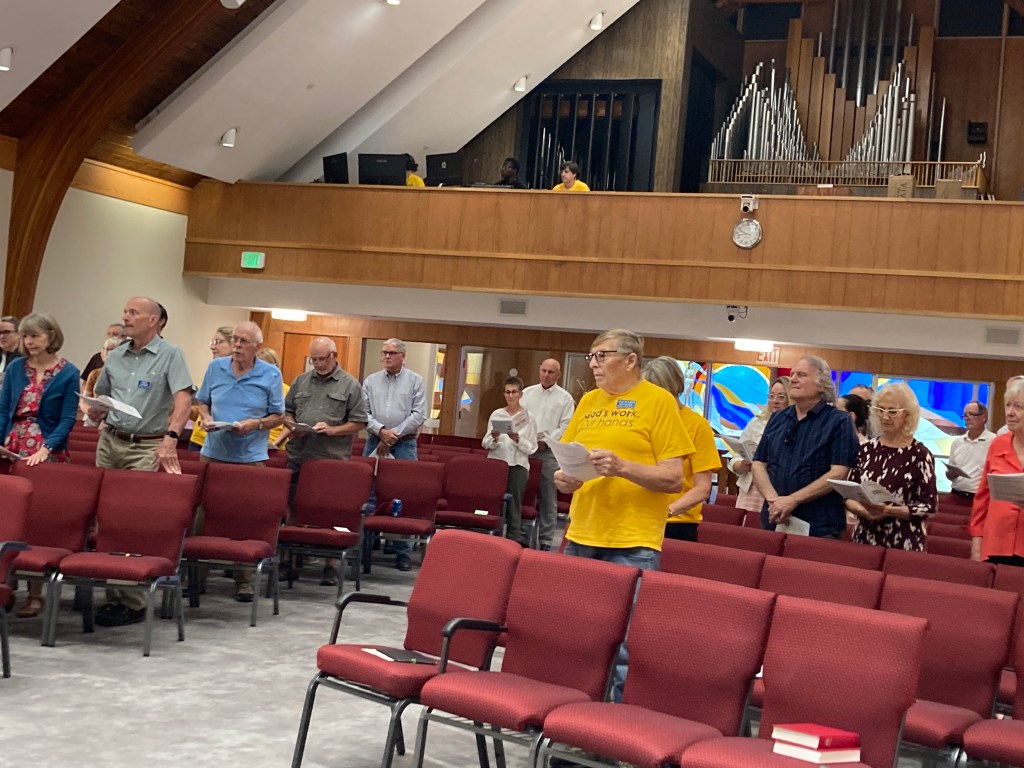
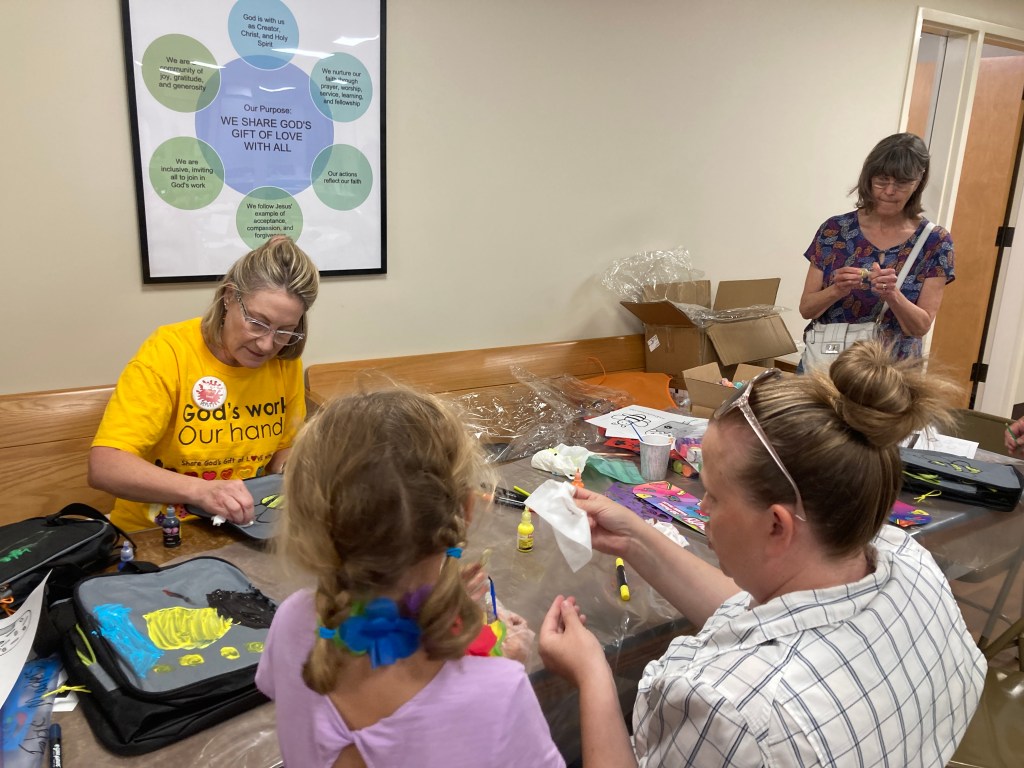
The bulk of the morning was spent preaching and presiding at Immanuel Lutheran in downtown Boise, a church I can drive to without GPS (even with construction) thanks to collaboration, hosted events, and simply the many years of being in the same cluster. Worship was followed by Messy Church (intergenerational faith formation).
I loved the cupcakes celebrating 10 years of God’s Work. Our Hands. Sundays.
25 Just then a lawyer stood up to test Jesus. ‘Teacher,’ he said, ‘what must I do to inherit eternal life?’ 26He said to him, ‘What is written in the law? What do you read there?’ 27He answered, ‘You shall love the Lord your God with all your heart, and with all your soul, and with all your strength, and with all your mind; and your neighbour as yourself.’ 28And he said to him, ‘You have given the right answer; do this, and you will live.’
29 But wanting to justify himself, he asked Jesus, ‘And who is my neighbour?’ 30Jesus replied, ‘A man was going down from Jerusalem to Jericho, and fell into the hands of robbers, who stripped him, beat him, and went away, leaving him half dead. 31Now by chance a priest was going down that road; and when he saw him, he passed by on the other side. 32So likewise a Levite, when he came to the place and saw him, passed by on the other side. 33But a Samaritan while travelling came near him; and when he saw him, he was moved with pity. 34He went to him and bandaged his wounds, having poured oil and wine on them. Then he put him on his own animal, brought him to an inn, and took care of him. 35The next day he took out two denarii, gave them to the innkeeper, and said, “Take care of him; and when I come back, I will repay you whatever more you spend.” 36Which of these three, do you think, was a neighbour to the man who fell into the hands of the robbers?’ 37He said, ‘The one who showed him mercy.’ Jesus said to him, ‘Go and do likewise.’
Sermon – Meggan Manlove
We can hardly say the word Samaritan without first saying “good”: Good Samaritan Hospital, Good Samaritan Nursing Home, Good Samaritan Society, Good Samaritan Roadside Service. This story is so well known that newspersons and legislators who have no idea of what it meant to be a Samaritan will speak of passing “good Samaritan laws” and people being “good Samaritans.” This is so much more than a morality lesson. It is one of Jesus’ most well-known parables and it is also one of the most scandalous.
We are back on the road to Jerusalem, in a village along the way. A scholar of the Torah is there. He is one of the learned and well-respected people in the village. This is someone who has been studying scripture for many years. He can recite the 10 Commandments in his sleep. He can quote and explain all the purity laws.
He stands up to test Jesus with a question about inheriting eternal life. Jesus responds with a questions of his own. The lawyer gives him a good answer, one we would expect from someone who has studied scripture his entire career. He answers with a combination of Old Testament texts—love the Lord your God and love your neighbor.
Jesus tells the lawyer to follow the law’s instruction. But the scholar wants “to justify himself.” He wants to put parameters on the law. He seeks a definition of neighbor. He expects a definition in line with the purity laws. He expects to discover the limits to the phrase “my neighbor.”
Jesus goes ahead and tells a story that blows the lawyer’s world view apart. This is not a story about normal roadside assistance in Idaho—where someone robs me and another person comes and kindly helps me out.
Jesus tells the story of a man beset by bandits. Jesus does not say much about the man in the ditch. Jesus’ Jewish audience certainly assumed he was a Jew. Two people pass on by the man in the ditch.
Now these are not just two ordinary men. The first is a priest and the second is a Levite.
What they share in common is that they are students of the law. So presumably they knew the same two commandments that the lawyer quoted, love God and love your neighbor. These two men are leaders in the faith communities, they are what we might call the church establishment. The priests and Levites head the purity list. They would avoid contact with a naked and therefore presumably dead body.
Three is a common storytelling number. The first person did not stop to help the man and neither did the second. The audience is prepared; we are prepared for the third man to stop and help this poor fellow in the ditch. But then Jesus shatters all expectations, makes jaws drop and eyes pop. Then a Samaritan comes along. What? It cannot be?
The story does not pit an Israelite against a priest and a Levite. By making the hero of the story a Samaritan, Jesus challenged the longstanding enmity between Jews and Samaritans. Samaritans were regarded as unclean people. They were descendants of the mixed marriages that followed from the Assyrian settlement of people from various regions in the fallen northern kingdom.
By the time Jesus told this story, the enmity between the Jews and the Samaritans was ancient and bitter. The two groups disagreed about everything that mattered: how to honor God, how to interpret the Scriptures, and where to worship. Though we’re inclined to love the Good Samaritan, Jesus’s choice to make him the hero of his story was nothing less than shocking to first century ears.
The differences between them were not easily negotiated; each was fully convinced that the other was wrong. So what Jesus did when he had the Samaritan be merciful, was radical and risky. It stunned his listeners. He was asking them to dream of a different kind of kingdom. He was inviting them to consider the possibility that a person might add up to more than the sum of her political, racial, cultural, and economic identities. He was calling them to put aside the history they knew, and the prejudices they nursed. He was asking them to leave room for divine and world-altering surprises.
By depicting a Samaritan as the hero of the story, Jesus demolished all boundary expectations. Social position—race, religion, or region count for nothing. The man in the ditch, from whose perspective the story is told, will not discriminate among potential helpers. Anyone who has compassion and stops to help is his neighbor.
The question turns when viewed from the perspective of the one in desperate need. Naming the third character as a Samaritan challenges the lawyer to examine stereotypes regarding Samaritans. But it also invalidates all stereotypes. Community can no longer be defined or limited by such terms. The three on the road are each identified by social class, but the man in the ditch is not identified by such labels.
The lawyer will not even use the word Samaritan. When Jesus asks him who was the neighbor, the lawyer says only, “The one who showed mercy.” Ironically, his answer provides a very accurate description of a neighbor. Jesus turns the issue from boundaries required neighborliness to the essential nature of neighborliness.
This parable has a scandalous edge. [Amy-Jill Levine] One scholar says, “To hear this parable in contemporary terms, we should think of ourselves as the person in the ditch, and then ask, ‘Is there anyone, from any group, about whom we would rather die than acknowledge, ‘She offered help’ or ‘He showed compassion’? More, is there any group whose membership might rather die than help us? If so, then we know how to find he modern equivalent of the Samaritan.
It might be Muslim, Skikh, Buddhist, Jew, Black, White, Mexican, Arabic, Mormon, Lutheran, gay, lesbian, transgender. Genuine kindness and goodness and mercy cannot be restricted to any one people. They also do not depend up on having learned the “right” answers.
Jesus’ parable shatters the stereotypes of social boundaries and class division and renders void any system of religious quid pro quo. Neighbors do not recognize social class. This is key: mercy is not the conduct of a calculating heart. Eternal life is not the reward of prescribed duties.
The duty of neighborliness is an expression of love of God and love of others. The duty of neighborliness transcends any calculation of reward. The Samaritan could not have expected any reward or repayment for what he did for the beaten man. One who shows mercy in order to gain a reward would, therefore, not be doing “likewise.” To do “likewise,” to cross boundaries, is to respond to boundaries that have already been crossed on our behalf.
The Samaritan is the one who notices—who actually sees—this beaten man. By seeing him he is moved to pity. The Samaritan is the one who recognizes that when it comes to the question of who is our neighbor, there are no rules. Our neighbor is anyone in need. So where are we to get such vision?
This parable shows us that the ability to see our neighbors clearly does not come from your ethnic background or where you are from or what your job is. None of those things matter. So, do I go to Walgreens or Costco for those lenses? If only it were that easy. It takes practice to see the neighbor. It takes diligence in the midst of weariness. It requires a community to which we are accountable for our seeing. It takes intentionality and humility.
“Who is my neighbor?” the lawyer asked. Your neighbor is the one who scandalizes you with compassion, Jesus answered. Your neighbor is the one who upends all the entrenched categories and shocks you with a fresh face of God.
The God who rescued Israel from Egypt in the first exodus is about to do a new thing: a new exodus from Babylon that will be like the old exodus, and also not like it. We read from Isaiah 43:
16 Thus says the Lord,
who makes a way in the sea,
a path in the mighty waters,
17 who brings forth chariot and horse,
army and warrior;
they lie down, they cannot rise,
they are extinguished, quenched like a wick:
18 “Remember not the former things,
nor consider the things of old.
19 Behold, I am doing a new thing;
now it springs forth, do you not perceive it?
I will make a way in the wilderness
and rivers in the desert.
I do not think it’s a stretch to say that God is doing something new right now. Sometimes I wish I could predict what it is. Other times I am simply up for the adventure and hope I can keep up. Whatever is happening, I do find it helpful to remember that we are not the first ones to experience new things.
Isaiah reminds his audience and us that God has done something new before. The other helpful directive from this Isaiah passage is to simultaneously forget those former times. Yes, this will be like that, but not really. For the Israelites, I am quite sure God is saying, “This time it will be even more magnificent!” Is that true for our time? It is hard to say. We put the Isaiah text in conversation with 2 Corinthians 5:17, “Therefore, if anyone is in Christ, he is a new creation. The old has passed away; behold, the new has come.”
What I take from all of this, pastorally if not scholarly, is that God is very good at doing a new thing and doing it wonderfully. At the same time, we are active participants. We have been given agency to engage.
Your congregation may already be living into a new thing; many of our congregations are. If you are not but you are curious, here are some old and new things that the synod staff would be eager to help you explore.
Shared Ministry with other ELCA Lutheran congregations – Lutherans have been sharing pastors in this country since immigrants have been forming congregations here. But we can also share other staff members, other resources, events, prayer, and worship.
Shared Ministry with ELCA Full Communion Partners – See this LIST of partners. In our synod, we already have experience sharing pastors, buildings, and even entire congregations with PCUSA Presbterians, Episcopalians, and the United Church of Christ.
Raise Up a Pastor from Within – The Theological Education for Emerging Ministries (TEEM) certificate program is a non-residential and contextual-educational arm of Pacific Lutheran Theological Seminary and Luther Seminary, aimed at preparing people for ordained ministry in the ELCA and the Episcopal Church. Students study at home with local pastors/mentors, while doing the ministry in a congregation.
Note–we are also GRATEFUL to all of our congregations who have raised and continue to raise up candidates for ministry who leave and serve elsewhere. Keep it up!
Licensed Pastoral Associates – We have several people trained by the Montana Synod-ELCA’s LPA Program. More of the pieces are online since the pandemic. We would be sure to surround LPAs with mentor pastors or deacons.
Death and Resurrection – Consider the STORY of Redeemer Lutheran in Portland, OR, which is now Salt and Light, nested in the midst of Leaven. Though parts of their story are urban, please do not dismiss this model if you live in a rural setting. The heart of the process was listening, discerning, and evaluating–which congregations everywhere can do.
Communal Discernment – Whether you want to explore one of the tools listed above or whether your congregation simply needs to figure out what might be next, the synod office has a communal discernment resource we would love to share with you.
Anchor Church Model – A grassroots model started by large ELCA congregations in urban Colorado and North Carolina. The vision is “To assist struggling congregations with high potential for regaining a vibrant ministry as well as to launch new mission sites with a higher degree of success and impact.” Here’s a Living Lutheran article about the movement. Since this model was first launched, other sites have adopted it to various contexts.
The good news is that you are not alone, we walk together, and we also are not alone. No matter the season, the Holy Spirit accompanies us and we can trust God’s faithfulness. Finally, not everything will be new. We will still gather as Christian communities. We will still strive to love God and our neighbors.
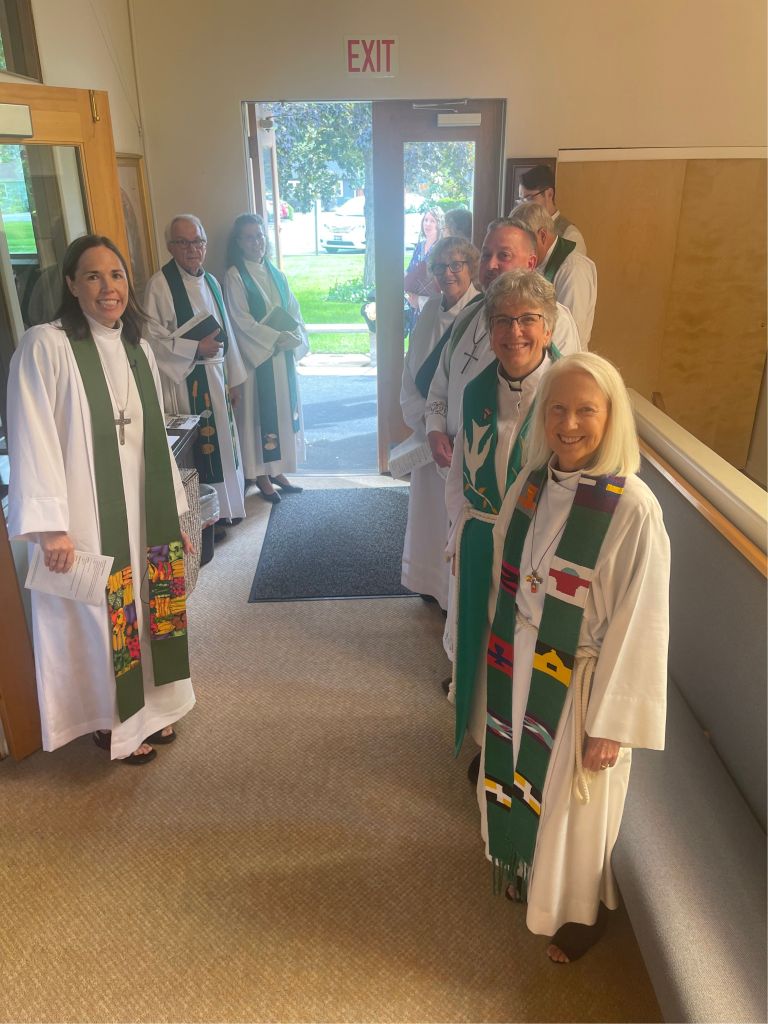
The people of the Northwest Intermountain Synod celebrate with the congregations of Redeemer Lutheran, Boise and Grace Lutheran, Horseshoe Bend on the occasion of the installation of Rev. Mariah Mills as their new pastor. Mills is a graduate of Trinity Seminary and completed her internship at Bethany English Church & United Protestant Campus Ministries in Cleveland. Freed by Grace to live faithfully, witness boldly, and serve joyfully.
My first Installation as bishop and what a joy to be with Redeemer/Grace, churches my former congregation partnered with on so much youth ministry. I was on the sidelines when these congregations signed their first shared ministry agreement. In the past few months we all watched as the congregations stepped up to do some much needed renovations to their old parsonage next door. We are in this work by God’s grace and with one another.
Sermon preached at Redeemer Lutheran, Boise for the Installation of Rev. Mariah Mills, called to serve as pastor of Redeemer and Grace Lutheran, Horseshoe Bend.
Exodus 3:1-13
3Moses was keeping the flock of his father-in-law Jethro, the priest of Midian; he led his flock beyond the wilderness, and came to Horeb, the mountain of God. 2There the angel of the Lord appeared to him in a flame of fire out of a bush; he looked, and the bush was blazing, yet it was not consumed. 3Then Moses said, ‘I must turn aside and look at this great sight, and see why the bush is not burned up.’ 4When the Lord saw that he had turned aside to see, God called to him out of the bush, ‘Moses, Moses!’ And he said, ‘Here I am.’ 5Then he said, ‘Come no closer! Remove the sandals from your feet, for the place on which you are standing is holy ground.’ 6He said further, ‘I am the God of your father, the God of Abraham, the God of Isaac, and the God of Jacob.’ And Moses hid his face, for he was afraid to look at God.
7 Then the Lord said, ‘I have observed the misery of my people who are in Egypt; I have heard their cry on account of their taskmasters. Indeed, I know their sufferings, 8and I have come down to deliver them from the Egyptians, and to bring them up out of that land to a good and broad land, a land flowing with milk and honey, to the country of the Canaanites, the Hittites, the Amorites, the Perizzites, the Hivites, and the Jebusites. 9The cry of the Israelites has now come to me; I have also seen how the Egyptians oppress them. 10So come, I will send you to Pharaoh to bring my people, the Israelites, out of Egypt.’ 11But Moses said to God, ‘Who am I that I should go to Pharaoh, and bring the Israelites out of Egypt?’ 12He said, ‘I will be with you; and this shall be the sign for you that it is I who sent you: when you have brought the people out of Egypt, you shall worship God on this mountain.’
13 But Moses said to God, ‘If I come to the Israelites and say to them, “The God of your ancestors has sent me to you”, and they ask me, “What is his name?” what shall I say to them?’
Still from the film Prince of Egypt
1 Corinthians 12:1-11
12Now concerning spiritual gifts, brothers and sisters, I do not want you to be uninformed. 2You know that when you were pagans, you were enticed and led astray to idols that could not speak. 3Therefore I want you to understand that no one speaking by the Spirit of God ever says ‘Let Jesus be cursed!’ and no one can say ‘Jesus is Lord’ except by the Holy Spirit.
4 Now there are varieties of gifts, but the same Spirit; 5and there are varieties of services, but the same Lord; 6and there are varieties of activities, but it is the same God who activates all of them in everyone.7To each is given the manifestation of the Spirit for the common good.8To one is given through the Spirit the utterance of wisdom, and to another the utterance of knowledge according to the same Spirit, 9to another faith by the same Spirit, to another gifts of healing by the one Spirit, 10to another the working of miracles, to another prophecy, to another the discernment of spirits, to another various kinds of tongues, to another the interpretation of tongues. 11All these are activated by one and the same Spirit, who allots to each one individually just as the Spirit chooses.
Matthew 14:13-21
13 Now when Jesus heard this, he withdrew from there in a boat to a deserted place by himself. But when the crowds heard it, they followed him on foot from the towns. 14When he went ashore, he saw a great crowd; and he had compassion for them and cured their sick. 15When it was evening, the disciples came to him and said, ‘This is a deserted place, and the hour is now late; send the crowds away so that they may go into the villages and buy food for themselves.’ 16Jesus said to them, ‘They need not go away; you give them something to eat.’ 17They replied, ‘We have nothing here but five loaves and two fish.’ 18And he said, ‘Bring them here to me.’ 19Then he ordered the crowds to sit down on the grass. Taking the five loaves and the two fish, he looked up to heaven, and blessed and broke the loaves, and gave them to the disciples, and the disciples gave them to the crowds. 20And all ate and were filled; and they took up what was left over of the broken pieces, twelve baskets full.21And those who ate were about five thousand men, besides women and children.
Meggan Manlove – Sermon
“We are stronger together,” a new colleague of mine is fond of saying. I am learning what that feels like and looks like around our synod, but I know it to be true already in the Treasure Valley of Idaho. Congregations have been praying for Redeemer and Grace for some time, and now today we celebrate that you have a new pastor. Hooray! But I also want to say hooray to all of you for your waiting.
The story of Moses and the burning bush has been portrayed by artists for centuries. It’s a story that grabs the imagination—the bush that blazes but is not consumed, the command to take off shoes because Moses is standing on holy ground, and the call—the call to the person unprepared and unwilling that reminds us of so many other call stories in scripture. I love this story too. I love that Moses is paying attention and notices the bush. I love the dialogue between Moses and God—God’s naming the people’s suffering, Moses’ questioning, God’s assurance. There are components of this story that are at once relatable and others that are other worldly.
But this week I was mostly struck by how the passage begins and by what precedes it. “Moses was keeping the flock of his father-in-law Jethro.” This story is preceded by Moses witnessing an Egyptian beating Moses’ kinfolk; Moses killing said Egyptian; Moses then fleeing from Eyptian Pharaoh. Moses flees to the land of Midian where he meets Jethro, marries Ziporah, and has a son. Then we read in chapter two, “after a long time the king of Egypt died.” In other words, it was not a matter of mere weeks or days between Moses fleeing Egypt and encountering the burning bush. It was a long time.
Moses waited for God. So did the Israelites. In a day an age where I can instantaneously look up news happening not just in my city but on the other side of the globe, this waiting can also seem otherworldly. It is not just that our culture is transactional, and so we slip into making our relationship with God transactional, it is also that we expect things now. Nothing encourages or affirms patient waiting.
Redeemer and Grace, you waited, either comfortably or impatiently and uncomfortably. You prayed. You stayed in relationship with God. You continued to build relationships with one another and your neighbors, first in the middle of a global pandemic and then coming out of the pandemic. I want to say that I saw your faithful waiting. I don’t know how you will look back on that time in a year or two, but I hope you see that that practice in waiting prepared you to notice, to pause and turn your head as Moses did, to notice the future pastor God was preparing for this call.
My assumption is that something else happened in that waiting. A variety of gifts from among you were lifted up in new ways, which brings us to First Corinthians. It is helpful to remember that Paul’s letter to Corinth is primarily about the common needs of the Christian community. Here is one criticism Paul lodges against the Corinthian congregation: their inability to live out the essential claim of a community founded in the Gospel of Jesus. The life, death, and resurrection of Jesus unite every congregation of followers. Unity is for the sake of God’s mission in the world and for the building up of that particular community.
For Paul, spirituality involves the ongoing reality and work of the Holy Spirit in the lives of Jesus’ followers. The problem in Corinth is that some spiritual elitists have really messed this up. They have regarded their gifts of the Spirit as making them superior to other members of the Community. Paul emphasizes unified divine action. This empowers diverse human activity for the common good—the benefit of everyone.
For me, the pairing of the Feeding of the Multitude and the Corinthian passage on Spiritual Gifts is a great one. God’s abundance of bread and fish, the 12 baskets of leftovers, becomes accessible to all communities. God has also given us an abundance of spiritual gifts, enough to build life-giving communities wherever we are.
Paul also is adamant that the gifts come from the Spirit, not from us. Sometimes, even when we have a called pastor leading us, we still must wait to see or hear how the Spirit will use all of those gifts. We must do that active waiting we are talk so much about during Advent, but which we are called to each day.
Paul would further contend that the Spirit does not promote excessive individualism or elitism because those do not benefit the common good. One pastor wrote, “Spiritual gifts are not for us, and therefore it is essential that we discern them and use them. Spiritual gifts are given by the Holy Spirit, they are a way that the Holy Spirit flows through us into the world that God loves. By exercising our gifts, we put ourselves at the disposal of the Great Almighty to be used as God wishes. Nothing could be more humbling. And God will use you. In fact, this is how God has designed us, with the capacity to know and love God and with unique gifts that God uses to bless the world….”
Know that you Mariah and you Redeemer Lutheran and Grace Lutheran are not alone as you live out your baptismal call. The body of Christ is a body. We are truly church together. None of us can do this work alone. And we are the body of Christ accompanied by the Holy Spirit. As each of you disciples continues to take one faithful step forward, know that the Spirit is always with you, in the bread and wine, in our shared worship, and in your daily lives. Thanks be to God.
One of the best parts of this new call is meeting so many people in our synod, across the ELCA Lutheran network, and in our various communities doing faithful work. This week I or the synod staff and I connected with a variety of people listening to God, their neighbors, the larger society and then sharing God’s love with their unique passions and gifts. Meetings included those with a western bishop, a synod staffer from the midwest, a staff member from Lutheran Immigration and Refugee Services, and the head of Music that Makes Community.
Early in the week I participated in one of two listening sessions for bishops on the ELCA’s Future Church: God’s Love Made Real.
Future Church: God’s Love Made Real
We want to know what it is to be the church God is calling us to be. But we need YOU. Join us as we seek to discern God’s Spirit and work to become the church God is calling us to be. This is Future Church; This is God’s Love Made Real.
SURVEY?
Your input and perspective in this work is valuable. Take a survey to share your experience to help us better make God’s love real to others:
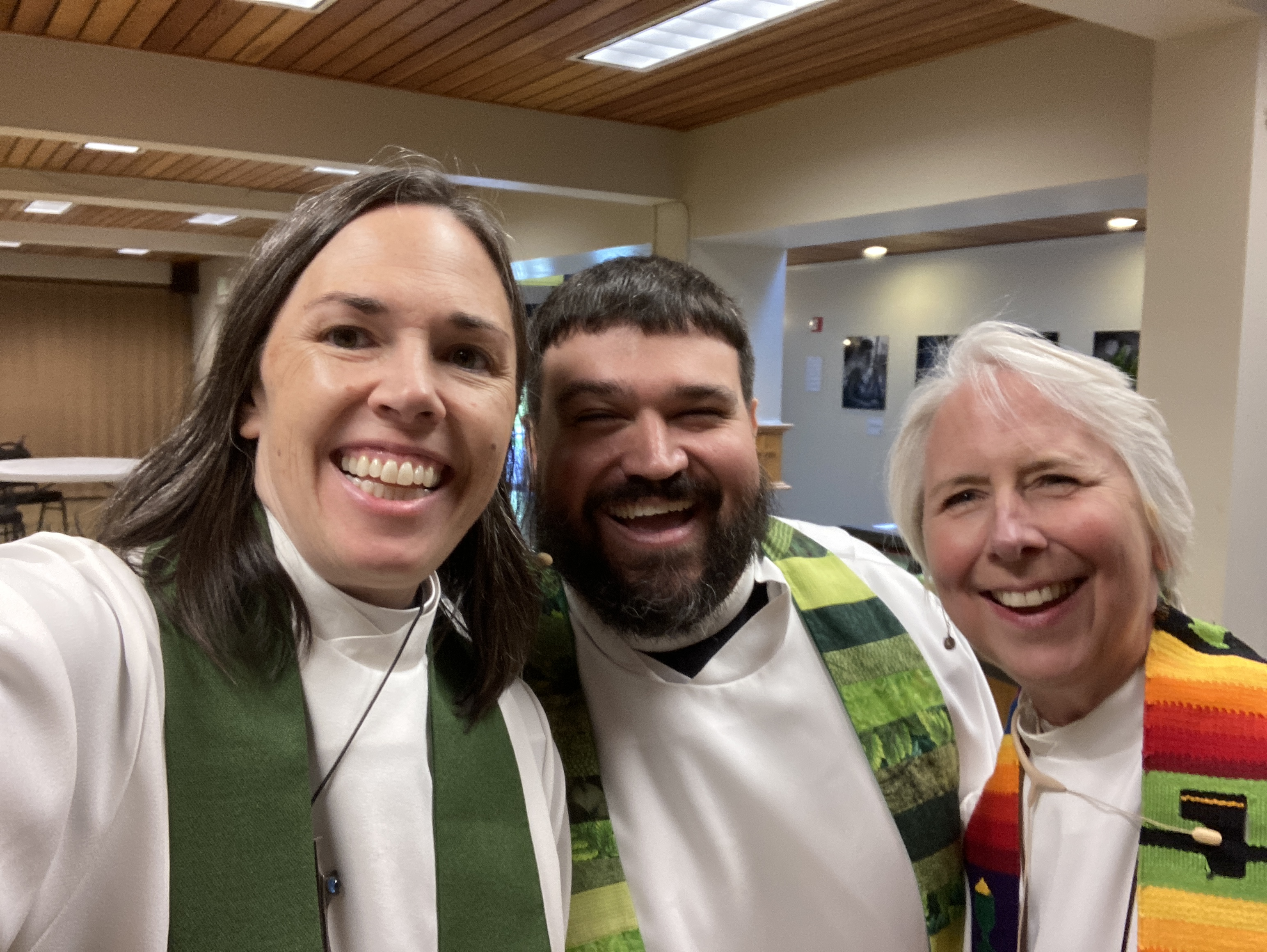
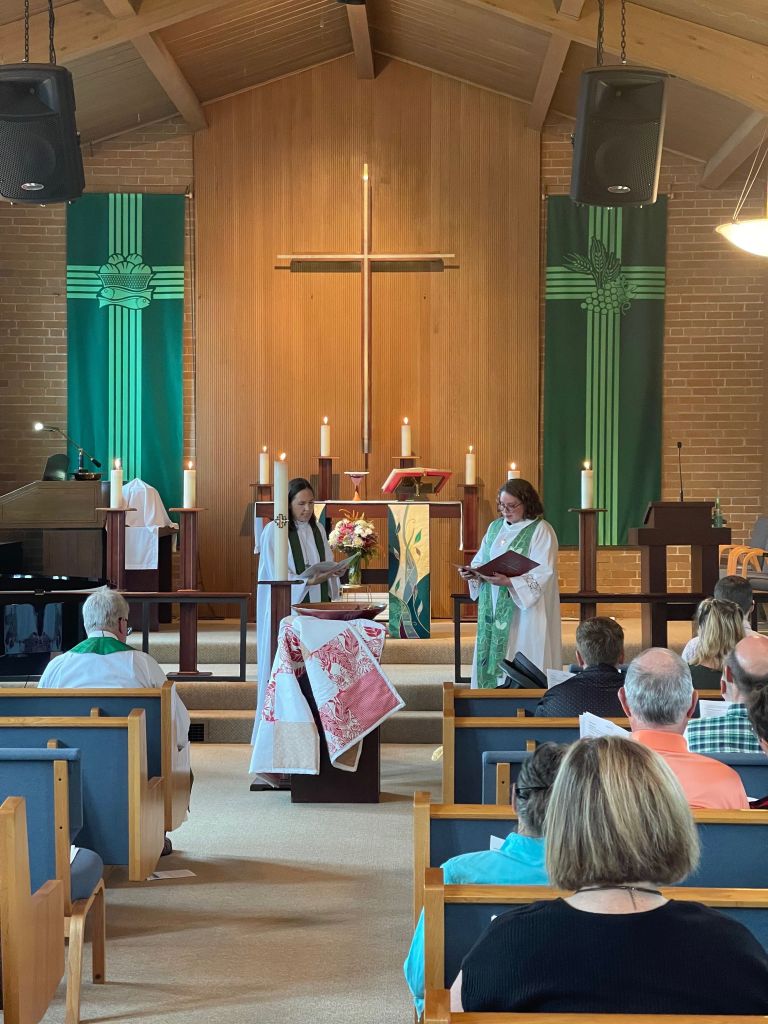
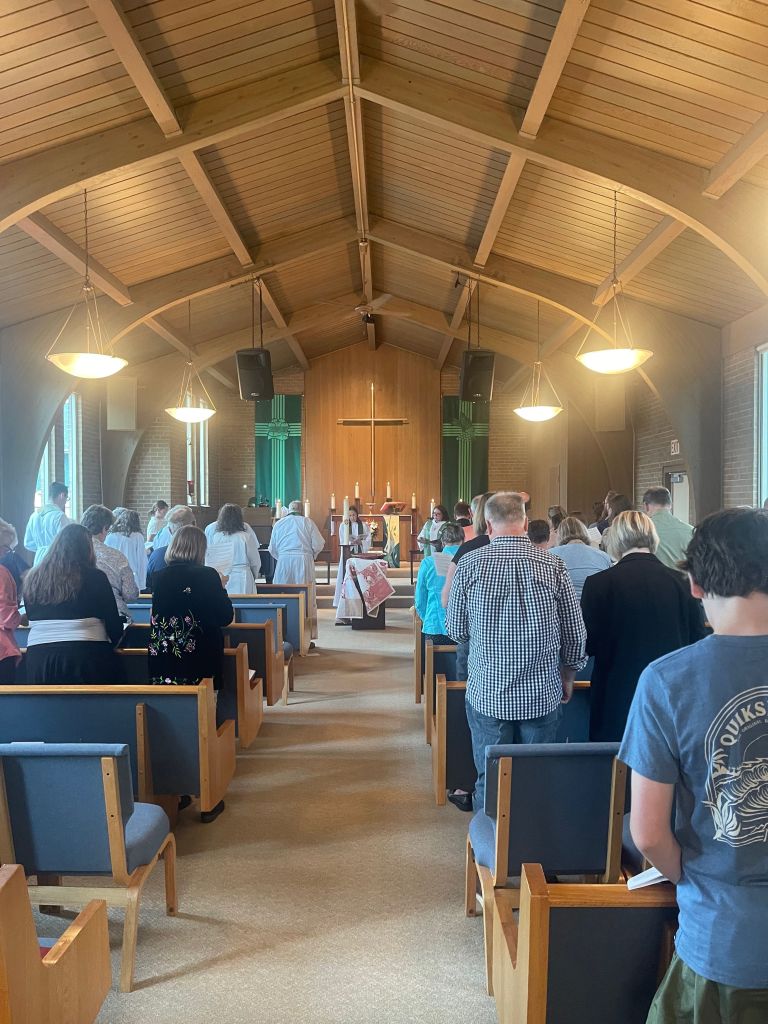
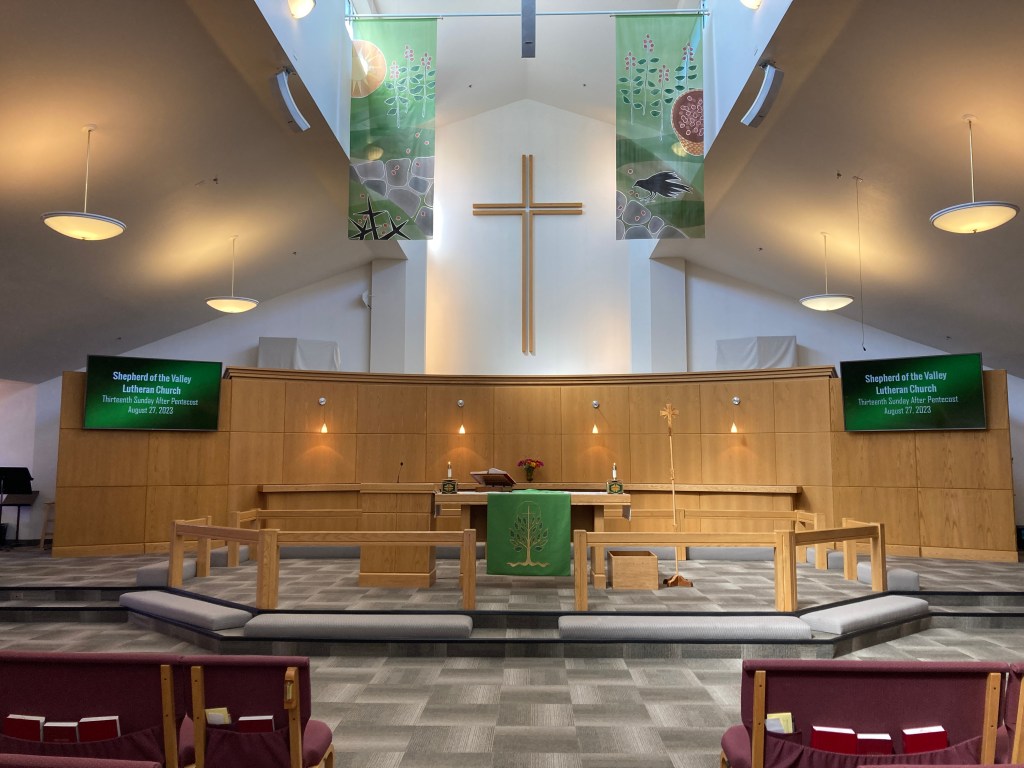
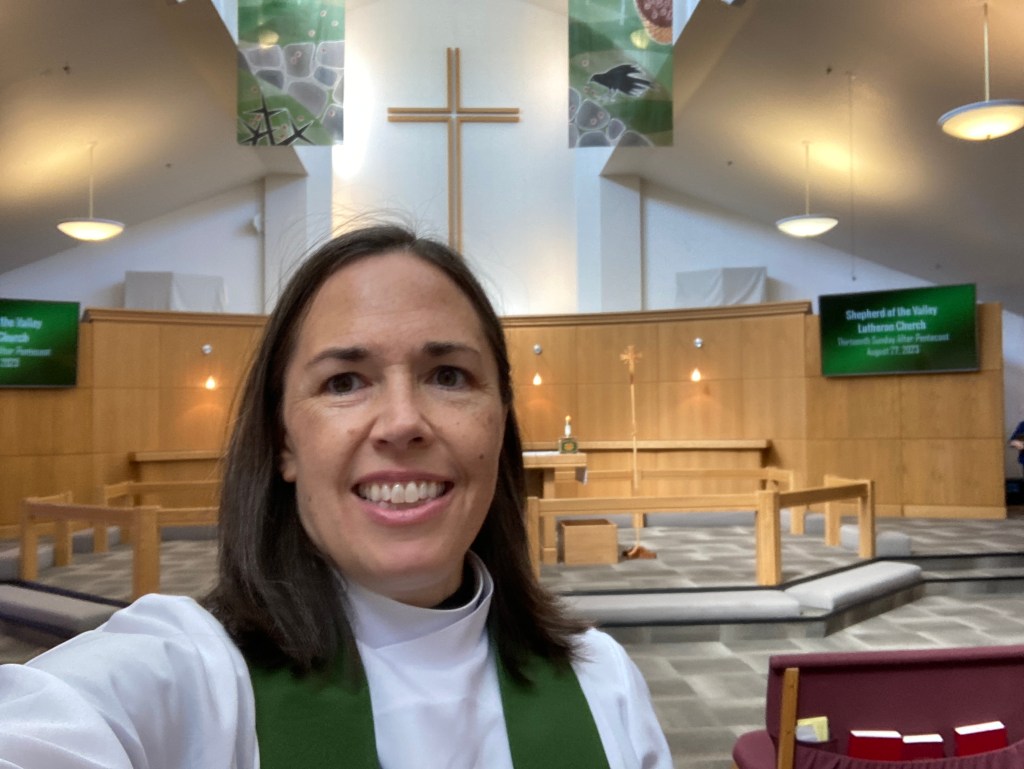
I had not made concrete plans for this morning because I was to preside at an installation in the afternoon. That installation was postponed until Labor Day Weekend due to COVID. So I emailed Pastor Dave Deckerd at Shepherd of the Valley and said I would like to come worship with them. He invited me to preside and said worship attendance might be sparse due to some COVID in that community. My body quickly remembered March 2020 and I had to do some deep breathing and relaxing.
It ended up being a good morning. When I came to Idaho in November 2010, my first group of mutual supporters were the ELCA youth ministers, including the Luther Heights program director. An important member of that group was SOV’s youth minister Greg Boelken, who later moved with his wife to Atlanta. The pastors and deacons often met at SOV in those early years for a book study, but I would always arrive early and go talk to Greg in his office. He had grown up a Missouri Synod pastor’s kid, attending Camp Perkins. By the time I met him, he was serving on the Luther Heights board. We talked about camp, the Treasure Valley, and church. He truly made me feel welcome and so I still associate that building with his warm hospitality.
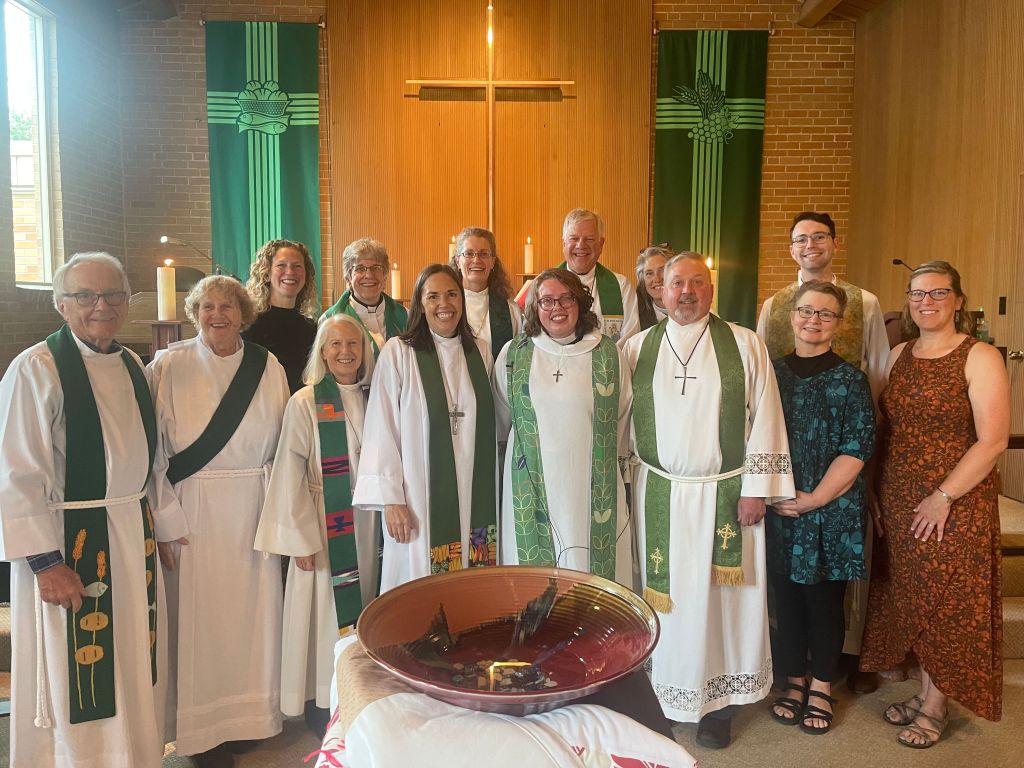
I forgot to get photos with people
Worship this morning was simplified for summer, but still held all the components I value. It was a gift to sit in the pew and hear the good news preached by Pastor Dave and it was, as it always is, humbling to preside at the Lord’s Supper with these strangers, now friends. Fellowship time brought the gift up multiple conversations and introductions.
I read a bit and then logged on to join the joint Lutheran Campus Ministry WSU-U of I Board meeting. It sounds like campus ministry is off to a great start in Pullman-Moscow after last year’s very challenging school year.
If I needed reminders that this work does not need to be done in a silo, this week gave me an abundance of them.
The week started, after my drive home Monday, with a vaccination appointment at Saltzer Health, in preparation for the synod trip to the Ulanga Kilombero Diocese in Tanzania later this fall. Shout out to Saltzer’s staff who talked me through everything.
Wednesday morning I attended my first Region One First Call Consult meeting, during which we also discussed mobility. First call is so different than when I went through it in 2004. I was reminded of how grateful I am to be part of a region that works well together and communicates regularly about calls, resources, and ideas.
Wednesday afternoon I attended a hybrid luncheon for the Faith Action Network, a multi-faith, non-profit organization though which thousands of people and over 160 faith communities across Washington State partner for the common good. Together, we are powerful voices of faith and conscience advocating for a more just, peaceful, and sustainable world. Many of our Eastern Washington congregations are part of the network. This was their first hybrid meeting, hosted by the NW Washington Synod, ELCA. Those of us from further east were grateful for the use of technology.
I was having a bit of trouble with technology, and set up an appointment with an ELCA resource person who walked me through a work-around. More gratitude.
That afternoon, we had an orientation for our new Northwest Intermountain Synod Council members. We were all reminded about Region 1 yet again, this time regarding the financial services office we all share. Different synod council officers also talked about our shared work as a synod.
Thursday I had a Zoom call with a church relations staffer from Luther Seminary. We talked about our regional gatherings as a synod, internship sites, Faith+Lead, and other resources at the seminary. Serving out west the last 12 plus years, I have gotten to know more people connected to PLTS, our seminary in Berkeley. When in Chicago, I took classes at LSTC. Serving in Iowa for six years, I went to events at Wartburg. Even though I’m not an alumni, I remain grateful for the roles the seminaries play in the life of the church.
Friday afternoon I sat in on a Zoom call with synod staff, our Washington Lutheran Disaster Response Coordinator (a volunteer!) and the head of Lutheran Disaster Response. This was of course in response to the Gray and Oregon Road Fires, both still burning. It is such a comfort to have LDR as a partner








 A Place at the Table