Loop around Washington in October

After a week in Minneapolis Sept. 30-Oct 7 (ELCA Church Council, Installation of Presiding Bishop Curry, and Conference of Bishops) I had a day at home to wash some clothes and repack.

I set out to Seattle on a Thursday for my final Pacific Lutheran University board meeting Thursday and Friday. Afterwards, I reflected, “Honored to have served on the PLU Board of Regents for two years. It was a joy to serve on the task group (led by Scott Barnum) that led to the sunsetting of the corporation and the start of the Board of Regents Committee on Congregational Relations. I also served on the Admissions and Student Relations Committee, chaired by Jaynee Groseth and then Sheila Radford-Hill. Today, I got to have lunch with former Luther Heights camper and counselor Logan Denen, finishing his MSW and starring in the Instagram show Boyish Charm (teaching viewers how to make good meals with food pantry ingredients). Grateful to board president Pastor Mark Griffith for his leadership. My heart is full of gratitude. Now I hand off this board role and lean into ELCA Church Council Region 1 liason bishop.” I was surprised at how sad I was to leave this group of people. I am proud of PLU and hopeful for its future.

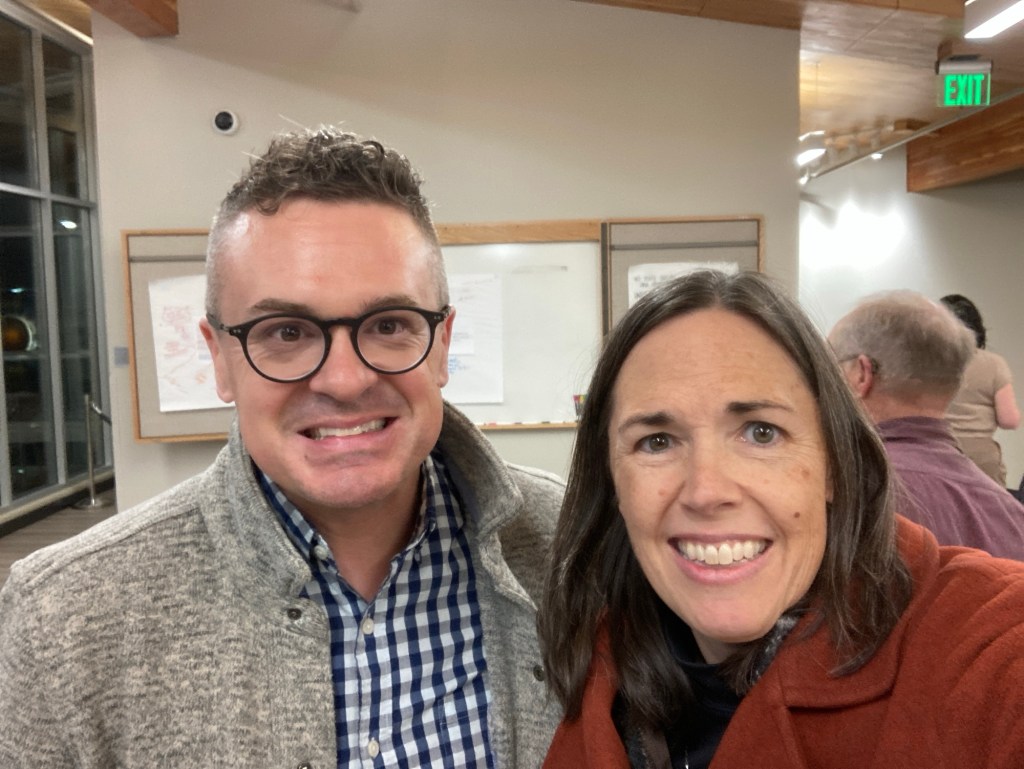
With Logan.

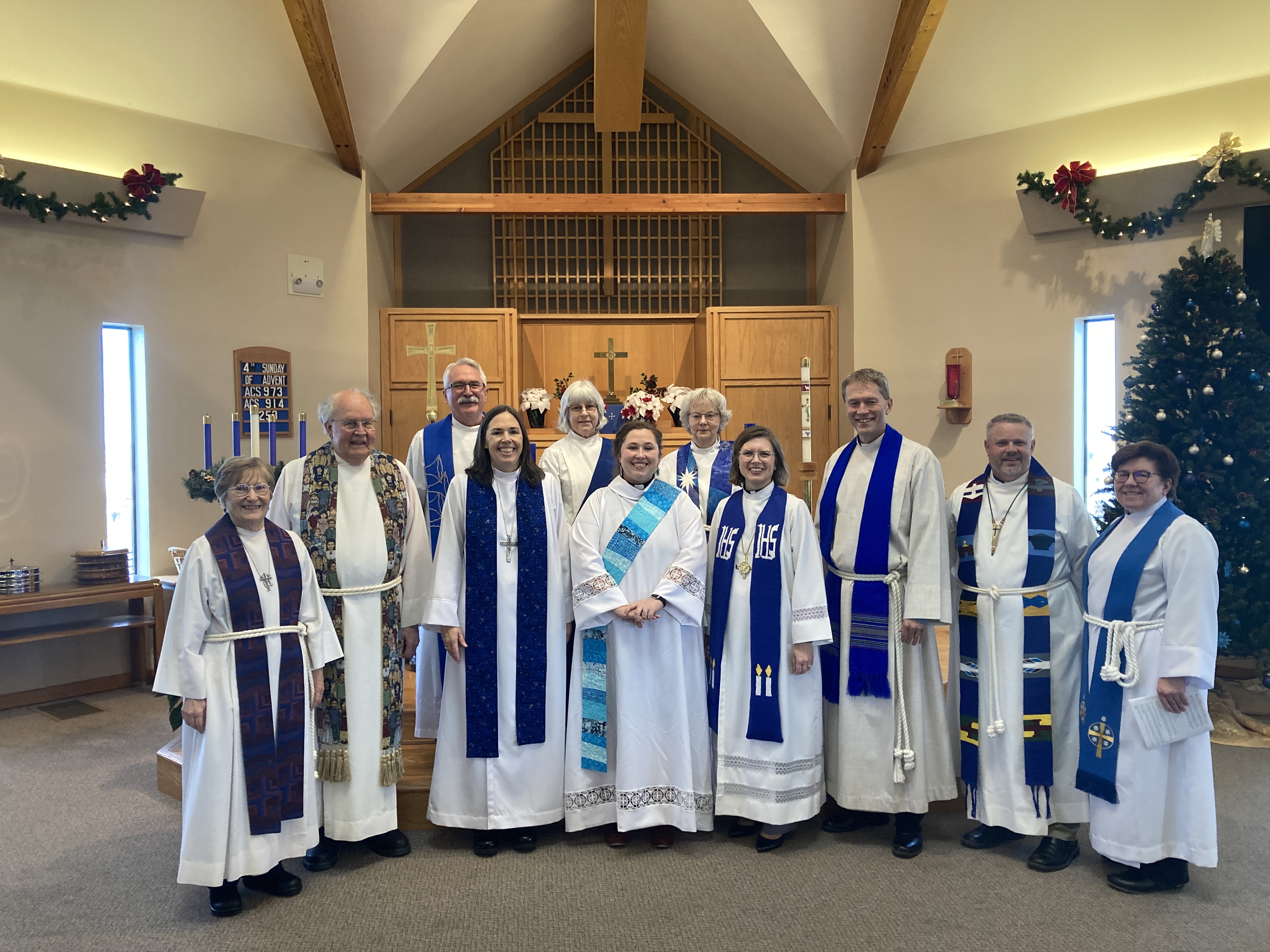
Bp Shelley Bryan Wee, also serving on the board and the colleague who’d kindly picked me up from the airport, and I continued our journey south to Olympia, WA for the installation of Southwestern WA Bishop Keith Marshall. We started Friday evening with a dinner with Keith, his family, and much of the synod staff. The installation was held at Gloria Dei Lutheran in Olympia with ELCA Presiding Bishop Yehiel Curry preaching and presiding, Bp Curry’s first installation of another bishop. The bishops all went to dinner on the water that evening. Then Bishop Tim Oslovich and his wife Sinje took me back to SeaTac Airport. They headed to Anchorage for Tim’s first installation of a pastor while serving as Alaska bishop and I flew to the Tri-Cities.

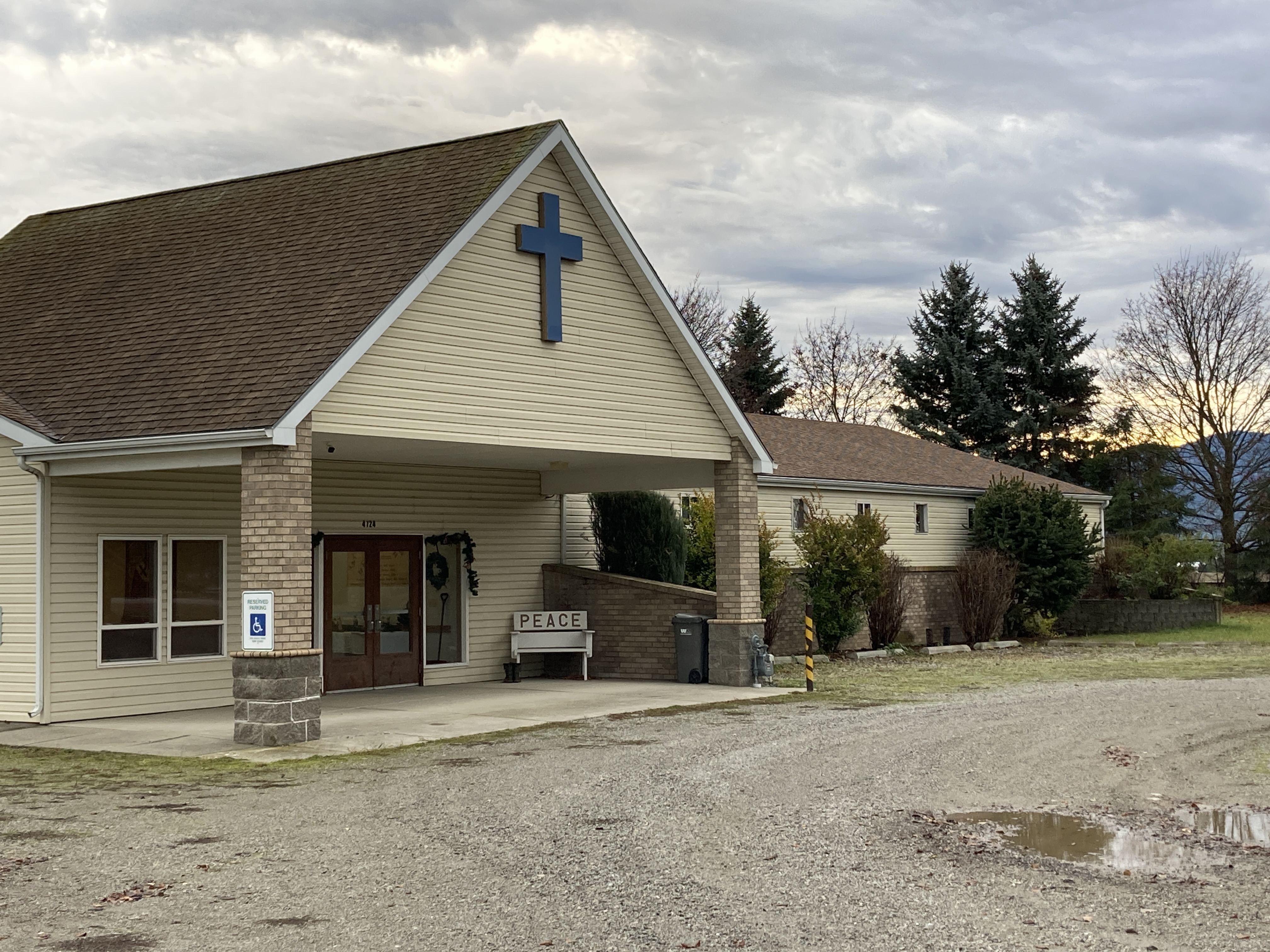
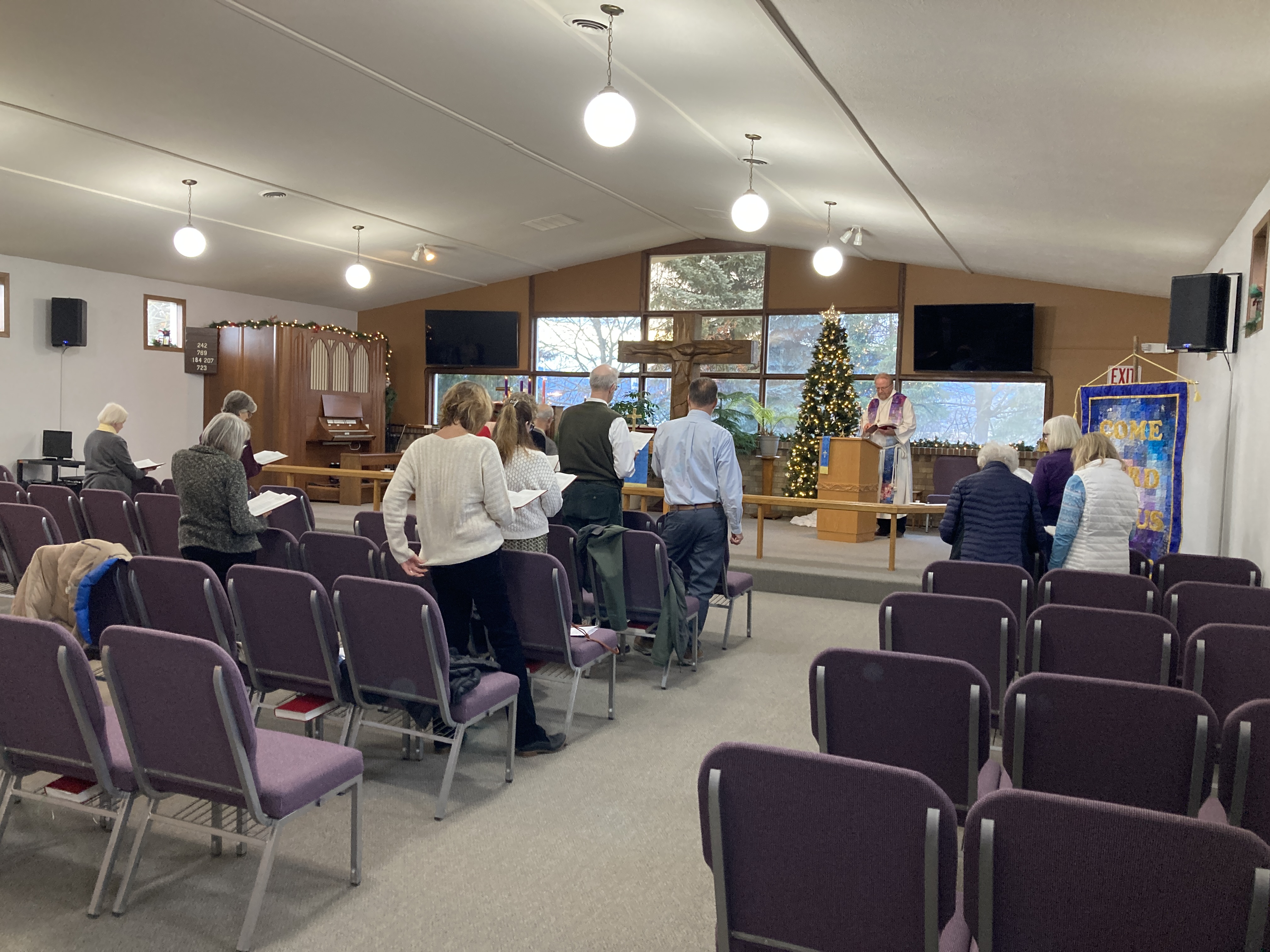
Sunday morning I drove over and presided at Immanuel Lutheran in Grandview, WA, served by Pastor Jake Schumacher. They have moved into a partnership with the PCUSA church in Sunnyside (Pastor Jake serves both churches) and this year they are an internship site for Luther Seminary student Lori Tharp. I was warmly welcomed and grateful to hear the gospel proclaimed.

Bishop’s Fall Convocation with Rev. Dr. Anthony Bateza, St. Olaf College, was Monday through Wednesday. We started with a beautiful worship service with Dr. Bateza preaching at First Lutheran, Pasco and then moved to a hotel on the Columbia River over in Richland. This is one of my favorite weeks of the year–just learning and spending time with the pastors and deacons in our synod and this year was no exception.

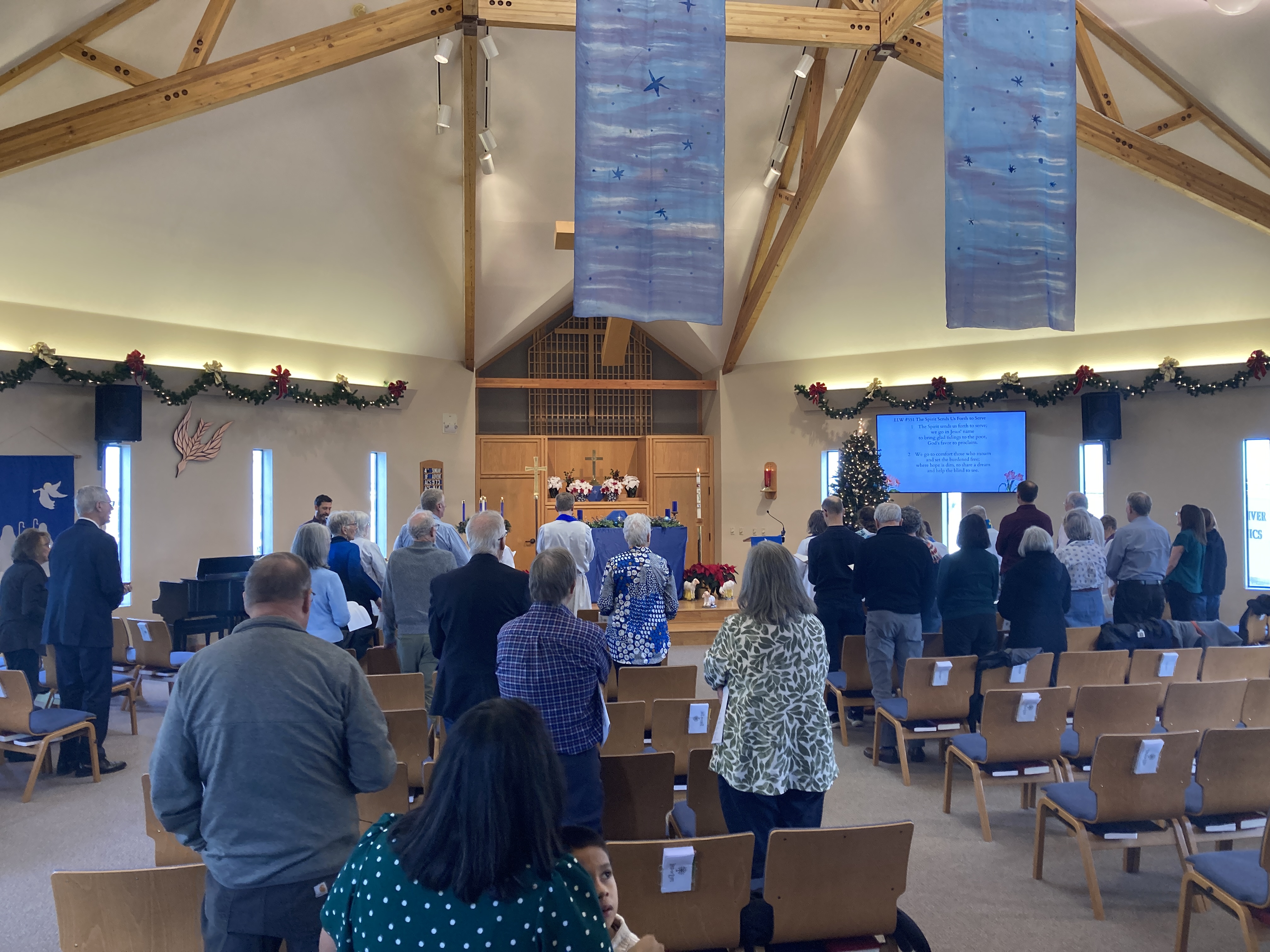
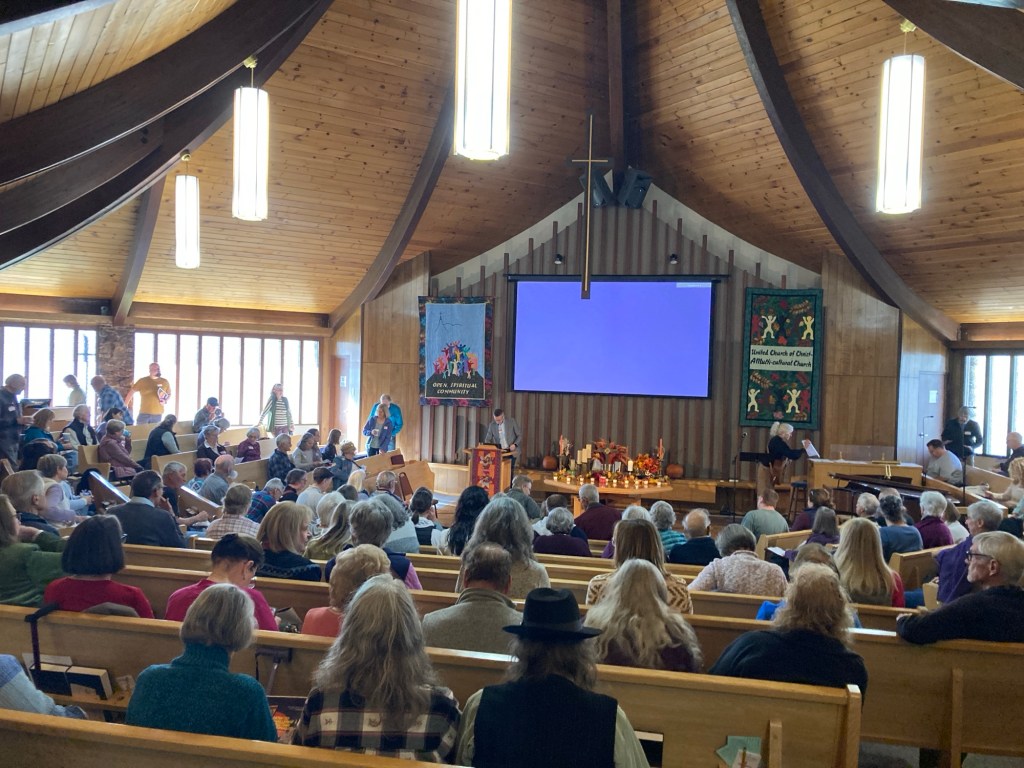
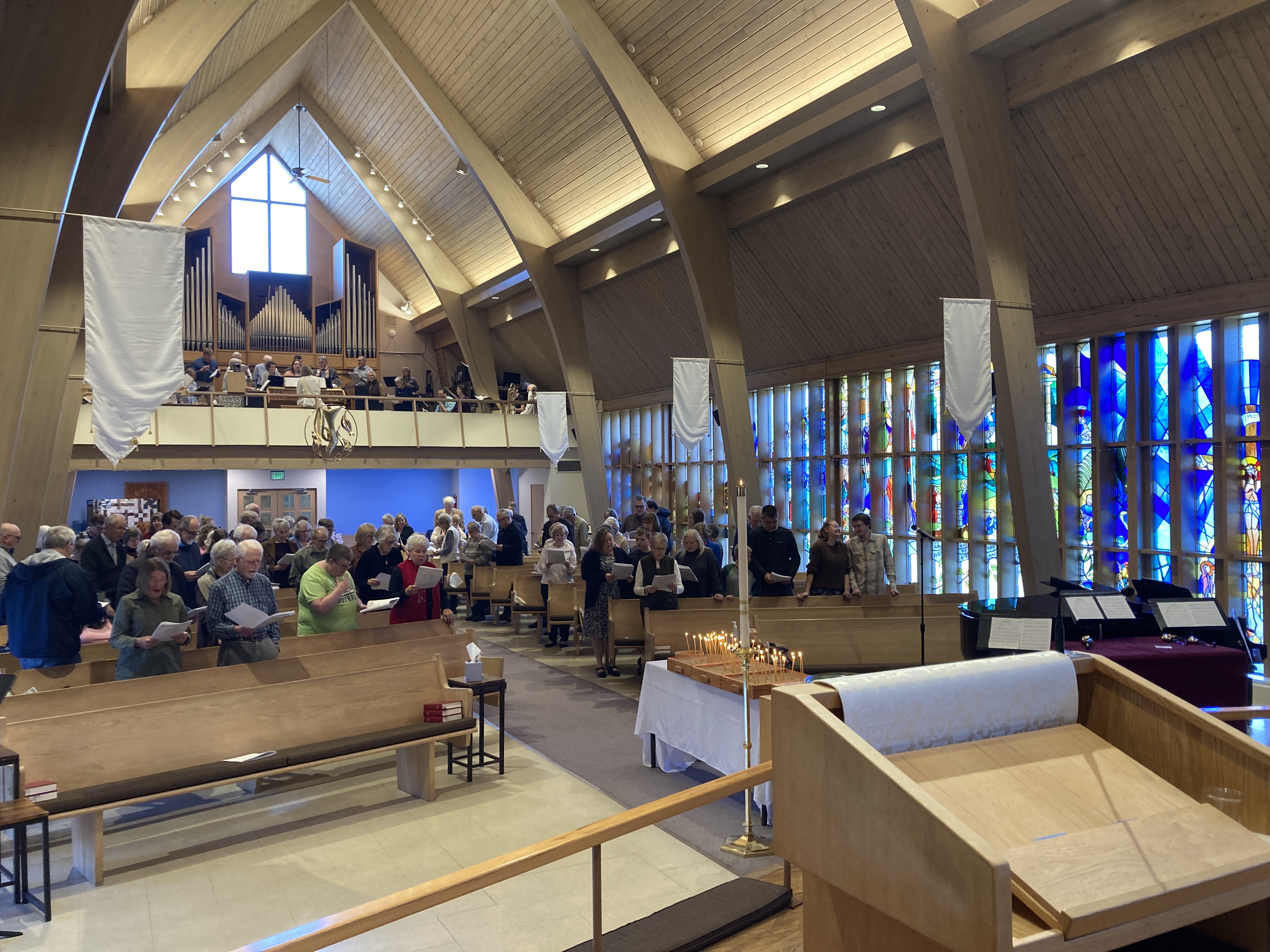
Opening Worship at First Lutheran, Pasco

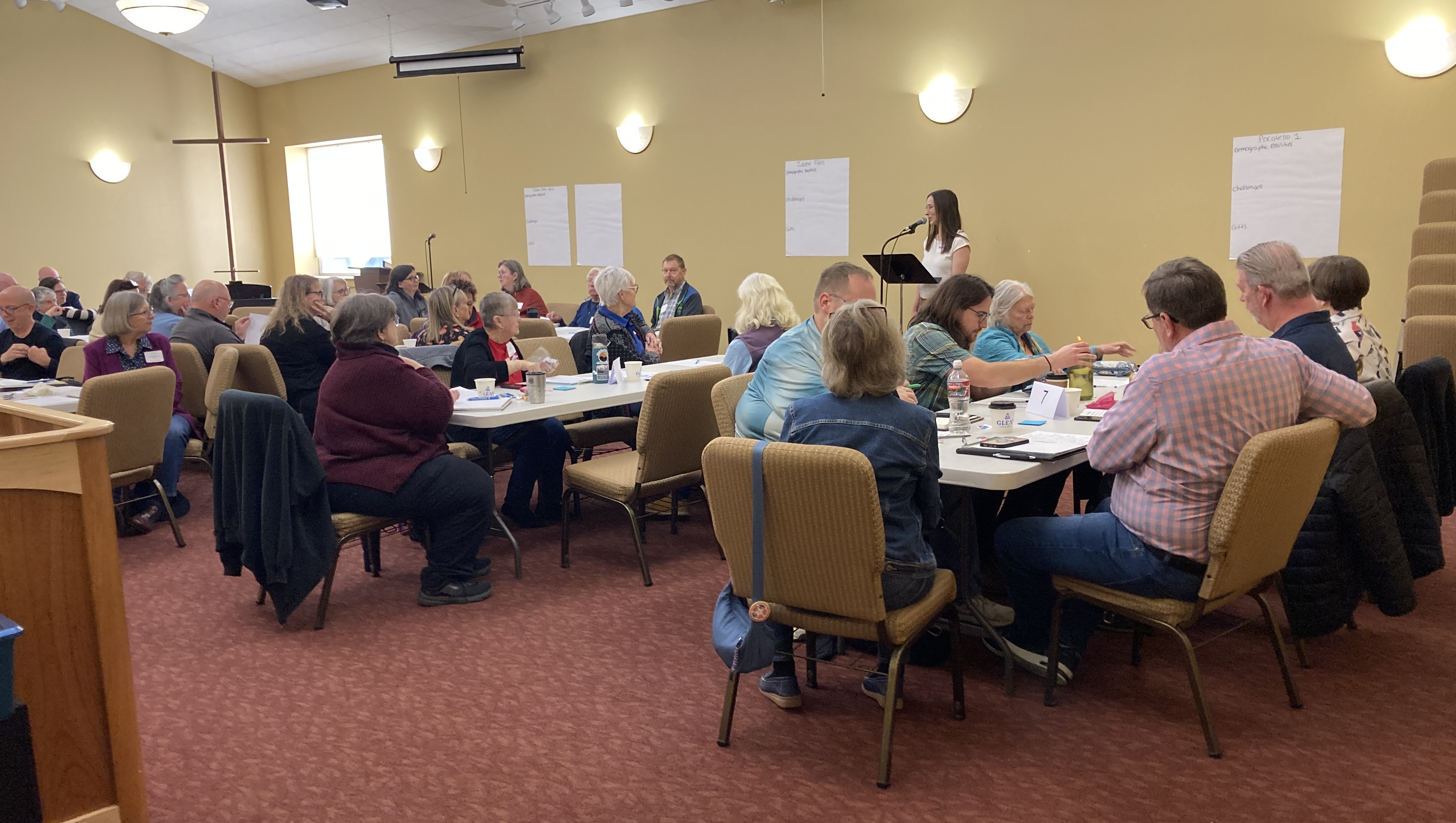
The synod’s cluster deans stayed an extra night and we met at Lord of Life, Kennewick, with the synod’s Eco-faith Action Network meeting down the hall. After hearing updates from the various clusters, we spend a lot of time laying the groundwork for our 2026 in-person Synod Assembly at First Lutheran in Kennewick.

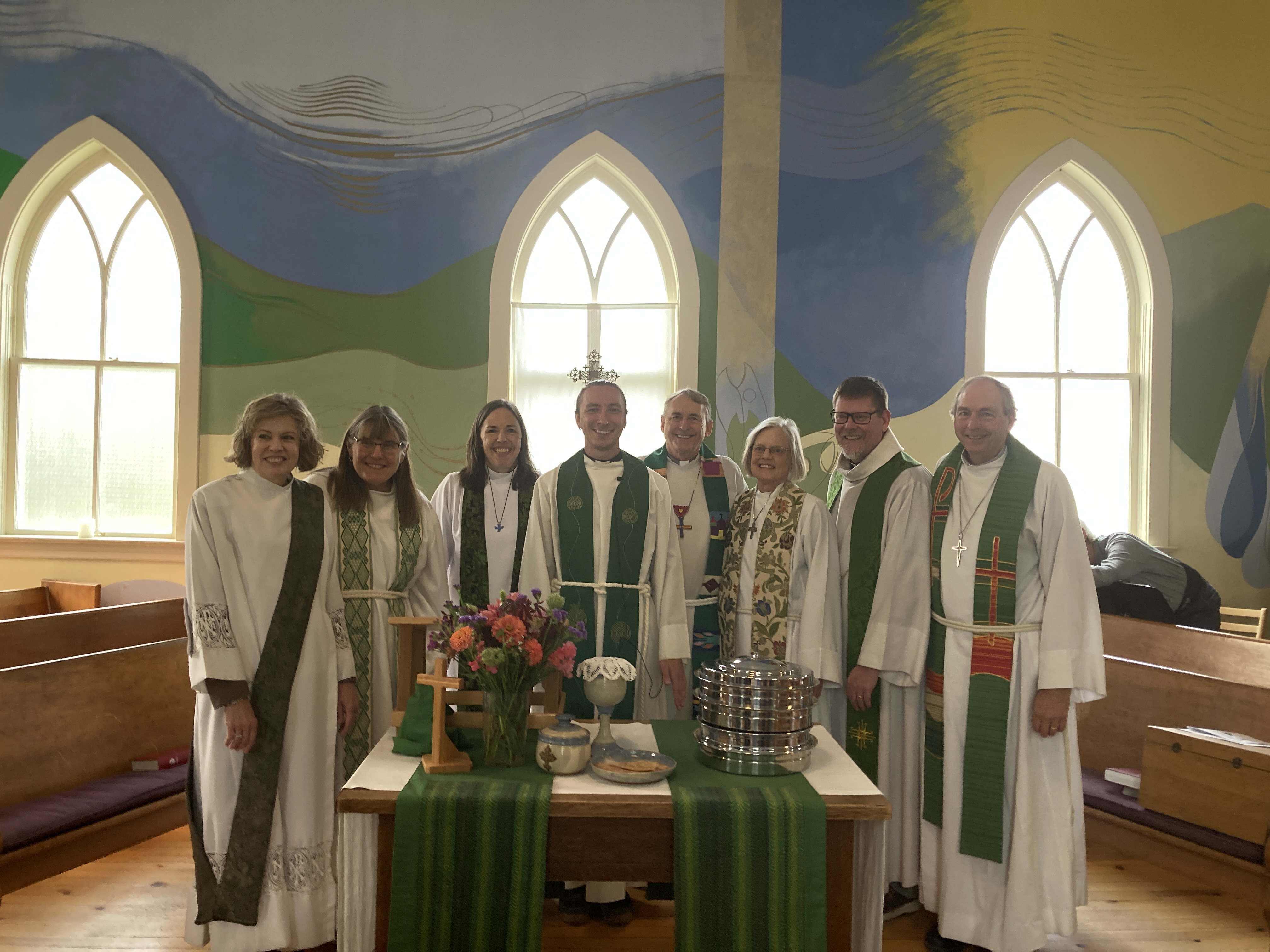
Deans and Staff

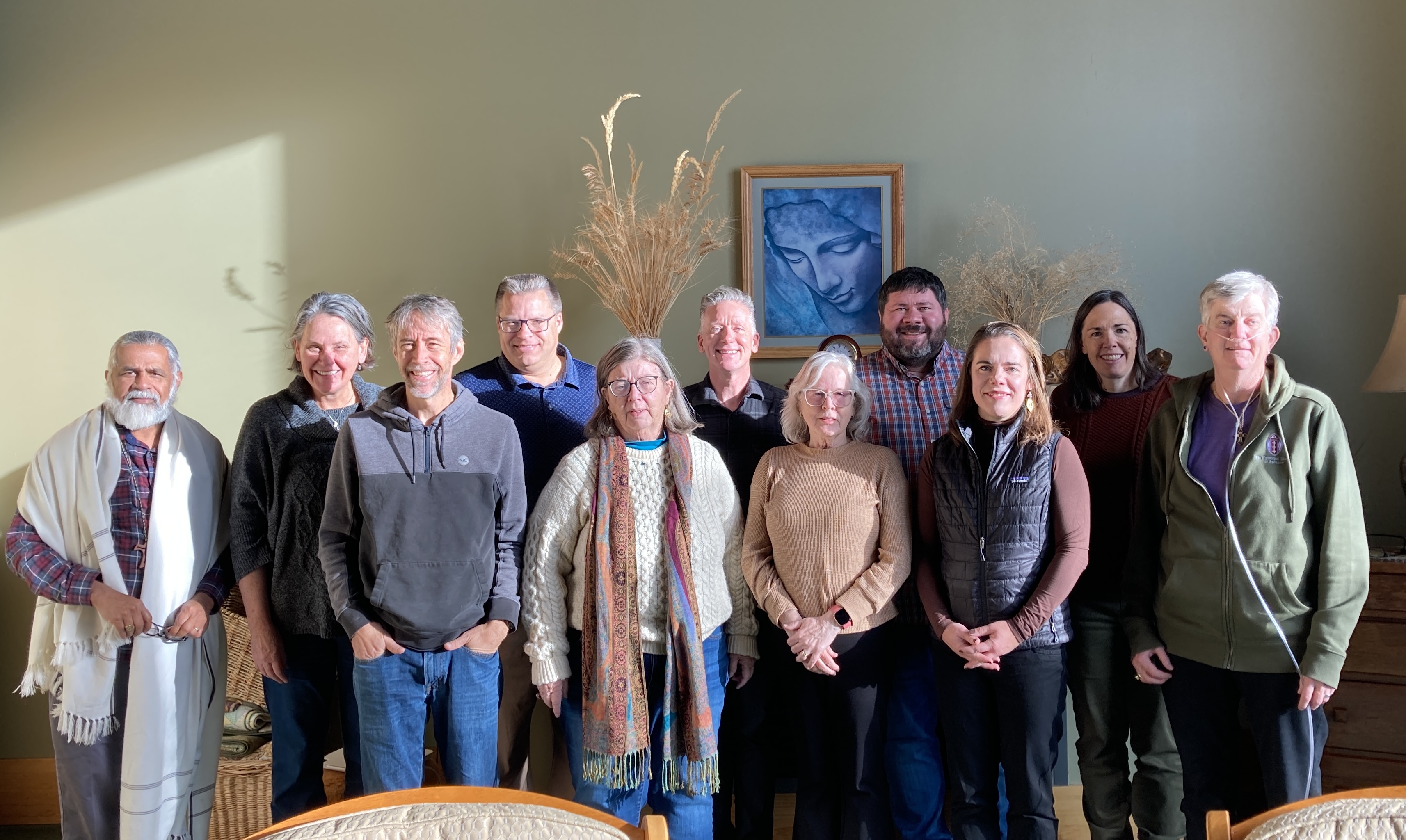
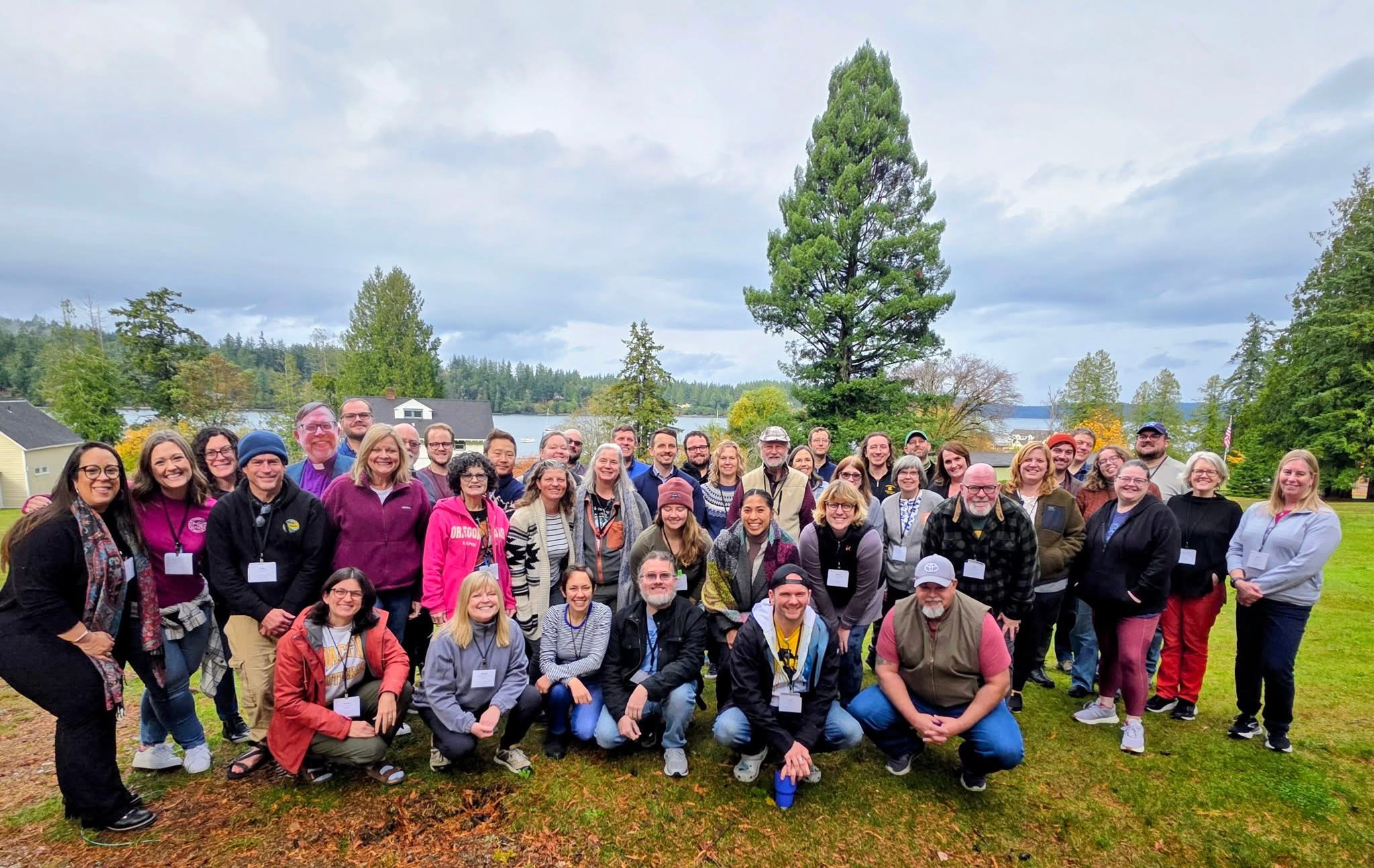
DEM Pastor Liv Larson Andrews drove us to Leavenworth for dinner and then we went on to the Grunewald Guild. Friday was a day to catch up on email, walk, and rest and do some laundry and then participants and leaders for our Preach, Pray, Preside, and Polity retreat started arriving. Liv put together a great group of teachers and the lay people showed up ready to learn. The Grunewald Guild was a great setting with amazing food!

Pastor Paul Hoffman leads a session on preaching

I preached and presided on Sunday with Grace Lutheran and St James Episcopal in Cashmere, WA. Pastor Rob Gohl serves both congregations but was at diocesan convention. The two congregations worship together every Sunday, alternating buildings.

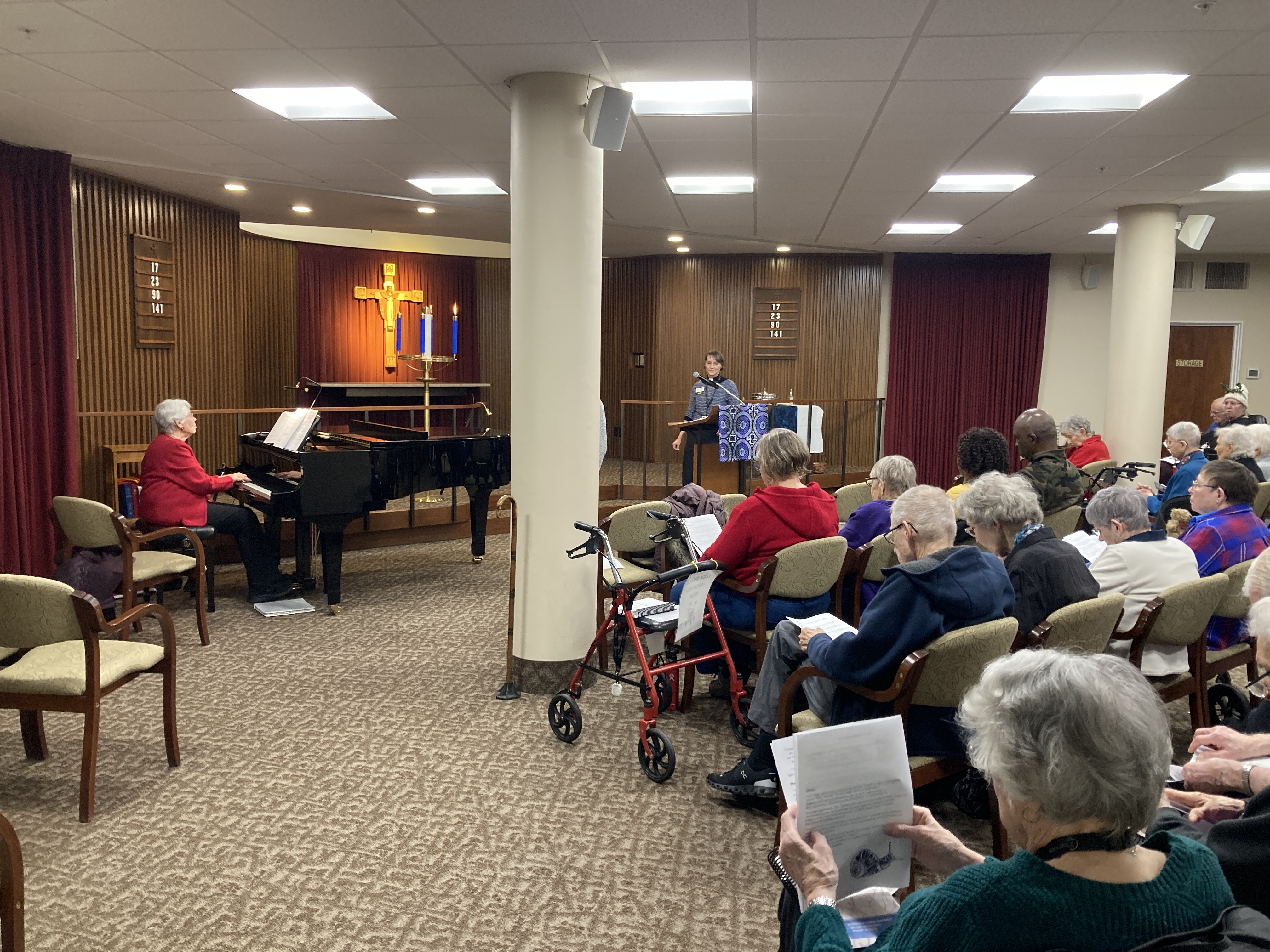
After Liv finished up at the Guild, she picked me up in Cashmere and we headed to Spokane, home for her, and one night more for me. On Monday afternoon we had a gathering for retired pastors and deacons and spouses at Riverview Retirement Community in Spokane. It was a simple time of catching up with one another and hearing some updates from me about the synod and the larger ELCA. I flew back to Boise Monday evening. On Sunday and Monday, I started getting texts about an ICE raid in Wilder, Idaho.

Posted in NWIM Synod | Tagged , , | Leave a comment

Response to Wilder, Idaho

October 20, 2025

This action, as I understand, was FBI led and ICE supported. I will keep my message brief to insure there is, to my knowledge, no misinformation. 

The action created chaos and harm regardless of what the original scope of the action was intended to be (see KTVB and Statesman coverage for context and more): children targeted for the color of their skin and social location swept up and zip tied and terrified for their life. PODER and ACLU of Idaho are on the scene working to create safe conditions, to advocate for individuals’ legal rights, and try to relieve the trauma. Many partners in the advocacy and faith community are working on the ground and behind the scenes. 

For the moment:

  • Pray for those in harms ways, for law enforcement, and for constructive dialogue with the legal authorities, local community, and advocates.
  • Call on our state elected leaders to have compassion towards immigrants. 
  • Be critical thinkers of the varying messaging that is coming out and the misinformation among it and always seek to understand and amplify the voice of those people with less power in the situation. 
  • Strategize alongside immigrants themselves; practice solidarity.
  • Donate to the Idaho Families Assistance Fund to be used to help families with any needs associated with immigration related separation.
  • ELCA Lutherans reading this might revisit our ELCA Social Message on Immigration.
  • Additional opportunities for public witness and support may be needed in the coming days. We will do our best to keep you posted.

Remember:

Love insists on the dignity of every human being.

Love insists on justice for the marginalized and oppressed.

Love insists that the church must reflect God’s diverse life-giving community.

Love insists that we listen, speak, and act with respect, even in disagreement.

Love insists on hope, trusting that God’s kingdom of justice and peace will prevail.

Bishop Meggan Manlove

Posted in NWIM Synod, Reflections | Tagged , , , , | Leave a comment

Fall Convocation Sermon

Fall Convocation– Oct. 15, 2025 – Closing Worship

Holiday Inn, Richland on the River

Genesis 32:22-31, Luke 18:1-8

In the late 1950s, my dad and three other guys bought a piece of property west of Custer, South Dakota. It was all my dad’s idea, and he was the one with the relationship with previous owner and widow Laura Behrens. My father had come to Lutheranism in his 20s through men he met while working at the downtown YMCA in St. Paul, MN. The Christianity of his childhood he would later call a fundamentalism of sorts. In leaving the faith of us childhood, he also separated from family. Later he separated from his first wife and married my mom. Maybe life for all of us is moving and growing within changing relationships, including our relationship with God, but that was certainly true for my father. We moved to that piece of land west of Custer when I was four years old, in 1980. 

And so it is that every time I turned onto the mile-driveway leading up to our home, I read these words on the mounted wooden sign: Peniel Valley Ranch, named after our story from Genesis. I recently remarked to my mom that it was so good of dad to name a place where others could come and wrestle with their faith, wrestle with God, see the face of God, and my mom said, “It was really mostly about your dad’s wrestling.” I know she is right. 

And yet, these last few days, as Dr. Bateza has talked so much about relationships, I couldn’t help but reflect on the gift it was to me to grow up knowing that wrestling with God was an acceptable part of the life of faith, of following Jesus. Similar but not identical to lament, when I have gone through difficult times, with relationships: familial, professional, and personal. I’m not a trickster like Jacob. My shadow side is that I am fiercely loyal, until I’m not (in personal relationships). This has caused plenty of wrestling with God. Through everything, I never felt like God abandoned me. I held on and wrestled, which usually manifested as waking up to my own tears as my subconscious and the divine worked out something. I learned only in my mid-30s that my exvangelical friends were never given such permission, and neither had my dad as he was growing up.

You know this story well, preaching it or teaching it to adults or confirmation students, but let’s still do some review. We encounter Jacob when he is terribly afraid that his twin brother Esau will kill him for taking his birthright.  He has not heard back from his messengers; he does not know if Esau has accepted his gifts. He does not know if his servants are even still alive. And yet he sends his wives and children into the path of Esau and his riders — without him. 

Jacob has evaded his greatest fear up to that point. The danger is across the water from him. He is safe, for a while; or so he thinks. But then, a person or personage he does not know (or does not recognize) grapples him to the ground. Jacob responds by fighting back and they wrestle for a long time. 

There was a stalemate. And then, the wrestler did something to Jacob’s hip and put it out of joint. That part has always been a mystery to me. Is God, who has been named by now, taking a cheap shot? Surely not. Jacob himself demands a blessing. The wrestler asks Jacob’s name and then gives him a new name, “Israel.” Finally, as dawn is breaking on the Jabok Riverbank, God bestows the blessing itself.  That is only the first part of the story, because Jacob does go on to meet Esau face-to-face.  

God has and may encounter people in conflictual times by taking the very form of the anticipated difficulty—a broken relationship, a hard transition, a new experience we fear. Think of Moses arguing on Mount Sinai with God before going down to deal with the Israelites or picture Jesus in the Garden of Gethsemane praying in agony even as he anticipates his death.  

If we go through such a time with God, we experience a gracious rehearsal for the actual circumstance. In simplistic words, we practice. But of course, we can turn our back on God. To refuse to engage with God in that struggling moment denies oneself a God-given resource. But going through it with God before we go through it with others can be a blessing. 

Jacob had a very real fear of his Brother Esau’s anger. Jacob’s deliverance from God does not resolve the conflict with Esau. Jacob still must face that. But it must have been different for him having already wrestled with God.  In other words, Jacob was not just delivered from something. Deliverance, a new name, and a blessing are not ends in themselves. Jacob was also delivered for something—a new relationship with a human being.

Jacob’s later confrontation with Esau mirrors the encounter with God. Jacob testifies that seeing Esau’s face is like seeing God’s face. The opposite might be true in hindsight: Seeing God’s face is like seeing Esau’s face. What Jacob had expected from Esau was hostility; he got graciousness. What Jacob might have expected from God was graciousness. He did get that but only on the far side of the attack.

Even after his encounter with Esau, Jacob’s wrestling match is still with him. I think of Jacob’s limp as like the seal on our foreheads in the Sacrament of Baptism. We have died with Christ. That should forever change us. After my father died in December 2020, a friend whose own mom had died several years before wrote, “The hole is still there, but healing comes.” I think of what we heard yesterday between the difference between grief and melancholy.  If you truly die with Christ in the waters of baptism, of course you are changed. You have your own limp, your own mark. You also have the freedom, forgiveness, and new life that are promised in baptism. And of course, You too have a new name, “child of God.”

In this moment, as we have been reflecting on together the past few days, we read and hear so much about our disagreements, our polarization, our ongoing resentments. Many of you are not just reading about polarization but living it in your various contexts. I have yet to see the signage or testimony or social media post from Christians admitting to wrestling with God. I think it’s likely we are wrestling with God, wrestling with our faith, but we’re too afraid to admit it to one another. It’s not something we talk about, even though it is quite natural. But you do that wrestling with one who has already been marked with the cross of Christ and sealed by the Holy Spirit.

I love presiding at installations and ordinations and it has been an honor to be a symbol of Christian unity at three bishop’s installations in the last month. And yet, I find myself leaning on the promises made in holy baptism more than ever now.  The renunciations of evil, the marks of discipleship named so clearly, and the promises made by God and the assembly are all gifts for the baptized, for you. Through water and the word, you were trusted by God and entrusted with God’s own love and mercy. You were sealed by the Holy Spirit, the same Spirit that is with you still. It is that same Spirit that frees you today to see God in the face of the other: stranger, friend, neighbor. It’s that same Spirit that frees you today to see God in your own face—beloved child of God. 

Posted in NWIM Synod, Sermons | Tagged , , , , | Leave a comment

Montana Bishop’s Installation – Sept. 20

This past weekend, the Region 1 bishops and the bishop of Western ND traveled to Billings, MT for the installation of the Montana Synod’s new bishop: Bishop Ben Quanbeck. Several former Montana Synod bishops were present for the occasion and the Episcopal bishop attended as well.

American Lutheran in Billings
Bishop Eaton and Bishop Quanbeck in the center

I spent three summers working at Camp Christikon, north of Yellowstone National Park, on the Bolder River near the Absorka Beartooth Wilderness. In 1995, after finishing my Mat-term oversees, I spent 24 hours with my parents in Rochester, MN (they were interim camp directors at Good Earth Village that year) before joining a caravan of four cars heading from the Midwest to Montana. Heather Wigdhal, the new Executive Director of Christikon, was in that caravan.

Joe, one of Ben’s cousins, and I worked on staff together in 1998. Pastor Ken and I worked at camp at different times but served together in the Boise area for over eight years.

The Region 1 bishops Zoom every Wednesday. I always am grateful to be with them in person!

Dinner Friday night with Bp Eaton

Posted in NWIM Synod | Leave a comment

Bishop’s Report for NWIM Synod Council – Sept. 2025

For as in one body we have many members and not all the members have the same function, so we, who are many, are one body in Christ, and individually we are members one of another. Romans 12:4-5 (NRSVue)

Vice President Lisa leading us in discussion at All Saints Lutheran, Spokane

Pastor:

Since our spring meeting at Lutherhaven, I have visited the following congregations for Sunday worship or an ordination: Faith, Kamiah (at Community Presbyterian Church); St. John’s, American Falls; Trinity, Pullman; Zion, Deer Park; Immanuel, Boise; First, Ellensburg; Prince of Peace, Spokane; Grace, Mountain Home; St. Paul, Ontario; Christ, Walla Walla-Installation; Christ the King, Goldendale; and Grace Community, Potlach. Following the Council meeting I’ll visit Troy Lutheran and preside at UCC Pastor Ian McPherson’s rite of welcome at Salem, Spokane. I also visited our newest congregation, Christ the King, Milton Freewater on my trip home from the Walla Walla installation. 

I have no idea under which of these headings Synod Assembly belongs, but we had a wonderful online assembly. Yes, it’s hard not to be in person every year, but the feedback I have received about who could participate because it was online and just one day, makes me grateful for our pivot. Pastor Phil pulled together a gifted team and followed through on so many details. Our synod worship team grounded us beautifully throughout the day.

Our synod currently has eight individuals somewhere in the ELCA Candidacy process with 2-4 more who could begin the process/Entrance at our February meeting!

Pastor Liv is pulling together our fall Preach, Pray, Preside, (and Polity) Retreat in October and reports that we’ll have around 12 participants. We hope to have a similar retreat in the spring in Southern Idaho.

Servant: 

At our June Region 1 Bishops’ Retreat, anticipating two new bishops begin to serve in our region, we adjusted our assignments. My last PLU board meeting will be in October and this fall I will begin serving as the Region 1 liaison bishop to ELCA Church Council. I commissioned the summer staffs at Camp Lutherhaven and Luther Heights Bible Camp. I led devotions for Lutherhaven’s Wild Women Retreat at Shoshone Mountain Retreat. I attended ELCA Churchwide Assembly with the other six voting members from our synod—what a wonderful group of people we sent! I highlighted actions from CWA in my August newsletter column. 

Symbol of our unity in Christ’s church:

I attended and preached at Montana’s Synod Assembly and attended the Southwestern WA Synod Assembly. I’ll return to both synods this fall for bishop installations. I will travel to Minneapolis in October for ELCA Church Council, Installation of Bishop Curry, and Conference of Bishops. 

I recruited Lutherhaven’s Outdoor Ed Coordinator Josh Kramer (a Concordia, Moorhead alum who worked at Camp Metigoshe in ND) to be our synod’s ELCA Young Adult Network liaison. He will travel to Chicago in October for an orientation. I worked with NWIM’s ELCA World Hunger coordinator Pastor Ethan Bergman to recruit Diedre Jacobson (St. Mark’s), Ryan Lawrence (Cameron Emanuel), and Nick Tinker (King of Glory) to attend the ELCA World Hunger Gathering in Columbus, OH Sept. 18-21 (this gathering happens every 18 months).

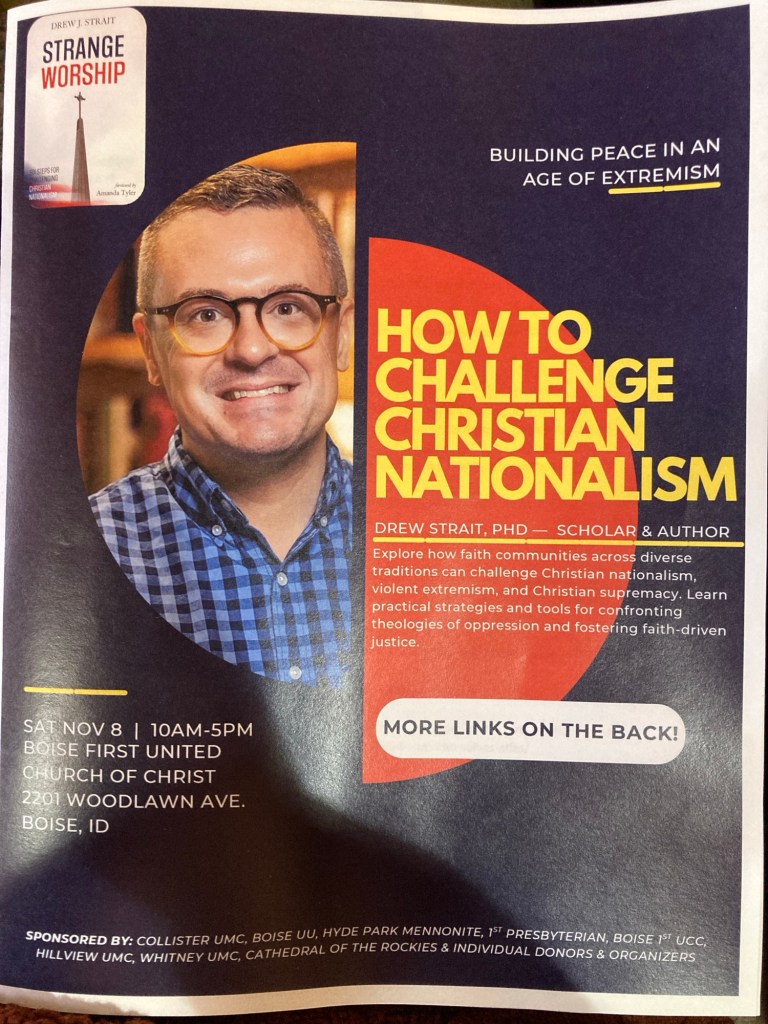
Learn about our ecumenical work thanks to the CaSTLE grant later in this report. I also continue to meet with ecumenical leaders both up north (those covering N. Idaho and Eastern WA) and down south (covering S. Idaho and Oregon). I’ll be part of Boise Pride’s interfaith worship in September. In November, Mennonite Drew Straight (Liv’s friend) will be in Boise speaking about his book Strange Worship: Six Steps for Challenging Christian Nationalism. I worked with Spokane Alliance and the Spokane Episcopal Diocese to bring Foundations of Community Organizing Training to North Idaho Oct. 3-4.

CEO:

Thanks to everyone who helped prepare for Cathy Steiner’s sabbatical and gave the synod staff grace when we missed something. Thanks to Diana Abken for filling in. We have such an amazing staff. I chose the Romans 12 text because it is our theme verse for the United at the Font events, it’s a text I am leaning on during these hard times (we can each do and be something to heal the world now and it can look different for each person and even each community), and I think we truly live out these verses as a small and lean synod staff. I am so grateful for the gifts Cathy, Phil, and Liv bring to this ministry. Eugene Peterson translates a portion in The Message this way: So, since we find ourselves fashioned into all these excellently formed and marvelously functioning parts in Christ’s body, let’s just go ahead and be what we were made to be, without enviously or pridefully comparing ourselves with each other, or trying to be something we aren’t.

Each month I convene a group from across Region One to be a sounding board for Rudy Vazquez, our new Financial Services Office coordinator (the group includes Cathy and former Region 1 Coordinator retired Pastor Mark Nelson). 

This summer we finally received and distributed gifts to ELCA recipients from Faith, Toppenish’s closing:

$15,000 to the NWIM Synod as an undesignated gift (Ex Committee followed our gift policy and designated 10% to churchwide $1500.00, 10% to Campus Ministry Endowment $1500.00, 10K to Bequest, and 2000.00 as a gift).

$15,000 to ELCA World Hunger

$15,000 to Lutheran Disaster Relief

$15,000 to Tumaini School in the Ulanga Kilombero Diocese (NWIM Synod Global Mission team designated: $5000 to scholarships, $5000 to flood relief, and $5000 set aside for hopes of the future solar kitchen at the school)

$15,000 to the NWIM Synod Fund for Leaders

$15,000 to NWIM’s WELCA chapter

$15,000 to Katie’s Fund (ministry of the national WELCA org)

$10,000 to the PLU Archives Department (holds all archives for Region One)

The Faith, Toppenish remnant still has some local distributions to make, and they gave a generous gift already to their neighbors at Our Saviour’s Lutheran, Sunnyside.

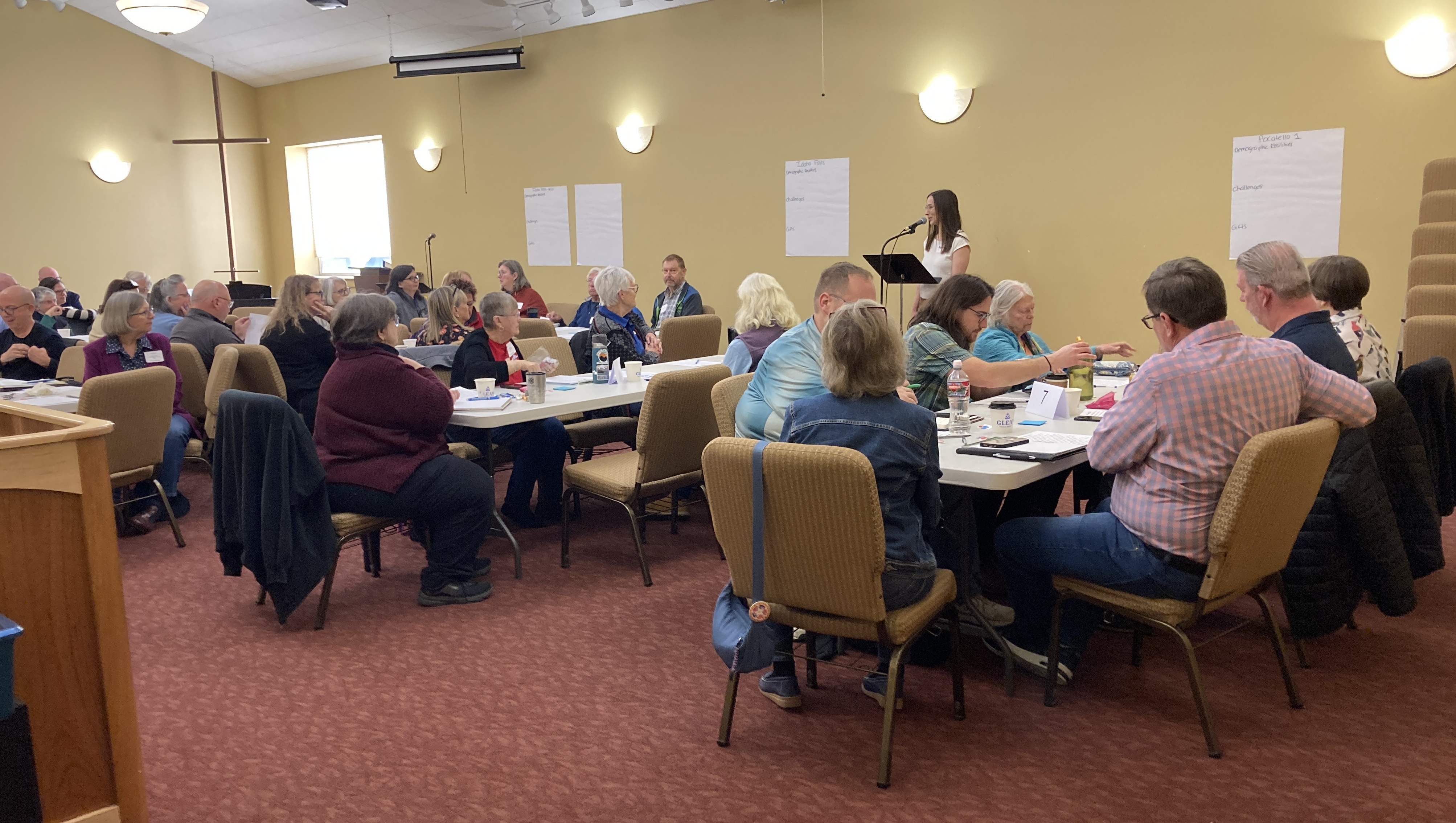
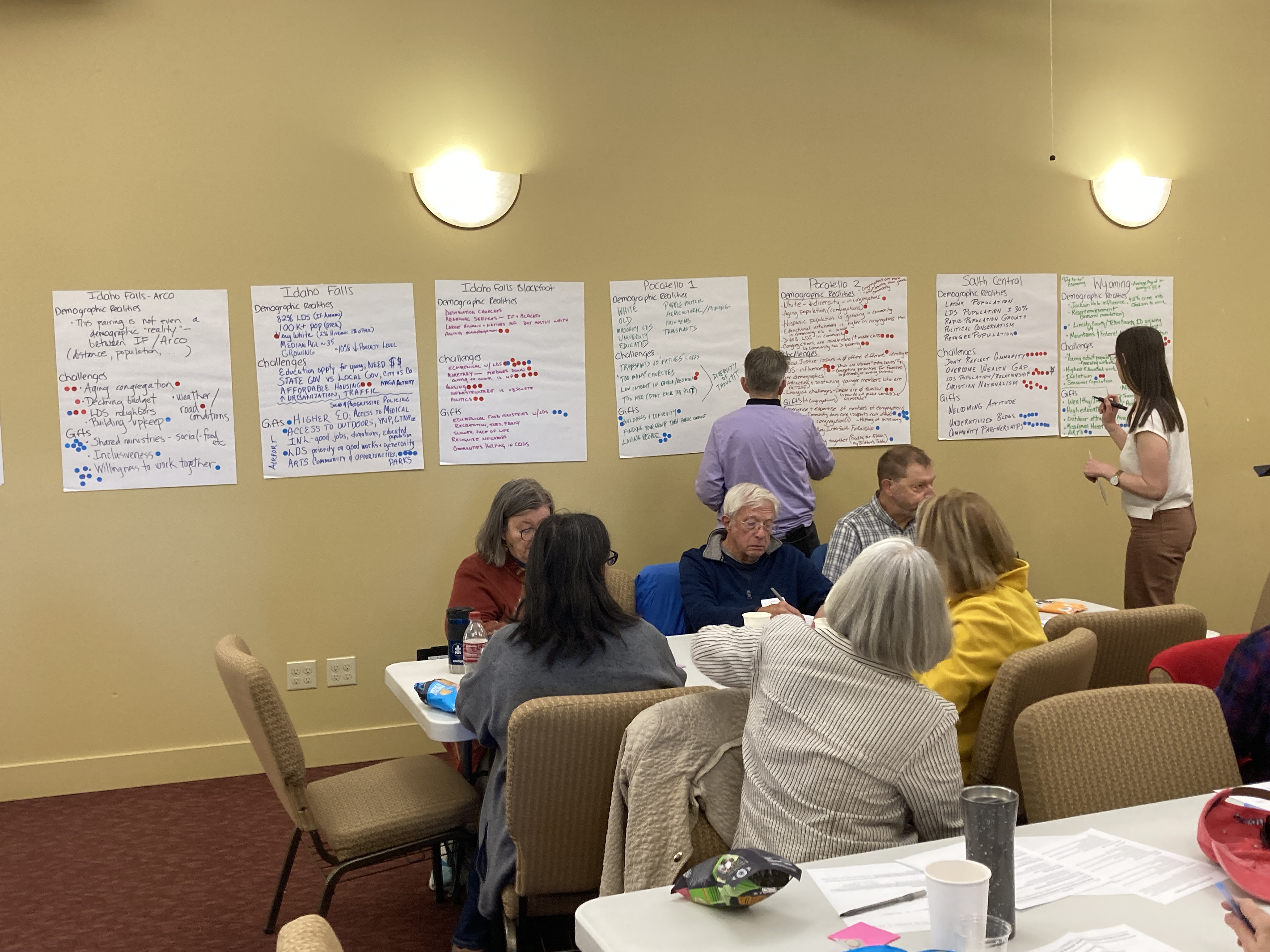
In late April I submitted a grant application to Wartburg Seminary’s CaSTLE Project for equipping rural and small-town ministries. We were one of two synods who applied for and received grant funds in the ecumenical experiments category. With our $20,000 we are holding three ecumenical events for church leaders this fall: Moses Lake, Clarkston, and Pocatello. We will also have a retreat in December for middle judicatory leaders from five denominations so we can better understand each other’s theologies and polities.

Posted in NWIM Synod | Tagged , , , , | Leave a comment

Invitation to Extended Service – Salem

Sept. 14, 2025

Salem Lutheran – Invitation to Extended Service

Pastor Ian McPherson – United Church of Christ

Matthew 22:34-46

I am so grateful to be with you today Salem Lutheran. Human beings have always needed joy and real celebration and our need for such moments is heightened now. What’s more, I know that this day of celebrating this next chapter with your new pastor comes after a season of good and holy discernment. 

Last Wednesday and Thursday I was in Boise with an ecumenical group of faith leaders for the Interfaith Countering Hate Summit hosted by Interfaith Alliance and Western States Center.Whether we call today’s service the fake installation or “Invitation to Extended Service,” what is clearer to me than ever is that our ecumenical and interfaith relationships are going to become increasingly important in the years ahead as we continue to proclaim and work collectively for God’s shalom. 

I am delighted that Pastor McPherson selected these familiar verses from Matthew for today, because they mirror the ethos of Salem Lutheran in West Central and they inform the mutual ministry that a congregation and pastor share.

Matthew’s gospel submerges us in a series of encounters Jesus has with religious leaders who oppose him. First, he is asked about paying taxes to the Roman Emperor, then comes the question of whether or not the dead are resurrected, and next we overhear the question about the greatest commandment. 

Jesus answers by quoting Deut. 6:5, the Shema of Israel. The commandment to love the Lord with all one’s heart, soul, and might is prefaced by “Hear, O Israel: The Lord is our God. The Lord alone.” The command to love God is a command that presumes God’s love of Israel. Such a love is no vague generality but rather is manifest in the concrete and daily care of God for God’s people. We know what it means to love God only because of God’s love for us through the law and the prophets, Stanley Hauerwas wisely writes. This love can be harsh and dreadful, because to be loved by God is to be forced to know ourselves truthfully. 

Jesus continues by quoting Lev. 19:18, that we are to love our neighbor as ourselves. On these two commandments, Jesus tells the lawyer, hang all the law and the prophets. This is the same Jesus who told us in the Sermon on the Mount that he came not to abolish the law and prophets and that not a letter of the law would pass away until all is accomplished. 

If we have any questions about what neighbor love might look like, or if we want to write our own edition, we can look back at the same chapter of Leviticus where we are commanded not to steal, deal falsely, lie, swear falsely by God’s name, defraud, revile the deaf, put a stumbling block before the blind, or render unjust judgment. 

Now here is a crucial layer of the text that I’m not sure I heard growing up in my Lutheran church in Western South Dakota but I am confident has been proclaimed from this pulpit or shared in Bible Studies at Salem: to learn to love our neighbor as ourselves, means me must learn to love ourselves as God has loved us (1 John 4:11). To learn to love ourselves truthfully is not easy because we most often desire to love ourselves on our own terms. The challenge that Jesus presents by joining these commandments it to learn that one is loved by God so that one is thus able to love God and others.

I think I finally understood the relationship between these loves when I first read Martin Luther’s Freedom of a Christian, in which he declares, “The Christian is a completely free lord of all, subject to none. The Christian is a completely dutiful servant of all, subject to all (Freedom, 10). For Luther, everything begins with God’s actions towards human beings. We are loved. How then can we not spontaneously share that love with others?

I know that love is not just an intellectual exercise in this community of faith. Pastor Ian, you have probably kept learning, from the interview through today and into to tomorrow, that this is a space where love is truly embodied—from the Lord’s Supper to soup and bread brought to those hurting, putting your bodies in harms way, splashing in the font to remember your own belovedness, and the list goes on.

I’ll be honest, the reality of God’s love for me is something I have to keep learning and leaning into. Perhaps because I grew up in the forest and have spent hours in the out of doors, it was the stuff of faith that came with physicality that resonated with me most. I remain eternally grateful that the triune God we worship somehow understood that we human beings would need promises paired with simple water, bread, and wine to be reminded of Gods’ abundant love for us. The language we hear at the font and that we will hear today at the Lord’s Supper is pure gift and God’s love for creation. That love received, then is shared when we leave this place.

Salem Lutheran in West Central has been, is, and will be an incubator for love. Through sacred friendships, hearing the old old story of God’s love for you and all of creation, in the love feast that is the Lord’s Supper, you receive God’s love and are sent forth to love. You are freed from sin and brokenness and death and freed for love. And oh how desperately our world needs that love right now, as events each and every week remind us.

Any reflection on these two interconnected commandments Jesus points to is a reminder that we simply cannot follow Jesus on our own. To love well is really hard. To know we are loved can also be hard. We need the Holy Spirit and we need that Spirit moving through local expressions of the body of Christ, a congregation.

Today we rejoice that new mutual ministry between Pastor Ian McPherson and the people of Salem Lutheran is beginning. Congregations, like people can have multiple callings throughout their existence. As the world, nation, Spokane, the West Central neighborhood have changed, so have specific callings changed here, as some of your long-time members can recall. One of your tasks together is to faithfully carry out Word and Sacrament ministry so each of you is strengthened and nourished for ministry in your daily lives. The ELCA model constitution for congregations describes this in the purpose section: “Nurture its members in the Word of God so as to grow in faith and hope and love, to see daily life as the primary setting for the exercise of their Christian calling, and to use the gifts of the Spirit for their life together and for their calling in the world.”

You will also discern what your collective love is calling you into here and now for your community and the world. Again the constitution states that you will “Serve in response to God’s love to meet human needs, caring for the sick and the aged, advocating dignity, justice, and equity for all people, working for peace and reconciliation among the nations, caring for the marginalized, embracing and welcoming racially and ethnically diverse populations, and standing in solidarity with the poor and oppressed and committing itself to their needs.” 

Thank you for your ministry for so many years in this neighborhood and thank you for the mutual ministry you have embarked on for the next chapter. As we will now sing, to God be the glory.

Posted in Uncategorized | Tagged , , , , | Leave a comment

Holy Cross Sunday at Troy Lutheran – Sept. 14

John 3:13-17, 1 Cor. 1:18-24

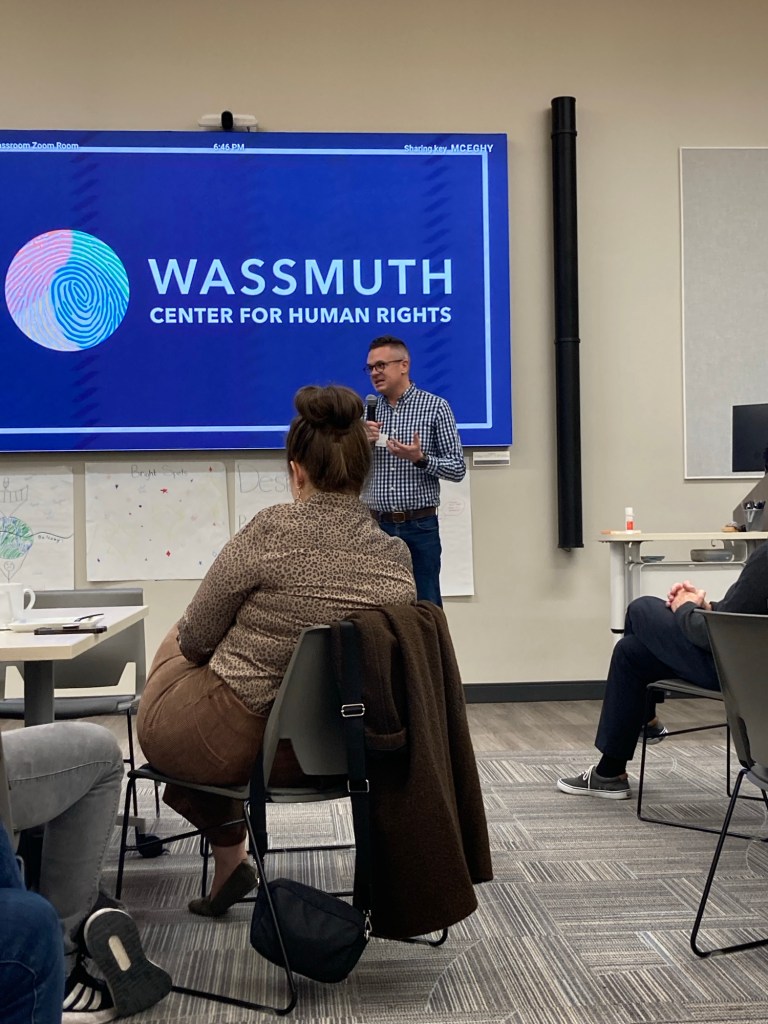
A few weeks ago, I attended an event at the Wassmuth Center for Human Rights in Boise. The Wassmuth Center is named after Bill Wassmuth, a priest at St. Pius X Catholic Church in Coeur d’Alene. In the 1980s he found himself confronted with the misuse of theology for hateful aims by white supremacists in northern Idaho. He lived through a vindictive bombing of his home and built coalitions to battle the Aryan Nations as a chair of the Kootenai County Task Force on Human Relations. 

The presenter at the Wassmuth Center was a retired librarian and junior high English teacher who talked about literature being a mirror, a window, or a sliding door, using the seminal 1990 essay by Rudine Sims Bishop. Has a book or movie every transported you to another world, let you walk in the shoes of someone whose life is so different from your own? That’s a window. When the lighting is right, a window can become a mirror. Have you ever read a book or article and felt so seen, like you could see so much of your own story in it? A mirror, right? Some windows can become sliding glass doors, where readers just have to walk through in their imagination to become part of whatever world has been created.

On the best days, the clearest days, I think the cross at the center of our faith is both a mirror and window. Let’s start with where we all are. Take a few moments and consider what the cross means to you personally? Pause. And what do you think it means to others, those in this sanctuary and those a world away? Pause.

Before exploring further what the cross means to us and our faith, I find it helpful to rule out what the cross is not. One of my favorite scholars lists several of the most common and harmful false crosses: “The cross of Constantine for 1,700 years justified war in the name of God.” Other false crosses she lists are the the cross of “‘bear your suffering meekly, like a lamb’ which drives abused women and others back into the hands of their abusers,” and the “medieval cross that retains Jesus nailed to it, forever dead or dying.” (Cynthia Moe-Lobeda, “Being Church as, in, and against White Privilege”).

What then is the true cross, the life-giving cross, that we celebrate today? As John 3:14–15 insists, abundant life comes to believers this way: “Just as Moses lifted up the serpent in the wilderness, so must the Son of Man be lifted up.” 

In Numbers 21, poisonous serpents have been let loose in the camp of Israel as punishment for the people’s grumbling and unfaithfulness. The story tells us that the serpents bite the Israelites and many people die. Desperate, the people repent and ask Moses to talk to God on their behalf. Moses does so, and God commands Moses to raise up a bronze serpent for the people to look at. When they gaze upon the lifted serpent, the people who were poisoned live.

The word translated as “lift up” also means “exalt.” We are asked to hold these two meanings together simultaneously. As the serpent in the wilderness was lifted up, to the Son of Man must be lifted up on the cross. The double-meaning implies that physical act of lifting up is also a moment of exaltation. That is, it is in the crucifixion, resurrection, and ascension that Jesus is exalted. The God we worship shows saving power where we least expect, in the form of power’s opposite—a cross. 

When I see the cross, I am reminded that Christ is present in our brokenness and bondage to evil and draws forth power that we did not know we had. A favorite professor [Moe-Lobeda] writes, “This truth enables us to see the structural brutality of which we are a part without being destroyed by that knowledge. . . . In Martin Luther’s own words, when reality seems ‘distorted and sinful, and seemingly God-forsaken . . . a theologian of the cross is not afraid to recognize reality for what it is.’”

What does any of this mean in Troy, Idaho in 2025 after yet another week of violence in our nation and across the globe? I think sometimes we forget just how seemingly absurd the cross is in our culture. When Jesus walked on earth, the cross was an instrument of terror, torture, and death wielded by imperial power. It was used against all those who challenged the dominance and supremacy of the Roman Empire. In his love for the world, the whole world, including each of you, Jesus endured suffering and death on a cross.

This makes the cross a symbol of nonviolent resistance. Followers of Jesus respond to Jesus’ love by trusting in the non-violent love of God to work all things for good (even terrible things like suffering and death!). This is how God heals the world, and it’s the paradigm for how we work with God in the renewal of all things. When we gather for the Lord’s Supper today and eat the bread of life and the cup of salvation, we remember Jesus’ broken body and his blood spilled out for the life of the world, as we say during the distribution of Communion, “For you.”

The symbol of the cross and the name of Jesus Christ have been co-opted over and over throughout the centuries—Constantine, the Crusades, the removal of Indigenous peoples in this country under the guise of spread the gospel, and now in the form of Christian Nationalism. In this moment, communities of faith like yours which as faithfully passing on the abundant love and grace of Jesus through generations for decades, are needed more than ever. The world needs your welcome and hospitality, your rejection of evil, your care for those most vulnerable, your sharing of Jesus’ love for all people.

I’ve spent a lot of time here trying to help us think about what the cross means to us, to put up a mirror. I want to close with words from Reverdy Ransom, an African American Christian who lived in Ohio and Pennsylvania from 1861-1959. His experiences and those of the people he served as an African Methodist Episcopal (AME) bishop, were probably more like those of both Jesus and the Apostle Paul (whose words we heard in the First Corinthians reading) than our own. Let’s close with this window into another’s understanding of the cross of Christ:

“But our highest goal is not a unified church, a but a unified humanity in the bonds of brotherhood. The wise men from East were guided by a star, but wider men of our unfolding, coming from the four corners of the earth are guided by a higher vision. They seek not a manger but a cross where all men stand with equal footing on common ground. It is the final stand of humanity’s last retreat. All other meeting places have failed. For all ages men have tried the decisions of the battlefield, the prerogatives of kings, the decisions of courts, the enactments of parliaments, and union of great power seeking to underwrite the peace of the world. All these have left in their trail misery and chaos, division, and strife. But at the cross one man is lifted up so high above all other causes that divide, and his arms are extended so wide that they enfold in their loving embrace every tribe, kindred, tongue, and nation, to bind them together with his wounded hands in the everlasting bonds of brotherhood and love,” Reverdy Ransom, “The Coming Vision.”

Posted in NWIM Synod, Sermons | Tagged , , , , | Leave a comment

Highlights from the Treasure Valley

The Bishops’ Holy Land trip I was scheduled to participate in this September was postponed for obvious reasons. To say I lament the genocide, the violence, the tragedy that we have been witnessing in Israel and Palestine seems inadequate. And as I write those words, I don’t want them to minimize bloodshed and tragedy in other parts of the world, like Sudan. And all of those words give me a measure of guilt in writing that it felt like a gift to have a week of my life back to spend at home among friends and familiar places during one of the Boise area/Treasure Valley’s most pleasant months–September.

  • Faith Lutheran in Caldwell – This is my home congregation and I love being able to simply attend worship and be nourished by the Word and Sacraments.
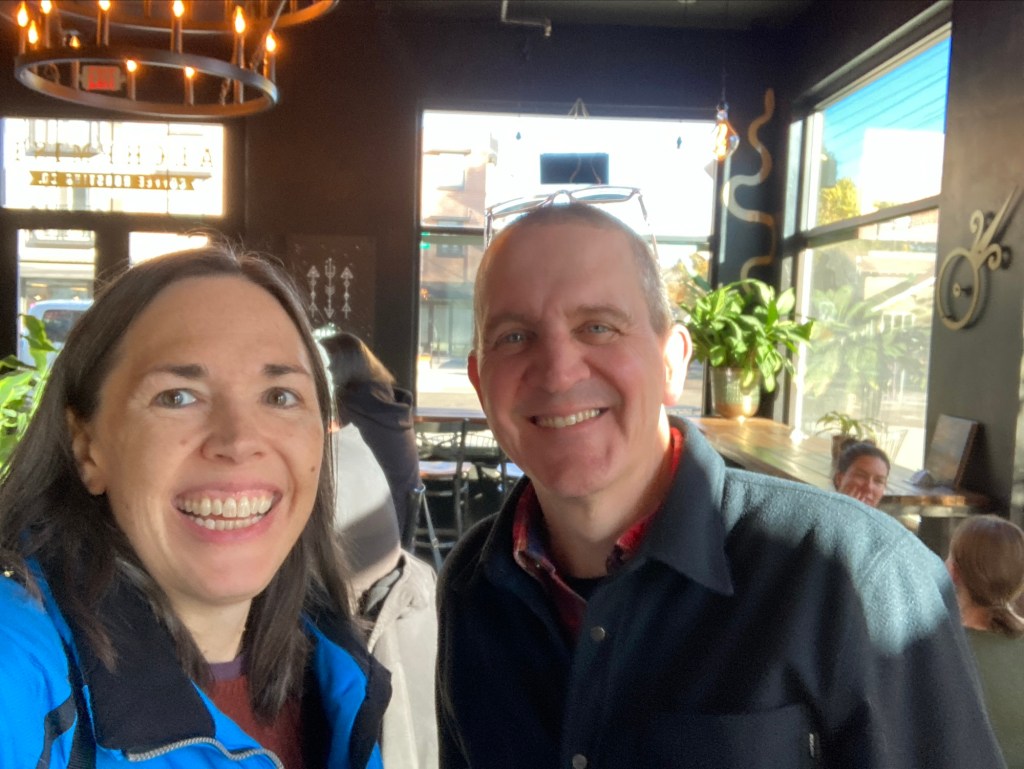
  • I went to brunch at Rembrandts in Eagle (a place that’s had many transformations during my time in Nampa/Boise) with some friends and met a woman who works for the Idaho Human Rights Commission–what a gift they are to the state.
  • I attended the Labor Day Rally at the Capital and it was good to be with strangers and friends speaking about the wealth gap and wages and labor.
  • I finally made it to the Wassmuth Center for Human Rights’ Speakers at the Center series and heard a wonderful retired librarian/junior high English teacher speak about the power of books and stories to feel seen and to step into the stories of others.
  • I attended Saturday Worship at St. Michael’s Cathedral–where I go when I want to be quite anonymous–except that Boise is still really a small town and of course I ran into people I know.
  • The best silver lining to the trip being postponed is that I was in town for Boise Pride – Trans Rally and Parade Friday and Pride Interfaith Worship, Parade, and Festival on Sunday. I led a blessing during worship and marched with Luther Heights Bible Camp in the parade, which had a new route this year.
  • I dropped off a bunch of old electronics at Reuseum on Chinden and trust that they will be recycled or repurposed.
  • A friend and I saw Peter and the Star Catcher at the Idaho Shakespeare Festival. I had no idea what to expect but found myself laughing at lines and nodding knowingly at other pieces of the story.
  • On one day, I stayed home and joined the last online session in a series by the Idaho Nonprofit Center on financial development. I was wearing my LEAP Housing board hat that day.
  • Because of Boise Pride and some other events, another denominational leader was in town so we had a Southern Idaho Ecumenical Judicatory Gathering. We spend a lot of time on Zoom and it was fun to be together.
  • Finally, I attended the  Interfaith Countering Hate Summit hosted by Interfaith Alliance and Western States Center. The latter is an organization I’ve been following since I was elected bishop. This event was at once sobering and hopeful. I’m still reflecting on all I heard.
ELCA Bishop, UCC Conference Minister, Presbyter, Episcopal Bishop
Offering a blessing during Boise Pride Interfaith Worship
Stage for Peter and the Star Catcher, with the moon rising over the Boise Foothills
Posted in NWIM Synod, Reflections | Tagged , , , , | 1 Comment

United at the Font – the pre-work

Originally published in the NWIM Synod’s e-newsletter.

Dear Friends in Christ,

We are preparing to open registration for our three one-day United at the Font: Partnering for the Futureevents this fall. As I wrote in our grant application to Wartburg Seminary, these three locations were chosen in conversation with ecumenical partners. However, I see no reason why the entire synod cannot join in on the learning and growing.

I love this paragraph from the 1982 World Council of Church’s document Baptism, Eucharist, and Ministry:

Christian baptism is rooted in the ministry of Jesus of Nazareth, in his death and in his resurrection. It is incorporation into Christ, who is the crucified and risen Lord; it is entry into the New Covenant between God and God’s people. Baptism is a gift of God, and is administered in the name of the Father, the Son, and the Holy Spirit. St Matthew records that the risen Lord, when sending his disciples into the world, commanded them to baptize (Matt. 28:18–20). The universal practice of baptism by the apostolic Church from its earliest days is attested in letters of the New Testament, the Acts of the Apostles, and the writings of the Fathers. The churches today continue this practice as a rite of commitment to the Lord who bestows his grace upon his people.

Baptism, Eucharist, and Ministry is foundational to all of the ELCA’s full communion agreements with other denominations, and even though it is over 40 years old, it remains an excellent piece to study, especially for those of us in the Mountain West who are always swimming in ecumenical waters.

With this newsletter column we are inviting all of you to engage this fall in the United at the Font pre-work, whether you’ll be joining us in Moses Lake, Clarkston, Pocatello or not.

· Discussion Questions to accompany the three articles

· Baptism, Eucharist, and Ministry (World Council of Churches)

· The Value of Rural Churches and Fresh Hope by Jennie Birkholz

· The Economic Halo Effect by Partners for Sacred Places

In addition to the above, another good resource for deepening our understanding of baptism is ELCA Churchwide’s Living Our Baptism – 5 Bible Studies on the Five Gifts of Discipleship.

Finally, we encourage all ministry sites to make Affirmation of Baptism by the Assembly part of All Saints Sunday this fall. (We know this is already a tradition for some of you). Watch for a special Affirmation of Baptism liturgy to be sent out mid-October.

Why revisit the promises made by God and the promises we make in Holy Baptism? Here’s the opening paragraph of Article 20 from the social statement Faith and Civic Life, adopted this summer by the ELCA Churchwide Assembly:

All the baptized must wrestle with the relationship between their faith, the church, and civic life as they live out their responsibilities to “care for others and the world God made, and work for justice and peace.”34 This church’s involvement in civic life is primarily borne out in the lives of its members as they embody discipleship in their communities and relationships. Consistent with the testimony of the Scriptures and the Lutheran tradition, the ELCA is clear in its teaching that all Christians share in the calling to civic and political participation. This church strongly affirms this shared calling of all the baptized.

Bishop Meggan Manlove

Posted in NWIM Synod, Reflections | Tagged , , , , | Leave a comment

Grant Writing as Storytelling: Rural (Ecumenical) Ministry

This post contains our Northwest Intermountain Synod’s grant application to Wartburg Seminary’s Castle Project for small town and rural ministry. I did most of the writing after good conversations with Episcopal Bishop Gretchen Rehberg and Presbyter Sheryl Kinder-Pile up in Spokane, but DEM Pastor Liv Larson Andrews added poetic and biblical language to our answer on baptismal ecclesiology.

We are very excited about our upcoming events in the synod and Assistant to the Bishop Pastor Phil Misner and I enjoyed our time at Wartburg this August with other grant recipients.

Baptism, Eucharist, and Ministry in the Rural Intermountain West

Description of Project (500 words or less):

The pillars guiding us are relationship building and equipping our lay leaders. We will host events across our synod bringing together members of at least four denominations (ELCA, PCUSA, Episcopal, and UMC). Our three locations will be Grant County, WA (Moses Lake area), Palouse of WA and ID, and Southeast ID (American Falls to Idaho Falls). These areas were strategically chosen by teams of middle judicatory leaders. For geographic context, the Northwest Intermountain Synod is 80 congregations between Jackson, WY and Leavenworth, WA. This is roughly the same distance as the trip from Chicago to New York City. Grounding our time together at these three in-person events will be a deep dive into the historic 1982 World Council of Churches convergence text, Baptism, Eucharist, and Ministry. We want our lay and rostered leaders to recognize what they share with their siblings from these various denominations when it comes to the sacraments and the life-giving and love filled gospel we proclaim. Further, we want to equip our leaders to share these gifts with their larger communities. Judicatory/synod leaders will do theological framing and teaching. We would bring in a neutral outside facilitator (hopefully someone connected with Gonzaga University’s leadership school. These early fall gatherings will be followed by coaching sessions which help leaders keep the conversation going locally. As I, Bishop Meggan, sat with an Episcopal bishop and Presbyter, dreaming about how this grant could help us equip our leader, we quickly realized that we also need guidance. Though we have many shared ministries, see below, there is so much we still need to learn. We seek guidance as we figure out what skills and knowledge we need to support our local leaders. The final component of our fall project is a retreat for judicatory leaders during which we will take a deep dive collectively into one another’s polities and sacramental theologies, all so we can better guide thoughtful and faithful ecumenical congregational partnerships and mergers. We would also use Baptism, Eucharist, and Ministry and would teach one another, a cooperative learning retreat. We might Zoom in some of our churchwide staff or seminary professors.

How does this project support the furthering of a baptismal ecclesiology? (250 words or less)

Our ecumenical relationships in rural areas equip us to be a special and united voice witnessing to God’s compassion, mercy, and healing in areas dominated by Christian nationalism. We seek to dial up the volume on this voice, not to castigate or shout at our neighbors, but to be a steady presence of peace, calling each other and our neighbors into deeper humanity. As the fragrance of Mary’s oil filled the house, we wish to share the good things we have been given: the abundant presence of Christ in word and sacrament, baptismal dignity and blessing, and works of mercy that transform the world with God’s love. We believe we can share these gifts even more fully alongside our ecumenical partners. To put it bluntly, we are in no hurry to close our small congregations in rural areas because we know the voices that will fill the void if that happens. Our lay leaders often understand this as well and are hungry to step up and learn and lead. The way forward, particularly in the mountain west, is ecumenical consortiums and ecumenical mergers oftentimes led by lay leaders with several pastors and deacons mentoring and supporting. We are deeply committed to partnering for the sake of the Gospel.

How does this project fit with the current priorities of the synod? (500 words or less)

In the case for support for our synod, workshopped and owned by our large synod council, we name five Cs: Cultivating Leaders, Candidacy, Call Process, Companion Synod, and Campus Ministry. Cultivating Leaders is listed first intentionally and prioritizes the cultivation of lay leaders. Our synod staff’s purpose is to serve, accompany, and equip ministry sites and leaders of the NWIM of the ELCA so they can point to and participate in the gracious work of Jesus. Finally, our staff goals for 2024-2025 include: 

  • Develop and raise up discerning leaders who proclaim and further the gospel.
  • Amplify collective gifts and resources by deepening and broadening relationships and partnerships.
  • Equip and empower partners to practice stewardship towards solidarity in Christ.
  • Cultivate a team culture that enables our collective work and individual thriving.

The proposed project aligns with our priorities of raising up and equipping leaders and deepening and broadening partnerships within our synod and ecumenically. 

We refer to our ELCA ministry sites as Wellsprings of God’s Love claiming boldly that “as the waters of our synod all flow into streams and creeks that run into the Snake and Columbia Rivers, our ministry sites make up the watershed proclaiming the life-giving gospel of Jesus Christ.” We know that our full-communion partners share this vision and commitment and that they are part of the same watershed.

A final theme this project aligns with, not named explicitly in synod documents, is of returning to basics. Online book studies have included God is Red and the draft of the ELCA’s social statement Faith and Civic Life, but they have also included Bible Studies and Dan Erlander’s Manna and Mercy. It is hard to think of something more basic than looking at baptism, eucharist, and ministry with our full communion partners.

What supports are already in place to further the success of this project? (250 words or less)

A robust and grounded culture of ecumenism already exists across our synod. Our synod includes four federated PCUSA/ELCA congregations, all in rural areas and one is currently served by a UMC pastor. There are additional ministry partnerships with PCUSA ministries (sharing pastors or supply pastors). In two communities, an ELCA pastor or Episcopal priest serves both of those respective congregations. Three more ELCA pastor serve additional full-communion congregations. There are numerous ecumenical endeavors in small towns and our three more urban hubs (Spokane, Boise, Tri-Cities—rural to most of the United States) addressing food insecurity. There are too many ecumenical Martin Luther King Jr., midweek Advent, midweek Lent, and Holy Week worship services and summer Vacation Bible Schools to list here. Several of our congregations have participated in the Spokane Presbytery’s Land Stewardship Project. The Episcopal Diocese’s College of Congregational Development has welcomed one of our ELCA churches, with hopefully more following this year. Middle-judicatory relationships are fostered regularly across the synod, including with two Episcopal dioceses, two UMC districts, two UCC conferences, one Mennonite conference, and five Presbyteries. Leaders are dedicated to these relationships not motivated by survival of institutions but because of our commitment to make sure the Gospel of God’s abundant love continues to be shared through Word and Sacrament.

How will you measure the success of this project? (250 words or less)

We will work with the ELCA Research and Evaluation team to create three surveys: pre-ecumenical gathering, post-gathering and before coaching, and one for after the three coaching sessions. These surveys will help us evaluate the events and, equally as important, capture understanding, learnings, and stories. Each judicatory leader will also commit to doing one-on-one interviews with three lay leaders. Through the surveys and interviews, participants will report on new ecumenical relationships, deeper understandings of baptism, eucharist, and ministry, and opened imaginations for partnered ministries and mergers. Judicatory/synod leaders will be listening deeply and discerning next steps. By the end of the leadership retreat, we will have a clearer path forward for better supporting and equipping our local leaders.

Posted in NWIM Synod | Tagged , , , , | Leave a comment