Palouse and Spokane Connections

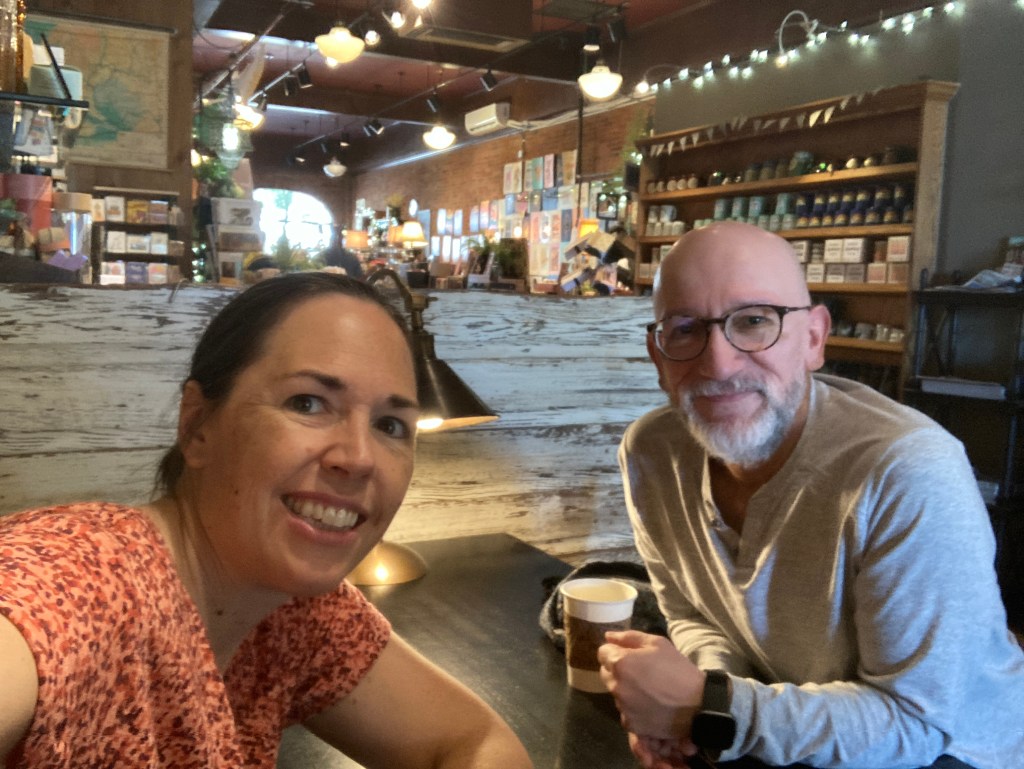
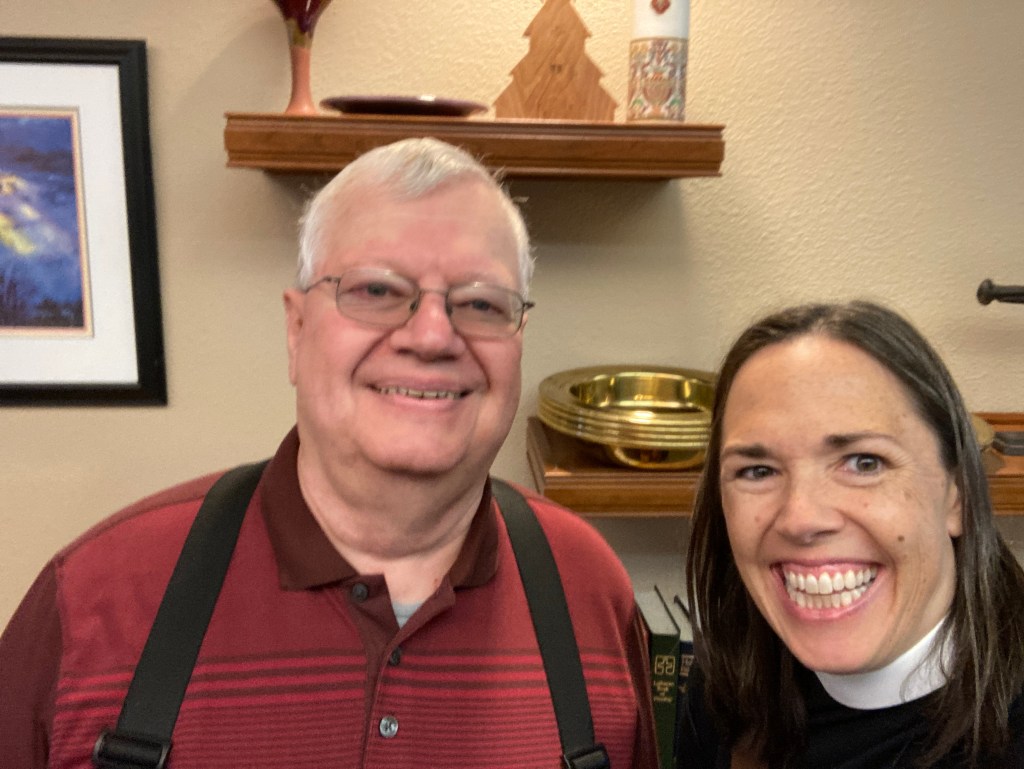
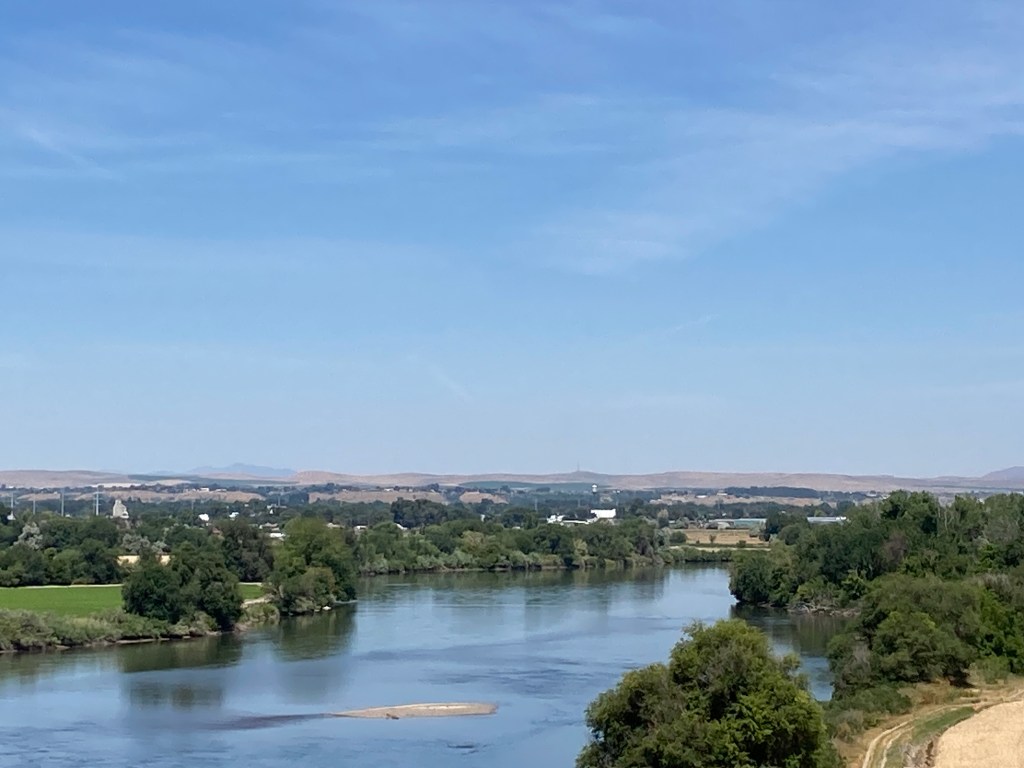
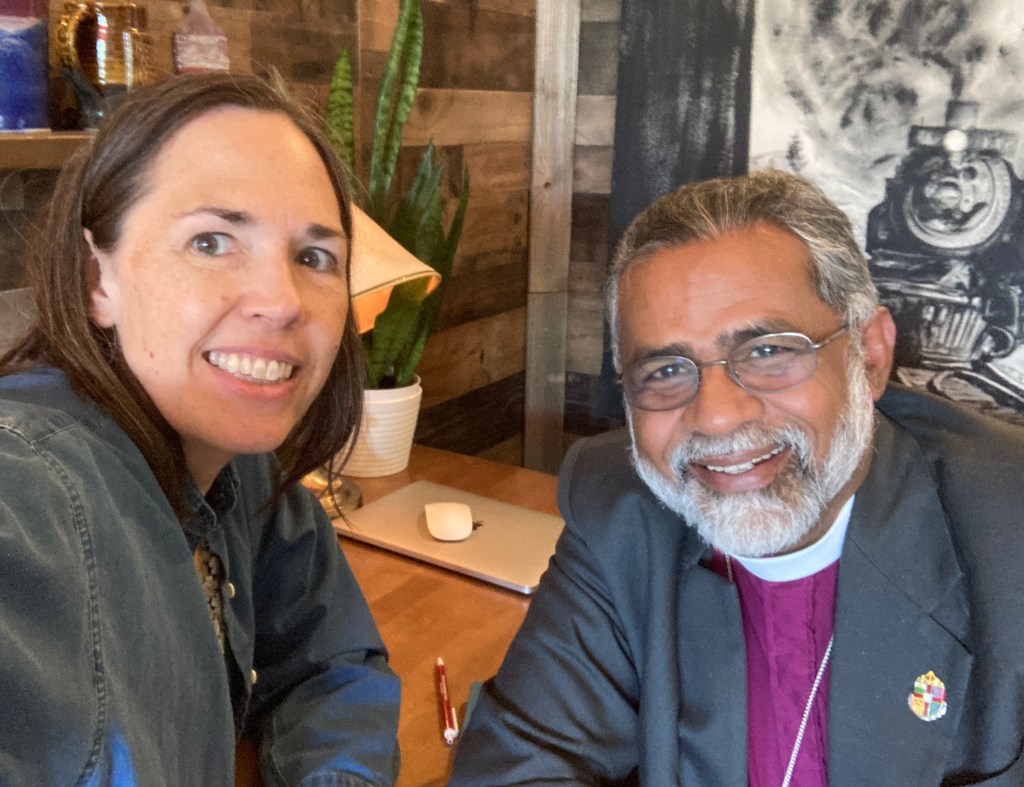
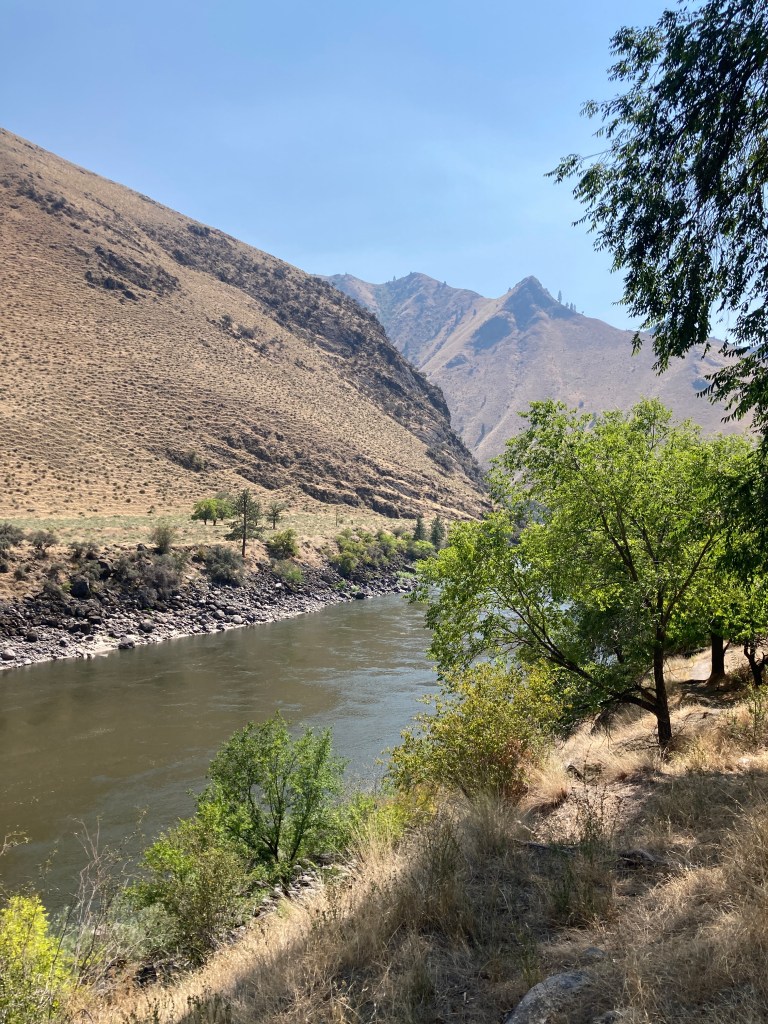
Last Wednesday I drove up Idaho along highway 95 and then 195, stopping to stretch my legs in a baked Riggins (in the canyon). I had a great conversation with campus minister Deacon Karla Neumann Smiley and her colleague George, the part time admin for The Center (formerly Campus Christian Center). We have some big dreams.

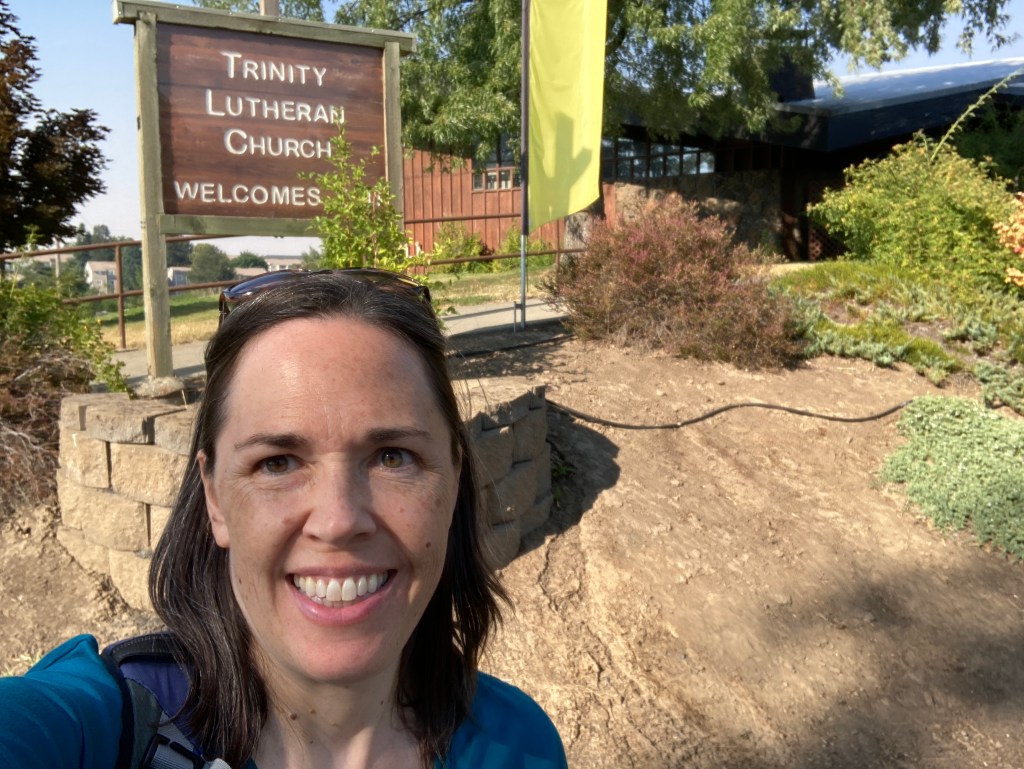
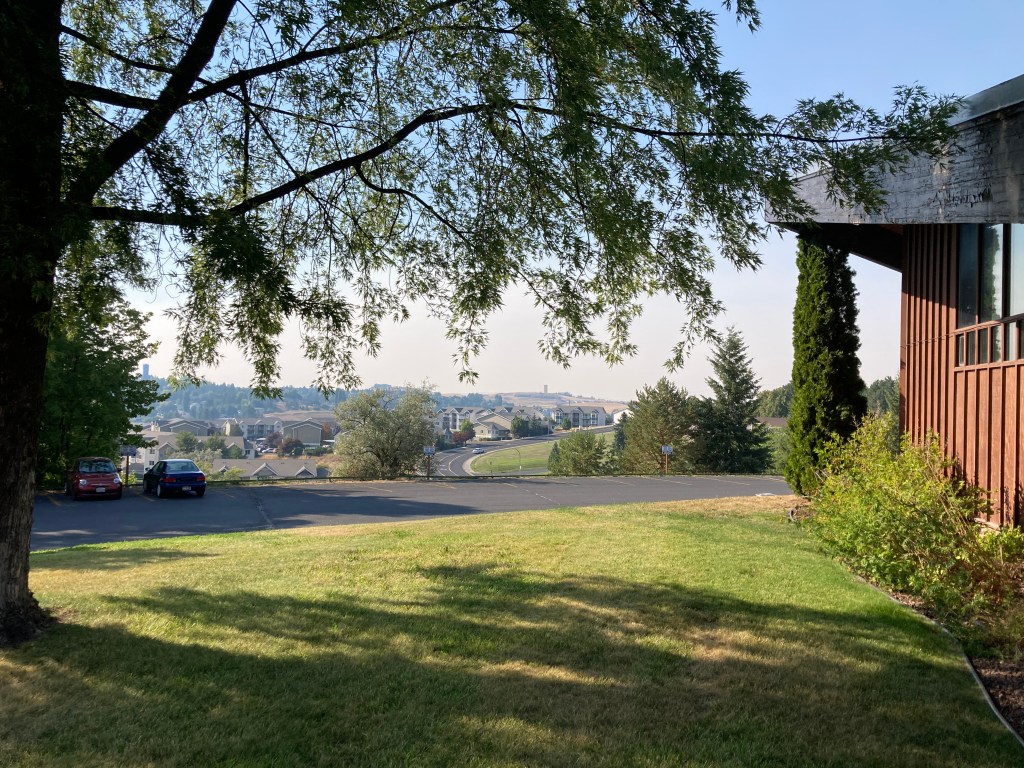
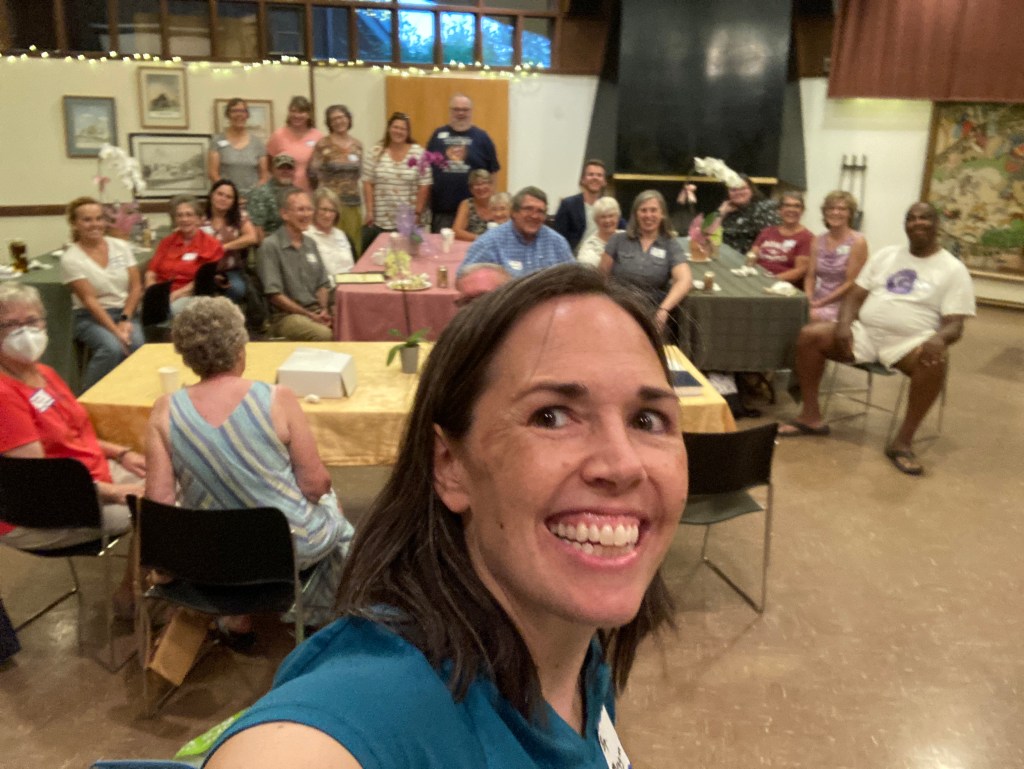
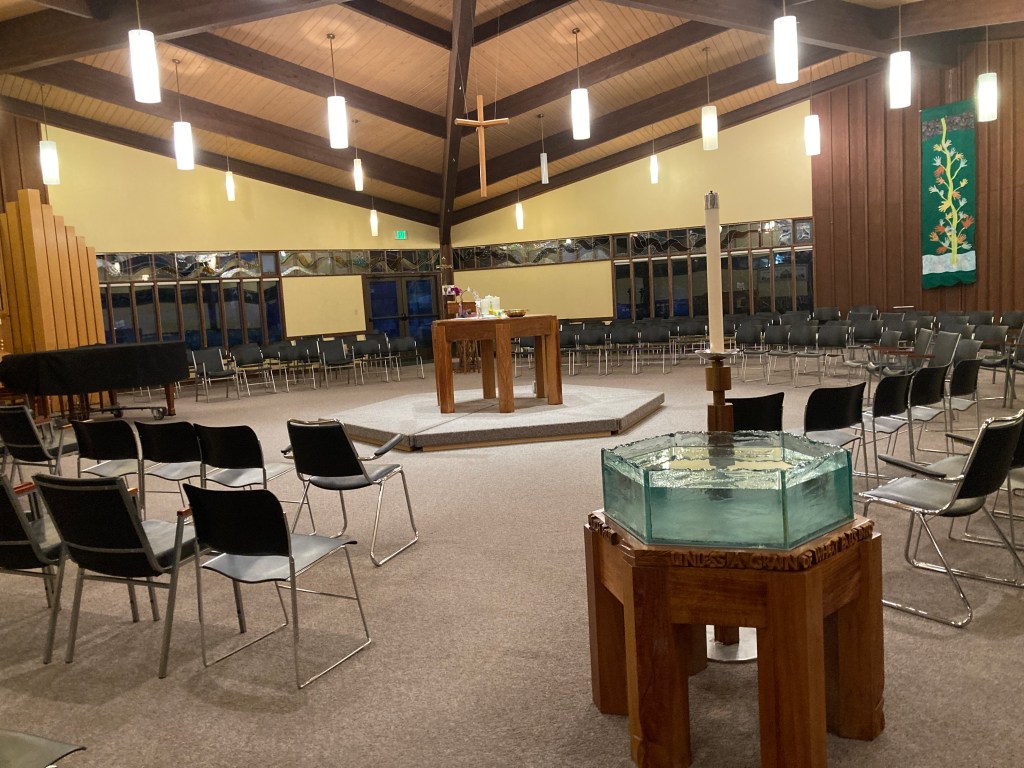
Then other pastors and lay leaders from the Palouse and Tsemincum Clusters joined us at Trinity Lutheran in Pullman for dinner, fellowship, and conversation about ministry and the synod.

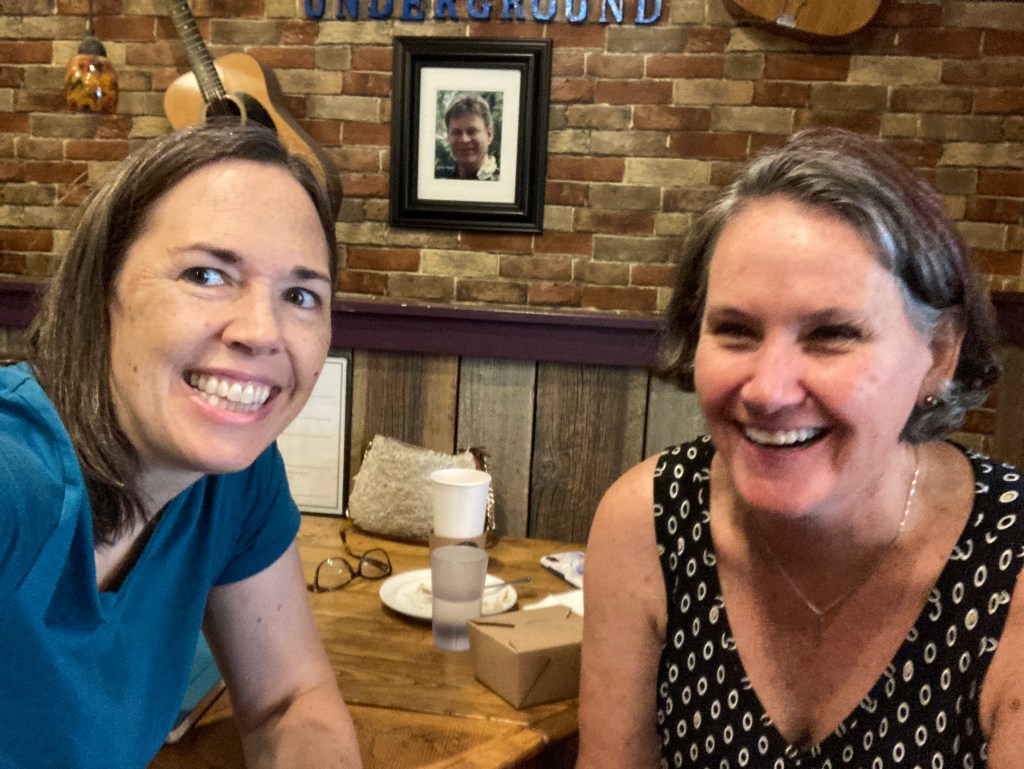
I met two more ecumenical partners during my time in Spokane: United Methodist District Superintendent Daniel Miranda and Presbyter Sheryl Kinder-Pyle. Our synod staff joined the Episcopal Diocese for lunch one day–very fun and more dreaming.

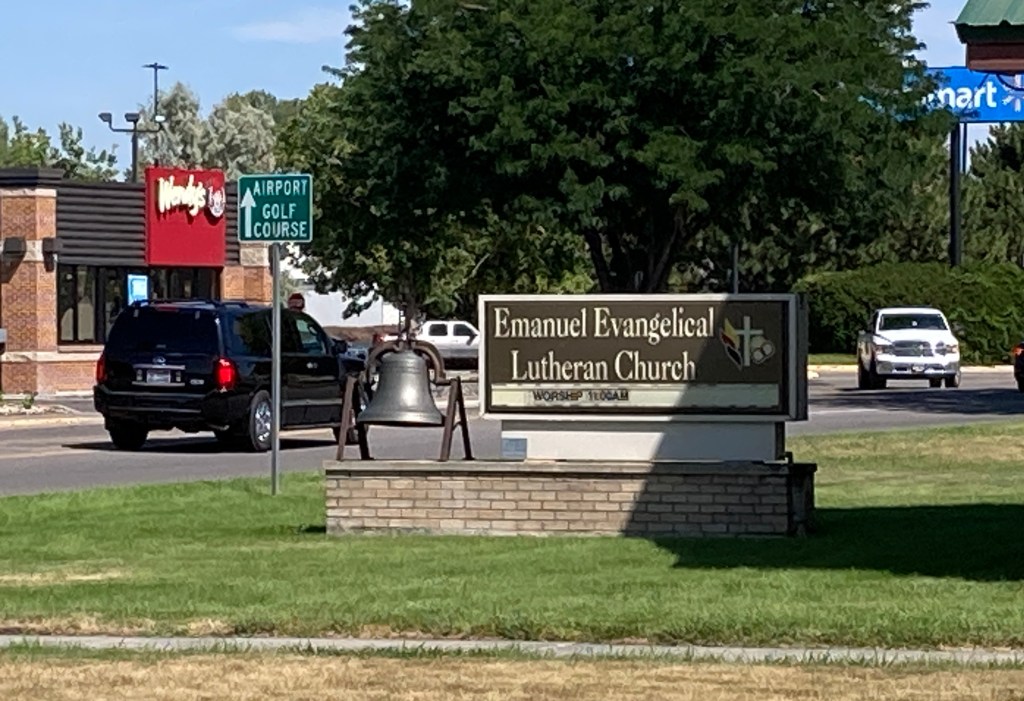
On Friday and Saturday we watched the news break about three fires nearby, the largest being the #GrayFire which made national news and left devastating damage in the town of Medical Lake. St. John’s, Medical Lake was spared but the clergy couple, who also serve Emmanuel in Reardon, moved all of Sunday morning worship to Emmanuel. Assistant to the Bishop Phil Misner joined them for worship. Strange coincidence, just last week I had my first Zoom call with the Washington State VOAD representative related to Lutheran Disaster Response. I emailed Ray and he kept us informed on the disaster and I trust he will parter with us through the long relief process. Stay-tuned for more.

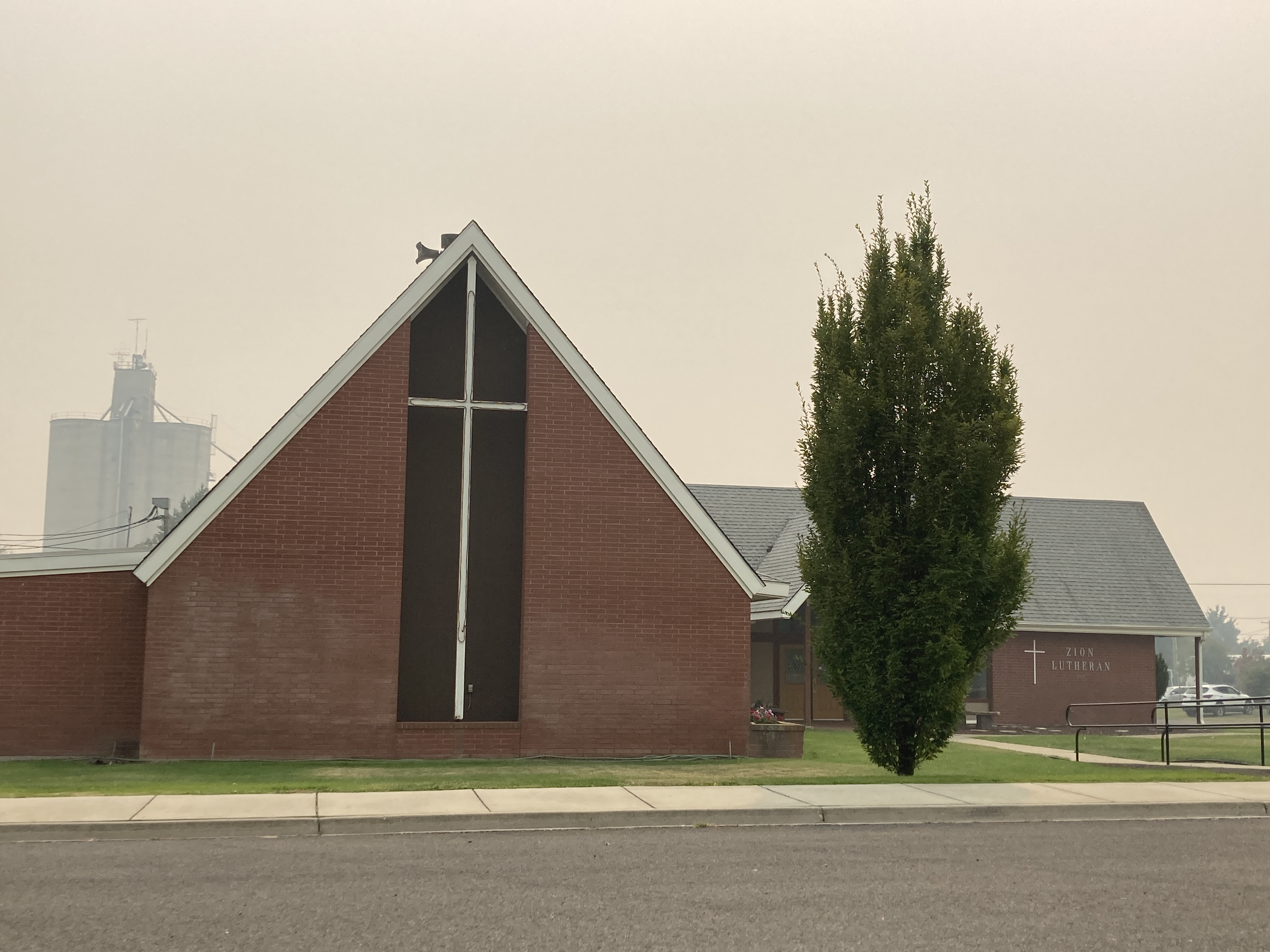
I drove to Davenport to see one of our pastors recovering from a hospitalization. The air quality was grim; hard to say if this was from the Gray Fire or from smoke coming in from Canada or a combination. Here’a photo of Zion Lutheran, Davenport.

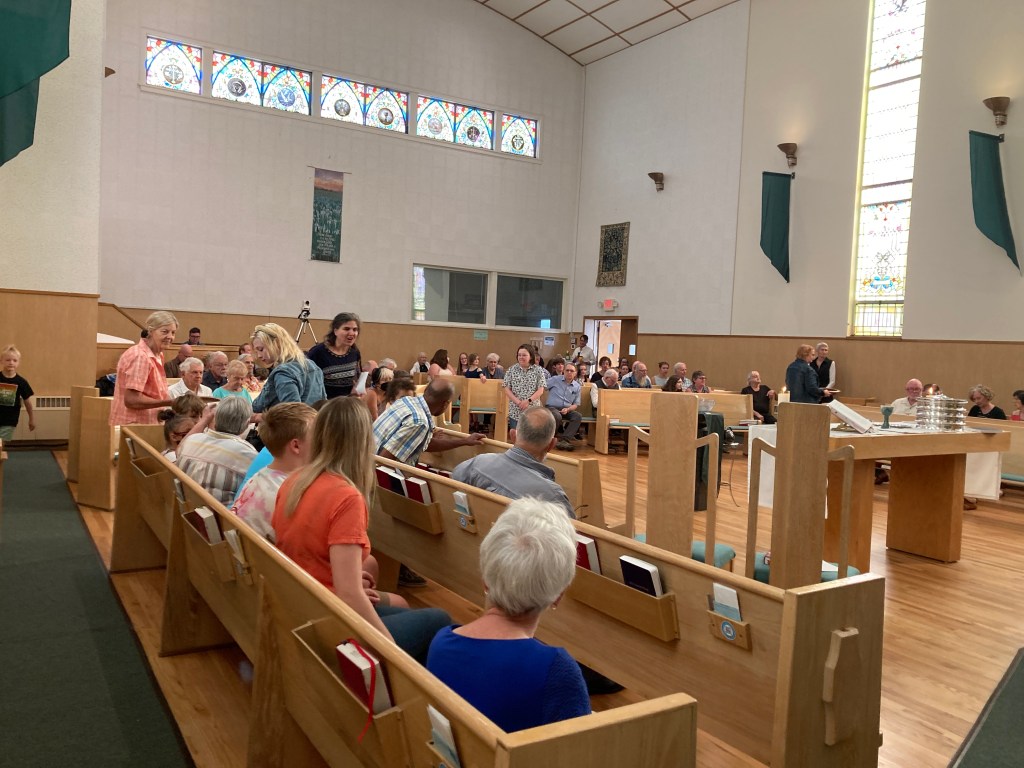
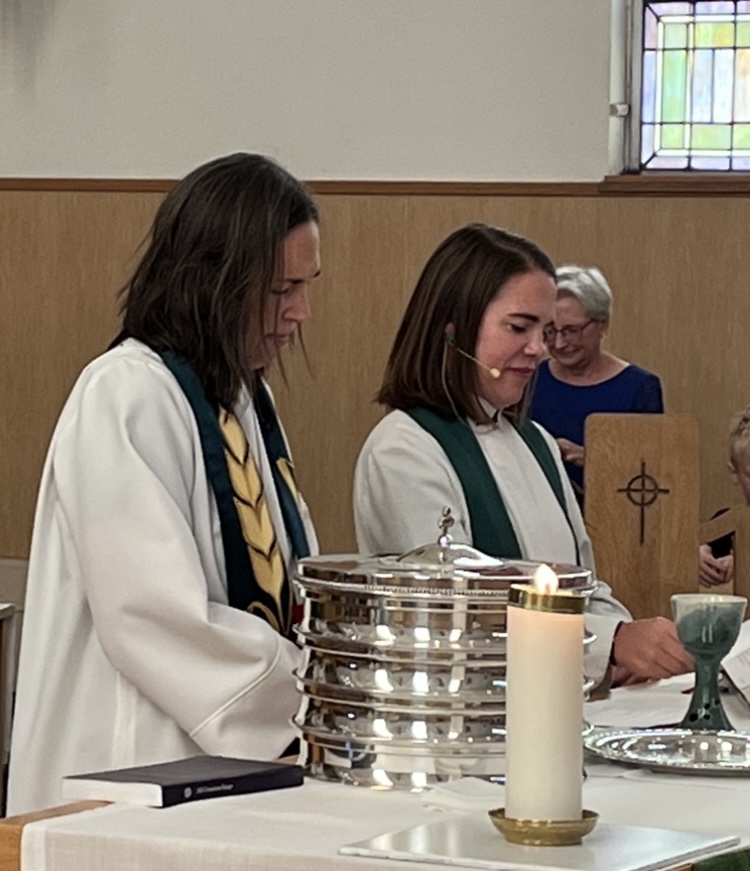
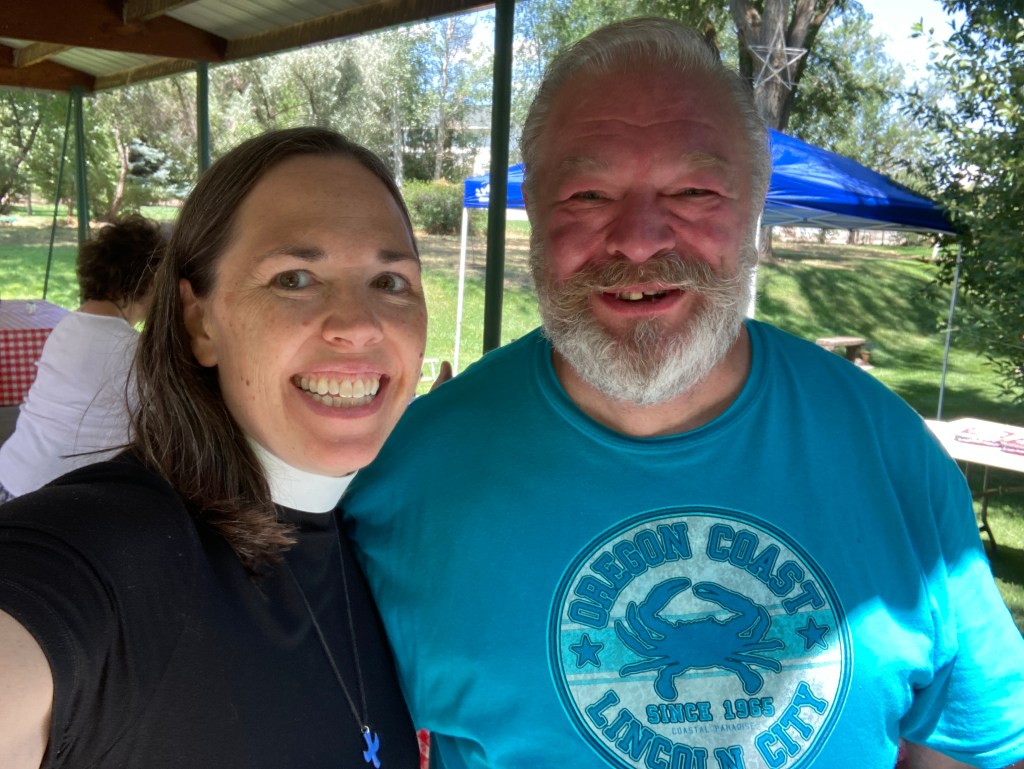
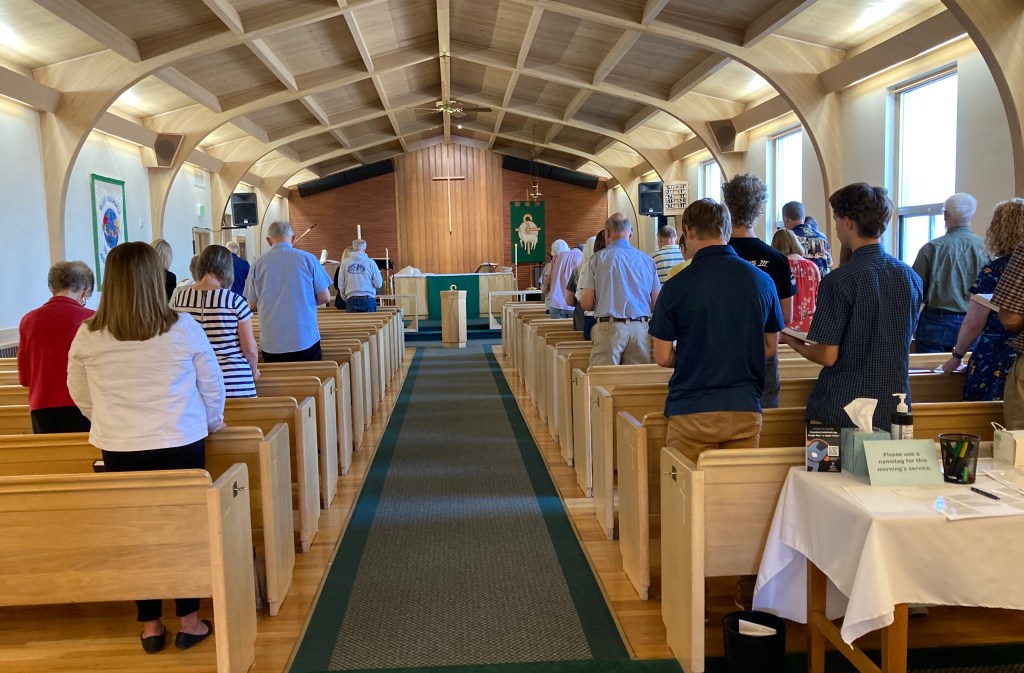
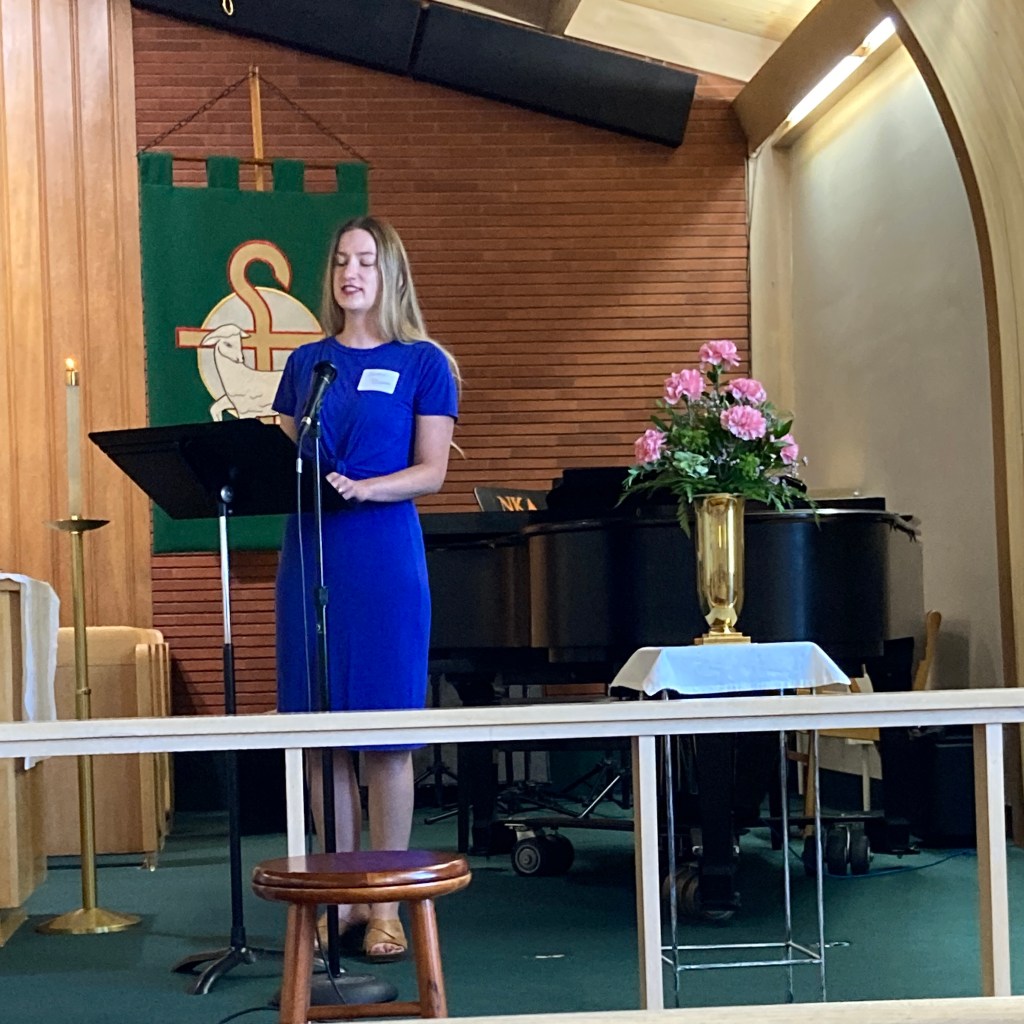
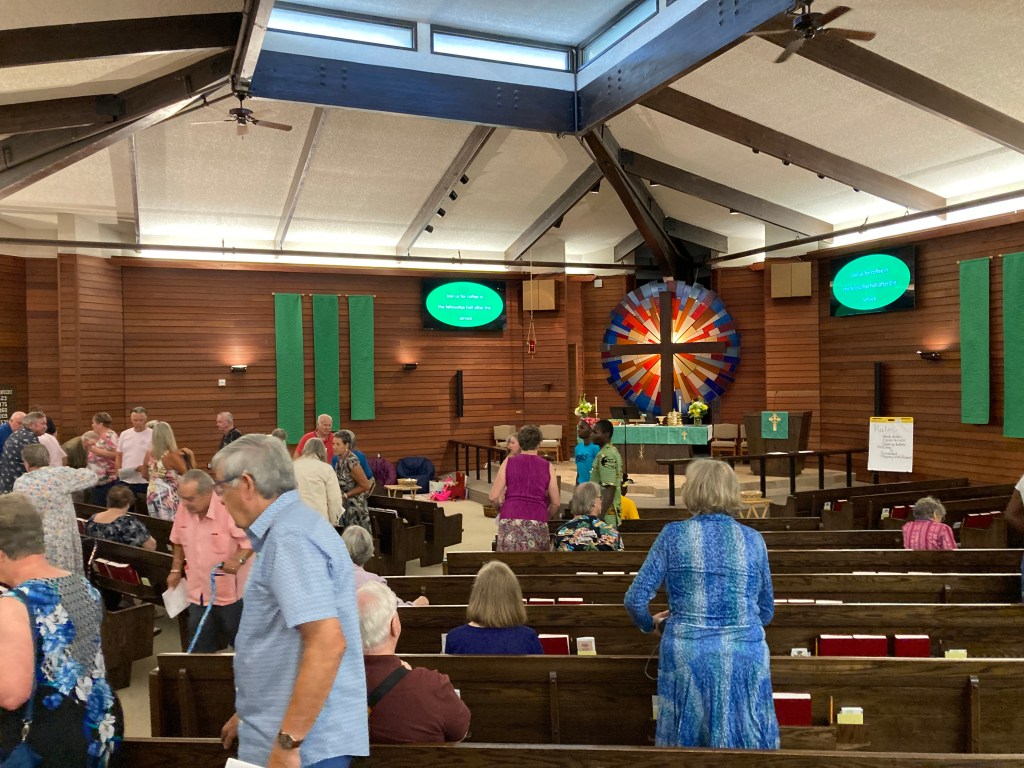
Sunday morning I preached and presided at Salem Lutheran in West Central Spokane for a tri-parish worship service which welcomed members of Salem, Central, and All Saints (Me, Pastor Liv Larson Andrews from Salem and Pastor Alan from All Saints pictured below).

On Sunday night, the Misners had me over for dinner and introduced me to grilled pineapple on vanilla ice cream! Where has this been all my life?

Posted in NWIM Synod | 1 Comment

Aug. 20, 2023

Preached at Salem Lutheran for a tri-parish worship service shared by Salem Lutheran, All Saints Lutheran, and Central Lutheran of Spokane, WA.

Matthew15:21-28

21Jesus left that place and went away to the district of Tyre and Sidon.22Just then a Canaanite woman from that region came out and started shouting, “Have mercy on me, Lord, Son of David; my daughter is tormented by a demon.” 23But he did not answer her at all. And his disciples came and urged him, saying, “Send her away, for she keeps shouting after us.” 24He answered, “I was sent only to the lost sheep of the house of Israel.” 25But she came and knelt before him, saying, “Lord, help me.” 26He answered, “It is not fair to take the children’s food and throw it to the dogs.” 27She said, “Yes, Lord, yet even the dogs eat the crumbs that fall from their masters’ table.” 28Then Jesus answered her, “Woman, great is your faith! Let it be done for you as you wish.” And her daughter was healed instantly.

Christ and the Canaanite Woman

Ilyas Basim Khuri Bazzi Rahib
Walters Art Museum
Baltimore, MD

Sermon – Bp Meggan Manlove

Thank you so much for the invitation to preach this morning and to be with you today. We have quite the gospel passage. It is a challenging story because it makes us wrestle with how we understand Jesus, at least that’s where I have usually gone when thinking about this passage. It is so how I was trained—to make him the focus of every sermon I preach, especially when preaching on a New Testament text. But maybe, just this once, we’re better just focusing on this remarkable woman. 

The Canaanite’s woman’s persistence is both remarkable and inspiring. I think about images from the natural world that compare to her. As I’ve walked the streets of Spokane this week, I’ve stumbled over sidewalks broken by the determined roots of your huge trees; they will not be limited by cement. I think of the Pasque Flower of my home-state of South Dakota, pushing up through the snow each spring. I picture glaciers slowly, but determinedly transforming their environments. 

But for the first time in my life this story had an incredibly personal connection for me. Whose to say why, even though I’ve preached on it multiple times, I never saw my own family of origin in it. I assume I’ve done enough healing so now I can read it with fresh eyes. I was diagnosed with Epilepsy as an eight-year-old in rural South Dakota in the 1980s and my mom had this woman’s persistence—no question about it. 

When a doctor prescribed me the standard medication that every kid was put on then, the drug transformed me into someone my mom did not recognize; she said no. She believed there could be a better more abundant life for me. She went looking for other doctors and treatments. When locals tried to fault her and asked, “What are you going to do about this?” she never let it deter her self-worth or her care for me. She also remained a working mom—not allowing the sexism in the town to alter her path. I suspect that most of you know stories of this fierce love and I hope some of you have even experienced it, if not with your own parents than with another caring adult or friend.

Mom and I have not talked about her faith during this time in our lives, but I suspect her prayers were robust, maybe not for a cure, but for a treatment and for doctors and nurses who would truly listen and see her little girl. My particular story has a happy ending. We found a doctor and a medication that made me seizure-free with no side-effects. Even if we had not, I know my mom’s persistence and fierce love would have helped carry me and give me a full life. 

The Canaanite woman in our story steals the scene with her boldness and daring. I don’t really know how to interpret Jesus’ words in this story, I’ll leave that to your three pastors to sort out in a Bible Study. But he really should not be surprised, and maybe he is not. All he needs to do is look at his own genealogy, which we read at the beginning of Matthew’s gospel. A friend of mine [Dr. Celia Wolff] pointed out that Jesus has four women, similar to the Canaanite, named in his genealogy. These women suffered grief, hardship, and abuse and responded with resilience and strategic action.

First, Tamar, gets into Jesus’ family tree because, when Judah comes along looking for a good time, she has the foresight to ask for three pieces of ID as collateral on her compensation. When she turns up pregnant and Judah wants her burned for prostitution, she pulls out his ID and says, “Mark whose these are.” And Judah must admit, “She is more in the right than I” (Gen 38).

Then there is Rahab. She was a prostitute, and, by the way, a Canaanite. She’s part of Jesus’ family because, when the Israelite spies made their first stop in Jericho at her house, she put them in her debt by boldly shielding them from discovery. She demanded from them a promise of safety for her whole family. She gets a home in Israel and bears a son named Boaz.

That brings us to Ruth. She was a Moabite. Ruth quickly catches Boaz’s eye, but when he seems a little slow to make a move, she takes action that forces him either to disgrace her or take her as his wife. And then she becomes King David’s great-grandmother.

Speaking of David, the fourth woman Matthew names in Jesus’ genealogy is the one who had been “the wife of Uriah” (1:6). Bathsheba. You might think, “this is the exception. Bathsheba is in the story because of what was done to her, not because of what she did.” But don’t forget that her son, Solomon, was not going to succeed David as king until Bathsheba demanded that David swear to it (1 Kings 1:15-31). 

None of these women was born into Israel. They snuck under the umbrella of God’s care by their own wit and cunning. And they were rewarded. The Canaanite woman in Matthew 15 has abundant precedent for both her request and her response to Jesus. Jesus has entered her territory. And, in an important way, through her spiritual foremothers—Tamar, Rahab, Ruth, and Bathsheba—she’s already in his house. 

The Canaanite woman’s persistent, single-minded expectation that Jesus will supply her need… this is what Jesus recognizes as faith. And in the face of such expectation, such trust, how could he fail her? 

The disciples want nothing to do with her. “Send her away!” they tell Jesus. That’s also what they tried to do with 5000 hungry people. The woman cries out in language they will all recognize, “Have mercy on me, Lord, Son of David.” Jesus still isn’t having any of it. He says first that has come only for the “lost sheep of Israel” and later, “It is not fair to take the children’s food and throw it to the dogs.

Then we have the rest of the remarkable exchange in which the woman picks up Jesus’ words and throws them back at him: “Yes, Lord, yet even the dogs eat the crumbs that fall from their master’s table.” Elsewhere, Jesus has chastised the little faith of the disciples. Now, in this woman, he meets and names a wondrously strange and persistent faith.

Jesus answers, “Woman, great is your faith! Let it be done for you as you wish.” The truth is, it has always been in God’s character, this ever-expanding invitation. We read it in the genealogy in Matthew’s gospel, with the four women who snuck in with cunning. We hear it in the Prophet Isaiah speaking for God, “And the foreigners who join themselves to the Lord, to minister to him, to love the name of the Lord…these I will bring to my holy mountain.” We witness it in Jesus’ encounter with this woman of great faith.

So then, is this gospel passage about the woman’s persistence and great faith or is it about the extravagant reaches of God’s mercies? I think the answer is Yes. In other words, it is about both. The story of the Canaanite women is preceded by the feeding of the 5,000 and followed by the feeding of the 4,000. To keep the bread metaphor going, they make a sandwich. 

Think of all that is contained in those stories of abundance. The compassionate mercy of God, the persistence of faith, and the gift of that bread which supplies our every need are all bound together. Likewise, gathered together around the table, we will receive a meager morsel today. But by God’s mercy they become for us gifts of finest wheat, hope, nourishment, new life. Thanks be to God.

Posted in NWIM Synod, Sermons | Leave a comment

Aug. 6, 2023

Sermon preached at Good Shepherd, Pocatello and Emanuel, Blackfoot.

Matthew 14:13-21

13Now when Jesus heard this, he withdrew from there in a boat to a deserted place by himself. But when the crowds heard it, they followed him on foot from the towns. 14When he went ashore, he saw a great crowd; and he had compassion for them and cured their sick. 15When it was evening, the disciples came to him and said, “This is a deserted place, and the hour is now late; send the crowds away so that they may go into the villages and buy food for themselves.” 16Jesus said to them, “They need not go away; you give them something to eat.” 17They replied, “We have nothing here but five loaves and two fish.” 18And he said, “Bring them here to me.” 19Then he ordered the crowds to sit down on the grass. Taking the five loaves and the two fish, he looked up to heaven, and blessed and broke the loaves, and gave them to the disciples, and the disciples gave them to the crowds. 20And all ate and were filled; and they took up what was left over of the broken pieces, twelve baskets full. 21And those who ate were about five thousand men, besides women and children.

Offering of Loaves and Fish  —  United Reformed Church, Brighton, England

Meggan Manlove

Grace to you and peace from God our Father, and the Lord Jesus Christ. Amen. This morning we have texts about feasts and abundance and more than enough. Fittingly, the texts also give the preacher an abundance of themes and entry points. They are also so rich in imagery that they ask for little interpretation. 

For my part, after reading these texts and then going on walks in my neighborhood, I kept giving thanks for the birthday party I was able to attend last Sunday evening. This new call of bishop has introduced me to amazing new people, from my sisters and brothers in the Conference of Bishops to our amazing synod staff to the many faithful people showing up in congregations. But all of these relationships are new and take energy. I am energized by this work but it’s a new rhythm and I have needed nourishment, just as I did as a parish pastor for 18 years.

I had my friend’s birthday party on my calendar, but I sent a quick text Sunday afternoon just to make sure it was still on. She replied, “I’m serving chicken and sweet corn so come hungry.” This friend is particularly gifted at pulling together kind, fun, and interesting people. Most of us at this event have known each other for many years, through our birthday friend or because of our own relationships. 

Can you recall a dinner party where the food was not gourmet, but it left you so satisfied? When the conversation just flowed? Where friends were genuinely curious about one another’s lives? Where you felt completely seen but also cared for, not because of what you do or what you’ve accomplished but because of who you are? That’s how my friend’s parties feel to me. 

I walked in Sunday evening and the food was being prepared. I hadn’t realized how hungry I was. My senses were awakened. As I saw kind and familiar faces I began to relax. The conversation flowed as we caught up on one another’s lives. These are all people who when they ask “How have you been?” I trust that they are genuinely curious; it’s not an expression of mere politeness. After our feast on summer harvest and chicken, we started playing games. My old Lutheran camp director used to say that we were not facilitating recreation, but re-creation. That’s how I felt around the board game table that evening. As we laughed at ourselves and the game, as the conversation flowed, as I continued to feel loved just for who I am, there was re-creation. I was nourished in so many ways. 

My experience at my friends’ many dinner parties and games nights, I think that’s something of what happened when Jesus fed the multitude. He sees, first, a real human need. The people are hungry, and they need something to eat. He feeds them out of compassion, and that is important. 

It is important in contrast to what has just happened. Herod has just had a dinner party quite different than the one I told you about. It was a banquet whose mood was shaped by power and fear and ended with John the Baptist’s head on a platter. Herod provided food for those who are not without food as a demonstration of his power. In sharp contrast, Jesus feeds the five thousand because he has compassion for them. It is an alternative to the envy and greet the Herods of this world cannot avoid.

It can be tempting to dwell here on Jesus meeting the crowds’ physical needs and that being an inspiration for us to feed the hungry. I am grateful that so many congregations in our synod have taken up feeding ministries and that ELCA World Hunger encourages such outreach and does its own amazing work globally. But there is so much more to this passage. 

There is rich symbolism in the bread and fish. Five loaves of bread would remind that crowd, and maybe us, of the five books of Moses. Two fish help us recall the pillars of the Old Testament: the law and the prophets. In other words, food and scripture are rightly tied together. As my friend’s birthday party reminded me, there can be no strict separation between body and would. The words we read in scripture are the words of life, every bit as essential for our ability to live as bread and fish. After all the work my former congregation did in affordable housing, it was natural for me to ponder a move in that direction—going full time into the nonprofit world. But I still believe so strongly that the words of the gospel have the power to give life. The message about God’s love poured out abundantly through Jesus’ life, death, and resurrection is a world so many people still need to hear. So, here I am.

Beyond my friend’s dinner parties, the other meal that sustains me is the Lord’s Supper, Holy Communion, the Eucharist, the foretaste of the feast to come. And this morning’s passage, the feeding of the five thousand, directs our attention to Jesus’ feeding of his disciples with his body and blood. Jesus break bread in our lesson this morning. He anticipates that his body will be broken. Jesus feeds the five thousand with bread and fish provided by the disciples, but he will become for us the bread itself. Just as the bread that fed the five thousand will be more than was needed, recall the twelve baskets of leftovers, so Jesus’ body will never be exhausted. Today we will feast on the meal once again, as the followers of Jesus have done for millennia.

Every time we gather for worship we pray “give us this day our daily bread,” the fourth petition of The Lord’s Prayer.  In his Small Catechism, Martin Luther writes that God gives daily bread, even without our prayer, to all people, though sinful, but we ask in this prayer that he will help us to realize this and to receive our daily bread with thanks. The word daily cautions us against worrying about the future and reminds us to be content with what the Lord provides.

The feeding of the 5,000 in Matthew’s Gospel is representative of the meaning of the Christ-event as a whole. The story portrays God’s act in Jesus Christ in meeting human need. The story shows the disciples’ involvement in meeting those needs. Jesus’ charges his disciples: “You give them something to eat.” The source of the feeding is God, but the resources are human. The work of the disciples, the “bread” of human effort, is honored, used, and magnified by Jesus. 

The story illuminates God’s unqualified mercy.  The feeding of the crowds is not contingent on the crowd’s obedience. They hear and follow but make no other continuing commitment. To Jesus’ disciples, the people who do commit, there is the command to give something to eat. God provides all that is daily bread. We are called to be instruments of the feeding.  

Every time gather around the altar, we remember that we are recipients of God’s unqualified mercy.  We eat together, friends and strangers, just as the people on the hillside who were served by the disciples.  Everyone is welcomed at the Lord’s table. There is always an abundance of bread and wine, forgiveness and new life. We sometimes call the Lord’s Supper the Eucharist, which means thanksgiving. We give thanks for what God gives us through this meal. Leaving this place, we trust that with God’s help we will obey Christ’s instruction, “you give them something to eat,” whether that is food for the body or food for the soul, “you are seen and you are loved.”   

Posted in Sermons | Leave a comment

Full Weekend in Southeast Idaho

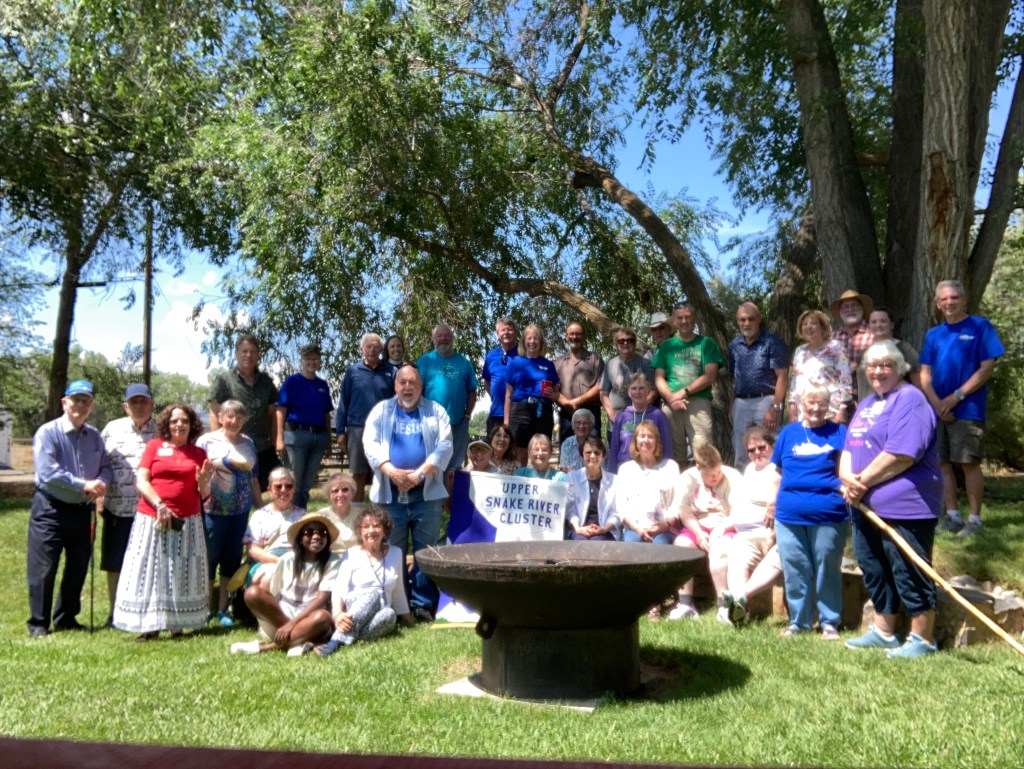
It was a joy to be with the people of the Upper Snake River Cluster at their annual summer picnic in Firth, Idaho Saturday, but that really made up only one sliver of a great weekend of relationship building and exploration.

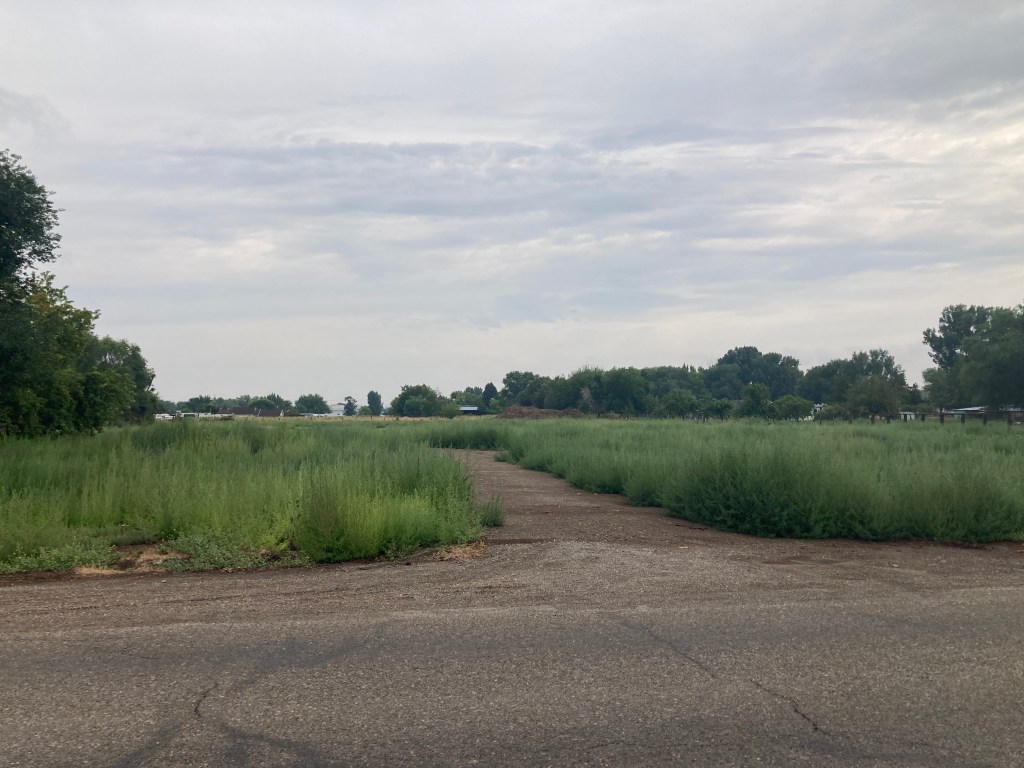
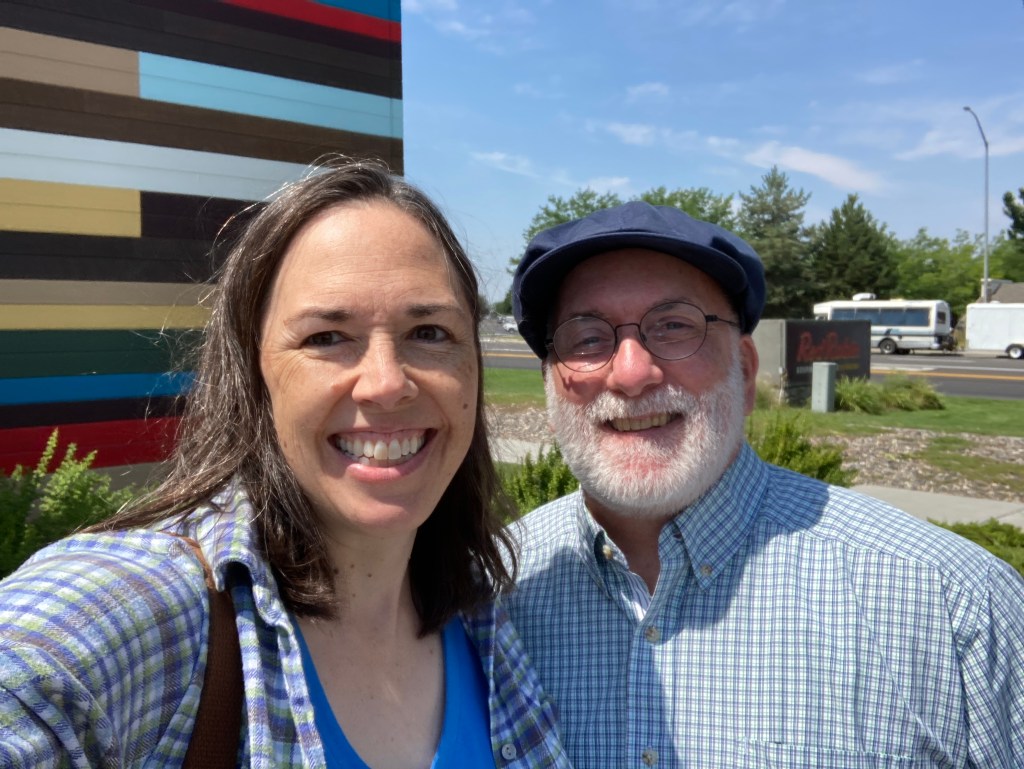
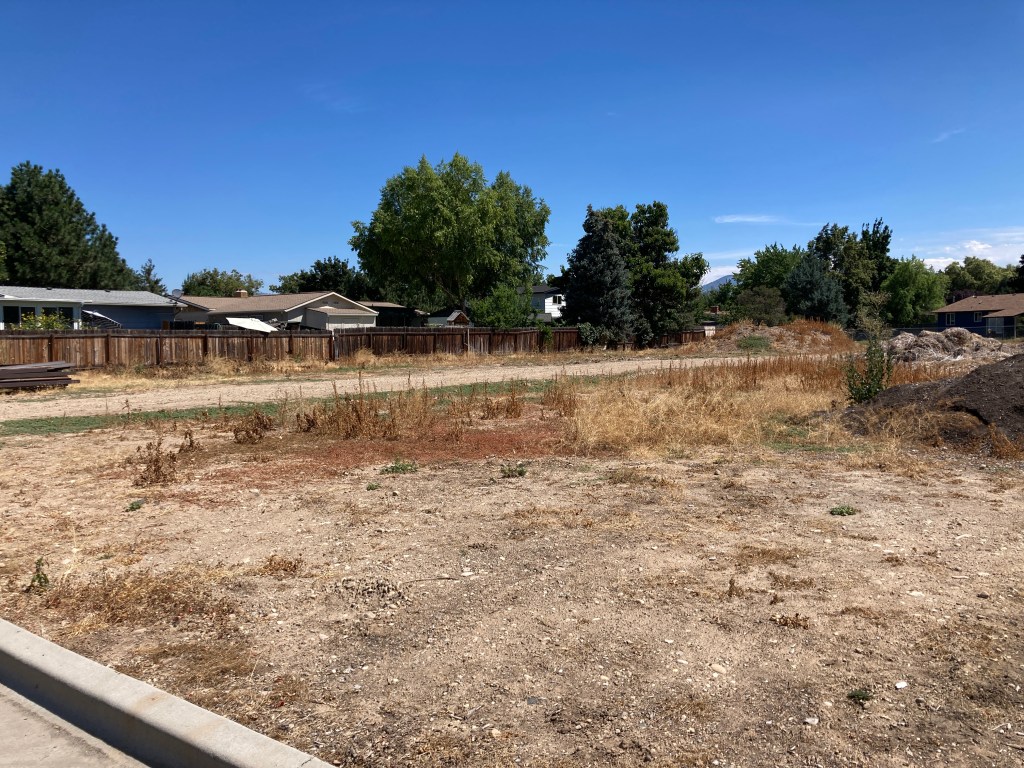
First Pictures: I serve on the board for LEAP Housing and I think I found the lot in Mountain Home for Falcon’s Landing; lunch with Pastor Andy Hamblen in Twin Falls (Andy serves Our Savior, Twin Falls and is also the board president for Luther Heights); coffee with Presbytery of Kendall Presbyter Cathy Chisholm (lots of dreaming); Pocatello: home to ISU–go Bengals!

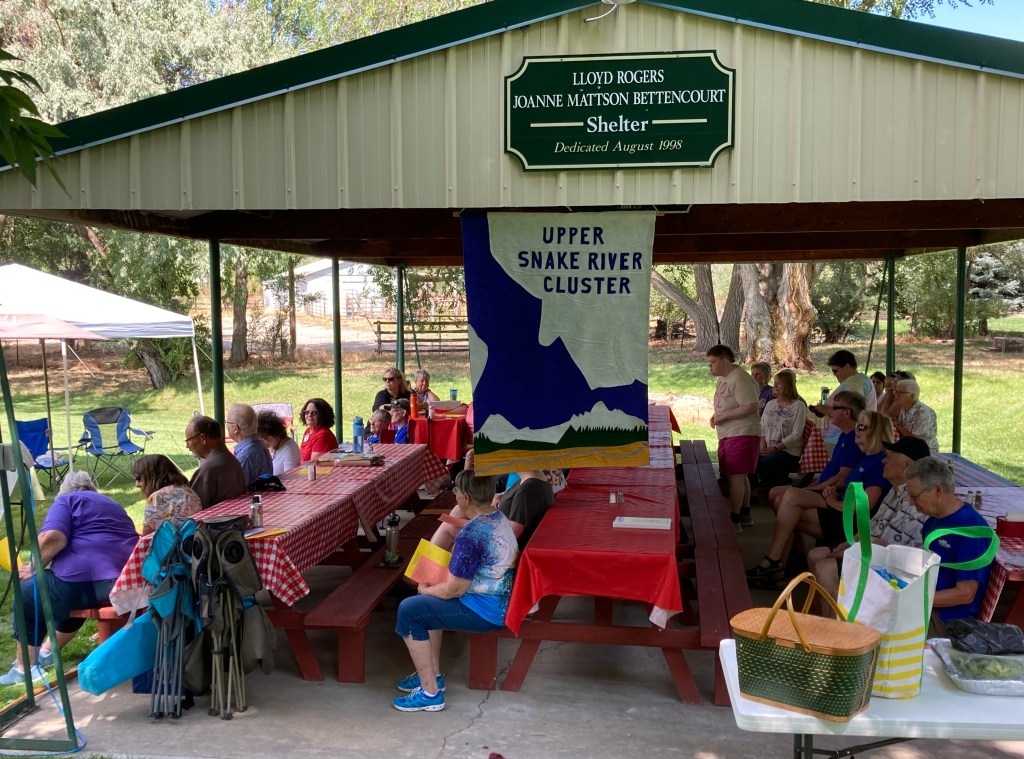
Saturday was the first time the cluster had been able to hold the picnic for several years, for a number of reasons. People were so happy to be together. We had a simple worship service during which I read the Body of Christ passage from I Corinthians 12 and then, as has become my practice, shared what we do together as the Northwest Intermountain Synod. Bethel Lutheran, Firth transformed a drainage into a park, our meeting for the picnic. It was an afternoon rich in food and conversation.

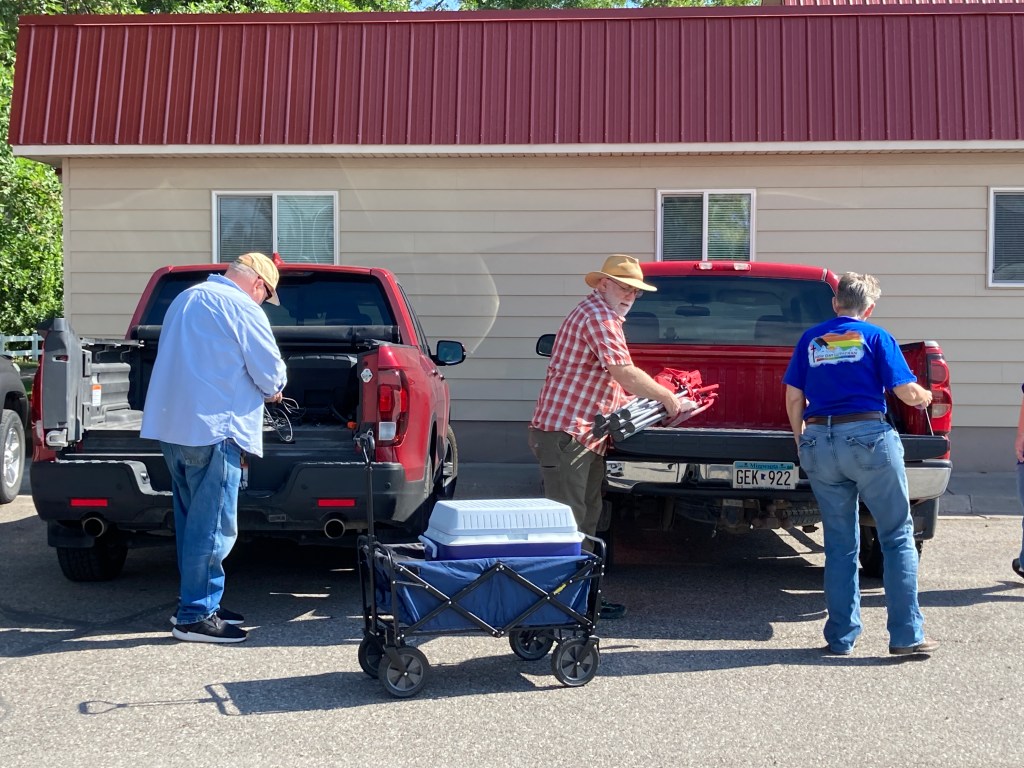
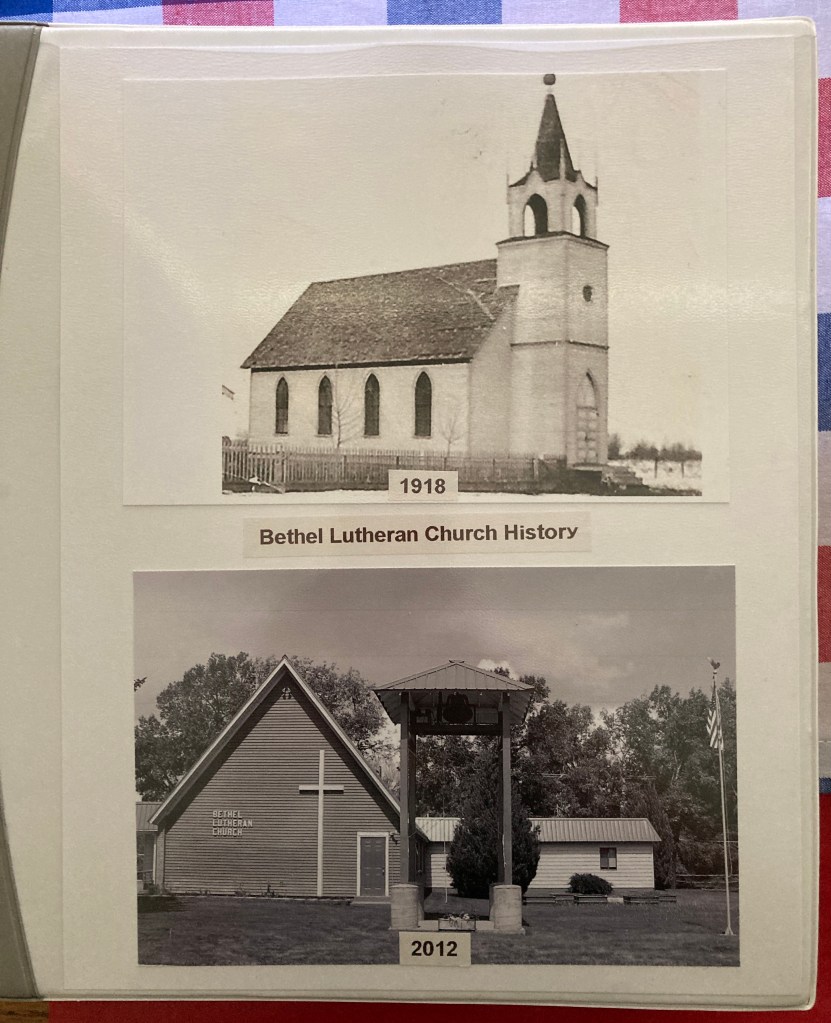
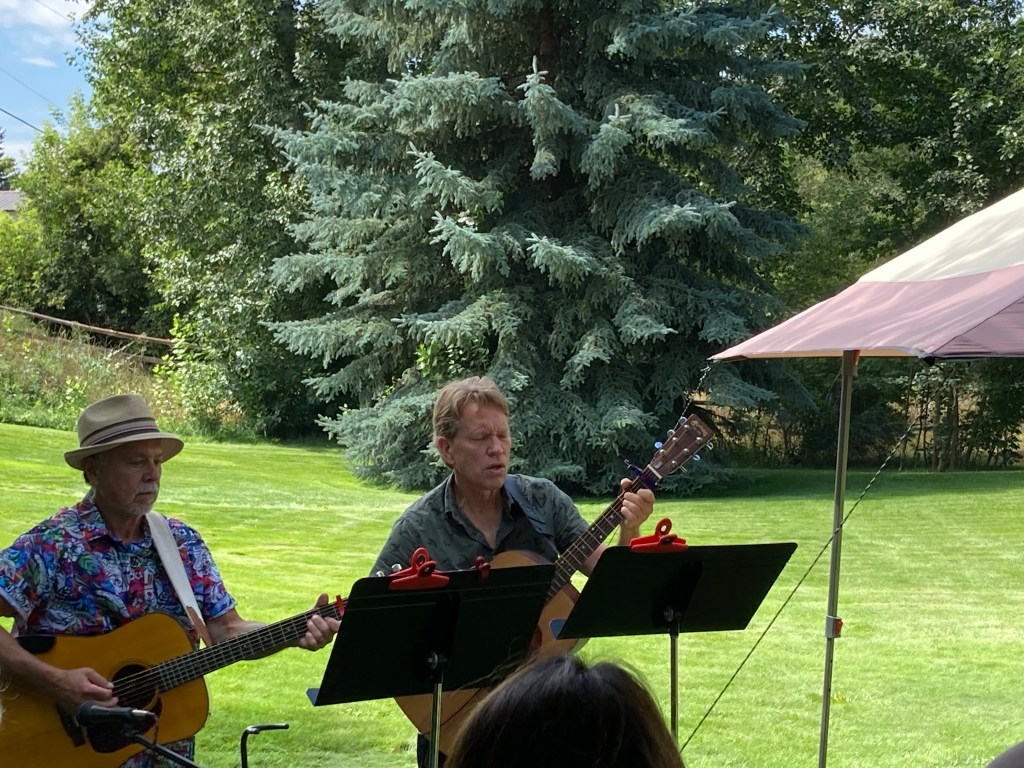
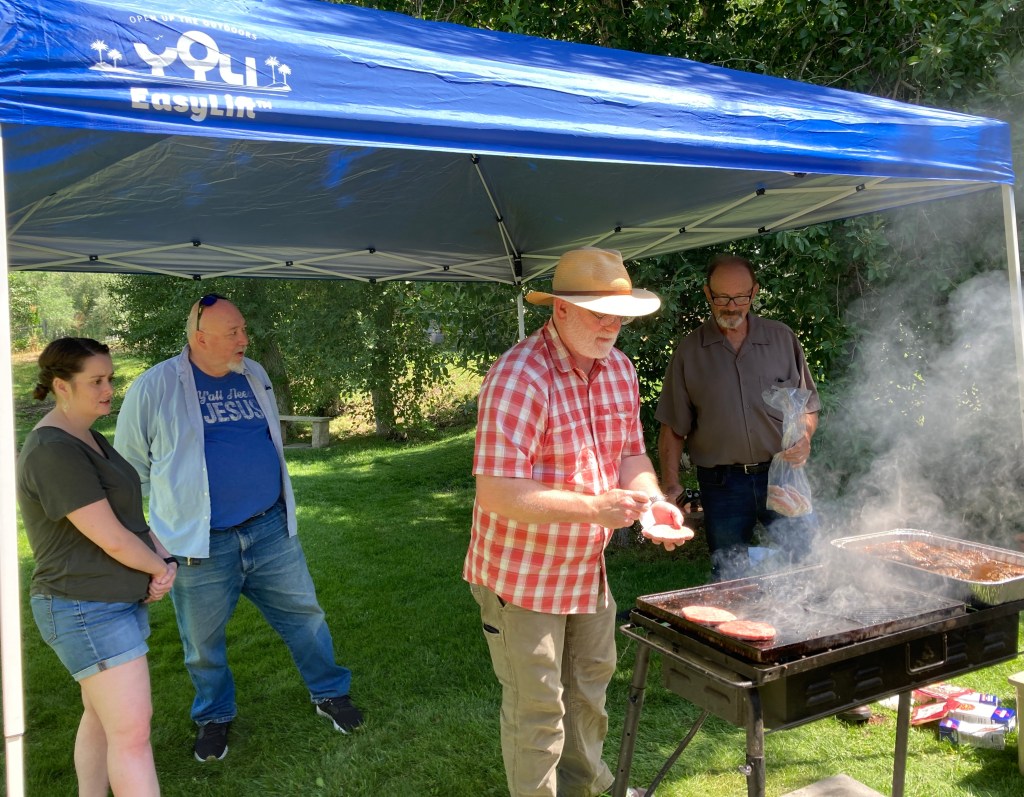
Next Photos: Red pickups are a popular vehicle for Upper Snake River Cluster pastors, inside of Bethel Lutheran and a binder from their recent 125th anniversary celebration, worship, shelter, grilling, me and Pastor Jon Beake (St. John’s, American Falls–Beake has served in SW Wyoming & SE Idaho for 28 years), group photo around the fire pit.

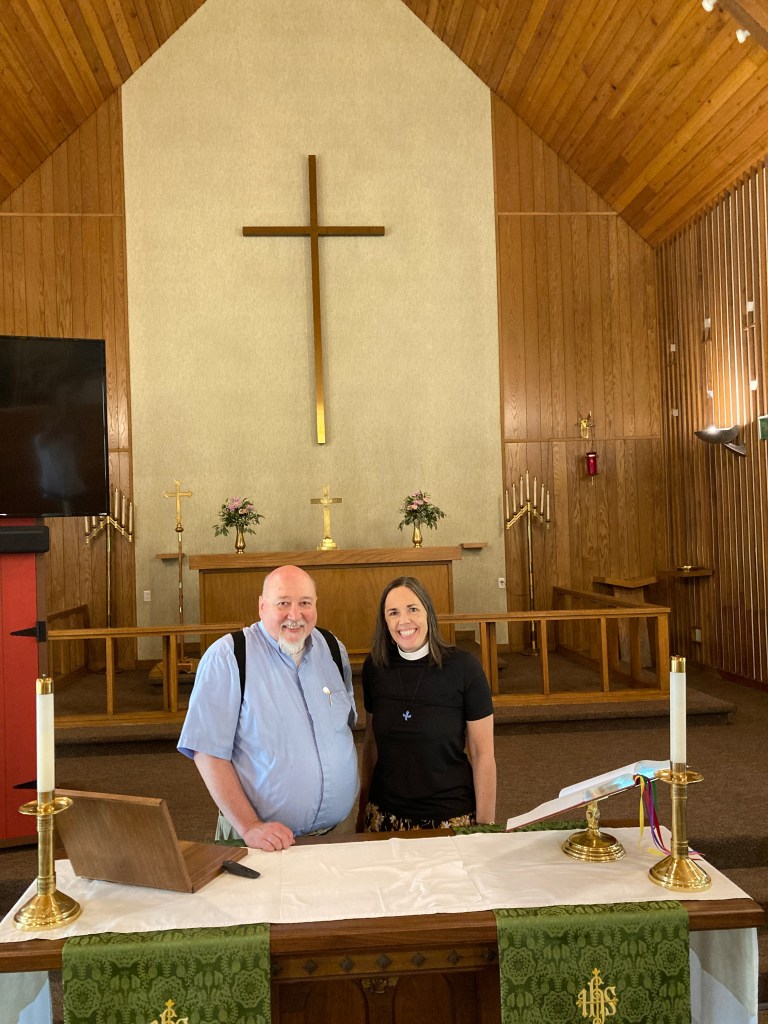
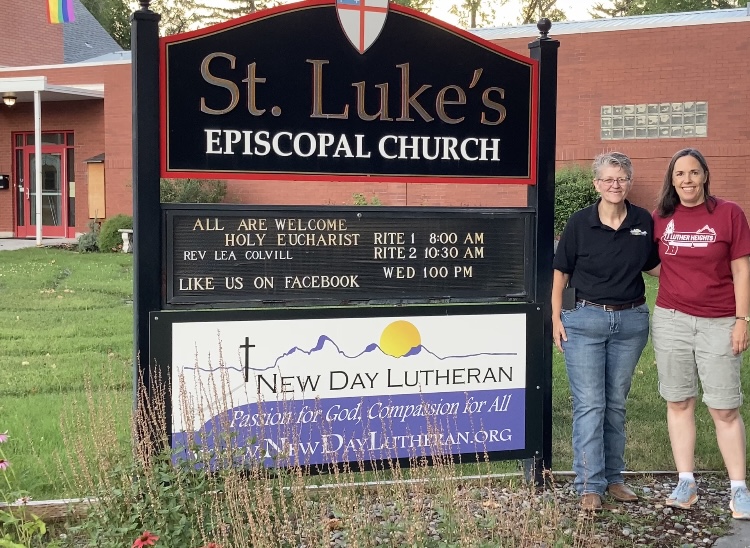
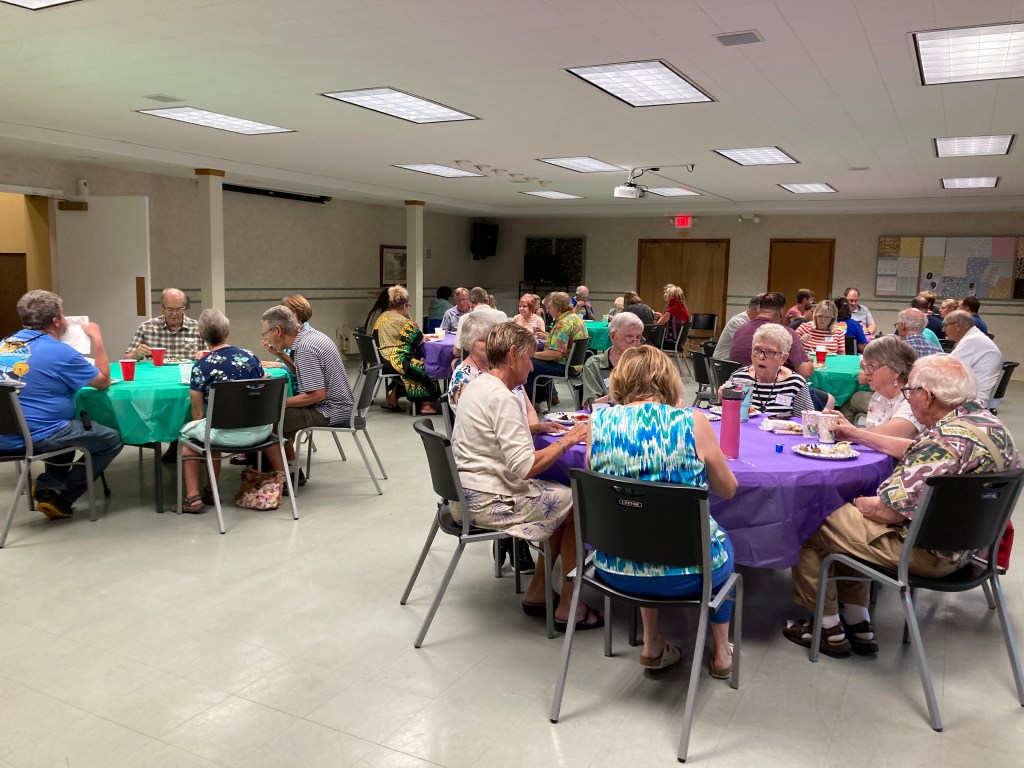
Final Photos: The pastors also planned a full Sunday for me: preaching at Cluster Dean Pastor Wayne Shipman’s two congregations (Good Shepherd, Pocatello and Emanuel, Blackfoot) and then an evening potluck at New Day Lutheran in Idaho Falls, which is hosted by St. Luke’s Episcopal. Good Shepherd has a rich history of gifted musicians and this Sunday was no exception. Follow this LINK and go to minute 43:30 for a song written for the Feeding of the Multitude text from Matthew for Jordan Bowman to sing, accompanied by her dad David Bowman. It is wonderful! Good Shepherd is hosting a Let’s Make Some Music day camp for kids this week. Note below that Emanuel, Blackfoot creatively repurposed its Reformation 500 Anniversary door by turning it into the television stand for worship slides.

Posted in NWIM Synod | Leave a comment

King of Glory, Boise, ID

Joy and lots of memories welled up in me today as I joined King of Glory (KoG), Boise for worship and fellowship time. Pastor Connie Winter-Eulberg decided to preach once a month this summer on hard texts from scripture and today’s text was Judges 11:1-11, 29-40 (Jephthah). I am a proponent of the Revised Common Lectionary for lots of reasons but it of course has its limits and since not everyone wants to or can participate in Bible Study, we do well as a church to find ways to preach on texts like this one occasionally.

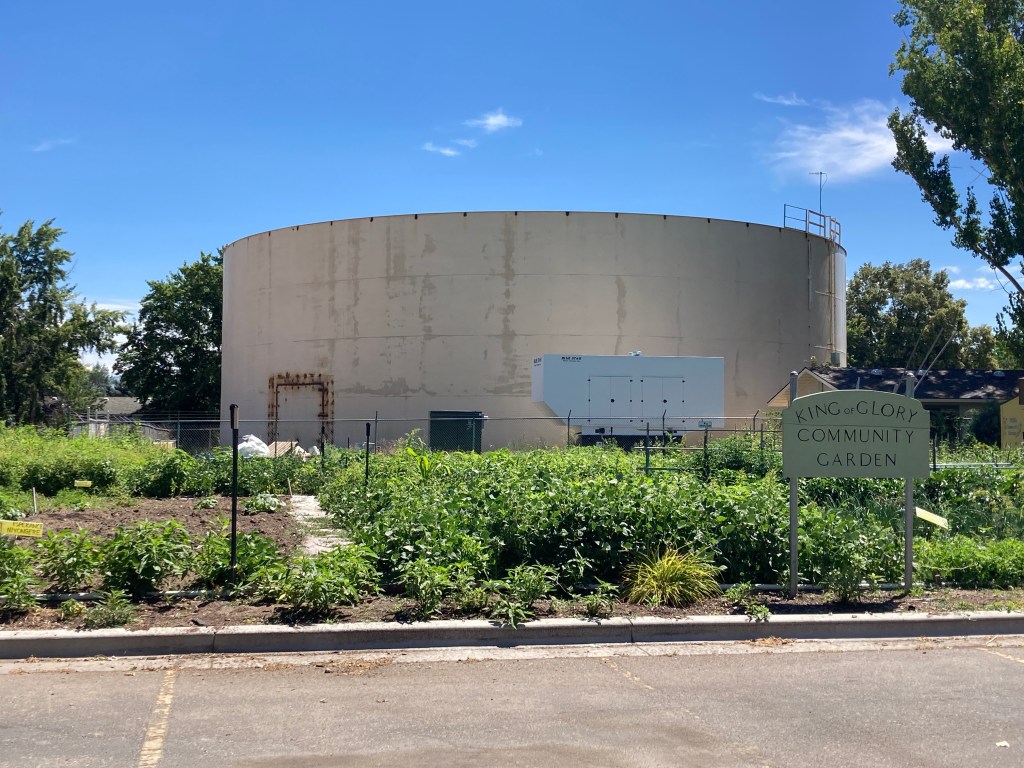
KoG just made some big decisions regarding land use: 1) committing to the building of affordable housing, in partnership with LEAP, on the back property of the church. The project will include the sale of land to LEAP to be placed in a Land Trust for the purpose of building eight (8) rental units to be managed by LEAP and its management company, 2) selling some land to VEOLIA for the purpose of drilling a new community well (this project includes fencing and an access road for VEOLIA), 3) retaining the current community garden.

Having lived through the acquisition of Trinity New Hope affordable housing while pastoring Trinity, Nampa (16 affordable housing units originally built in the 1990s adjacent to the church parking lot) it was good to talk about how Trinity’s neighborhood is thriving this many years later.

New stewardship of land is not the only thing happening in this congregation. King of Glory also has a long history of welcoming New Americans, primarily refugees from Africa. They are hoping to hire a new church musician soon. On Sept. 9 they will participate in the Multi-faith Action Project’s (MAP) Feed the Hungry event, a chance to build relationships with other faith communities while packing food. (Pastor Connie and I were part of forming MAP over the last year or so.) KoG will also be participating in Boise Pride in September.

When I took the call to Trinity, Nampa and moved in October 2010, Trinity needed one more Sunday with its interim pastor before I started. So my first Sunday in Idaho, Reformation Sunday, I worshiped at KoG. For a season, our pastors and deacons met regularly in the KoG conference room. In the middle of the pandemic (Spring 2021 when I had just become the cluster dean) I installed Pastor Connie as the new pastor, with just a handful of people in the sanctuary. This past spring, KoG hosted part of our Confirmation Co-op Retreat. Today, coffee hour was hosted by the Stewardship Team. KoG is, like Trinity and two other congregations in the synod, participating in GSB Fundraising’s Stewardship for all Seasons, paid for in part by a Synod Share Grant I wrote for the four churches. It was fun to hear about KoG’s ministry initiatives and what they have learned working with GSB.

I’m getting used to connecting with old friends on these visits, people like Jim Rickerd (see photo), and meeting new people. If I don’t recognize someone, I always ask how long they have been with the congregation, how they found it, and why they keep returning. The answers collectively tell a story. A surprise at KoG was meeting Pat (Harris) Herr, who grew up at Trinity, Nampa and continued to take her mom Esther Herr there for many years.

Posted in NWIM Synod | 1 Comment

July 23, 2023

Hope Lutheran Eagle, Sunday after interim pastor finished

Romans 8:12-25

12So then, brothers and sisters, we are debtors, not to the flesh, to live according to the flesh—13for if you live according to the flesh, you will die; but if by the Spirit you put to death the deeds of the body, you will live. 14For all who are led by the Spirit of God are children of God. 15For you did not receive a spirit of slavery to fall back into fear, but you have received a spirit of adoption. When we cry, “Abba! Father!” 16it is that very Spirit bearing witness with our spirit that we are children of God, 17and if children, then heirs, heirs of God and joint heirs with Christ—if, in fact, we suffer with him so that we may also be glorified with him.

18I consider that the sufferings of this present time are not worth comparing with the glory about to be revealed to us. 19For the creation waits with eager longing for the revealing of the children of God; 20for the creation was subjected to futility, not of its own will but by the will of the one who subjected it, in hope 21that the creation itself will be set free from its bondage to decay and will obtain the freedom of the glory of the children of God. 22We know that the whole creation has been groaning in labor pains until now; 23and not only the creation, but we ourselves, who have the first fruits of the Spirit, groan inwardly while we wait for adoption, the redemption of our bodies. 24For in hope we were saved. Now hope that is seen is not hope. For who hopes for what is seen? 25But if we hope for what we do not see, we wait for it with patience.

Matthew 13:24-30, 36-43

24[Jesus] put before [the crowds] another parable: “The kingdom of heaven may be compared to someone who sowed good seed in his field;25but while everybody was asleep, an enemy came and sowed weeds among the wheat, and then went away. 26So when the plants came up and bore grain, then the weeds appeared as well. 27And the slaves of the householder came and said to him, ‘Master, did you not sow good seed in your field? Where, then, did these weeds come from?’ 28He answered, ‘An enemy has done this.’ The slaves said to him, ‘Then do you want us to go and gather them?’ 29But he replied, ‘No; for in gathering the weeds you would uproot the wheat along with them. 30Let both of them grow together until the harvest; and at harvest time I will tell the reapers, Collect the weeds first and bind them in bundles to be burned, but gather the wheat into my barn.’ ”
36Then he left the crowds and went into the house. And his disciples approached him, saying, “Explain to us the parable of the weeds of the field.” 37He answered, “The one who sows the good seed is the Son of Man; 38the field is the world, and the good seed are the children of the kingdom; the weeds are the children of the evil one, 39and the enemy who sowed them is the devil; the harvest is the end of the age, and the reapers are angels. 40Just as the weeds are collected and burned up with fire, so will it be at the end of the age. 41The Son of Man will send his angels, and they will collect out of his kingdom all causes of sin and all evildoers, 42and they will throw them into the furnace of fire, where there will be weeping and gnashing of teeth. 43Then the righteous will shine like the sun in the kingdom of their Father. Let anyone with ears listen!”

Sermon – Meggan Manlove

Grace to you and peace from God our Father and the Lord Jesus Christ. Amen. This morning we have the second of seven parables Jesus tells in Matthew 13, all to explain the kingdom of heaven, or reign of God. You want to follow me, Jesus implies? You want to be disciples? Let me tell you a story and open your imaginations. 

This is second parable centered around seeds and harvest. If sowing seeds is complicated in early scripture verses by soil conditions that hinder growth, the problem in verses 24-30 concerns the intrusion of a hostile force. The field owner has an enemy who introduces weeds into the field. As the weeds take over the field with the crop of grain be ruined. Even those of you who do not farm but raise vegetables or flowers know well the challenge of weeds!

I only need to step out of my subdivision to be reminded of the Idaho farmers’ relationship with weeds and the ongoing process of controlling the tares while letting the crops grow.  We watch and wait to see the final outcome at the harvest. It’s appropriate, at least for those of us in an agricultural setting, that this parable is part of the summer lectionary, while we watch and wait for what we hope will be a bountiful crop. 

Maybe you all are great at waiting. I struggle. When I sit with the paper every morning, I feel like I’m hovering on a threshold, like I’m waiting for the other shoe to drop.  I think part of this uneasiness is simply a result of the continual news feed I have access to. Still, it often seems as if ours is the most anxious time in history, at least from what Margaret Guenther calls our selfish perspective in a remarkably affluent and outwardly secure corner of God’s world.  We live with heightened awareness of the unease, the shakiness and uncertainty, the sense of foreboding that is part of the human condition.   

We are not alone in this, however. There is a universality in the Apostle Paul’s depiction of an anxious time of suffering.  All creation, he tells the Romans and us, is poised: waiting for fulfillment, waiting with eager longing for something. There is the same universality in the story Jesus tells: the field is almost ready for the harvest, but it is far from perfect.  What should be a bountiful crop of wheat is going to be half weeds. But until that harvest, when there will be a drastic sorting out, weeds and wheat must be left to grow.  If the wheat flourishes, the choking weeds will also flourish.  We wait for the time of decision, the irrevocable sorting out that comes at the end.

The contrast of the parable of the wheat and weeds and the passage from Paul’s letter to the Romans reminds us that we are not there yet. Both passages suggest that this is a time of waiting, of letting things grow and unfold. But it is also a time of looking forward to some sort of resolution, an end time. We live in the “already, not yet.”  We are poised on the threshold.

For a congregation waiting to call a new pastor, today’s passages might assure you that you are part of a whole communion of saints waiting. We wait edgily, not for random, terrifying destruction. This is not the kind of waiting people are doing in Canada, checking every minute to see if the wind has changed direction and then knowing the fire is coming to your neighborhood next. 

We are waiting for something different. We wait, in Paul’s words, “to obtain the glorious liberty of the children of God.” As Jesus says in the parable, we await the coming of God’s kingdom. In different ways, Jesus and Paul are heralding the inbreaking of God’s rule on earth, the fulfillment of all our hopes and prayers when we pray—sometimes mindlessly—that God’s kingdom will come on earth and God’s will be done in every corner of the earth.

We wait. If we knew precisely how and when the waiting would end, then our life in Christ would be simply an exercise in religious persistence. It would be like standing in line at the grocery store checkout or waiting in the dentist’s office for someone to call our name. The tension in that kind of waiting is more boredom than anxiety.  

But waiting for the inbreaking of the kingdom is like no other kind of waiting. It is not the routine, humdrum marking of time in our daily lives, or the terror and dread of devastation. I liken it to a certain degree to first-time campers who had never been to camp but had their bags packed and jumped into the cars with joyful anticipation. Ours is waiting in deep deep hope for something that is not seen, yet yearning for it with a longing that is beyond words. This yearning for the coming of the kingdom is yearning for God.

Both Jesus and Paul use powerful images of growth and fruition.  Paul, who surely had little if any firsthand experience with the wondrous process of human birth, tells us that all of creation—which means all of humankind, all of us—is groaning in the pangs of childbirth. Just as the field of wheat with its intermingled weeds grows at its own pace, so birth cannot be hurried. Birth happens when it happens.

But what about those noxious weeds? What about the judgment Jesus makes so very clear in the parable?  I’m in no hurry for that final day—I’m happy to muddle on for a bit, living in the promise of things hoped for but not seen. Just having the promise is enough for now. Sometimes I find myself thinking about the weeds and wondering whether they have anything to do with me. I try to persuade myself that Jesus is talking about someone else, someone unworthy of saving, all those people who surely have no place in God’s kingdom. Surely, he is talking about those weedy people whom I would consign to the compost heap if not to the cleansing fire. It is much more comforting to hope that I am pure wheat and that the weeds are quite disposable.

But maybe the concept of weeds is more complicated. What if we are not pure wheat, but have some qualities of the weeds in us, qualities that we need to be free of before we can be truly fruitful. Or maybe we fail to grow and thrive because—fine-quality wheat that we are—we let ourselves be choked and thwarted by the weeds around us.

We bounce back and forth between these two pictures. On the one hand, the people of God are filled with the yearning for God. On the other hand, they are part of God’s garden, active and growing toward the ultimate harvest. Both images remind us that we are living in a not-yet time. We live in radical trust that God’s promise will be fulfilled. We wait. We labor. We hope for that which is not seen, but somehow knowing that what Paul calls our glorious liberty as children of God is all that truly matters.  

For all the harshness of the parable’s verdict on the unrighteous, the good and evil dualism is tempered. Because the world, the church included, encompasses both good and bad, none can presume to be good while others are not. In our Lutheran language, we are all both saint and sinner. And because the verdict belongs not to us but to God, and God is patient to allow the complexity and ambiguity, the people of God are not to condemn others.

That does not mean we should not call out injustice in this waiting time. Of course we should. And we, who have had glimpses of the kingdom of heaven, can work to change systems that harm and destroy. Knowing God’s love and grace, how can we not want to share those gifts with everyone we encounter?

Posted in Sermons | 1 Comment

Hope Lutheran, Eagle, Idaho

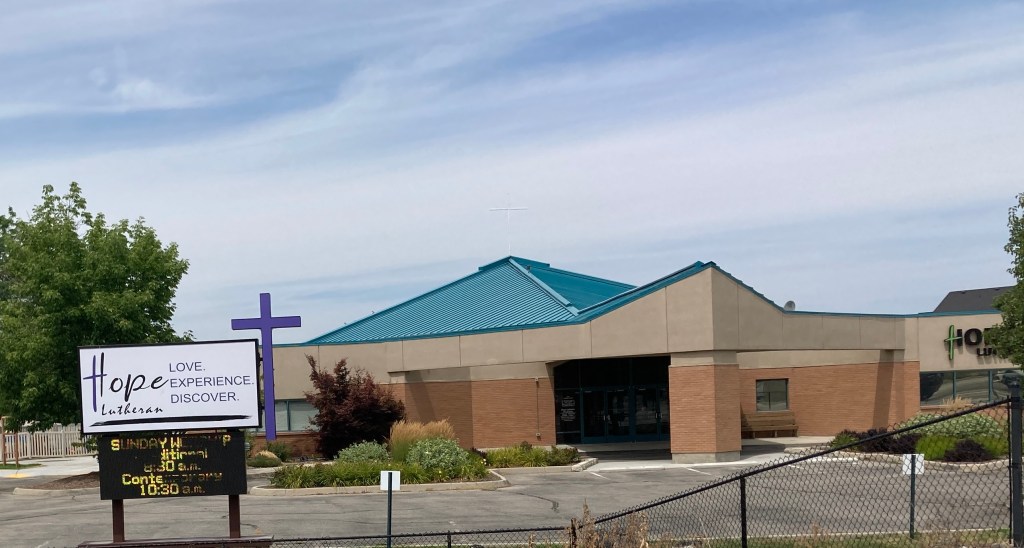
Memories: This morning I preached, presided, and brought greetings from the synod office to the congregation of Hope Lutheran. Hope sits on Highway 44 between Eagle and what was (but is no longer) the sleepy town of Star. During my time as pastor of Trinity Lutheran, Nampa I joined carpools to Luther Heights camp from Hope’s parking lot, I brought or met many youth from Trinity for Confirmation Co-op (joint Confirmation shared by 4-6 ELCA congregations in the Treasure Valley Cluster), I attended cluster gatherings for youth and/or adults.

Transformation: Slowly I have watched the building transform, first a makeover in the sanctuary and then a makeover in the building, transforming former day care rooms (Hope’s day care struggled coming out of the pandemic) to a beautiful and functional Idaho Food Bank site. I should have taken photos of their food storage and sorting rooms but I forgot the rest of the world has not been on the tour yet.

Something New: Last Sunday, Hope said goodbye to their interim pastor of about one year. At the end of June, Hope said goodbye to their young disciples minister Casey Cross, who will begin as Luther Heights Bible Camp’s first Associate Director Aug. 1. Part of Cross’ job will be helping Luther Heights (socked in by snow in the winter) become a fully year-round ministry. Confirmation Co-op, which ran from the fall of 2015 to spring 2023, will in fact transform into one of Luther Heights’ many offerings. As I caught up with many parents of youth who had come through Confirmation Co-op and other joint cluster youth ministries, my heart swelled with gratitude for the families’ trust in our collaborative efforts. I am also thankful to Hope for hosting so many of our events. Follow this LINK and click on For Congregations to learn more about what camp is offering.

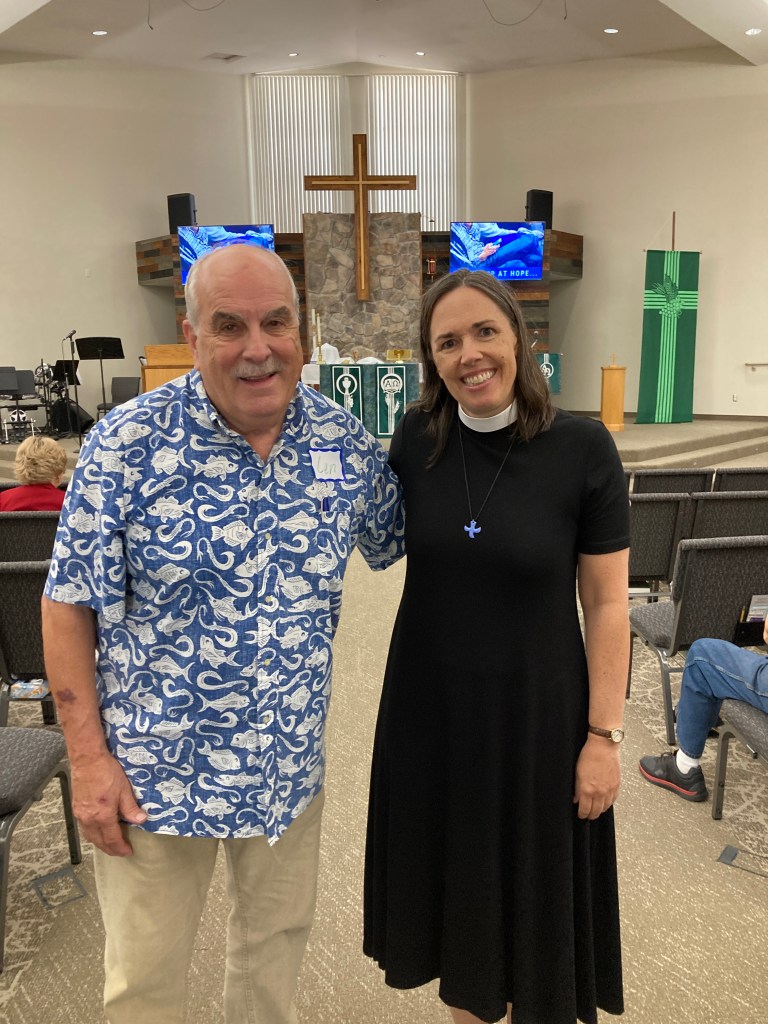
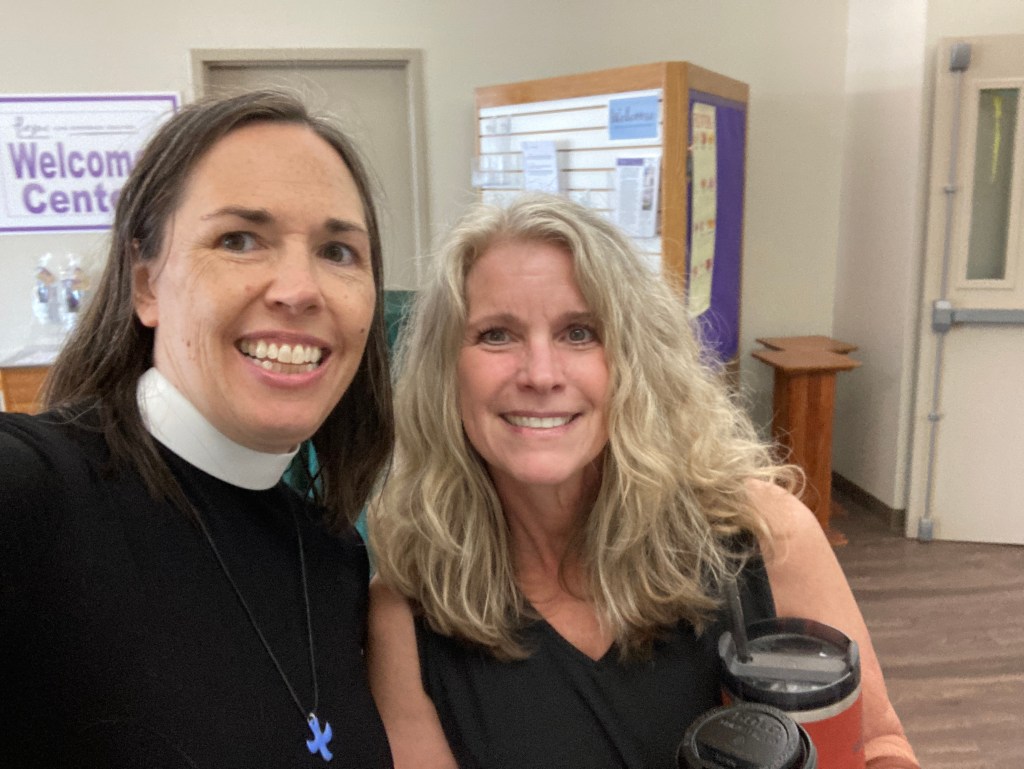
Photos: End of second worship service, me with the current council president Len, me and a parent of kids I worked with long ago (kids are now adults!), Hope’s exterior from Linder and Highway 44.

Posted in NWIM Synod, Reflections | Leave a comment

The Freedom of a Christian – Online Series

For the 500th Anniversary of Martin Luther’s treatise The Freedom of a Christian, Presiding Bishop Elizabeth Eaton invited our church to revisit the treatise. I never did that with my congregation or cluster, but I am inviting our synod into the STUDY this summer. We will meet online for six Tuesdays from Aug. 8-Sept. 12. This will be a way for you to get to know me and explore this sometime timeless document. We will also pray with and for one another and our synod. Summer is a time of travel, so I would hope participants could make at least four of the six sessions.

From Bishop Eaton, “Five hundred years ago, Martin Luther wrote a treatise titled The Freedom of a Christian. In it, he offered his most compelling summary of the Christian life: In Christ we are completely free and at the same time completely bound in love and service to our neighbors. For Christians such as you and me, this has been our Lutheran way of telling the Christian story for 500 years. At the heart of our Lutheran theological tradition, we find the antidote to our despair.” 

Fill out this GOOGLE FORM if you would like to participate.

-Bishop Meggan Manlove

Posted in NWIM Synod, Reflections | 4 Comments

St. Paul Lutheran Church, Ontario, OR

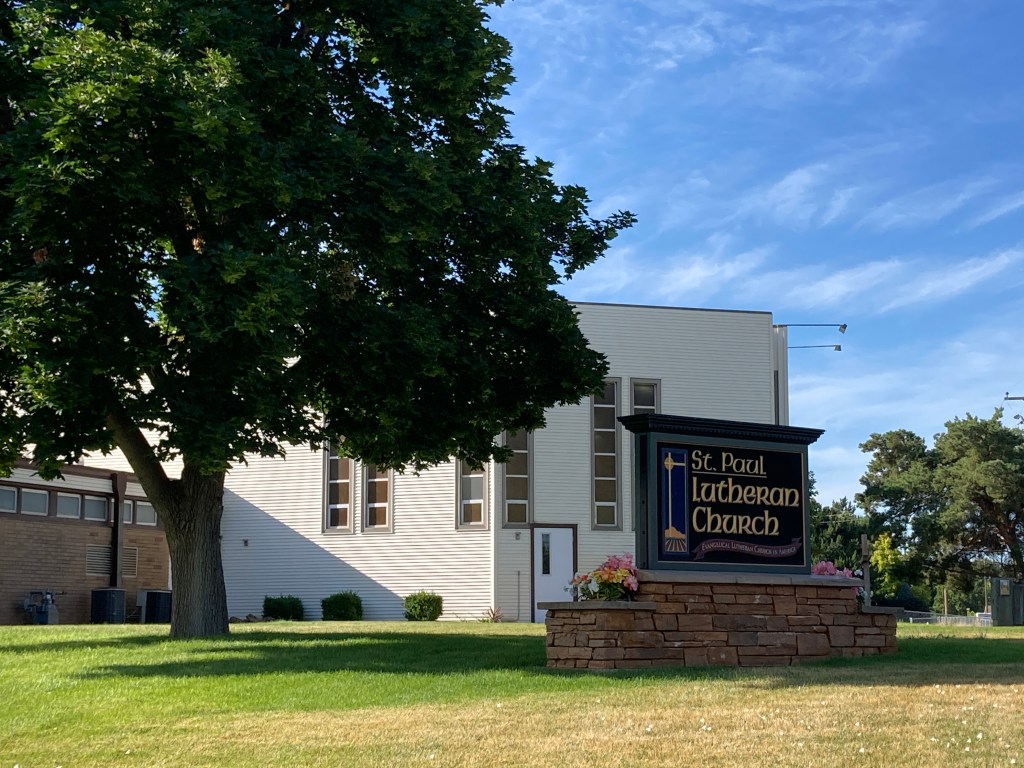
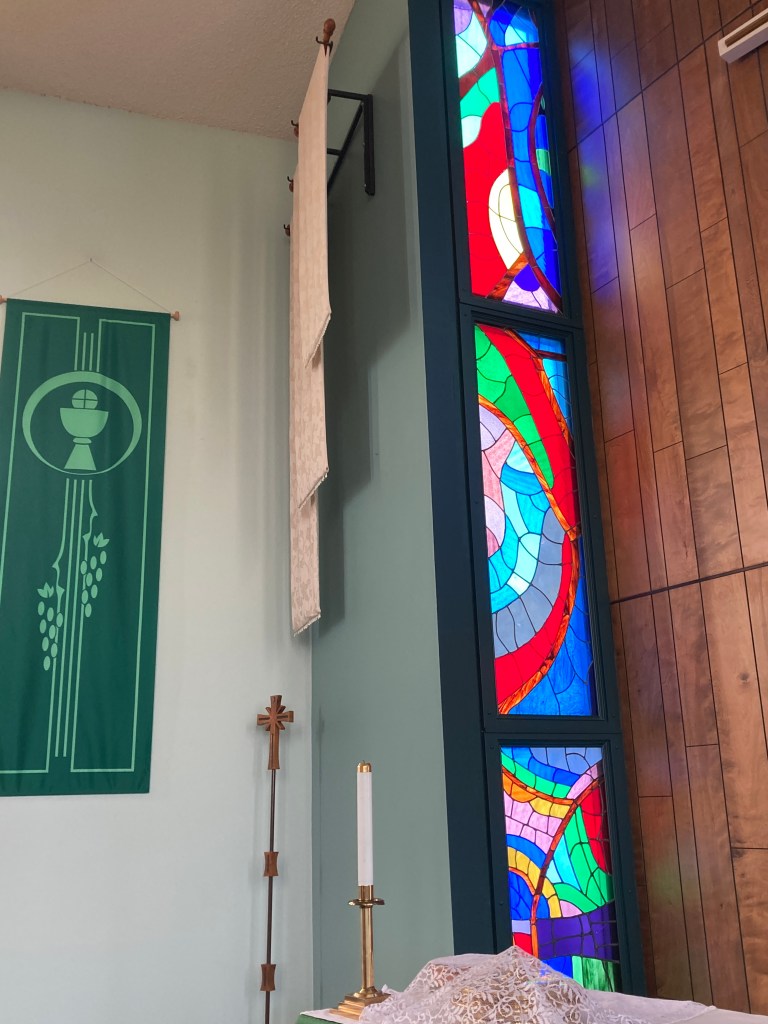
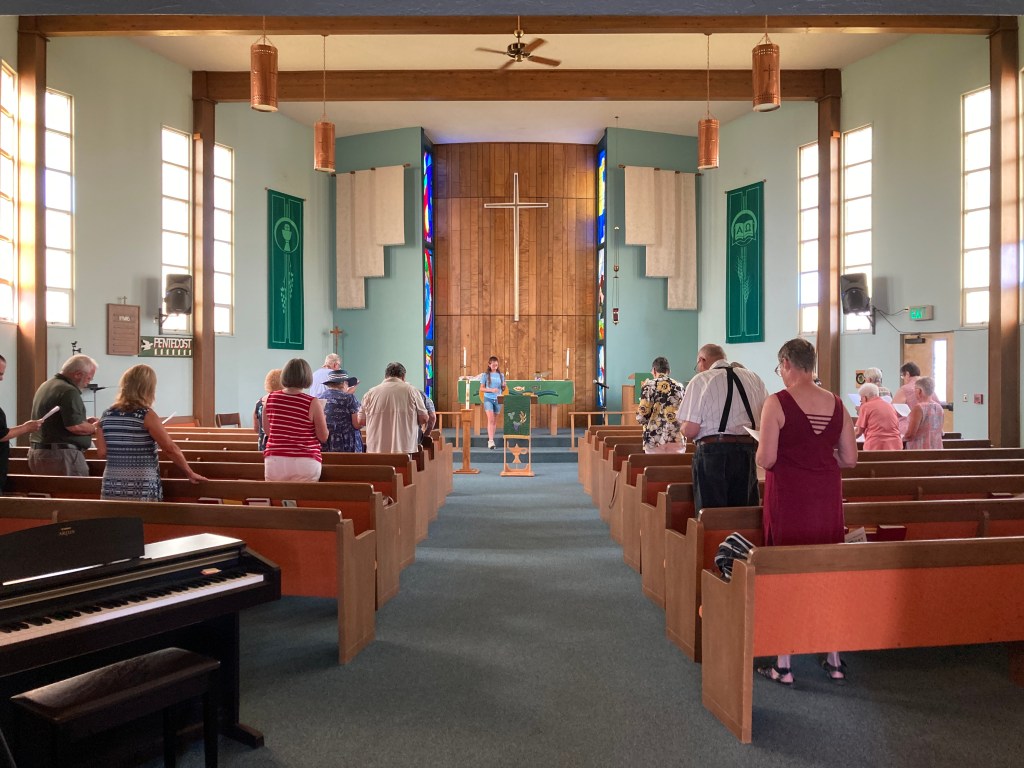
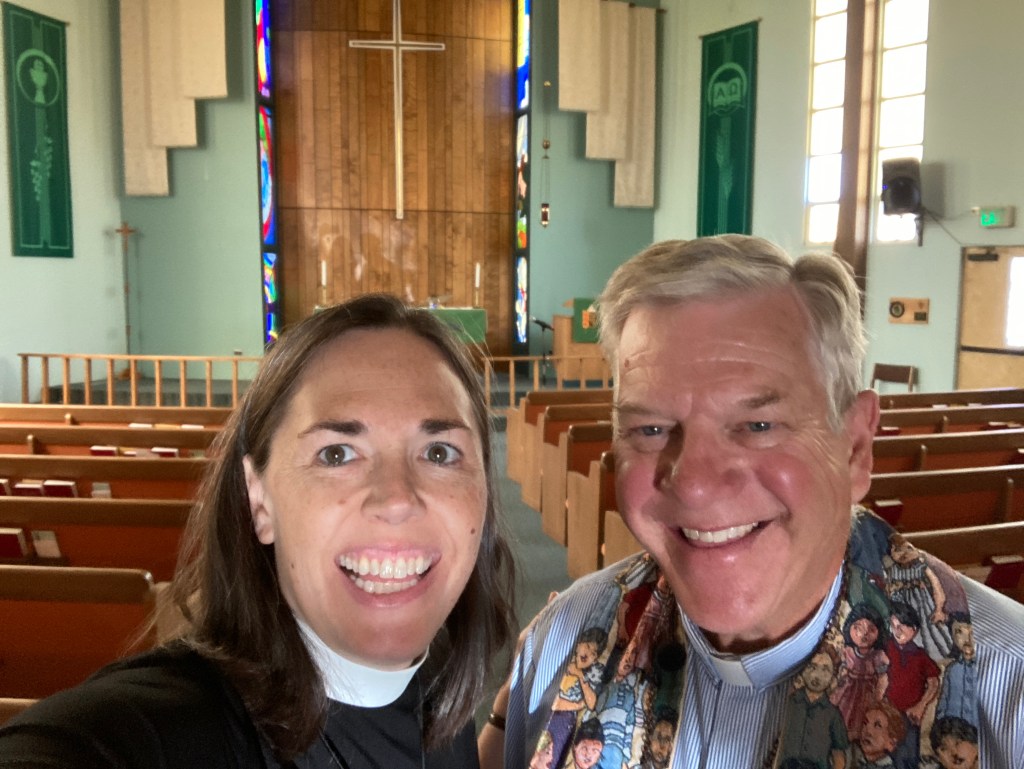
It was a beautiful morning to drive to, worship and speak with the people of St. Paul Lutheran, Ontario, Oregon. My first 4-5 years at Trinity, Nampa, we participated in TVLYFE (monthly gatherings for high school youth that rotated from church to church). Trinity always attended the gathering at St. Paul because our kids knew each other from athletic events. I became more familiar with this congregation when one of its previous pastors, James Aalgaard (now at Grace, Wenatchee) and I were both up at Luther Heights Bible Camp the same week. The church was working towards building its early learning center Giggles and Grace. Before the congregation joined our synod, former Eastern WA Idaho Bishop Martin Wells encouraged Pr Justin Tigerman (Faith, Caldwell) and I to drive out for the installation of Pastor Justin Johnson. Johnson’s sister and I had sung in college choir together–small world. One of the St. Paul youth went with our cluster group to the ELCA Youth Gathering in Houston and her mom was there this morning–so fun to hear about this young woman’s life. The church has been served by Pastor Paul Malek most recently. The stained glass, pictured below, was designed by a church member in the last ten years and replaced “70s orange” according to one member this morning. I loved the vibrant colors. It was a good morning of worship, bringing greetings from the synod, and conversations about being church today in Ontario, Oregon, a city that is part of the Treasure Valley in so many ways but is obviously in a different state. I especially appreciated hearing from newer visitors and members about why they have landed at St. Paul–people primarily looking for community and a place and people to help them encounter God. St. Paul and Giggles and Grace are hosting Luther Heights on Location (Day Camp) in two weeks!

Posted in NWIM Synod | Leave a comment

Ecumenism, Zoom calls, Connecting, Tools

I started the week talking with Redeemer Lutheran member, Professor Andrew Finstuen, who is looking for a place in Canyon County to show the documentary Idaho Listens (and then start creating a discussion guide to accompany it). Finstuen has been leading Boise State University’s Institute for American Values, whose mission is “Through dialogue, research and education, the Institute inspires us to talk and listen to each other respectfully about issues and values that have shaped America and Americans from all walks of life.”

I attended the Idaho Hispanic Chamber of Commerce Cafe con Amigos event Tuesday, just up the street from my house this month! It was great to connect with my friend Eric from Poder of Idaho. News was just starting to break about the city of Nampa taking possession of the Hispanic Cultural Center, which Learning Peace: A Camp for Kids has used for many years. I think Boise Dev has covered this story most thoroughly.

I met online with GSB to talk about fundraising and let them pass along technical advice and wisdom they have gleaned from working with many synods and bishops over the years. Thanks Paul and Evan!

I finally checked off my list applying for my travel VISA for the companion synod trip to the Ulanga Kilombero Diocese in Tanzania this fall.

Slowly I am getting into the rhythm of meeting with my Region 1 bishop colleagues weekly and leading staff meetings weekly (we are using Praying the Catechism for our devotions).

I met with two ecumenical colleagues: the Boise Presbyter and the Episcopal Diocese of Idaho Bishop.

Posted in NWIM Synod | Leave a comment