Potlach, Aug. 24

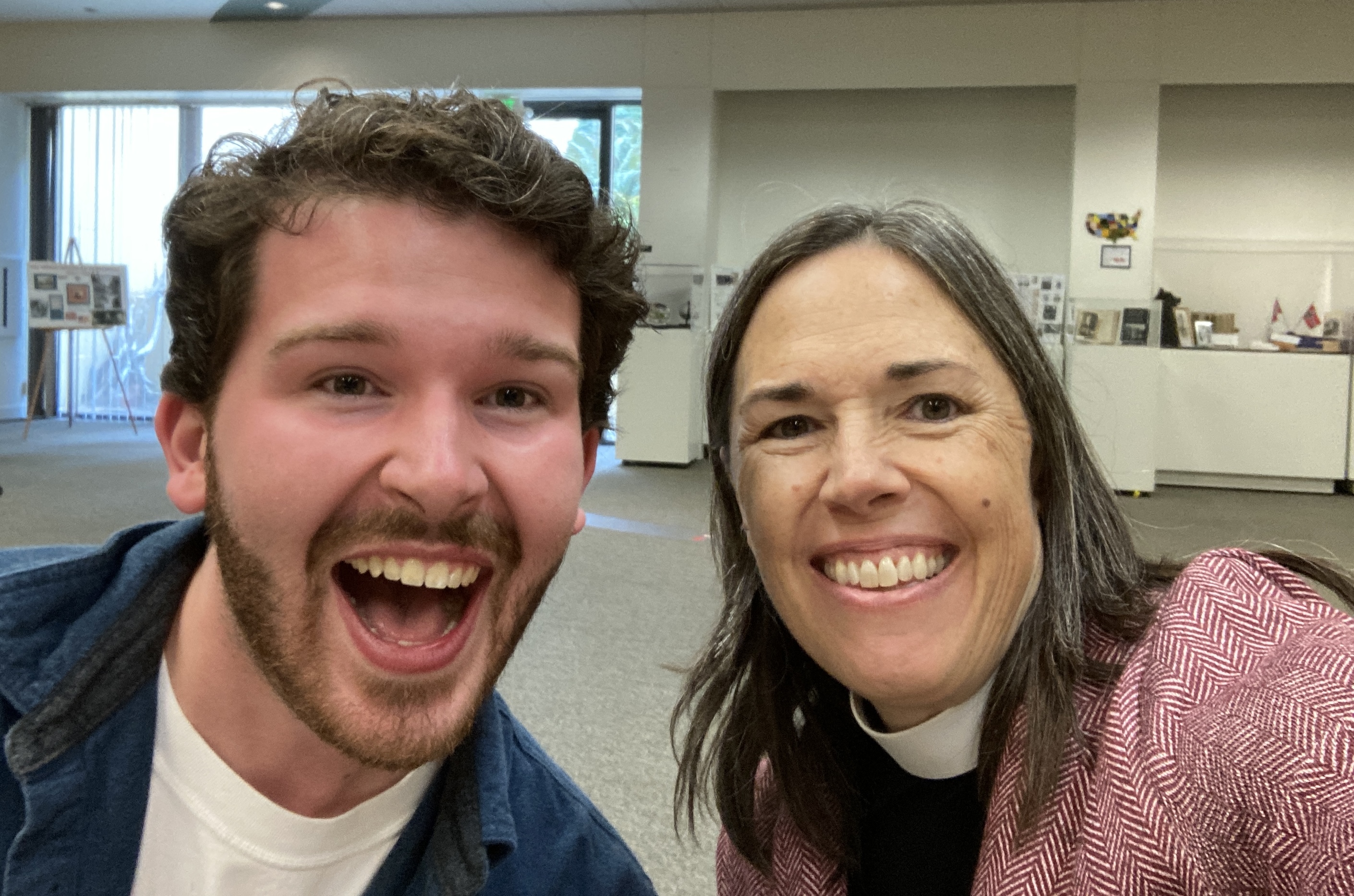
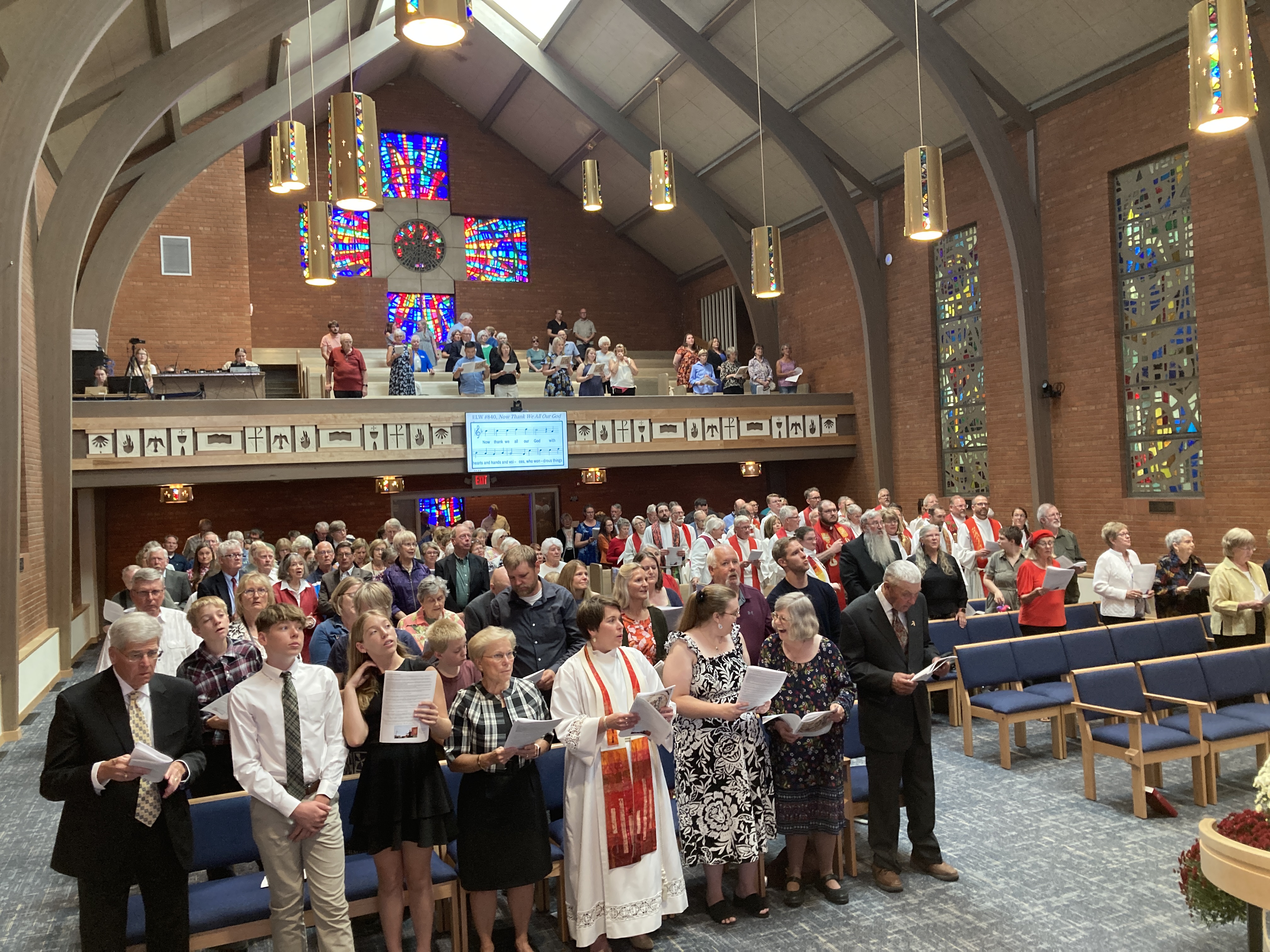
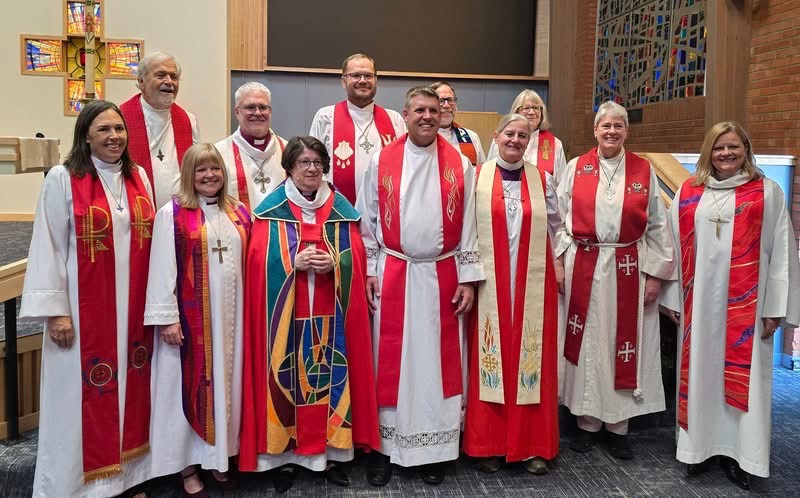
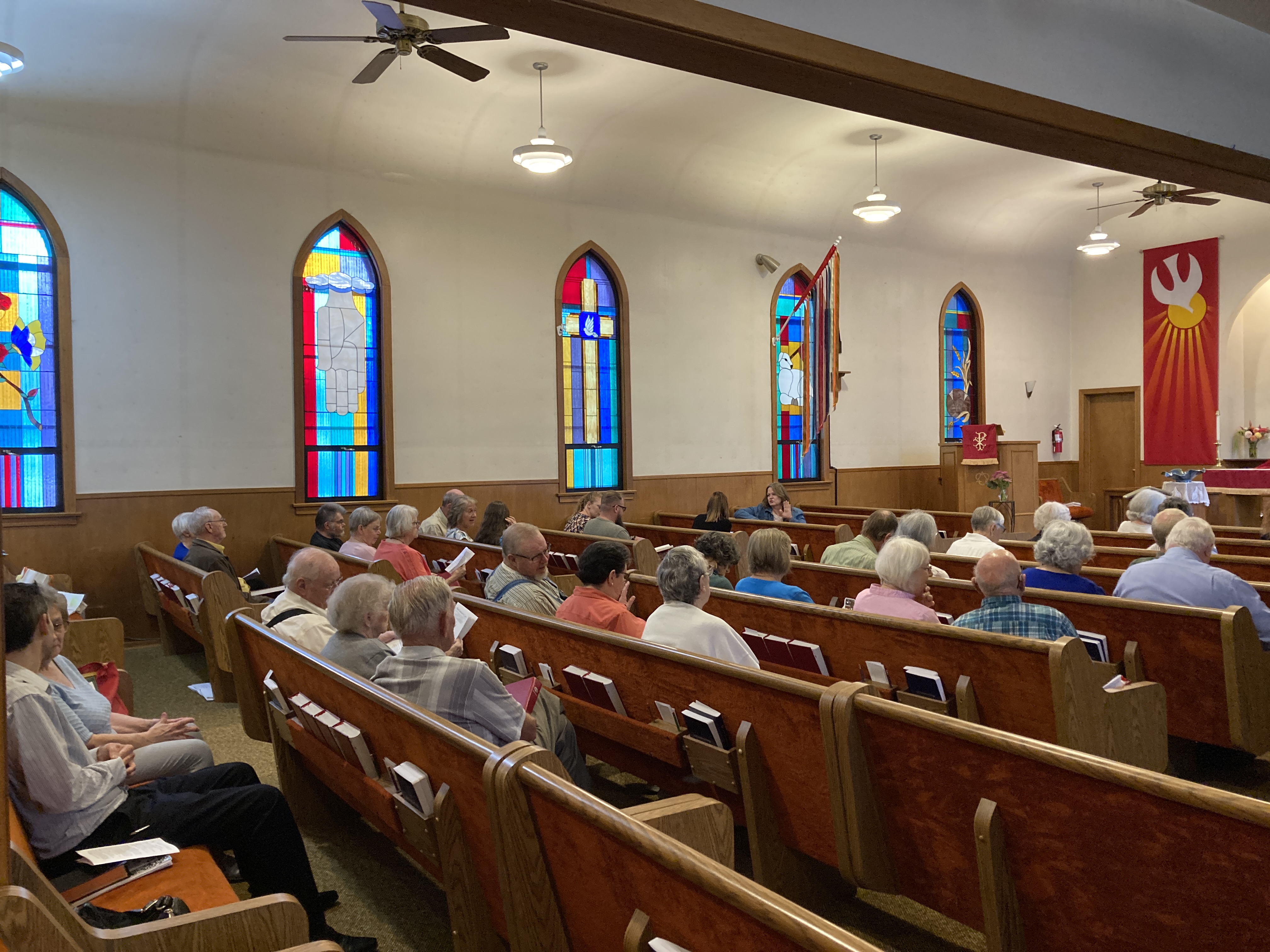
Grace Community Church in Potlatch is one of our synod’s four ELCA/PCUSA federated churches, meaning it is fully a member of both denominations. The two churches began sharing a pastor in the 1970s and fully federated just over ten years ago, according to what I heard today. They kept the PCUSA building for its size and I can see the sanctuary filling up for funerals. The congregation is a site for the Idaho Food Bank each month. I loved that many people led different parts of worship. Four different pastors rotate through each month, each assigned a different Sunday. This was not a Holy Communion Sunday so I offered to lead Affirmation of Baptism by the Assembly–such a joy.

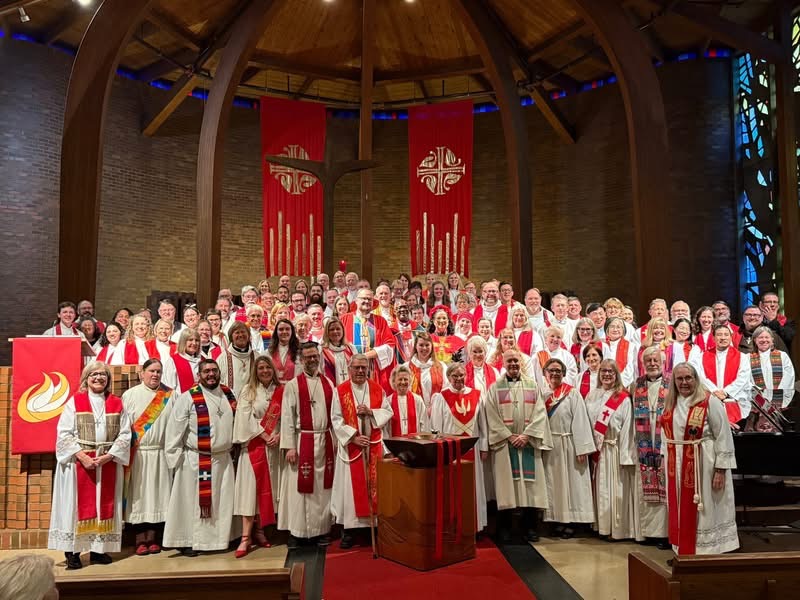
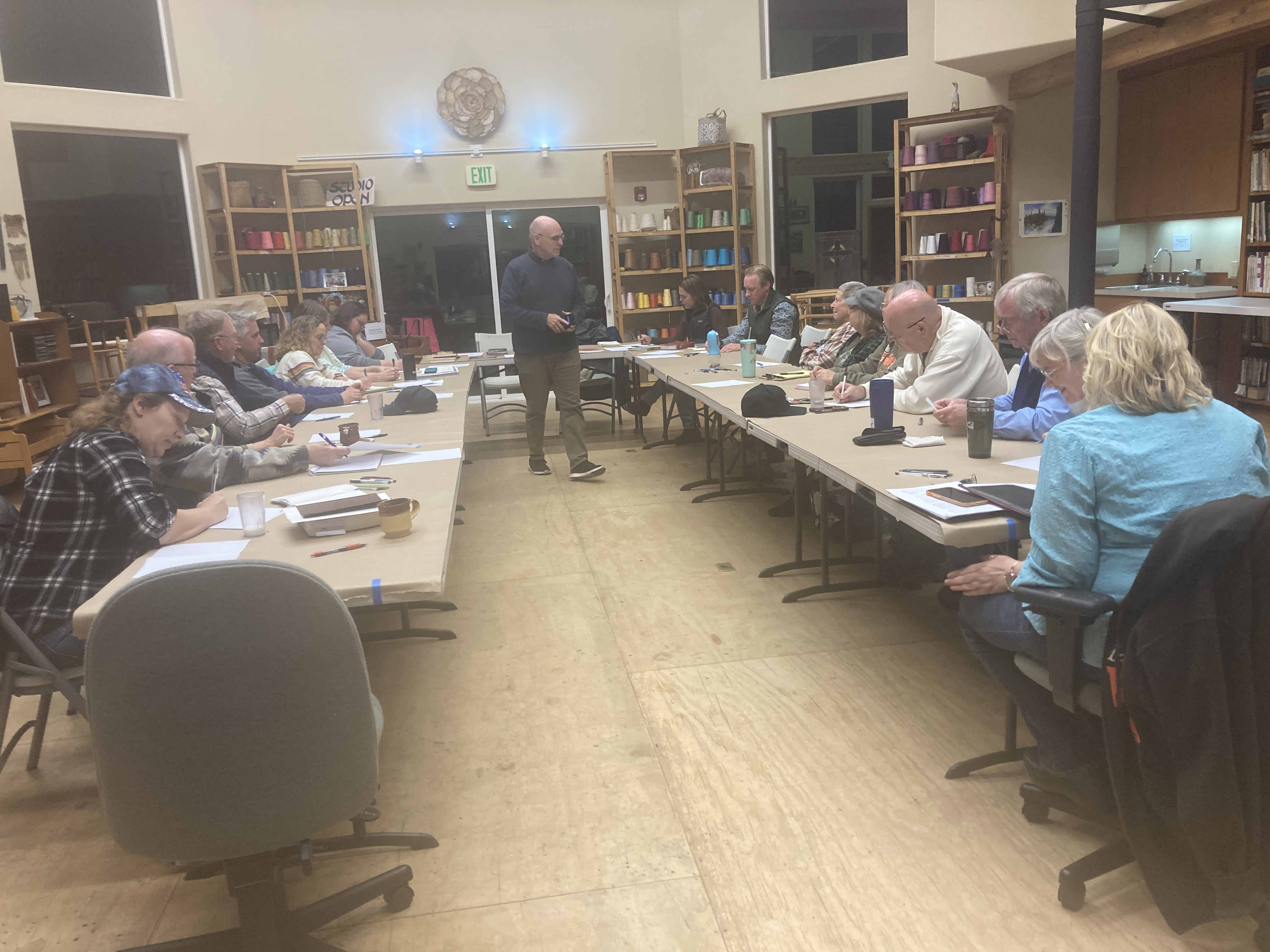
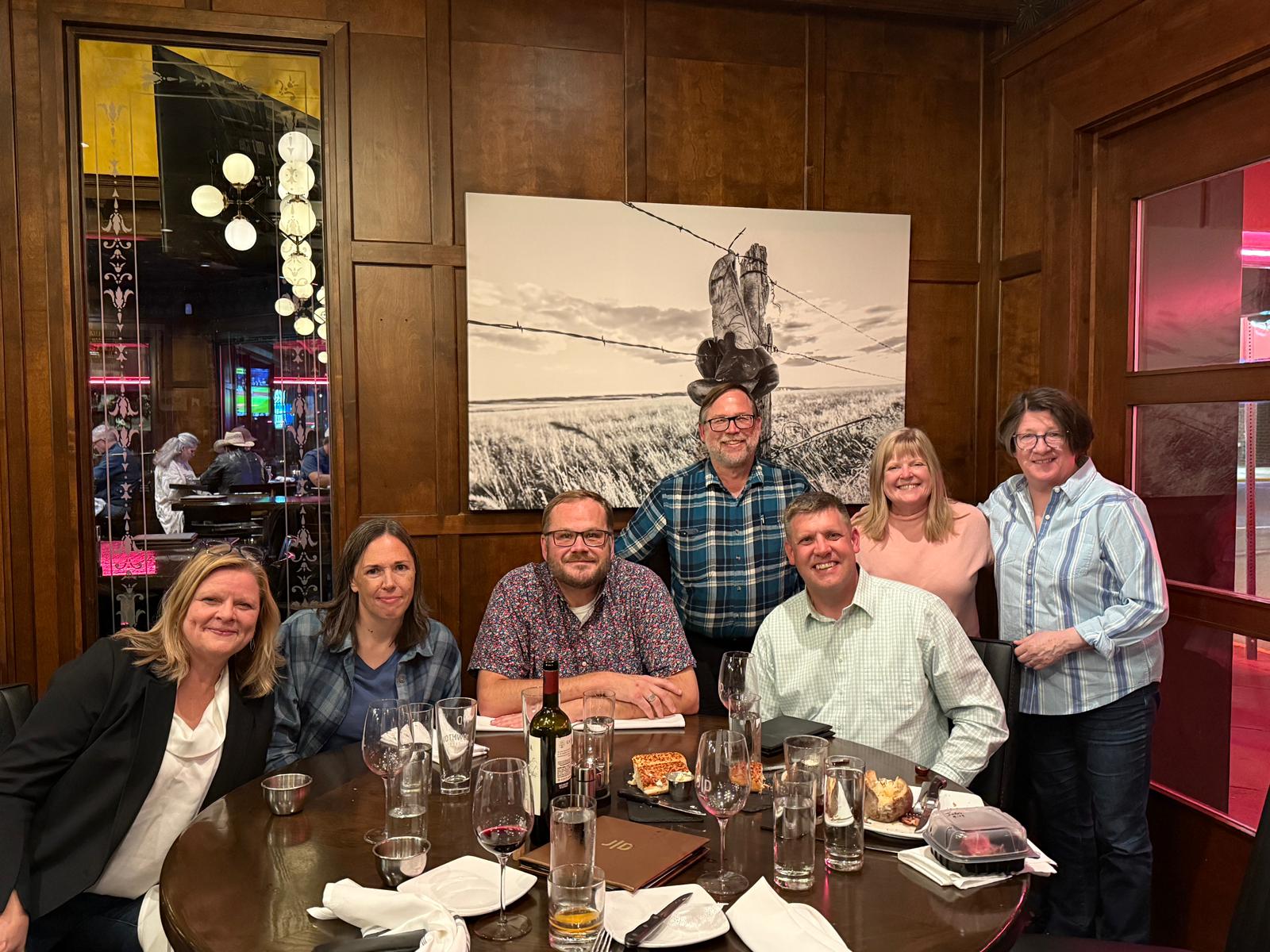
Good group for mid-August
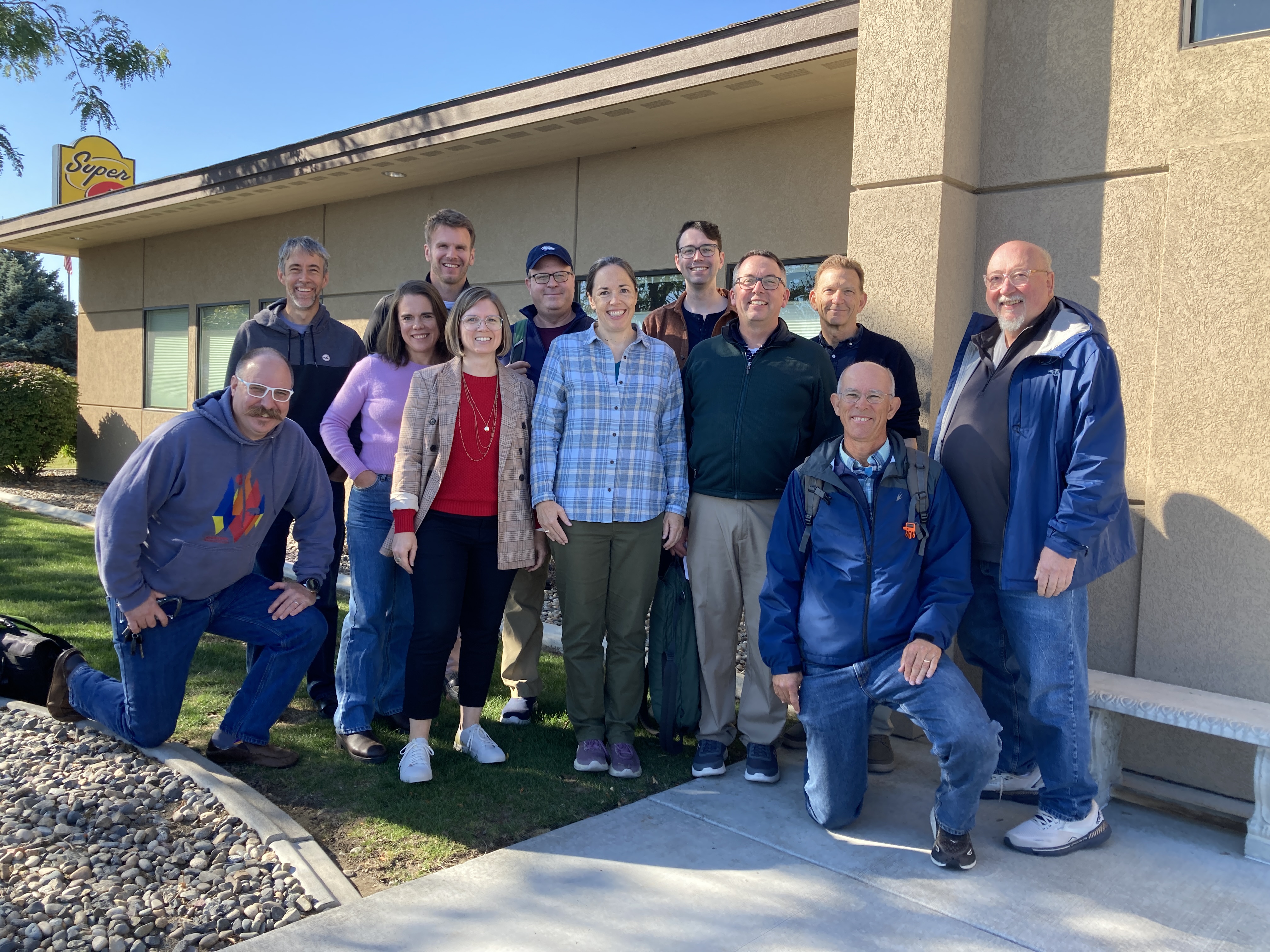
Exterior – nice ramp for mobility

Aug. 24, 2025

Luke 13:10-17

This gospel passage can so easily be simplified and we can be too quick to judge.  What was it really like for the crippled woman and the leader of the synagogue?  Settle in and walk in their shoes.

For eighteen years she has strained to see the sun, the sky, and the stars. She knows people in her community by their sandals and feet, maybe the bottom of their tunics. Most of us look into one another’s eyes. She looks down at children and small animals. Most people’s landmarks are buildings; hers are large stones and tree roots sticking out of the ground. She has grown accustomed to looking down. It is always difficult to look up. She turns from side to side to see what you who stand upright can see with just a glance. They say her illness is caused by Satan.

Jesus has come to our community. He is teaching in our synagogue. The woman is a faithful Jew and so has come here this Sabbath day. We all have heard that Jesus is a healer. He has done extraordinary things. Still, she dares not ask him to heal me, or even to approach him. She is here to listen, to learn from this teacher.  She can barely see his eyes; it is so painful to look up.  

Jesus sees her. He calls her over and says, “Woman, you are set free from your ailment.” He lays his hands on her. Immediately she stands up straight. She give thanks to God, with the whole assembly. We are rejoicing.  But a leader of our synagogue is fuming. Why?

The Sabbath is a day for rest and renewal. Honoring it has been a law since the days of Moses. In Egypt our people, the Israelites, were slaves and worked under the command of our masters. We never rested. Then Moses came down the mountain with a command to set aside one day of the week to rest and pray.

It is all too easy to start making exceptions to this rule, to any rule. It is the woman’s job as a spiritual leader of the people to help them hold fast to the laws.  What will happen if we decide that we are going to go out and work in the field because it has been neglected? What is to stop us from making another exception to the rule? Where will we stop? Will we start making exceptions to lying or gender roles? Doesn’t this Jesus, an Israelite himself, know that he is threatening our way of life—the way God gave us to live?

This parable is thick. What is Jesus thinking? Is he encouraging a domino effect of law breaking? My former congregation Trinity, in Nampa partnered with the University of Idaho Extension to teach food preservation classes. Students always asked about substitutions. They asked if there were exceptions to this rule or that rule. In some cases following the rules of food preservation was a matter of serious illness.  

Jesus is not encouraging a break from the rules. However, he is suspending a law for mercy’s sake. He can heal. He sees this crippled woman and knows that he can heal her, change her life. She will not only be restored physically. She will live a whole new life in her community. Of course he heals her, just as he heals you.

One of Jesus’ names was Emmanuel, “God With Us.” Jesus is God up close and personal; God as God really is rather than whom we had imagined God to be; God is often too close for comfort. And one of the main things we learn about God after watching God With Us in action is this: God is merciful.

Someone said, “I spent the first thirty years of my life thinking God was mad at me for something. Then I saw Jesus.” Jesus could have passed by that suffering woman that day, could have preached to her some sweet sermon on bearing up under misfortune. He could have averted his eyes from her and focused instead upon the well-heeled and more attractive people, the defenders of scripture, the keepers of religious rules. Jesus didn’t do any of that. What he did was to feel her pain and to respond to her in mercy.

Jesus saw her. But he didn’t just watch. He didn’t continue with his teaching. He really saw her. In the gaze of Jesus, which must have been the kind of gaze that goes directly to the heart, Jesus raised her up by laying his hands on her. She straightens up, and you can almost imagine their eyes meeting, their gaze locked. How she must have gloried in being seen, apart from her evil spirit, no longer that old, bent-over woman but now the friend of Jesus. Eye to eye, person to person, partners in the life of God. And she sees too. She sees God right in front of her.

The laws were given to order our lives.  Commands to protect life (do not murder), protect relationships (do not lie), to help us rest (keep the Sabbath holy) can be and are life-giving. But the greatest command is to love. We are to love God and we are to love our neighbors. Such love has the final word, is the law above all laws, is the greatest command, is the most life-giving law there is. Such love pours from the baptismal font and the promises made there, the promises we will remember today. Love poured into you from the promises of the baptismal font. At the font, each of you was seen, claimed, named child of God, a name you can never get rid of.   

What life does this love call us into? Jesus saw the crippled woman who had become invisible to the people who lived with her each day.  Perhaps we, like the crippled woman who Jesus heals, are able to see things that before we could not.  

Who do we not see when we are burdened and weighed down? Surely there are people today in bondage who need to be loosened from fear or grief or anger.  There are people who are lost and forsaken. There are other people who no one else takes time to see. Who do we not see day in and day out? Washed, forgiven, claimed as God’s own, we know that God sees us and loves us. We have new eyes to see the lost and broken in our community of faith and beyond these walls.

God’s love for us frees us.  You are recipients of this love when you are washed clean in the waters of the font. You receive God’s love and mercy when you turn to the font every week and hear words of forgiveness. You receive God’s love and mercy when you gather around the table and feast on the bread and wine—the bread of life, the cup of salvation.

Of course we can be disheartened easily. I am sure that the woman Jesus healed did not go on to live a perfect life, always praising God and never tripping up. Our work will never be done, and it will never be done perfectly. God will love us no less.  God’s mercy will bend beyond our brokenness. God will never forsake you.  God sees you for who you are and calls you by a name that is never erased, “child of God.”  Amen.

Posted in NWIM Synod, Sermons | Tagged , , , , | Leave a comment

ELCA CWA

Originally published in the August electronic-newsletter for the Northwest Intermountain Synod.

ELCA Churchwide Assembly

Yet among the mature we do speak wisdom, though it is not a wisdom of this age or of the rulers of this age, who are being destroyed. But we speak God’s wisdom, a hidden mystery, which God decreed before the ages for our glory and which none of the rulers of this age understood, for if they had, they would not have crucified the Lord of glory. But, as it is written,

“What no eye has seen, nor ear heard,
    nor the human heart conceived,
what God has prepared for those who love him”—

10 God has revealed to us through the Spirit, for the Spirit searches everything, even the depths of God. 11 For what human knows what is truly human except the human spirit that is within? So also no one comprehends what is truly God’s except the Spirit of God. 12 Now we have received not the spirit of the world but the Spirit that is from God, so that we may understand the gifts bestowed on us by God. 13 And we speak of these things in words not taught by human wisdom but taught by the Spirit, interpreting spiritual things to those who are spiritual. (1 Corinthians 2:6-13)

Dear Friends in Christ,

The above text was the second passage for our Monday morning worship at Churchwide Assembly in Phoenix, AZ. It was an honor to be one of the seven voting members from the NWIM Synod at this Assembly, under the theme For the Life of the World.

Inside this e-newsletter you will find news about our newly elected Bishop-elect Curry and Secretary-elect Mills.

We also elected ELCA Church Council members, including Rev. Dr. Barbara Rossing from Faith, Leavenworth.

We adopted our newest Social Statement: Faith and Civic Life. Rev. Dr. Anthony Bateza, one of the co-chairs of the statements task force will be with our pastors and deacons this fall.

We approved updates to the Human Sexuality Social Statement.

We heard the Commission for a Renewed Lutheran Church’s final report along with the ELCA Church Council’s response to the report.

The CRLC’s work also found its way into some of our Constitution revisions.

We adopted a Memorial that has us standing for the End of Occupation of Palestine (I have been thanked by several people for NWIM’s Pastor Dane Breslin’s words about this Memorial). We received the Common Statement on the Filioque (which I wrote about earlier here).

Our own Mondo Davilla (Celebration, East Wenatchee) served on the important Reference and Counsel Committee during Assembly, so we rarely saw him at lunchtime.

We adopted another Memorial on Indian Boarding School Remembrance.

One evening, we participated in an educational Powwow and later in the week

AMMPARO held a Candlelight Prayer Vigil for refugees and immigrants.

Our synod joined voting members and guests from the Greater Milwaukee Synod (our domestic companion synod) for a wonderful dinner.

Every day was grounded in amazing worship services. We were fed by sermons by Bishop Elizabath Eaton; Rev. Imad Mousa Dawood Haddad, bishop-elect, Evangelical Lutheran Church in Jordan and the Holy Land; Bishop Vashti Murphy McKenzie, General Secretary and President of the National Council of Churches; and Rev. Wyvetta Bullock, ELCA executive for administration.

We heard an amazing presentation from Professor Chad Rimmer from Lenoir-Rhyne University and Southern Seminary. He introduced me to/reminded me of this wonderful quote by Martin Luther: “This life, therefore, is not righteousness but growth in righteousness, not health but healing, not being but becoming, not rest but exercise; we are not yet what we shall be, but we are growing toward it; the process is not yet finished, but it is going on; this is not the end, but it is the road; all does not yet gleam with glory, but all is being purified.” Luther, Defense and Explanation of All the Articles (1521)

I don’t know how long the recordings of the plenaries and worship services will be online, but if you can, please watch some of them! You can also check out Living Lutheran online and watch for the next print edition. 

Mondo, Bp Meggan, Pr Dane, VP Lisa Therrell, Jason Mills (Trinity, Nampa), Heidi Hellner-Gomez (Immanuel, Grandview), and Sylvia Hwang (Grace, Wenatchee)

-Bp Meggan Manlove

Posted in NWIM Synod, Reflections | Tagged , , , , | Leave a comment

CaSTLE Grant

June 6, 2025

Northwest Intermountain Synod, ELCA Receives Grant from Wartburg Theological Seminary’s CaSTLE Project to Support Rural and Small Town Congregations

The Northwest Intermountain Synod, ELCA is honored to announce that it has been selected as a grant recipient through The CaSTLE Project: The Country and Small Town Lived Ecclesiology Project, a five-year initiative led by Wartburg Theological Seminary to support renewal in small town and rural congregations.

With this grant, the Northwest Intermountain (NWIM) Synod, ELCA will receive funding to deepen rural ecumenical relationships of lay people and rostered leaders in three areas across our synod as well as relationships between midlevel judicatory leaders (bishops, presbyters, district superintendents). The project seeks to deepen baptismal identity and cultivate thriving, Spirit-led communities of faith in rural contexts.

“We are grateful for the opportunity to partner with Wartburg Theological Seminary and The CaSTLE Project,” said Bishop Meggan Manlove, NWIM Synod. “This grant will allow us to We seek to deepen partnerships for the sake of the Gospel, equipping our congregations and leaders for a future rooted in hope and purpose.”

The CaSTLE Project, funded by the Lilly Endowment Inc., is part of the Thriving Congregations Initiative and aims to renew a baptismal ecclesiology for the long-term flourishing of rural congregational life. The first cohort of grantees will gather at Wartburg Theological Seminary in Dubuque, IA, from August 11–13, 2025, for a summer conference focused on mutual learning, community-building, and innovation.

“We are excited to walk alongside the leaders of NWIM Synod in this journey of renewal,” said Rev. Ramie Bakken, Director of The CaSTLE Project. 

For more information about The CaSTLE Project, visit: https://www.wartburgseminary.edu/castle-project

Local Contact:
Pastor Meggan Manlove
Bishop
bishopmeggan.manlove@nwimsynod.org

DETAILS FOR THOSE IN THE NWIM SYNOD:

July 2, 2025

Please save the date for now, as the flyer states. Talk in your leadership meeting (council, vestry….) about 2 lay leaders your congregation might send. District Superintendents, Presbyters, Bishops, and Conference Ministers have all been brought in on this collaborative effort. Stay tuned for more and thank you for all you already do to partner for the sake of the gospel!

-Bishop Meggan Manlove

Moses Lake – area from Quincy to Ritzville and from Othello up to Coulee City

Clarkston/Lewiston – north to Endicott and Potlatch

Pocatello – American Falls to Ashton

Read the Spokane FAVs Article: https://favs.news/lutheran-synod-unites-churches-strength-rural-faith-communities/

Screenshot
Posted in NWIM Synod | Tagged , , , | Leave a comment

Wild Women Retreat

This past weekend I led devotions for the Wild Women Retreat at Shoshone Mountain Retreat, part of Lutherhaven Ministries. 38 women from WA, ID, and MT, ranging in age from 20s to 80s, rafted on the Clark Fork in Montana, rode the zip line at Shoshone, hiked, rested, water colored, prayed, and built relationships.

Lutherhaven’s summer theme is Story so I adapted my storytelling workshop and paired different pieces with the Bible stories chosen for the summer, so Kim Barnes memoir Zacchaeus (belonging), Bonhoeffer’s Life Together and the Great Commission (community and discipleship), Good Samaritan as a text for Saturday’s Compline around the campfire, and then I gave a message for Sunday morning worship.

Shoshone Mountain Retreat – July 20, 2025

Wild Women Retreat 

Matt. 4:12-23 – Call of Disciples

Grace to you and peace from God our Father and the Lord Jesus Christ.

There is general agreement that Jesus turning water into wine at Cana is the first miracle, but I believe it is in today’s scene that we witness the first miracle–Jesus’ word. After seeing Peter and Andrew he says simply, “Follow me, and I will make you fish for people.” The first disciples don’t even blink. Immediately they leave their nets and follow him. The Word has great power.  

Galilee is a strange place for a Messiah to work. It was not just geographically far from Jerusalem; it was considered spiritually and politically far as well. Galilee was the most removed of the provinces. Furthermore, Judeans thought Galileans sat rather loose with the law. They were less biblically pure than those in or near Jerusalem.  Galilee was notorious as a nest of revolution. Jesus sets up shop among the outcast.  

Our gospel writer, Matthew, wants to show that Jesus’ career in Galilee, far from being proof against Jesus’ Messiahship, is proof of it. By Jesus living in Galilee, particularly by his moving right next to the Sea of Galilee to begin his public ministry, the Word spoken through Isaiah is truly fulfilled. “Land of Zebulun, land of Naphtali, on the road by the sea, across the Jordan, Galilee of the Gentiles–the people who sat in darkness have seen a great light.”

The tool Jesus and his new disciples will use in Galilee has its own significance.  There is no manipulation. They will not use any kind of bait to lure the people in.  Following Jesus means being caught up in and then using a net.  

At a certain level of reality, it is undoubtedly true that we choose Jesus as our master or teacher. We choose to be present where he is proclaimed, and his words studied. We choose to read the Gospels and ponder their significance. We choose to go on a retreat at a Lutheran Christian camp where our faith might be nurtured. At a deeper level of our being, however, we acknowledge that the reverse has been true. In all our searching we were being sought. The one whom we choose is the one who first chose us.  

God chooses us, and we respond. The gift is abundant life. Things do not stay the same. If we are to accept Jesus’ offer, we must also accept some measure of risk.  James Baldwin wrote, “Any real change implies the break-up of the world as one has always known it…the end of safety.” Spiritual growth implies change. And change suggests risk. We clutch those behaviors and beliefs that make us feel safe.  Christian spirituality calls this “attachment.” The word comes from old European roots meaning “staked” or “nailed to.” It implies that what makes us feel safe may also place us spiritually in peril. Our souls remain tethered to something other than the love of God.  We hold ourselves back from what we were meant to become.  

Jesus chooses us once and for all. We are chosen people. But following him is a daily undertaking.  Letting go and following Jesus is not something we do once. We follow daily.  Each day we are invited to follow him and take the risks that might be involved.  We embark on an adventure, just as the first disciples did. 

Andrew and Peter left their nets immediately and followed Jesus. Likewise, James and John left their boat with their father and followed Jesus. Unlike us, they did not know the rest of the story. But they seem to have been prepared to take a great risk in response to those simple words, “Come, follow me.” 

The first disciples reorient themselves. Jesus had preached, “Repent, for the kingdom of heaven is near.” “Repent” does not picture sorrow or remorse, but a change in the direction of one’s way of viewing the world. Get yourself a new orientation, a new perspective for the way you live, then act on it.

Why repent? Why do we need a different perspective? Something new is on the horizon, perhaps in our midst. Jesus proclaims that the kingdom of heaven is near. He echoes John the Baptist, who came preaching, calling for repentance, “for the kingdom of heaven has come near.” This morning, Jesus imitates that call. The Sermon on the Mount will come next. In it, Jesus interprets discipleship and God’s blessings in terms of kingdom talk, or reign of God talk. Later, the disciples will be sent out with the same message. Further into his ministry, when Jesus begins using parables, he will paint a picture of the reign of God including images of the treasure hidden in a field or the precious pearl or the Samaritan who showed neighbor love.

Through it all, beginning with his invitation today, what is clear is that it begins first and foremost with God. God, through Jesus, proclaims that the kingdom of heaven is near. Emmanuel, God with us, in Jesus, is living proof that God’s reign is indeed breaking into the world.

Posted in NWIM Synod, Sermons | Tagged , , , , | Leave a comment

Easter 7 Sermon for Montana Synod Assembly

There’s been a lot of travel and I forgot to drop this on my blog.

Montana Synod Assembly 

May 31, 2025

John 17:20-26

When I hear Jesus’ prayer for his disciples in our reading from John’s gospel today, I hear his visions and hopes for authentic love and unity. I hear him speak poetically about his relationship with the Father, you might think Mother if that is easier for you. We hear of a loving and connected parent-child relationship. And though the Holy Spirit is not named in this text, that dance of the Trinity, the relationality inherent in the God we worship is so present in this prayer. The love within that Holy Trinity is abundant and real and inviting. It’s hard to carry out as human beings, sinful and broken as we are, which is one of many reasons Jesus prays for his disciples. If it were automatic human behavior, then there would be no need for prayer.

This struggle made me think of my first call in Soldier, Iowa, a town of 200 people near the Missouri River in what’s known as the Loess Hills. I served there from 2004-2010 and shortly before I arrived, the school district that Soldier, Iowa was part of was dissolved. A vote was put to the citizens and instead of merging with their long-time partner district, a pin was dropped in the middle of the current district. Like many ELCA Lutheran congregations, my new church was full of schoolteachers. They were grieving, in disbelief that other residents had not seen things the way they did. I clearly remember teachers telling me how difficult it was to stand around the Holy Communion rail with people who had voted in such a way that they had lost their jobs. But they kept coming to worship. They kept coming together and sharing the bread and wine, shoulder to shoulder receiving the gifts of new life and forgiveness. And very slowly relationships healed.

During Holy Communion we are literally invited into the unity of the Triune God, unity portrayed in Jesus’ prayer. In the town church we had a straight communion rail but Memorial Day weekend through the month of June, we went out to the old massive country church for worship. And there stood a beautiful half-circle communion rail, one where you not only stood shoulder to shoulder with people, but those on the ends could look across and make eye contact. One big reason I am still in the church, with all of its faults and growing edges, is because of our audacious belief that when we cannot forgive, when we cannot reconcile, when we have no energy to be curious about one another, the means of grace can still be received through Word and Sacrament. My hunger for bread and wine draws me to the table where I feast shoulder to shoulder with my siblings in Christ.

I wrote to my synod recently that I think we forget how radical and rare it is for the good news of God’s love and grace to be preached and heard, and for the sacraments to be celebrated faithfully. It is radical and rare in part, at least within the geography I serve, because there are so many other things parading as the gospel. I am especially exhausted by White Christian Nationalism permeating into so much of the fabric of the territory I serve. Why does something so antithetical to the good news of Jesus Christ get to carry the name of Christ?

White Christian Nationalism is based on creating and sustaining social hierarchies, often revolving around gender and sexuality. It is also comfortable with authoritarian social control. And it includes a desire for strict boundaries around national identity, civic participation, and social belonging that fall along ethno-racial lines. A “Christian nation” is generally understood to be one where white, natural-born citizens are held up as the ideal, with everyone else coming after. (Andrew Whitehead, p. 29). 

I worry sometimes that as we get clearer about being against White Christian Nationalism, we are not exactly sure what we are for instead. Sometimes it is easier to speak in the negative than the positive. I am grateful to be with you this weekend and hear more about why the two resolutions related to our indigenous siblings are important to you as individuals and as a synod. Addressing the reality of Missing and Murdered Indigenous Women and the history of Indian Boarding Schools is, in fact, one way to follow the Jesus we encounter in the gospels. 

When we say Christian Nationalism is antithetical to the gospel of Jesus Christ, we need look no further than Jesus’ prayer for his followers. Jesus prays, “As you Father, are in me and I am in you, may they also be in us.” Hear the mutuality and oneness. “That they may become completely one, so that the world may know that you have sent me and have loved them even as you have loved me…I desire that those also, whom you have given me, may be with me where I am to see my glory, which you have given me because you loved me before the foundation of the world.” 

The prayer is saturated in this rich love language, and it is a love not for one set of people, but for the whole world, the cosmos, the same world sung about at the beginning of this same gospel: “The true light, which enlightens everyone, was coming into the world.He was in the world, and the world came into being through him, yet the world did not know him.” This is the world God made, the world God loves, and the world into which God sent the Son. Into this same world, Jesus now sends his disciples. They are already in the world but now they are commissioned to bear witness in and to the world of God’s love.

And what is this love? Something sentimental that we might find on a cupcake or greeting card? No. Our final verse summarizes the work of all of Jesus’ ministry, “I made your name known to them, and I will make it known, so that the love with which you have loved me may be in them and I in them.” This verse confirms one of the central themes of Jesus’ Farewell Discourse to his followers: Jesus’ death and departure does not end his presence and work with the faith community. Jesus’ work continues in the work of the Holy Spirit. 

God’s love is constant and ongoing, and the love goes on through the Holy Spirit. Empires and ideologies come and go. God’s love will be with you forever. Disagreements within congregations, synods, and entire denominations are important and can keep us up at night, but the balm that gets you through the night is God’s love. 

Influencers, newsfeeds, and so much more can seem to have all the answers. But compared the good news of Jesus Christ, it’s all a mirage in the desert. You worship the God who, as we learn earlier in this gospel, is the source of living water. 

That’s why the author of Revelation records, “the Spirit and the bride say, ‘Come.’ And let everyone who hears say, ‘Come.’ And let everyone who is thirsty come. Let anyone who wishes, take the water of life as a gift.” That gift is for you, always and forever. Amen.

Posted in NWIM Synod, Sermons | Tagged , , , , | Leave a comment

Walla Walla Installation Sermon – July 13

Installation of Pastor Lars Hammer 

Christ Lutheran, Walla Walla

July 13, 2025

Mark 4:1-9, Isaiah 40:1-11, Psalm 96, Romans 12:4-8

An installation service is a great day for celebration. We celebrate the journeys of both the congregation and pastor or deacon and the new mutual ministry that has begun. Ministry always takes place in a context and so today provides opportunity to pray and dream and wonder about the present and future ministry of Christ Lutheran in Walla Walla, WA, a place with its own story.

Pastor Hammer has selected a wonderful constellation of scripture passages for us: Isaiah’s words of comfort that we perhaps all wanted to break in song proclaiming—so many composers have paired those words with music. We read together Psalm 96 with its praise, invoking so much of natural world. If every congregation in our synod simply provided God’s comfort for their community and praised God, that would be more than enough, I think.

The truth is, I want more for our congregations, which is why I love that Romans 12 is part of our worship today. Paul gives us the reminder that everyone in this congregation, not just the pastor, brings God-given gifts to their daily lives and to the collective ministry of Christ Lutheran. It is also a reminder that no congregation has to do everything, be all things. As one of my friends is fond of saying, “congregations can have vocations too.” 

After two years as bishop of the Northwest Intermountain Synod, I can say that one of my deep joys is not only identifying gifts in individuals but watching an entire community of faith discern its calling or callings for a particular period of time, a chapter of their life together. 

And then we have our gospel reading about seeds landing on different soil, a lesson for those who follow Jesus about how the Word of God and the Word, Jesus, are received. Listen! Jesus commands, foreshadowing the message to those on the Mount of Transfiguration, “This is my Son, the Beloved; listen to him!” In the verses following our gospel passage, Jesus explains the parable for his early followers and us.

Birds eat the seeds on the path; the obstacle is Satan, whose opposition ensures that potential disciples will remain “by the way” instead of “on the way.” Consider the crowd that only listens but does not follow. 

Seed that falls on rocky soil is like the word that is received but when obstacles arise, followers of Jesus defect. You might think of disciples for whom suffering is a stumbling block.

Seed sown among the thorns seems to represent those who really do hear the word; however, they do not bear fruit. We are reminded of the “worries of this age, the lure of wealth, and all other passions.” And it’s hard not to think of the one discipleship rejection story in this same gospel—the rich young man who turns away from Jesus’ call, whose story we never hear the end of.

Despite the years since this parable and explanation were written down, there is much that still resonates. The barriers to hearing the message–to repent for the reign of God has come near–are perhaps as robust as ever. There is much that can and does block hearing Jesus’ word.

Evil still exists and we might be better off if we all called it by name. In my synod newsletter column, I recently encouraged our congregations to include the corporate the Affirmation of Baptism service into Sunday morning worship this summer or fall, in part so you can all practice renouncing the devil and all the forces that rebel against God.

Do other obstacles still arise? Well, what would our rostered and lay leaders gathered here today say? Global pandemic, recessions impacting the church institutions we’ve depended on for so long, dissolution with organized religion. A few nights ago, I read a thread on social media: members of Generation X explaining why they do or do not participate in a church community. The stories of people hurt by the church were heart breaking. But to some of the writers I wanted to shout, “Well, Christian community is not perfect but it’s worth it. Try it.”

In fact, there are so many barriers to hearing the word and following Jesus. It’s almost easy to miss the final verse, “Other seed fell into good soil and brought forth grain, growing up and increasing and yielding thirty and sixty and a hundredfold.” 

On an installation Sunday we get to bear witness to that fruit. (In so many other parts of our synod I would stick with grain, or substitute wheat, but hear in the Grape Cluster, fruit seems the appropriate metaphor). Reading through Pastor Hammer’s biography, we see seeds that were planted in his life, and we see seeds the Holy Spirit has already planted through him. 

But equally as important is the body of Christ seated here, to return to our passage from Romans. Each of you, members of Christ Lutheran, members of Walla Walla, and clergy colleagues are also evidence of fruit bearing, evidence that the Holy Spirit pursued you along the way. Through another person or in a holy solitary encounter you heard the message “repent, the reign of God has come near.” And you are here on a Sunday afternoon worshiping and celebrating that through the same Holy Spirit, the good news of Jesus Christ will continue to be shared. Alleluia! What might that mutual ministry look like? For that we go back to the gospel.

It strikes me that the reading for today does not include Jesus allegorizing of it.  How does the text read by itself? One scholar, taking us back to rural 1st century Palestine, writes that “the parable’s focus on the majority of seed, which went fruitless would be bitterly familiar to the peasant, for whom the grain seed represented his only ‘cash flow’—with it he fed his family, paid the rent and tithes, and sowed next year’s crop. The fact that above all it is the greed of affluence that chokes the seed also held special significance for the tenant farmer, for it reflected [his agrarian reality]. Wealthy landlords always extracted enough of the harvest to ensure that the farmer remained indentured to the land, strangling any prospects he might have to achieve even a modicum of economic security.” 

A typical farmer might expect a yield of around 7:1. The parable’s harvest then represents a dramatic shattering of the vassal relationship between peasant and landlord. With this surplus, the farmer could not only eat and pay his rent, tithes, and debts, but even purchase the land, and end his servitude. “The kingdom is like this,” Jesus might be saying. It envisions the abolition of the oppressive relationships of production that determined the horizons of the Palestinian farmer’s social world. 

I doubt that many of the top 1% of wealth in our country is here in Walla Walla, but the wealth gap in our country is widening and impacting your community. I don’t expect our congregations to solve our country’s or world’s economic woes. What I hope for are wellsprings of God’s love where people receive glimpses of the reign of God, where imaginations are opened, where hope is born and nurtured, and where we can talk about all the hard things through the lens of the gospel of Jesus Christ. 

Today God’s abundance is made clear in a simple meal of bread and wine. The promises of new life and forgiveness are the fruit that will feed and sustain us. A new perspective, an in-breaking of the reign of God, are clear at the table with its foretaste of the feast to come. Thanks be to God.

Posted in NWIM Synod, Sermons | Tagged , , , , | Leave a comment

On Baptism and Vocation

Originally published in the Northwest Intermountain Synod July e-newlsetter

Dear Friends in Christ,
I had been planning to use this July column to look ahead to Labor Day Weekend, which I will still do. First, I want to commend to you Bishop Eaton’s Statement on the passage of the One Big Beautiful Bill Act with her calls to action. I know this legislation will impact our communities, though not exactly how and when. Current local events also felt big this past week as I watched the story of the two firefighters’ deaths in Kootenai County. Then we heard that Bruce and Barbara Turner and the new priest, Father Akinpelu James (a Luther Seminary grad), of St. Luke’s Episcopal Church in Idaho Falls (which hosts New Day Lutheran) were in a car crash. Bruce died and Barbara and Akinpelu sustained injuries. I am grateful that our faith tradition gives us the tools to make space for grief and prayer and lament. These leave room for encounters with the divine, even and especially when we feel that we are in the darkest valleys. Please be open to God meeting you there in the valley. What then for the people of God?

I have been thinking a lot about two other related gifts of our tradition—Affirmation of Baptism and our theology around vocation. I love so many parts of the Affirmation service. What I appreciate the most probably depends on the day I am having. Sometimes it’s the renunciation of the devil and all that rebels against God (added in the Evangelical Lutheran Worship edition). Sometimes it’s the summary of the five promises (sometimes called the five gifts of discipleship). Sometimes it’s the gifts of God named in the liturgy. I still love the prayers in the old Lutheran Book of Worship. Being reminded of who we are and whose we are is always a good and powerful thing. I suggest taking a Sunday this summer or in the fall to have your whole congregation affirm their baptism. Are there people worshiping with you who are probably not baptized? That’s okay. You can invite them to participate in whatever way they feel comfortable and use it as an opportunity to talk about our Lutheran understanding of Holy Baptism.

I know several congregations, and there are surely more, who have heard from their members on Sunday mornings or Wednesday evenings about how they connect their faith with their current or past jobs and careers, how they live out their vocations. If you have not done this yet, maybe this is the year. Often in the late summer and early autumn we are good at blessing teachers and farmers, but what if this year, leading up to or following Labor Day, we blessed all varieties of labor? This could take place during the offering time—offering thanks for the gifts people offer in the way of labor. I think people need to be reminded, now more than ever, that God blesses them outside of our hour of communal worship, that God cares about our labors (volunteer and compensated). Equally important, we all need reminders that united with Jesus Christ, we each can bring gifts of empathy, connection, and presence to our laboring, no matter what it is. 

From the e-newsletter of Rev. Tim Brown, Director of Congregational Stewardship Support: 

Blessed be, God of all creation.

Give softness to the land.

Give us skill to work the land.

This plough is sign to us of Your blessing.

Give us softness of heart.

Give us skill to serve You.

Blessed be God—Creator, Christ, and Spirit,Three of Glory, Three of Light, Three of Life.


—From Meg Llewellyn, The Celtic Wheel of the Year: Christian & Pagan Prayers & Practices for Each Turning (Anamchara Books, 2020) 

Bishop Meggan Manlove

Posted in NWIM Synod, Reflections | Tagged , , , , | Leave a comment

Seattle University and Quality of Call

I am a week behind on this blog, in part because as soon as I got home from Seattle there was one event after another that I was paying attention to (synod, national, global) and after months of staying healthy, I developed a small cold. But the weekend in Seattle, and how it came to be, are important and I want a record of them for the future.

Seattle University, a Jesuit school in Seattle proper, long had a Master of Divinity degree that a number of ELCA Lutherans earned. That degree program sunsetted, but the Center for Ecumenical and Inter-religious Engagement has remained strong. Last year, the Center’s Michael Trice reached out the ELCA Region 1 bishops about creating a summer certificate program and launching the pilot in 2025. Each of us six bishops was invited to send one person in each category: lay person, seminarian, first call pastor or deacon, specialized minister, later in their career minister. They called it the Discerning Leadership Certificate.

Here’s more language from the flyer: The CEIE Discerning Leadership Certificate is an immersive, intensive residential opportunity for leaders seeking to deepen self-knowledge, refine their leadership skills, and explore their leadership future in a safe and nurturing environment. The certificate is facilitated in a method of Ignatian discernment and guided by spiritual directors and coaches in a 5:1 cohort model.The Certificate begins May 1, with an online instructional resources, preparatory reading and reflections, and two virtual sessions with coaches and cohorts in June. 

I was so excited about this because I have deep appreciation for Ignation spirituality after my year in the Jesuit Volunteer Corps AND Seattle is only a short drive or flight for everyone in my synod. I think lifelong learning and connecting with colleagues are so important and I was thrilled that I could send people to a quality event that would not take them a whole day to travel to (or use up their entire continuing education budget on airfare).

So as this certificate program was developing, we bishops were reminded that we could/should apply for Quality of Call grants from the ELCA. From the ELCA website: The Quality of Call Initiative is part of the Presiding Bishop’s Leadership Initiative and is funded by a generous donor to empower change. The vision of this initiative is: A church that is equitably served by people who are empowered to serve with their gifts, irrespective of identity markers heretofore targeted by systems and individuals for bias, discrimination, and oppression.

Synods could apply for smaller grants and a few synods, or an entire region, could apply for a collaborative grant. I suggested our region add on two nights to the Certificate program for seminarians and ministers who are women and invite an outside facilitator to help us bishops listen. I know my own experience as a woman pastor in Nampa, Idaho, but that’s not representative of all the women serving across the region. We would use this listening and some surveys to create a second larger event.

In the end, eight women stayed after the certificate program. Three bishops came for the two nights. We invited Jill Beverlin, Director of Coaching Ministries in the ELCA, to be our facilitator. I had never met Jill, but she has a great reputation and after a few Zoom calls with her and Bishop Laurie Larson Caesar from Oregon I knew we would be fine. But Jill was better than fine–she was outstanding–reading the room, getting to know everyone, and giving the participants space to process the week they had just experienced while also giving them just a few more tools and practices.

I, in turn, got to be the event coordinator. I already had deep respect for our staff and volunteers that coordinate with venues but that respect has definitely grown. There are so many tiny pieces of just a two day event for a few people!

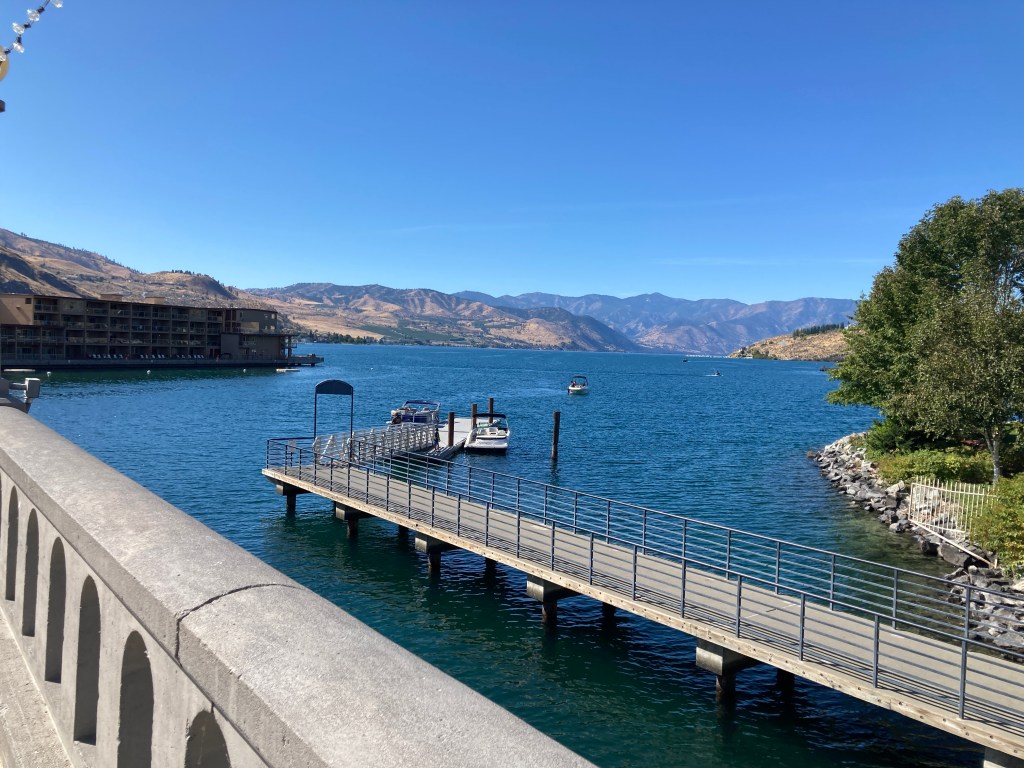
Kudos to Bp Larson Caesar for suggesting we end the two nights with dinner on the water. It was a bit breezy but the conversation and view were absolutely worth it.

Sunday morning was mostly about heading home, but I decided to catch up with some family friends–Pastor Maynard and Darlene Attik. They took me to their home church, University Lutheran, and I got to meet Pastor Andy and learn about all the renovations happening there. Maynard preached, but before he did, he explained the impact my dad Jerry had on him. Maynard is the one who cheered me on when I was trying to receive a call after serving in rural Iowa. His good friend Eric Wilson Wieberg was my predecessor at Trinity, Nampa who led the church through the affordable housing venture–something I put together a few years into the call at Trinity–small world. It’s always worth the time to connect with old friends.

Posted in NWIM Synod, Reflections | Tagged , , , | Leave a comment

All about Pride parades and festivals – a letter to the NWIM Synod

Originally sent to pastors, deacons, and synod council members.

Across our synod, from June through September, community members will be showing up at Pride Parades and Festivals as one way to support our LGBTQ+ siblings. You might wonder what in the world this has to do with being a Lutheran Christian today. 

One of our starting points is this excerpt from the Statement of Purpose section in the ELCA constitutions: Serve in response to God’s love to meet human needs, caring for the sick and the aged, advocating dignity, justice, and equity for all people, working for peace and reconciliation among the nations, caring for the marginalized, embracing and welcoming racially and ethnically diverse populations, and standing in solidarity with the poor and oppressed and committing itself to their needs (C4.02.d).

Further, our synod is a Reconciling in Christ Synod, which means we believe that God made us each Imago Dei, in the image of God. We believe that whenever the image of God is denied in our LGBTQ+ siblings, whether by law, policy or hatred, the Imago Dei is diminished in all of us. We encourage our ministry sites and larger communities to support and advocate for the full inclusion of LGBTQ+ people in all aspects of our life together. We strive to interpret scripture boldly through the Lutheran Christian lens of God’s unending grace and abundant love for the world. Love is at the very heart of our faith, as Jesus himself invites us to “Love one another.” Our love is welcoming and faithful. It always protects, always trusts, always hopes, always perseveres (1 Corinthians 13:7, NIV).

When the LGBTQ+ community uses the word “pride” it refers not to pridefulness but rather about having pride in — celebrating — an identity that is God-given. We hold our LGBTQ+ siblings in prayer and pray for them, for their families, and for our community this month and beyond. May God ever guide and bless our journey toward justice, inclusivity, and hope in our synod and beyond.

Do we still need Pride parades and festivals in 2025? The world’s first permitted gay parade was organized for June 28, 1970, to commemorate the Stonewall Rebellion on Christopher Street in New York City the year prior. Since then, we have seen denominations, including the ELCA, change their positions on committed same sex couples and LGBTQ+ people in committed relationships serving as pastors and deacons. We witnessed the landmark Obergefell v. Hodges (2015) Supreme Court case. But our responsibilities go beyond adjustments to policies and laws, and LGBTQ+ people are still not seen by all people as made in God’s image. So yes, until the time when all shall see their neighbors as God has always seen them, I believe we still need Pride Parades and Festivals. If you have never attended one, maybe this is the year to be curious and attend. Ask compassionate questions. Listen to stories. Wonder what the Holy Spirit is up to.  

I also commend to you the documentary 1946: The Mistranslation that Shifted Culture. Watch it with a friend or as a congregation and then discuss it. Finally, if you are ready to dive in more, check out what our friends at Reconciling Works have to offer for Pride Resources

Bishop Meggan Manlove

2025 Pride events within the NWIM Synod territory (not comprehensive)

May 30 – Ontario, OR

May 31 – Ellensburg, WA

June 6 – Jackson Hole, WY

June 6 & 7 – Southern Idaho (Twin Falls) 

June 7 – Coeur d’Alene, ID

June 13 & 14 – Spokane, WA

June 14 – Pocatello, ID

June 21 – Wenatchee, WA and Rexburg, ID

June 22 – Tri-Cities (Kennewick, Pasco, Richland, WA)

June 28 – Idaho Falls, ID

July 11 – Sandpoint, ID

July 26 – Goldendale, WA

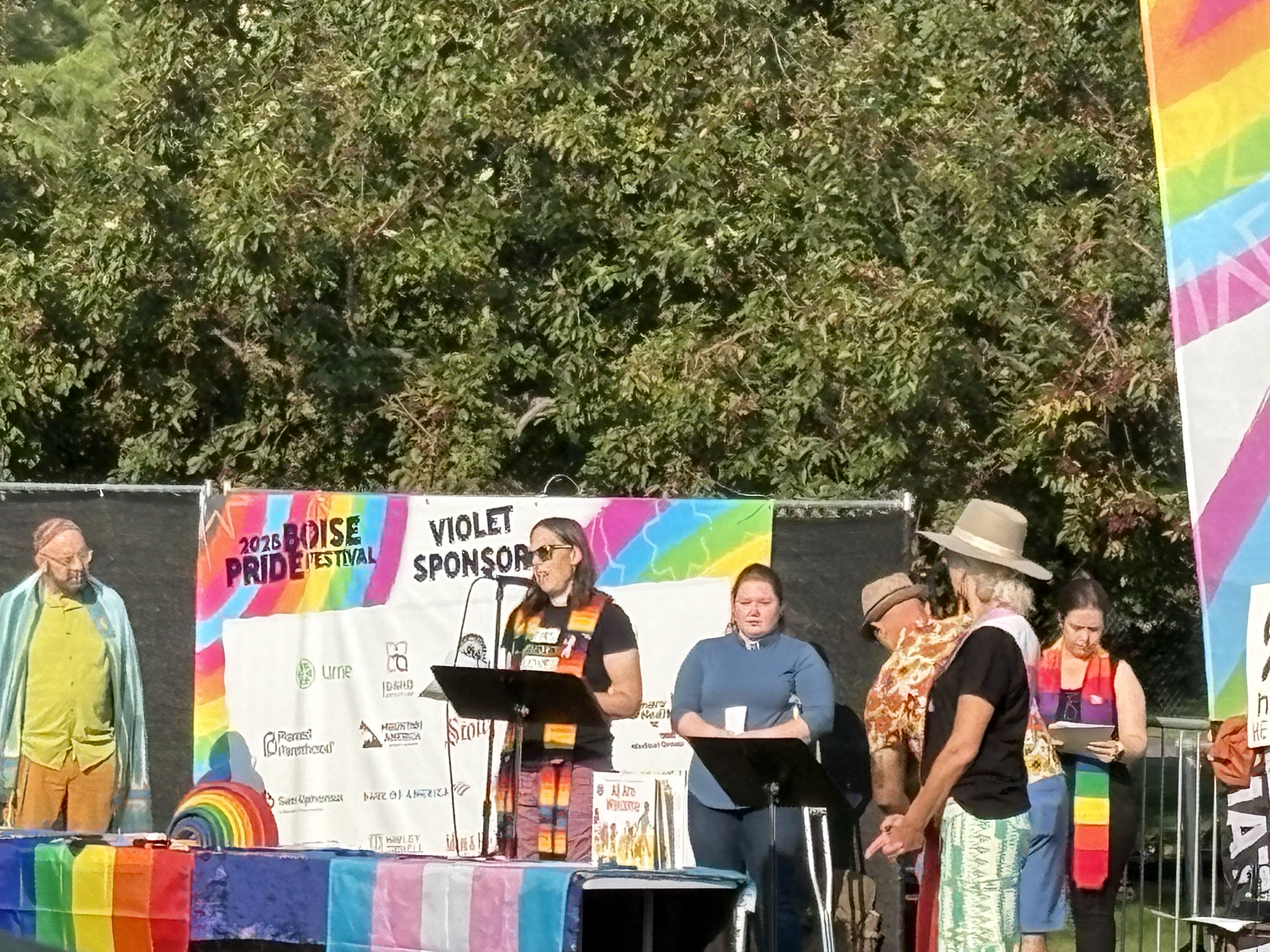
Sept 5-7 – Palouse Pride (Moscow, ID) and Boise, ID

Posted in NWIM Synod, Reflections | Tagged , , , , | Leave a comment

End of a Road Trip

When people ask me what has surprised me most about this call as bishop, how I respond usually depends on the day or week. I have certainly been surprised by the pastoral care needed by both rostered leaders and congregations. The upside to this is that pastoral care is something I am equipped for after so many years in parish ministry. But another thing that’s surprised me is the jigsaw puzzle of being a good steward of the synod’s resources and my time as I serve the synod and larger ELCA and as I try to stay healthy. My travel pales in comparison to some of our churchwide staff and bishops who have continual international and national commitments. I don’t know how some of them do it. I’m coming to the end of a 12 day trip and I am very excited for several nights at home, at the same time I am so grateful for the hospitality I have received and the encounters I have had.

It started two Fridays ago when I flew to Seatac to attend the Southwestern Washington Synod Assembly, where the assembly was electing a new bishop and thanking Bishop Rick Jaech for his twelve years as bishop. I had so many good conversations with ministry partners (like our Washington State liaison to VOAD and Lutheran Disaster Response Ray Sherjven and UW Campus Pastor Chelsea Globe and SW WA Director for Evangelical Mission Joey Ager and Lutherwood Camp Director Pr. Kevin Beebe). And it’s always good to see ministry partners Andrea Arey (Portico) and LuAnn Ferguson (MIF) and hang out with Region 1 Bishops Shelley Bryan Wee and Laurie Larson Caesar.

With Bishop-elect Keith Marshall

Sunday morning I drove an easy and beautiful two hours to our church in Ellensburg (see previous post). After worship I had lunch with two future ministry candidates and then drove on to Spokane. On Monday, I was able to fit in several important one-on-one conversations and a lot of phone conversations.

Tuesday morning, Bishop Shelley Bryan Wee (whose parents live near Spokane) and I headed to Montana together to join the other four Region One bishops for our annual retreat. It was a really wonderful time together, saying good goodbyes to two colleagues and seeing a gorgeous part of Montana I had never really explored. Highlights of our sightseeing were the First People’s Buffalo Jump and a boat ride along the Missouri that took us past the setting for Norman Maclean’s Young Men and Fire. But the worship, prayer, and laughter were what my body will carry from our time together.

Shelley dropped me off in Spokane, where I’m stay with a family friend, and I had nice Saturday in Spokane and then preached and presided at Prince of Peace on Sunday. Post-worship time was filled with great conversations. This week, Pastor Joel joined other lay and rostered leaders from our synod and across Region 1 ELCA at Seattle University for a pilot program created by their Center for Ecumenical and Inter-religious Engagement.

Flying into O’Hare

Sunday afternoon I took a nonstop flight from Spokane to Chicago for a Monday thru Tuesday morning meeting at the Lutheran Center on Higgins Road–Seminary Debt Reduction Task Force. This group has been doing research for several years and I’m coming in just at the very end as liaison bishop. (Bishop Curry stepped off the task force when he became chair of the Conference of Bishops). It is an amazing group of people to work with and learn from and our time was led by Adam DeHoek from ELCA Research and Evaluation. We’ll be giving a report to ELCA Church Council in November, so stay tuned.

Our time at the Lutheran Center overlapped with the first few days of Bishop Formation for 13 new bishops and it was great to meet them all and catch up with the veteran bishops leading Formation. But now it is going to very good to go home and sleep in my own bed.

Posted in NWIM Synod, Reflections | 1 Comment