The Tree of Life

Originally published on tvprays.org.

Proverbs 3:13-18


13 Happy are those who find wisdom,
   and those who get understanding, 
14 for her income is better than silver,
   and her revenue better than gold. 
15 She is more precious than jewels,
   and nothing you desire can compare with her. 
16 Long life is in her right hand;
   in her left hand are riches and honour. 
17 Her ways are ways of pleasantness,
   and all her paths are peace. 
18 She is a tree of life to those who lay hold of her;
   those who hold her fast are called happy. 

This Lent, Trinity Lutheran, Nampa’s midweek theme is The Tree of Life. Each Wednesday, as part of our Taize Prayer services, we hear a scripture passage that mentions trees or the tree of life specifically. I was familiar with every passage recommended by our worship resource except for this one from Proverbs. 

The tree of life is first found in Genesis 2-3, where cherubim and a flaming sword guard it after Adam and Eve’s expulsion from the garden. Here in Proverbs, not at all off limits, the tree as wisdom may be grasped–not as a means to everlasting life, but for health, prosperity, and joy. 

In some poetry of the ancient Near East, wisdom was likened to a great woman in the skies who guided people toward righteous living. For the Hebrew people, this Wise Woman was the Torah. In Lent we can see Christ as this Wisdom, a tree of life for us.

There are few things I appreciate more in the life of faith than a good image, metaphor, or story. I have absorbed myself in data points the last two years trying to lead a congregation thought the Covid pandemic. I often wonder what metrics I am supposed to use to measure ministry today. And Trinity Lutheran is involved in affordable housing work, another arena where data points are abundant and needed, especially when trying to gain funding or change laws.

So more and more I love that faith is less about data and more about stories and images that give life and hope. I find the tree of life compelling because my life has been full of trees. Ponderosa Pines dominated my youth growing up in the Black Hills. In college, riding my bike along the Red River (which runs north), I grew to love the changing colors. The fall colors of Minnesota paled in comparison to those I witnessed in central New York, during what we would now call my gap year. I walked my subdivision perimeter in Nampa a ton during the first months of the pandemic and was amazed by the buzz of the trees–hundreds of pollinators found the blossoms in those trees. There was so much life in those branches.

It makes complete sense to me that people would equate that life with the life that comes from Wisdom. Sometimes we sons and daughters of the Reformation are so grateful to be justified by grace alone, a great corrective at the time, that we forget or minimize the guidance for abundant life in scripture and our tradition. 

It is not that following the Torah (and I mean the entire Torah not just 10 Commandments) and teachings of Jesus are a guarantee of health and joy, at least not if we look at the metaphor purely as individuals. There are too many structural and systemic barriers in place. 

But what if we were to follow the Torah and Jesus teachings as entire congregations or communities? Trees again can guide us. Much has been written in the last five years about how trees are not siloed organisms in the forest. Instead, they communicate with each other. A classmate of mine summarizes some of the recent literature in her book review of Finding the Mother Tree: Discovering the Wisdom of the Forest.

There is so much wisdom for how to live well in scripture, and this living well does bring joy and health. I do not need data points to tell me that, though they exist. It is my lived experience. I am ultimately happier when I care for friends and strangers. My body is better off when I do not covet, but instead keep a gratitude journal. I am healthier in body, mind, and spirit when I take time to worship God and take time for rest. 

Likewise, the communities I am part of are also healthier when we heed the teachings in scripture: when we practice love of neighbors within and beyond our community, when we celebrate what God has given us instead of having a scarcity mindset, when we take time to re-create in the mountains at Luther Heights or during the annual church campout, when we together worship the Lord our God with our heart, soul, and mind. Like the trees, we are made for community, for doing faith together. 

Posted in Reflections, Trinity Lutheran | Leave a comment

Why go to church camp?

My former professor Don Browning defined practical theology as “critical reflection on the church’s dialogue with Christian sources and other communities of experience and interpretation with the aim of guiding its action toward social and individual transformation.” Sacred Play­grounds is a practical theology project that Browning would have admired. Jacob Sorenson seamlessly weaves together theology, church history, scripture, and empirical research about the impacts of Christian summer camp on campers.

The book contains two complementary arguments: the Christian summer camp experience makes multiple mea­surable impacts on campers, and camping ministry deserves attention from academic scholars. The research supporting the project is impressive. During the summers of 2015 through 2019, Sorenson’s team surveyed more than 7,000 campers at over 35 Christian camps across the United States and Canada.

Click here to read the full review.

Posted in Reflections | Leave a comment

March 6, 2022

Prayer of the Day

O Lord God, you led your people through the wilderness and brought them to the promised land. Guide us now, so that, following your Son, we may walk safely through the wilderness of this world toward the life you alone can give, through Jesus Christ, our Savior and Lord, who lives and reigns with you and the Holy Spirit, one God, now and forever.

Amen.

Deuteronomy 26:1-11

1When you have come into the land that the Lord your God is giving you as an inheritance to possess, and you possess it, and settle in it, 2you shall take some of the first of all the fruit of the ground, which you harvest from the land that the Lord your God is giving you, and you shall put it in a basket and go to the place that the Lord your God will choose as a dwelling for his name. 3You shall go to the priest who is in office at that time, and say to him, “Today I declare to the Lord your God that I have come into the land that the Lord swore to our ancestors to give us.” 4When the priest takes the basket from your hand and sets it down before the altar of the Lord your God, 5you shall make this response before the Lord your God: “A wandering Aramean was my ancestor; he went down into Egypt and lived there as an alien, few in number, and there he became a great nation, mighty and populous. 6When the Egyptians treated us harshly and afflicted us, by imposing hard labor on us, 7we cried to the Lord, the God of our ancestors; the Lord heard our voice and saw our affliction, our toil, and our oppression. 8The Lord brought us out of Egypt with a mighty hand and an outstretched arm, with a terrifying display of power, and with signs and wonders; 9and he brought us into this place and gave us this land, a land flowing with milk and honey. 10So now I bring the first of the fruit of the ground that you, O Lord, have given me.” You shall set it down before the Lord your God and bow down before the Lord your God. 11Then you, together with the Levites and the aliens who reside among you, shall celebrate with all the bounty that the Lord your God has given to you and to your house.

Psalm 91:1-2, 9-16

1You who dwell in the shelter of | the Most High,
  who abide in the shadow of | the Almighty—
2you will say to the Lord, “My refuge | and my stronghold, 
  my God in whom I | put my trust.” 
9Because you have made the | Lord your refuge,
  and the Most High your | habitation,
10no evil | will befall you,
  nor shall affliction come | near your dwelling.
11For God will give the angels charge | over you,
  to guard you in | all your ways.
12Upon their hands they will | bear you up,
  lest you strike your foot a- | gainst a stone. 
13You will tread upon the lion | cub and viper;
  you will trample down the lion | and the serpent.
14I will deliver those who | cling to me;
  I will uphold them, because they | know my name.
15They will call me, and I will | answer them;
  I will be with them in trouble; I will rescue and | honor them.
16With long life will I | satisfy them,
  and show them | my salvation.

Romans 10:8b-13

8b“The word is near you,
  on your lips and in your heart”
(that is, the word of faith that we proclaim); 9because if you confess with your lips that Jesus is Lord and believe in your heart that God raised him from the dead, you will be saved. 10For one believes with the heart and so is justified, and one confesses with the mouth and so is saved. 11The scripture says, “No one who believes in him will be put to shame.” 12For there is no distinction between Jew and Greek; the same Lord is Lord of all and is generous to all who call on him. 13For, “Everyone who calls on the name of the Lord shall be saved.”

Luke 4:1-13

1Jesus, full of the Holy Spirit, returned from the Jordan and was led by the Spirit in the wilderness, 2where for forty days he was tempted by the devil. He ate nothing at all during those days, and when they were over, he was famished. 3The devil said to him, “If you are the Son of God, command this stone to become a loaf of bread.” 4Jesus answered him, “It is written, ‘One does not live by bread alone.’ ”
  5Then the devil led him up and showed him in an instant all the kingdoms of the world. 6And the devil said to him, “To you I will give their glory and all this authority; for it has been given over to me, and I give it to anyone I please. 7If you, then, will worship me, it will all be yours.” 8Jesus answered him, “It is written, 
 ‘Worship the Lord your God,
  and serve only him.’ ”
  9Then the devil took him to Jerusalem, and placed him on the pinnacle of the temple, saying to him, “If you are the Son of God, throw yourself down from here, 10for it is written, 
 ‘He will command his angels concerning you,
  to protect you,’
11and 
 ‘On their hands they will bear you up,
  so that you will not dash your foot against a stone.’ ”
12Jesus answered him, “It is said, ‘Do not put the Lord your God to the test.’ ” 13When the devil had finished every test, he departed from him until an opportune time.

Christ Tempted – Monreale Cathedral; Monreale, Italy

Sermon – Pastor Meggan Manlove

The term “Lent” originally comes from the Anglo-Saxon word “lencten” which means “spring.” This is the time, in the Northern Hemisphere at least, when the days are lengthening. Lent is a springtime for the souls. We dig down around the roots of our faith–giving those roots all they need to flourish. It is a season of fasting, prayer, giving, and repentance. Repentance is having a new perspective, new lenses to see God, ourselves, and our neighbors. We put the Alleluias away until Easter morning and instead sing, “Nothing in all creation can separate us from the love of God.”

The season of Lent began as period of fasting leading up to the Vigil of Easter. Catechumens, a churchy word for those preparing for baptism at Easter, would fast and spend days in intense preparation. For those that were already baptized, Lent was a period to be renewed in their faith by studying the Bible, the Creed and the Lord’s Prayer.

Although it was originally only a two-day period of preparation, Lent became a three-week preparatory period in the middle of the fourth century and then this was further expanded into six-weeks, or forty days. By the end of the fifth century, there was a desire to exclude Sundays from Lent since Sundays are always celebrated as feasts of the Resurrection. And so, Lent begins not on Sunday, but on Ash Wednesday.

The current practice of forty days of Lent recall Moses’ forty-day fast on Mount Sinai, Elijah’s 40 days on the mountain, and of course Jesus’ forty-day fast in the wilderness after his Baptism.

To fully grasp Jesus’ journey, we have to go back to that baptism. Then and there God declared Jesus to be his Beloved Son, in whom he is well pleased. The words of that address are taken up in today’s story of testing. This time they are on the lips of the adversary. Two times the devil recalls God’s address. He calls it into question with the taunt, “If you are the Song of God.” It is followed by specific tests to find out whether Jesus truly is God’s Son–from the devil’s point of view.

These are not tests to do things that are desirable but not good for him (like our temptation to eat an extra piece of cake). These are tests to see whether even good things can lure Jesus from a focus on God and God’s will.

One pastor summed up the three tests as being about wealth, power, and safety. These are tests we are familiar with today. “At every turn it seems we are tempted to set aside God’s agenda for our own. We are tempted to be derailed from the best God wants for us all…. Jesus is tempted with three things quite familiar to us as well: wealth, power, and safety.” 

The first temptation is to turn a stone into a loaf of bread. This would certainly ease Jesus’ hunger after 40 days of fasting. If Jesus can do that then he can also turn the many stones covering Israel’s landscape into food. He could feed the many hungry people in a land often wracked by famine. This sounds like the manna in the wilderness that fed the Israelites. The challenge is to be a new Moses. 

Later Jesus will teach his disciples to pray, “give us this day our daily bread.” Bread is necessary for life. Martin Luther says bread is “Everything that nourishes our body and meets its needs, such as: Food, drink, clothing, shoes, house, yard, fields, cattle, money, possessions, a devout spouse, devout children, devout employees, devout and faithful rulers, good government, good weather, peace, health, discipline, honor, good friends, faithful neighbors and other things like this.”

So, what’s wrong with Jesus wanting these things? Absolutely nothing, unless their support replaces his primary mission. Our lives too are derailed by good things. The temptation is to make our life about the constant pursuit of more. If you follow Jesus, there will comes a time when you are tempted to forget your God-given mission by following the god of more. 

Elsewhere, Jesus teaches, “Don’t worry about your life: what you will eat or drink, or what you will wear. Trust God, who clothes the fields and feeds the birds. Seek first God’s kingdom and let everything else work itself out.”

The second test portrays the devil in the role of “ruler of this world” who can manage the governance of the world’s kingdoms. The price is to worship or honor that authority. In return, the devil will hand it all to Jesus. Remember that most of the known world in our author Luke’s day was under the strong and oppressive control of Rome. A change in regime could only be for the world’s good, right?

Again, Jesus answers no. The price is too high. Jesus’ reply is from the She’ma Israel, in Deuteronomyl. Moses gave this creed to the Israelites just before they entered the Promised Land. He told them not to forget who gave the land and commanded them to worship and serve the Lord. Jesus reinforces this rule later when he gives the first or two great commands: Love the Lord your God. All authority belongs only to God. Even playing the world’s game for a good purpose would risk serving something less than God.

The devil tempts Jesus to trade his calling, hist destiny, his integrity for power. Like bread, power is not bad. Think of what you could do with political power. You could feed people. You could change systems around finance and housing. You could empower everyone to vote. You could make a real difference. 

Jesus, however, accomplished his mission without holding political office. He did not wield power in that way. If we chase power, political, church, or other, we will miss what God can do with our powerlessness. God says, “My power is made perfect in your weakness.” It was not in Jesus’ political or military power that made a difference. It was his love and serving and dying for us which made all the difference.

The testing concludes in Jerusalem. This is the same place where Jesus’ ministry will culminate in his passion and resurrection. The devil quotes Psalm 91, which promises God’s protection to those who are righteous. The temple in Jerusalem is the place where supposedly the most righteous carry out their work. “Go there,” the devil challenges, “and test it!” 

However, many of the professionally righteous people in Jesus’ day were living out their role by working hand in glove with the Roman occupiers. They were actually hurting Israel’s poor and suffering people. Surely reform is in order. Jesus quotes Deuteronomy again, “Do not put the Lord your God to the test.”

Like power and wealth, safety is not a bad thing. But if saving our own skin becomes the highest good, we will never risk anything. There would be no cross. We may think ships are safest in the harbor, but that is not what ships are built for. Life is dangerous. In the end, no one gets out alive. Don’t trade your mission for an illusion of immortality. 

The 40 days of Lent begin in the wilderness, for each of us for Jesus. Wilderness is not always a comfortable place, but it is necessary. It is a place with much to offer: reflection and healing, but also temptation and testing. 

Bishop Rinehart warns, “Expect to have your calling and mission questioned. Satan speaks constantly: ‘Why give your life to this silly religious business? The church is just a petulant club of judgmental moralists. Leave this behind. Go make some real bread. Live the high life. Eat and drink for tomorrow we die. Forget your cross. Are you some kind of masochist? Why sacrifice for others? Why be a servant? Why servitude at all? Go for the gusto. Don’t worry about the poor. Didn’t Jesus say the poor will always be with you? You can’t save the world. Go, live your life.’”

Perhaps one of the reasons we fear the wilderness experience is because we know that we will encounter voices of doubt, fear, and temptation, as well as the voices of faith, hope and love. So, the season of Lent and its accompanying wilderness are not without risks. The wilderness is wild after all. But the alternative is closing our hearts to the spiritual, being left to go on our own strength.

This season invites us to change routines. Listen. Fast. Pray. Give. Trust. Know that none of our practices or disciplines makes you a better person, right before God, of special merit. Instead, the disciplines of Lent simply clear away the clutter so that we can see and hear God more clearly.

What of the end of Jesus’ time in the wilderness? Jesus sent the devil packing. “When the devil had finished every test, he departed from him until an opportune time.” The devil came back. It happened during Jesus’ last week in Jerusalem. The devil entered Judas and set in motion the betrayal and arrest, the trial and the denial, the abandonment and the crucifixion. He spoke through a variety of voices. Religious leaders said, “Let him save himself if he is the Messiah.” A criminal asked “Are you not the Messiah? Save yourself and us.” Again, there is temptation for proof, a sign, or some kind of power and action.

The devil always comes back. We will never pass the devil’s testing. And we do not look at Jesus to see how to do it. We are like the criminal on the cross. We are in captivity and cannot free ourselves. Today, in the wilderness of our temptations, Jesus Christ comes. He comes through water, bread and wine, to remember you, to claim you and free you from sin, death and the power of the devil. Thanks be to God.

Prayers of Intercession – Sundays and Seasons

The prayers are prepared locally for each occasion. The following examples may be adapted or used as appropriate.

Drawn close to the heart of God, we offer these prayers for the church, the world, and all who are in need.

A brief silence.

We pray for the church. Sharpen its proclamation of the word so that your people learn to reject voices of deception and distraction. Strengthen all who are tempted to believe lies about themselves or others. Merciful God,

receive our prayer.

We pray for the earth and all its creatures. Protect wilderness places and all plant and animal species that call them home. Sustain farmers and all laborers who work the land and harvest the fruits of its abundance. Merciful God,

receive our prayer.

We pray for the nations of the world. Awaken elected leaders and government officials to the needs of those who are oppressed and grant them compassion to deal mercifully with immigrants and refugees who reside among us. Merciful God,

receive our prayer.

We pray for those in need. Rescue those experiencing mental illness or contending with addiction. Ease the anxiety of those who live with dementia. Command your angels concerning all who are sick (especially). Merciful God,

receive our prayer.

We pray for this assembly. Bless those who bake bread and prepare the table for our communion celebration. Accompany those who share the bounty of this meal with those who are homebound or hospitalized. Merciful God,

receive our prayer.

Here other intercessions may be offered.

We give thanks for those who have died (especially). Gather them with all the saints into your heavenly dwelling place. Encourage us with the promise that all who call upon your name are saved. Merciful God,

receive our prayer.

Accept the prayers we bring, O God, on behalf of a world in need, for the sake of Jesus Christ.

Amen.

Posted in Sermons | Leave a comment

March. 2, 2022 Ash Wednesday

Prayer of the Day

Almighty and ever-living God, you hate nothing you have made, and you forgive the sins of all who are penitent. Create in us new and honest hearts, so that, truly repenting of our sins, we may receive from you, the God of all mercy, full pardon and forgiveness through your Son, Jesus Christ, our Savior and Lord, who lives and reigns with you and the Holy Spirit, one God, now and forever.

Amen.

Isaiah 58:1-12

1Shout out, do not hold back!
  Lift up your voice like a trumpet!
 Announce to my people their rebellion,
  to the house of Jacob their sins.
2Yet day after day they seek me
  and delight to know my ways,
 as if they were a nation that practiced righteousness
  and did not forsake the ordinance of their God;
 they ask of me righteous judgments,
  they delight to draw near to God.
3“Why do we fast, but you do not see?
  Why humble ourselves, but you do not notice?”
 Look, you serve your own interest on your fast day,
  and oppress all your workers.
4Look, you fast only to quarrel and to fight
  and to strike with a wicked fist.
 Such fasting as you do today
  will not make your voice heard on high.
5Is such the fast that I choose,
  a day to humble oneself?
 Is it to bow down the head like a bulrush,
  and to lie in sackcloth and ashes?
 Will you call this a fast,
  a day acceptable to the Lord?

6Is not this the fast that I choose:
  to loose the bonds of injustice,
  to undo the thongs of the yoke,
 to let the oppressed go free,
  and to break every yoke?
7Is it not to share your bread with the hungry,
  and bring the homeless poor into your house;
 when you see the naked, to cover them,
  and not to hide yourself from your own kin?
8Then your light shall break forth like the dawn,
  and your healing shall spring up quickly;
 your vindicator shall go before you,
  the glory of the Lord shall be your rear guard.
9Then you shall call, and the Lord will answer;
  you shall cry for help, and he will say, Here I am.

 If you remove the yoke from among you,
  the pointing of the finger, the speaking of evil,
10if you offer your food to the hungry
  and satisfy the needs of the afflicted,
 then your light shall rise in the darkness
  and your gloom be like the noonday.
11The Lord will guide you continually,
  and satisfy your needs in parched places,
  and make your bones strong;
 and you shall be like a watered garden,
  like a spring of water,
  whose waters never fail.
12Your ancient ruins shall be rebuilt;
  you shall raise up the foundations of many generations;
 you shall be called the repairer of the breach,
  the restorer of streets to live in.

Psalm 51:1-17

1Have mercy on me, O God, according to your | steadfast love;
  in your great compassion blot out | my offenses.
2Wash me through and through | from my wickedness,
  and cleanse me | from my sin.
3For I know | my offenses,
  and my sin is ev- | er before me.
4Against you only have I sinned and done what is evil | in your sight;
  so you are justified when you speak and right | in your judgment. 
5Indeed, I was born | steeped in wickedness,
  a sinner from my | mother’s womb.
6Indeed, you delight in truth | deep within me,
  and would have me know wisdom | deep within.
7Remove my sins with hyssop, and I | shall be clean;
  wash me, and I shall be pur- | er than snow.
8Let me hear | joy and gladness;
  that the body you have broken | may rejoice. 
9Hide your face | from my sins,
  and blot out | all my wickedness.
10Create in me a clean | heart, O God,
  and renew a right spir- | it within me.
11Cast me not away | from your presence,
  and take not your Holy Spir- | it from me.
12Restore to me the joy of | your salvation
  and sustain me with your boun- | tiful Spirit. 
13Let me teach your ways | to offenders,
  and sinners shall be re- | stored to you.
14Rescue me from bloodshed, O God of | my salvation,
  and my tongue shall sing | of your righteousness.
15O Lord, o- | pen my lips,
  and my mouth shall pro- | claim your praise.
16For you take no delight in sacrifice, or | I would give it.
  You are not pleased | with burnt offering.
17The sacrifice of God is a | troubled spirit;
  a troubled and broken heart, O God, you will | not despise.

2 Corinthians 5:20b–6:10

20bWe entreat you on behalf of Christ, be reconciled to God. 21For our sake he made him to be sin who knew no sin, so that in him we might become the righteousness of God.
6:1As we work together with him, we urge you also not to accept the grace of God in vain. 2For he says, 
 “At an acceptable time I have listened to you,
  and on a day of salvation I have helped you.”
See, now is the acceptable time; see, now is the day of salvation! 3We are putting no obstacle in anyone’s way, so that no fault may be found with our ministry, 4but as servants of God we have commended ourselves in every way: through great endurance, in afflictions, hardships, calamities, 5beatings, imprisonments, riots, labors, sleepless nights, hunger; 6by purity, knowledge, patience, kindness, holiness of spirit, genuine love, 7truthful speech, and the power of God; with the weapons of righteousness for the right hand and for the left; 8in honor and dishonor, in ill repute and good repute. We are treated as impostors, and yet are true; 9as unknown, and yet are well known; as dying, and see—we are alive; as punished, and yet not killed; 10as sorrowful, yet always rejoicing; as poor, yet making many rich; as having nothing, and yet possessing everything.

Matthew 6:1-6, 16-21

[Jesus said to the disciples:] 1“Beware of practicing your piety before others in order to be seen by them; for then you have no reward from your Father in heaven.
  2“So whenever you give alms, do not sound a trumpet before you, as the hypocrites do in the synagogues and in the streets, so that they may be praised by others. Truly I tell you, they have received their reward. 3But when you give alms, do not let your left hand know what your right hand is doing, 4so that your alms may be done in secret; and your Father who sees in secret will reward you.
  5“And whenever you pray, do not be like the hypocrites; for they love to stand and pray in the synagogues and at the street corners, so that they may be seen by others. Truly I tell you, they have received their reward. 6But whenever you pray, go into your room and shut the door and pray to your Father who is in secret; and your Father who sees in secret will reward you.
  16“And whenever you fast, do not look dismal, like the hypocrites, for they disfigure their faces so as to show others that they are fasting. Truly I tell you, they have received their reward. 17But when you fast, put oil on your head and wash your face, 18so that your fasting may be seen not by others but by your Father who is in secret; and your Father who sees in secret will reward you.
  19“Do not store up for yourselves treasures on earth, where moth and rust consume and where thieves break in and steal; 20but store up for yourselves treasures in heaven, where neither moth nor rust consumes and where thieves do not break in and steal. 21For where your treasure is, there your heart will be also.”

Sermon – Pastor Meggan Manlove

As we approach year three of the global pandemic, nearly 6 million deaths globally and now we lament Russia’s invasion into Ukraine, even as we know there are many armed conflicts around the globe, I come to this year’s Ash Wednesday service feeling covered in ashes. Unlike Ash Wednesday 2020, we do not so much need ashes on our foreheads to remind us of our mortality. The reminders are everywhere. Can the cross of ashes on our foreheads remind us of mortality and something more this year? 

One thing I love about symbols, particularly in the life of faith, is that there is often more than one meaning, at least if it’s a good symbol. The waters of baptism both cleanse us and drown our sin. When we drink the wine of Holy Communion we remember Christ’s blood, shed on the cross, but we also remember the wedding at Cana when he turned water into wine. This makes us recall the vineyards here in the Treasure Valley and the notion that Holy Communion is a foretaste of the feast to come. Candles remind us of the lights in the sky which God created at the dawn of creation, the pillar of fire that led the Israelites through the Red Sea, and that Christ is the light in the darkness.

So, back to ashes. Ashes, in addition to being a sign of mortality and repentance, are a symbol of cleaning. They were once used as a cleansing agent in the absence of soap.  So, ashes tell of both death and renewal. It is that symbolism of cleansing and renewal that I am drawn to this year. And cleansing and renewal are all part of the season of Lent.

Lent translates from a Middle English word that means “spring.” We might all be on the cusp of doing some spring cleaning in our homes, that yearly ritual of polishing things, washing windows, dusting corners, and airing out blankets and pillows and rugs in the warming air. 

One writer notes that soul-cleaning does not need to imply that we are filthy, worthless people who must be made pure in order to know God or do good or be worthy. We are not impure in that way. In the same way that my house is not impure at spring housecleaning time. It is simply dusty and a bit stuffy. So it is with our lives. Winter can foster spiritual complacency, perhaps. With so much inside time, our souls revel in coziness, warmth, and comfort. Winter spirituality can let us settle in. Things get disordered, overlooked.

And we do not have simply winter but two years of regular quarantining, time when we were sick, time when people we live with were sick. Regular faith practices were turned on their heads. We learned to worship first by looking at a screen, then with social distancing and no singing. Some of you found new disciplines or faith practices, or you adapted old practices. Adversity can produce opportunity and I am confident that happened around the globe. Individuals and pockets of people found new ways to pray, and read scripture, and serve their neighbor with acts of love. 

Lent is always a time to shake things up and I think Lent 2022 might be a particularly appropriate season to reflect on how we have grown in faith, or how we have struggled, how we have adapted, and what it means to follow Jesus in the next chapter. What needs to be purged, scrubbed, or opened up?

Those ashes remind us that this is a new season. It’s time to get off the sofa and poke in neglected corners and open windows. It’s a great time to take a look inside ourselves and our collective whole. And, as with every Season of Lent, it is a time to try new practices. Our gospel passage from Matthew has much to say about what the church calls, the discipline of Lent, which sounds sterner than it is.

Jesus highlights three religious practices common to first-century Judaism that continue to be practiced today by people of many faiths, including Christianity: almsgiving, prayer, and fasting. Jesus is particularly concerned with setting side by side the human perception and God’s reception of our religious activities. In other words, what motivates our actions is very important. In the end, the passage presents this question, “Why do I do what I do, during this season?” 

The journey through Lent, through this spring soul cleaning is ultimately characterized by caring about others and the world, whether it is popular or unpopular, applauded or criticized. It is a season to do what we do as faithful people because it deepens our identity and rootedness in what is central to God. That includes care for the poor, the voiceless, the disinherited, and the exploited.

So, with the goal of spring soul cleaning, deepening faith, and with the three disciplines of Lent already laid out in the gospel, what kind of Lenten disciplines might we take up this year?  I’m not speaking in the abstract; I’m talking about each of our lives for the next 40 days. 

What change can you make in your own life that will impact your corner of the world? Yes, you can give up the excess of something you maybe need less of physically—sweets, soda, junk food. And certainly, that helps you become a good steward of the physical body God gave you. You might end up with more energy for bringing in the reign of God. What will that new work look like? You might give us some screen time in favor of face-to-face connections. You might give up a favorite beverage and save the money and on Easter donate your savings to a refugee resettlement agency. 

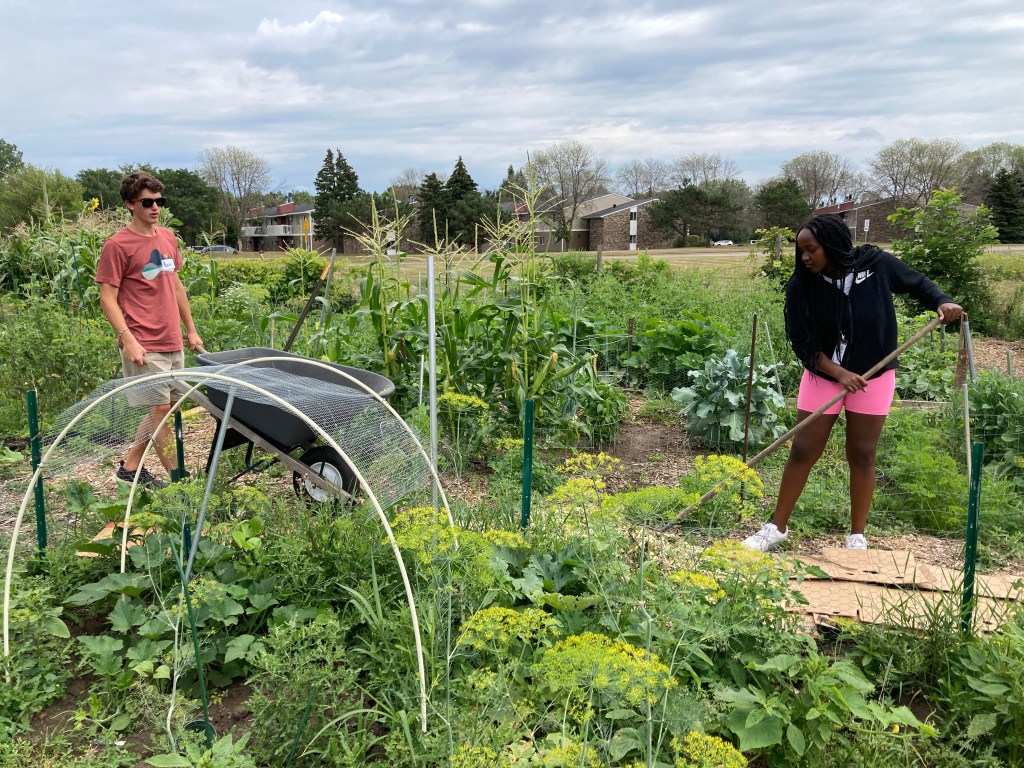
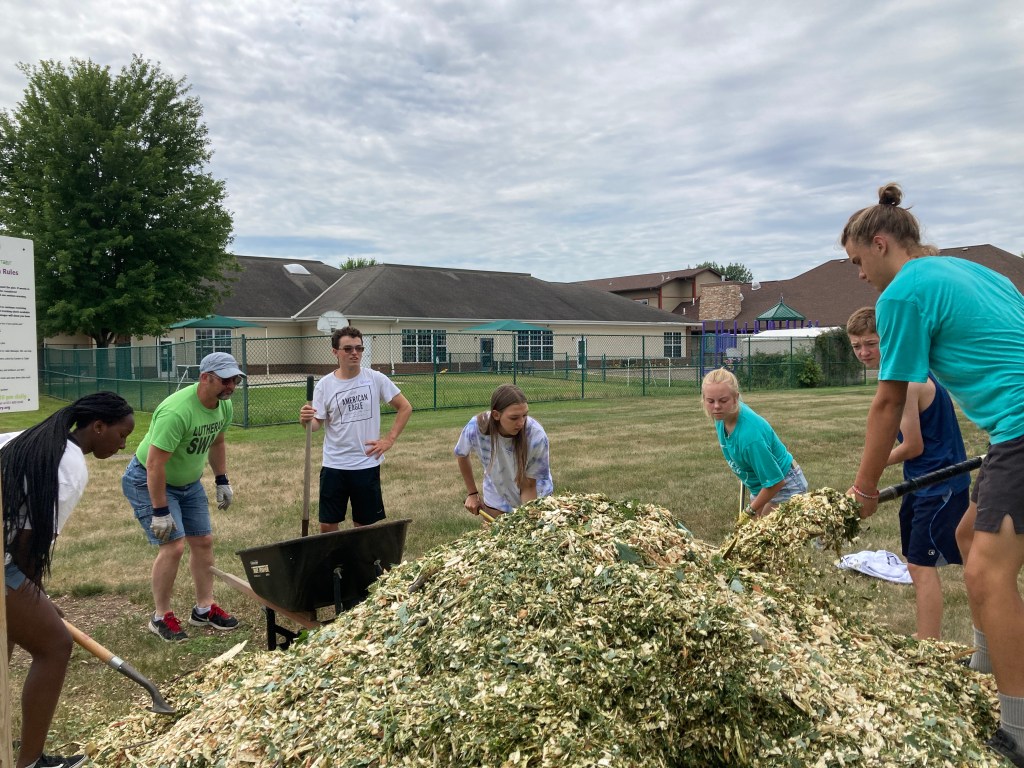
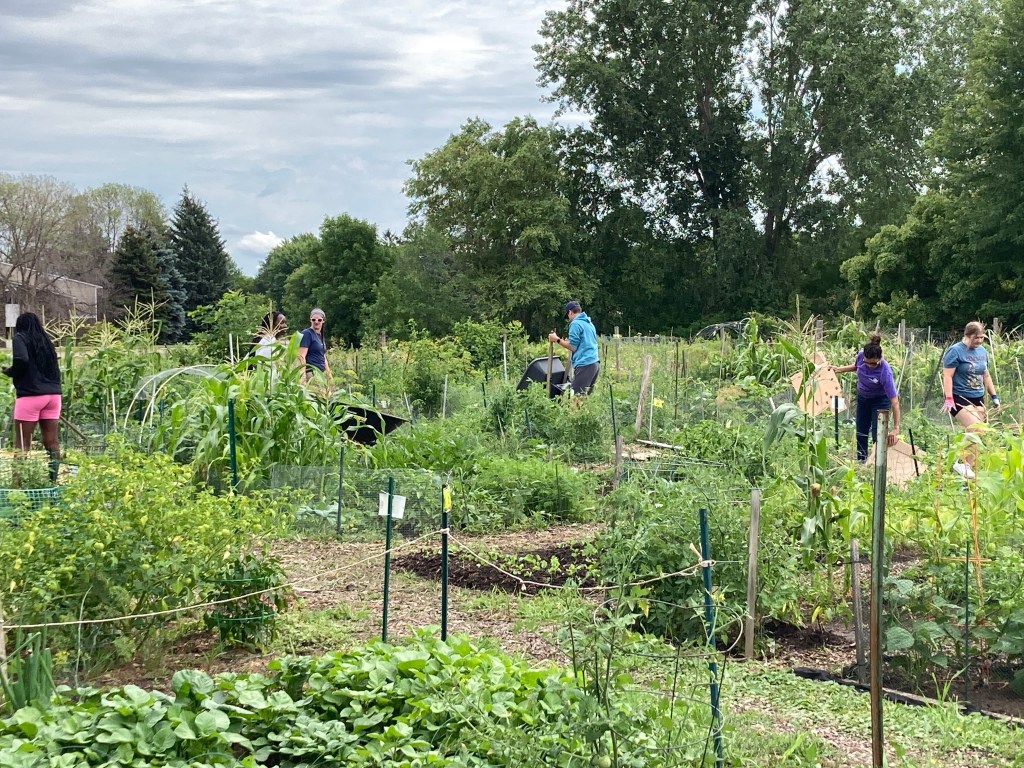
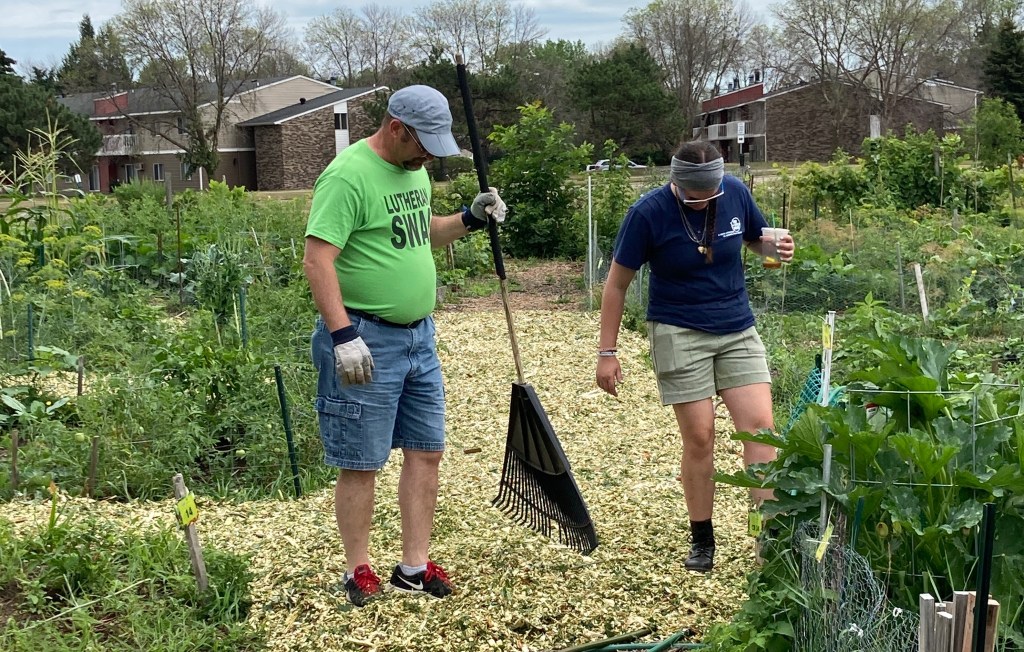
Perhaps you could spend some time cultivating one of the many community gardens in Nampa. There is the discipline of reading through the Book of Psalms, or you could read through the Gospels of Luke or John, which we will hear from on Sundays during Lent. You might add to your daily prayers and intentional prayer for the people in your life who are the most difficult. Another wonderful discipline taken up by people is journaling gratefulness. That has been a transformative experience for individuals, changing not just their minds but the way they end up encountering other human beings and all of creation. Whether we give something up, change our financial giving, pray, or do some combination, the possibilities for Lenten disciplines are infinite. 

The other symbolism within the ashes is transformation, for ashes themselves are a product of transformation. When something is burned, when a thing meets fire, ash is created. Ashes are about cleaning, creativity, and change. Today, Ash Wednesday, offers a new start, new possibilities, and a pathway of transformation. Thanks be to God.

Prayers of Intercession

Drawn close to the heart of God, we offer these prayers for the church, the world, and all who are in need.

A brief silence.

Renew your church, O God. When we have drifted from our call to proclaim repentance and to guide your people toward justice, lead us back to you. Encourage believers who hold the church’s doors open to those who have felt excluded. Merciful God,

receive our prayer.

Renew your creation, O God. Transform parched places into watered gardens and preserve every creature that awaits the arrival of spring. Turn each of us from practices of environmental exploitation to become responsible stewards of all you have made. Merciful God,

receive our prayer.

Renew our civic life, O God. Teach those in authority to advocate for the liberation of all who are oppressed and grant them courage to make difficult decisions. Merciful God,

receive our prayer.

Renew our lives, O God. Spare your people from diseases of the body, mind, or spirit and send healing to those overcome by illness or grief (especially). Restore to us the joy of your salvation. Merciful God,

receive our prayer.

Renew this congregation, O God. During these forty days of Lent, confirm our sense of mission and expand our imagination for ministry. Deepen our faith, increase our love, and draw us into your unfolding work of healing and restoration. Merciful God,

receive our prayer.

Here other intercessions may be offered.

As we mark ashes on our foreheads, we give you praise, O God, for all the saints who died and yet are alive with you (especially John Wesley and Charles Wesley, whom we commemorate today). Receive us with them into your eternal embrace. Merciful God,

receive our prayer.

Accept the prayers we bring, O God, on behalf of a world in need, for the sake of Jesus Christ.

Amen.

Posted in Sermons | Leave a comment

Feb. 27, 2022 Transfiguration Sunday

Prayer of the Day

Holy God, mighty and immortal, you are beyond our knowing, yet we see your glory in the face of Jesus Christ. Transform us into the likeness of your Son, who renewed our humanity so that we may share in his divinity, Jesus Christ our Lord, who lives and reigns with you and the Holy Spirit, one God, now and forever.

Amen.

Exodus 34:29-35

29Moses came down from Mount Sinai. As he came down from the mountain with the two tablets of the covenant in his hand, Moses did not know that the skin of his face shone because he had been talking with God. 30When Aaron and all the Israelites saw Moses, the skin of his face was shining, and they were afraid to come near him. 31But Moses called to them; and Aaron and all the leaders of the congregation returned to him, and Moses spoke with them. 32Afterward all the Israelites came near, and he gave them in commandment all that the Lord had spoken with him on Mount Sinai. 33When Moses had finished speaking with them, he put a veil on his face; 34but whenever Moses went in before the Lord to speak with him, he would take the veil off, until he came out; and when he came out, and told the Israelites what he had been commanded, 35the Israelites would see the face of Moses, that the skin of his face was shining; and Moses would put the veil on his face again, until he went in to speak with him.

Psalm 99

1The Lord is king; let the | people tremble.
  The Lord is enthroned upon the cherubim; let | the earth shake.
2The Lord, | great in Zion,
  is high a- | bove all peoples.
3Let them confess God’s name, which is | great and awesome;
  God is the | Holy One.
4O mighty king, lover of justice, you have es- | tablished equity;
  you have executed justice and righteous- | ness in Jacob. 
5Proclaim the greatness of the Lord and fall down be- | fore God’s footstool;
  God is the | Holy One.
6Moses and Aaron among your priests, and Samuel among those who call upon your |name, O Lord,
  they called upon you, and you | answered them,
7you spoke to them out of the pil- | lar of cloud;
  they kept your testimonies and the decree | that you gave them.
8O Lord our God, you answered | them indeed;
  you were a God who forgave them, yet punished them for their | evil deeds.
9Proclaim the greatness of the Lord and worship upon God’s | holy hill;
  for the Lord our God is the | Holy One.

2 Corinthians 3:12–4:2

12Since, then, we have such a hope, we act with great boldness, 13not like Moses, who put a veil over his face to keep the people of Israel from gazing at the end of the glory that was being set aside. 14But their minds were hardened. Indeed, to this very day, when they hear the reading of the old covenant, that same veil is still there, since only in Christ is it set aside. 15Indeed, to this very day whenever Moses is read, a veil lies over their minds; 16but when one turns to the Lord, the veil is removed. 17Now the Lord is the Spirit, and where the Spirit of the Lord is, there is freedom. 18And all of us, with unveiled faces, seeing the glory of the Lord as though reflected in a mirror, are being transformed into the same image from one degree of glory to another; for this comes from the Lord, the Spirit.

4:1Therefore, since it is by God’s mercy that we are engaged in this ministry, we do not lose heart. 2We have renounced the shameful things that one hides; we refuse to practice cunning or to falsify God’s word; but by the open statement of the truth we commend ourselves to the conscience of everyone in the sight of God.

Luke 9:28-36

28Now about eight days after these sayings Jesus took with him Peter and John and James, and went up on the mountain to pray. 29And while he was praying, the appearance of his face changed, and his clothes became dazzling white. 30Suddenly they saw two men, Moses and Elijah, talking to him. 31They appeared in glory and were speaking of his departure, which he was about to accomplish at Jerusalem. 32Now Peter and his companions were weighed down with sleep; but since they had stayed awake, they saw his glory and the two men who stood with him. 33Just as they were leaving him, Peter said to Jesus, “Master, it is good for us to be here; let us make three dwellings, one for you, one for Moses, and one for Elijah”—not knowing what he said. 34While he was saying this, a cloud came and overshadowed them; and they were terrified as they entered the cloud. 35Then from the cloud came a voice that said, “This is my Son, my Chosen; listen to him!” 36When the voice had spoken, Jesus was found alone. And they kept silent and in those days told no one any of the things they had seen.

Transfiguration of Christ, detail – Early 17th c. Icon, Benaki Museum, Athens, Greece

Sermon – Meggan Manlove       

There are years, like this year, when I really appreciate Transfiguration Sunday. For weeks, we have been listening in as Jesus teaches. His teachings are challenging, dangerous to him and his followers, and frankly it is sometimes hard to grasp what exactly the goal is. What does the reign of God look like? Then, just as we are about to start the 40 days of Lent and the journey towards Jerusalem, Jesus says, let me give you a glimpse of glory, a real glimpse of the foretaste of the feast to come, something that will sustain you for the road ahead. Sustenance for the road ahead sounds pretty good to me this week.

I hope most of us have had those experiences; a place or time when we have seen a glimpse of Jesus’ glory. Where and when have you had a foretaste of the feast to come? Maybe you felt near the presence of God in the midst of grief, upheld by all your sisters and brothers in Christ. Perhaps you experienced the glory of God on a literal mountaintop, looking out over a breathtaking vista, or maybe it was another natural wonder like the ocean or a canyon.

I think about the ways I felt cared for by this congregation in December 2020 when my dad was dying in Mesa and we were still quite locked down due to the pandemic. The actual verb I would use to describe that time is that you carried me. 

I also think of the group of colleagues and mentors who I met with in Northeast Iowa during my first six years in public ministry. We met each Tuesday for an in-depth text study, studying together the scripture passages on which we would preach. But we also met for pizza, beer, and conversation each Friday. I brought every problem a first-call pastor could face to that group and my stories were all met with love and understanding. We did not agree on everything, but I could bring my full self-there and I knew it to be a safe and holy space. There too I got glimpses of the promised feast.

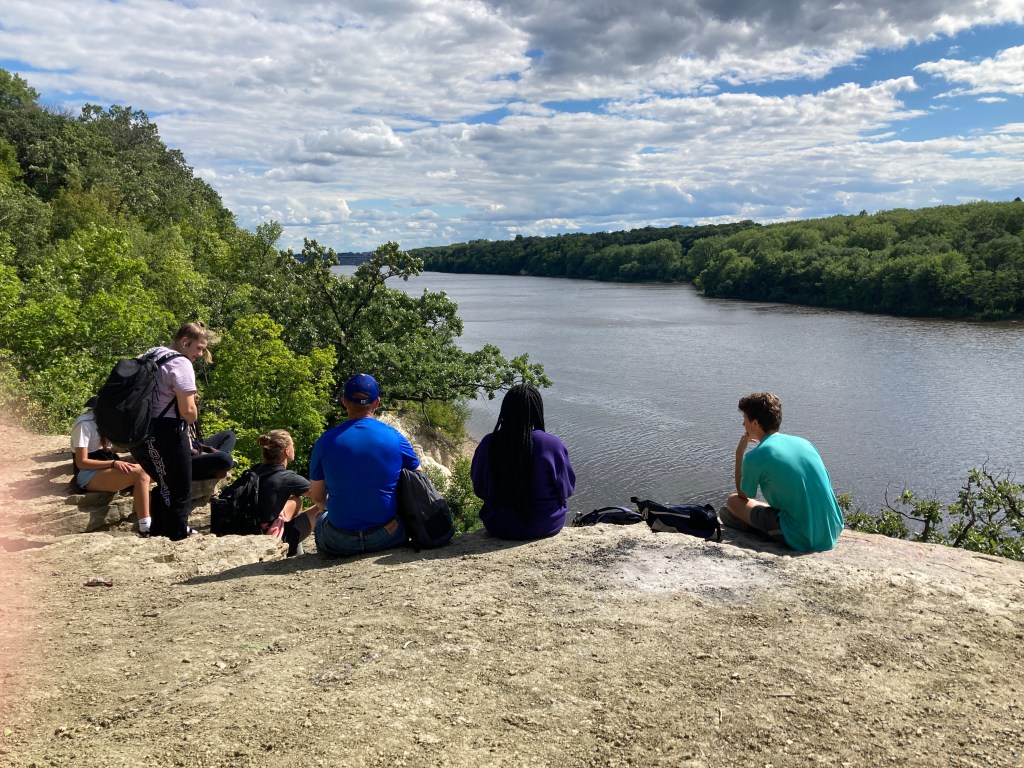
I think of paddling canoes through the Boundary Waters of Northern Minnesota/Ontario at dawn and hearing the call of a loon. I can see vistas of the old beautiful Black Hills where I grew up. I remember the panoramic views from the peaks of the Absoraka-Beartooth Wilderness in Montana and driving and hiking through the valleys of the Sawtooth and White Cloud ranges here in Idaho–all places I have glimpsed God’s glory. 

Jesus takes Peter, James, and John up on a mountain.  They will experience something completely new. There on the mountain, Jesus is transfigured—his clothes become a blinding white. Then Moses and Elijah appear out of nowhere and start talking with Jesus. It is so amazing, so terrifying, that Peter does not know what to say.  

Still, he likes it enough to try to hold on to it—perhaps even make some booths to keep them there. But before he can start building, a cloud descends upon them, and out of the cloud the voice of God is heard: “This is my Son, my Chosen; listen to him!”

This has got to be one of the top ten ecstatic events in the whole Bible.  It sounds a lot like the time God spoke to Moses on Mount Sinai or the time God whispered to Elijah on Mount Horeb. Here are the two biggest figures in the Old Testament—Moses, who represents the Law, and Elijah, who represents the prophets—now speaking with Jesus. But God also has something to say. 

God has spoken before in Luke. At Jesus’ baptism, a voice from heaven said, “You are my Son, the Beloved; with you I am well pleased.” It was after that event that Jesus began his ministry of teaching and healing. Now, God speaks again, and it is after this encounter that Jesus sets his face to Jerusalem. It is in this encounter with God that Jesus is empowered and commissioned again for his God-given ministry.

When the cloud disappears, Elijah and Moses are gone. No one is left but Jesus.  The experience is over as quickly as it began. Jesus remains with them, but not the glorious Jesus, arrayed in dazzling white. No, this is the man with whom the disciples ate and slept.  

From the very beginning, Jesus is true God and true man. From the beginning, he is filled with glory—the very glory of God. But that glory of the father is a glory we cannot bear. Moses knew that. When he asked to see God’s glory, God answered, “No one shall see me and live.” So, God put on flesh; God became known in a way we could see. At the Transfiguration, Moses finally does get his wish: he looks directly into the face of God—God’s face revealed in Jesus.

We live by faith—faith that is strengthened by those transfiguration moments—but also faith that, even in the everyday moments, senses that God is present and at work in the world.  We live by faith—faith that trusts that God is present in the midst of our sorrow and in the ordinary parts of our lives.

For me, the greatest glimpses of God’s glory, the best foretastes of the feast to come, have occurred when I was at a place apart. Because I worked at Camp Christikon in very formative years, my 20s, the glimpses I received then still shape me.  Christikon, nestled in the big beautiful Absorka Mountains north of Yellowstone National Park, is primarily a hiking camp for junior and senior high school kids. 

Our director Bob Quam was intent on creating intentional Christian community, full of encounters with the natural world, work, play, prayer, worship. Central to life at Christikon were stories.  Bob Quam talked about the “old, old story” of which we were still a part–the story of homecoming from exile and life from death, the story of love embodied and outpoured in Jesus for the sake of the world, the story of the wedding feast at the end of time which we could taste now in the body and blood of Christ, as well as other elaborate meals Bob prepared regularly for his staff.

Part of why I encourage youth and adults from this congregation to attend Luther Heights Bible Camp is to have some of the experience I had at camp. If we truly believe that the gospel can transform lives and communities down here in the literal valley, it’s helpful to have had a glimpse of God’s glory, of the feast, of the kingdom, even if we have to go away to get those glimpses. Our intergenerational church campout, while not a full week, has frequently done the same thing as summer camp–given us a glimpse of God’s glory.

Camps often get critiqued as being retreats from the real world or a bubble that serves to protect participants from the outside world. My dad, who thought and wrote a lot about camping ministries, suggested that the camp community is the real world in that it is closer to the world as it should be, as God intended it to be. He wrote, “We have seen a glimpse of the kingdom. We have seen a bit of life as it should be. Working together, we create places where people can come, learn, and go out into the world to make it as it should be.”

We don’t remember our own mountain top experiences to indulge in nostalgia. Nostalgia can be a dangerous form of remembering that steals the pleasure out of the present. But there is a place for remembering and giving thanks for people and places through whom God has worked in your lives. Our Psalm helps us remember almost every week. Before we join together in the Lord’s Prayer, the long prayer I speak is all about remembering. And at the heart of that prayer, we recall Jesus telling his disciples, when they gather to eat the bread and drink the wine, to do it “in remembrance of me.”

Down the mountain, we hold on to God’s vision of glory and wholeness and peace.  Even standing smack-dab in the middle of brokenness, in the middle of a world experiencing violence, we hold on to God, we call upon God, we behave as if God’s new world of wholeness is on the way, and we are sustained by the glimpses that we have seen already: those moments when people are healed and comforted, those times when violence gives way to reconciliation and selfishness gives way to love, those moments when whole communities reach out and care for one another. 

We praise God for moments of grace—moments when it all comes together. And we praise God for the promise that all of our moments are upheld by the abiding presence of God.  

Jesus came down that mount of Transfiguration. His disciples followed him on a journey of transformation. Together they experienced the heights and the depths of our experience. Jesus knows us in the very depths of our souls and loves us still—we can live in faith and hope. Not because we have it all together, but because God is here.  

Prayers of Intercession (from Sundays and Seasons)

The prayers are prepared locally for each occasion. The following examples may be adapted or used as appropriate.

The Spirit of the Lord is poured out upon us in abundance; so we are bold to pray for the church, the world, and all that God has made.

A brief silence.

Transform us by your greatness, O God. Send us down the mountain to share joy with all people. Make us agents of change, confident that your hope will vanquish despair and your goodness will conquer evil. God of grace,

hear our prayer.

The mountains and valleys sing your praise. Dazzle us with your presence in every landscape: bluffs built by ancient glaciers, canyons carved by flowing rivers, flat horizons with uninterrupted views, and sands shaped by ocean tides. God of grace,

hear our prayer.

You love justice and establish equity. Strengthen leaders of local governments, community nonprofits, and grassroots campaigns. Bless them with gifts of integrity, creativity, and sound conscience. Build up safe and joyful communities where all people may thrive. God of grace,

hear our prayer.

Heal those who are in distress (especially). Give patience to those waiting for answers. Grant hope to those who have reached the limits of treatment. Give compassionate hearts to those who accompany loved ones through illness and uncertainty. God of grace,

hear our prayer.

Today we shout alleluia from the mountaintop; this week we enter the wilderness of Lent. Bless all who prepare and lead us in worship during this change of season: pastors, deacons, musicians, and all who contribute to our worship life (especially). God of grace,

hear our prayer.

With deep sadness that we pray for peace and for the people of Ukraine. God who sees the weakness in acts of naked aggression; God who feels the fear in moments of acute helplessness: cure this warring madness, and shield all who fall in harm’s way. Leach the poison from the mind that thinks strength is shown in a bullying force. And may an equal strength in solidarity give resolve to those whose aim is to protect, and respect, not just the ones we call our own, but all with whom we can share a better, more peaceful world. (from the Corymeela Community)

hear our prayer.

Blessed are they who listened to Christ’s voice in this life and now rest with him (especially). Transform us from glory into glory, and give us your peace, that we do not lose heart. God of grace,

hear our prayer.

Since we have such great hope in your promises, O God, we lift these and all of our prayers to you in confidence and faith; through Jesus Christ our Savior.

Amen.

Posted in Sermons | Leave a comment

Feb. 20, 2022

Prayer of the Day

O Lord Jesus, make us instruments of your peace, that where there is hatred, we may sow love, where there is injury, pardon, and where there is despair, hope. Grant, O divine master, that we may seek to console, to understand, and to love in your name, for you live and reign with the Father and the Holy Spirit, one God, now and forever. Amen.

Genesis 45:3-11, 15

3Joseph said to his brothers, “I am Joseph. Is my father still alive?” But his brothers could not answer him, so dismayed were they at his presence.
  4Then Joseph said to his brothers, “Come closer to me.” And they came closer. He said, “I am your brother, Joseph, whom you sold into Egypt. 5And now do not be distressed, or angry with yourselves, because you sold me here; for God sent me before you to preserve life. 6For the famine has been in the land these two years; and there are five more years in which there will be neither plowing nor harvest. 7God sent me before you to preserve for you a remnant on earth, and to keep alive for you many survivors. 8So it was not you who sent me here, but God; he has made me a father to Pharaoh, and lord of all his house and ruler over all the land of Egypt. 9Hurry and go up to my father and say to him, ‘Thus says your son Joseph, God has made me lord of all Egypt; come down to me, do not delay. 10You shall settle in the land of Goshen, and you shall be near me, you and your children and your children’s children, as well as your flocks, your herds, and all that you have. 11I will provide for you there—since there are five more years of famine to come—so that you and your household, and all that you have, will not come to poverty.’ ” 15And he kissed all his brothers and wept upon them; and after that his brothers talked with him.

Psalm 37:1-11, 39-40

1Do not be provoked by | evildoers;
  do not be jealous of those | who do wrong.
2For they shall soon wither | like the grass,
  and like the green grass | fade away.
3Put your trust in the Lord| and do good;
  dwell in the land and | find safe pasture.
4Take delight | in the Lord,
  who shall give you your | heart’s desire. 
5Commit your way to the Lord; put your trust | in the Lord,
  and see what | God will do.
6The Lord will make your vindication as clear | as the light
  and the justice of your case like the | noonday sun.
7Be still before the Lord and wait | patiently.
  Do not be provoked by the one who prospers, the one who succeeds in | evil schemes.
8Refrain from anger, leave | rage alone;
  do not be provoked; it leads on- | ly to evil. 
9For evildoers shall | be cut off,
  but those who hope in the Lord shall pos- | sess the land.
10In a little while the wicked shall | be no more;
  even if you search out their place, they will | not be there.
11But the lowly shall pos- | sess the land;
  they will delight in abun- | dance of peace.
39But the deliverance of the righteous comes from | you, O Lord;
  you are their stronghold in | time of trouble.
40You, O Lord, will help them and | rescue them;
  you will rescue them from the wicked and deliver them, because in you | they seek refuge. 

1 Corinthians 15:35-38, 42-50

35But someone will ask, “How are the dead raised? With what kind of body do they come?” 36Fool! What you sow does not come to life unless it dies. 37And as for what you sow, you do not sow the body that is to be, but a bare seed, perhaps of wheat or of some other grain. 38But God gives it a body as he has chosen, and to each kind of seed its own body.
  42So it is with the resurrection of the dead. What is sown is perishable, what is raised is imperishable. 43It is sown in dishonor, it is raised in glory. It is sown in weakness, it is raised in power. 44It is sown a physical body, it is raised a spiritual body. If there is a physical body, there is also a spiritual body. 45Thus it is written, “The first man, Adam, became a living being”; the last Adam became a life-giving spirit. 46But it is not the spiritual that is first, but the physical, and then the spiritual. 47The first man was from the earth, a man of dust; the second man is from heaven. 48As was the man of dust, so are those who are of the dust; and as is the man of heaven, so are those who are of heaven. 49Just as we have borne the image of the man of dust, we will also bear the image of the man of heaven.
  50What I am saying, brothers and sisters, is this: flesh and blood cannot inherit the kingdom of God, nor does the perishable inherit the imperishable.

Luke 6:27-38

[Jesus said:] 27“But I say to you that listen, Love your enemies, do good to those who hate you, 28bless those who curse you, pray for those who abuse you. 29If anyone strikes you on the cheek, offer the other also; and from anyone who takes away your coat do not withhold even your shirt. 30Give to everyone who begs from you; and if anyone takes away your goods, do not ask for them again. 31Do to others as you would have them do to you.
  32“If you love those who love you, what credit is that to you? For even sinners love those who love them. 33If you do good to those who do good to you, what credit is that to you? For even sinners do the same. 34If you lend to those from whom you hope to receive, what credit is that to you? Even sinners lend to sinners, to receive as much again. 35But love your enemies, do good, and lend, expecting nothing in return. Your reward will be great, and you will be children of the Most High; for he is kind to the ungrateful and the wicked. 36Be merciful, just as your Father is merciful.
  37“Do not judge, and you will not be judged; do not condemn, and you will not be condemned. Forgive, and you will be forgiven; 38give, and it will be given to you. A good measure, pressed down, shaken together, running over, will be put into your lap; for the measure you give will be the measure you get back.”

Prayers for Reconciliation (after WW II Bombings) – Reconciliation Church, Dresden, Germany

Sermon – Pastor Meggan Manlove

Today’s gospel text from Luke has often been misused in the past, especially by the church. It became a word preached to slaves in order to keep them in their place. This same scripture has been preached or quoted to others in abusive relationships, convincing abused spouses to stay in their homes rather than flee. Jesus never intended his words to be applied against the oppressed. 

The other background to this text in our moment in history, is the great resignation we are currently witnessing. The reasons people are quitting their jobs are probably as unique as each individual. You all probably know someone who retired early, has contemplated quitting, has taken a break, or has switched jobs or careers. One thread is that wages are not keeping up with the costs of living, particularly when it comes to housing. Employees also want more flexibility, more time with their families, a better quality of life. Many people are saying goodbye to companies who seem to prioritize profits over people. I don’t know where the great resignation will lead us as a country, but I think it’s a stirred up a conversation worth having.

And I would hate for someone considering leaving a job where they are not valued to say to himself, “well I can’t afford rent but maybe I shouldn’t advocate for myself because in Luke chapter 6 Jesus tells me to turn to other cheek and to give both my coat and shirt away.” That may be an extreme reading of this text, but biblical interpretation can be a slippery slope and it’s good to beware of where people could slide in reading this often misinterpreted text.

So, if Jesus never intended his words to applied against the oppressed, what is the goal of his words? What are we supposed to do with such a text? One scholar summed up Jesus’ words this way, “You know the system this world runs on? It is all based on keeping score. If anyone injures you, you retaliate and injure him. And what about the positive relationships in your lives? There, too, it’s all about keeping score. Someone gives you a gift, you give one in return. Someone invites you to his house for dinner, you reciprocate. But what credit is there in that for you?” Jesus asks.

Three times Jesus asks, “What credit is it to you if you love someone who loves you, if you do good to someone who does good to you, if you lend to someone who will later lend something to you?” The Greek word translated as “credit” is charis, which most often is translated as “grace.” So, we could paraphrase these verses to ask, “What grace is that of ours to love just those who love us, or do good to those who do good to us, or lend to those who can lend us something back in return?”

What Jesus calls on his disciples to do is “keep score no more.” To trust the God who pulled a paradigm shift on the cross, settling a whole world’s “old scores” then and there, and then tearing up the ledger.

Jesus is continuing to paint a picture of his promised future—painting a picture of what the world could look like if some norms were completely overturned. But he does more than paint a picture of the promised future. Jesus envisions, desires, wants, wishes, and wills it into his current context. The promised future is breaking into the present.

Jesus’ alternative is not sheer possibility but aggressive actions to undermine hostility and violence. He taught a new response to hostility. Jesus’ teachings to his disciples call for imaginative, aggressive, but non-violent responses to the problems that have born such bitter fruit in our own time.

It’s true that this is hard teaching, as is much of the gospel itself. Still, we believe that through Christ, transformation is possible. We just keep asking ourselves and one another, how do we live our lives responding with grace, forgiveness, and nonviolence, instead of reacting with words or actions that seek to answer hurt with more hurt? Instead of keeping score.

Nelson Mandela spent 27 years in prison in South Africa. His life after prison could have been one of vengeance or retribution. He had the ultimate score to settle, if he wanted to. Instead, he created the Truth and Reconciliation Commission. It was hard painful work done that did not ignore past injustices but did help his country move forward.

I think Mandela’s experience and transformation must have threads of similarity to Joseph, the character in our reading from the book of Genesis. Joseph was born to Jacob and Rachel. He was his father’s eleventh son.  As a boy, Joseph received an elegant coat from his father. He also dreamed that the sun, moon, and eleven stars bowed down before him, which indicated that someday Joseph’s family members would bow down before him. His brothers became jealous, sold the boy into slavery in Egypt, and placed blood on his elegant coat to deceive their father into thinking that Joseph was dead.  

In Egypt Joseph rose to a position of influence, but he was imprisoned on false charges of making advances on the wife of Potiphar, his master. We do not know how long he was in prison. After interpreting Pharaoh’s dreams which portended famine, he was released and given responsibility for Egypt’s food stores. When famine struck, Joseph’s brothers came to Egypt for food. Joseph disguised his identity, held one of his brothers hostage in prison, and demanded that the rest of them bring their youngest brother Benjamin to Egypt. Joseph also put his brothers’ money back in their sacks of grain. When they returned Joseph revealed his identity, our passage today, and brought his father Jacob to live in Egypt. 

As I said earlier, part of why these are hard texts is that we know they have been used, both Jesus’ words and Joseph’s story, to silence the victimized so that others are not inconvenienced by their difficult stories. The words of scripture have been used to actively encourage vulnerable people to stay in abusive environments and relationships. Those are, to put it clearly, abuses of scripture and the name of Christ. 

I think one way that the Joseph story can help us read scripture more faithfully, is by simply paying attention to who is doing the speaking. Can you imagine if the words had come out of one of the brother’s mouths? What if Joseph had simply revealed himself and then his brother Simeon had said, “Yes. God’s plan was for us to sell you into slavery so that you could save our family today.” Or what if Mandala’s original enemies had said, “See, 27 years in prison was for good, to prepare you to lead when you finally got out.” Or what if a CEO says to someone, “If we had always paid you a living wage, instead of protecting my bonuses and stocks, you never would have left and found a different career.” 

Instead, it is the victim, Joseph, who gets to make the claims about God working through all of this activity. Joseph is ready, after so many years, to forgive, to keep score no more. Joseph is the one who is able to say that God has been with him and his brothers and now it is time to reconcile and move forward. There is forgiveness and grace. 

We can never tell someone who has suffered a great evil at the hands of others that God is bringing good out of the tragedy. If it is going to happen at all, the victims must discover for themselves that God has somehow created something new out of their suffering, that out of their survival God’s grace can even provide food to save someone else from famine.

What is essential to both Mandela and Joseph’s stories is that they remembered who they were or, more accurately, they remembered whose they were. When the teachings of the Sermon on the Plain are not grounded in our identity as God’s children, they become an onerous list of ethical demands that do not further justice and wholeness. When the disciple, then and now, understands her actions as flowing out of God’s abundance, to which she belongs, and which belongs to her, turning the other cheek becomes an act of resistance to evil that has the power to transform others and the world. 

Faith in Jesus Christ is far more than giving cognitive assent to doctrines. The Creed, the prayers, the words in the hymns we sing are all important. They all are helpful tools in understanding this long narrative of which we are a part. But in the end, this faith is a way of life, a way that is contrary to our own inclinations. To answer hurt with forgiveness is plausible only because the resurrected Christ is our strength.

Prayers of Intercession (Sundays and Seasons)

The prayers are prepared locally for each occasion. The following examples may be adapted or used as appropriate.

The Spirit of the Lord is poured out upon us in abundance; so we are bold to pray for the church, the world, and all that God has made.

A brief silence.

You teach us to love our neighbors and enemies alike. Encourage your church to follow the leading of your love, especially when it is risky or difficult. Help us to show mercy just as we have first received mercy. God of grace,

hear our prayer.

Nurture fields that lie dormant, resting until it is time to bloom again. Bless farmers and all who cultivate fields and urban gardens. Give favorable weather for planting. Bring forth from buried seed an abundant harvest, and guard against famine and disease. God of grace,

hear our prayer.

Look upon our world with mercy, that we delight in an abundance of peace. Protect all whose lives are marred by war and civil unrest. Release political prisoners and amplify the voices that challenge us to seek forgiveness and pursue nonviolence. God of grace,

hear our prayer.

Your people cry out for mercy. Console hearts that long for forgiveness. Mend broken relationships. Heal bodies that suffer chronic pain or illness. Strengthen and deliver all whose spirits are troubled (especially). God of grace,

hear our prayer.

You bind us together into one family. Teach us to forgive one another and to resolve conflicts with humility and patience. Bless families of all shapes and sizes, and show love to those who are lonely or grieving. God of grace,

hear our prayer.

Here other intercessions may be offered.

We praise you for the saints who have inherited the fullness of your kingdom (especially). As you have raised them to imperishable and eternal life, sustain us in faith by the promise of resurrection. God of grace,

hear our prayer.

Since we have such great hope in your promises, O God, we lift these and all of our prayers to you in confidence and faith; through Jesus Christ our Savior.

Amen.

Posted in Uncategorized | Leave a comment

Feb. 13, 2022

Prayer of the Day

Living God, in Christ you make all things new. Transform the poverty of our nature by the riches of your grace, and in the renewal of our lives make known your glory, through Jesus Christ, our Savior and Lord.

Amen.

Jeremiah 17:5-10

5Thus says the Lord:
 Cursed are those who trust in mere mortals
  and make mere flesh their strength,
  whose hearts turn away from the Lord.
6They shall be like a shrub in the desert,
  and shall not see when relief comes.
 They shall live in the parched places of the wilderness,
  in an uninhabited salt land.

7Blessed are those who trust in the Lord,
  whose trust is the Lord.
8They shall be like a tree planted by water,
  sending out its roots by the stream.
 It shall not fear when heat comes,
  and its leaves shall stay green;
 in the year of drought it is not anxious,
  and it does not cease to bear fruit.

9The heart is devious above all else;
  it is perverse—
  who can understand it?
10I the Lord test the mind
  and search the heart,
 to give to all according to their ways,
  according to the fruit of their doings.

Psalm 1

1Happy are they who have not walked in the counsel | of the wicked,
  nor lingered in the way of sinners, nor sat in the seats | of the scornful!
2Their delight is in the law | of the Lord,
  and they meditate on God’s teaching | day and night. 
3They are like trees planted by streams of water, bearing fruit in due season, with leaves that | do not wither;
  everything they | do shall prosper.
4It is not so | with the wicked;
  they are like chaff which the wind | blows away.
5Therefore the wicked shall not stand upright when | judgment comes,
  nor the sinner in the council | of the righteous.
6For the Lord knows the way | of the righteous,
  but the way of the wicked shall | be destroyed.

1 Corinthians 15:12-20

12Now if Christ is proclaimed as raised from the dead, how can some of you say there is no resurrection of the dead? 13If there is no resurrection of the dead, then Christ has not been raised; 14and if Christ has not been raised, then our proclamation has been in vain and your faith has been in vain. 15We are even found to be misrepresenting God, because we testified of God that he raised Christ—whom he did not raise if it is true that the dead are not raised. 16For if the dead are not raised, then Christ has not been raised. 17If Christ has not been raised, your faith is futile and you are still in your sins. 18Then those also who have died in Christ have perished. 19If for this life only we have hoped in Christ, we are of all people most to be pitied.
  20But in fact Christ has been raised from the dead, the first fruits of those who have died.

Luke 6:17-26

17[Jesus] came down with [the twelve] and stood on a level place, with a great crowd of his disciples and a great multitude of people from all Judea, Jerusalem, and the coast of Tyre and Sidon.18They had come to hear him and to be healed of their diseases; and those who were troubled with unclean spirits were cured. 19And all in the crowd were trying to touch him, for power came out from him and healed all of them.
  20Then he looked up at his disciples and said: 
 “Blessed are you who are poor,
  for yours is the kingdom of God.
21“Blessed are you who are hungry now,
  for you will be filled.
 “Blessed are you who weep now,
  for you will laugh.
  22“Blessed are you when people hate you, and when they exclude you, revile you, and defame you on account of the Son of Man. 23Rejoice in that day and leap for joy, for surely your reward is great in heaven; for that is what their ancestors did to the prophets.
24“But woe to you who are rich,
  for you have received your consolation.
25“Woe to you who are full now,
  for you will be hungry.
 “Woe to you who are laughing now,
  for you will mourn and weep.
  26“Woe to you when all speak well of you, for that is what their ancestors did to the false prophets.”

The Bread Line – Franklin D. Roosevelt Memorial – D.C.

Sermon – Pastor Meggan Manlove

Jesus’ Sermon on the Plain today is introduced with a powerful description of Jesus’ healing work. Multitudes are gathered from near and far, representing many people. They recognized Jesus’ power and they have come to hear him and be healed: “All in the crowd were trying to touch him.” And, the author tells us, Jesus healed all of them. Then Jesus speaks.

With his words, Jesus is redefining, both now and for the future, the way the world works. He is replacing common representations of the world with new ones. 

We might need to be reminded that Jesus’ claims clearly do not represent conventional wisdom. Is not wealth a sign of God’s blessing? How then can the poor be declared fortunate, and the wealthy be warned of God’s curse?

Jesus’ vision of the new world today is about all the final things. And yet, Jesus’ vision it is not relegated to the future. The end has already arrived, and the values Jesus asserts reflect this new era. In other words, Jesus’ teaching is meant to jolt his audience, including us, into new perceptions of God’s liberating goal. 

Jesus’ beatitudes and woes are words of hope and comfort to people like those who have already been the recipients of Jesus’ ministry: lepers, sinners, the demonized, tax collectors, women. Those people may be unacceptable in the world they live in, but they are embraced and restored in the new world Jesus proclaims and embodies.

Let me be clear, there is no idealization of poverty in our story. Instead, Jesus describes the new world, the kingdom of God, as a place where poverty is absent. 

The new world and the values it embodies will catch unawares those who measure their lives by the old order. Those rooted in the old order will find their sense of well-being and self-assurance is grounded in false values.

The “wealth gap,” “food deserts,” the “education gap,” the “health gap,” and other gaps and failures around the globe mark the two sides of the blessings and woes. It’s the gap we are called to address by this passage for God’s sake and our own. It’s what children of God do and what they repent of not having done, confident that God gives new opportunities to live with generosity and attention.

There is no one big sweeping way for one of us to help usher in God’s reign right now. Only Jesus can do that. So, in the already but not yet time, the reversal and reordering happens in small ways in various context. Like the Fall Crop Hunger Walk, the Souper Bowl of Caring has an inspiring, though more recent, origin story, that illustrates what this reordering might look like. 

In 1990, this simple prayer was said, “Lord, even as we enjoy the Super Bowl football game, help us be mindful of those who are without a bowl of soup to eat.” The prayer was delivered during a worship service at Spring Valley Presbyeterian Church in Columbia, SC led by Brad Smith, who was serving as a seminary intern at the time. 

This gave birth to an idea. Why not harness the energy and enthusiasm of the Super Bowl weekend, a time when people come together for football and food, to unite the country for a higher good? Church groups could collect dollars in soup pots and canned food for those in need and every dollar and food donation could go directly to a local charity of their choice. Now people of all ages tackle hunger to help support local food scarcity. 

Is this movement changing the world? Doubtful. But on a day when so much money is on display during one football game, the Souper Bowl of Caring is a reminder that there are simultaneously people experiencing poverty and hunger in our own community. What’s more, the systems that support the NFL Super Bowl are tied to the reason we have a Souper Bowl of Caring. 

Giving people access to food is a great start. Linking harm and harm to change our world so no one needs a free can of food is when we know the kingdom of God has fully arrived. We are here muddling in the already and not yet time and that’s okay. It’s okay as long as we keep muddling.

There remain plenty of roadblocks to our moving forward, as many today as in Jesus’ day. So much around us encourages us to break the first commandment and make an idol of money. We spiritualize the poor and tell one another that something good coming for the poor….in heaven). We convince ourselves that someone else is fixing our economic system or helping those with less. Or we put our heads in the sand and believe that economic disparity is happening somewhere else, not in our community.

It’s not like any of our disregard is new. Jesus talked about all these problems a lot. Consider the rich man and Lazarus in Luke 16 or the man who would build two barns in Luke 12. Riches distract these men from heeding the ways of God and lead people away from life with God now and in the hereafter. 

The first beatitude describes a way of life, and we, who are not poor–not really–run to the version of the beatitudes in Matthew’s Gospel in relief. There Jesus says “blessed are the poor in spirit.” But our preference for Matthew says much more about us than about the words of Jesus. The poor are those whose desperate need and inability to help themselves have driven them to turn to God for their hope. 

Gustavo Gutierrez has commented that, “God has preferential love for the poor not because they are necessarily better than others, morally or religiously, but simply because they are poor and living in an inhuman situation that is contrary to God’s will. The ultimate basis for the privileged position of the poor is not in the poor themselves but in God, in the gratuitousness and universality of God’s agapeic love.”

The beatitudes are promises to those who are suffering in this world that God still sees them, loves them, and is intent on their thriving. Jesus’ words are also warning calls to his hearers. They are called to live with attention and generosity toward their neighbors, even as God is attentive and generous.

Because we are not poor, the first beatitude either mystifies us or leaves us feeling guilt rather than joy. Our pride and our ability to provide for ourselves have blocked the channels of blessing. But we don’t have to stay there. After all, God has invited us into that work. Some days that is exhausting and overwhelming and other days it can only be described as, yes, a blessing, a real deep embodied blessing, not a hashtag blessed.

The topography of our scene today is noteworthy for what it might mean in our own lives. Jesus went up to the mountain and then came down. What was he doing on the mountain? Praying. In our passage today, there is a clear bridge between Jesus’ prayer and his ministry. The purpose of his retreat on the mountain was explicitly to pray. The outcomes of his vigil is twofold: he discerns God’s will regarding the selection of the apostles and he is empowered for divine service. Jesus’ prayer solidifies his relationship to God the Father and strengthens him for ministry. Prayer transformed Jesus.

Those of us who plan worship hope prayer does the same thing for those of us gathered together in person or online. If you turn to page 105 in the front of your hymnal you will see on the bottom of the page the list of things we pray for together each Sunday. That list reflects today’s beatitudes and woes. The prayers are meant to be part of our dialogue with God, but they are also meant to stir each one of us up. They are, like the Apostle’s Creed, a statement of faith, of what it means to follow Jesus out of this space.

If you turn back to page 93 you will see our entire worship service outlined. At the very end is the Sending and bolded in that section is the Blessing. There were various parts of worship that were dropped as we pivoted to online worship and then came back to shorter in-person services, but never the prayers of intercession and never the blessing. At the end of every worship service, we are sent to the continue our participation in God’s mission. With the blessing of God, we go out to live as Christ’s body in the world. Amen.

Prayers of Intercession

The Spirit of the Lord is poured out upon us in abundance; so we are bold to pray for the church, the world, and all that God has made.

A brief silence.

Blessed are those whose trust is in you. Strengthen the faith of those who profess your name and bring reassurance to those who doubt or fear. Through your church speak continued blessing into the world. God of grace,

hear our prayer.

Those who trust in you are like trees planted by streams of water. Bless fruit trees with an abundant harvest. Protect rainforests from destruction. Restore land that has eroded after deforestation. Resurrect woodlands after forest fires. God of grace,

hear our prayer.

Search the hearts of those who govern, that they lead with humility. Inspire leaders to collaborate on policies that protect people and the planet. Sustain truth-tellers and social movements that challenge society to become more honest and just. God of grace,

hear our prayer.

Send your blessings of mercy upon those who long for consolation. Tend to those struggling with poverty, unemployment, or uncertainty. Provide for all who are hungry. Console those who face persecution. Grant peace to all who suffer (especially). God of grace,

hear our prayer.

Renew this congregation in our shared mission. As we plan and dream for the future you are preparing, inspire us by the examples of Martin Luther and all the reformers. Bless new projects and new ministry partnerships. God of grace,

hear our prayer.

Here other intercessions may be offered.

Christ is raised from the dead, and so we cling to the hope of the resurrection. We praise you for the lives of the saints who lived and died in the hope of eternal life with you (especially). God of grace,

hear our prayer.

Since we have such great hope in your promises, O God, we lift these and all of our prayers to you in confidence and faith; through Jesus Christ our Savior.

Amen.

Posted in Sermons, Trinity Lutheran | Leave a comment

Feb. 6, 2022

Prayer of the Day

Most holy God, the earth is filled with your glory, and before you angels and saints stand in awe. Enlarge our vision to see your power at work in the world, and by your grace make us heralds of your Son, Jesus Christ, our Savior and Lord.

Amen.

Isaiah 6:1-8 [9-13]

1In the year that King Uzziah died, I saw the Lord sitting on a throne, high and lofty; and the hem of his robe filled the temple. 2Seraphs were in attendance above him; each had six wings: with two they covered their faces, and with two they covered their feet, and with two they flew. 3And one called to another and said: 
 “Holy, holy, holy is the Lord of hosts;
 the whole earth is full of his glory.”
4The pivots on the thresholds shook at the voices of those who called, and the house filled with smoke. 5And I said: “Woe is me! I am lost, for I am a man of unclean lips, and I live among a people of unclean lips; yet my eyes have seen the King, the Lord of hosts!”
  6Then one of the seraphs flew to me, holding a live coal that had been taken from the altar with a pair of tongs. 7The seraph touched my mouth with it and said: “Now that this has touched your lips, your guilt has departed and your sin is blotted out.” 8Then I heard the voice of the Lord saying, “Whom shall I send, and who will go for us?” And I said, “Here am I; send me!” [9And he said, “Go and say to this people: 
 ‘Keep listening, but do not comprehend;
 keep looking, but do not understand.’
10Make the mind of this people dull,
  and stop their ears,
  and shut their eyes,
 so that they may not look with their eyes,
  and listen with their ears,
 and comprehend with their minds,
  and turn and be healed.”
11Then I said, “How long, O Lord?” And he said:
 “Until cities lie waste
  without inhabitant,
 and houses without people,
  and the land is utterly desolate;
12until the Lord sends everyone far away,
  and vast is the emptiness in the midst of the land.
13Even if a tenth part remain in it,
  it will be burned again,
 like a terebinth or an oak
  whose stump remains standing
  when it is felled.”
 The holy seed is its stump.

Psalm 138

1I will give thanks to you, O Lord, with | my whole heart;
  before the gods I will | sing your praise.
2I will bow down toward your holy temple and praise your name, because of your steadfast | love and faithfulness;
  for you have glorified your name and your word a- | bove all things. 
3When I called, you | answered me;
  you increased my | strength within me.
4All the rulers of the earth will praise | you, O Lord,
  when they have heard the words | of your mouth.
5They will sing of the ways | of the Lord,
  that great is the glory | of the Lord.
6The Lord is high, yet cares | for the lowly,
  perceiving the haughty | from afar. 
7Though I walk in the midst of trouble, you | keep me safe;
  you stretch forth your hand against the fury of my enemies; your right | hand shall save me.
8You will make good your pur- | pose for me;
  O Lord, your steadfast love endures forever; do not abandon the works | of your hands. 

1 Corinthians 15:1-11

1Now I would remind you, brothers and sisters, of the good news that I proclaimed to you, which you in turn received, in which also you stand, 2through which also you are being saved, if you hold firmly to the message that I proclaimed to you—unless you have come to believe in vain.
  3For I handed on to you as of first importance what I in turn had received: that Christ died for our sins in accordance with the scriptures, 4and that he was buried, and that he was raised on the third day in accordance with the scriptures, 5and that he appeared to Cephas, then to the twelve. 6Then he appeared to more than five hundred brothers and sisters at one time, most of whom are still alive, though some have died. 7Then he appeared to James, then to all the apostles. 8Last of all, as to one untimely born, he appeared also to me. 9For I am the least of the apostles, unfit to be called an apostle, because I persecuted the church of God. 10But by the grace of God I am what I am, and his grace toward me has not been in vain. On the contrary, I worked harder than any of them—though it was not I, but the grace of God that is with me. 11Whether then it was I or they, so we proclaim and so you have come to believe.

Luke 5:1-11

1Once while Jesus was standing beside the lake of Gennesaret, and the crowd was pressing in on him to hear the word of God, 2he saw two boats there at the shore of the lake; the fishermen had gone out of them and were washing their nets. 3He got into one of the boats, the one belonging to Simon, and asked him to put out a little way from the shore. Then he sat down and taught the crowds from the boat. 4When he had finished speaking, he said to Simon, “Put out into the deep water and let down your nets for a catch.” 5Simon answered, “Master, we have worked all night long but have caught nothing. Yet if you say so, I will let down the nets.” 6When they had done this, they caught so many fish that their nets were beginning to break. 7So they signaled their partners in the other boat to come and help them. And they came and filled both boats, so that they began to sink. 8But when Simon Peter saw it, he fell down at Jesus’ knees, saying, “Go away from me, Lord, for I am a sinful man!” 9For he and all who were with him were amazed at the catch of fish that they had taken; 10and so also were James and John, sons of Zebedee, who were partners with Simon. Then Jesus said to Simon, “Do not be afraid; from now on you will be catching people.” 11When they had brought their boats to shore, they left everything and followed him.

Artist John August Swanson (1938-2021) next to his Cast Your Nets

Sermon – Pastor Meggan Manlove

Nets breaking and boats sinking; the mention of these two images is enough for me to recall today’s gospel story–the calling of the first disciples. The crowd of spectators and the men scrambling to haul in the fish awaken the senses. Jesus is well into his ministry in Galilee. Though not welcomed in his own home, Jesus has healed people suffering from demons and diseases and delivered a sermon in the synagogue.

It is noteworthy that Jesus recruits his first disciples in the midst of their workplace –the Sea of Galilee. The call to follow Jesus might occur in a place of worship but clearly that is not a requirement. The men are washing their nets after a night of unsuccessful fishing. There is nothing outstanding about the setting until Jesus appears. He has been healing and teaching and at the center of his ministry is his Word, and the calling of the disciples continues this theme. He teaches the crowd from the boat and then tells Peter to put out his nets into the deep water. Peter trusts Jesus’ words, albeit a little begrudgingly, and lets down the nets, against all reason. 

Reason probably told Peter, an experienced fisherman, that Jesus’ instructions were foolish. The best place and time to catch fish is near the shore in the morning or evening, yet Jesus commands Peter to cast the nets into the deep waters at midday and Peter obeys. Peter knew enough about Jesus’ ministry to be open to possibilities. And Jesus provides an abundance of fish after a night of empty nets. Abundance and new life accompany the Word in Jesus’ work in Galilee. Scrambling in the boat, the first disciples get a glimpse of Jesus’ power. He is obviously more than just a savvy fisherman.

Peter is made aware of more than Jesus’ power. Peter recognizes his own sinfulness. He falls at Jesus’ knees and says, “Go away from me Lord, for I am a sinful man!” The prophet Isaiah had a similar response. He says, “Woe is me! I am lost, for I am a man of unclean lips, and I live among a people of unclean lips; yet my eyes have seen the King, the Lord of hosts!”

There is a famous saying, I really tried to find the source but was unsuccessful, God does not call the equipped. God equips the called. Reflecting on the call stories of this week, someone compared them to a conversation between Frodo and Gandolf in Lord of the Rings. Frodo says, “I wish the ring had never come to me. I wish none of this had happened.” Gandolf replies, “So do all who live to see such times, but it’s not for them to decide. All we have to decide is what to do with the time that is given to us.” 

So, thank goodness God equips the called rather than calling those already equipped. We are living in a time of so much loss, grief, uncertainty, and doubt. We might think this is not for me. I’m not the right person for this! This is not what I learned in Sunday School or from my early teachers or from my parents. This is not what I thought it would look like to follow Jesus. This is not what it has been. And yet, this is where we are. 

In the same way that God never accepts the protests from the called ones like Isaiah, Peter, or so many others who have gone before us, God gives us what we need to do what is needed. God has given you what you need to do what is needed. God may not have burned your mouth with a hot coal, but God has made you enough – enough for this moment in this place at this time. What will we do with the time that has been given to us?

This is the guidance for discipleship that Jesus gives throughout his ministry–don’t be afraid; leave everything and follow me. The disciples make it look quite easy. They had heard about Jesus and then saw him perform a miracle. Of course they followed him.

When I was a first-year counselor at a Lutheran camp in Montana, that first phrase become essential to my sanity; “Do not be afraid.” Who could imagine how easy it is to forget those words and the promise that we know accompanies them, “I will be with you always.” First year counselors need a good deal of grace. Certainly, they need grace while learning the mechanics like cooking over open stoves and learning hiking routes. 

More than any other time in rhythm of camp life, I needed to be reminded of Christ’s accompaniment during Bible Studies. I was 18 with two weeks of staff training, no seminary training. What questions will engage these campers, what passages will help them make connections with their own lives, how long should I let them be silent before moving on, what can I do to help them open up? About the middle of the week, I was often ready to throw my hands up, frustrated with my inadequacies as a counselor. 

In the middle of every week, we worshiped using Compline, prayer at the close of the day, right out of the old green hymnal but also in the ELWs in our pews. As we read and sang the service I was comforted by the five scripture verses in the service that we read every week– God’s Word – 

Bend your necks to my yoke, and learn from me, for I am gentle and humble-hearted; 

set your troubled hearts at rest, and banish your fears; 

nothing can separate us from the love of Christ; cast all your cares on him, for you are his charge; 

you are in our midst, O Lord, and you have named us yours; do not forsake us, O Lord our God.” 

We were all reminded that we were not alone. Christ Jesus was with each of us, equipping us for the little corner of ministry that was ours. I was not walking beside Jesus in Galilee, but the Holy Spirit was certainly in our midst. I was not alone in my ministry as a camp counselor. The burden was off. But my role was important. I was needed as part of the community.  I was called but did not need to be afraid. God was equipping me along the way.

Jesus did not give up on his disciples when they fell short. And we can take hope from that. They doubted, ignored, and betrayed him, but they also learned from him, spread the good news, cured diseases, and identified him as the Messiah, the healer of the world.  

Our life of discipleship is also full of starts and pauses, tripping and getting back up. In the end we must remember that it is not all about us. We are not called to be God’s children because of qualifications, character or potential, because we are already equipped. God’s call is unpredictable and unmerited. Once we are called, the Holy Spirit works through us. 

I want to experience Jesus’ Word in a setting like that shore in Galilee, in which he and his Word are so clearly present. Thank goodness for tangible gifts that we share, the holy sacraments. Like today’s gospel lesson, Jesus’ Word is central to both. The gifts of Baptism do not come through water alone–the gift comes through the water and the Word. The Word holds the same role in the sacrament of the Lord’s Supper. 

Jesus gives us tangible gifts in the sacraments of Baptism and the Lord’s Supper if we trust his words. Peter trusted Jesus and threw his nets into the sea. Jesus promises we will hear the Word in the sacraments. God intercedes through the word with the water, bread, and wine and forgives our sins and gives healing and wholeness. God gives abundant life, as abundant as that catch of fish. Through the Word and bread and wine, the Holy Spirit equips us still today.

Prayers of Intercession

The Spirit of the Lord is poured out upon us in abundance; so we are bold to pray for the church, the world, and all that God has made.

A brief silence.

Equip your church to proclaim the good news that we have first received: the forgiveness and grace shown to us through Jesus Christ. Send us out as apostles, sharing the hope of your salvation with a waiting world. God of grace,

hear our prayer.

Holy are you, O God of hosts. Heaven and earth are filled with your glory. Reveal your splendor in fiery sunsets and in deep blue twilights. Teach us to recognize you in the beauty of our natural world. God of grace,

hear our prayer.

Soften the hearts of rulers and governments that they perceive and tend to the needs of their people. Remove corruption and the impulse toward violence. Protect first responders and military personnel who risk their lives in service of others. God of grace,

hear our prayer.

Your steadfast love endures forever; do not abandon those who look to you for hope and healing. Bless doctors, nurses, social workers, therapists, and all caregivers. Draw near to those who are scared, sick, or in pain (especially). God of grace,

hear our prayer.

The disciples received help from partners as they brought in an abundant catch of fish. So strengthen this congregation’s partnerships with community organizations and ministries (especially). Multiply our shared efforts and bring joy to our relationships. God of grace,

hear our prayer.

Here other intercessions may be offered.

We give thanks for our ancestors in faith who boldly answered your call. By their example give us courage to live in faith and to proclaim your mercy until the day that you gather us into your glory. God of grace,

hear our prayer.

Since we have such great hope in your promises, O God, we lift these and all of our prayers to you in confidence and faith; through Jesus Christ our Savior.

Amen.

Posted in Sermons, Trinity Lutheran | Leave a comment

What Have We Learned

February column for Trinity’s Epistle/Newsletter. Previously published on tvprays.org.

Friends in Christ,

I read an article online that encouraged congregations to not let the current moment pass by before taking some time to reflect on what we have learned during the last year (or two). Here’s a share-out from meetings/gatherings during January, 2022 at Trinity:

Worship Altar Guild and Music

We’ve become adaptable

Things can be simpler

Communion adaptations have gone well

We are now ready to bring back some things

Gospel and Growth

We need repeated, frequent contact with God and our church family; that contact was maintained through online worship and Zoom classes; we pay closer attention to worship when we are here in person, so that makes us appreciate in-person worship even more. We have taken time to get better acquainted with each other and, seeing fewer people around to get things done, we feel a higher level of responsibility to do things. We appreciate how many people it takes to make things happen. The Advent Daily Devotion showed people are increasingly willing to be transparent and vulnerable in the stories they tell.

Stewardship

We have learned that this congregation has great generosity and faithfulness; we have weathered the loss of some core members and have gained new members; this has worked out better than we had anticipated; despite a long period without in-person worship in the sanctuary, giving has continued. Despite everything feeling off-balance initially, members have been resilient and adaptable. Liturgical worship surprisingly lends itself to online participatory worship experience; perhaps changing the liturgical setting several times each year helped prepare worshipers for having a “the same but different” worship experience online. If we pulled the tvprays.org devotions authored by Trinity members, we could gauge ways the church was addressing the pandemic.

Monday Morning Study Group

Don’t take anything for granted. We can learn new things like Zoom and technology can keep us connected from others near and far away. It’s different, but one can created new relationships with people you have never met in person using technology. The importance of working highspeed internet for all households. We’ve become a church without walls and there are benefits to online church for real people. It was important to use hard copy/paper communication with people without internet. Consistently doing in-depth assessment of who is connected and who is in danger of falling through the cracks was crucial. The deep importance of feeling community-but that takes work-and we have been willing to do that work. Being isolated gives us time to be reflective; we’re more capable of enduring isolation than we had imagined. Online giving is great and we hope it continues.

Church Council

The church of Jesus was not about brick-and-mortar 2000 years ago; being online and outdoors and doing many things differently feels more like being the church of Jesus. We have had to deal with changes, on almost a week-to-week basis, and have become more accepting of change because of this; we have adjusted well, despite our desire to have things be the way they used to be. We have become more open to the perspectives of others. We have a sense of just how long a year can feel. We have named what is hard and learned to celebrate what we have accomplished. We used the strengths we already had such as respect for others, dignity, and creativity. Our concept of what a healthy congregation should look like (full sanctuary; full offering plate) has been altered; we are healthier than preconceived notions indicate.

Your Turn

Call me or a council member, email, write a letter, share in Facebook comments or in the comments on my blog (megganmanlove.com). What have YOU learned or what do you think WE have learned these past two years?

Peace,

Pastor Meggan

Posted in Reflections, Trinity Lutheran | Leave a comment

TLC 2021 – Trinity New Hope

Trinity New Hope’s tagline is “Help and hope for those in need.”  That’s what we do!  We are very proud of the numerous families we have been able to help this year, including assisting several families transition from homelessness to a clean, safe home in which to live.  Trinity members have participated by helping to provide furniture, appliances, cleaning supplies, and holiday gifts for our tenants.  

Since Trinity New Hope is a 501(C)(3) non-profit corporation, we are eligible to receive donations.  In 2021 Trinity New Hope participated in the Home Partnership Foundation’s Avenues for Hope housing campaign, which raised $17,900.  We exceeded our fundraising goal of $15,000 and received donations from more than a dozen different states!  Our goal is to use part of the funds raised to improve our property’s landscaping.  We used the Avenues for Hope funds raised in 2020 to complete the construction this year of a maintenance shop on the Trinity New Hope land, which provides space for a workshop for our maintenance staff and a place to store maintenance tools and materials.  

Trinity New Hope’s 16 single family homes are overseen by our amazing staff:  Tami Romine (property manager) and Steve Van Atter (maintenance manager).  If you see these fine individuals, please thank them for their excellent work!  

The Board of Directors is proud of the difference that Trinity New Hope is making in Nampa.  If you have a heart forthis ministry, please contact Pastor Meggan or any board member.  There are many opportunities to volunteer, and we would welcome you to the team.

The Board of Directors, Trinity New Hope

(Pastor Meggan Manlove, Tami McHugh, Cathy Winwood, Judy Kellar, Andrew Hanson, John Hergert, Shelly Regis, Debra Harris, Carl Radke, and Tom Dale)

Posted in Housing, Trinity Lutheran | Leave a comment