Seattle University and Quality of Call

I am a week behind on this blog, in part because as soon as I got home from Seattle there was one event after another that I was paying attention to (synod, national, global) and after months of staying healthy, I developed a small cold. But the weekend in Seattle, and how it came to be, are important and I want a record of them for the future.

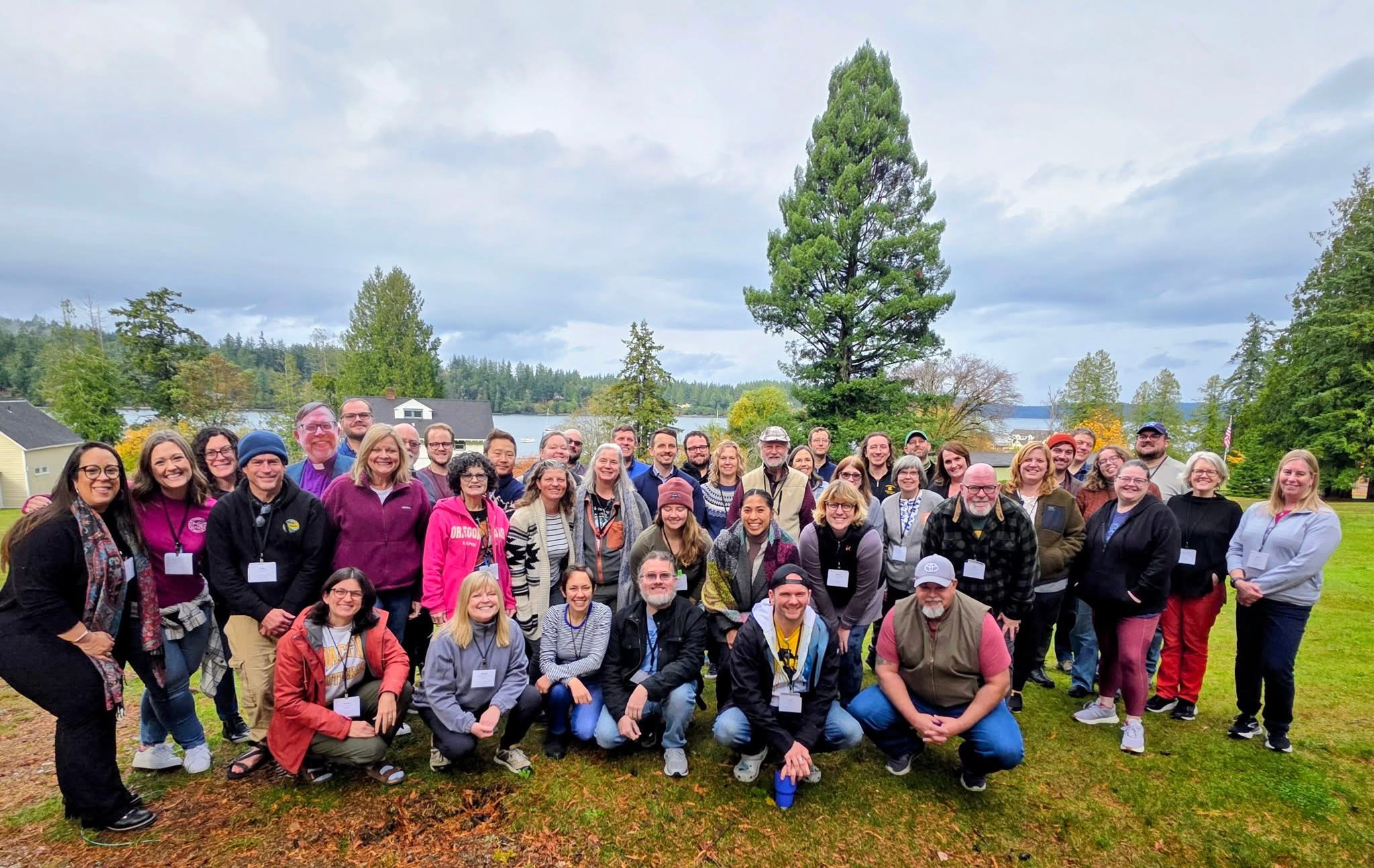
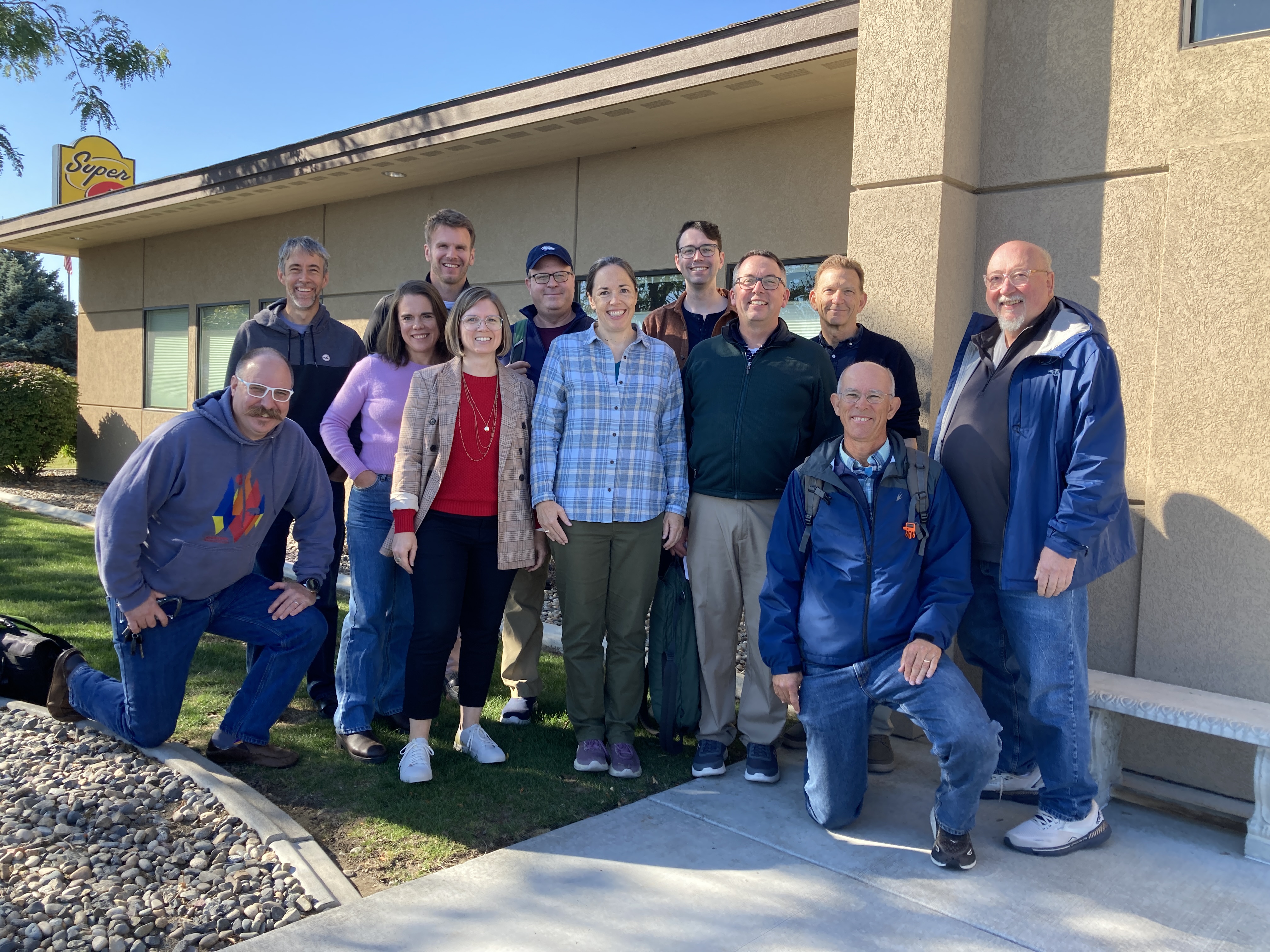
Seattle University, a Jesuit school in Seattle proper, long had a Master of Divinity degree that a number of ELCA Lutherans earned. That degree program sunsetted, but the Center for Ecumenical and Inter-religious Engagement has remained strong. Last year, the Center’s Michael Trice reached out the ELCA Region 1 bishops about creating a summer certificate program and launching the pilot in 2025. Each of us six bishops was invited to send one person in each category: lay person, seminarian, first call pastor or deacon, specialized minister, later in their career minister. They called it the Discerning Leadership Certificate.

Here’s more language from the flyer: The CEIE Discerning Leadership Certificate is an immersive, intensive residential opportunity for leaders seeking to deepen self-knowledge, refine their leadership skills, and explore their leadership future in a safe and nurturing environment. The certificate is facilitated in a method of Ignatian discernment and guided by spiritual directors and coaches in a 5:1 cohort model.The Certificate begins May 1, with an online instructional resources, preparatory reading and reflections, and two virtual sessions with coaches and cohorts in June. 

I was so excited about this because I have deep appreciation for Ignation spirituality after my year in the Jesuit Volunteer Corps AND Seattle is only a short drive or flight for everyone in my synod. I think lifelong learning and connecting with colleagues are so important and I was thrilled that I could send people to a quality event that would not take them a whole day to travel to (or use up their entire continuing education budget on airfare).

So as this certificate program was developing, we bishops were reminded that we could/should apply for Quality of Call grants from the ELCA. From the ELCA website: The Quality of Call Initiative is part of the Presiding Bishop’s Leadership Initiative and is funded by a generous donor to empower change. The vision of this initiative is: A church that is equitably served by people who are empowered to serve with their gifts, irrespective of identity markers heretofore targeted by systems and individuals for bias, discrimination, and oppression.

Synods could apply for smaller grants and a few synods, or an entire region, could apply for a collaborative grant. I suggested our region add on two nights to the Certificate program for seminarians and ministers who are women and invite an outside facilitator to help us bishops listen. I know my own experience as a woman pastor in Nampa, Idaho, but that’s not representative of all the women serving across the region. We would use this listening and some surveys to create a second larger event.

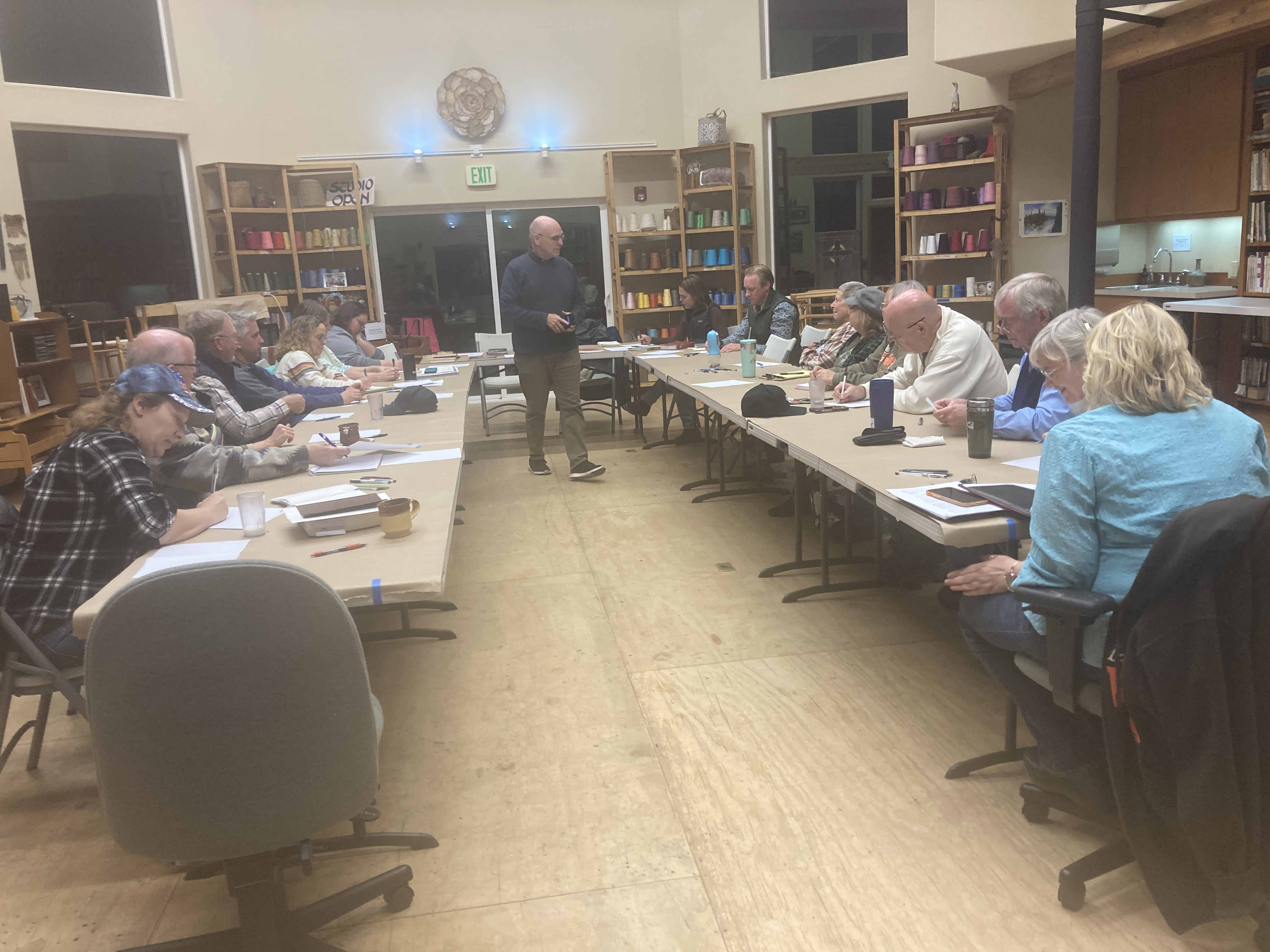
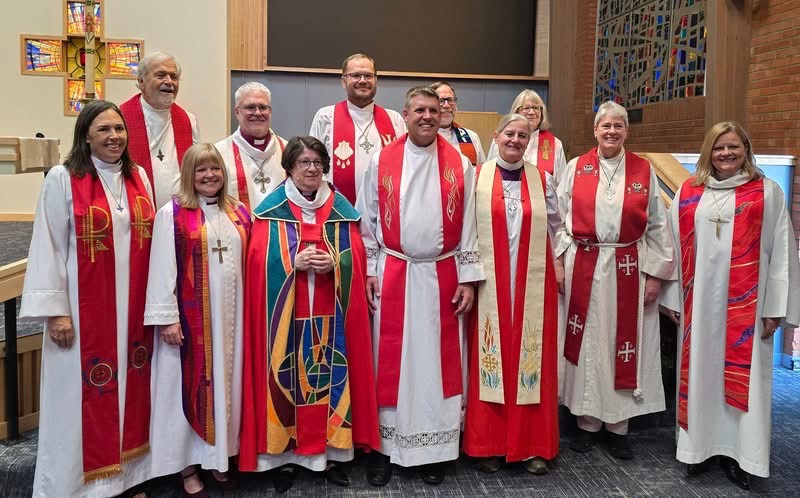
In the end, eight women stayed after the certificate program. Three bishops came for the two nights. We invited Jill Beverlin, Director of Coaching Ministries in the ELCA, to be our facilitator. I had never met Jill, but she has a great reputation and after a few Zoom calls with her and Bishop Laurie Larson Caesar from Oregon I knew we would be fine. But Jill was better than fine–she was outstanding–reading the room, getting to know everyone, and giving the participants space to process the week they had just experienced while also giving them just a few more tools and practices.

I, in turn, got to be the event coordinator. I already had deep respect for our staff and volunteers that coordinate with venues but that respect has definitely grown. There are so many tiny pieces of just a two day event for a few people!

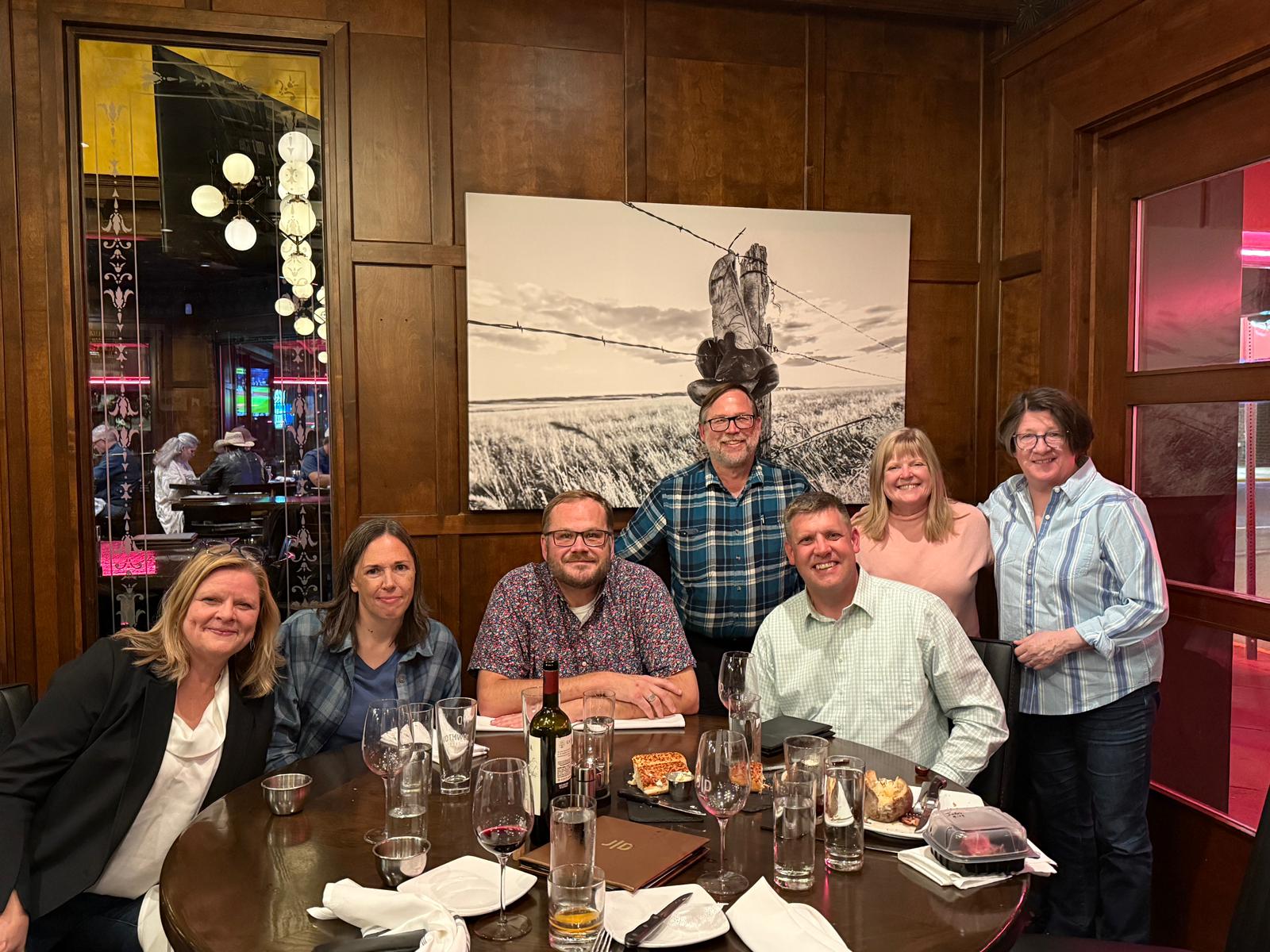
Kudos to Bp Larson Caesar for suggesting we end the two nights with dinner on the water. It was a bit breezy but the conversation and view were absolutely worth it.

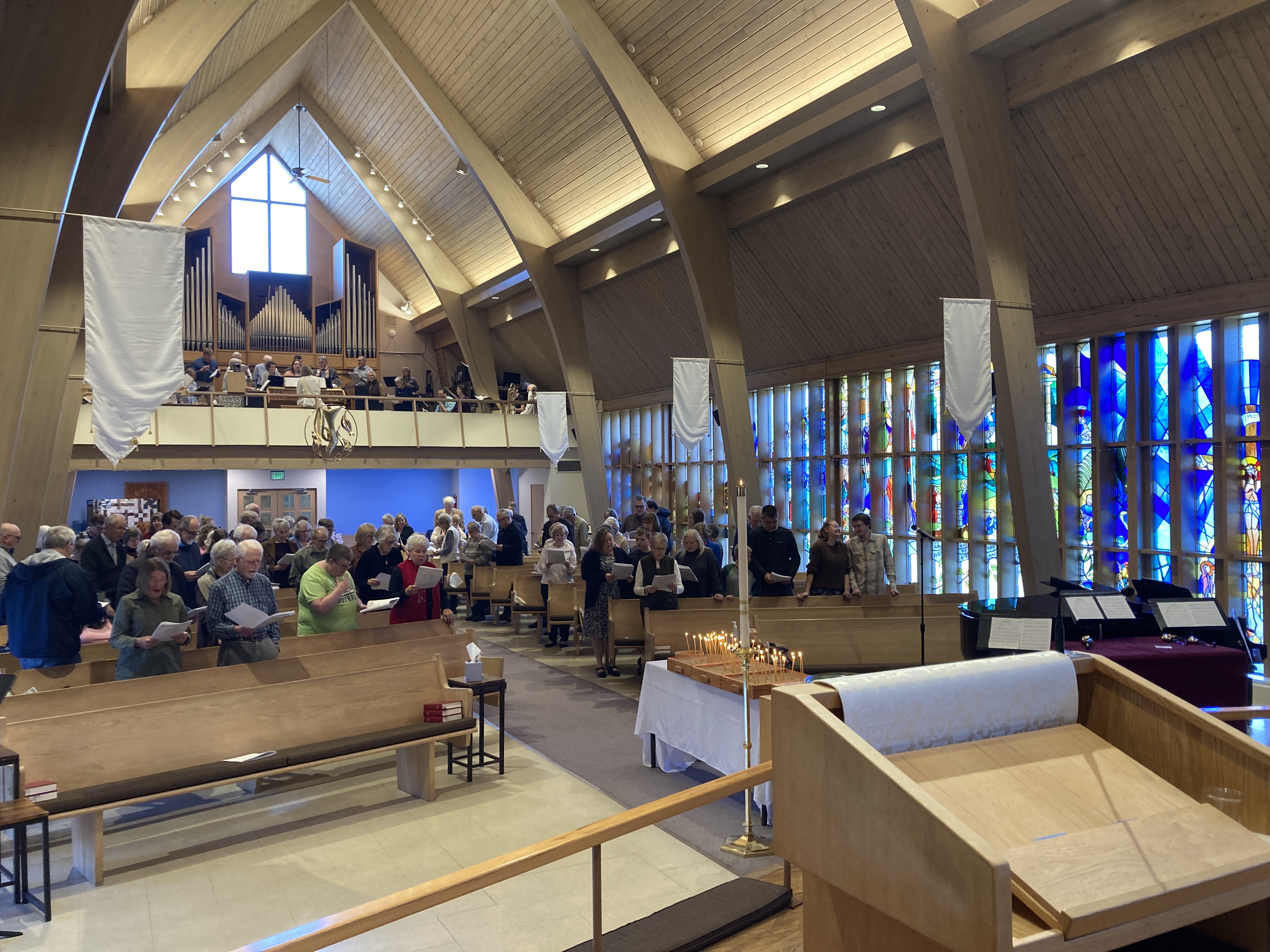
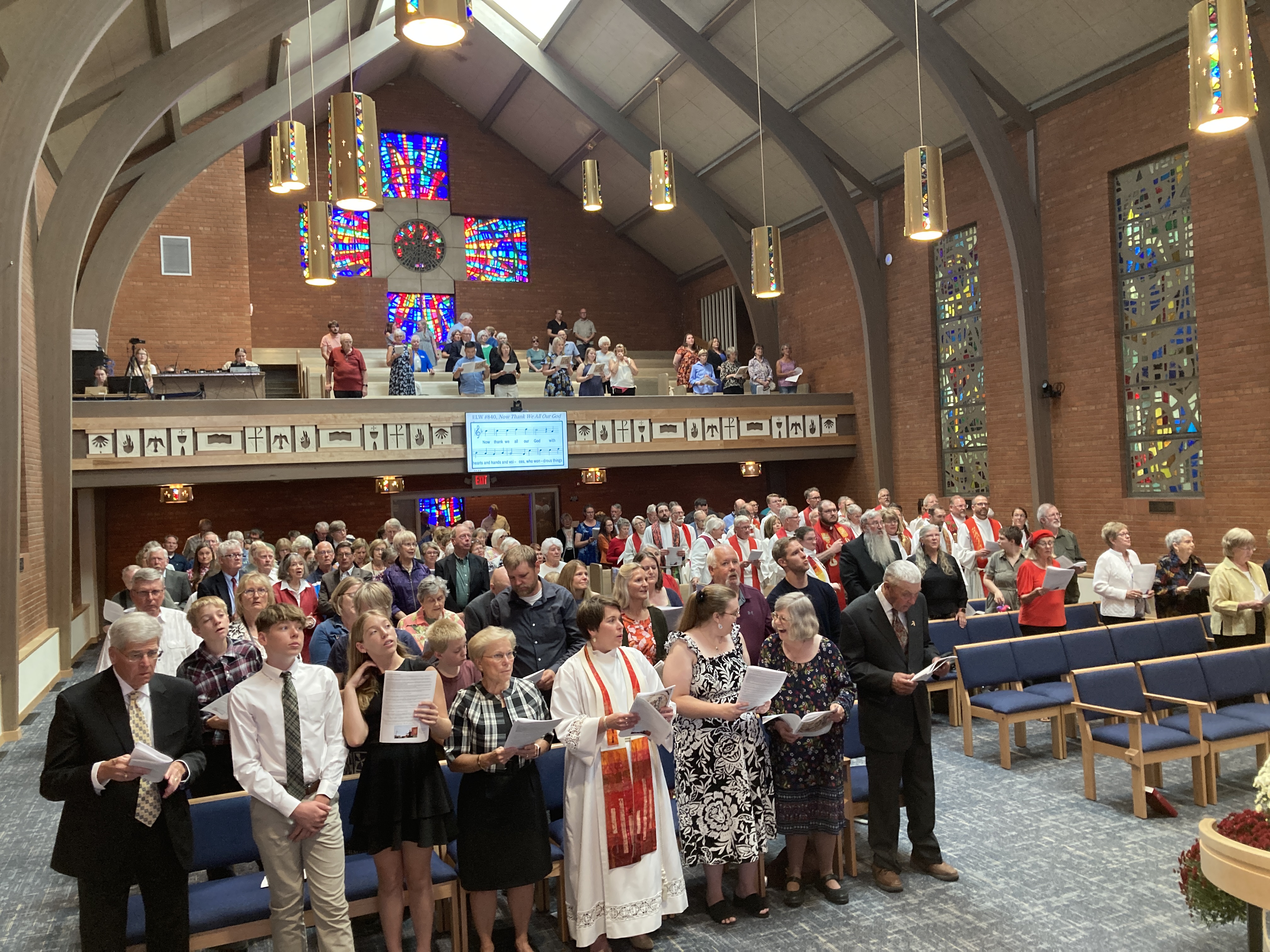
Sunday morning was mostly about heading home, but I decided to catch up with some family friends–Pastor Maynard and Darlene Attik. They took me to their home church, University Lutheran, and I got to meet Pastor Andy and learn about all the renovations happening there. Maynard preached, but before he did, he explained the impact my dad Jerry had on him. Maynard is the one who cheered me on when I was trying to receive a call after serving in rural Iowa. His good friend Eric Wilson Wieberg was my predecessor at Trinity, Nampa who led the church through the affordable housing venture–something I put together a few years into the call at Trinity–small world. It’s always worth the time to connect with old friends.

Posted in NWIM Synod, Reflections | Tagged , , , | Leave a comment

All about Pride parades and festivals – a letter to the NWIM Synod

Originally sent to pastors, deacons, and synod council members.

Across our synod, from June through September, community members will be showing up at Pride Parades and Festivals as one way to support our LGBTQ+ siblings. You might wonder what in the world this has to do with being a Lutheran Christian today. 

One of our starting points is this excerpt from the Statement of Purpose section in the ELCA constitutions: Serve in response to God’s love to meet human needs, caring for the sick and the aged, advocating dignity, justice, and equity for all people, working for peace and reconciliation among the nations, caring for the marginalized, embracing and welcoming racially and ethnically diverse populations, and standing in solidarity with the poor and oppressed and committing itself to their needs (C4.02.d).

Further, our synod is a Reconciling in Christ Synod, which means we believe that God made us each Imago Dei, in the image of God. We believe that whenever the image of God is denied in our LGBTQ+ siblings, whether by law, policy or hatred, the Imago Dei is diminished in all of us. We encourage our ministry sites and larger communities to support and advocate for the full inclusion of LGBTQ+ people in all aspects of our life together. We strive to interpret scripture boldly through the Lutheran Christian lens of God’s unending grace and abundant love for the world. Love is at the very heart of our faith, as Jesus himself invites us to “Love one another.” Our love is welcoming and faithful. It always protects, always trusts, always hopes, always perseveres (1 Corinthians 13:7, NIV).

When the LGBTQ+ community uses the word “pride” it refers not to pridefulness but rather about having pride in — celebrating — an identity that is God-given. We hold our LGBTQ+ siblings in prayer and pray for them, for their families, and for our community this month and beyond. May God ever guide and bless our journey toward justice, inclusivity, and hope in our synod and beyond.

Do we still need Pride parades and festivals in 2025? The world’s first permitted gay parade was organized for June 28, 1970, to commemorate the Stonewall Rebellion on Christopher Street in New York City the year prior. Since then, we have seen denominations, including the ELCA, change their positions on committed same sex couples and LGBTQ+ people in committed relationships serving as pastors and deacons. We witnessed the landmark Obergefell v. Hodges (2015) Supreme Court case. But our responsibilities go beyond adjustments to policies and laws, and LGBTQ+ people are still not seen by all people as made in God’s image. So yes, until the time when all shall see their neighbors as God has always seen them, I believe we still need Pride Parades and Festivals. If you have never attended one, maybe this is the year to be curious and attend. Ask compassionate questions. Listen to stories. Wonder what the Holy Spirit is up to.  

I also commend to you the documentary 1946: The Mistranslation that Shifted Culture. Watch it with a friend or as a congregation and then discuss it. Finally, if you are ready to dive in more, check out what our friends at Reconciling Works have to offer for Pride Resources

Bishop Meggan Manlove

2025 Pride events within the NWIM Synod territory (not comprehensive)

May 30 – Ontario, OR

May 31 – Ellensburg, WA

June 6 – Jackson Hole, WY

June 6 & 7 – Southern Idaho (Twin Falls) 

June 7 – Coeur d’Alene, ID

June 13 & 14 – Spokane, WA

June 14 – Pocatello, ID

June 21 – Wenatchee, WA and Rexburg, ID

June 22 – Tri-Cities (Kennewick, Pasco, Richland, WA)

June 28 – Idaho Falls, ID

July 11 – Sandpoint, ID

July 26 – Goldendale, WA

Sept 5-7 – Palouse Pride (Moscow, ID) and Boise, ID

Posted in NWIM Synod, Reflections | Tagged , , , , | Leave a comment

End of a Road Trip

When people ask me what has surprised me most about this call as bishop, how I respond usually depends on the day or week. I have certainly been surprised by the pastoral care needed by both rostered leaders and congregations. The upside to this is that pastoral care is something I am equipped for after so many years in parish ministry. But another thing that’s surprised me is the jigsaw puzzle of being a good steward of the synod’s resources and my time as I serve the synod and larger ELCA and as I try to stay healthy. My travel pales in comparison to some of our churchwide staff and bishops who have continual international and national commitments. I don’t know how some of them do it. I’m coming to the end of a 12 day trip and I am very excited for several nights at home, at the same time I am so grateful for the hospitality I have received and the encounters I have had.

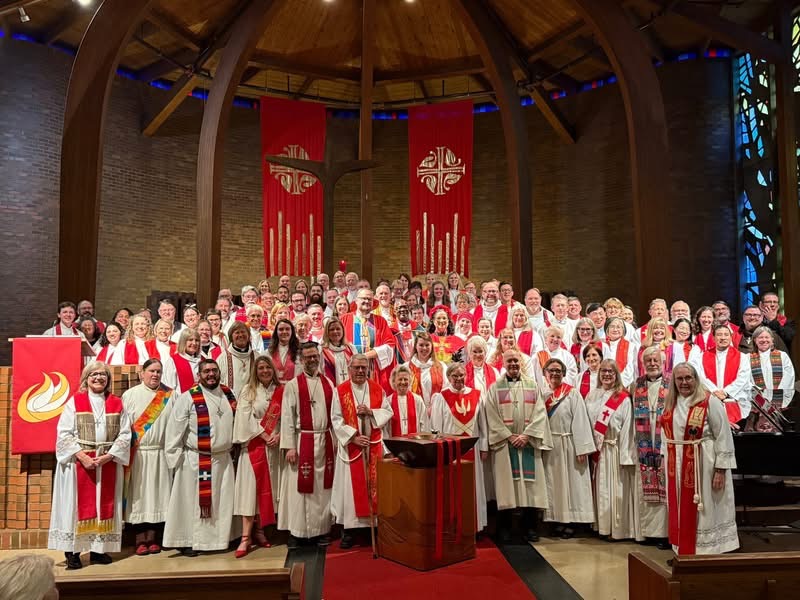
It started two Fridays ago when I flew to Seatac to attend the Southwestern Washington Synod Assembly, where the assembly was electing a new bishop and thanking Bishop Rick Jaech for his twelve years as bishop. I had so many good conversations with ministry partners (like our Washington State liaison to VOAD and Lutheran Disaster Response Ray Sherjven and UW Campus Pastor Chelsea Globe and SW WA Director for Evangelical Mission Joey Ager and Lutherwood Camp Director Pr. Kevin Beebe). And it’s always good to see ministry partners Andrea Arey (Portico) and LuAnn Ferguson (MIF) and hang out with Region 1 Bishops Shelley Bryan Wee and Laurie Larson Caesar.

With Bishop-elect Keith Marshall

Sunday morning I drove an easy and beautiful two hours to our church in Ellensburg (see previous post). After worship I had lunch with two future ministry candidates and then drove on to Spokane. On Monday, I was able to fit in several important one-on-one conversations and a lot of phone conversations.

Tuesday morning, Bishop Shelley Bryan Wee (whose parents live near Spokane) and I headed to Montana together to join the other four Region One bishops for our annual retreat. It was a really wonderful time together, saying good goodbyes to two colleagues and seeing a gorgeous part of Montana I had never really explored. Highlights of our sightseeing were the First People’s Buffalo Jump and a boat ride along the Missouri that took us past the setting for Norman Maclean’s Young Men and Fire. But the worship, prayer, and laughter were what my body will carry from our time together.

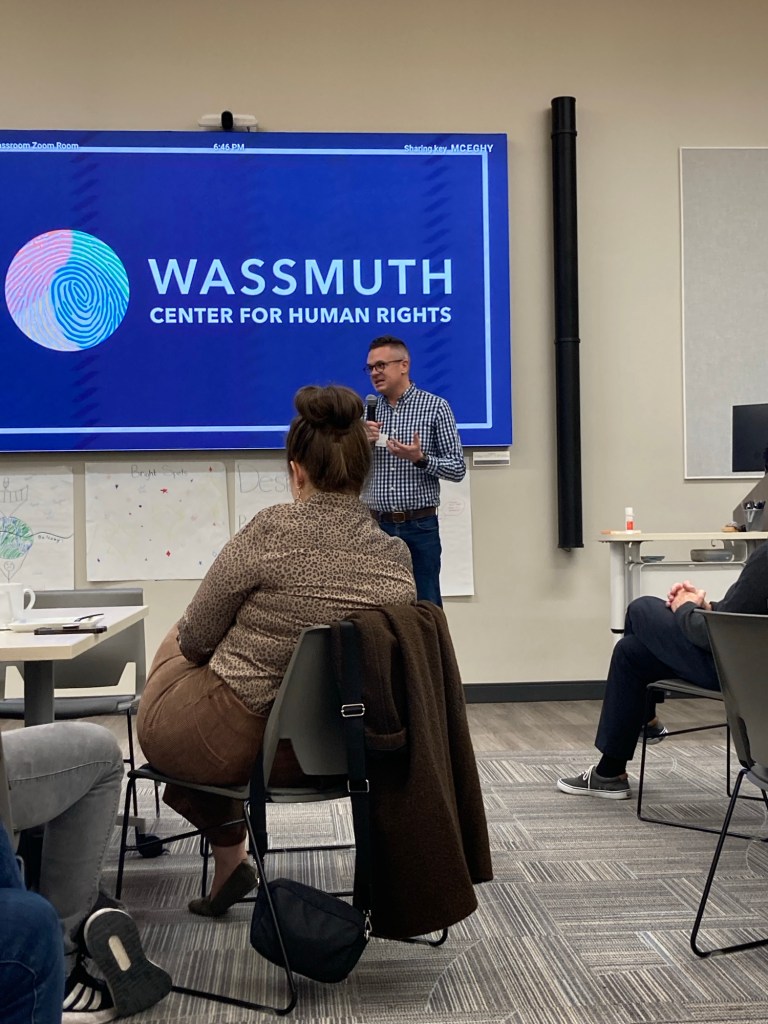
Shelley dropped me off in Spokane, where I’m stay with a family friend, and I had nice Saturday in Spokane and then preached and presided at Prince of Peace on Sunday. Post-worship time was filled with great conversations. This week, Pastor Joel joined other lay and rostered leaders from our synod and across Region 1 ELCA at Seattle University for a pilot program created by their Center for Ecumenical and Inter-religious Engagement.

Flying into O’Hare

Sunday afternoon I took a nonstop flight from Spokane to Chicago for a Monday thru Tuesday morning meeting at the Lutheran Center on Higgins Road–Seminary Debt Reduction Task Force. This group has been doing research for several years and I’m coming in just at the very end as liaison bishop. (Bishop Curry stepped off the task force when he became chair of the Conference of Bishops). It is an amazing group of people to work with and learn from and our time was led by Adam DeHoek from ELCA Research and Evaluation. We’ll be giving a report to ELCA Church Council in November, so stay tuned.

Our time at the Lutheran Center overlapped with the first few days of Bishop Formation for 13 new bishops and it was great to meet them all and catch up with the veteran bishops leading Formation. But now it is going to very good to go home and sleep in my own bed.

Posted in NWIM Synod, Reflections | 1 Comment

Prince of Peace – June 22, 2025

Luke 8:26-39 (Prince of Peace, Spokane, during Pr. Skindlov’s sabbatical)

Grace to you and peace from God our Father and the Lord Jesus Christ. Thank you so much Prince of Peace for the invitation to be with you this morning and for working with Pastor Joel so that he could take time this summer for sabbatical. 

It is an interesting task to talk about demons in the 21st century in the United States of America. We do not experience demons as they are described in the Bible. But rest assured that my words this morning will not be stuck in first century Palestine. I believe there is a way to talk about demons in our lives today. But first, we need to imagine ourselves with that group of disciples who are following Jesus in a very different time and place.

Imagine we have left our home country and journeyed across the lake. It was an eventful trip. A windstorm swept us down the lake, and we thought we would drown. Jesus calmed the storm. He apparently has power over the forces of nature. Now we have arrived in a foreign country—the country of the Gerasenes. The Messiah, Jesus, was supposed to come to save our people, so we do not quite know what we are doing here. What room is there in the reign of God for Gerasenes?

The first person Jesus encounters on this alien turf is a man of sorry plight. He is naked, shameful, and obviously cut off from the community. His home is in the tombs. In a very real way, he is living as a dead man. He has been in bondage for many years. He has lost all social and religious status. We soon learn the reason for this. Thousands of demons hold him in captivity. Jesus asks him his name and he replies “Legion.” A Roman military legion contains 5,600 troops. The demons are so strong that mere chains and shackles cannot confine them. 

Is there anything we can compare to such a tragedy, to someone whose identity is so far gone? One of my favorite professors brings the text into our own context. To begin with, all the demons Jesus confronts have three things in common. Listen and hear if any of this sounds familiar.

First, the demons Jesus confronts all cause self-destructive behavior in the victim. The victim feels trapped in that condition. The demons separate the victim from normal living in the family circle. Do not many of us suffer from the same kinds of snares and burdens? Do we not have friends and family members who are?

“Demons” are those forces which have captured us. They have prevented us from becoming what God intends us to be. And so, we are surrounded by—yes, possessed by—as many demons as those whom Jesus encountered. Our demons can be of many kinds: mental illnesses, schizophrenia, paranoia, addictions, obsessions, destructive habits, anxiety, loneliness. I am sure that each of you, through personal experience and through a a relationship with a friend, a family member, a co-worker or client, can add other specific demons to the list.

Note the similarities between this demon-possessed man and the demons that possess us. He was totally cut off from family and society. He did not live with people, but in the tombs, probably in caves that were used as burying places. The Gerasene demoniac was also “driven by the demon into the wilds.” In other words, he was already in a “living death,” separated from normal people and normal living. Picture in your mind’s eye how demons today isolate people both physically and emotionally.

And the demons were harming him. In another version of this story, the man was “bruising himself with stones” (Mark 5:1-20) and “no one could restrain him anymore, even with a chain.” Mental illness, addiction, destructive habits hurt people every day.

Finally, and most sadly, the demoniac was so totally possessed that though the demons recognized Jesus as “Son of the Most High God,” the man could not free himself. Only the power of God can cast out demons. The seventy person sent out by Jesus soon after this healing came back and reported, “Lord, in your name even the demons submit to us!” (Luke 10:17).

This is the key to the work of Alcoholics Anonymous, whose twelve steps to healing begin with these three:

  1. We admitted we were powerless over our addiction, that our lives had become unmanageable.
  2. We came to believe that a Power greater than ourselves could restore us to sanity.
  3. We made a decision to turn our will and our lives over to the care of God, as we understood him.

These first three steps are basic to the AA program. Likewise, we are not passive, but we cannot cast out demons on our own. We need God to free us from our demons. 

It is said that when Martin Luther felt oppressed by the devil, he would take courage by shouting, “I am baptized!” In this way he grounded his confidence of healing in God’s external, objective act of drawing him into the Christian family throught he water and the word of baptism. We also can declare that God claims us once, again, and always as God’s own beloved children. “Child of God” is your name, the name, that can never be taken away.

Members of Alcoholics Anonymous also realize they do not only need God’s help, but they need the support of people around them. In almost all of Jesus’ stories of healing, there is restoration to families and townspeople—people are returned to their community and the community welcomes them. For the healing of demons today, the fellowship of family, congregation and community is a key to restoration. Becoming free from our demons is seldom a “do-it-yourself” project. We need help from outside ourselves. We need God’s help and we need the other people who are instruments of God’s healing.

At the end of the story, the man “had been healed,” a word from the Greek sozo. Sozo can also be translated saved, or delivered, or made whole. He is not only delivered from the demon and not only cured of the terrible burden. He has been altogether healed and saved

You may not feel that you are living with a demon right now, but I will simply name, as I have in my synod newsletter columns, that we are living in unsettled times. There is simply a heaviness right now—worrying about the well-being of all those living on the margins of society, worrying about violence close at home and warfare across the globe, worrying about so many of the guardrails of society I have taken for granted for so long. And no human being was designed to take in and absorb the amount of information we are now reading and watching. It’s just too much. 

I am audacious enough to believe that Jesus can and is still the balm we need—even in these times. In a society overwhelmed by competition and division, Jesus’ message of love and healing and belonging is as relevant and needed as ever. In a time when the world, including myself, has gone digital, Jesus’ gifts of love and forgiveness is received in very simply bread and wine—common and physical elements that we receive with our physical bodies. No matter what you are bringing today to this community of the Body of Christ, the healing and wholeness given by Jesus Christ, are for you as well, today and always. Amen.

Posted in NWIM Synod, Sermons | Tagged , , , , | Leave a comment

Holy Trinity Sunday with First Lutheran, Ellensburg

June 15, 2025

John 16:12-15

The Holy Trinity, the center of this Sunday’s celebration, is, I believe, one of the most counter-cultural Christian beliefs. To live in the information age is to be inundated with photos, stories, data, headlines, and so many words and claims, sometimes true and often not. If you resent how much effort it takes to be an informed citizen of this planet, you have the company of your bishop. But what’s more, there is very little room for either the supernatural or the unexplainable. And the Holy Trinity truly is both supernatural and unexplainable. It is mystery—perhaps one of the greatest mysteries of our faith.  

Somehow this mystery has not deterred Christians from naming institutions after the Trinity for years—colleges, seminaries, nursing homes, hospitals, and of course churches. I have never looked up the statistics, but I am quite sure that if we catalogued names of Lutheran congregations in this country, Trinity would come out on top or be a close second to Good Shepherd. 

Today’s celebration is counter cultural for another reason—it is about mutuality and interdependence—more traits that have little stature in the age of AI. Physician and author Gabor Mate speaks about the “toxic culture of materialism.” In the toxic culture of materialism, materials, and especially the possession of material things, is far more important than connection, love, or spiritual values. Chat GP may be able to help you generate a document or even start problem solving, but that output does not equal a relationship.

Mate reminds us that human beings, all of us, need relationships, all different kinds of relationships: relationships with the natural world, relationships with other human beings, relationships with meaningful and creative work that contributes to the good of the cosmos, and life-giving relationship with our own selves. We are naturally wired for empathy, compassion and connection but there are many barriers to us practicing those things today.

We, gathered in this space and time, have a clear mandate to love one another as Jesus loves us. And we worship a God who exemplifies community, mutual relationships, and a loving symbiosis. The community within the Trinity speaks to our lives here and now.  

Think how radical it was to those early Christians and also new followers of Jesus today. The God we worship is not a pantheon of gods like those we read about it Greek and Roman mythology—a roster of gods who are in a power struggle, who often use humans as pawns for their own benefit—Zeus, Athena, Helena, Apollo. 

One writer put it this way: Then, along came the Christians. “Blessed be God: Father, Son, and Holy Spirit.” What’s this? Still a Unity of Being, but also a Trinity of Persons? The concept was…confusing to those who had dispensed with multiple deities, who had fully embraced the notion of one God (monotheists), who wanted to keep things plain and simple. Why complicate things? And what does it mean anyway? 

The truth of it all originates in the language of Jesus. In our passage from John’s gospel today, Jesus is talking with his followers about their futures, when he will no longer walk beside them on earth: “When the Spirit of truth comes, he will not speak on his own, but will speak whatever he hears, because he will take what is mine and declare it to you. For all that the Father has is mine.” In another place Jesus declares, “Do you not know that the Father is in me and I in the Father?” Still elsewhere he prays that his disciples may be one “even as the Father and I are one.” This is the language of relationship, the language of mutual devotion. 

A twelfth-century scholar, [Richard of St. Vincent], spoke of God in terms of shared love, a community in which that love is expansive and generous. It is love that cannot be self-contained. It overflows from Parent to Child to Spirit and back again. This is captured not only in our passage from John, but in the creeds we pray as Lutheran Christians.

Seventeen hundred years ago, the first ecumenical council was convened in Nicaea to discern matters central to the Christian faith, namely: How do we understand Jesus Christ? The council sought to end disputes about the divine nature of Jesus

and his relationship to God. It was an attempt to unify all of Christendom. Naturally, debates arose, and different schools of thought emerged. In the end, near-consensus was reached — and later expanded in 381 — which resulted in the Nicene-Constantinopolitan Creed. Ever since, Christians have articulated the complexity of the faith in clear and simple terms.

So, this year we celebrate the God-given gift of our visible unity. We also celebrate the 1,700-year-old ecumenical movement that began with a common affirmation of our faith. Here in the Northwest Intermountain Synod, including Ellensburg, that ecumenism is lived out weekly through Lent and Advent shared evening prayer, community Vacation Bible Schools, ecumenical food ministries and so much more. 

This anniversary of Nicea also invites reflection and self-critique. A later addition to the creed called the “filioque” (“and the Son”) was made by the Latin [Western] Church in an attempt to resolve yet another dispute. The filioque has contributed to division between the Eastern Orthodox and Western churches for almost a millennium. But this enduring issue has been meaningfully addressed in a joint statement issued last year by a team of Lutheran and Orthodox Christians. As Presiding Bishop Elizabeth Eaton wrote, “This fruit of 40-plus years of dialogue presents us with the opportunity to move toward healing age-old divisions within Christ’s church, both globally and in our own context.”

The joint Lutheran Orthodox statement explains: As part of the Latin tradition, the [16th century] reformers inherited the Nicene Creed with the Filioque and did not consider it problematic. Valuing this old and most venerable ecumenical Christian text, we now suggest that the translation of the Greek original (without the Filioque) be used in the hope that this will contribute to the healing of age-old divisions between our communities and enable us to confess together the faith of the Ecumenical Councils of Nicaea (325) and Constantinople (381).

Furthermore, the Nicene-Constantinopolitan Creed is a doctrinal statement used in the liturgy. The people of God pray the Nicene-Constantinopolitan Creed and in that prayer their faith is shaped by the Triune God. Renewed focus on the original wording of the Nicene-Constantinopolitan Creed may encourage renewed theological reflection on the Trinity and the role of the Holy Spirit.

Is the Creed still relevant?  Words matter. Just ask a parent whose kid repeats a swear word the parent hoped they had not overheard. Or ask a parent whose kid sings a camp song or piece of the liturgy over and over. We confess and worship a God who is not a pantheon, not a binary either or, not a hierarchical god, but a loving God whose relationality is intrinsic. 

Yes, for people who trust this Triune God, who choose to be followers of this God, there are real life implications. You are invited into the Trinity itself; sometimes called the dance of the Trinity. In the waters of baptism, at the table of bread and wine, in our singing and prayers, you encounter the Triune God. The same love that flows within the Trinity is received by you. Abundant love and life are yours. The Triune God says no to that toxic culture of materialism and yes to mutuality and interdependence and most of all to the love that only God can give. And you simply receive them. In the dance of the Trinity, you are ultimately free, free to love and free to be loved.

Look at all of those flowers!!

Posted in NWIM Synod, Sermons | Tagged , , , , | Leave a comment

Outdoor Ministries, Joy, and Grief

Faith Leaders

I have spent the last week enjoying the spaces and the people who make up to of our Northwest Intermountain Synod’s outdoor ministry sites. Last Sunday through Tuesday I was at Luther Heights Bible Camp, a small camp between Stanley and Ketchum, Idaho which has sat on leased Forest Service property since its beginnings. This is a seasonal camp primarily because of snow pack. For many years they have hosted a faith leaders retreat and during the last few years it’s been in June during staff training, allowing leaders to get some continuing education along with fellowship. This year we focused on Youth Mental Health with the help of Lutheran Community Services Northwest staff from the Tri-Cities office and from a foster parent who is a member of Our Savior Lutheran in Twin Falls. On Tuesday morning I also led a Lutheranism 101 session for the staff and then anointed/blessed the staff during morning worship–such a privilege. Camp Director Maddie Glanz has an excellent summer staff.

Summer Staff
Tuesday morning worship at Luther Heights’ Outdoor Chapel

Friday I flew to Minneapolis to be with my mom and and then both of us attended the funeral for my godfather Warren Salveson, director of Camp Ewalu, camp counselor of Wilderness Canoe Base, interim director of Holden Village, interim director of Good Earth Village, pastor and interim pastor and at one time he served on the Iowa District staff. He and my dad met when Warren and godmother Sonja took youth from Warren’s congregation in Michigan out to Camp Koinonia, which my dad had just started. Warren spent his teenage years in Brooklyn, NY so I’m sure there was a draw to see the camp serving his home congregation. Warren was like a brother to my dad and the stories Warren and Sonja’s four kids told at the funeral revealed so much about their friendship. I was actually pretty afraid of Warren as a little kid, but as with so much of his life, that changed after his stroke. I’m so sorry I won’t have any more conversations with him, or with my dad, but I’m grateful for all the time I took and he and Sonja made to be together. A lot of my dad’s old friends gave me a little grief when I was elected bishop because my dad was so committed to the ministry of lay people and he got tired of pastors and bishops thinking so much of themselves. But Warren, a lifelong pastor who my dad always respected and loved, never gave me a hard time, not even as a joke. He supported me and in these past two years as I’ve served as bishop, asked caring questions, understanding that the church I was serving was so different than the one he was ordained into. We, along with my mom and dad and godmother, shared an abiding belief in the ability of the gospel to transform people’s lives for the good. And that view shaped and shapes so much of who we were and are. I have cried quite a few cathartic tears over the past few days and no wonder when I look at where I’ve been and who I have been with. Grief can be a lot and even when we have experience with it, it can surprise us.

With Warren and Sonja after my bishop installation worship
Ready for guests!
Great turn out for the 80th Anniversary kick-off

After the funeral, mom took me to the airport and I flew to Spokane and then drove out to Camp Lutherhaven on Lake Coeur d’Alene. Sunday was the kick-off of Lutherhaven’s 80th Anniversary. Camp Director Rebecca Smith let me commission the summer staff during worship–again an honor. As I wrote elsewhere, what a great way to spend Pentecost Sunday!I came to this camp with my mom and dad when they led staff training for Margie Fiedler. Since that time the camp has grown in sites and year-round and summer numbers. It is a big operation. Lutherhaven is also one of the three ELCA camps participating in the next stage of the Rhythms of Faith Project, which I sit on the national advisory team for. I’ll be back at another Lutherhaven site, Shoshone Basecamp, next month to provide some reflections and devotions for the Wild Women Retreat. A huge thank you to both of these outdoor ministries for being Wellsprings of God’s Love and sharing the gospel in these beautiful places.

Staff lead the sung final blessing
Posted in NWIM Synod | Tagged , , , , | Leave a comment

Last Minute Thoughts – Pentecost & Holy Trinity Sundays

Originally published in the Northwest Intermountain Synod e-newsletter

As you make final preparations for the festivals of Pentecost and/or Holy Trinity, I commend to you the Lutheran-Orthodox Joint Statement on the Filioque: A Study Guide from the ELCA. In addition to history, theology, and a Bible Study, the resource contains suggestions for hymns and language for liturgy. 

This year we are celebrating the 1700 anniversary of Nicaea, the first ecumenical council, and we are also celebrating the joint statement by the Lutheran World Federation and the Orthodox Church on what we call the Filioque clause (“and the Son”)—a later addition made by the Latin Church in an attempt to resolve yet another dispute — which contributed to division between the Eastern and Western churches for almost a millennium. In our Evangelical Lutheran Worship books, you will see a * next to the Filioque clause whenever the Nicene Creed is printed. 

As I began learning about this old addition, reacquainted myself with the original council, read the joint statement and the study guide, and participated in a webinar for ELCA bishops, what I found most helpful was a sentiment expressed by Pastor Dirk Lange, Lutheran World Federation Assistant General Secretary for Ecumenical Relations. Lange said that it may be time to now drop the Filioque clause, but what is far most important about all this is the conversation, the conversation about the Trinity which can in turn inform our conversations about our relationships with Goda and one another. For me at least, this notion and invitation made the whole topic that much more relevant. 

The love, relationality, and symbiosis within the Trinity invites us in. Furthermore, like the Holy Communion table where all can feast, like the font where all can be made new, like a day in natural world with our feet planted on God’s good creation, the Trinity itself gives us a glimpse of God’s future reign which is at once already and not yet, or, as the Creed’s last line puts it, “in the life of the world to come”

And so, please look at the study guide as we approach Pentecost and Holy Trinity Sundays or pick it up as a church council or study group later this summer. Those of us going to ELCA Churchwide Assembly in Phoenix at the end July and early August will be gathering under the theme “For the life of the world,” a theme informed by the Nicene Creed, Bishop Eaton’s articulation of who we are as church, the wisdom of Dietrich Bonhoeffer, and even the purpose statements in our church constitutions.

Finally, make sure to check out the hymn section in the study guide. And on that note, I’ll leave you with this link to a relatively new Trinity song: Glory to God, Whose Goodness Shines (All Creation Sings 1087). To this Gen Xer, this piece by Paul Vasile, who many of us know from his time with Music that Makes Community, feels like what Jay Beech might write today, and I mean that as high praise. 

Narthex at Trinity, Nampa, Pentecost Sunday 2022

Peace,

Bishop Meggan Manlove

Posted in Uncategorized | Tagged , , , , | 1 Comment

Reflections on Montana Synod Assembly

I am writing this blog post from the Great Falls Airport having spent the last few days with the Montana Synod during their Assembly. I was here as the Region 1 bishop representative because the assembly had a bishop election. That election, which included three failed third ballots, will be the dominant narrative. Yesterday Pastor Ben Quanbeck, serving King of Glory, Billings, was elected bishop on the fifth ballot (see the Montana Synod FB page for the results of all the ballots).

However, the Assembly included more than the election. I’ve put captions with some photos below. Not pictured, but important parts of the assembly, were the keynote by Helping Hands of Great Falls Director Ms. Carrie Parker and the Bible Study by Wartburg Seminary Professor Dr. Mark Yackel-Juleen.

Vigil for Missing and Murdered Indigenous Women at Bethel Lutheran

I had lunch with Pastor Amy Walls, daughter of the NWIM Synod and now serving on Rocky Boy Indian Reservation. It was great to catch up!

Grateful for my colleague Bp Laurie Jungling, who I have served with for two years in Region 1 and in the Conference of Bishops. Bp Jungling will conclude her six-year term at the end of August.

Deacon Allen Sasser-Goehner is the new director the Northern Rockies Institute of Theology, part of the Montana Synod. I worked with Allen at Camp Christikon in 1995 and 1996 and with his wife Pastor Molly Sasser-Goehner in 1998. Allen and I led our first junior high overnight together in 1995!

Opening Prayer Saturday morning with Lay Ministry Associate Recognitions. There are many LMAs serving all across Montana. I was able to hear some of their stories at a dinner for them Saturday evening.

Rt. Rev. Dr. Marty Stebbins, Bishop of the Episcopal Diocese of Montana, preached at opening worship. We took a selfie to send to our colleague Bishop Gretchen Rehberg of the Spokane Diocese.

With Pastor Ben Cherland, Red Lodge, MT, brother of Elizabeth Cherland and brother-in-law of Pastor Kent Narum, who served as one of my parents’ pastors at Custer Lutheran Fellowship.

Worship Saturday – I preached on the RCL texts.

Installation of Deacon Colter McCarty as Associate to the Bishop during closing worship.

With Rev. Tom Shlotterback, (fellow Concordia Cobber) St. John’s United, Billings, presider for closing worship and retiring very soon.

Bishop-elect Pastor Ben Quanbeck

Posted in NWIM Synod | Leave a comment

Sermon for Montana Synod Assembly

Meggan Manlove

Saturday (day 2) May 31, 2025

John 17:20-26

When I hear Jesus’ prayer for his disciples in our reading from John’s gospel today, I hear his visions and hopes for authentic love and unity. I hear him speak poetically about his relationship with the Father, you might think Mother if that is easier for you. We hear of a loving and connected parent-child relationship. And though the Holy Spirit is not named in this text, that dance of the Trinity, the relationality inherent in the God we worship is so present in this prayer. The love within that Holy Trinity is abundant and real and inviting. It’s hard to carry out as human beings, sinful and broken as we are, which is one of many reasons Jesus prays for his disciples. If it were automatic human behavior, then there would be no need for prayer.

This struggle made me think of my first call in Soldier, Iowa, a town of 200 people near the Missouri River in what’s known as the Loess Hills. I served there from 2004-2010 and shortly before I arrived, the school district that Soldier, Iowa was part of was dissolved. A vote was put to the citizens and instead of merging with their long-time partner district, a pin was dropped in the middle of the current district. Like many ELCA Lutheran congregations, my new church was full of schoolteachers. They were grieving, in disbelief that other residents had not seen things the way they did. I clearly remember teachers telling me how difficult it was to stand around the Holy Communion rail with people who had voted in such a way that they had lost their jobs. But they kept coming to worship. They kept coming together and sharing the bread and wine, shoulder to shoulder receiving the gifts of new life and forgiveness. And very slowly relationships healed.

During Holy Communion we are literally invited into the unity of the Triune God, unity portrayed in Jesus’ prayer. In the town church we had a straight communion rail but Memorial Day weekend through the month of June, we went out to the old massive country church for worship. And there stood a beautiful half-circle communion rail, one where you not only stood shoulder to shoulder with people, but those on the ends could look across and make eye contact. One big reason I am still in the church, with all of its faults and growing edges, is because of our audacious belief that when we cannot forgive, when we cannot reconcile, when we have no energy to be curious about one another, the means of grace can still be received through Word and Sacrament. My hunger for bread and wine draws me to the table where I feast shoulder to shoulder with my siblings in Christ.

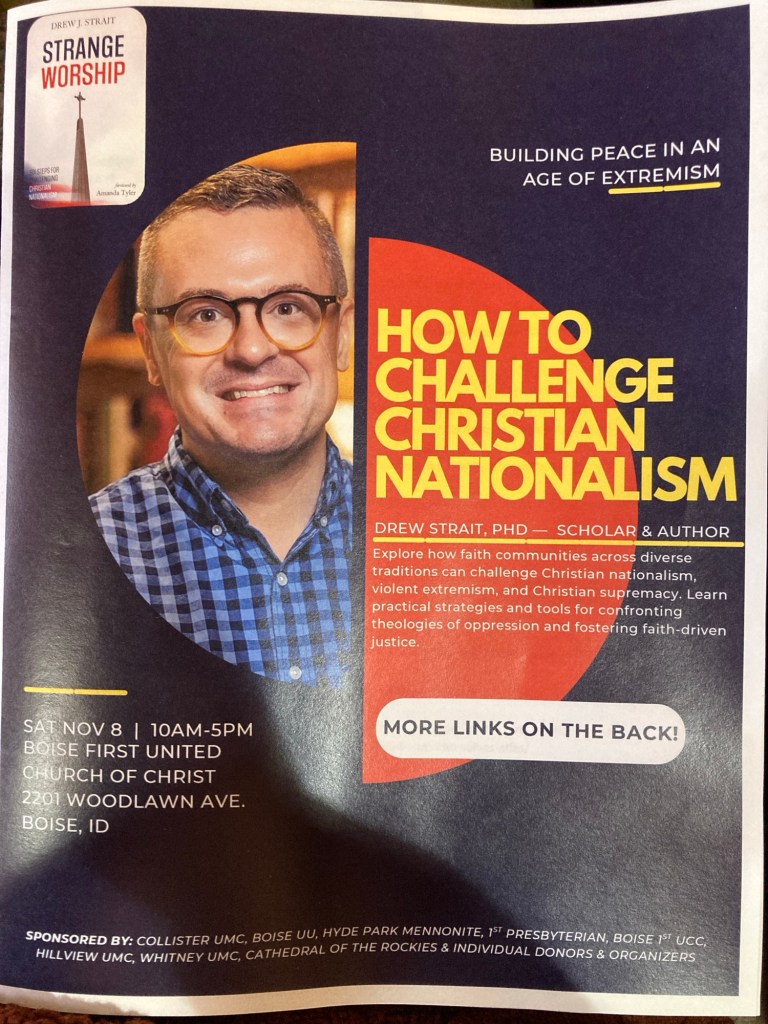
I wrote to my synod recently that I think we forget how radical and rare it is for the good news of God’s love and grace to be preached and heard, and for the sacraments to be celebrated faithfully. It is radical and rare in part, at least within the geography I serve, because there are so many other things parading as the gospel. I am especially exhausted by White Christian Nationalism permeating into so much of the fabric of the territory I serve. Why does something so antithetical to the good news of Jesus Christ get to carry the name of Christ?

White Christian Nationalism is based on creating and sustaining social hierarchies, often revolving around gender and sexuality. It is also comfortable with authoritarian social control. And it includes a desire for strict boundaries around national identity, civic participation, and social belonging that fall along ethno-racial lines. A “Christian nation” is generally understood to be one where white, natural-born citizens are held up as the ideal, with everyone else coming after. (Andrew Whitehead, p. 29). 

I worry sometimes that as we get clearer about being against White Christian Nationalism, we are not exactly sure what we are for instead. Sometimes it is easier to speak in the negative than the positive. I am grateful to be with you this weekend and hear more about why the two resolutions related to our indigenous siblings are important to you as individuals and as a synod. Addressing the reality of Missing and Murdered Indigenous Women and the history of Indian Boarding Schools is, in fact, one way to follow the Jesus we encounter in the gospels. 

When we say Christian Nationalism is antithetical to the gospel of Jesus Christ, we need look no further than Jesus’ prayer for his followers. Jesus prays, “As you Father, are in me and I am in you, may they also be in us.” Hear the mutuality and oneness. “That they may become completely one, so that the world may know that you have sent me and have loved them even as you have loved me…I desire that those also, whom you have given me, may be with me where I am to see my glory, which you have given me because you loved me before the foundation of the world.” 

The prayer is saturated in this rich love language, and it is a love not for one set of people, but for the whole world, the cosmos, the same world sung about at the beginning of this same gospel: “The true light, which enlightens everyone, was coming into the world.He was in the world, and the world came into being through him, yet the world did not know him.” This is the world God made, the world God loves, and the world into which God sent the Son. Into this same world, Jesus now sends his disciples. They are already in the world but now they are commissioned to bear witness in and to the world of God’s love.

And what is this love? Something sentimental that we might find on a cupcake or greeting card? No. Our final verse summarizes the work of all of Jesus’ ministry, “I made your name known to them, and I will make it known, so that the love with which you have loved me may be in them and I in them.” This verse confirms one of the central themes of Jesus’ Farewell Discourse to his followers: Jesus’ death and departure does not end his presence and work with the faith community. Jesus’ work continues in the work of the Holy Spirit. 

God’s love is constant and ongoing, and the love goes on through the Holy Spirit. Empires and ideologies come and go. God’s love will be with you forever. Disagreements within congregations, synods, and entire denominations are important and can keep us up at night, but the balm that gets you through the night is God’s love. 

Influencers, newsfeeds, and so much more can seem to have all the answers. But compared the good news of Jesus Christ, it’s all a mirage in the desert. You worship the God who, as we learn earlier in this gospel, is the source of living water. 

That’s why the author of Revelation records, “the Spirit and the bride say, ‘Come.’ And let everyone who hears say, ‘Come.’ And let everyone who is thirsty come. Let anyone who wishes, take the water of life as a gift.” That gift is for you, always and forever. Amen.
Posted in Sermons | Tagged , , , , | Leave a comment

Answering “How are you?”

I’ve been quiet on this blog the last few weeks. After our Synod Assembly and a few more days up in Spokane I flew back to the Treasure Valley and because of some miracle in the calendar have been here for 3.5 weeks. I emailed friends and colleagues asking to get walks, lunches, and coffee dates on the calendar. Everyone has genuinely asked, “How are you?” and my answer sometimes got stuck in my throat. That’s because I am doing well and have been filling up my cup with time with friends and hikes in beautiful Southern Idaho and concerts and community events and yet I know so many people are hurting. Friends near and far who work for the federal government have lost or could lose their jobs. Refugees who thought they found refuge have not. LGBTQ+ friends and strangers have experienced hateful rhetoric and legislation. And the West Ada School district cannot get off the front page. More than all that, and that’s a lot, I worry about our democracy. I think it will hold, but I’m less sure than I ever have been. How am I? I am deeply concerned. I am also deeply proud of our ELCA congregations and ministries and our ecumenical partners continuing to share God’s love and mercy in their local contexts. And I have hope because we are not in this reign of God stuff alone. So here are some highlights from the last few weeks:

Faith Funders Event hosted by King of Glory Lutheran and organized by LEAP Housing–an event to raise donations and charitable investment dollars for the affordable housing to be built by LEAP on KOG’s property.

Idaho Conservation Voters Boards and Commissions Fellowship program: The fellowship program seeks to get more women, people of color, and LGBTQ people on local boards and commissions. As a woman serving on Nampa’s Building Design Review Commission I was invited to tell about 15 people (think speed dating) about my experience on the commission.

So many hikes and walks with friends in and around the Treasure Valley and Southern Idaho. Here I am with Ariel Agenbroad, who works for the University of Idaho Extension in Ada County. We partnered a lot when I was the pastor at Trinity, Nampa and it was so fun to catch up.

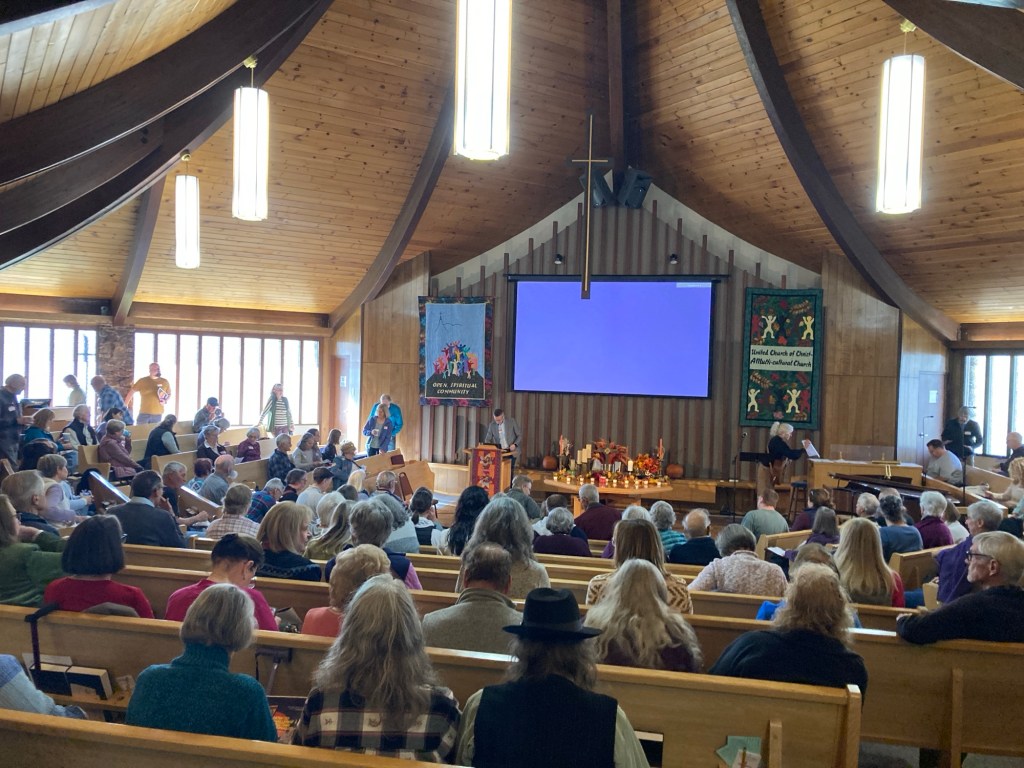
Sundays at Faith, Caldwell (home church) and Immanuel, Boise (confirmation Sunday) and a Saturday evening at St. Michael’s Episcopal Church.

Lutheran Community Services Northwest Boise District was awarded a grant from the Idaho Women Community Foundation (a very competitive grant process) and I was able to join them at the banquet.

So many meals and meet ups with ecumenical friends: Presbyterian, Episcopal, Methodist, Nazarene, UCC, Disciples of Christ, and yes some Lutherans too.

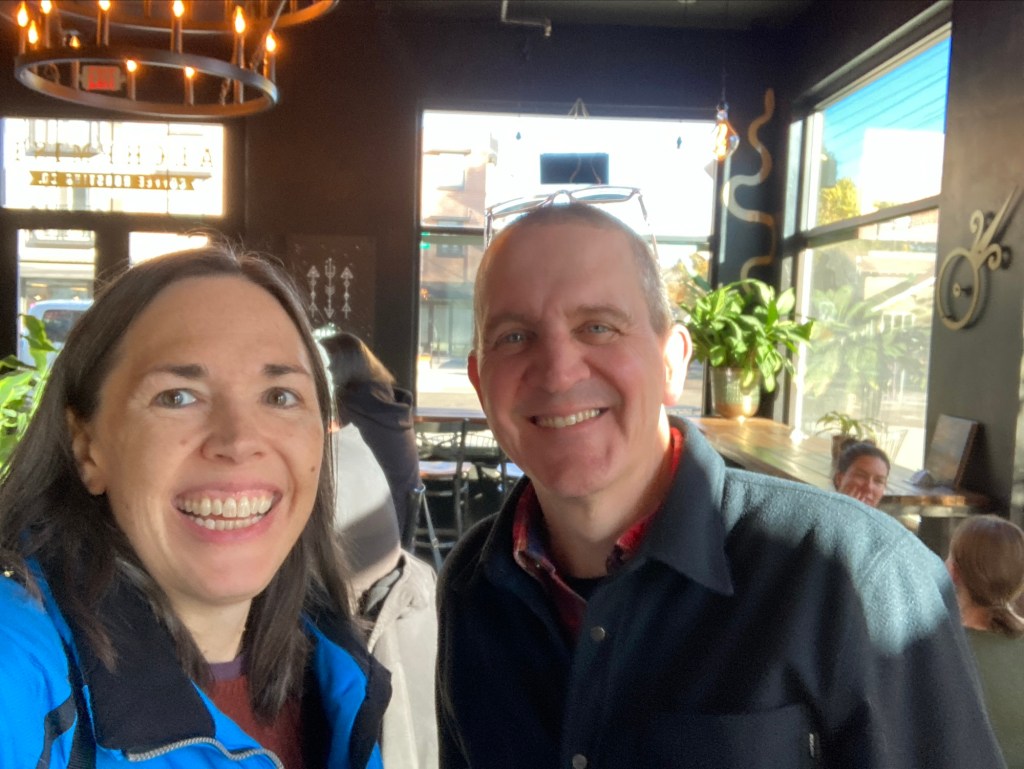
Nadia Bolz Weber came to Cathedral of the Rockies in Boise and this was a very fun ecumenical event. Nadia gave her testimony/story AND we all got to sing together–so life-giving.

Speaking of music, I went to the spring concert at Cathedral of the Rockies, where they sang pieces by Rene Clausen, heard local band Orale at Caldwell’s Indian Creek Plaza, and attended the James Taylor concert right here in Nampa!

The Treasure Valley Cluster pastors and deacons had a retirement celebration lunch for Pastor Paul Malek.

Posted in NWIM Synod, Reflections | Tagged , , | 1 Comment