Grape Cluster – Heidi’s Retirement

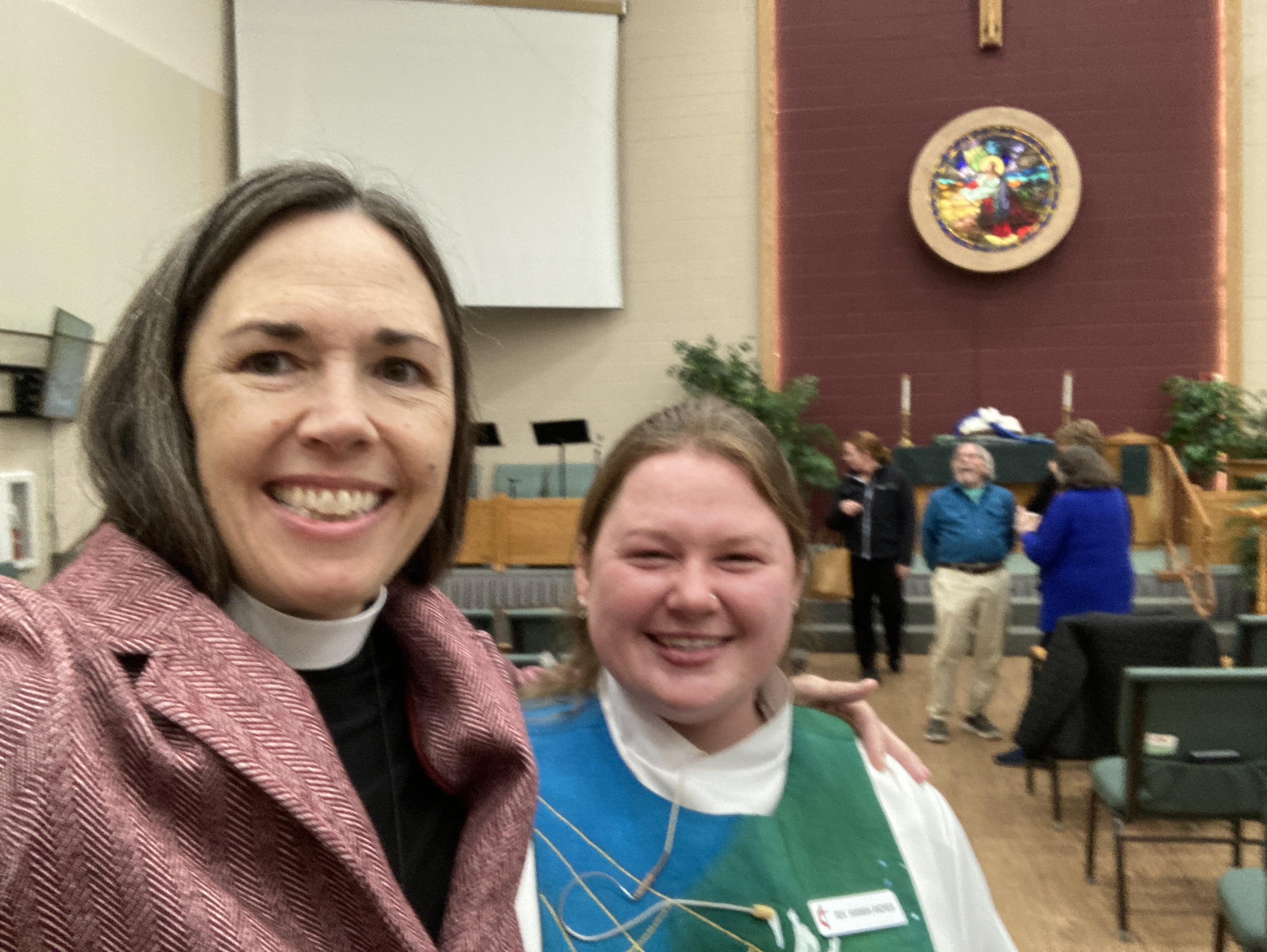
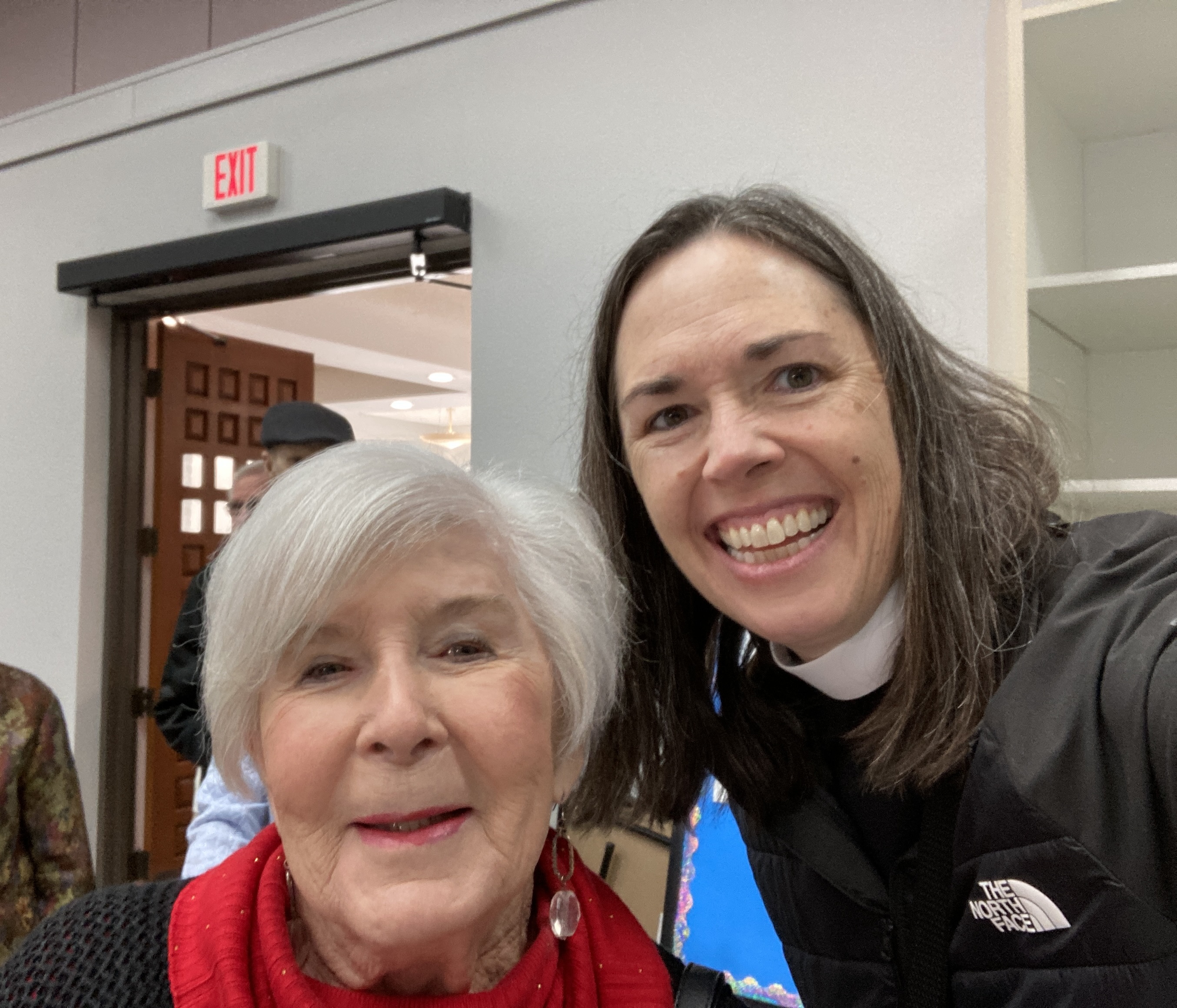
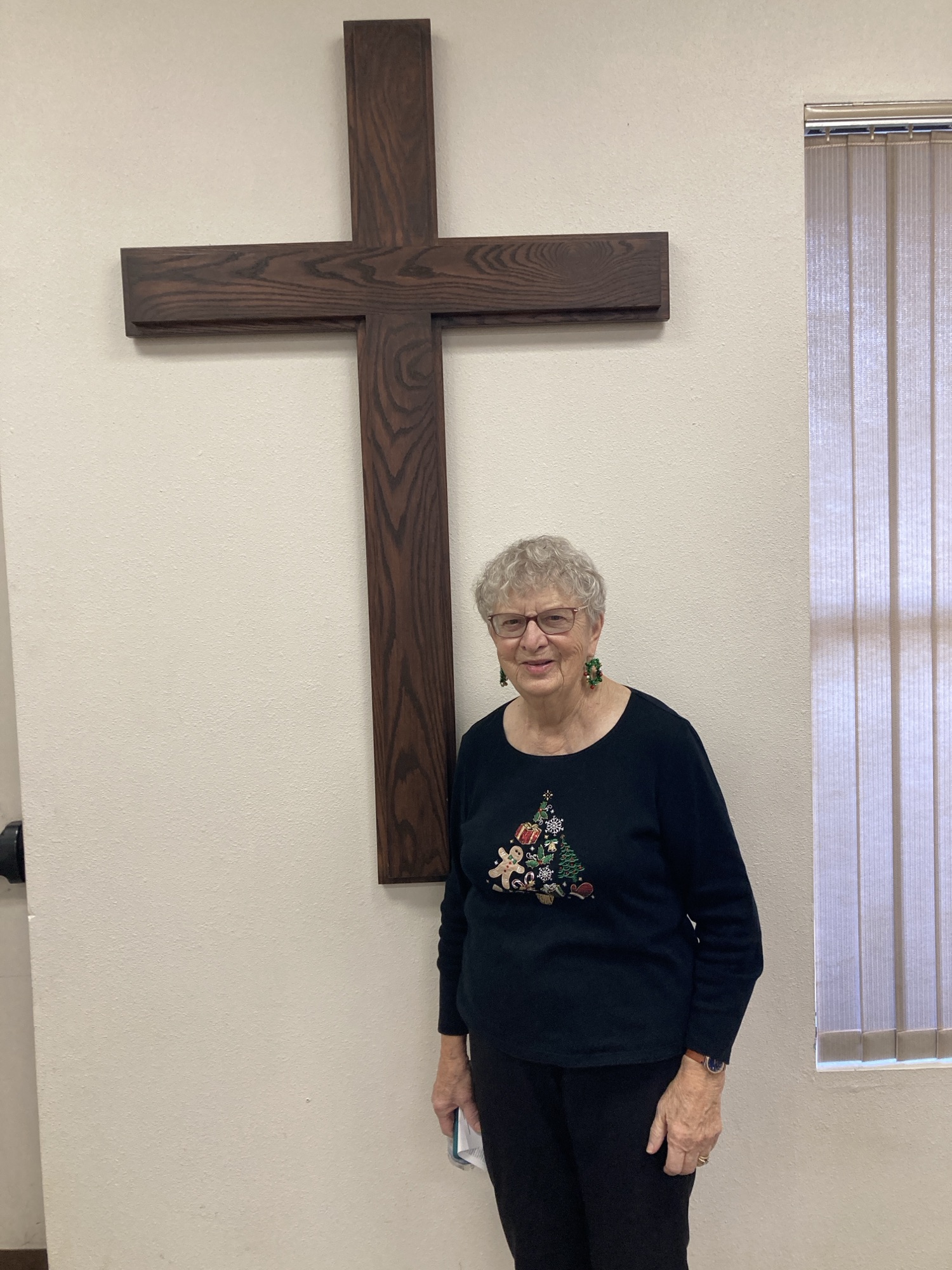
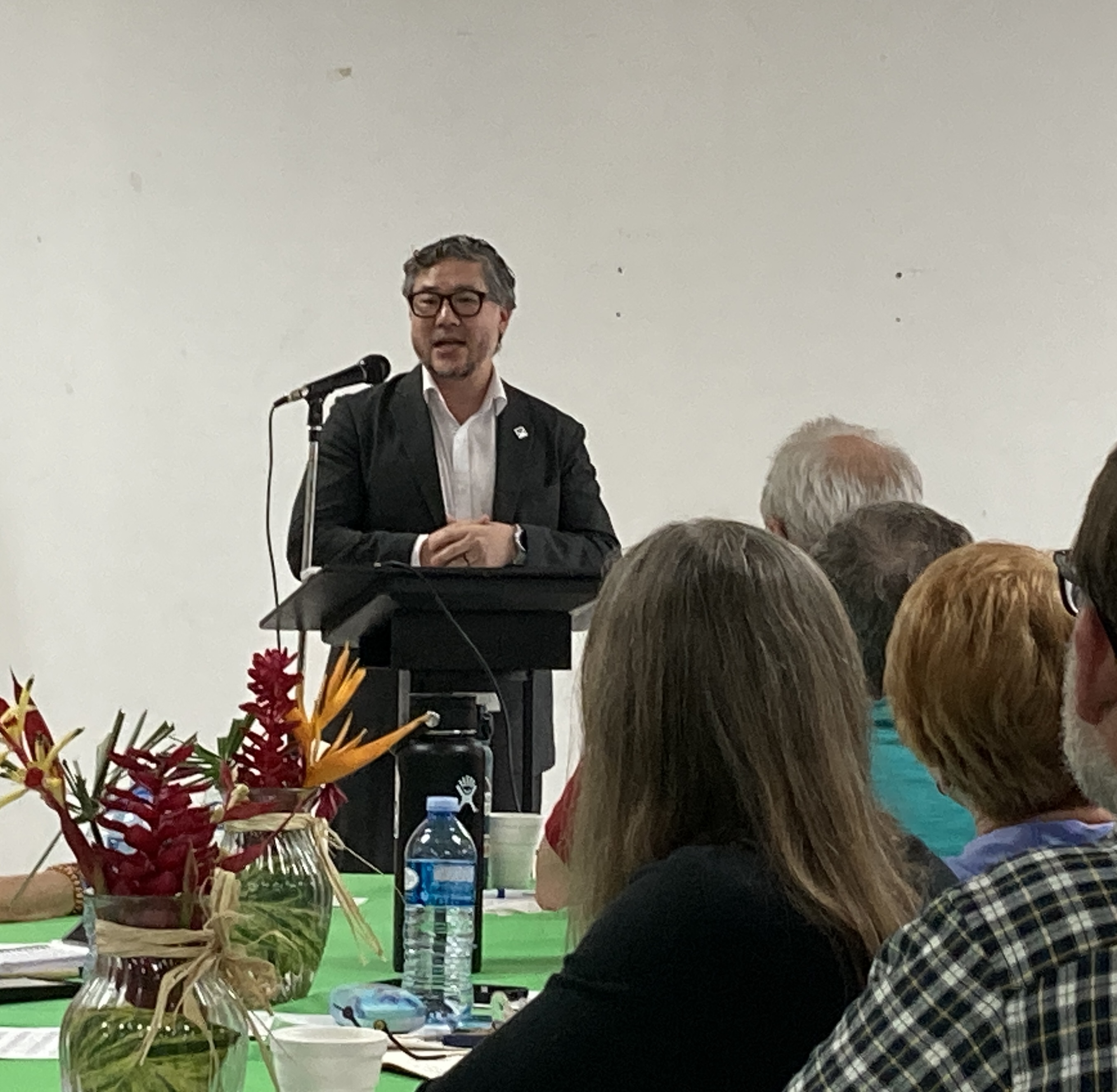
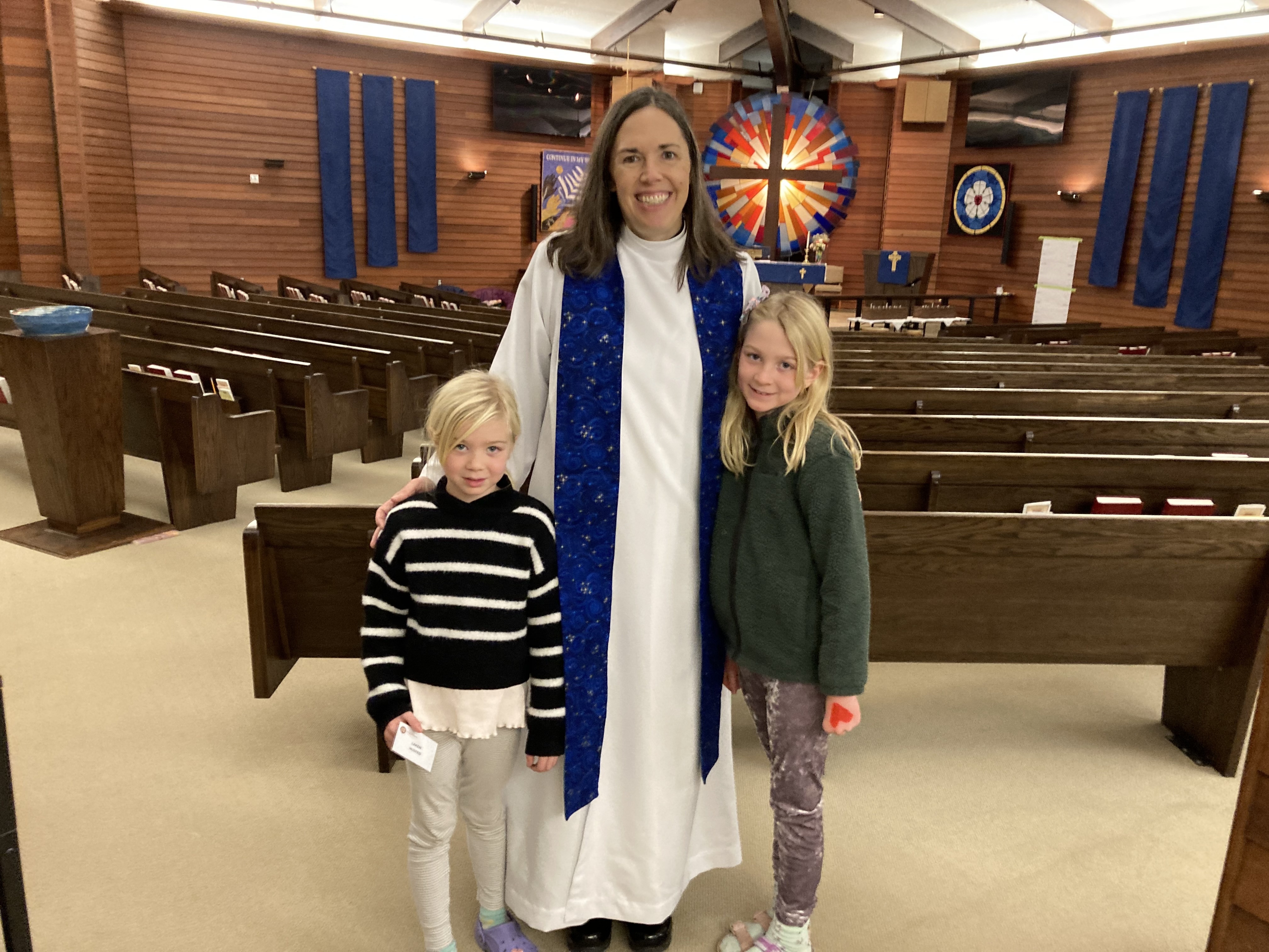
This past weekend I made a quick trip up to Kennewick and Walla Walla. The trip was centered on the retirement of Deacon Heidi Cryer, who has served at Lord of Life, Kennewick for 21 years. The congregation hosted a huge party for her Saturday afternoon and her last Sunday was the following day. As Heidi has been a big part of shepherding our companion synod relationship with the Ulanga Kilombero Diocese in Tanzania, I wore the cope and miter gifted to the synod on the trip five of us (including Heidi and husband Dan) took last year.

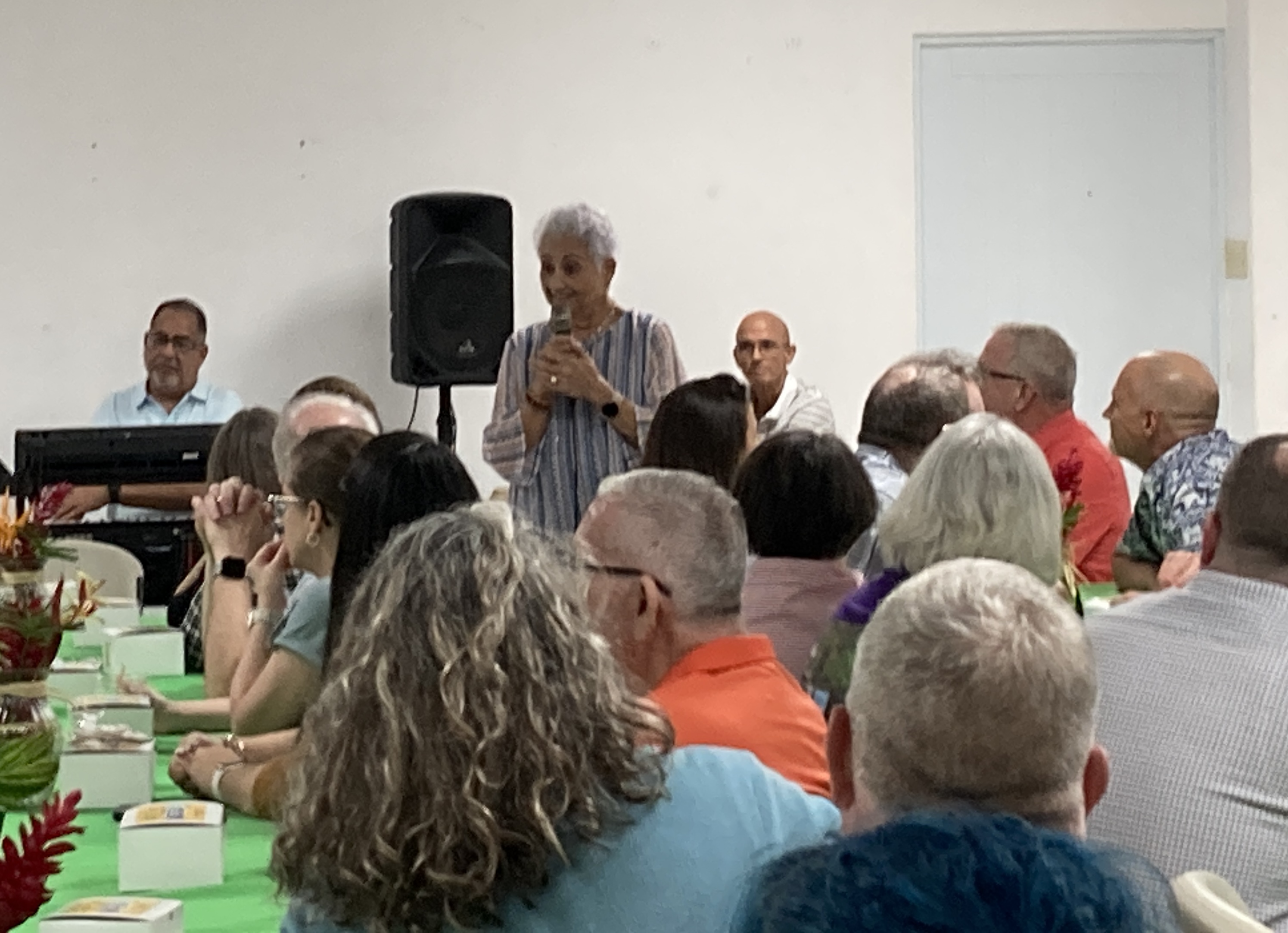
Wonderful turn out for the retirement party!

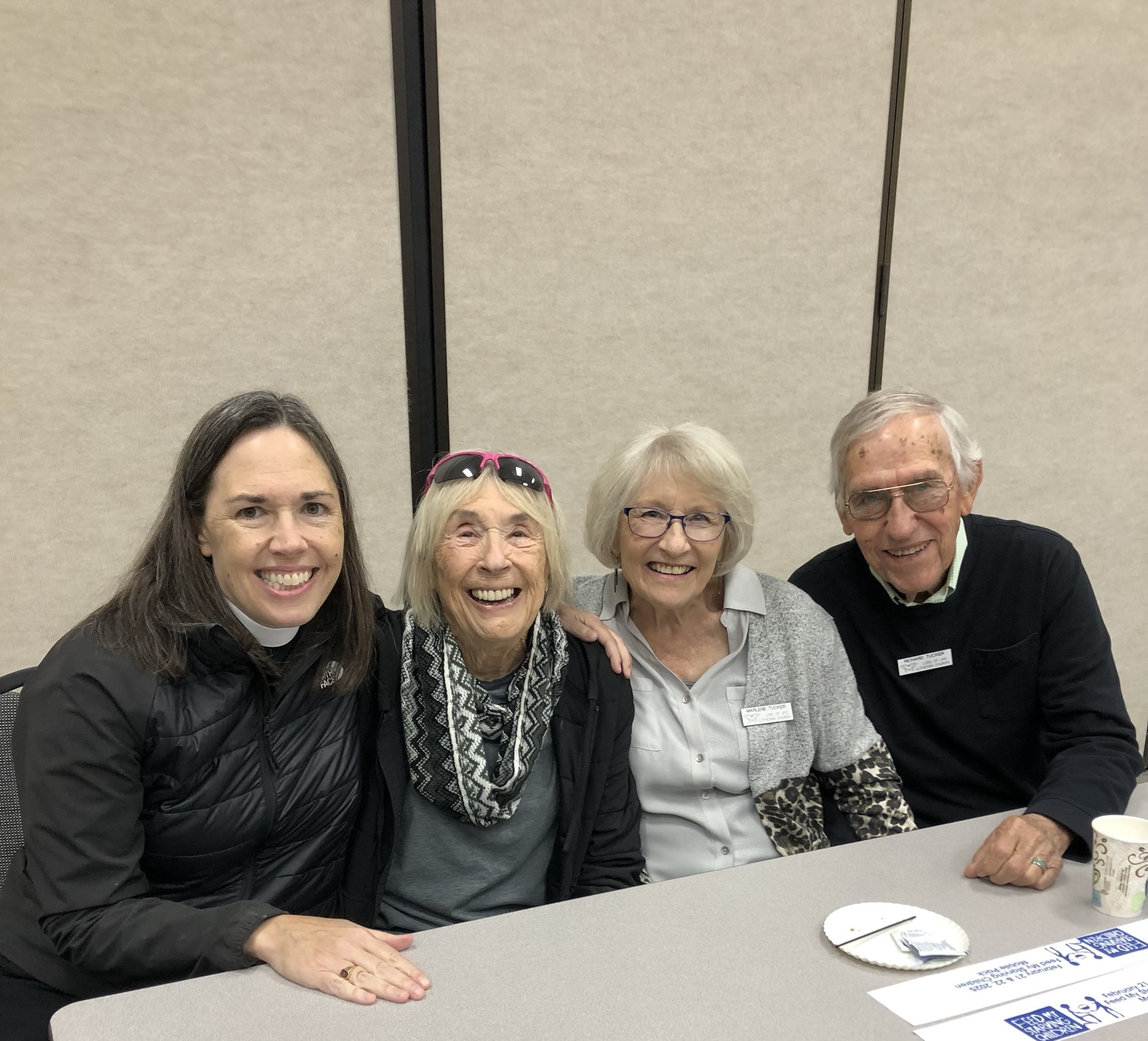
One of our goals as synod staff is to gather retired leaders together in 2024. We had a much smaller group at First Lutheran in Kennewick (following Heidi’s party) than we did in October in Spokane, but it was still a wonderful conversation, so wonderful that I lost track of time and was late for my next appointment. We missed seeing retired pastor Joel and deacon Margaret but I got to stay at their home and it was lovely to catch up.

Pastor Joel Ley retired from Christ Lutheran, Walla Walla in late spring 2023. The first interim had to step down for family reasons but Pastor Phil recruited Pastor Deanna from the West Side (Seattle area) and I was able to meet her at Truth Teller Winery in Walla Walla.

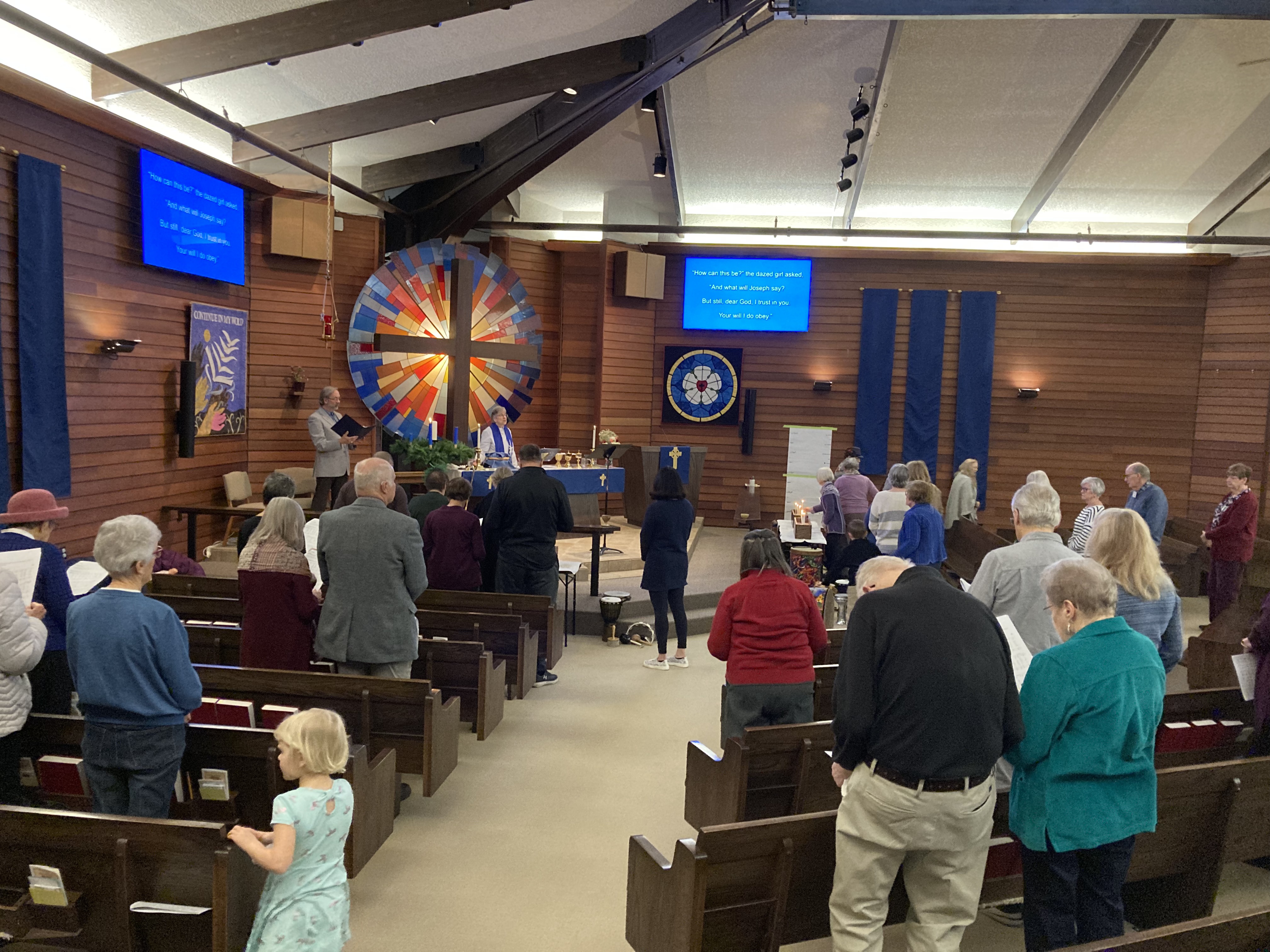
The worship service Sunday back at Lord of Life was wonderful. It became clear over the two days how intentional the staff and leadership have been around doing Heidi’s goodbye well.

Liturgy for the end of a call to ministry
Pastor and Deacon serving one another at the table one last time.
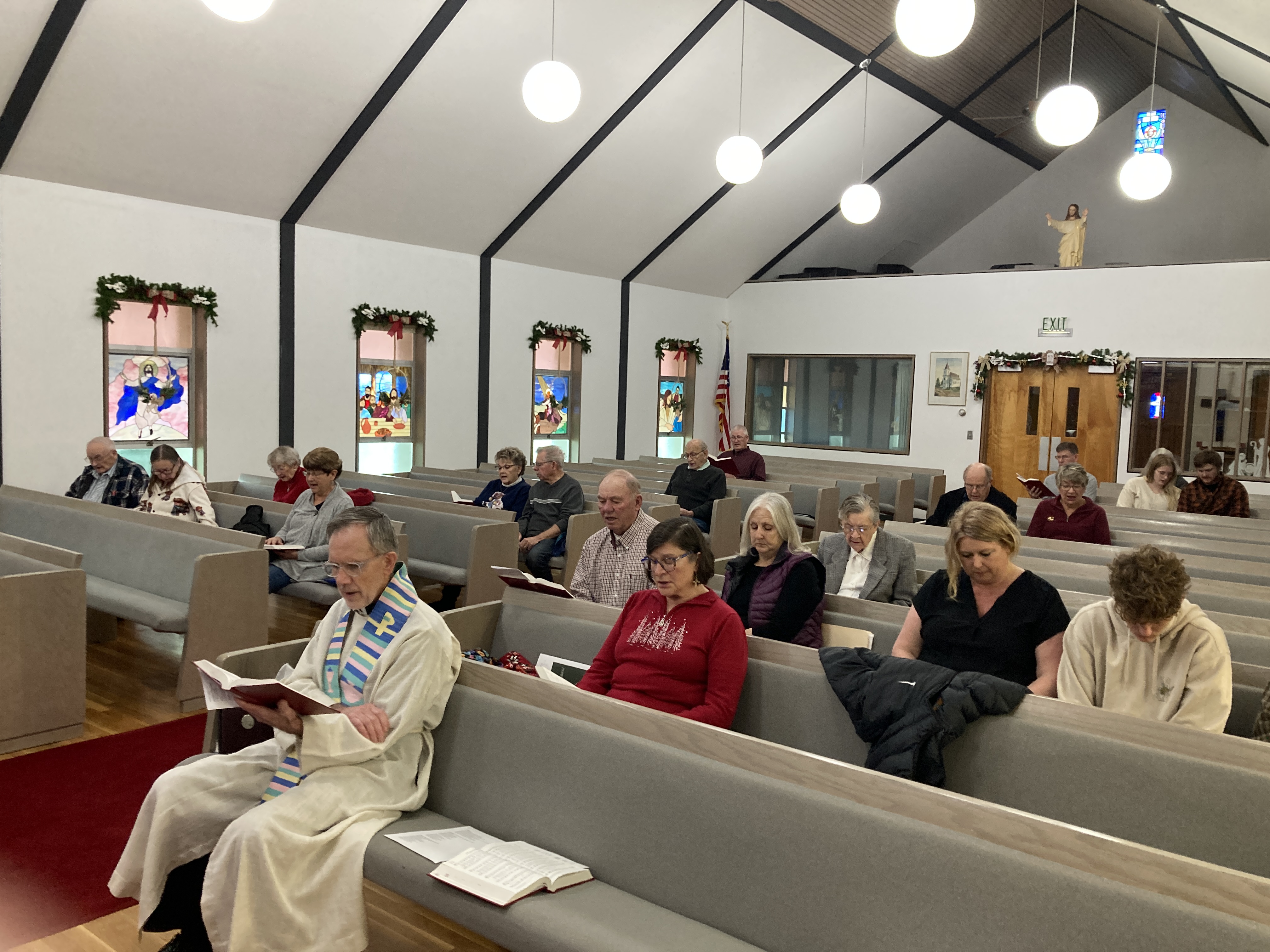
End of worship photo
Posted in NWIM Synod | Tagged , | Leave a comment

Heidi Cryer’s Retirement – Nov. 24, 2024

Jeremiah 36:1-8, 21-23, 27-28; 31:31-34

Lord of Life, Kennewick – Deacon Heidi Cryer’s Retirement

It’s hard not to catch some of the similarities between today’s text and Deacon Heidi Cryer’s transition to retirement. Jeremiah has been prophesying for around twenty years. Suddenly he is asked to write everything he has spoken down on a scroll. I can only imagine the documentation the council, staff, and other leaders have asked you to do after over twenty years of ministry. The words you have spoken have imprinted themselves on people’s hearts to be sure, but there’s a reason we write things down, right? 

In today’s story, the spoken word of prophecy becomes the written word. This assures that Jeremiah’s words will live on in the community beyond the prophet’s lifetime. Spoken words disappear in time. Written words are more enduring. The spoken words have been rejected; written words will persist through time and will have either a judgmental or salutary effect on later generations of readers. It was so important to God that Jeremiah and his scribe had to the exercise twice because the king meticulously destroyed the first scroll. I hope you all have made back-ups of Heidi’s documentation.

Twenty years may seem like a short time in the span of history, but it was a big twenty years for Jeremiah and the people he spoke to. Likewise, consider where we were as a country and synod when Heidi first came to Lord of Life in 2003: the year MySpace was invented; we were still in the Iraq War; Lord of the Rings: Return of the King had its film deput. 

I am so grateful for Heidi’s ministry in this place and with this expression of the Body of Christ. I am grateful that you have tended to her transition to retirement so well—documentation, celebration, exit interview, many conversations. It’s a lot when you have a good goodbye after over twenty years. And as I have had conversations with both Deacon Heidi and Pastor Kirsten, I sense that you have been honest about the larger simultaneous truths—that Heidi’s ministry in this time and place has been monumental and that ministry will go on when she is no longer serving as your deacon. 

Ministry will continue because, as our text so poignantly reminds us this morning, we worship a God of promise and relationship; a God who certainly uses individuals as instruments of healing and proclamation, but is not dependent on any single individual. And the God we worship is always doing a new thing. In this morning’s text we hear about the new covenant.

We do well to pause here and revisit the entire notion of covenant. The covenant is an agreement or pact. It binds two parties together into a relationship. One or both of the parties make certain promises, or they commit themselves to something they will honor. Anyone here part of an HOA covenant?  

God made one of the most famous covenants with Noah. He made the covenant after the Great Flood that wiped out everything but Noah, his family, and two of every animal. God put a bow in the sky and promised that no matter how bad things got, he would never again destroy the world with a flood.

God also made covenants with Abraham and Sarah, promising them as many descendants as the stars in the sky. God makes a similar covenant with David, the shepherd boy who slaid the giant Goliath and became king.  God promises that David’s house and kingdom shall be established forever. 

In this morning’s text Jeremiah refers to the most famous covenant up to this point—the covenant made when God took the people by the hand to bring them out of the land of Egypt, a covenant that they broke. The old covenant was the one made on Mount Sinai after God had led the people out of the slavery of Egypt through the Red Sea. That covenant was based on the Law, the Ten Commandments written on stone. Parents were to teach that covenant to their children.

Some things will stay the same with the new covenant. God will continue to be the initiator. The Law will still be the norm for living as God’s people.  The goals will be the same: to love God and to love the neighbor.

So now let’s return to our text. Consider again King Jehoiakim we meet in the passage. It is so easy to read this passage from Jeremiah and think immediately of every civil law that I believed in that the courts have overturned, or the legislators have rewritten. I can compare those instances so easily with the king tearing up Jeremiah and Baruch’s scroll. But I am not preaching to the judiciary or a legislative body. Instead, I am preaching to you and me.

Where have I metaphorically or literally torn up the prophecies from God—the reminders to love God and love neighbor? Well, I find it much easier to love the neighbor across the globe who is different than me. It is harder to love neighbors when their different cultural norms rub against my daily life. I want to claim my norms and world view as superior. Likewise, there are neighbors in my neighborhood who put up campaign signs that made loving them increasingly difficult. I don’t think I am a person who has enemies until I read Jesus’ command to love our enemies, an iteration of loving our neighbor, and suddenly I cannot get to the confession and forgiveness fast enough.

And as for loving God, or not worshiping other gods, here I am convicted too today. You will not find me bowing down to statues or idols, but I can sometimes feel myself idolizing ideologies and social movements. Algorithms that keep me in bias bubbles don’t help me at all and it can take all my strength to step away from devices and simply get some fresh air.

I need the new covenant Jeremiah speaks of as anyone else. What will be new? This covenant will be like the one made after the flood. It is unilateral. The promise of the new covenant is sheer promise. The people don’t have to agree with the covenant. The new covenant cannot be broken. Neither the people nor God can break this covenant. It is everlasting.  

Most important, the new covenant is based on God’s forgiveness. God’s new covenant is a generous forgiveness that wipes the slate of the past totally clean for you and me. From the least to the greatest, “I will forgive their iniquity, and remember their sin no more.” 

We often place limits on forgiveness. We are like Peter asking Jesus how many times we forgive those who wrong us, “seven times?” Jesus corrected Peter, “No…seventy times seven.” This forgiveness is generous and extended to all, including each of you, from the wretched and despised to the great and the honored. God’s forgiveness is not a new reality. However, in the new covenant God’s unilateral act of forgiveness is the basis upon which this new covenant is established. So, was that the end? God engraved instructions on people’s hearts and peace and kindness prevailed?

I believe an honest reading [Fretheim’s] of Jeremiah 31 is that the text has not been fully fulfilled, even with Jesus Christ. Yes, you will receive forgiveness and new life at the table today. Through baptism, God makes a covenant with each person that God never walks away from. You remain always a beloved child of God.

And yet, we are not yet at a point where we no longer need teachers and evangelists who will encourage us to know the Lord. We are not yet at the point where we can claim that all know God, from the least of them to the greatest. This remains a promise for the future. So today we give thanks again for Deacon Heidi, one who has encouraged this community to know God. Thank you for reminding so many of us, myself included, of the love and presence of God already imprinted on our collective heart.

Posted in NWIM Synod, Sermons | Tagged , , , , | Leave a comment

Bethel, Firth – Nov. 17, 2024

Saturday I drove to Pocatello to stay with cluster dean Pastor Wayne Shipman and his wife Janet–always grateful for their hospitality. I drove up to Bethel Lutheran in Firth Sunday morning. This is a small congregation that has not had a pastor for over four years. It was good to worship with them and have good discussion about their future. I stopped at Emmanuel, Blackfoot on my way back to the interstate. Emmanuel sold half of their building to a bank and is in the midst of a partial remodel. The outside looks so different and I look forward to seeing photos when the inside is complete.

Hebrews 10:11-25

My focus this morning will be on our passage from Hebrews chapter 10. I must admit that I have a weird relationship to the book of Hebrews. As a whole, it would perhaps not make my top ten list of favorite books of the Bible and yet there are a few choice passages that I absolutely love.

The book is a sermon written for a community of people who were never eyewitnesses to the ministry of Jesus. The sermon addresses a situation of malaise experienced by Christians some decades after the ministry of Jesus ended. It brings a word of encouragement to discouraged people. They once had a vivid sense of God’s presence and later showed bold support for others during an outburst of persecution. Yet, as time dragged on, the malaise set in. 

The author attempts to embolden them by telling of the way Jesus went through suffering into glory, making a way for others to follow. As high priest, Jesus Christ brings others into a new covenant relationship with God. People are therefore called to persevere in faith, knowing that God will be faithful.

The passage most applicable to a church’s life together today begins with some language that may feel as distant as the Middle East: 19 Therefore, my friends, since we have confidence to enter the sanctuary by the blood of Jesus, 20 by the new and living way that he opened for us through the curtain (that is, through his flesh), 21 and since we have a great priest over the house of God, 22 let us approach with a true heart in full assurance of faith, with our hearts sprinkled clean from an evil conscience and our bodies washed with pure water.

It helps to know that the inner chamber of Israel’s sanctuary was the holy of holies, where only the high priest was permitted to approach God. People like you and me simply would not have access to God. Yet here, the author of Hebrews invites all who have been redeemed by Christ the high priest to follow him into the presence of God in the sanctuary. 

The invitation flips everything. First the invitation does not refer to a physical movement into a holy place. Instead, the invitation is to a movement of faith. By holding firmly to the confession of faith in what Christ has done, people (you and I) can approach God confidently in prayer and continue joining together with others in worship. 

It might be hard for us to imagine not having access to God through Jesus. In some ways that’s a good thing, it illustrates our familiarity with the miracle of the incarnation, God living among us. But we don’t want to fall into a type of malaise like the original hearers of Hebrews. 

The primary reason we read scripture, alone or in an assembly like this one, is to be reminded of the good news of Jesus Christ–bringer of salvation and healing for a broken world and broken people. God did not look down from a distant heaven and say, “There, there, it’s all right.” Instead, in Jesus, God entered into the full range of human suffering and tragedy.

The author of Hebrews has two interconnected goals: renew a sense of personal trust in this God of healing and wholeness and a revitalized commitment to life in community. The words from Hebrews are a directive for all of us, “let us approach with a true heart in full assurance of faith.” What is this “faith” the author speaks of? In the very next chapter we read, “Now faith is the substance of things hoped for.” Bring to God your faith/hope or your hope/faith. And never doubt God’s own faithfulness; it is the thing that gives us hope.

I love that the author lifts up both the need to approach God on one’s own and the necessity of community. German Lutheran Pastor Dietrich Bonhoeffer wrote about this balance in his book Life Together: “Let him who cannot be alone beware of community… Let him who is not in community beware of being alone… Each by itself has profound perils and pitfalls. One who wants fellowship without solitude plunges into the void of words and feelings, and the one who seeks solitude without fellowship perishes in the abyss of vanity, self-infatuation and despair.” 

Why is the embodied community part of the life of faith? Can’t we simply know that Christian community exists? Is actual participation necessary? When participation is possible, we would have to say yes, because that’s how Jesus set it up. Following Jesus, the Messiah, the Christ, being Christian means being part of a meal-fellowship. 

Hearing the Word and gathering at the table is central to who we are and how we are shaped. You return to the table to meet one another and to encounter the risen Christ in wine and bread. You are sent from the table for, as this morning’s author says, love and good deeds. As the author is exhorting the original readers, so the readers are to exhort one another.  

“And let us consider how to provoke one another to love and good deeds, not neglecting to meet together, as is the habit of some, but encouraging one another.” The author’s specific words are almost eerie to me, as if peering centuries ahead into America’s culture of individualism. The writer emphasizes that these practices are best cultivated within the life of the Christian community as it comes together to worship, enjoy fellowship, and provoke one another to acts of Christlike service.

For over 125 years, Bethel, Firth has been a place where people came together to hear about God’s love for each person, each follower of Jesus. It does not matter our age; we always need to hear that good news. Worship, in its many forms, has been sustaining the faithful for millions of years: hearing the Word, sharing the meal, praying for the world, being sent out for love and good deeds.

Dorothy Day put it this way, “We cannot love God unless we love each other, and to love we must know each other. We know [God] in the breaking of bread, and we are not alone anymore. Heaven is a banquet and life is a banquet, too, even with a crust, where there is companionship. We have all known the long loneliness and we have learned that the only solution is love and that love comes with community.” Thanks be to God.

Posted in NWIM Synod, Sermons | Tagged , , , , | Leave a comment

LOM Conference

Last Monday through Friday I was in Baltimore for the annual Lutheran Outdoor Ministry Conference. I served on the LOM board from 2013-2018 and attended many conferences and board meetings. I stayed involved with the network, developing an education committee, and attended the first Great Gathering (many denominations working together for a joint conference at Lake Junaleska in 2019). Coming out of the pandemic, I received an LOM discount for the Certificate in Religious Fundraising in exchange for rebooting the LOM development committee, which I still serve on. I attended the LOM Conference in Minneapolis in 2021 because I wanted to connect with old friends and because the theme was Total Inclusion. In 2022 the conference was in Boise so I commuted. Last year I was either coming back from or in our companion synod during the conference, plus I was starting a new role.

In January I began serving on the Rhythms of Faith Advisory Team, looking at the relationship between camp, church, and home. We have three outdoor ministries in the NWIM Synod (Lutherhaven, Luther Heights, and Holden Village). Considering these two things, I decided to attend this year’s event. It was a joy to see old friends this November in Baltimore and meet new leaders. People expressed gratitude for a bishop spending a week with the group. I was able to connect with leaders from across the church (both churchwide staff and those who support the whole ELCA).

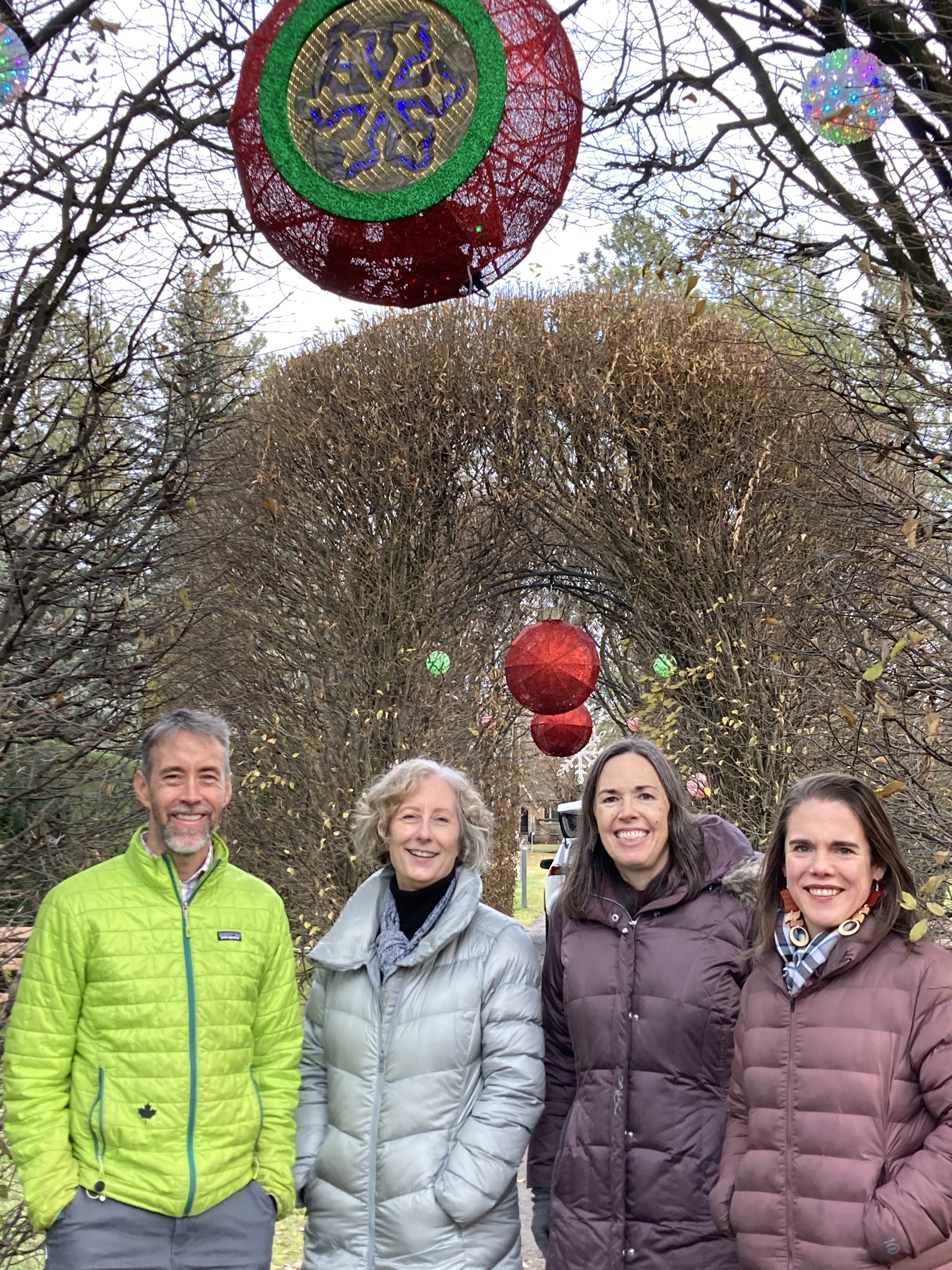
Group Photo at the church

Mary Kay DuChene and Liz Eide from Leader Wise were are keynote speakers. Our synod uses Leader Wise for boundary trainings and psych evals for ministry candidates but I had never been to an in-person training. I loved their session on how we each deal with conflict and enjoyed getting to know these women over meals.

Mary Kay

Most of our time was at the Maritime Conference Center but we spent the first full day at Christ Lutheran Church in Baltimore, next door to The Lutheran Center (home of Lutheran World Relief and Global Refuge). LWR helps Lutherans distribute quilts across the globe.

View of quilted bricks from five floors up
Loved seeing a brick donated by Emmanuel, Moscow, Idaho

Next year Outdoor Ministry Connections (OMC) will again have a Great Gathering at Lake Junaleska.

Posted in NWIM Synod, Reflections | Tagged , , , , | Leave a comment

Messiah Lutheran’s Final Worship

Messiah Lutheran, Spokane

Nov. 10, 2024

John 15:1-8

Grace to you and peace from God our Father and the Lord Jesus Christ. Amen. 

I am grateful that the sermon is not the only thing to carry the weight of today. Music, prayers, the Lord’s Supper, rituals, blessings, and more music, will all help us move through emotions. We need it all to celebrate the many years of Messiah Lutheran’s ministry and to grieve the completion of that ministry. 

Likewise, I love that you selected John chapter 15 as the gospel text for today. Although, I started to prepare this sermon on election day, and I was not crazy about how it convicted me. How easy it is, I was reminded, to turn to anything and everything else than the true vine? I could actually feel myself veering to certain candidates, specific issues, movements in my home state of Idaho and across the country. If we can win, I thought to myself, then I will have all the sustenance I need, all the belonging I need. How foolish but how easy it is to veer off in any direction but Jesus, the true vine.

Thanks be to God for all the ministries and congregations across the Northwest Intermountain Synod, the ELCA, and the whole Christian Church that have been places to tell a different narrative, a life-giving narrative, a story that is always true: Jesus is the vine, and you are the branches. Today we celebrate that Messiah Lutheran has been such a place to proclaim and hear this good news in North Spokane since 1951. 

Notice, if you will, that Jesus’ statement is declarative: I am the vine, and you are the branches. There are no qualifiers, no conditions, no if, then. There is nothing we do to earn being a branch, whether as a person or community. Washed in the font and showered with promises, you are connected to the vine forever, even if I try to escape it and find nourishment and love and belonging elsewhere. Instead of if/then, what we have is a because/therefore. Because you are the branches connected to the vine, therefore you will bear fruit.

I asked our synod executive admin Cathy Steiner to send me a history of Messiah Lutheran. What I read there was years of not just being part of the vine but bearing fruit in so many ways—loving children and adults in the neighborhood and making sure they knew the abundance of God’s love and mercy, lifting up future pastors who went on to share the gospel elsewhere, calling associate pastors who came here and who were loved into being servant leaders, and utilizing the gift of music to praise God, cry out to God, and bring unity to the followers of Jesus gathered in these walls.

As much as we celebrate today, it would be disingenuous to not name the grief as well. I was surprised how I mourned when Emmanuel, Cheney closed. They were my internship congregation for one mere year, and it hit me hard. And so, I cannot fathom what those of you who have called this place home for so many years are feeling. Please do not diminish your grief; make room for it, acknowledge it when it arises, tell stories, journal, use all the stories to move through that grief when it comes. And give thanks to God, because we worship a God who can hold all our sorrow and grief.

In grief, it might be natural to develop a case of what one of my closest friends calls a case of the should haves. We should have done this. Our Pastor should have done this. That member should have. The bishop or synod should have. I should have.  In my experience, the should haves usually only leads to a cycle of blaming and shaming, neither of which leads to transformation, growth, or bearing fruit. In fact, blame and shame are things I presume we are better off pruning. As with a funeral in which we acknowledge that the person at the center had imperfections, go ahead and name that this congregation’s journey had bumps and difficulties. The Holy Spirit bore fruit despite them and is bearing fruit still.

I hope you take some comfort, though it might be small today, that even in completion, you are bearing fruit. Instead of a multi-plex business office or luxury condos being built here, this building will be inhabited by another church, which means more gospel proclamation, more singing praises to God, more people finding a welcome, more children knowing the love of Jesus Christ, more branches connected to the true vine.

Those of you who feel like you will have no church home, you are still connected to the vine. Jesus the vine is tenacious. The seal made on your brow at baptism can never be rubbed off. A strange part of being bishop is being somewhat of a wanderer. I have a new home congregation, but they tease me about my attendance. It can be unmooring to step into a new sanctuary Sunday after Sunday, but after a year I know what to look for.

In our Lutheran tradition I can depend on certain places and symbols to ground me. They are the same ones we will give thanks for today: table, font, place for the scripture and proclamation. These are the places where we are sure to meet the Word, God incarnate, Jesus, the vine who gives life. And though their size changes, the color of wood varies, the decorative etchings telling a local history, they are in all our Lutheran sanctuaries. 

And seeing them reminds me that every congregation, every single one, is temporal. Every congregation has a lifespan, just like every living creature. What goes on and on and on is the body of Christ gathered around the means of grace and sent forth into the world. Much as I love big beautiful historic sanctuaries, they are not necessary for people to partake of the bread of life or the cup of salvation. And so, I know that you will find new communities with whom to worship, impossible as that might sound today. You will continue to hear the story of God’s forgiveness and love for you. Jesus is the vine, and you are the branches—even still. 

Thanks be to God for the ministry and ministries of Messiah Lutheran, thanks be to God for a new church which will take over stewardship of this place and this building, thanks be to God for the ministry that will happen through the legacy gifts of Messiah, and thanks be to God that our hope and trust are in Jesus the vine, no one and nothing else.

Posted in NWIM Synod, Sermons | Tagged , , , , | Leave a comment

Idahoans Against the Death Penalty

Press Conference at Idaho State Capitol, Nov. 7, 2024, Bp Manlove

(I am so grateful for the 1991 ELCA Social Statement on the death penalty. All quotes here are from that statement.)

The Lutherans of the Northwest Intermountain Synod-ELCA grieve the scheduled execution (Nov. 13) of Mr. Thomas Creech and are thankful for the postponement.

At the 2023 gathering of the ELCA Lutherans from Idaho, Eastern WA, and parts of Wyoming and Oregon, we passed a resolution condemning the use of the firing squad and all forms of the death penalty. Why?

My family of Lutheran Christians believes we are called to “respond to violent crime in the restorative way taught by Jesus and shown by his actions.” [Matt. 5:38-42—turn the other cheek, give your cloak… and John 8:3-11 Let anyone without sin throw the first stone]. Restorative justice involves “addressing the hurt of each person whose life has been touched by violent crime.” This approach “makes the community safer for all.”

  1. Executions represent an unacceptable, non-restorative approach to violent crime
  2. Executions can reinforce social injustice—Violent crime reminds us that we have failed to ensure justice for all members of society, yet people often respond to violent crime as through it were exclusively the criminals’ individual failure. Capital punishment makes no provable impact on the breeding grounds of violent crime. Executions harm society by reinforcing existing injustice. The death penalty distracts us from our work toward a just society.
  3. The death penalty cannot possibly be administered justly. The justice system is not perfect, and yet an execution cannot be undone if a verdict is overturned.

“The practice of the death penalty (including the scheduled execution of Mr. Creech) undermines any possible moral message we might want to ‘send.’” It is not fair, and it will fail to make society better or safer. The message conveyed by this scheduled execution is one of brutality and violence.

Press Release about the Press Conference

Idahoans Against the Death Penalty 

Press Conference – Friday at 11am MT BOISE, ID (Nov 7, 2024) —  Several Idahoans Against the Death Penalty conveners will be available for comment on the postponement of the execution of Thomas Creech and other matters related to Idaho’s death penalty at a press conference at 11am MT on Friday, Nov 8 on the stairs in front of the Idaho State Capitol in Boise. 
Mr. Creech, who was subject to a failed execution attempt in February of this year and had been scheduled for another attempted execution on November 13, has been returned from the “Death Watch” cell to his regular Death Row cell at the Idaho State Correctional Institution. The execution has been postponed to allow time for legal briefings as ordered by Federal District Judge G. Murray Snow.
Spokespersons at Friday’s press conference will include Rev. Karen Hernandez, Sage District Superintendent for the United Methodist Church and Rev. Dr. Meggan Manlove, Bishop of the Northwest Intermountain Synod of the Evangelical Lutheran Church in America.

The two women are among the conveners of a new organization established to give voice to growing opposition to a resumption of executions in Idaho. The group’s web page is IdahoansAgainstTheDeathPenalty.org, and features several mechanisms for Idahoans to register opposition to executions, including:

  • A “Leadership Letter” addressed to the governor and the legislature for Idaho business owners, clergy and other faith leaders, and others in community leadership roles to add their names. This letter will be submitted to Governor Little if and when a new execution date is scheduled for Mr. Creech or ay other Idaho prisoner. 
  • An “Organizational Endorsement” opportunity for faith, civic, business and other organizations to endorse the new effort to amplify opposition to executions in Idaho 
  • Petitions to oppose the execution of Thomas Creech and Gerald Pizzuto, the two Idaho prisoners for whom execution dates have recently been set (Pizzuto does not currently have an execution date.)
  • A form to request a speaker
Posted in NWIM Synod, Reflections | Tagged , , , , | Leave a comment

What’s Grounding You?

Originally published in the Northwest Intermountain Synod e-newsletter.

As I write this, we are a few days from the election. Presiding Bishop Elizabeth Eaton has excellent words about Casting Ballots as People of Faith in THIS VIDEO, which I encourage you to watch. The other two ELCA Washington bishops and I WROTE about WA 2117 from a Lutheran perspective and I WROTE about ID Proposition 1 from a Lutheran perspective. It is an honor and privilege to vote, and I implore you to prayerfully consider what it means to vote with a Christian lens or ear. Director for Evangelical Mission, Pr. Liv Larson Andrews is collecting prayers for election day from across our synod and they will be shared on Facebook and YouTube every hour beginning at 8:00 am Pacific.

And yet there is more I want to say about this season. Oct. 14-16, about 90 of our pastors and deacons gathered in Walla Walla for Bishop’s Fall Convocation under the theme Leviticus and the Land: Stewardship and Sabbath. Our presenter, Dr. Rachel Wrenn from Trinity Seminary in Columbus, Ohio, said that “Being in relationship with the deity means being linked to raw, unadulterated divine power. That’s holiness.” Wow! Later, talking specifically about the book of Leviticus (Wrenn completed the footnotes for the NRSV Updated Edition of the Lutheran Study Bible), she said that “the goal of Leviticus is to establish healthy boundaries in the divine-human relationship so that the people can safely steward divine presence and power.”

This notion of divine presence and power has me wondering what is grounding me and you and the many ministry sites across our synod during this season? By season, I mean the election season, the season of fall holidays, the season of big family gatherings, the season when the days become shorter, and the church season of Advent, all of it.

As I listened to Dr. Wrenn, I was reminded that one of the greatest gifts the body of Christ, which we call the church, can give to its members and our larger communities is the opportunity to take a breath, the gift of making space, and not just space but sacred space, space where we can bring our deepest longings to God and then be silent. In our singing and praying we make space. This is one way we safely steward divine presence and power. Around the table of Holy Communion, we make space for all who want to feast on mercy and grace. When we read scripture as community and let it speak to us, we make space to encounter the holy.

What scripture passage or prayers or sacred songs are grounding you and your congregation in this season? How are you making space for yourself and your community of faith to take a deep breath? What are your individual or collective prayers to the triune God? Finally, when we encounter the Jesus of the Gospels, God’s love can take on many different forms, but ultimately it looks like compassion. Where are you witnessing compassion?

God’s Peace,

Bishop Meggan

Posted in NWIM Synod, Reflections | Tagged , , , , | 2 Comments

Lay Leadership Retreat – Preach, Pray, Preside

This past weekend, 11 lay people from across the northern part of the synod, three pastor teachers, and two synod staffers came together for prayer, learning, and building relationships. We titled the event Preach, Pray, Preside. Six of the participants are currently enrolled in the Montana Synod’s Lay Ministry Associate two-year online program. I handed over responsibility of shaping this retreat to our Director for Evangelical Mission Pastor Liv Larson Andrews. The retreat exceeded my expectations, largely because of the riches in the room.

Thanks to St. Mark’s Lutheran, Spokane for use of their space!

Pastor Jim Johnson (St. Luke, Spokane) taught the preaching sessions and the first evening he simply invited everyone to share their context and, if they are preaching, why them? The stories were so honest, the individuals so passionate about the gospel of Jesus Christ, the eagerness to grow was so palpable. After Compline, we retired for the evening. Following Morning Prayer on Saturday, Pr. Jim did a great job teaching/leading a conversation on Lutheran proclamation and preaching.

Pastor Kimmy Meinecke (an ELCA pastor serving St. David’s Episcopal Church) took us into the St. Mark’s Lutheran Church sanctuary for a session on worship leadership–again wonderful–a balance of theology and the practical. We moved to the synod office for lunch and were reminded that the synod office does not always show up on GPS maps the way we want it to. A few folks got turned around.

Pastor Yvette Schock (Chaplain at Riverview Retirement Community and daughter of Holy Trinity, Ephrata) led a session on prayer, specifically leading prayers publicly but also praying with individuals. Intentionality, reading a context, and hospitality were all themes Yvette wove throughout her session. Liv then had Pastors Kimmy, Yvette, and I answer general questions (as a panel).

We had a nice afternoon break and then gathered at Liv’s home in Spokane, where her husband Casey cooked and served us a delicious dinner. This group had, by then, been together for some time and the pre-dinner and dinner conversation rolled with stories, questions, pondering, and laughter.

Sunday morning I went up to St. Paul, Chewelah (home church of one LMA student) and almost everyone else disbursed to different ELCA Lutheran and Episcopal churches for worship. Pastor Liv gathered them all at a restaurant and debrief over lunch and then people headed home.

Posted in NWIM Synod, Reflections, Uncategorized | Tagged , , , | Leave a comment

Visit to St. Paul, Chewelah

I am making my way through a backlog of blog posts I could not post in real time because this time up in Spokane has been so full!

Was trying to get a pix of the new balcony, but it’s clearly around the corner

Yesterday, Reformation Sunday, I preached at St. Paul Lutheran in Chewelah, WA. This congregation has been served most recently by two retired pastors, Linda Webster and Bob Edwards, who come on alternate Sundays to preach and lead worship. They are just beginning the process of developing their ministry site profile. One of their members had been part of our our Preach, Pray, Preside Retreat in Spokane (see a future blog post) and it was nice to see Peter’s friendly face and hear his impressions of the weekend. After a lovely worship service in the sanctuary we gathered in the fellowship area for a Q and A. After answering a few questions I asked for any newer members to share why they started attending St. Paul and why they remained. It became clear that even in a small town with many many churches (reminding me a lot of my home town of Custer, SD), that St. Paul has a niche and understands what it is–a unique combination of sermons based in scripture and with a grace filled message, a place welcoming to women pastors, and a place with an open Communion table. After the Q and A I received a tour of the parsonage next door. As with many places I visit, we also ended up talking about the housing crisis in town. It may not be as bad as it is in Leavenworth and Jackson, but Chewelah’s housing market has been negatively impacted by more and more homes becoming VRBOs. It was also fun to hear the parishioners excitement for all the ways different people are stepping up, “thanks to so and so for leading or doing this” was a refrain throughout the morning. I am excited to keep walking alongside this congregation.

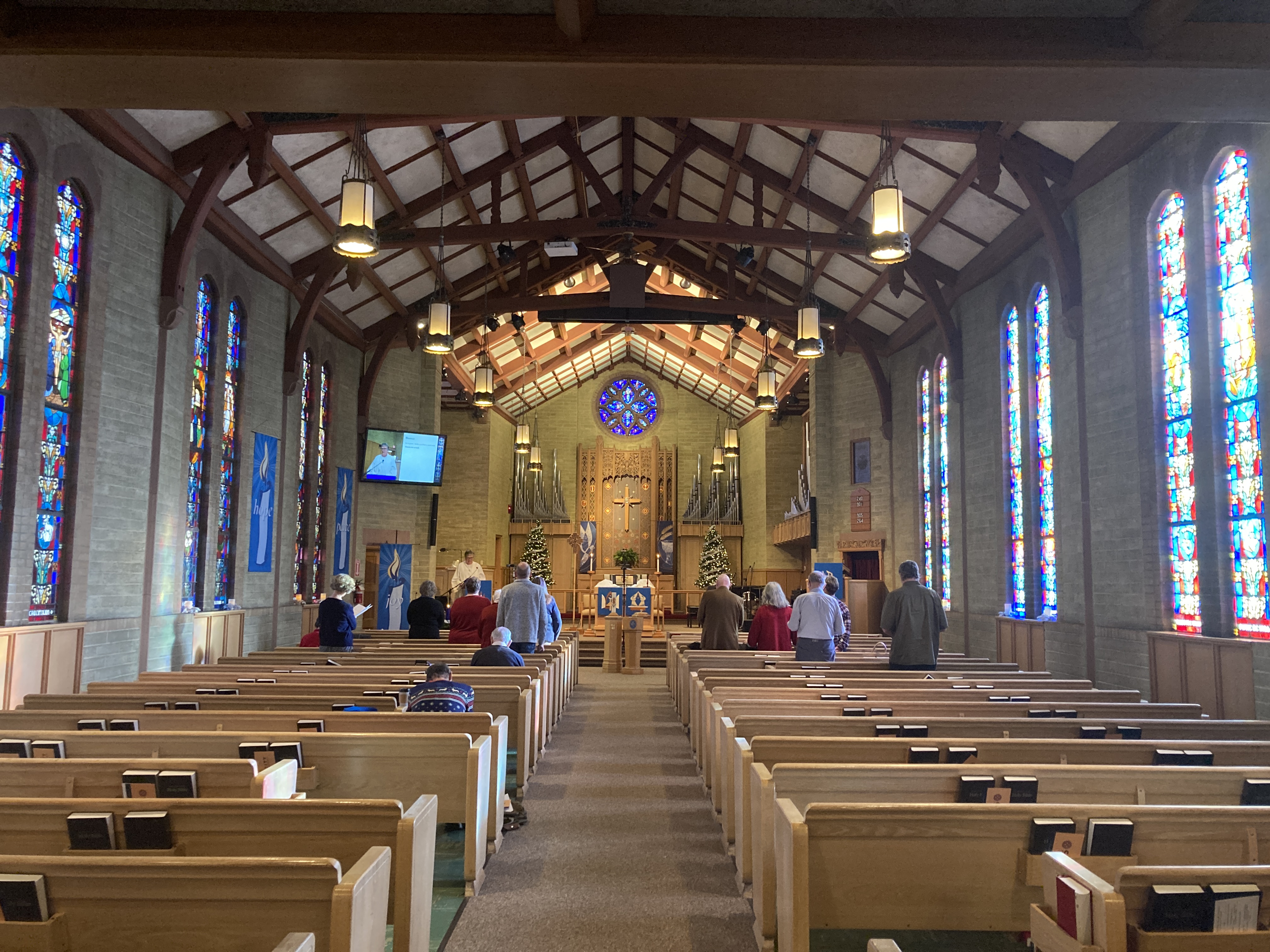
Photo during the offering – lovely space
Posted in NWIM Synod, Reflections | Leave a comment

Oct. 27 – Reformation, Chewelah

Meggan Manlove
St. Paul, Chewelah

John 8:31-36

It’s an honor to be with you for this Reformation Sunday. Grace to you and peace from God our Father and the Lord Jesus Christ. Amen. In the world of grant writing, when you approach a foundation about funds for additional staff there is an industry term—capacity building.  It’s called capacity building because the foundation hopes that instead of returning to its well of financial resources, your organization will hire a staff person who will raise money and create programs. He or she will increase your capacity.  

Reformation Sunday lends itself well to considering what capacity building does the Lutheran church, specifically the ELCA and churches like St. Paul, have at its disposal for the next 5-10-50-100 years? We can provide safe places for people to ask questions and have discussions—about scripture, faith, science, economics, literature. This is pure gift for a community, the nation, and the world.  And it is a natural part of who we are. At the same time, we are not a place where anything goes. Like Martin Luther, there are still some non-negotiables we confess and then declare, “Here we stand.”

Also, part of our capacity is our affinity to Ecumenism. Breaking up the church 500+ years ago is not something to celebrate. We continue to build relationships nationally and locally with other Protestant denominations. This coming week the Lutheran World Federation will celebrate the 25th anniversary of the signing of the Joint Declaration of Justification, the culmination of rich Roman Catholic-Lutheran dialogue.  Several years ago, Pope Francis and the leader of the Lutheran World Federation celebrated a Service of the Word together in Sweden.  

A leader in our church says that the second great gift of the Reformation, after being saved by grace through faith, is the understanding of vocation.  People who encounter Jesus want to connect their faith, with their daily living and our tradition gives us the language. Every person has multiple callings—parent, child, mentor, teacher, doctor, accountant, custodian and others.  

And, our greatest capacity lies in the text from this morning’s gospel.  Jesus said, “You will know the truth and the truth will make you free.” These are well-known and oft-cited words, though increasingly people do not know the source. They are literally inscribed in stone on many educational buildings, including the Bond Chapel attached to my alma mater—the Divinity School of the University of Chicago, but also the headquarters of the CIA. These words have sometimes been turned into a kind of loyalty oath in Christian circles. But using Jesus’ words as a motto for knowledge and power or as a demand for right belief completely misses the mark. We can easily fall into the trap of believing our effort and our understanding will bring life. We hear a demand for our work and miss God’s word of promise.

What does Jesus mean by “truth” and “freedom”? Does it mean, if we just know enough and behave well enough, we will attain freedom? And isn’t freedom the problem after all? We have been given free will, the argument goes, and that is what has gotten us into trouble. Free will is blamed as the source of evil. Salvation is found in somehow escaping from freedom, as “surrendering to God’s will” which usually becomes a set of moral obligations. It can force us into trusting only right knowledge…right doctrine…right behavior. 

But the Gospel of Jesus Christ has a different way of telling the human story: Humankind is not free despite what it might think about its proud lineage or powers. Humankind is deeply, hopelessly in captivity to sin and death. Jesus and his promise open a way to freedom, forgiveness, grace, and life. It is God who makes you free. It is not up to you. You do not have to live your lives constantly in fear of punishment, constantly trying to do the right thing. Paralyzed by your own fruitless, exhausting attempts at self-justification. Always looking over your shoulder.

A favorite scholar [Robert Capon] writes this about freedom, “If we are ever to enter fully into the glorious liberty of the children of God, we are going to have to spend more time thinking about freedom than we do. The church, by and large, has a poor record of encouraging freedom. She has spent so much time inculcating in us the fear of making mistakes that she has made us like ill-taught piano students: we play our songs, but we never really hear them, because our main concern is not to make music, but to avoid some flub that will get us in trouble.” 

Think of the systems we have erected, and been trapped in to keep us all in line. We can’t hear the music. And what heavenly music do we miss because we cannot hear? The promise of freedom. You miss the reality that your freedom has been realized through the death and resurrection of Jesus. In our bondage, it has become all about us. Luther’s definition of sin, “the soul curved in on itself” traps us in our own echo chamber.

Pontius Pilate famously asked, “What is truth?” By our definitions, the truth Jesus announces that sets us free leads us to ask the same question. Is truth right doctrine? Is truth right knowledge? Is it something we must attain? The truth that comes through Jesus is not moral instruction or the right thing to do or even behavior, but God love and mercy. When Jesus promises that you will know the truth and the truth will make you free, he was speaking of a person who is true, who remains true. 
The one who remains true is merciful, forgiving love brings life and freedom to the world. This truth is not information that can be taken and used to exploit and betray others, nor is it a secret code. It is Jesus’ promise to be true – true to God’s love and true to you despite all of your betrayals. When Jesus announces, “I am the way, the truth and the life,” Jesus is telling you that he is the embodiment of God’s compassionate mercy, true to the very end. Even truer than death.

Here is the good news. Here is the Gospel that Martin Luther discovered and that set him free. This is the truth that forms you into God’s liberated people. It is God’s promise that the former things are past. That the new covenant means not just a fresh start or another try for humankind, not just a little tweaking or a new page on a report card, no keeping account of future sins, but a sovereign promise pure and simple. In Christ, the one who is true, you are free.

Breathe that in for a moment. Free from the domination of sin, free from self-justification and self-righteousness, free from excluding people, free even from being Lutheran. And, since this freedom has been given by the one who is truer than death – you are free from death and freed for life. You are free to live in this truth and dare – dare anything – dare everything. And listen…you can hear the music of the one who loves us and is true.

Posted in NWIM Synod, Sermons | Tagged , , , , | Leave a comment