If you are a regular reader, some parts of this sermon may be familiar, because I preached on the end of John chapter 17 last year.
Central Lutheran, Yakima’s 100th Anniversary Worship
May 17, 2026 – John 17:1-11
Grace to you and peace from God our Father and the Lord Jesus Christ. Amen.
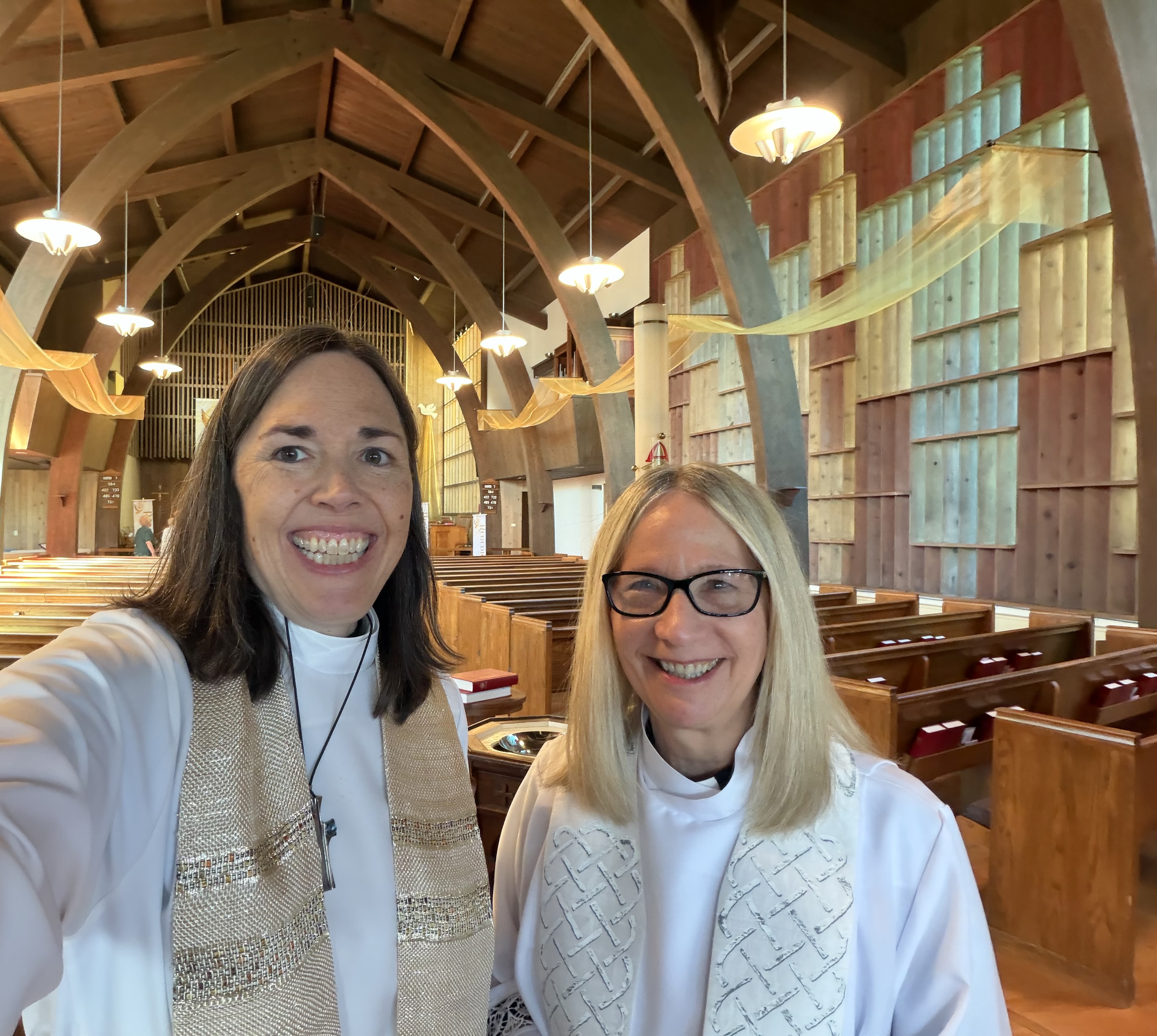
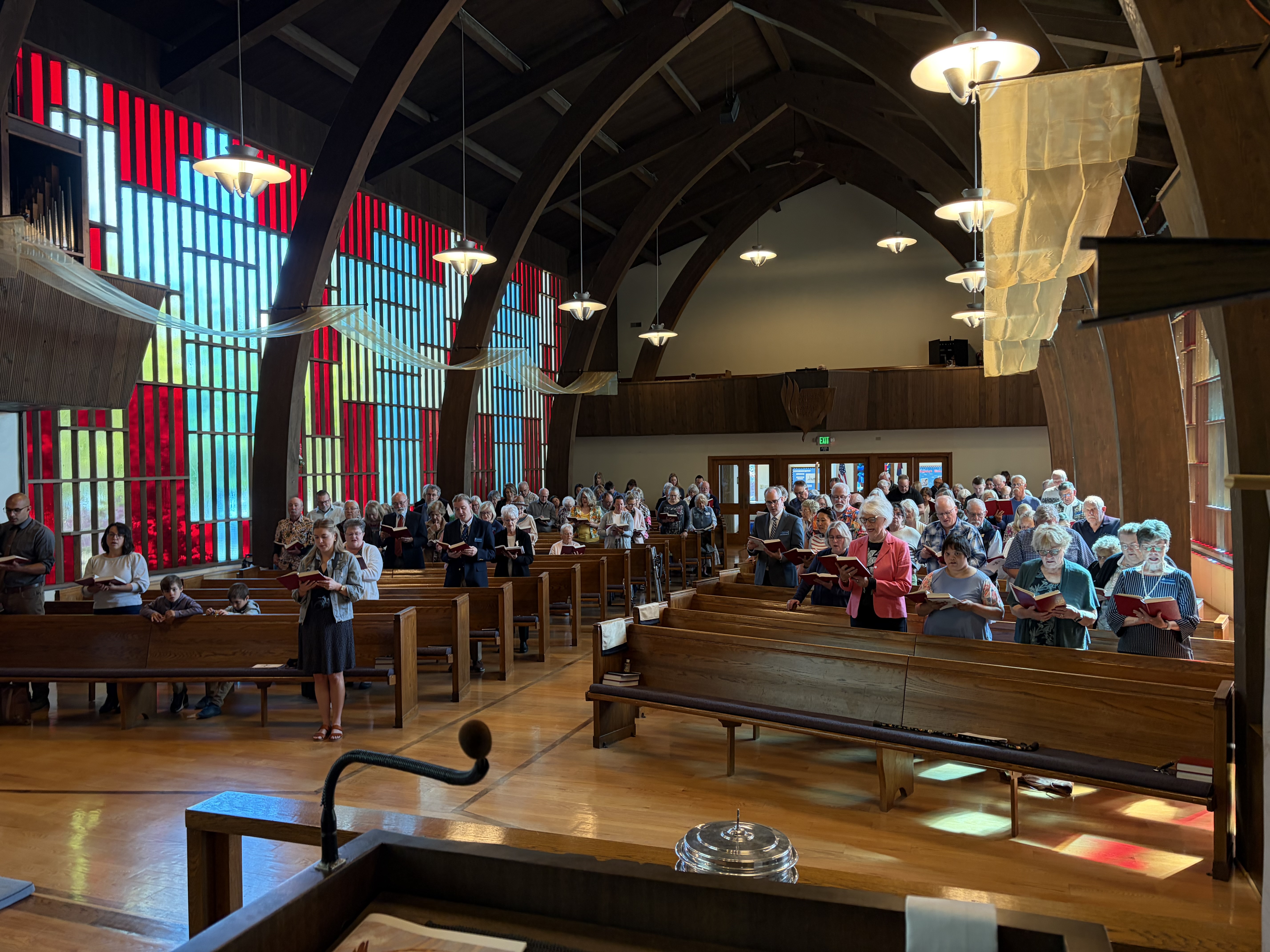
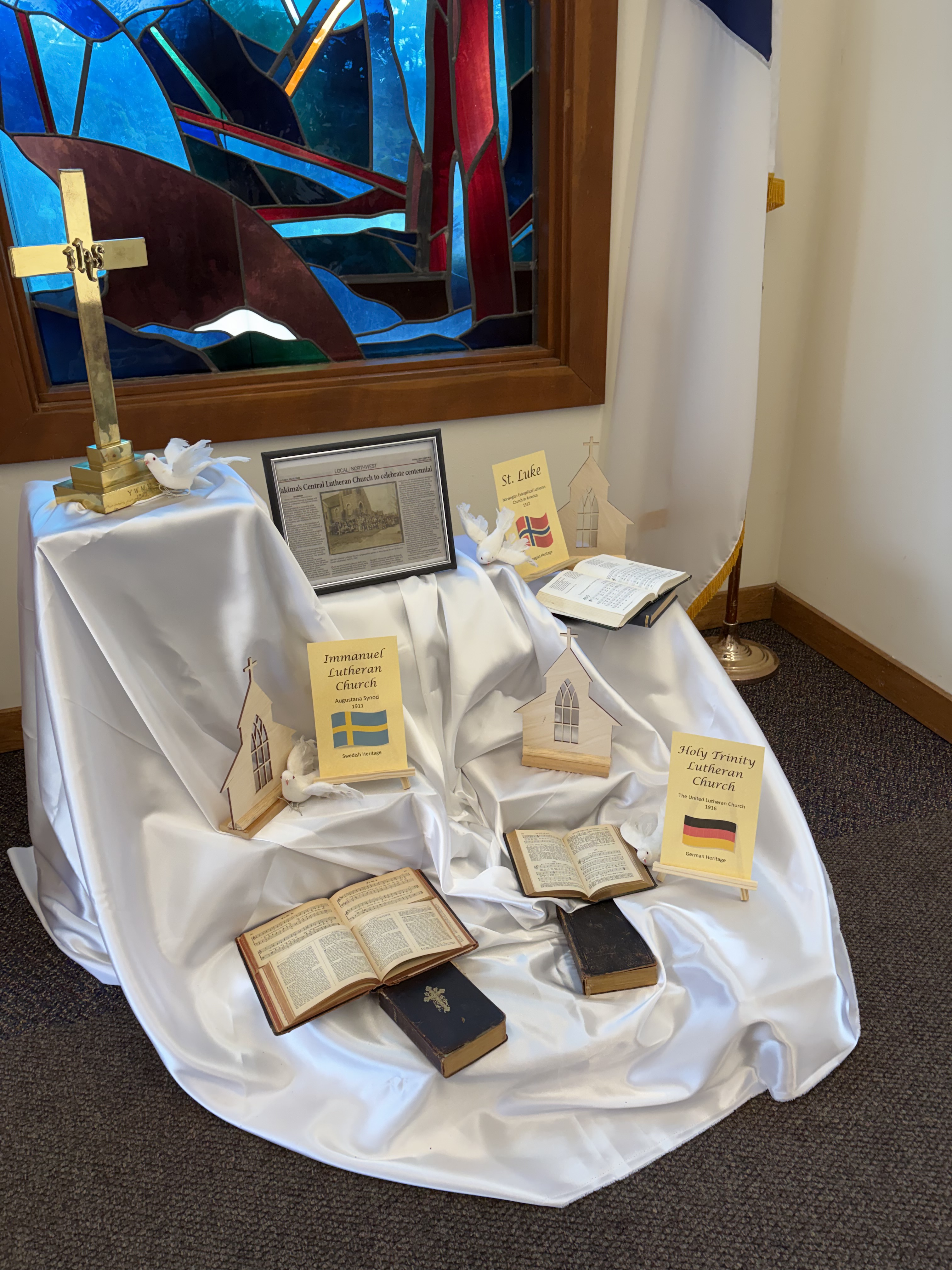
It is so good to be with you Central Lutheran, Yakima for your 100th anniversary—100 years of memories, of faithful Word and Sacrament ministry, of passing on the Lutheran Christian faith to the next generation, of sharing the love of Jesus Christ with your neighbors in Yakima and across the globe. A merger of ethnicities and languages over 100 years ago was just the beginning of decades of discernment and decision making and adaptations. Today we rejoice that through it all, ministry and this expression of the Body of Christ continues. On your 100th anniversary, you are looking ahead to the next chapter, rededicating this congregation to the triune God who has accompanied you for so long, rededicating to sharing that same life-giving good news of Jesus Christ.
When I hear Jesus’ prayer for his disciples in our reading from John’s gospel today, I hear his visions and hopes for authentic love and unity. I hear him speak poetically about his relationship with the Father, you might think Mother if that is easier for you. We hear of a loving and connected parent-child relationship. The relationality inherent in the God we worship is so present in this prayer. The love within healthy parent-child relations is abundant and real and inviting. It’s hard to carry out as human beings, sinful and broken as we are, which is one of many reasons Jesus prays for his disciples. If it were automatic human behavior, then there would be no need for prayer.
This struggle made me think of my first call in Soldier, Iowa, a town of 200 people near the Missouri River in what’s known as the Loess Hills. I served there from 2004-2010 and shortly before I arrived, the school district that Soldier, Iowa was part of was dissolved. A vote was put to the citizens and instead of merging with their long-time partner district, a pin was dropped in the middle of the current district. Like many ELCA Lutheran congregations, my new church was full of schoolteachers. They were grieving, in disbelief that other residents had not seen things the way they did. I clearly remember teachers telling me how difficult it was to stand around the Holy Communion rail with people who had voted in such a way that they had lost their jobs. But they kept coming to worship. They kept coming together and sharing the bread and wine, shoulder to shoulder receiving the gifts of new life and forgiveness. And very slowly relationships healed.
During Holy Communion we are literally invited into the unity portrayed in Jesus’ prayer. In the town church we had a straight communion rail but Memorial Day weekend through the month of June, we went out to the old massive country church for worship. And there stood a beautiful half-circle communion rail, one where you not only stood shoulder to shoulder with people, but those on the ends could look across and make eye contact. One big reason I am still in the church, with all of its faults and growing edges, is because of our audacious belief that when we cannot forgive, when we cannot reconcile, when we have no energy to be curious about one another, the means of grace can still be received through Word and Sacrament. My hunger for bread and wine draws me to the table where I feast shoulder to shoulder with my siblings in Christ. Today I think about Swedes, Norwegians, and Germans receiving communion together 100 years ago.
I have written to our synod that I think we forget how radical and rare it is for the good news of God’s love and grace to be preached and heard, and for the sacraments to be celebrated faithfully. It is radical and rare in part, at least within the geography of the Northwest Intermountain Synod, because there are so many other things parading as the gospel.
On a 100th anniversary of a congregation, it’s interesting to consider what things have paraded as good news over the decades. And in the midst of all those false gospels, Central Lutheran in Yakima found ways to follow the Jesus we encounter in the gospel texts. You kept witnessing to Jesus Christ and God’s abundant love for creation. And you, gathered here today, continue to be a community for whom Jesus prays.
What difference does that make, that you are a community for whom Jesus prays? Knowing God’s love for you and you all, Central Lutheran in Yakima, how will you share that love? And what stops you from sharing the love of God in word and deed? A church with 100 years of history must include highs and lows, disagreements, reconciliation, times when you erred on the side of focusing too much internally, times when you were so focused externally that you did not tend to the body, times when a scarcity mindset overwhelmed, times when fear of the unknown had you turning away from God. And yet we are here today. God is faithful and this church has been faithful, if imperfect.
Jesus prays, “Father, the hour has come; glorify your Son so that the Son may glorify you.” Hear the mutuality and oneness. “And this is eternal life, that they may now you, the only true God, and Jeus Christ whom you have sent.” Eternal life is the primary description of the gift that Jesus brings to those who follow him. Jesus’ death, resurrection, and ascension reveal the extent and nature of the love that shapes his relationship with God and his “own.” They reveal the very character and identity of God, a God of abundant love.
It is a love not for one set of people, but for the whole world, the cosmos, the same world sung about at the beginning of this same gospel: “The true light, which enlightens everyone, was coming into the world.He was in the world, and the world came into being through him, yet the world did not know him.” This is the world God made, the world God loves, and the world into which God sent the Son. Into this same world, Jesus will send his disciples. They are already in the world but now they are commissioned to bear witness in and to the world of God’s love.
Jesus’ prayer for the community models who the community is to understand and receive its identity in the world. This prayer is timeless, prayed before Jesus’ death, prayed during the Middle Ages and the Reformation, prayed in 1926 when three churches came together, prayed today. Overhearing this prayer has the power to remind you that the church’s life rests in and depends on God’s care. Jesus does not supply pragmatic directives on how to arrive at church unity or how to recognize the face of the “evil one” in the world. Jesus places the church’s future in the hands of God and invites you to listen in on that conversation. Today, we can hear and experience the love that Jesus and God have for you.
God’s love is constant and ongoing. Empires and ideologies come and go. God’s love will be with you forever. Disagreements within congregations, synods, and entire denominations are important and can keep us up at night, but the balm that gets you through the night is God’s love. For 100 years, the church of Central Yakima has pointed to God and God’s love as its rock, foundation, and source. As you remember, rejoice, and rededicate, celebrate all the saints, the people of this church, and point to God’s faithfulness as the source of your unity, love, and abundant life.