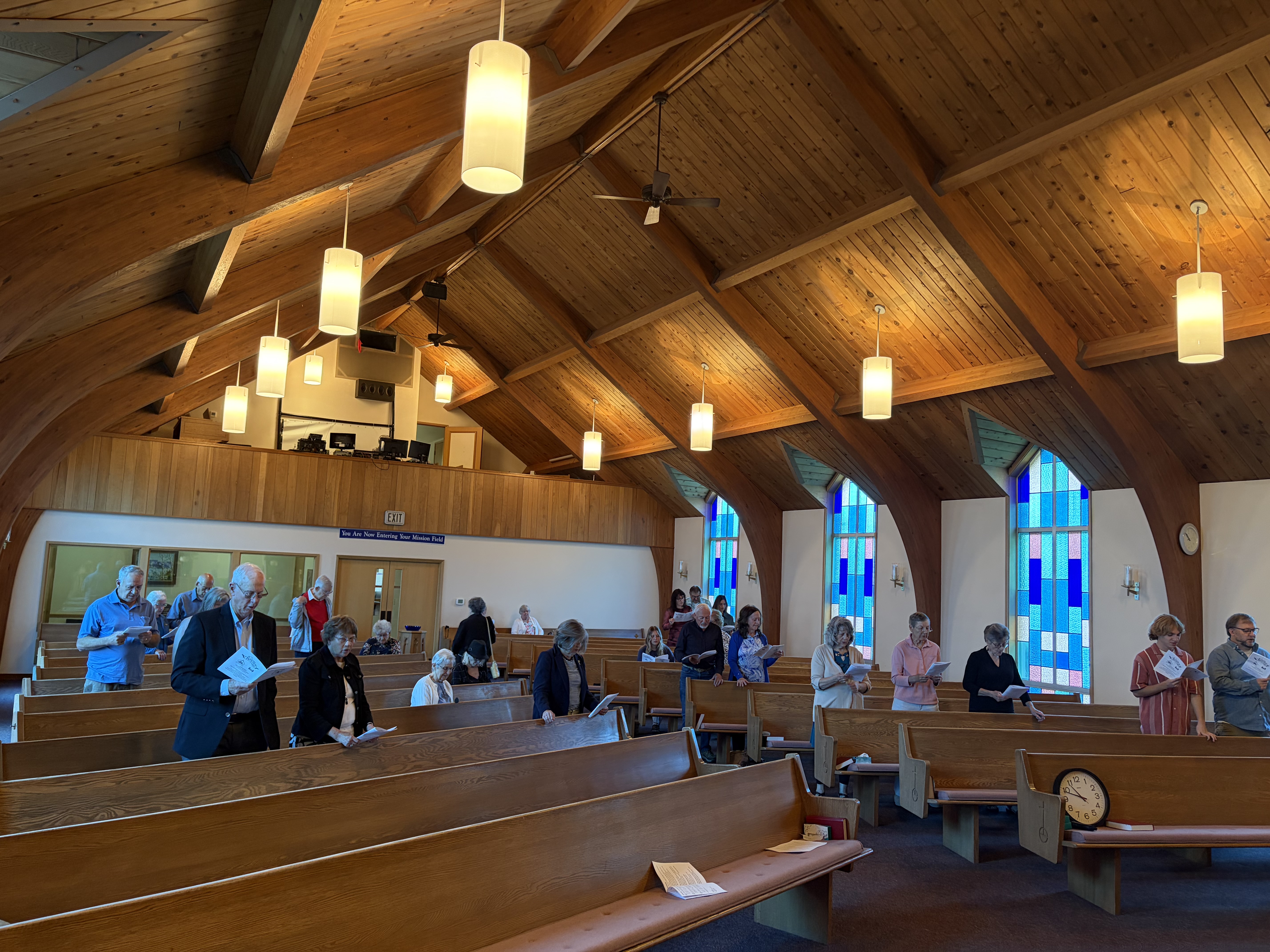
Sunday, June 28 was a double-worship day. I started by visiting Immanuel Lutheran in Moses Lake, served by interim Pastor Mary Anthony from the Oregon Synod. This congregation has been through a lot in the last 20 years, as members reminded me. Thanks to good lay leadership and a steady recent pastorate (Thanks Pastor Walter) they are in a good place and certainly a wellspring of God’s love in their community.
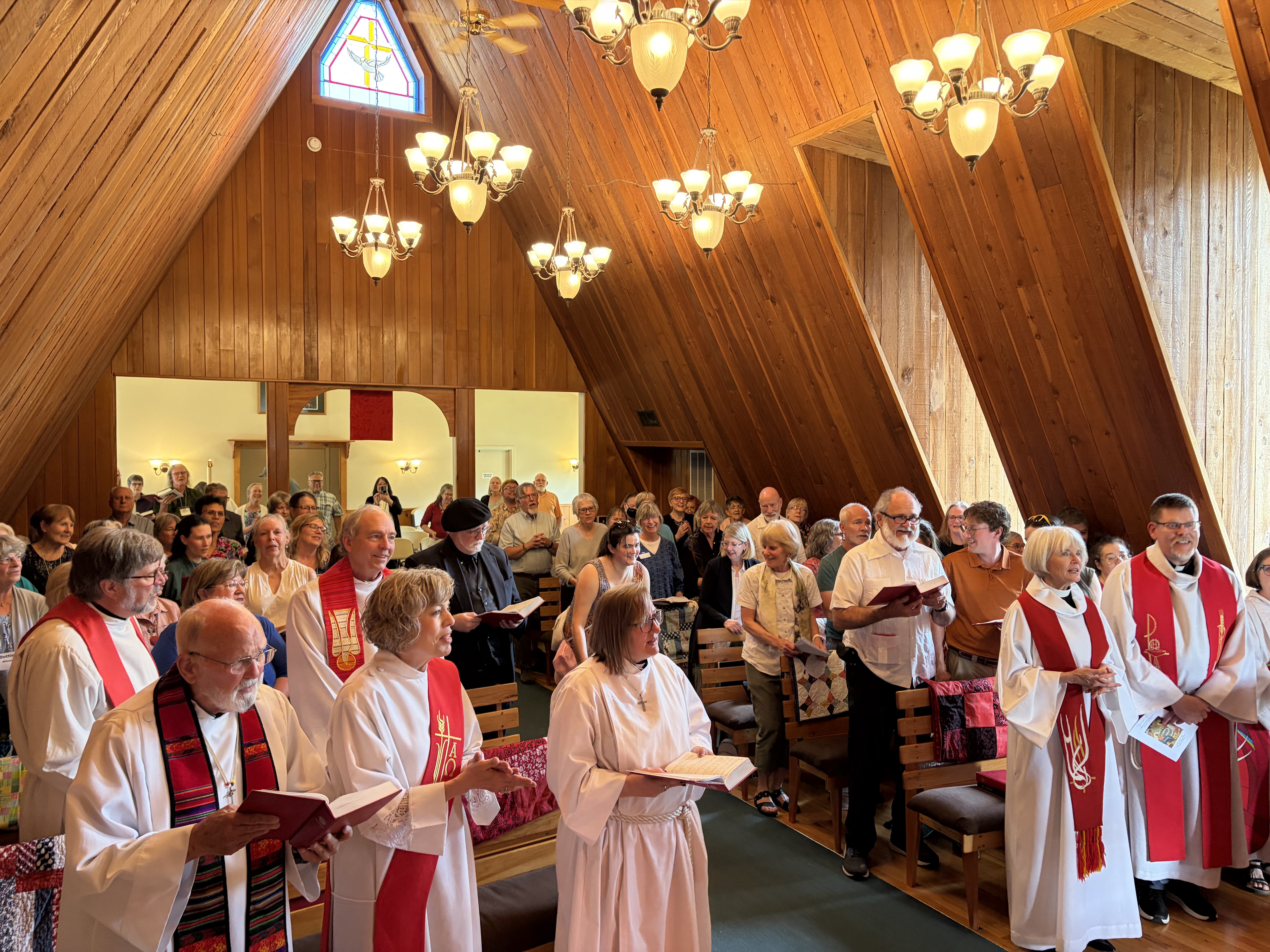
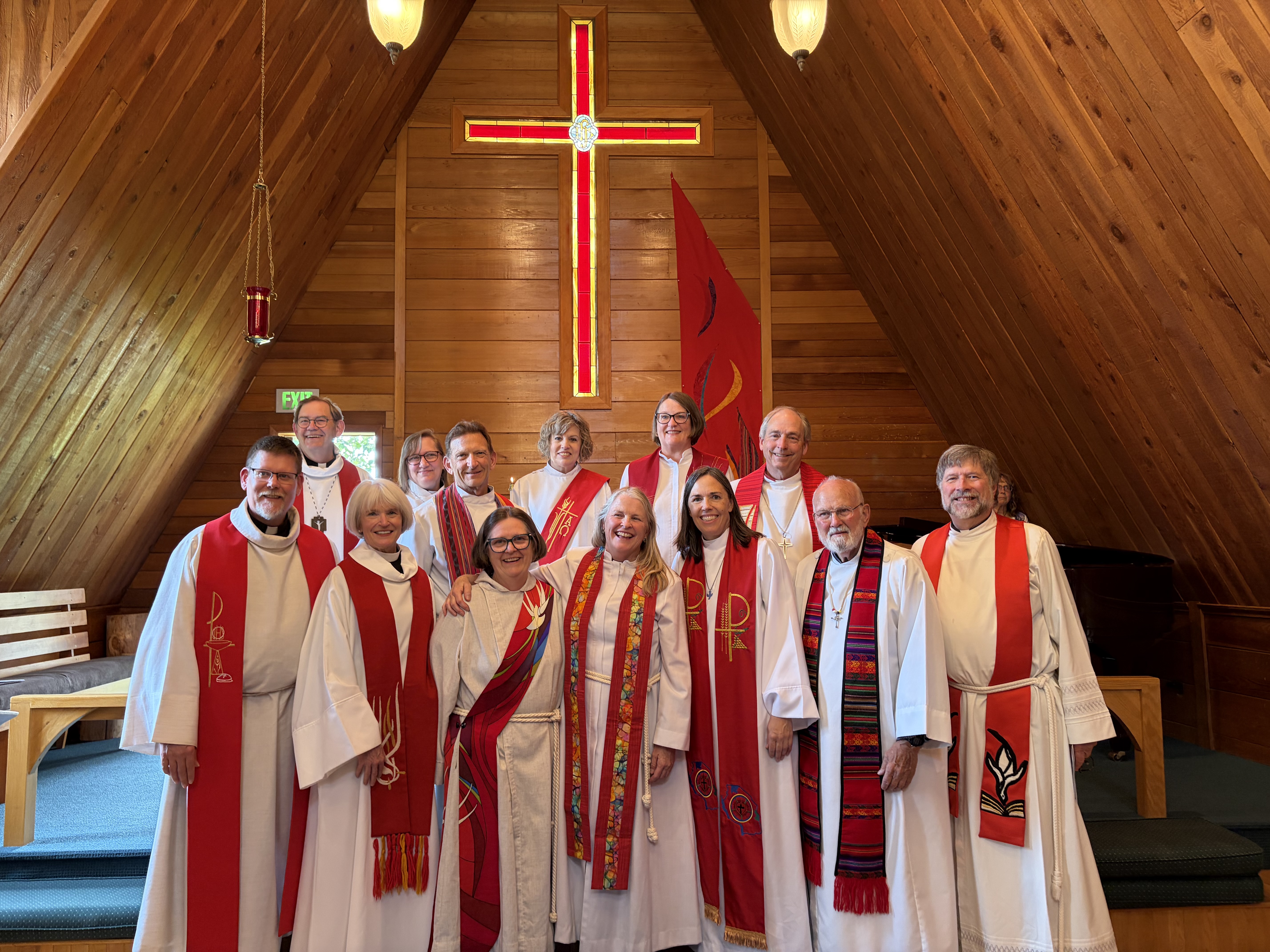
Then I traveled on to Lake Chelan Lutheran for the ordination and installation of Pastor Lynette Rose, serving as half-time associate pastor of Lake Chelan Lutheran. Pastor Paul Palumbo preached and it was a wonderful service.
Matthew 10:40-42
Grace to you and peace members of Immanuel Moses Lake. It is so good to be with you this morning and to bring greetings from the Northwest Intermountain Synod staff and council and to worship with you.
We have a very brief gospel lesson today and I know that my first instinct is to hear Jesus’ words to his disciples as a command. This is the Jesus who preached the beatitudes, who loves to teach about what it means to follow him, what it means to be a disciple.
Since Jesus himself says, “Whoever welcomes you welcomes me, and whoever welcomes me welcomes the one who sent me,” this must mean that I should welcome the stranger. After all, I am supposed to imitate Jesus. In welcoming the stranger, I am also welcoming Jesus and the one who sent Jesus.
Since Jesus says, “Whoever welcomes a prophet in the name of a prophet will receive a prophet’s reward,” this means I am supposed to welcome a prophet, and I will receive a prophet’s reward.
Since Jesus says, “whoever welcomes a righteous person in the name of a righteous person will receive the reward of the righteous,” this means that I ams supposed to welcome the righteous and then I will receive the reward of the righteous.
Finally, Jesus says, “whoever gives even a cup of cold water to one of these little ones in the name of a disciple— [will not] lose their reward.” I must offer a cup of cold water to needy and oppressed in order that I might not lose the reward.
Given all that Jesus said and did throughout his ministry, given the mercy he showed, given his preferential treatment of the sick, the outcast, those marginalized by others, reading these few verses and assuming we are to show hospitality and kindness to everyone is not a far stretch.
And yet, I think there is a different message for us in this text. Let us return to that first verse again. Jesus says, “Whoever welcomes you welcomes me, and whoever welcomes me welcomes the one who sent me.” Jesus is placing his hearers, including you all, not in the place of the ones offering the welcome. Instead, they/you are in the place of the ones receiving welcome.
He says, “Whoever welcomes you welcomes me, and whoever welcomes me welcomes the [Creator] who sent me.” So rather than being a commandment, what you are hearing today is a promise. And note also that the “you” here is plural. As Jesus’ followers, “you all” will be welcomed by some. And when you are welcomed, you will be making known both Jesus’ presence and God the Creator’s presence.
And so, the real command in today’s text is not so much about showing hospitality and kindness, thought that command is clear elsewhere in the gospels. To be welcomed by someone else, anyone else, means that we must go out! To be welcomed somewhere else means that ministry, living as baptized children of God, being the body of Christ is not contained to what happens on Sunday morning.
If we zoom out from our three verses this becomes all the more clear. In Matthew’s gospel, chapter 10, Jesus sends out the Twelve Apostles in mission and offers words of guidance. The chapter is sometimes called “the missionary discourse.” Matthew 10:40-42 is part of this longer discourse. Jesus offers words of guidance, warning, and promise about the disciples’ mission. Various phrases in the chapter show that the whole discourse is tied together as a whole.
“If anyone will not welcome you or listen to your words, shake off the dust from your feet as you leave that house or town” (10:14)
“See, I am sending you out like sheep in the midst of wolves” (10:16)
“So have no fear of them; for nothing is covered up that will not be uncovered (10:26)
“Whoever does not take up the cross and follow me is not worthy of me” (10:34)
“Whoever welcomes you welcomes me” (10:40)
Jesus’s words today are words of promise, under the broader commandment to follow Jesus out into the world in mission. In a sense, Jesus tells his disciples, “I am sending you into a dangerous world as part of my mission to love, save, bless, and be reconciled to that very world. It is dangerous out there. But you will find welcome. Those who welcome and receive you, also welcome and receive me—and they will be rewarded.”
Part of my role as the bishop of the 85 ministries in our synod, from Leavenworth in the west to Jackson, WY in the east is to explain how we collectively go out into the community and world with the message of Jesus’ love and mercy and sometimes we are welcomed.
But the best part of visiting congregations is learning how you are showing Jesus’ love in Moses Lake and Grant County as the body of Christ and as individual members. How are you showing up in the larger community and in circles beyond this faith community? What are those relationships like?
The truth is, the command is not necessarily to go out to different places. Each of you already lives much of your life beyond these walls, in your homes, in your places of work, in places of volunteering, and in places of recreation. How do you bring your identity as a baptized child of God into those spaces and times?
One scholar [Townes-Feasting] argued that “our will to achieve caring relationships is within our grasp, yet all too often, if left to our own devices, we fall short of creating and nurturing genuine relationships, in which we develop into the people God calls us to be.”
What gets in our way? Price, ego, self-doubt, and their kin keep us from connecting with each other except in self-interested ways. And so, we need God’s embrace in our lives to live in this paradox and fulfill our faith.
What does it mean to live out the baptismal promises in Moses Lake in 2026? Only you can tell me how farmers, government employees, healthcare workers, educators, entrepreneurs, business owners, neighbors, parents, grandparents, friends bear God’s message of unconditional love and forgiveness into your daily lives. Only you can tell me what happens when you offer yourself up as the guest of other people’s welcome in this particular context.
My assumption is that not everyone is welcoming. The life-giving gospel of Jesus’ abundant love and forgiveness is not what everyone wants to hear; it is not welcomed by all and so you will not be welcomed by all. This is especially true in a day and time when so many other things parade as the gospel of Jesus. But some people will be and are welcoming to you. And, most importantly, when you offer yourself up as guest for people to welcome, you manifest for all of those people the blessings of both God in Heaven and also the beloved Son, Jesus Christ.
That is the amazing thing about living out our baptismal identity. Simply by offering yourself up as the guest of another person’s welcome, you reveal for them the very reign of God. Today, we receive a glimpse of that reign at the table. Bread and wine become gifts of abundant life and mercy. And at this table, Jesus is the host and welcomes you graciously, beloved children of God.