
Matt 22:1-14
There are parables Jesus tells that can stand on their own better than others. The Parable of the Prodigal Son and the Parable of the Good Samaritan are two such examples. Today’s parable does not qualify. The parable of the wedding banquet, as found in Matthew’s gospel, needs some wrap around or context.
First, we might consider the significance of Jesus using imagery of a wedding. This helps us see the parable not just within the context of the stories of Jesus, but also in the light of the wedding that is the climactic image of scripture, the final wrap-up of the entire Bible, namely the Marriage Supper of the Lamb in Chapter 19 of the Book of Revelation.
The other lens that’s necessary for this parable is the extensive use of the imagery of a festive meal. So, try to recall the many diner parties, suppers, and wedding receptions you can gather out of scripture: not only the final Supper of the Lamb, but the marriage feast at Cana of Galilee, Jesus’ Last Supper, the evening meal at Emmaus on the night of Easter Day, and breakfast of broiled fish by the lakeside during one of Jesus’ resurrection appearances. We read today’s parable in the context of all the gracious invitations to “sit together in Christ Jesus” (Eph. 2:6). In other words, the world, including you, has been summoned to a party—to a reconciled and reconciling dinner with the Lamb of God.
As today’s parable begins, the King is not mad at anybody. He wills above all to celebrate. God extends a gracious invitation to join the joy. Sadly though, the situation is not so simple. Those invited would not come. Here is the unhappy truth that the world is full of fools who won’t believe a good thing when they hear it. One scholar [Capon] declares, “Free grace, dying love, and unqualified acceptance might as well be a fifteen-foot crocodile, the way we respond to it: all our protestations to the contrary, we will sooner accept a God we will be fed to than one we will be fed by.”
The invited guests make light of the king’s preparations and go off to care for their business interests. Some seize his servants and kill them. Why the violence? I think it would be unnatural if the violence did not bother us. I also know we are not supposed to strictly allegorize parables. What does it mean to faithfully tease out such a violent parable? Perhaps Jesus wants to highlight the enormity of the rejection. It’s followed by a festival of death presided over by the king himself. The king sends his soldiers and destroys those murderers.
Whoever these people were, they were lacking in the trust, the faith, that is the only divinely acceptable quality. And so, they take their place in Jesus’ parade of winners who lose. They are the Pharisee in the temple reading off his list of good deeds. And yet, they may also be you and me.
They are all of us who live in the twin certainties that our good works will earn us the right to attend the Super of the Lamb, and that God’s good nature will absolve us from having to sit through it if we happen to have other plans. Why the ferocity? Since neither they nor we could possibly be more wrong about either of these two certainties, Jesus insists on displaying both of them as dead wrong. Salvation is not by works, and the heavenly banquet is not an option. We are saved only by our acceptance of a party already in progress, and God has paid for that party at the price of his own death.
Jesus is on a roll in the parable and he presses on. The wedding party will go on. Servants are sent out and gathered all whom they found, both bad and good. This, my friends, is the hallmark of Jesus’ major parables of the kingdom and of grace.
Sowing, Wheat and Weeds, Nets, Good Samaritan, Prodigal Son, Jesus goes out of his way to make heroes of life’s losers. “Bad” is not a problem for the kingdom: it has already been aced out by the power of Jesus’ death and resurrection. He does not invite the good and snub the bad. He invites us all, while we are yet sinners; and he simply asks us to trust that invitation. And therefore, because the remaining inhabitants of his kingdom did just that, the wedding hall was filled with guests.
The invitation is free to everyone. Forgiveness and mercy are given abundantly through Jesus death and resurrection. If you accept the invitation to discipleship, the parable seems to say, it is not enough to simply RSVP and then show up.
Indeed, it is not enough anymore to call yourself a follower of Christ and then act as if you were sound asleep during the Sermon on the Mount. It is not enough to pledge allegiance to church membership without then vowing to live out that chosenness in the world. It is not enough say you are a “Christian” and then stay silent when life, liberty, and love are in jeopardy.
What exactly does this look like in 21st century Pullman, WA? You recently celebrated 100 years of ministry, 100 years of answering the question of what it means to be the Body of Christ in a particular time and place. It’s impossible to separate WSU from Pullman, but WSU has changed as the entire community has changed. Agriculture on the Palouse is still vibrant, but farming here as in rural Western Iowa where I served my first call, is staggeringly different than during the pre-Depression1920s. The religious landscape of the Palouse has also changed since Vulga Germans and other northern European immigrants brought Lutheranism here.
God’s gift of grace through Jesus Christ is still a gift that can lead to transformation. It is still a message that frees us from sin and death. Every instinct in us, shaped by our families of origin, rugged individualism, whatever shame we are carrying on any given day, may tell us we too should stay away from the banquet. Too scandalous is God’s abundant and underserved mercy and love.
Yet you know that you were claimed already in the waters of baptism, transformed in accordance with the difference made by Jesus Christ. You get to say yes to the banquet, the robe, and the life of discipleship. Let the words of the Apostle Paul be your song: Rejoice in the Lord always; again I will say, Rejoice. Let your gentleness be known to everyone. The Lord is near. 6 Do not worry about anything, but in everything by prayer and supplication with thanksgiving let your requests be made known to God. 7 And the peace of God, which surpasses all understanding, will guard your hearts and your minds in Christ Jesus.
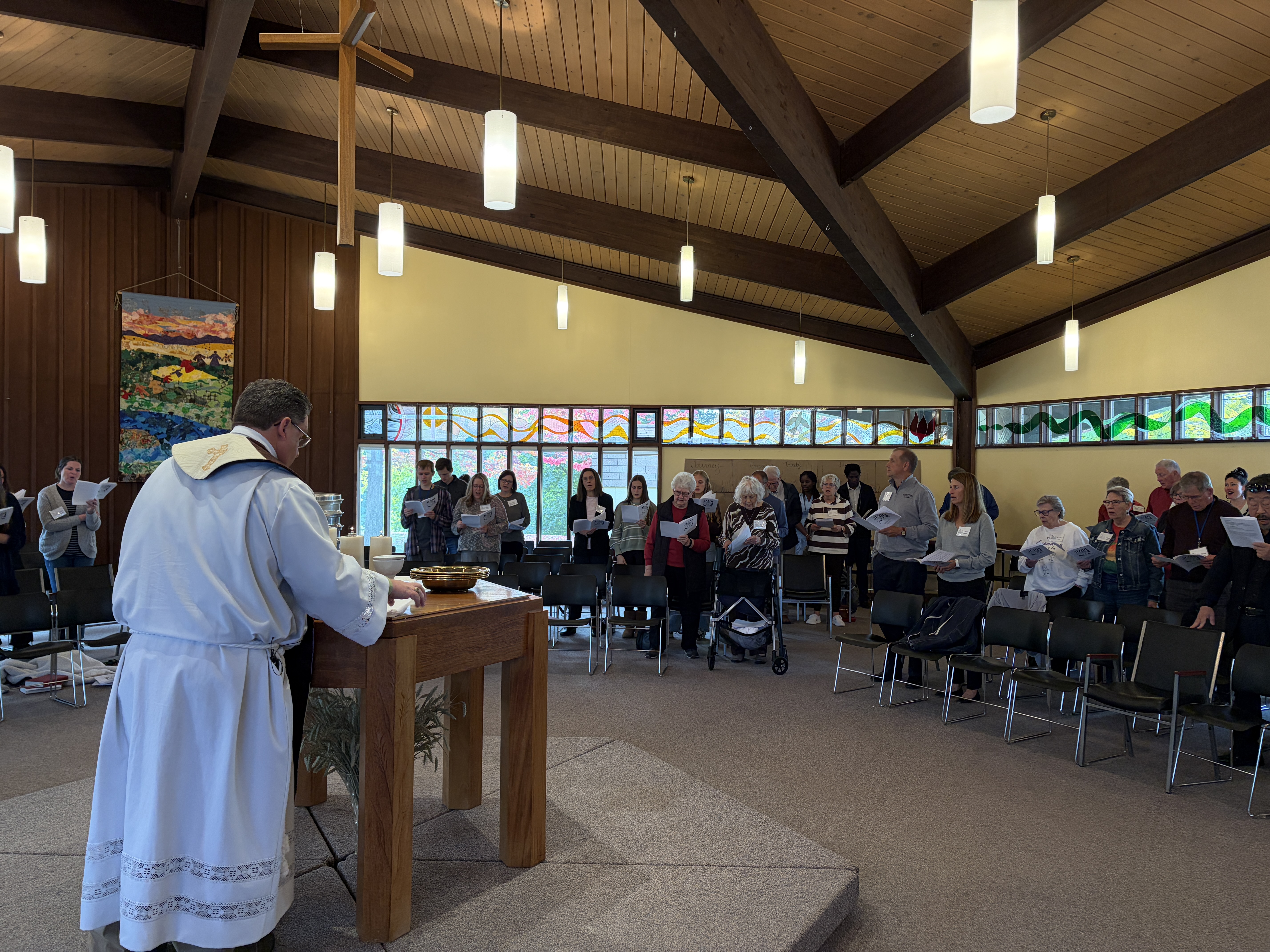
Today we celebrate the still new mutual ministry between Pastor Chris Hogstad and the people of Trinity Lutheran. Congregations, like people can have multiple callings throughout their existence. As the world, nation, and Pullman have changed, so have specific callings changed here. One of your tasks together is to faithfully carry out Word and Sacrament ministry so each of you is strengthened and nourished for ministry in your daily lives. The ELCA model constitution for congregations describes this in the purpose section: “Nurture its members in the Word of God so as to grow in faith and hope and love, to see daily life as the primary setting for the exercise of their Christian calling, and to use the gifts of the Spirit for their life together and for their calling in the world.”
You do that work as part of the synod, 85 ministries in the Northwest Intermountain Synod walking together. And we are part of the larger ELCA, including Lutheran Disaster Response, ELCA World Hunger, Sumud—our partners working for peace in the Holy Land and standing in solidarity with Palestinians, companion synods like the Ulanga Kilombero Diocese in Tanzania, and the whole Lutheran World Federation preparing to celebrate the 500th anniversary of the Augsburg Confession.
You, Trinity, will also discern what your collective love is calling you into here and now for your community and the world—how the Holy Spirit will move through you as you join the banquet in 2026. Again, the constitution states that you will “Serve in response to God’s love to meet human needs, caring for the sick and the aged, advocating dignity, justice, and equity for all people, working for peace and reconciliation among the nations, caring for the marginalized, embracing and welcoming racially and ethnically diverse populations, and standing in solidarity with the poor and oppressed and committing itself to their needs.”
Thank you for your ministry for so many years in this place and thank you for the mutual ministry you have embarked on for the next chapter. As we will now sing, to God be the glory.
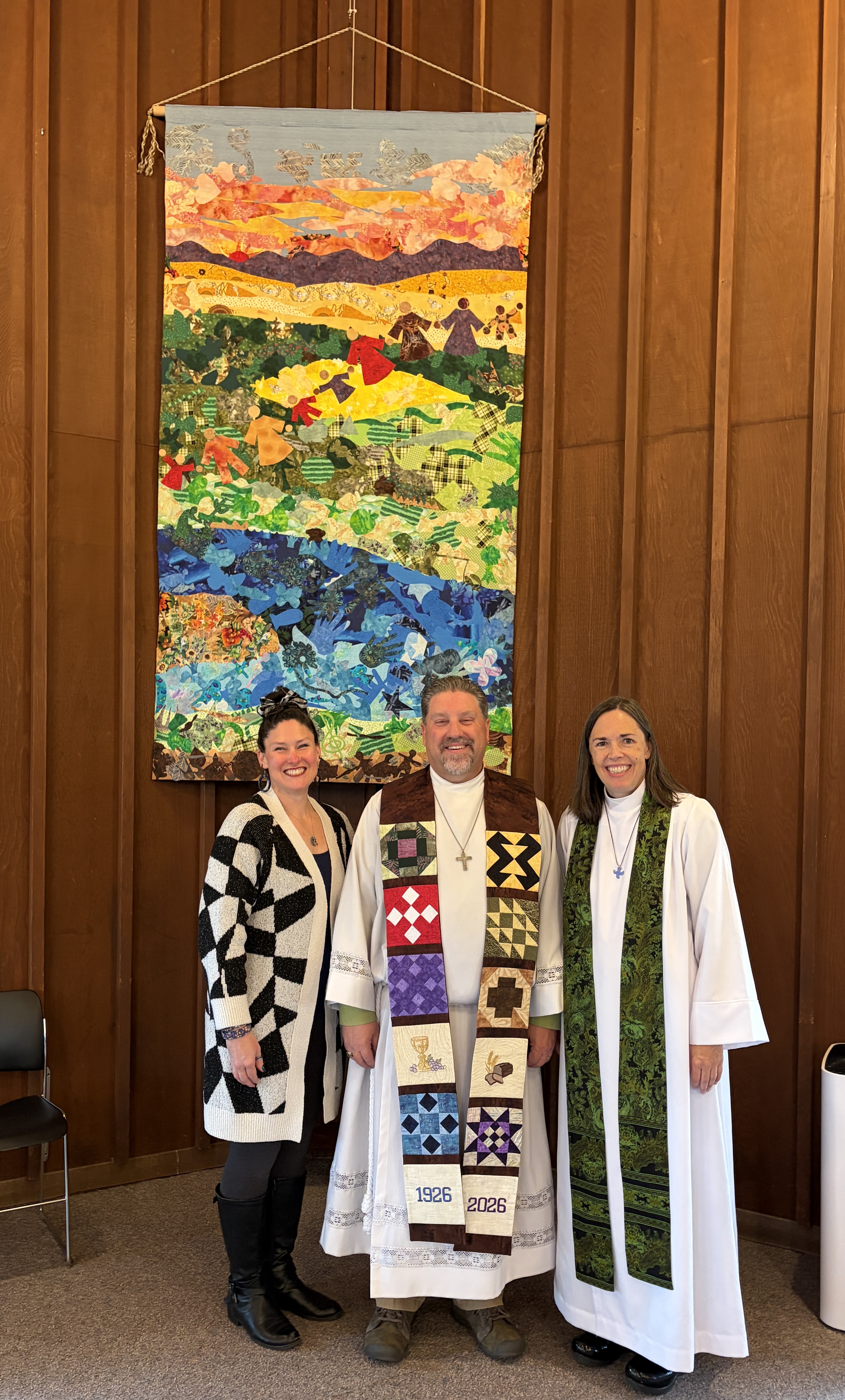
With Pastor Chris Hogstad and his spouse, Deacon Megan Hogstad


