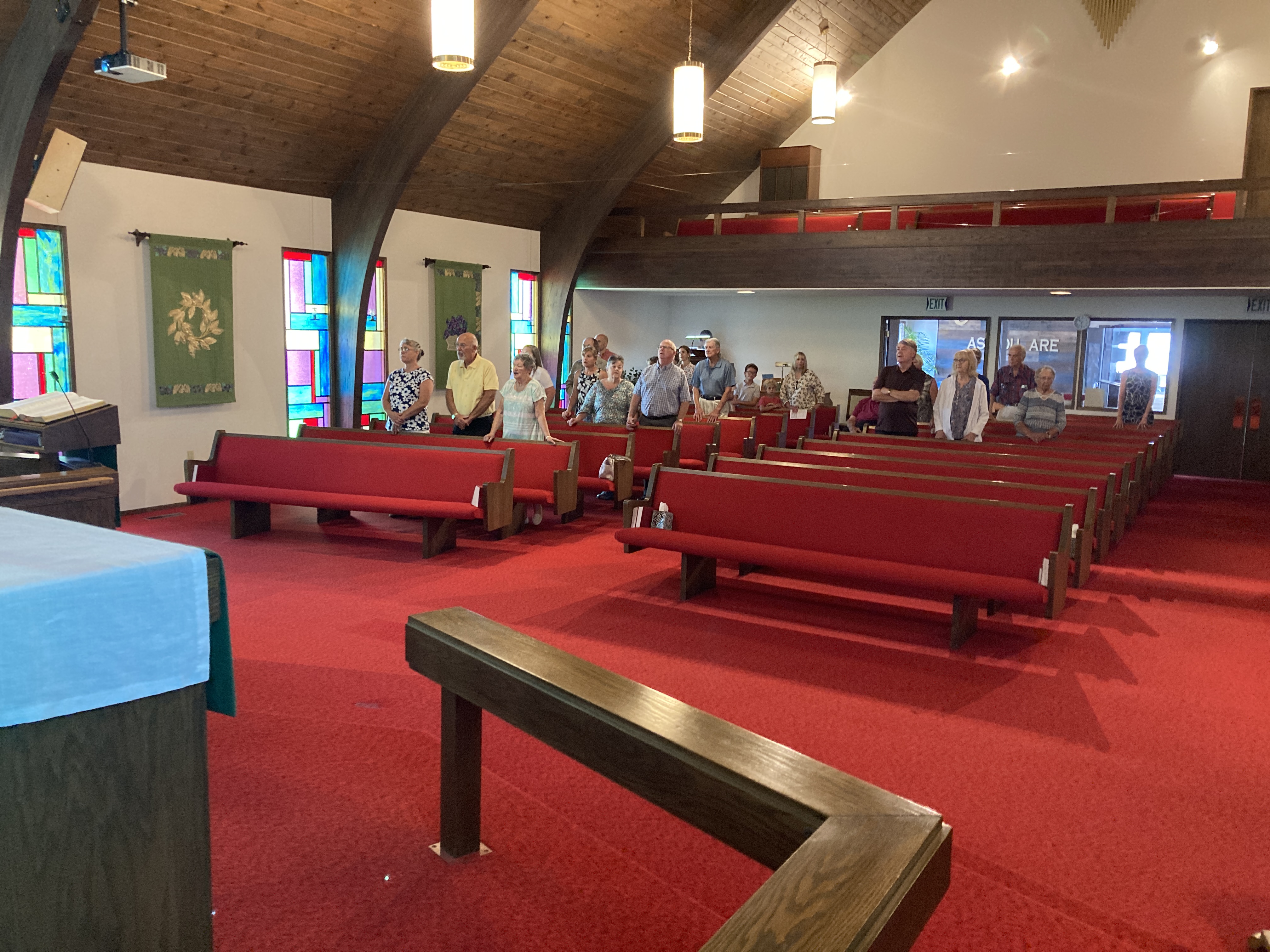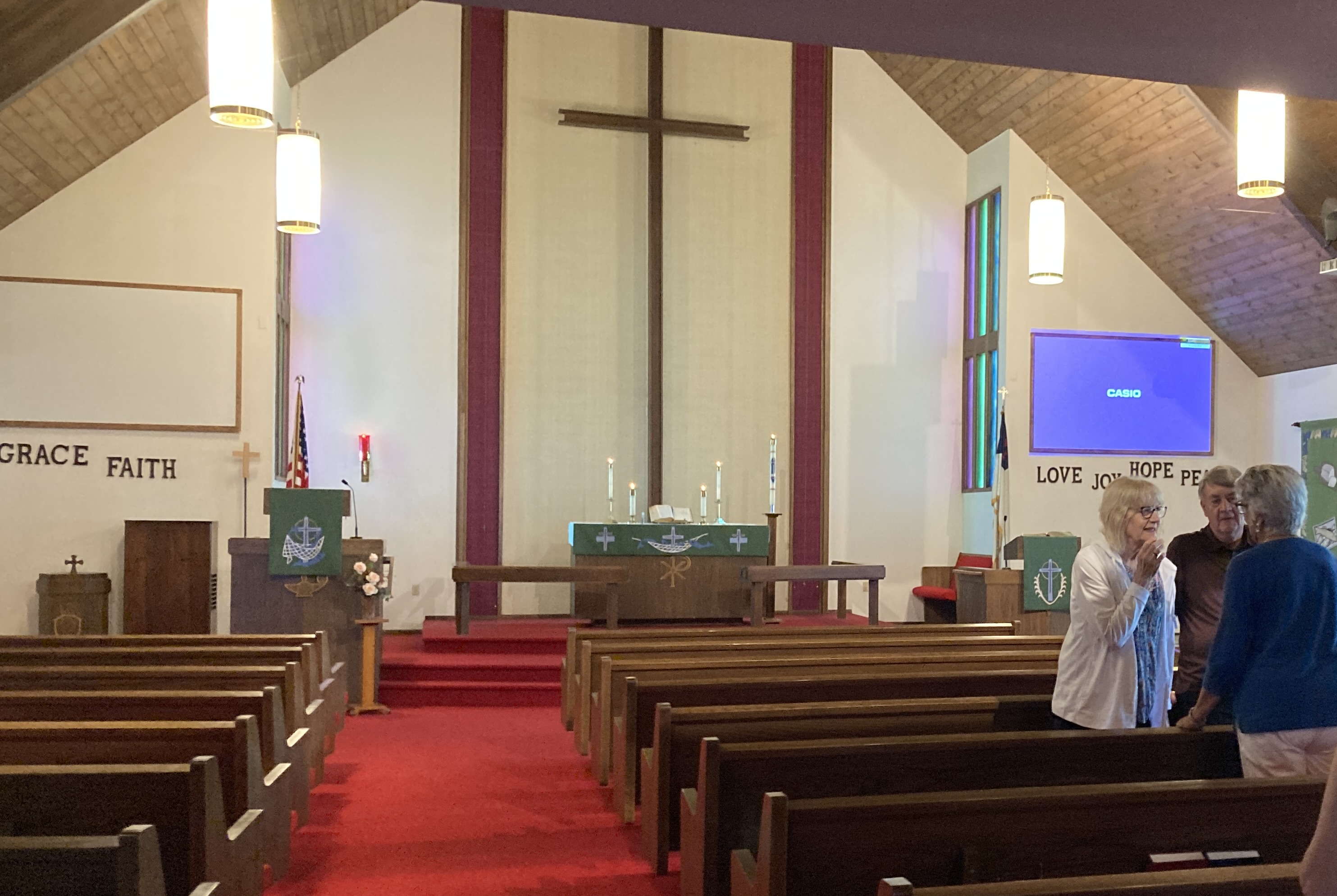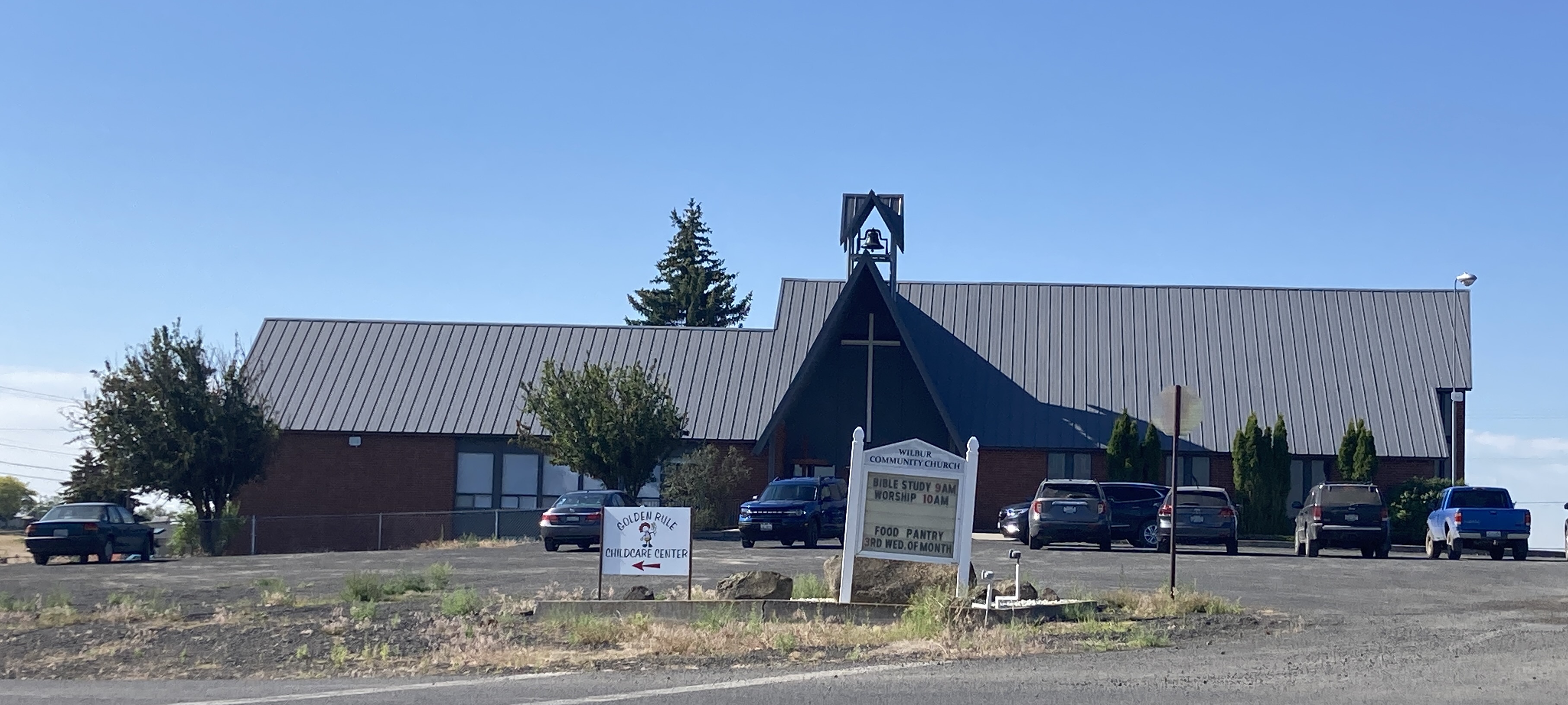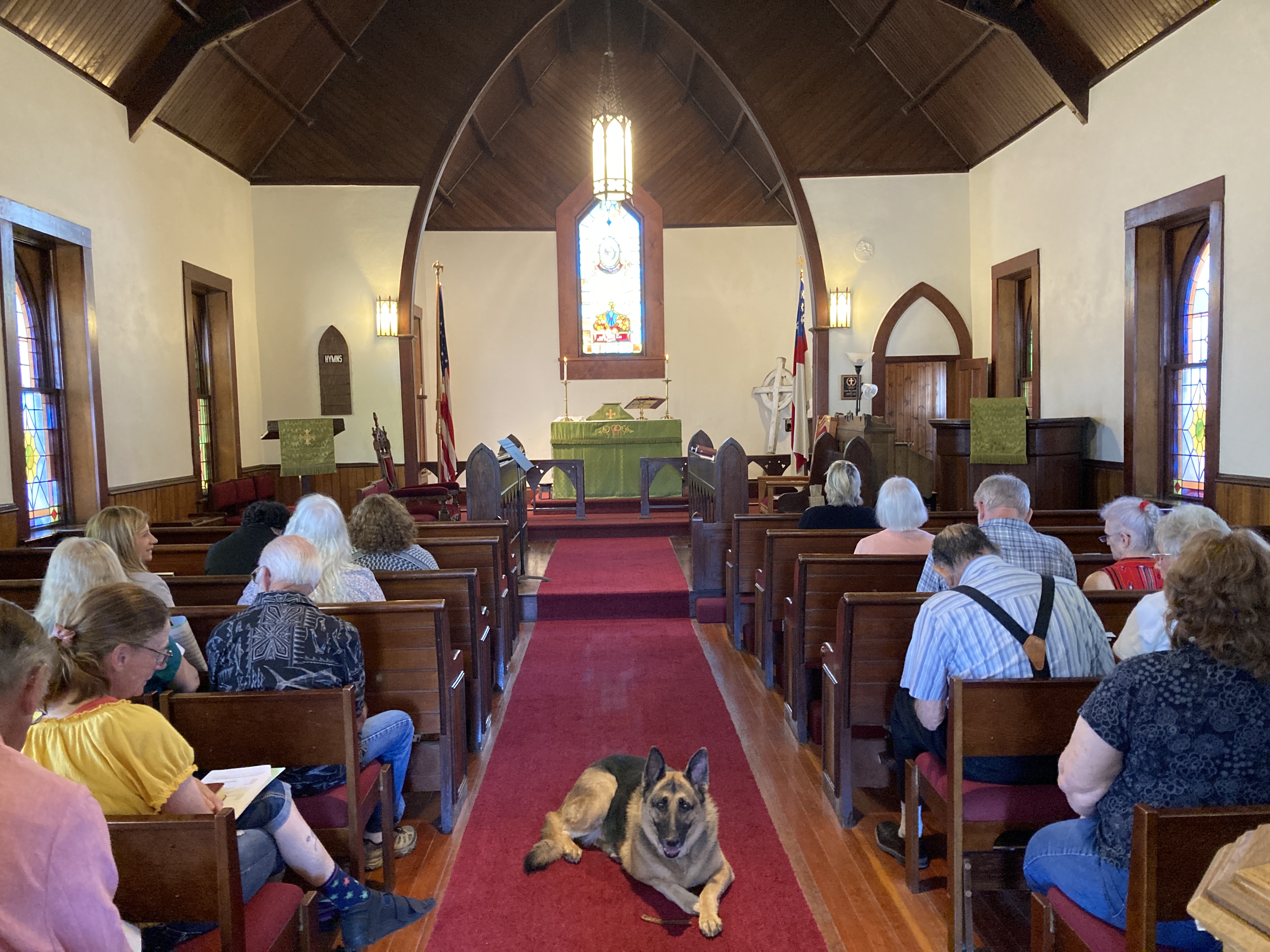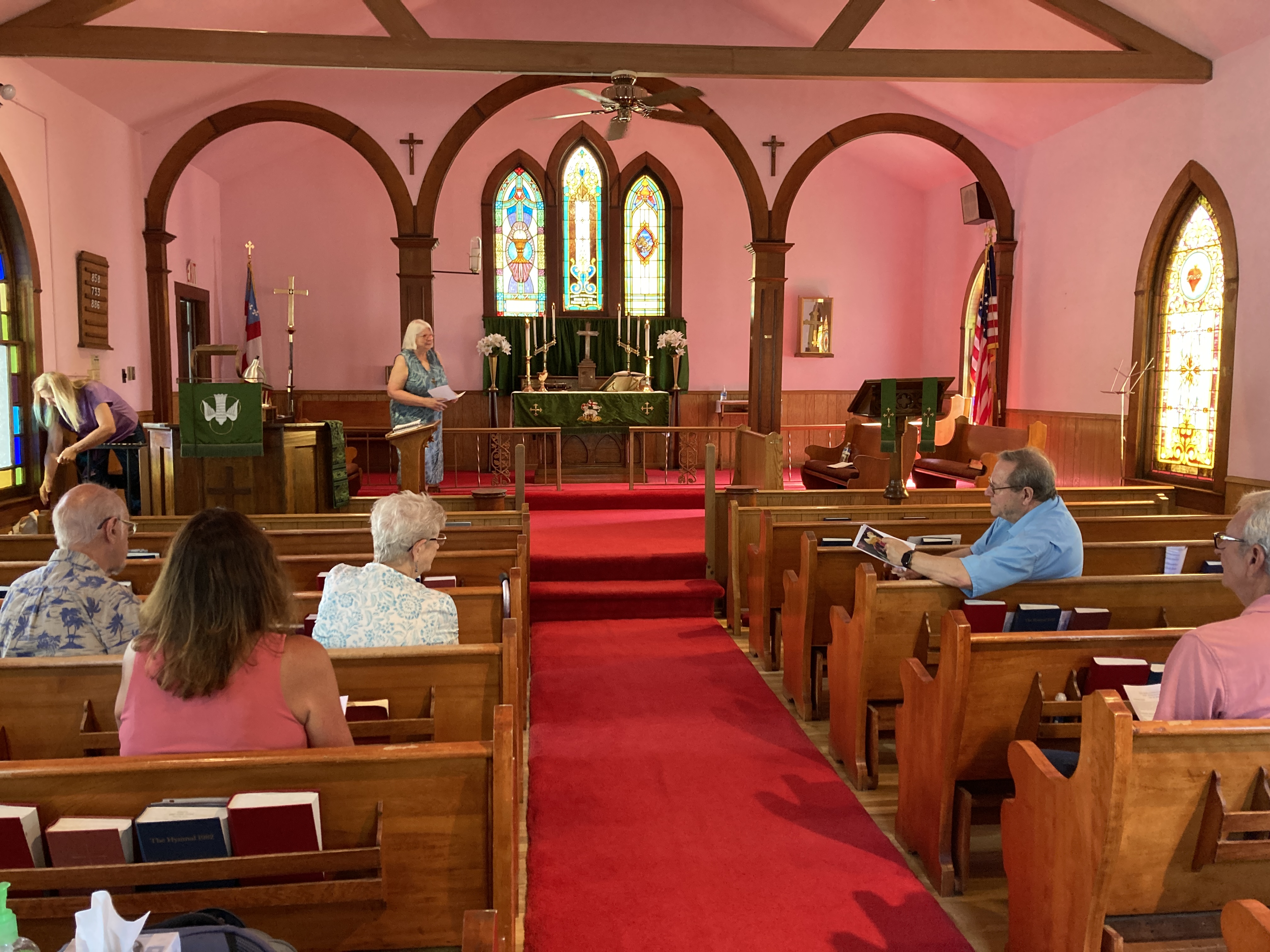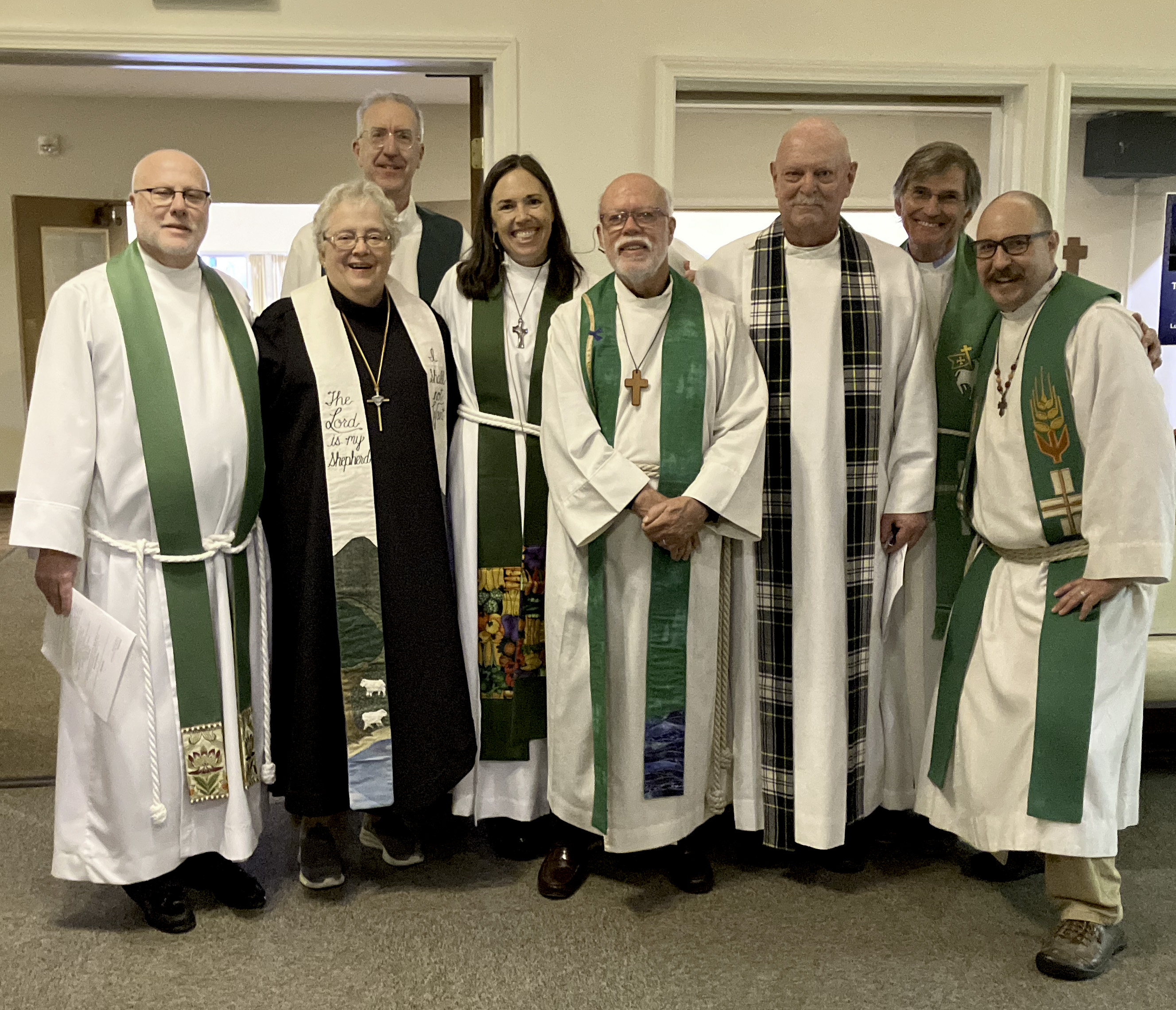
New Hope, Shoshone, June 30, 2024

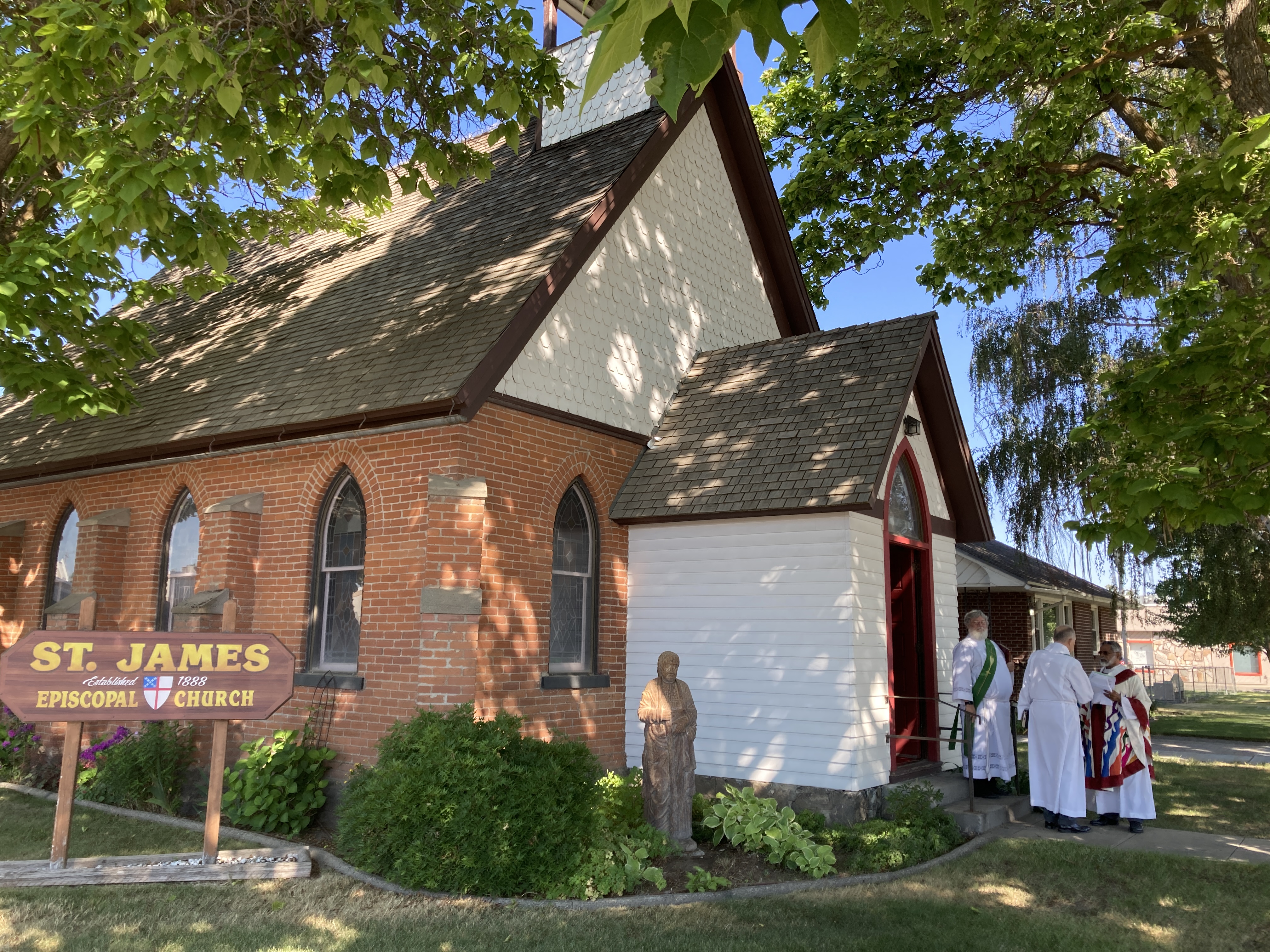
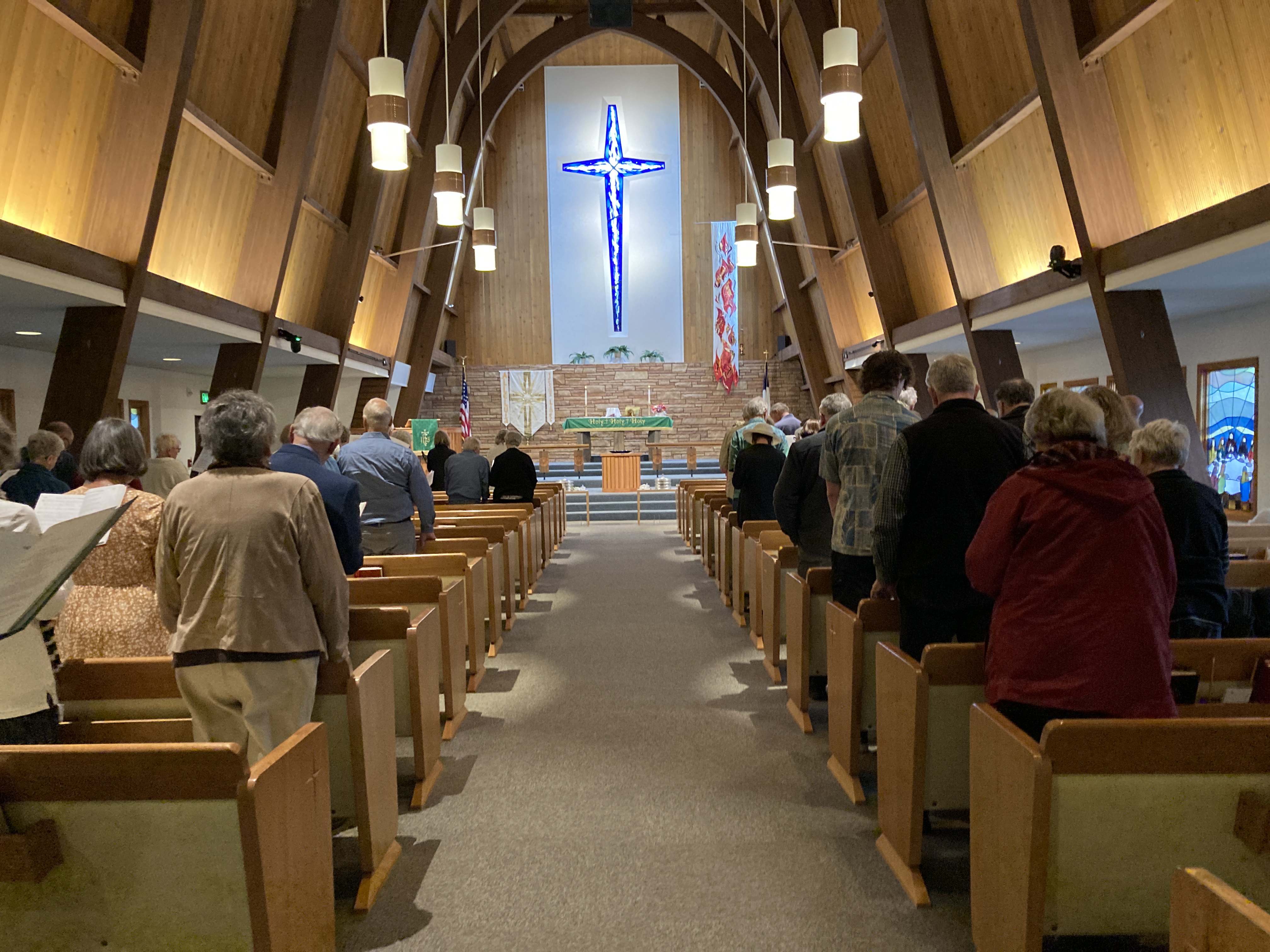
New Hope Lutheran, Shoshone, ID, nested in the Episcopal Church

Mark 5:21-43

21When Jesus had crossed again in the boat to the other side, a great crowd gathered around him; and he was by the sea. 22Then one of the leaders of the synagogue named Jairus came and, when he saw him, fell at his feet 23and begged him repeatedly, “My little daughter is at the point of death. Come and lay your hands on her, so that she may be made well, and live.”

24So he went with him. And a large crowd followed him and pressed in on him. 25Now there was a woman who had been suffering from hemorrhages for twelve years. 26She had endured much under many physicians, and had spent all that she had; and she was no better, but rather grew worse. 27She had heard about Jesus, and came up behind him in the crowd and touched his cloak, 28for she said, “If I but touch his clothes, I will be made well.” 29Immediately her hemorrhage stopped; and she felt in her body that she was healed of her disease.30Immediately aware that power had gone forth from him, Jesus turned about in the crowd and said, “Who touched my clothes?” 31And his disciples said to him, “You see the crowd pressing in on you; how can you say, ‘Who touched me?’” 32He looked all around to see who had done it.33But the woman, knowing what had happened to her, came in fear and trembling, fell down before him, and told him the whole truth. 34He said to her, “Daughter, your faith has made you well; go in peace, and be healed of your disease.”

35While he was still speaking, some people came from the leader’s house to say, “Your daughter is dead. Why trouble the teacher any further?”36But overhearing what they said, Jesus said to the leader of the synagogue, “Do not fear, only believe.” 37He allowed no one to follow him except Peter, James, and John, the brother of James. 38When they came to the house of the leader of the synagogue, he saw a commotion, people weeping and wailing loudly. 39When he had entered, he said to them, “Why do you make a commotion and weep? The child is not dead but sleeping.” 40And they laughed at him. Then he put them all outside, and took the child’s father and mother and those who were with him, and went in where the child was. 41He took her by the hand and said to her, “Talitha cum,” which means, “Little girl, get up!” 42And immediately the girl got up and began to walk about (she was twelve years of age). At this they were overcome with amazement. 43He strictly ordered them that no one should know this, and told them to give her something to eat.

I love this scripture passage from Mark because of the way the stories invite me and you into the text—so many details and characters and twists and turns plus two happy endings. But these stories have occasionally frustrated me because I have sat with parishioners and families over the past nearly twenty years and after pleas to God and many prayers, healing as we had hoped and prayed did not happen. 

Are these stories about Jesus’ healing two different women meant to encourage us to ask God for healing? Maybe. But maybe healing with a more nuanced understanding. Jesus’ ministry in Mark’s gospel begins with the declaration that the kingdom of God has come near, “repent, and believe in the good news.” The reign of God has come near—to you.

Our stories today from Mark’s gospel are all about relationships. We might say that these two incidents together help us understand each of them. They both involve women in crisis—in fact we do not know them by their names but by their needs. They were not outsiders to begin with, but both are now subject to the taboos around the mysterious power of life and the even more mysterious (and seemingly unconquerable) power of death. 

The first nameless and needy woman is barely a woman, just twelve years old and ready to begin her adult life. However, an unknown illness has struck her down, driving her father to extremes in his desperate search for help.  He was a leader, a religious leader in the synagogue, and yet this precious child’s illness has reduced him, weakened him, lowered him to the ground in front of a traveling folk healer in a last-ditch effort to prevent the worst from happening.

It seems that desperation, drives Jairus, the synagogue leader to Jesus. Jairus’ moment of faith comes a little while later, when the news arrives of his daughter’s death. Jesus then preaches briefly: “Do not fear,” he says to the grief-besotted man, “only believe.” Fear not; only believe. Jesus’ sermon was for all of us who suffer from the human condition. 

Into the midst of this comes the silent woman with the hemorrhage, without the boldness of the leader, simply hoping for one healing touch. I think a good word to describe the woman is “tired.” A flow of blood for twelve years would exhaust a person, as if her life force were draining away. Given ancient understandings of anatomy, menstruation, and ritual purity, Mark’s implicit point would therefore be that her womb is no longer a source or a site of life.That could be an instigator of shame in her culture and a cause of particular grief for her and her family. Jesus reaches beyond the shame for the sake of relationship. 

Further, he doesn’t permit this touch to stay anonymous, a passive healing on his part. He lets himself be sidetracked from hurrying to Jairus’ home long enough to find the person who has reached out to him with a touch that is more specific, more intentional, than merely jostling him in the crowd. Perhaps the crowd wanted to get near a celebrity, but this woman was reaching for her life. Jesus felt both her weariness and her deep hope. How could he simply walk away?

And for Jesus, the most important thing in that moment is to face the person who has touched him, to encounter her has human being and not just as an anonymous touch. Another translation might read: “Daughter, you took a risk of faith, and now you’re healed and whole. Live well, live blessed! Be healed.” And her neighbors witness this restoration of dignity.

During the delay, the synagogue leader gets the bad news that his daughter is already dead, and Jesus is no longer needed.  “Don’t bother,” the messengers say, “it’s too late.” Jesus speaks quietly, personally to Jairus right then, reassuring him: “Don’t listen to them; just trust me.”  When they arrive at Jairus’ home they make their way through the hired mourners. Jesus addressed them as he did the frightened, faithless disciples back in the boat, during the storm.  Where is their trust?

It must have been a tender scene, in the quiet that surrounds the sorrow for a dead child, yet Jesus is once again calm and confident. He reaches down to invite the little girl to rise up and live. And the little girl gets up immediately and walks around to the amazement of all. Jesus has to be the one to remember that she might be hungry after her ordeal and tells them to feed her.  He doesn’t miss the most ordinary and compassionate details.

Why does Jesus perform such miracles? The purpose is to establish Jesus’ identity: They are not stories about how to get God to do what we want, which is just another way of trying to stay in control. Instead, they are stories about who God is and how God acts, and what God is like. This is no ordinary man. This man is the son of God. Trust him. Holding on to that knowledge would sustain the early Christian community and the church today, all of you, and give you strength to meet the days to come and not lose heart.

Frederick Buchner puts us in the place of the little girl, with Jesus speaking to you, taking your hand and telling you to rise up and live: “You who believe, and you who sometimes believe and sometimes don’t believe much of anything, and you who would give almost anything to believe if only you could…’Get up,’ he says, all of you—all of you.”  Jesus gives life not only to the dead, but to those of us who are “only partly alive…who much of the time live with our lives closed to the wild beauty and the miracles of things, including the wild beauty and miracle of every day we live and even of ourselves.” 

I started this sermon wondering about our asking God for healing, wondering about our prayers. I know that sometimes prayers for healing have not been answered in the ways my parishioners and I had hoped they would be. But I also know the prayers were not fruitless. Have you had such an experience? With each prayer, each petition, each amen, your relationship with God deepened. You will never know if God’s mind was changed, but you understand that you were transformed—transformed by remembering Jesus is with you and sees you and loves you.

Who needs to know they are not alone in the town of Shoshone, in greater Lincoln County? I grew up in Custer, SD (population 2500 with a service population of 5000 in the 1980s). My parents were newcomers for at least their first twenty years there. 

The first congregation I served was Soldier Lutheran in Solider, Iowa (a farming town of 200 people near the Nebraska border). I absolutely loved the way people came together when there was a death or other tragedy. And yet, it was hard to break into the community. Most people were not intentionally malicious. It was simply the age-old human instinct to have insiders and outsiders. It’s the feeling so many of us have had—being in a crowded room full of people and realizing we’ve never felt so alone before. 

Small towns are not immune to that part of human nature. So, when you pray for healing in this county and place, who do you pray for? Who is wallowing in shame because of something they did or because of circumstances beyond their control? Who is desperate to regain an ounce of dignity? Who is longing to be seen, truly seen, an accepted? Maybe you know who that person is or who they are. Maybe it’s you.

Today, Jesus bids you, “Get up.” And at the table he gives us something to eat, something extraordinary—his own body and blood, simply bread and wine, the bread of life, the cup of salvation, or healing. In this simple sacrament we participate in the means of God’s grace once more and each one of us is restored. The psalmist’s words become our own: 

11 You have turned my mourning into dancing;
   you have taken off my sackcloth
   and clothed me with joy,
12 so that my soul may praise you and not be silent.
   O Lord my God, I will give thanks to you for ever.

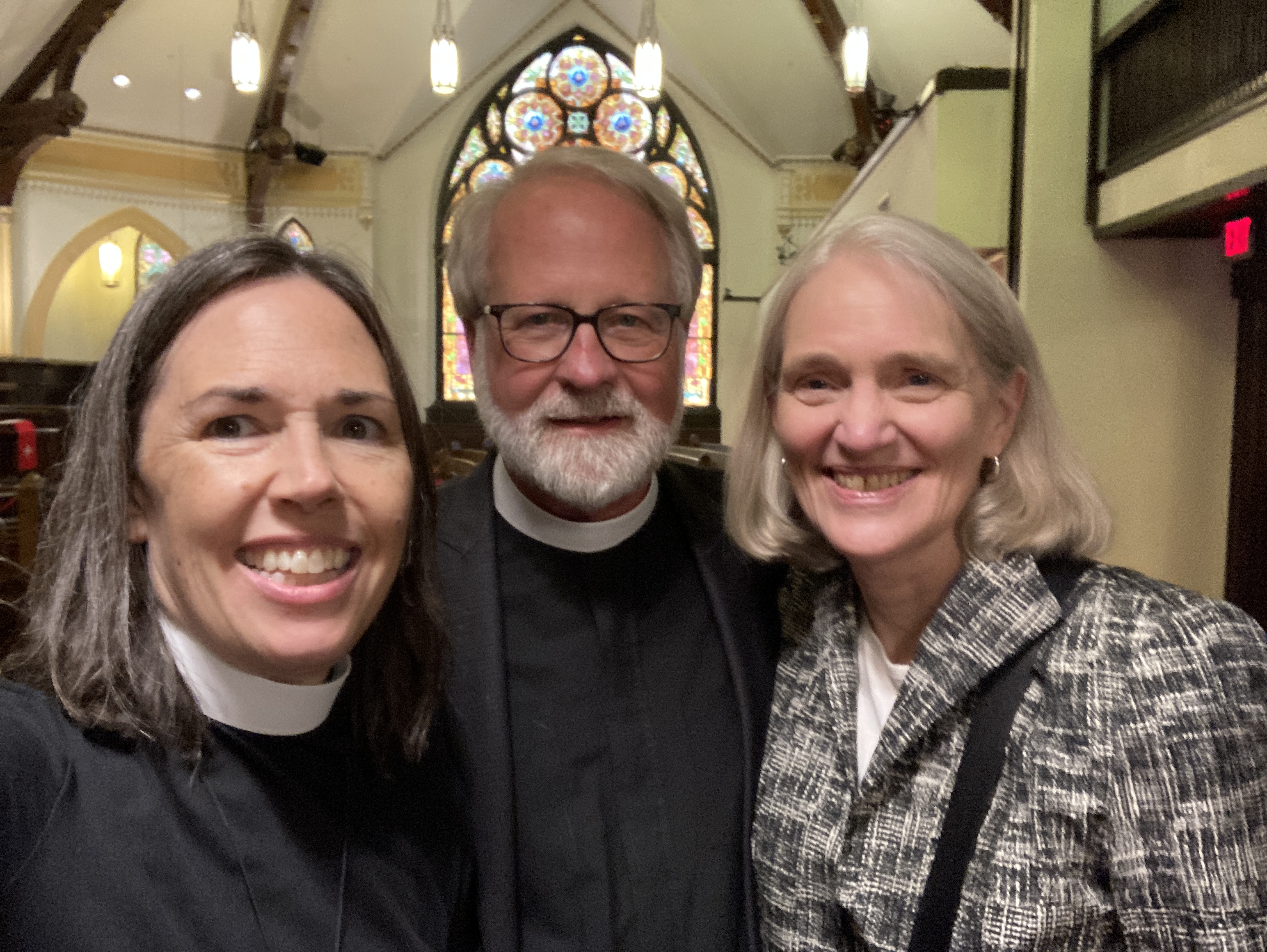
New Hope was started in the 1980s with help from Pr Fred from Our Savior Lutheran in Twin Falls

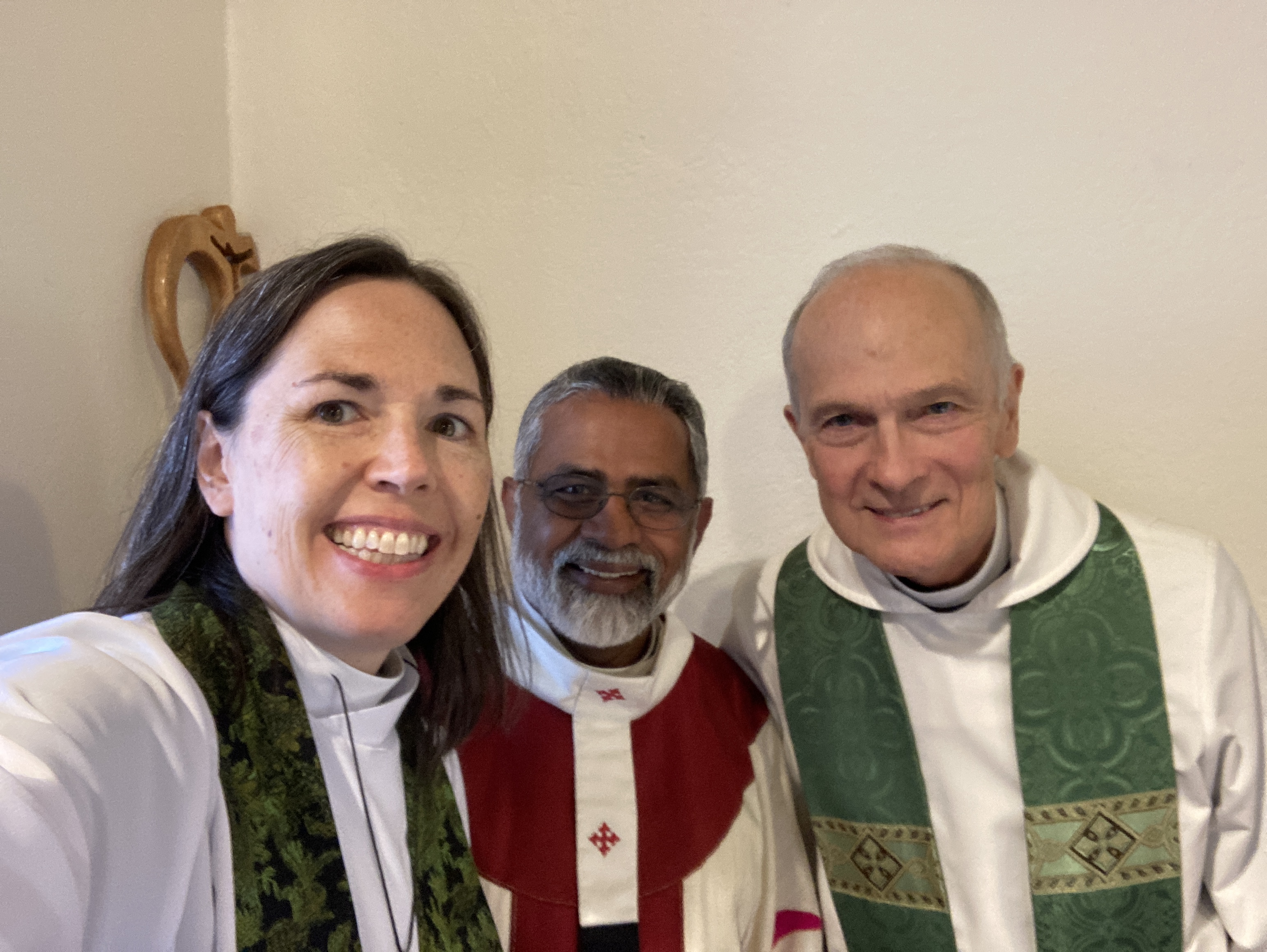
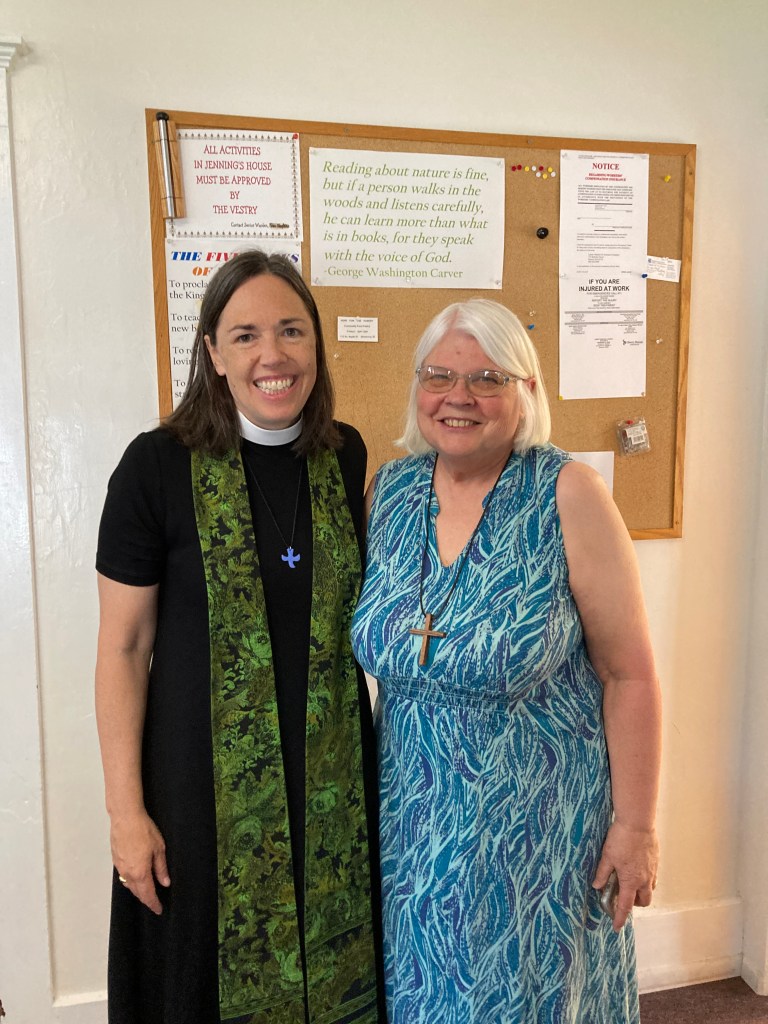
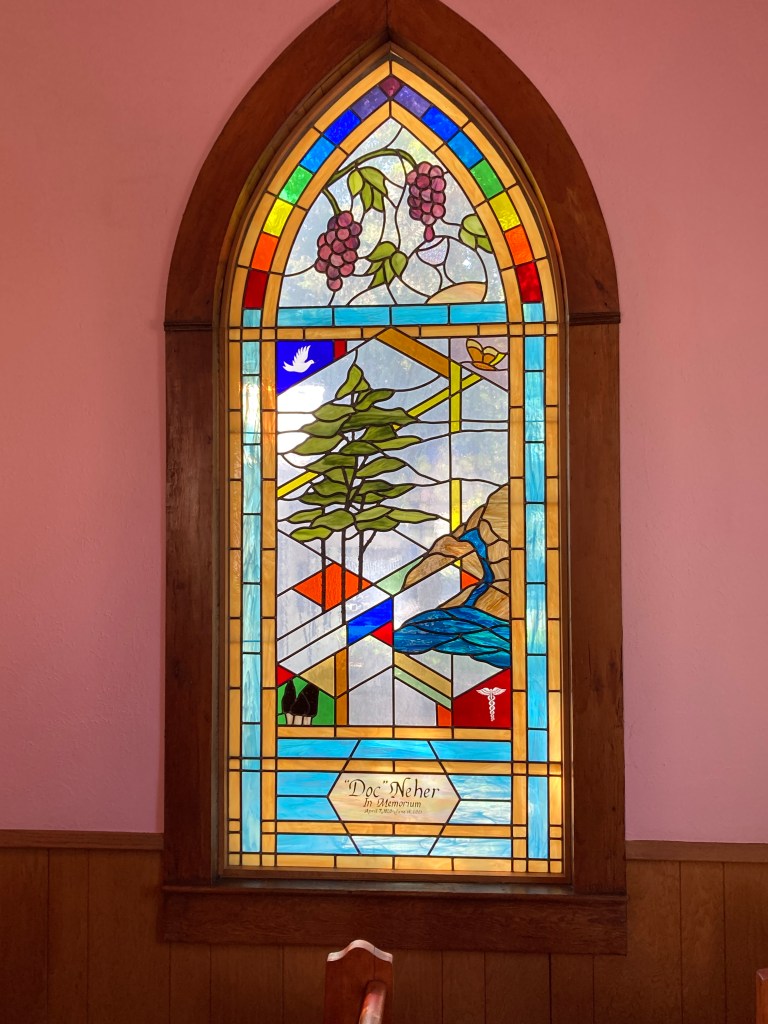
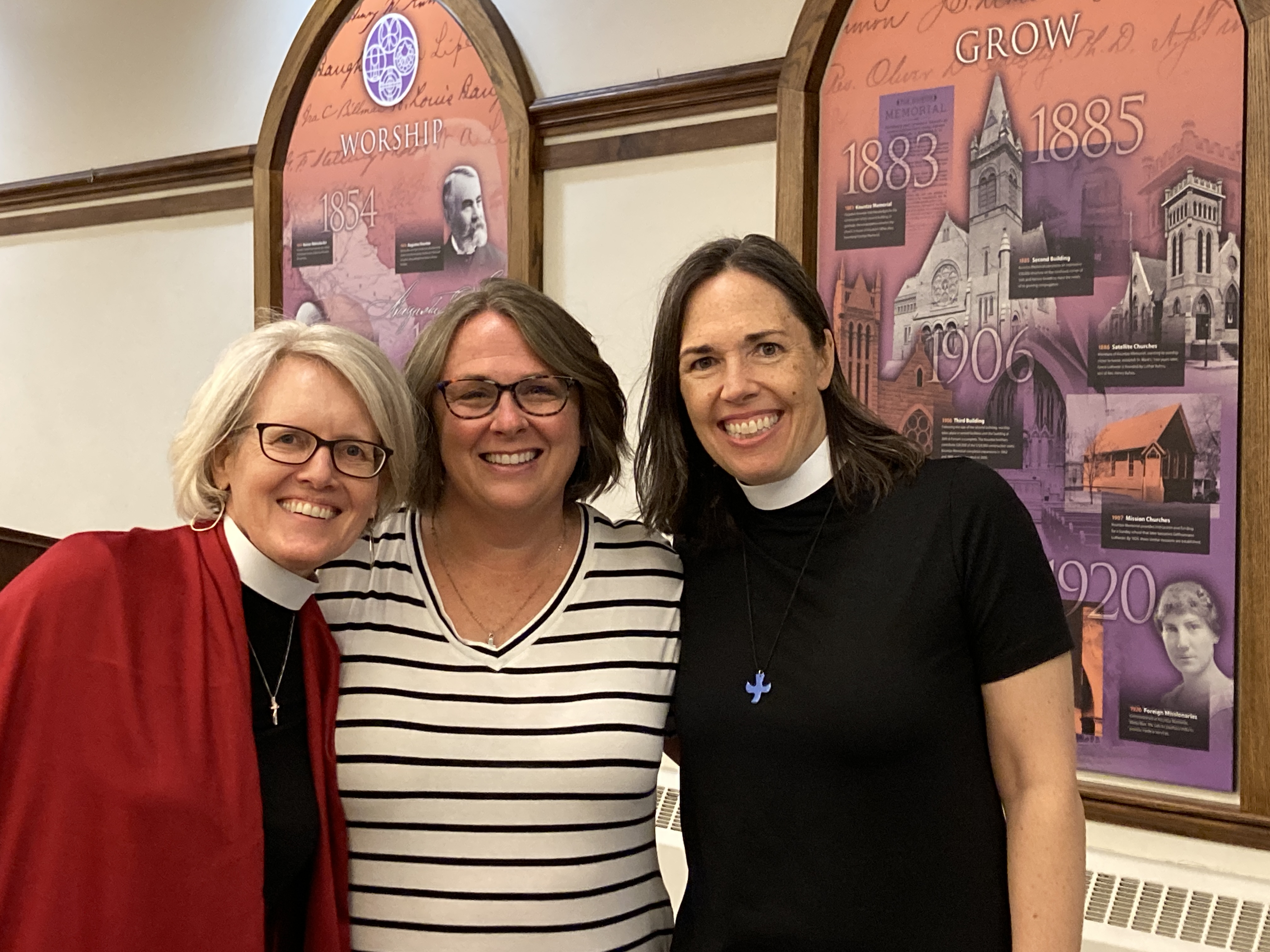
Me with Synod Authorized Minister Diane Davis. Newest stained glass window in sanctuary.

Posted in Sermons | Tagged , , , , | Leave a comment

Luther and Ministry in Daily Life

I received good feedback on this column, so I thought I’d share it here on the blog as well.

Originally published in the June 4, 2024 Northwest Intermountain Synod e-newsletter

As graduation season winds down, we celebrate graduates from our congregations and wonder about who these people will become and how they will live out their lives. I write this in the middle of a synod candidacy committee meeting weekend, so I hope some of these graduates will one day become pastors and deacons. But I also hope there will be those who find their calling as teachers, business owners, technicians, mechanics, chefs, elected officials, judges, marketers, nurses and hundreds of other vocations. Beyond daily work, I hope they live out their faith as family members, friends, neighbors, and volunteers.   

Over the past few months, I have emphasized and shared my own excitement about getting people trained for parish ministry through Montana’s Lay Ministry Associate program. While my enthusiasm remains, I do not want something else to get lost. Why do we gather for worship, for Bible Study, for prayer? Why do we care about what is read and preached in our assemblies? We worship so we can collectively communicate with the Triune God. We also hope that we will be nourished for the time when, at the end of worship, we are sent forth into the world.

My father, who worked for the YMCA and the church his entire life but was never ordained, was passionate about ministry in daily life. He wrote a newsletter for a time called Salt and Light, taking the name from Jesus’ words in Matthew 5:13-16. In that newsletter, dad lifted up all the ways Lutheran lay people were living out their faith in their daily lives. The Lutheran understanding of the priesthood of all believers is one many reasons my dad became a Lutheran as an adult. 

Martin Luther’s passion to make Scripture, the sacraments, and faith accessible to lay people is woven throughout his writing, preaching, and teaching. One of the most powerful examples of his commitment to equipping lay people was his translating the New Testament into the German language, the language of the people. 

Another important work to consider is Luther’s An Appeal to the Ruling Class of German Nationality as to the Amelioration of the State of Christendom. It is, like the 95 Theses, a call to reform. In this work, “Luther calls upon the ruling class to reform the Church, since the Church will not reform itself.” In this long document, Luther sets out to attack what he calls the three walls, “which the Romanists have cleverly surrounded themselves with.” Attacking the first wall, Luther writes that in his time popes, bishops, priests, monks, and nuns are called the religious class, whereas princes, lords, artisans, and farmworkers are called the secular class. No one should be frightened by this, Luther writes. “For all Christians whatsoever really and truly belong to the religious class, and there is no difference among them except in so far as they do different work. That is St. Paul’s meaning, in I Corinthians 12 [:12f.], when he says: “We are all one body, yet each member hath his own work for serving others.” This applies to us all, because we have one baptism, one gospel, one faith, and are all equally Christian.”

He follows this up with the statement that is the origin of the phrase “priesthood of all believers”: “The fact is that our baptism consecrates us all without exception and makes us all priests. As St. Peter says, I Pet. 2[:9], ‘You are a royal priesthood and a realm of priests,’ and Revelation, ‘Thou has made us priests and kings by thy blood’ [Rev. 5:9 f.]. If we ourselves as Christians did not receive a higher consecration than that given by pope or bishop, then no one would be made priest even by consecration at the hands of pope or bishop; nor would anyone be authorized to celebrate Eucharist, or preach, or pronounce absolution.”

Luther does believe that our office or occupation gives us different work but not greater dignity as he moves into what became our tradition’s understanding of Christian vocation: “Therefore those now called “the religious,” i.e., priests, bishops, and popes, possess no further or greater dignity than other Christians, except that their duty is to expound the word of God and administer the sacraments—that being their office. In the same way, the secular authorities “hold the sword and the rod,” their function being to punish evil-doers and protect the law-abiding. A shoemaker, a smith, a farmer, each has his manual occupation and work; and yet, at the same time, all are eligible to act as priests and bishops. Every one of them in his occupation or handicraft ought to be useful to his fellows, and serve them in such a way that the various trades are all directed to the best advantage of the community, and promote the well-being of body and soul, just as all the organs of the body serve each other.”

If any of this is intriguing to you, ask your pastor or search your church library for An Appeal to the Ruling Class. Also, read on in this e-newsletter for ELCA’s Tim Brown’s column Where Your Heart Is. Find ways to celebrate how you and others in your congregation are being salt and light wherever you are.

Peace,

Bishop Manlove

Posted in Uncategorized | Tagged , , , , | Leave a comment

Retreat in Seward

I never learned the history, but Region 1 of the ELCA (AK, MT, OR, SW WA, NW WA, NWIM) has a long history of bishops and spouses retreats. We rotate around the region and this year we were hosted by Bp Shelley Wickstrom in Seward, AK, home of her internship site. Bishop Wickstrom will finish twelve years as bishop and many more years as an active pastor in our region June 30.

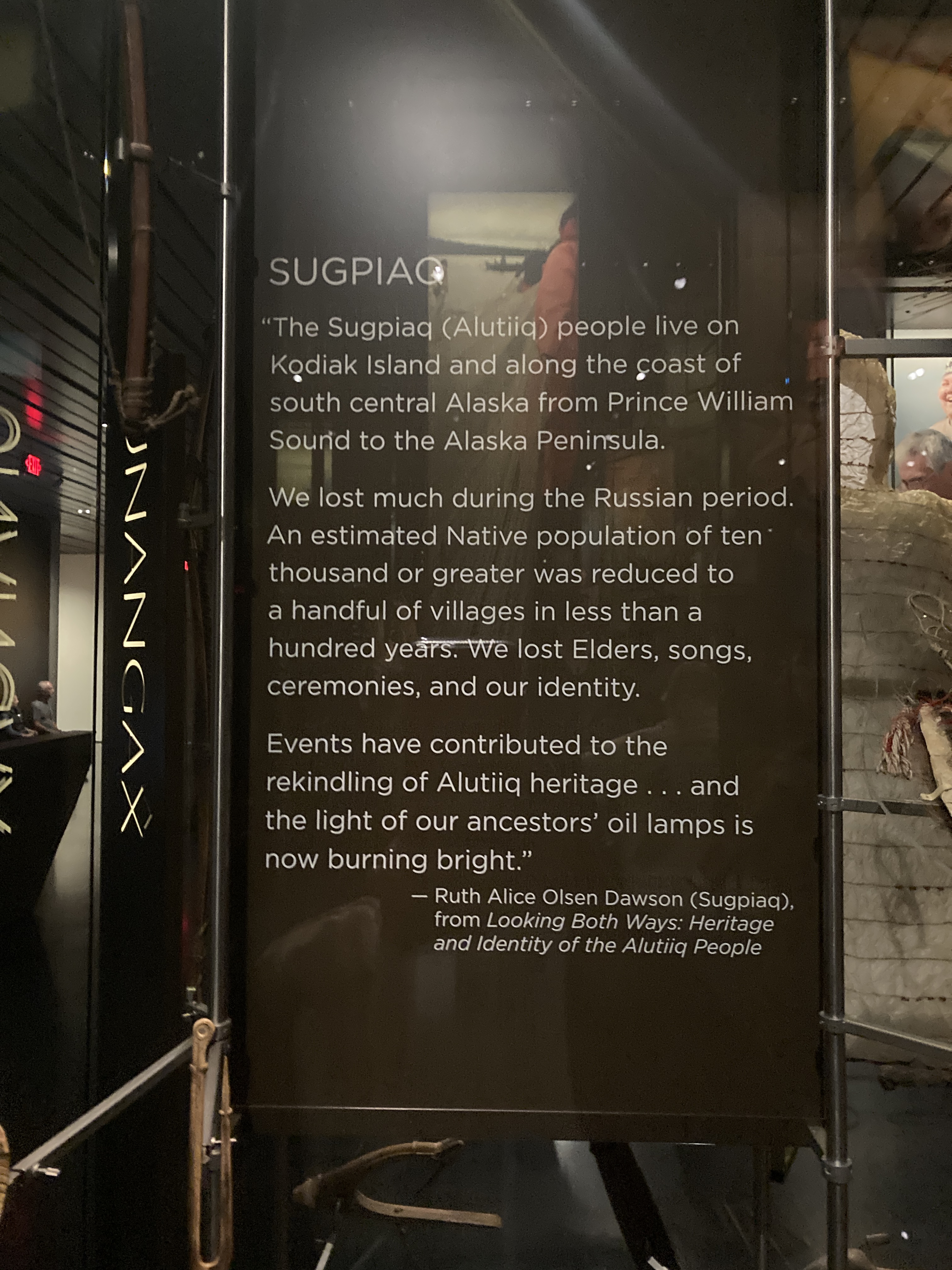
I flew into Anchorage through Seattle early last Sunday and made my way to the hotel, chosen for its proximity to the railroad station. I walked up to downtown Anchorage and found the weekend market, where I enjoyed a breakfast burrito with reindeer sausage. Then I found the Anchorage Museum with many excellent temporary exhibits, including ones about mapping Alaska, creativity fueled by climate change, and more. The heart of the museum, in my humble opinion, is the Smithsonian Arctic Studies Center: Living our Cultures, Sharing our Heritage: The First Peoples of Alaska. I went back to the motel to nap and got a message from a family/camp friend who lives in Anchorage. Judy Engh and I ended up having dinner.

Bp Laurie Jungling from Montana flew in later that night and we took the Alaska Railroad to Seward Monday. The scenery was fabulous.

We arrived in Seward long before our three colleagues showed up by car, fine since we couldn’t check into our VRBO until later. So we walked all around Seward and even visited the Alaska SeaLife Center. Then we enjoyed a very rich seafood chowder at a local restaurant.

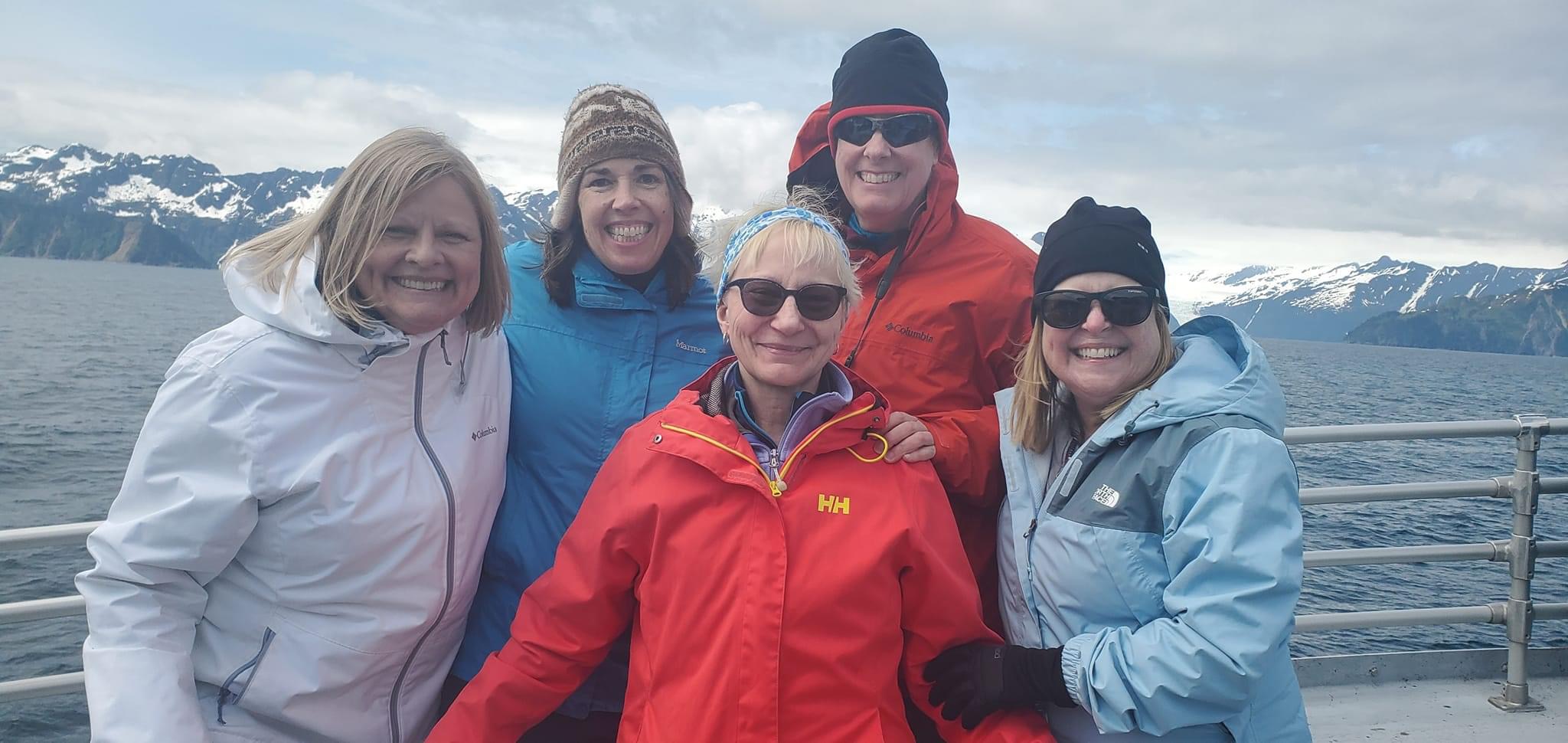
Bishop Rick Jaech from SW WA couldn’t join us for the retreat and he’s the only current bishop in our region who is married, so we were five single women; quite a contrast from the last time Wickstrom hosted a group of 11 and she was only single person. So, some things have changed. As conversations unfolded, it was fun to learn how each of us had been shaped in some way by time in the Montana Synod–growing up there, first call as pastor, middle of career calls as pastor, working at the Lutheran camps, serving as bishop. Montana was a meaningful thread.

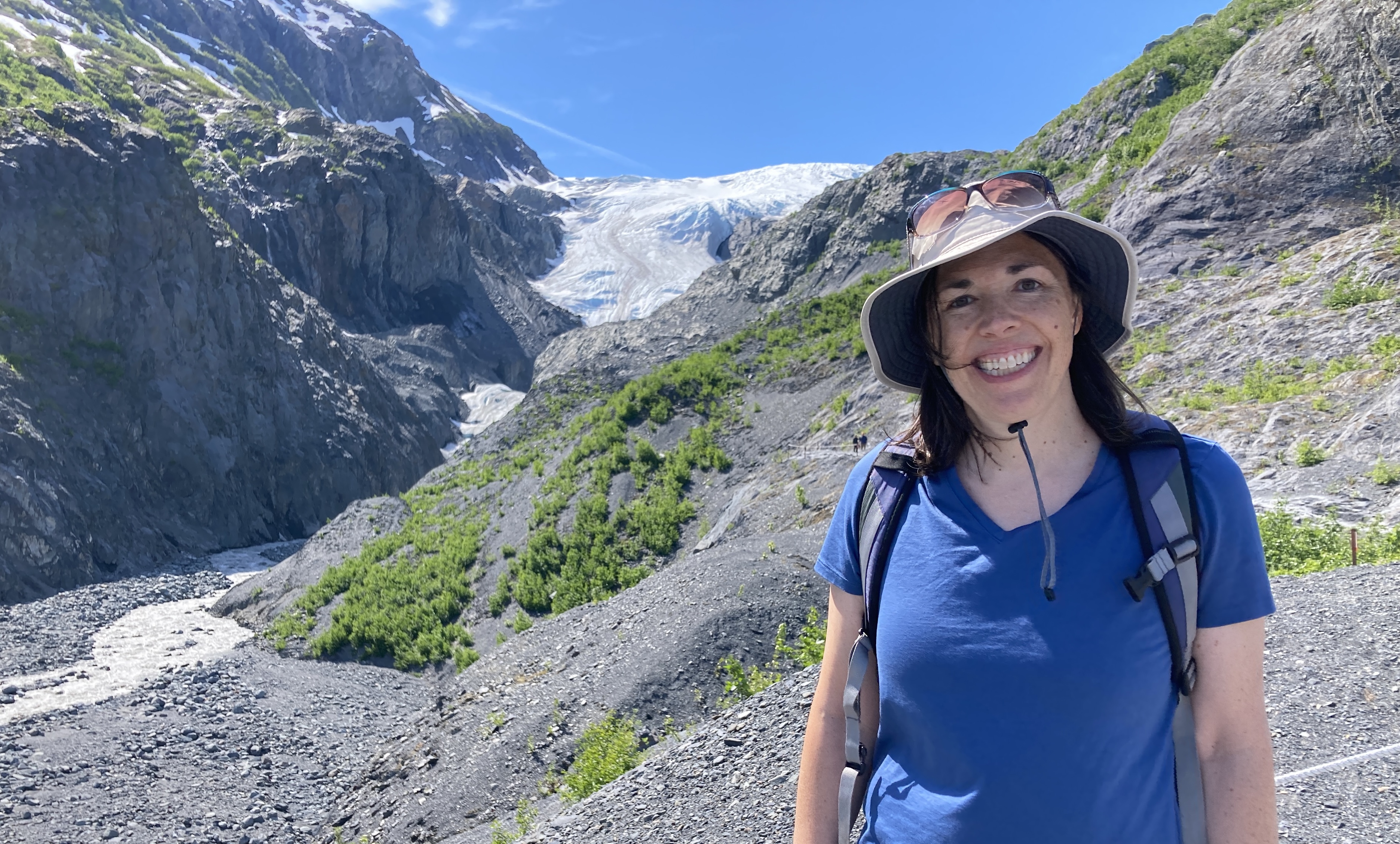
Our time together consisted of a hike to Exit Glacier, an incredible six-hour boat tour of Kenai Fjords National Park, an amazing dinner in Seward, cooking together at the house, games, laughter, long conversations, creating a book list, and finally having an actual meeting about all things Region 1 in which we zoomed in Jaech for about 90 minutes Thursday morning.

My flight was not until Friday morning so I spent Thursday night at Wickstrom’s home in Anchorage. It was such a gift to have this time and get to know her better. She is from the NWIM Synod, worked at Camp Lutherhaven, and preached at my Installation last fall–many connections even beyond those.

I accidentally left my laptop in my house in Nampa before heading out last weekend. I went to print off just one last thing and never returned the laptop to my carry-on. Maybe it was my subconscious telling me to unplug in Alaska. I had my phone and was able to handle a few things that came up. Yes, I’ll be doing catch-up this next week. I bought an extra novel at the Anchorage Airport but I never got to it because we were together and doing so much I simply had little time to read. I think I actually retreated and feel rejuvenated. What a gift!

Posted in Reflections | Tagged , , , | Leave a comment

Omaha Ordination

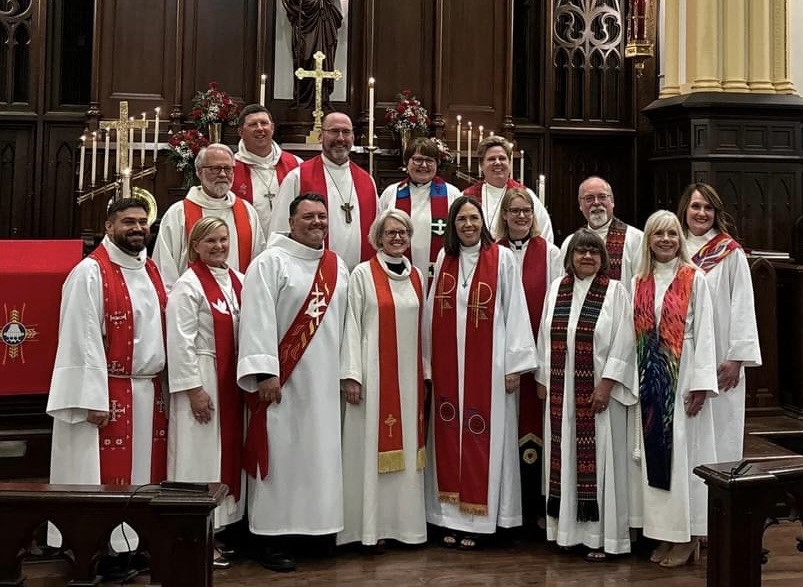
This past weekend I traveled to Omaha, NE to preside at Gretchen Olson Kopp’s ordination to ministry of word and sacrament. She has been called to St. Mark’s Lutheran in Spokane, WA.

On Gretchen’s suggestion, I worshiped at First Lutheran in Omaha.

First Lutheran, Omaha

Gretchen grew up in Western Iowa (Moville–which I’ll come back to) and served her internship at Kountze Memorial Lutheran Church in Omaha. Her husband Sacha’s work in academia has taken them around the country so there were people present also from around the country. I was happy to be back in Omaha, site for me on many days off when I served Soldier Lutheran Church in Western Iowa.

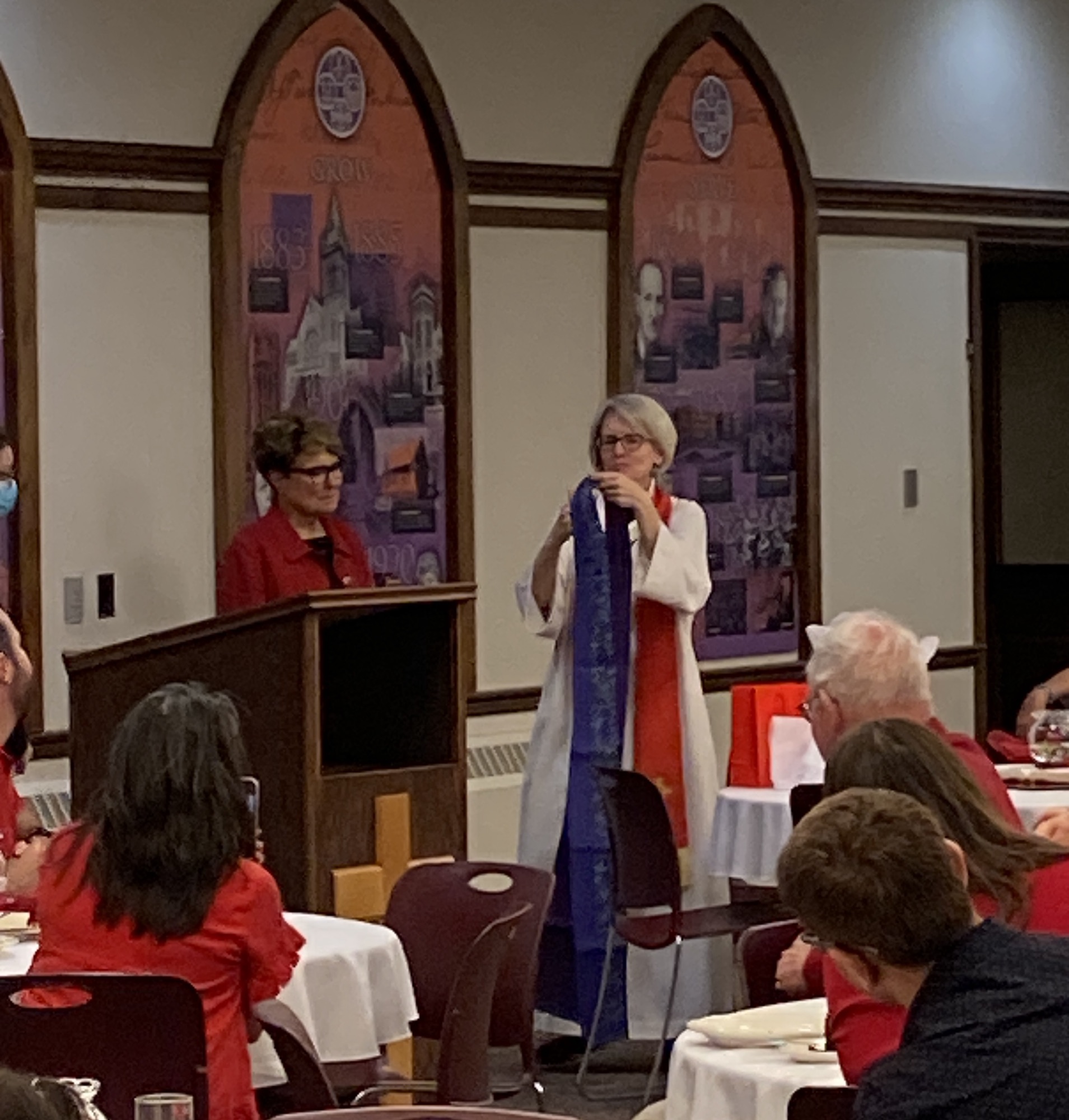
Gretchen received many stoles. This purple one was made by Threads of Grace, connected to the Episcopal Church in Nampa, Idaho! I remember when they were just getting started.

One of Gretchen’s childhood friends and neighbors is Megan Sorenson, who became a friend of mine when she was nurse for the week and I was with kids from church at Lutheran Lakeside Camp in northwest Iowa. Gretchen graduated from Wartburg Seminary and retired professor Dr. Thomas Schattauer was the guest preacher–I’m still thinking about his sermon.

Gretchen, Megan, and Meggan

I loved talking with Dr. Schattauer about worship (which he taught at Wartburg) and then I asked his wife Paula Carlson, who has had a career in Lutheran higher ed, where she grew up. When she answered Brooklyn, that led to us connecting over Camp Koinonia, the camp my dad helped found in Highland Lake, NY. Carlson celebrated her birthday at Koinonia’s dedication–cake and everything! It really is a small world. She also had great stories about Koinonia overnight trips in the Catskills and along the Delaware River, stories that would make the American Camping Association (who sets safety standards) shake their heads today.

With Thomas and Paula

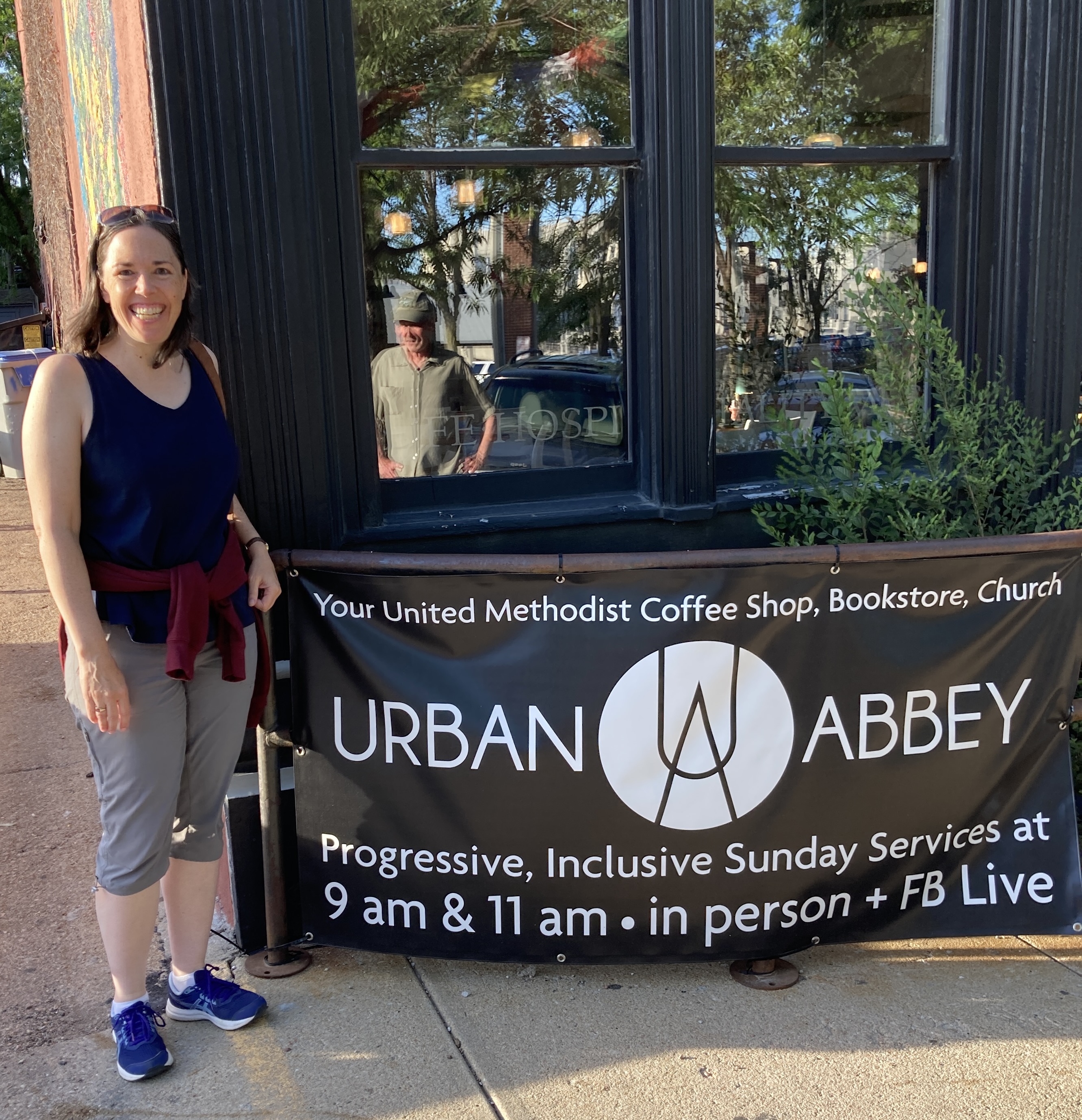
If family and friends are near where I travel for work, I try to catch up with them. I wish I could have connected with even more people on this trip, but I did get my cousin and husband from Lincoln, NE to drive over to Omaha. We went to the Old Market neighborhood. When I came to Omaha on my days off, I often visited Soul Desires Bookstore. Now it is much more than a bookstore–it’s a United Methodist worship community (and more) called Urban Abbey.

Posted in NWIM Synod | Tagged , , , | Leave a comment

Candidacy and North Idaho

Last Friday and Saturday, the synod candidacy committee met for business and interviews. This is the committee of the Northwest Intermountain Synod which walks alongside candidates for Word and Sacrament and Word and Service ministry. During this meeting we had two entrance interviews, both online, and two approval interviews, one online and one in-person. Last fall we had two endorsement interviews (the middle step of candidacy). We also hear updates from committee members who relate to candidates somewhere in the candidacy process. There is so much about this work that is an honor and privilege but being part of these four interviews was incredibly humbling. As grateful as I am for the candidates, I am equally grateful for the dedicated and compassionate committee members.

Once the candidacy meeting was scheduled, I knew to schedule other things in proximity to Spokane. Pastor Duane Fister has been serving First Lutheran in Sandpoint for a while, but we scheduled his installation for this past Sunday afternoon. Knowing I would already be up in Sandpoint, I decided to go further north Sunday morning and preach and bring greetings to Trinity Lutheran in Bonner’s Ferry. As I said in my FB post, Trinity has many wonderful ministries including a garden and childcare, both run by outside groups, deep connection to our companion synod, and just a lovely presence in the community. It was delightful during fellowship time to hear from people who have recently found the congregation. The installation at First, Sandpoint was also fun. Several pastors from the North Idaho Cluster joined us and two Episcopal colleagues and one Presbyterian, two of who did much of the supply preaching during the transition time, also attended. After the reception, a retired pastor who happened to serve on my dad’s board at camp Koinonia in Highland Lake, NY in the 1960s and who now lives at Luther Park, gave me a tour of the facility.

Trinity, Bonners Ferry
Nave of First Lutheran, Sandpoint
Pastor Fister is next to me

Posted in NWIM Synod | Tagged , , , , | Leave a comment

First Lutheran, Sandpoint Installation

June 2, 2024

Duane Fister’s Installation

Acts 12:24-13:5a

You have had quite a journey First Lutheran. First, with everyone else, you experienced a global pandemic. You said goodbye to a pastor and welcomed interims. You continue to steward your relationship with Luther Park. Outside the walls of the church building the world continues to change at an accelerated rate. And, in the middle of it all, you continued to faithfully gather around Word and Sacrament.

It is wonderful to be here today and celebrate this beginning of pastoral and mutual ministry with you all and with members of the ecumenical community and the North Idaho Cluster of the Northwest Intermountain Synod. On an installation day, our deepest hope is for a pastor to faithfully shepherd, equip disciples, preach, and preside over the sacraments. They do all this so that a community is shaped by God’s love and also sent forth to share with the world the love made known in Jesus Christ.

Pastor Fister chose this passage from Acts today, and it’s a great one for an installation. Above all, it reminds us that though today we celebrate this congregation and this pastor, the main actor is the Holy Spirit. The same is true in this passage from the Book of Acts. The Spirit is speaking clearly through and to the disciples. The voices of the Spirit and the voices of the disciples are together but not confused. 

Barnabus and Saul and John Mark are in fact driven by the Spirit. And to follow, or be driven by, the Spirit is to follow Jesus, in his way, in his ministry, and in his body. Part of mutual ministry, part of why a congregation and a pastor do ministry together, is so the collective whole can better listen to the Spirit.

A favorite theologian (Willie James Jennings) writes, “wherever women and men give themselves to the disciplines that attune the body to its hunger for the Spirit they will find themselves receptive to the voices of God, and they will hear the Spirit speaking and offering guidance.” There is no silent Holy Spirit in the Book of Acts, and I don’t think the Spirit has been or will be silent among this community of faith either. Then as now, I see a “communion-bearing, community-forming God who speaks in the midst of the multitude and makes known where we must go to follow the Spirit’s movement.”

At the heart of this passage, we hear what the community was doing when the Spirit showed up: “while they were worshiping the Lord and fasting.” The coincidence of my sermon preparation for this afternoon is that this scripture passage was set alongside a few ELCA candidacy approval essays. Friday and Saturday our synod candidacy committee met in Spokane and entranced two new candidates and approved two candidates—two people who can now receive calls to Word and Sacrament ministry. One of the approval essay questions was about the significance of the sacraments of baptism and holy communion. I have always loved the sacraments and believed that even though I did not complete understand how they work, that they are the place where God meets us and transforms us. There are many places God meets us, but in these two means of grace we can always count on Jesus Christ meeting us and giving us forgiveness and life. 

A dance a pastor and congregation have today is how much emphasis and time to put on the worship that happens for the gathered community and how much emphasis and time to place on what happens after the words, “Go in peace. Serve the Lord.” As Christians, we confess that we cannot have one without the other. Even the busy men in our scripture passage from Acts, traveling all over the ancient Mediterranean, stopped for worship and fasting. But they did not stay there indefinitely. Worship, like faith itself, is a gift from God to nourish us and free us so that we can love our neighbor across the street and across the globe. That ministry of neighbor love can make us heart broken and weary and sometimes angry, so we remember our baptisms again and feast once more on bread and wine and promises of life and mercy. 

This is the mutual ministry you have already entered into as pastor and congregation; thanks be to God. But there is even more. The Holy Spirit in her wisdom made the church large and diverse. Presiding Bishop Elizabeth Eaton reminds us that we are “church together.” In Sandpoint, Idaho you have partners from various denominations and also various nonprofit organizations. You also walk alongside the other ELCA congregations in the North Idaho Cluster and the entire Northwest Intermountain Synod. And we are accompanied by the Holy Spirit. Know that the Spirit is always with you, in the bread and wine, in our shared worship, and in your daily lives. Thanks be to God.

Posted in NWIM Synod, Sermons | Tagged , , , , | Leave a comment

Bonners Ferry, June 2

Trinity, Bonners Ferry

2 Cor. 4:5-12

These verses from 2nd Corinthians are, to my mind, among the most encouraging in all of scripture. They speak of the consistency of God’s loving care from the first day of creation to this present moment. “The God who said, ‘Let light shine out of darkness,’ is the same God who has shone in our hearts to give us the light of knowledge of the glory of God in the face of Jesus Christ.”

Imagine that the exact same power that brought light to the cosmos at the beginning of time is now offering light to illumine you, is in fact, shining through you as sunlight streams through a window. It is very hard to hold on to dark notions in the face of such a shining thought.

The subject that Paul is addressing in this letter is his own experience in the ministry. He wants to make clear to his friends in Corinth that he believes that the source of his ability to articulate the gospel is not found in himself. The credit belongs to God and to God alone. “We have this treasure, in clay jars, so that it may be made clear that this extraordinary power belongs to God and does not come from us.”  The point he makes is a universal one, isn’t it? Face it. You and I are all clay jars.

This is not bad news, it is simply the truth, and only the truth will allow us to be free and human in the way God intended. Here is the truth: from dust we came, to dust we will return, and for the time we are on this earth, what we are is somewhat analogous to clay jars. Useful to be sure, but also subject to chipping and cracking and likely to contain imperfections. Earthen vessels have little reason to boast. The most appropriate attitude for them is humble gratitude for the privilege of serving a function in the eternal scheme of things.

I am not saying that is an easy thing to accept the “clay jarness” of human existence. I am certainly not saying that you will be ushered into the easy life when and if you do. In fact, the opposite is likely to happen. The constant challenges Paul faced in his ministry, teach us not to hope for ease. “We are afflicted in every way,” he wrote, “but not crushed; perplexed, but not driven to despair, persecuted but not forsaken; struck down but not destroyed.”

What all of this says to me is that we are going to make it. There is a big difference between being beleaguered, which you will be, and being done in, which you will not be, thanks to the grace of God. According to Paul, this resilient strength is made available to us by the mysterious power unleashed on the world by Jesus’ death and resurrection. “His risen life is being made visible in our mortal flesh.”

This is the mystery at the heart of the Christian religion, and it is the heart of the matter. Our conviction is that God is at work repairing the world through these means. It is the spiritual reality on which we stake our lives.

Let me pause here to catch us up on this letter we will be hearing from for half of this summer. Paul’s relationship with the Corinthian congregation has deteriorated. In 2 Corinthians, the apostle seeks to rebuild his relationship with the Corinthians. He seeks to defend his own integrity as a trustworthy and competent servant of Christ. Paul will also refute what he perceives as the claims by other evangelists with backgrounds and gifts that are superior to his own.

Second Corinthians offers a real-life window on a strained relationship between a church leader and the people whom he loves. In this letter, we see an anxious apostle hoping to restore the relationship he had with churches he founded, even as he tries to avoid being drawn into a contest with other teachers over who has the most impressive skills and credentials. To do this, he discloses much about his own devotion to the Corinthians, his hardships in ministry, and the reconciliation God has accomplished for them all in Jesus.

In our passage today, Paul marvels that his own frail human body and afflicted life are the means by which God shares the news of God’s glorious self-revelation in Jesus Christ.

More than in any other correspondence we have from Paul, in 2 Corinthians we receive details of Paul’s persecutions and troubles. Here Paul speaks eloquently of the trouble he experiences. He concludes that these troubles are a participation in the death of Jesus, “so that the life of Jesus may also be made visible in our bodies” (2 Corinthians 4:10). 

Paul is drawing a contrast between the glory of God present in Jesus Christ and the medium through which God has chosen to spread that experience of glory. Christ is the human face of God, glorious and yet accessible to our unveiled faces. Ironically, God is making this news known through a life like Paul’s. 

In 1 Corinthians, Paul wrote that “God chose what is foolish in the world to shame the wise; God chose what is weak in the world to shame the strong; God chose what is low and despised in the world, things that are not, to reduce to nothing things that are” (1 Corinthians 1:27-28). The point here is similar. In a cultural context where strength, beauty, prosperity, and wisdom were thought to be evidence of God’s presence and blessing, Paul proclaims that God is working in precisely the opposite way. This theme of God’s power made perfect in weakness runs throughout 2 Corinthians as Paul tries to defend his ministry against that of the apparently more vibrant super-apostles. 

I love 2 Corinthians because I love this theme. It reminds me of Dan Erlander’s words in his book Baptized We Live.  He says that when we are united to Christ through baptism, we are united to both Jesus’ No and Jesus’ Yes. Erlander writes, “Jesus said no to the way of glory-the way of establishing the kingdom of God by any other way than dying on a cross. He rejected using personal charisma, the sword, miracles, rewards, reason—all normal ways of promoting even a righteous cause…. Jesus said Yes to the way of the cross—the way of submission to the will of the Father, absolute trust in the Father, dedication to human liberation, solidarity with human pain, and freedom to be human, weak, and vulnerable.”

Christianity is a big tent. It is a big tent even in North Idaho. There is plenty of religion, some of which calls itself Christianity, which says that religion proves itself by miracles, answered prayer, worldly blessings, fulfilled prophecy. There is plenty of religion which fulfills our human need to have higher status than others, to be better than others, to have ‘outsiders’ or ‘unbelievers’ to despise. There is also plenty of religion which teaches “going to heaven when I die” as the main reason to believe in God. Finally, circling back to Paul, there is plenty of religion which avoids teaching that the crucifixion is both the sacrificial act of Christ and the example of the way of life we are to follow.

The discipleship that I have been describing with Erlander and Paul’s help, may very well not be the norm. Living a discipleship that says yes to trusting God, yes to dedication to human liberation, yes to solidarity with human pain, and yes to freedom to be weak and vulnerable may get grimaces and lead to disagreements. It may even lead you, in Paul’s words, to being afflicted, perplexed, persecuted and struck down.  

Please hear that I am not condoning suffering for suffering sake. Ancient and contemporary “ministers of righteousness” and “apostles of the Messiah” have often manipulated the starkness of this language to get others to submit to their own agendas (see 2 Corinthians 10-13). Dying and living in Jesus is not about submitting to a human will, whether it be that of one’s own or another’s ego. And it is not about conforming to an ideal of suffering at the expense of one’s own or anyone else’s humanity.

A favorite scholar (Lois Malcom) writes, “As all that distorts and spoils our created goodness dies in Jesus, Jesus’ life is manifest as the flourishing of new creation in our lives. But that flourishing and renewal also involves sharing in the sufferings of Jesus — continually being put to death by all that goes against what this crucified Messiah embodied. In fact, it is precisely as [you] share in Jesus’ life and sufferings that the light of God’s glory shines — amid [your] fragile human existence — in the “face” of this crucified Messiah. This is how death in [you] becomes life-giving for others.”

Posted in NWIM Synod, Sermons | Tagged , , , , | Leave a comment

Ellensburg, Toppenish, Tri-Cities

Just less than a week ago I was getting ready to drive from Nampa to Ellensburg for our third of three Regional Gatherings. It was a long drive as I had not slept well the night before, but I took breaks and I had a great book to listen to (see end of blog post). As with Advent, Spokane Valley and Our Savior, Twin Falls, First Lutheran in Ellensburg was full of people who did an amazing job hosting us. Our volunteer registrar Diana was super organized. I arrived at the church early and got a nice tour from Pastor Dennis Hickman, who has served there for twenty years. Our speaker Grace Pomroy was again an engaging and wise presenter. We had ministry partners from Lutheran Community Services NW, Faith Action Network, Lutherhaven, and Holden Village. Most of all I am grateful for everyone who showed up ready to learn, sing, pray, and build relationships. It was so good to be together. Our sending service this time included a blessing for those in our synod (along with gifts they will take) who will be traveling to our companion synod, the Ulanga Kilombero Diocese of Tanzania, this summer.

First Lutheran in Ellensburg

Growing up in Custer, SD, all I knew about Ellensburg as a kid was that it was where the Borruds went when they were not running Lee Valley Ranch, their private camp near Custer. Dick helped start my home congregation, Custer Lutheran Fellowship, and was the campus pastor at South Dakota State University. He was later the campus pastor at Central Washington in Ellensburg. We knew him not just because of Custer but because he and my dad were both significant to the Lutheran camping movement. So, I was grateful the Borruds were in town and I was able to spend some time with them.

Sunday morning I headed south to Faith Lutheran in Toppenish, a congregation that began in the 1930s as a mission to the Yakima. They have shared a pastor, Tim Carnahan, with Our Savior in Sunnyside recently. They have also recently discerned that it is time for holy closure. A buyer is in the process of purchasing the building and its stuff (pews to dishes) so May 19, Pentecost was Faith’s Leave-Taking worship service. It was wonderful to hear stories of members and former members before and after worship, bring the synod’s thanks for years of faithful ministry, and participate in a small way in the worship service. One former pastor, Jim Christiansen, came back and I was grateful to hear about his time there in the 1970s. Many members from Our Savior came for worship and it was fun to meet them.

Passing of the Peace – one last time in this space
Current Members plus Pastors Tim and Jim and me

I drove that afternoon to the Tri-Cities, where I lodged with the Cryers, who I traveled to Tanzania with last fall. I attended an evening Youth Gathering fundraiser at Lord of Life Lutheran Church–best chocolate brownie I have had in a long time.

The next day I had breakfast with a candidate for ministry from the Tri-Cities and brunch with another ministry candidate from nearby. The morning of conversations ended with a sunny walk along the Columbia River.

The drive home was much easier because it was shorter and I had a few meetings and phone conversations. It was also gorgeous! Eastern Oregon is only green for a few months, but it was green and sunny on Monday afternoon. The stretch from La Grande to Baker City was especially breath-taking.

Playlist:

This Tender Land by William Kent Krueger (I’m about 1/3 through it)

A Braver Way podcast: How do you handle being triggered?

Pivot Podcast: Displacement of Enchantment–Dwight Zscheile interviews Andy Root

Posted in NWIM Synod | Tagged , , , , | Leave a comment

Boise Music Week Sermon

Boise Music Week Community Worship Service – May 5, 2023

First Presbyterian Church

Psalm 46

1 God is our refuge and strength,
   a very present help in trouble.
2 Therefore we will not fear, though the earth should change,
   though the mountains shake in the heart of the sea;
3 though its waters roar and foam,
   though the mountains tremble with its tumult.

4 There is a river whose streams make glad the city of God,
   the holy habitation of the Most High.
5 God is in the midst of the city; it shall not be moved;
   God will help it when the morning dawns.
6 The nations are in an uproar, the kingdoms totter;
   he utters his voice, the earth melts.
7 The Lord of hosts is with us;
   the God of Jacob is our refuge.

8 Come, behold the works of the Lord;
   see what desolations he has brought on the earth.
9 He makes wars cease to the end of the earth;
   he breaks the bow, and shatters the spear;
   he burns the shields with fire.
10 ‘Be still, and know that I am God!
   I am exalted among the nations,
   I am exalted in the earth.’
11 The Lord of hosts is with us;
   the God of Jacob is our refuge.
          

I attended college in Moorhead, Minnesota, at the one ELCA Lutheran Concordia. My junior year, the Red River flooded. It was an awful natural disaster—resulting from over 100 inches of snow, a late and sudden melt, rainstorms, and a slow shallow river that flows north, which meant it was blocked by ice further north. My classmates and I watched the flood to our south in the towns of Wahpeton and Breckenridge. It came to Fargo-Moorhead. Then it forged north to Grand Forks-East Grand Forks. The Red River Valley is incredibly rich farmland because of the remnants of being a lake formed by glaciers, but when the levy in Fargo-Moorhead broke, it wasn’t beautiful soil we thought of, it was devastation. 

My classmates and students at neighboring Moorhead State Univ. and North Dakota State Univ. were mobilized to sandbag, evacuate livestock from farms, make sandwiches for volunteers, and any other number of tasks. But, at this is why this story makes it into a sermon during Boise Music Week, there was another event that spring. That was the spring that the four Concordia Choirs and Orchestra were preparing Mozart’s Requiem for performances in Moorhead and Carnegie Hall.

The waters never ended up reaching our college campus, but it was still an emotionally and spiritually heavy spring full of predicaments and sorrow. Was I supposed to keep volunteering, or should I study for finals? Was it okay to sleep in my bed while people were becoming homeless? And how, in the midst of this tragedy, could any of us justify going to multiple music rehearsals? Add to this that over spring break I had been given a new diagnosis—Epilepsy. It was a lot.

One spring day, music director Renee Clausen addressed all of us at the end of a rehearsal. He said people would need our concert, even if it sometimes felt frivolous to us. This powerful piece of music we were preparing would be balm for the larger Red River Valley community. I never talked to a member of one of our Moorhead audiences, but I know one thing for sure. I made it through that spring in large part because of the Requiem rehearsals. I don’t know that I could have explained it this in the spring of 1997, but it’s clear looking back that the rehearsals became my time of prayer—for the community, for people I would never meet whose lives had been altered forever, and for myself.

Martin Luther supposedly said that when you sing, you pray twice. It’s hard to confirm if Luther actually said this, but I know it to be true and I assume that because you are here, you have experienced this too. When you sing, you pray twice. I think Luther knew it to be true when he turned Psalm 46 into my tradition’s anthem A Mighty Fortress. It is a good thing to read this beautiful psalm. It is gift to read aloud a song writer’s adaptation for their own time. 

Rolf Vegdahl, a musician in Chelan, Washington, adapted Psalm 46; his words are less triumphant than Luther’s. Hear part of Vegdahl’s adaptation:

Though the earth shall change,
though the mountains tremble,
though the waters roar,
we will not fear.

You are our refuge and our strength.

In times of trouble,

you are here.

God is our refuge and our strength,

a very present help in trouble.

Therefore, we will not fear,

though the earth be moved,

though the mountains shall fall into the sea.

Though its waters rage and foam 

and mountains tremble at its tumult,

the Lord of hosts is with us.

The God of Jacob is our stronghold.

This setting was sung as a duet at my installation across town last fall. I still go back and listen to the recording and draw strength from the words and music. Vegdah’s tune is more melodic and lilting than Luther’s German hymn. (Go to 25:12 in this YouTube video)

What we all needed that spring when the Red River was reaching beyond its banks to become ancient Lake Agassiz, what I assume the psalmist and their friends needed, what I think you and I need today, is the reminder that God is still here. God is still here mending, redeeming, healing, and making things new. 

You who are gathered here know, as the psalmist did, that all things change. Worse, all things are inherently unstable, including the earth itself, its rivers, mountains and seas, as well as the nations and peoples on the earth. Only God is a stable refuge, and that becomes the psalmist’s refrain. 

The psalmist goes on to sing a hymn to this strong and stable God. Most important, God makes wars cease, which, of course, will take care of the “uproar” of the nations in v. 6. The psalm looks forward to God’s stabilized world, which will be a world of peace; all weapons will be destroyed. We then hear a word direct from God, perhaps announced by a priest. Hear the assurance that God’s strength and God’s promise is for you. The control of chaos is beyond human ability, so the counsel is simple but profound, “Be still, and know that I am God!” The song ends by returning to the theme and refrain: “The Lord of hosts is with us; the God of Jacob is our refuge.”

Like all promises, this one, could be misunderstood. You could mistakenly hear it as though Zion were invulnerable because God’s presence could be taken for granted. Eventually, the prophets of old had to denounce such thinking. We might recall especially Jeremiah, with his insistence that people could not simply chant the mantra “The temple of the Lord, the temple of the Lord, the temple of the Lord” and think nothing bad could happen to them. No aspect of biblical religion can ever be used as a good-luck charm. Jeremiah would also remind you and I that God’s presence and God’s security is found among those who repent, change their ways, and do justice (Jeremiah 7:5-7). Poetry, melodies, and sacred songs, it turns out, can help you do all those things: repent, change, and do justice.

It strikes me that the spring my classmates and I sang Mozart’s Requiem, it was the Kyrie that stood out the most and that I most vividly remember. Perhaps that’s simply because of the music Mozart composed. But I wonder if it is because after years of liturgical worship, those were the words I actually understood (Lord have mercy) and that I needed to pray to God. 

Though different than the confession and forgiveness they are surely related. I think of the kyrie as the entire congregation crying out to the creator. Lord have mercy on this flooded region. Have mercy on me for not doing enough to aid all those hurting. A friend’s mentor said, “anytime you sing a kyrie, you have participated in a confession.”

Again, it is one thing to speak the words, “Lord of have mercy. Christ have mercy. Lord have mercy.” But you who are sitting here and experiencing Boise Music Week, I trust get it when I say that to sing those words, or the Latin Kyrie in worship or while singing Mozart’s Requiemadds something.

Those of you who are musicians then have great responsibility. You can use the emotional power of music for many goals. I give thanks during a worship service like this for the liturgists and church musicians who use their skills for the following: to help the worshiper communicate with the divine, to help the worshiper give God thanks and praise, to assist the worshiper who is ready to move through grief and anguish, and even the musician who knows when to leave moments of silence between the notes for whatever the worshiper may need.

Music is a gift from God, a gift to be treasured and stewarded well. Like the book of psalms, my tradition’s ancient book of songs and prayers, music is its own language. This language can, at its best, help nurture your relationship with God, give you the deep hope we need, and finally move you to keep bringing peace to your corner of the universe. Thanks be to God.

Choirs getting into new position during a hymn
Ryan Dye, First Presbyterian Musician and organizer of the Worship Service

Posted in Sermons | Tagged , , , | Leave a comment

May 5, 2024 – Mountain Home

Grace Lutheran, Mountain Home

Welcome Father Larry Spier

John 15:9-17

Today Jesus builds on his simple metaphor: he is the vine, and we are the branches. The imperative is quite clear: love. I find that there is so much in the passage from John’s gospel that is corrective to what ails the world, balm for our wounded communities, a tonic that could clear our vision. 

A few weeks ago, I noticed that one of the youth who was part of the Treasure Valley Confirmation Co-op became an Eagle Scout. There is one line in that ceremony that always makes me tear up: “I charge you to be among those who dedicate their skills and ability to the common good.” The notion of the common good is beautiful. I starting thinking about the common good in relation to John 15. 

Jesus says, “My Father is glorified by this, that you bear much fruit and become my disciples.” In this specific case he is referencing, at least metaphorically, a specific kind of fruit—grapes. How do we know this? Because the first seven verse of the chapter are all about how Jesus is the vine, and we are the branches. The fruit we will bear if we abide in God is love, pure and simple. 

How are the vine and branches related to the common good, besides the obvious command to love? The metaphor of the vine is non-hierarchical. There is no me getting ahead. There is not even room for church hierarchy—bishops, pastors, laypeople. The vine and branches metaphor is also stark in its anonymity. What I mean is that the visual image of the branches lacks any and all distinctions in appearance, character, or gifts. The question of “how do I look out for #1?” just does not fit into the picture.

The anonymity is also a contrast to other metaphors in the New Testament itself. First Corinthians 12, with its church as the body metaphor, is irresistible in the anatomical fantasy it puts before the early church: talking feet and ears, entire bodies composed exclusively of ears or eyes or noses. The Apostle Paul points to the place that his or her individual gifts occupies in the body. Paul holds together the oneness of Christ and the diversity of gifts and members of the body. And that metaphor can be helpful and life-giving. I know. I have preached and taught this metaphor a lot. 

But that’s not our focus today, and I am ever grateful for the vine metaphor. It undercuts any celebration of individual gifts in exchange for a clear focus, a directive for absolutely everyone. There is only one measure of one’s place in the faith community—to love as Jesus has loved—and everyone, great and small, ordained and lay, young and old, male and female are equally accountable to that one standard. 

What would happen if the church were to live as the branches of Christ? Well, individual distinctiveness would give way to the common embodiment of love. The distinctiveness of the community would derive solely from our relationship to God and Jesus, not the characteristics or even gifts of its members. And the mark of the faithful community would be how it loves, not who are its members. There is only one gift, to bear fruit, and any branch can do that if it remains with Jesus. 

A follower of Jesus is someone who, in every situation, tries to respond to other people with the love of Jesus. There may be responses to the world which, in the world’s eyes, “Make sense,” or which can simply be justified by reference to, “everyone else is doing it.” But Christians are those who, through baptism, have signed on, have publicly committed themselves, to obey Jesus. And Jesus has commanded us to love. 

The practice of obedience can make us Lutherans bristle when it sounds like we are obeying so that we will be loved and forgiven.  But in fact, we are all about obedience; we obey God’s commands because God has already claimed and loved us.  

Whether our obedience to Jesus’ command will make the world a better place, or lead to deeper human understanding, or help to win friends and influence people, we don’t know. We only know, in today’s scripture as well as so many other places in the New Testament, that this is clearly what Jesus commands us to do. 


It is not always easy to know exactly what loving one another means. This is where community, those other branches, can be helpful with discernment and accountability. There are some times our love needs to be that sort of “tough love.” Yet hate, violence, revenge, and the other means through which the world gets what it wants, are not options for Jesus’ people, people who are commanded to love, to bear fruit. Whatever it looks like, love remains the imperative.  

There is a second wonderful corrective that this passage from John addresses. Sometimes, especially in the Treasure Valley, we face a binary when it comes to following Jesus. There are Christians who will ask me, “are you a believer?” For them, I think, faith is completely a matter of the heart or mind. It is about where we put our trust, or in the words of our text today, what we abide in. 

If I am feeling just a little self-righteous, I want to respond to these Christians by asking them, “are you a fruit-bearer?” What I mean is, have you put your faith into action by feeding, clothing, visiting people in prison, welcoming the foreigner? How have you been bearing fruit?

But the truth is neither of these approaches is fully faithful and today’s gospel gets right to the heart of it. We cannot bear fruit if we are not abiding with Jesus. If we only bear fruit without abiding in Jesus, we will dry up and die OR our fruit will not resemble Jesus. And, if we only abide in Jesus, without bearing fruit, we are not actually abiding. 

However, if we truly abide in Jesus, which means abiding in God’s love, we will not be able to help ourselves. Fruit will come. Acts of love will be spontaneous. The love of God will simply spring forth like a big juicy grape.

Today we celebrate an invitation to extended service to Father Larry. We celebrate a new relationship between a shepherd and a flock and the fruit bearing that will occur because of this mutual ministry. We celebrate that years ago, Lutherans and Episcopalians recognized that our branches were similar enough, and maybe our fruit could be tastier and more abundant if we recognized how intertwined we already were. And we celebrated all along that we got our nourishment from the same Lord Jesus Christ.

I trust that Grace Lutheran will find new ways to abide in Jesus’ love. You may also discover that there are rhythms or habits that have not been helping you abide together in Jesus; you can prune them. Be mindful of what helps you abide and what helps you bear fruit. Be mindful of love, not sentimentality or romance, but that sustaining abundant love that come from God. It will naturally become love of neighbor and yes, even love of self. 

We are part of a big world and it is easy to feel quite small and insignificant. But maybe especially when we feel powerless, the Holy Spirit reminds us through scripture passages like this one that all of us are already fruit bearers because we abide in the love of God through Jesus. 

Posted in NWIM Synod, Sermons | Tagged , , , , | Leave a comment