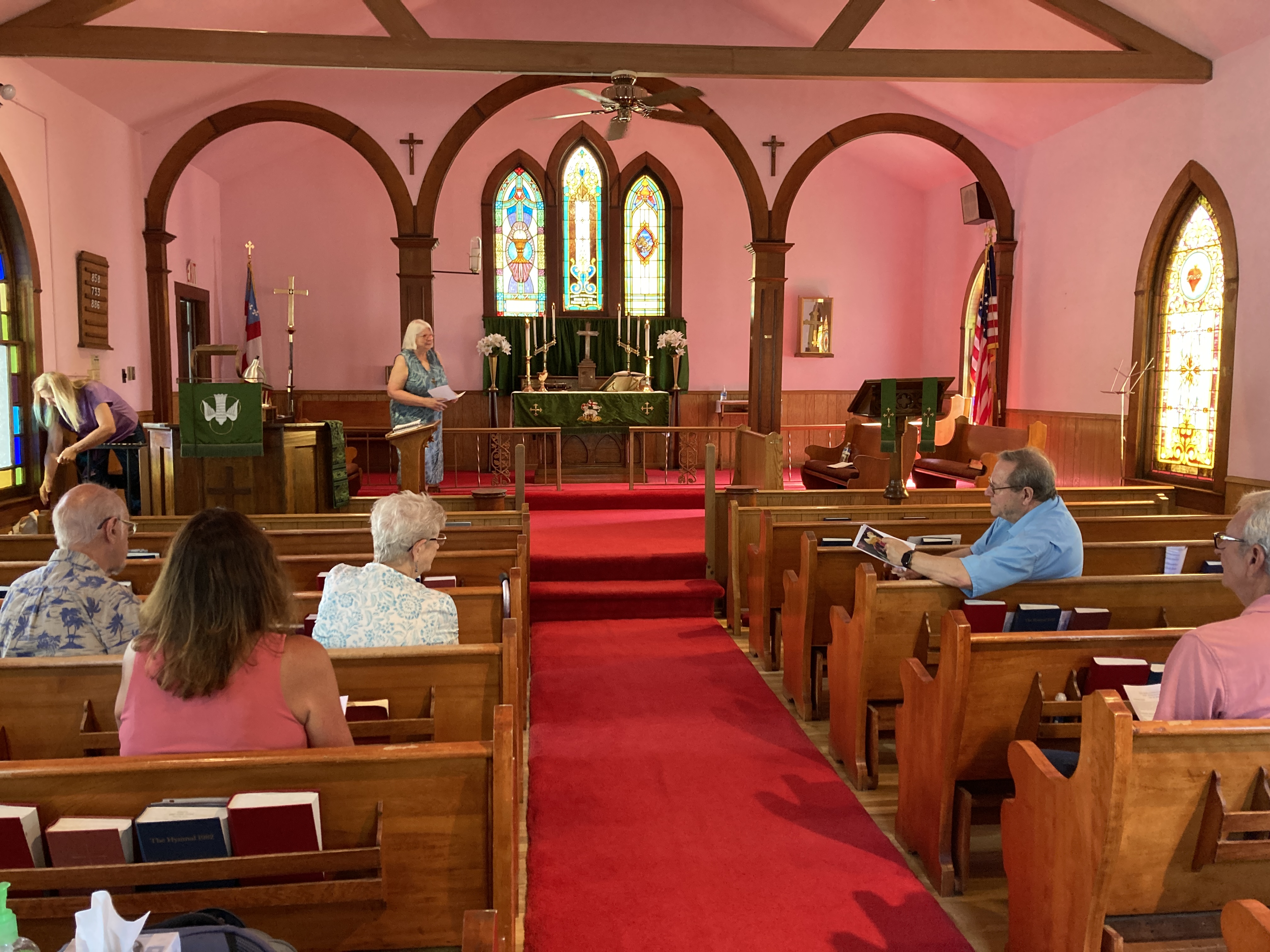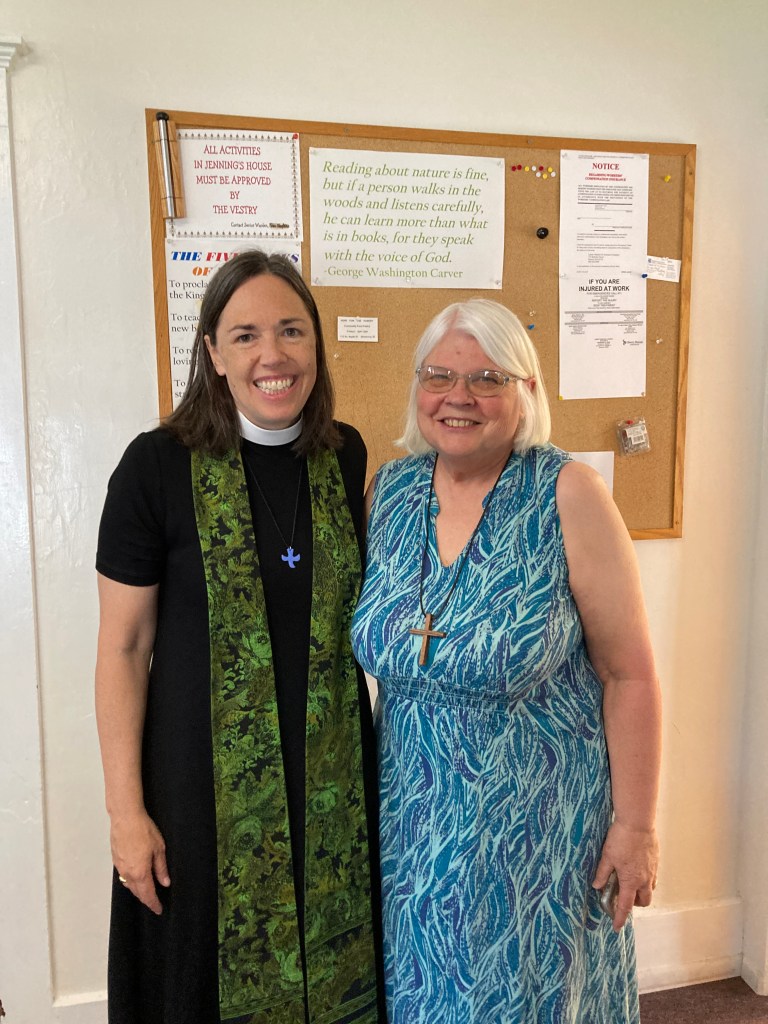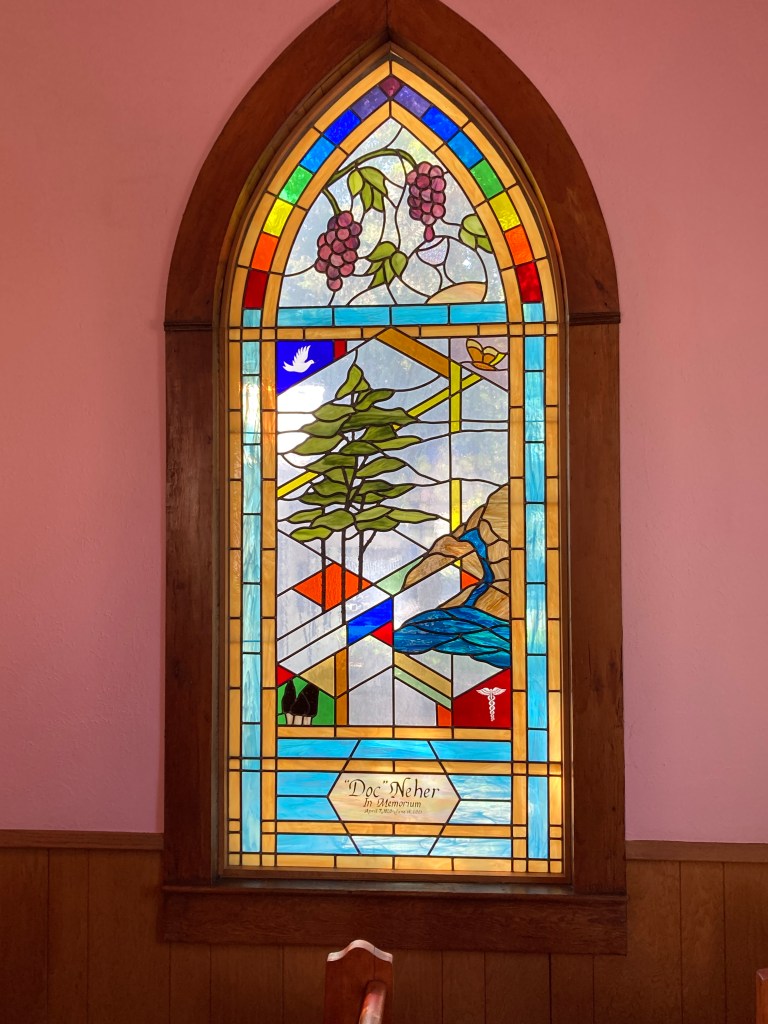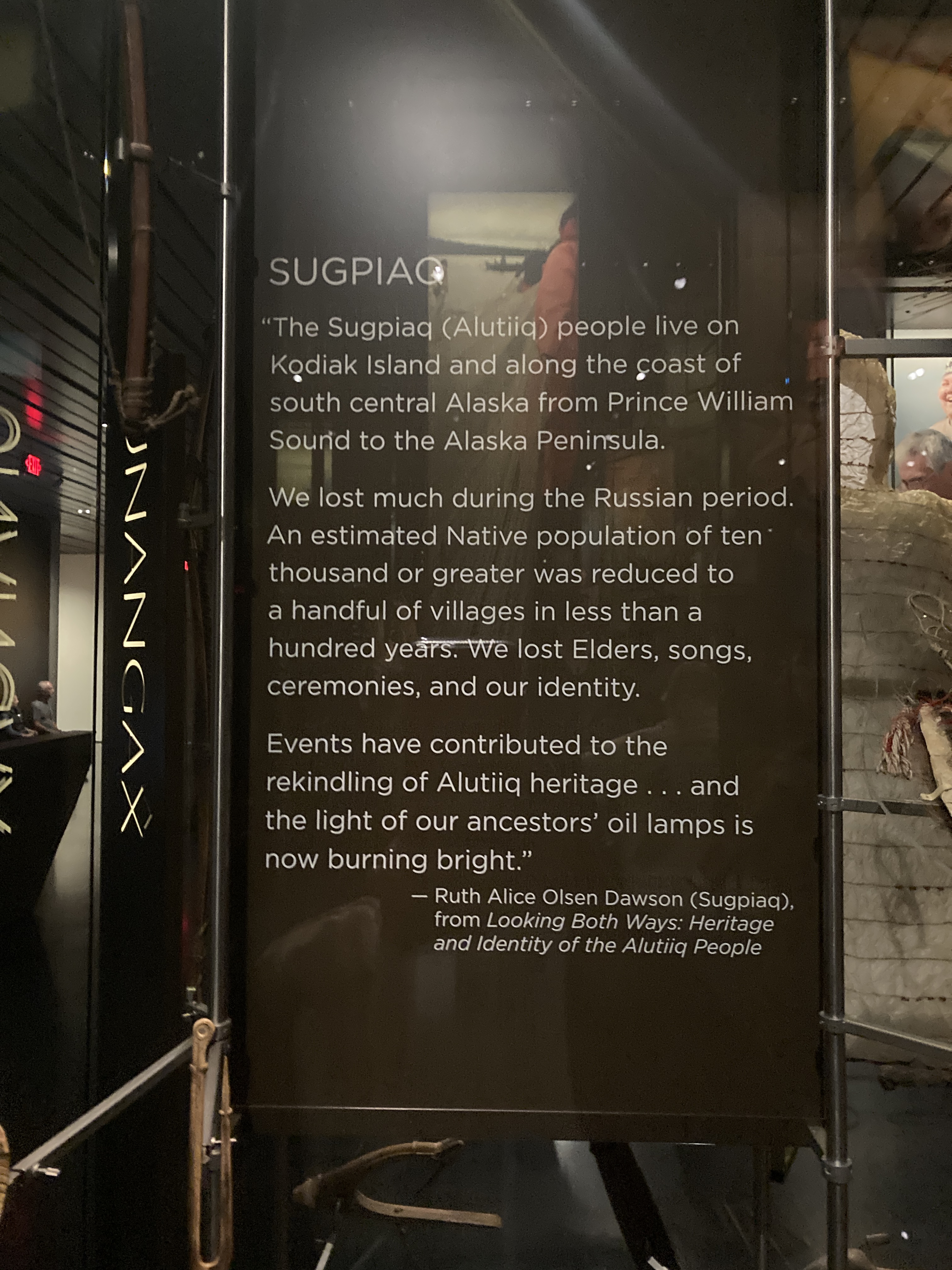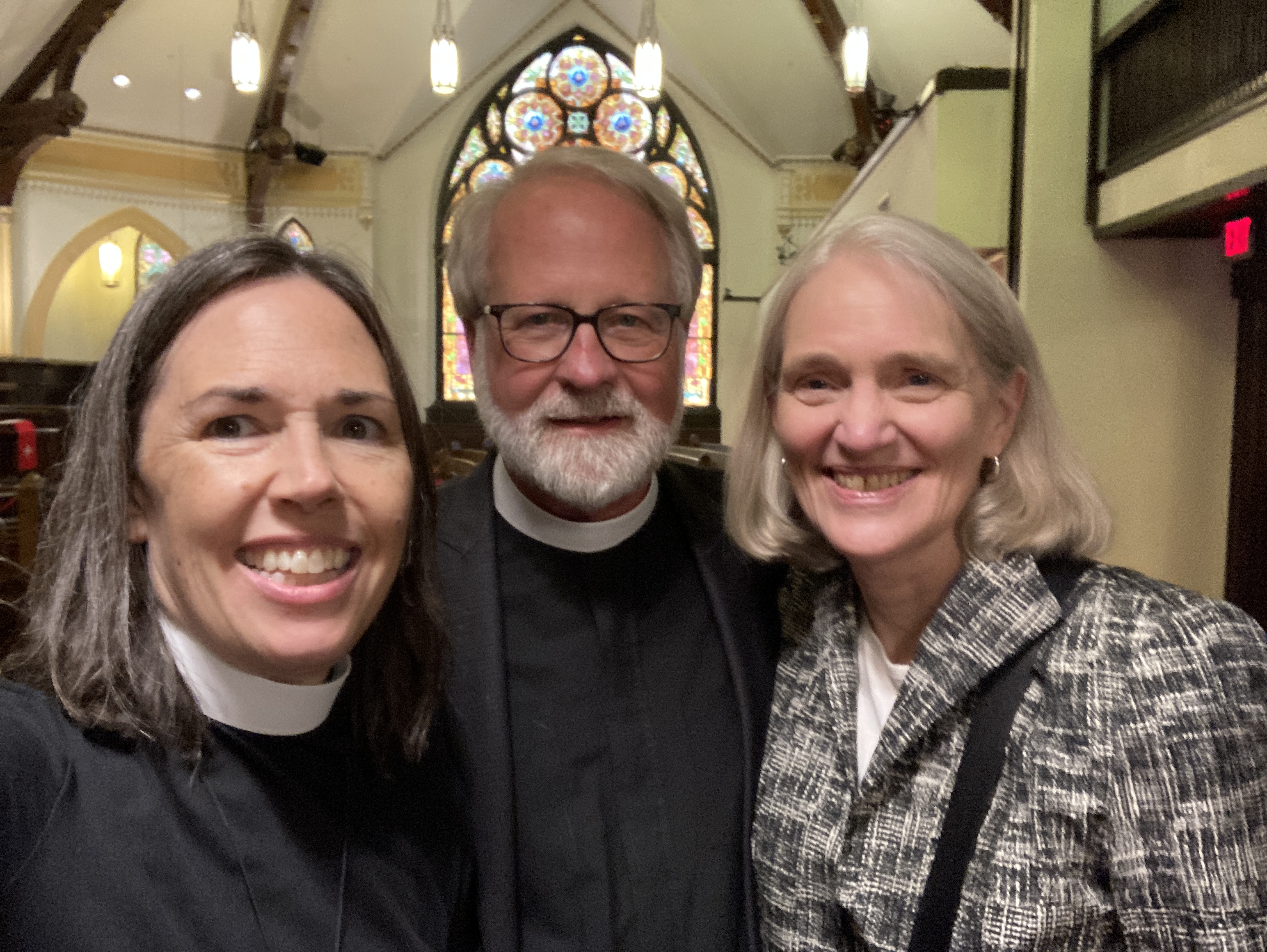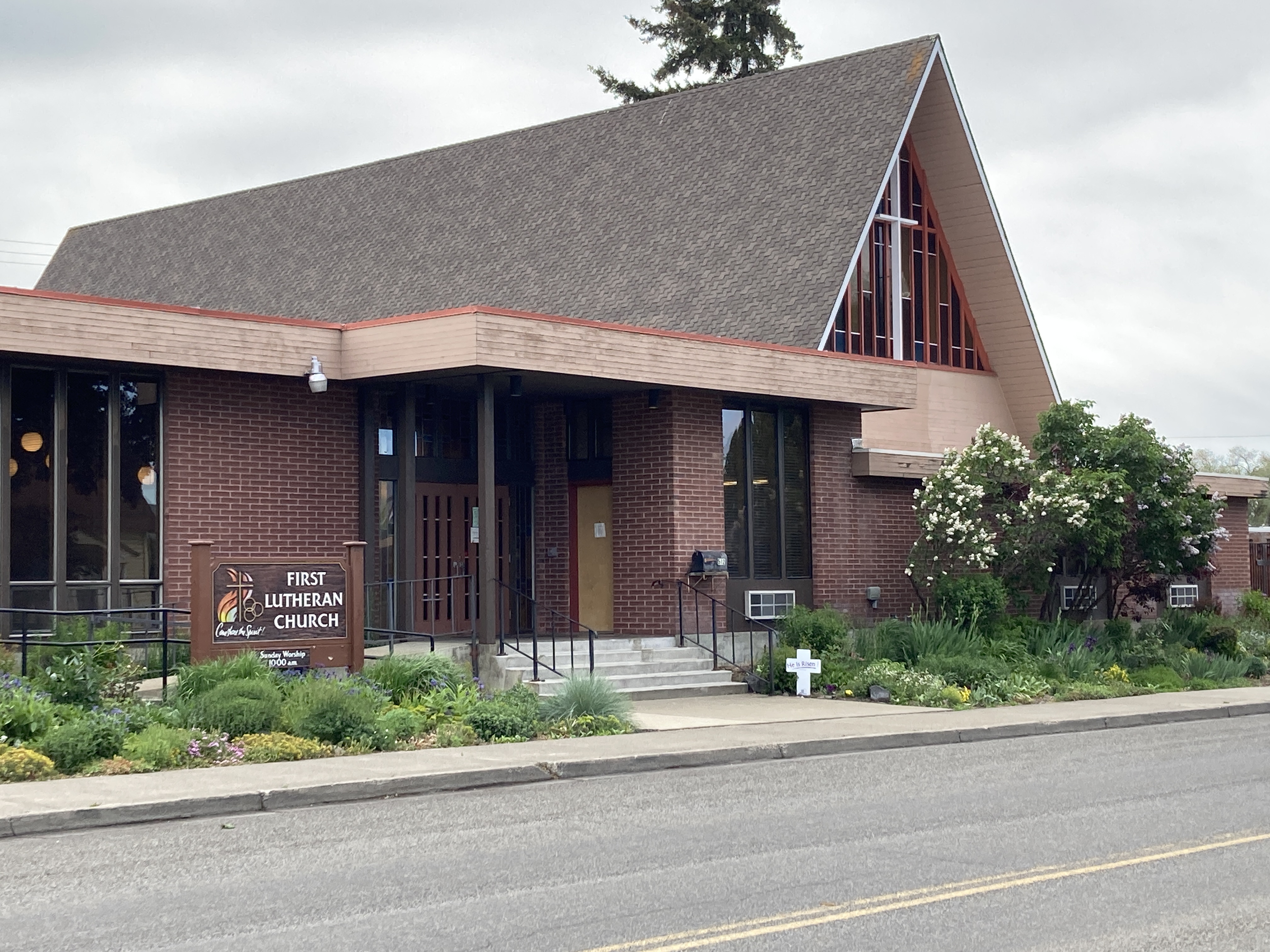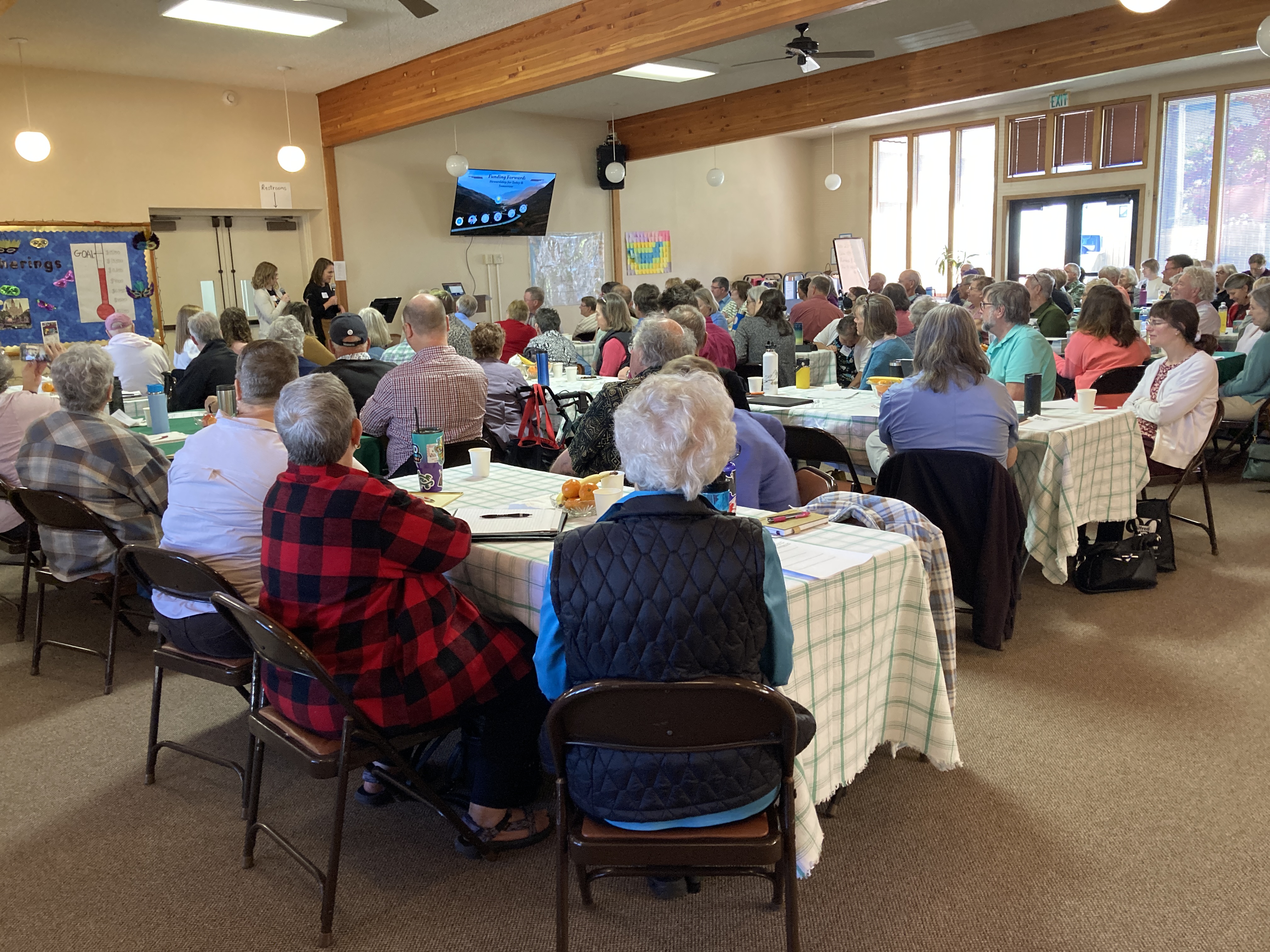
Just less than a week ago I was getting ready to drive from Nampa to Ellensburg for our third of three Regional Gatherings. It was a long drive as I had not slept well the night before, but I took breaks and I had a great book to listen to (see end of blog post). As with Advent, Spokane Valley and Our Savior, Twin Falls, First Lutheran in Ellensburg was full of people who did an amazing job hosting us. Our volunteer registrar Diana was super organized. I arrived at the church early and got a nice tour from Pastor Dennis Hickman, who has served there for twenty years. Our speaker Grace Pomroy was again an engaging and wise presenter. We had ministry partners from Lutheran Community Services NW, Faith Action Network, Lutherhaven, and Holden Village. Most of all I am grateful for everyone who showed up ready to learn, sing, pray, and build relationships. It was so good to be together. Our sending service this time included a blessing for those in our synod (along with gifts they will take) who will be traveling to our companion synod, the Ulanga Kilombero Diocese of Tanzania, this summer.
First Lutheran in Ellensburg
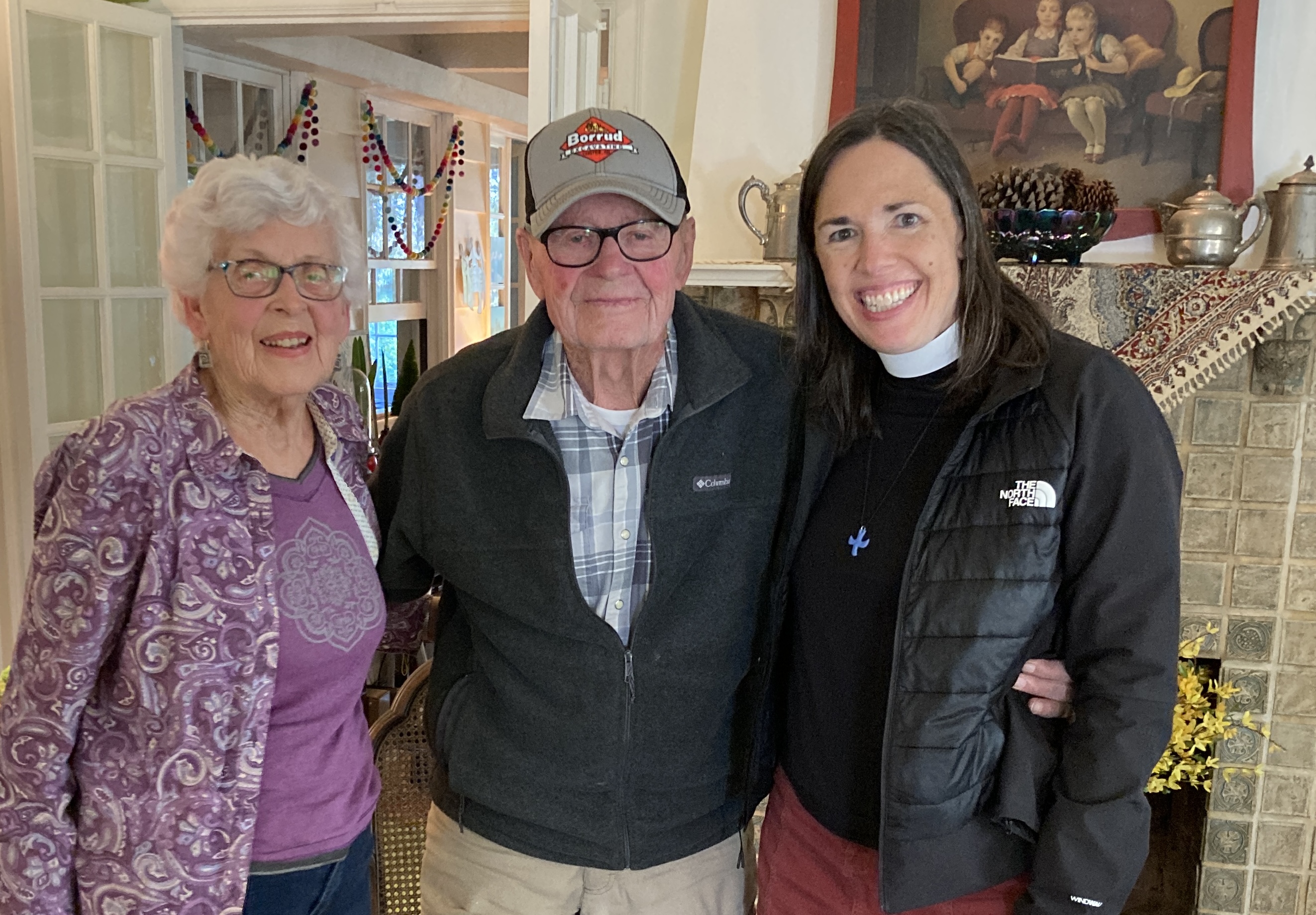
Growing up in Custer, SD, all I knew about Ellensburg as a kid was that it was where the Borruds went when they were not running Lee Valley Ranch, their private camp near Custer. Dick helped start my home congregation, Custer Lutheran Fellowship, and was the campus pastor at South Dakota State University. He was later the campus pastor at Central Washington in Ellensburg. We knew him not just because of Custer but because he and my dad were both significant to the Lutheran camping movement. So, I was grateful the Borruds were in town and I was able to spend some time with them.
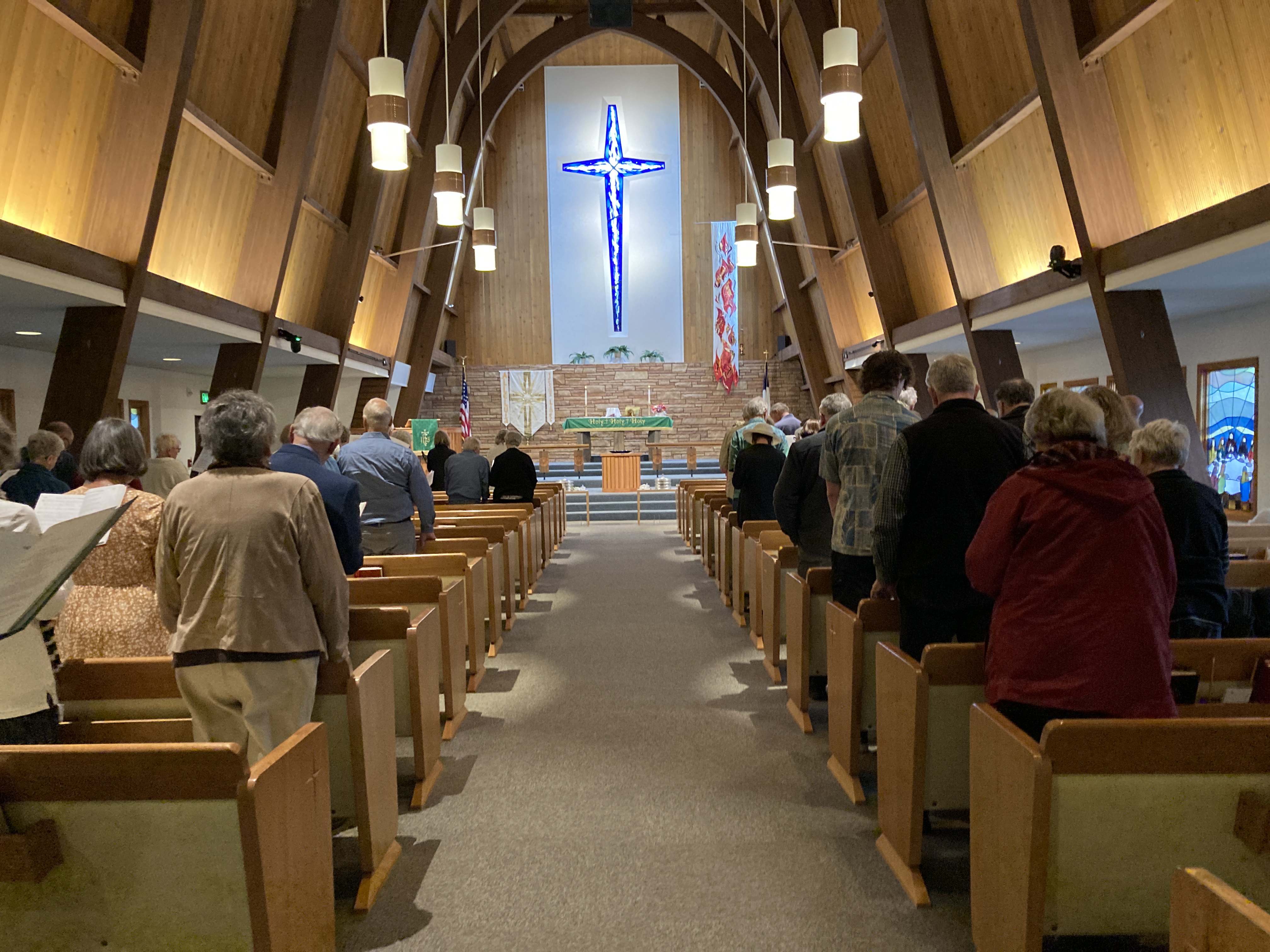
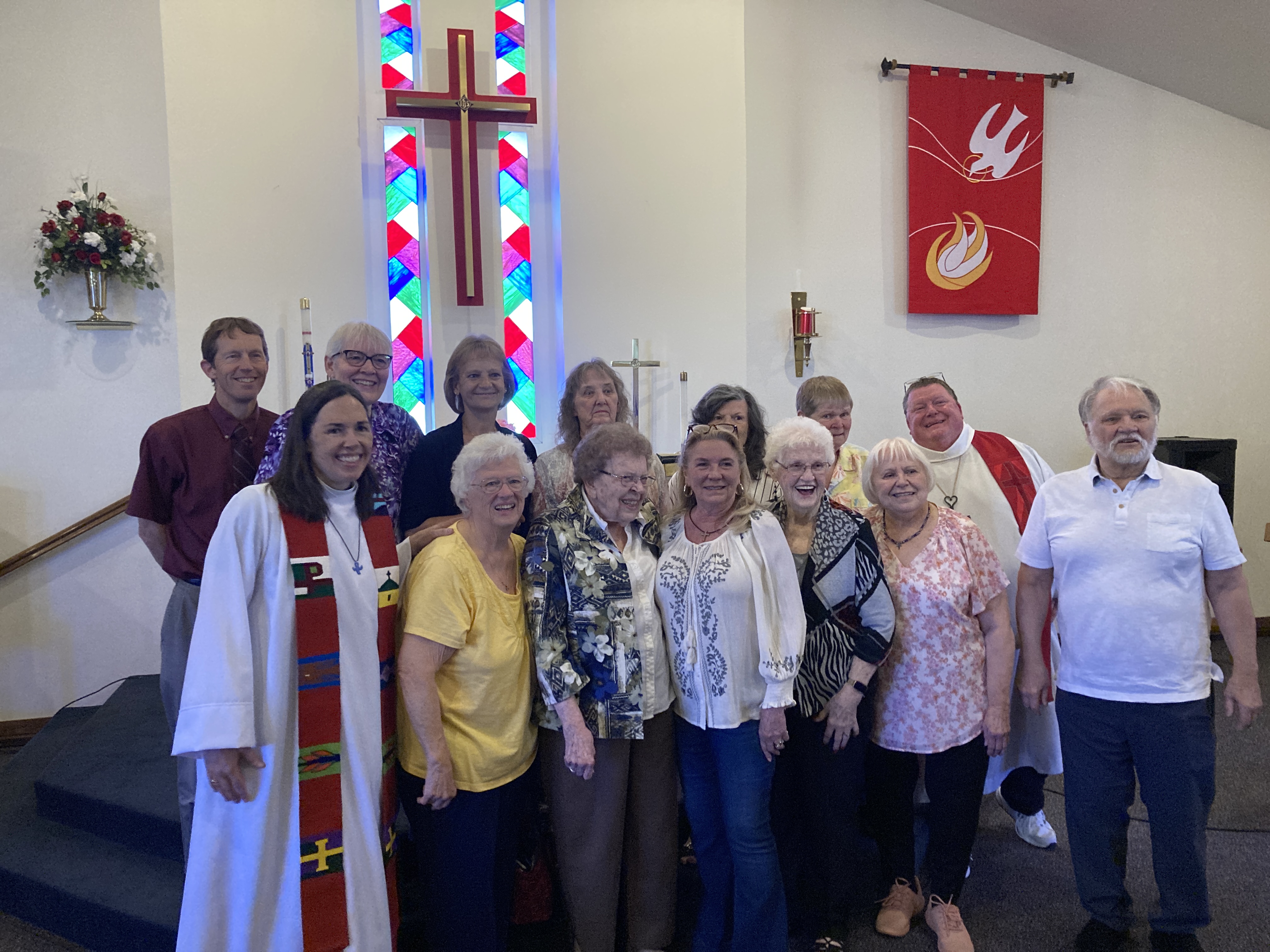
Sunday morning I headed south to Faith Lutheran in Toppenish, a congregation that began in the 1930s as a mission to the Yakima. They have shared a pastor, Tim Carnahan, with Our Savior in Sunnyside recently. They have also recently discerned that it is time for holy closure. A buyer is in the process of purchasing the building and its stuff (pews to dishes) so May 19, Pentecost was Faith’s Leave-Taking worship service. It was wonderful to hear stories of members and former members before and after worship, bring the synod’s thanks for years of faithful ministry, and participate in a small way in the worship service. One former pastor, Jim Christiansen, came back and I was grateful to hear about his time there in the 1970s. Many members from Our Savior came for worship and it was fun to meet them.
Passing of the Peace – one last time in this space
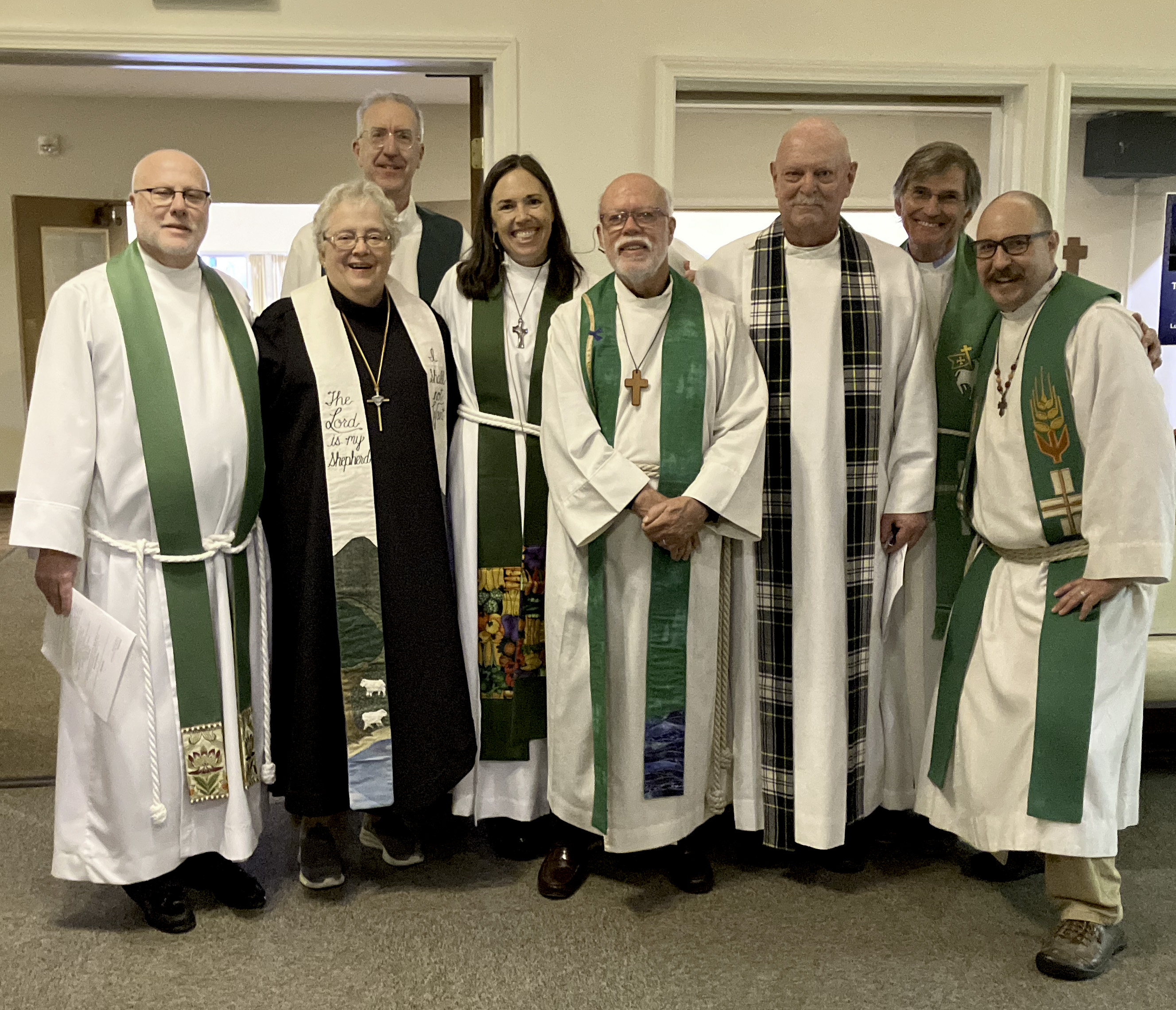
Current Members plus Pastors Tim and Jim and me
I drove that afternoon to the Tri-Cities, where I lodged with the Cryers, who I traveled to Tanzania with last fall. I attended an evening Youth Gathering fundraiser at Lord of Life Lutheran Church–best chocolate brownie I have had in a long time.
The next day I had breakfast with a candidate for ministry from the Tri-Cities and brunch with another ministry candidate from nearby. The morning of conversations ended with a sunny walk along the Columbia River.
The drive home was much easier because it was shorter and I had a few meetings and phone conversations. It was also gorgeous! Eastern Oregon is only green for a few months, but it was green and sunny on Monday afternoon. The stretch from La Grande to Baker City was especially breath-taking.
Playlist:
This Tender Land by William Kent Krueger (I’m about 1/3 through it)
Boise Music Week Community Worship Service – May 5, 2023
First Presbyterian Church
Psalm 46
1 God is our refuge and strength, a very present help in trouble. 2 Therefore we will not fear, though the earth should change, though the mountains shake in the heart of the sea; 3 though its waters roar and foam, though the mountains tremble with its tumult.
4 There is a river whose streams make glad the city of God, the holy habitation of the Most High. 5 God is in the midst of the city; it shall not be moved; God will help it when the morning dawns. 6 The nations are in an uproar, the kingdoms totter; he utters his voice, the earth melts. 7 The Lord of hosts is with us; the God of Jacob is our refuge.
8 Come, behold the works of the Lord; see what desolations he has brought on the earth. 9 He makes wars cease to the end of the earth; he breaks the bow, and shatters the spear; he burns the shields with fire. 10 ‘Be still, and know that I am God! I am exalted among the nations, I am exalted in the earth.’ 11 The Lord of hosts is with us; the God of Jacob is our refuge.
I attended college in Moorhead, Minnesota, at the one ELCA Lutheran Concordia. My junior year, the Red River flooded. It was an awful natural disaster—resulting from over 100 inches of snow, a late and sudden melt, rainstorms, and a slow shallow river that flows north, which meant it was blocked by ice further north. My classmates and I watched the flood to our south in the towns of Wahpeton and Breckenridge. It came to Fargo-Moorhead. Then it forged north to Grand Forks-East Grand Forks. The Red River Valley is incredibly rich farmland because of the remnants of being a lake formed by glaciers, but when the levy in Fargo-Moorhead broke, it wasn’t beautiful soil we thought of, it was devastation.
My classmates and students at neighboring Moorhead State Univ. and North Dakota State Univ. were mobilized to sandbag, evacuate livestock from farms, make sandwiches for volunteers, and any other number of tasks. But, at this is why this story makes it into a sermon during Boise Music Week, there was another event that spring. That was the spring that the four Concordia Choirs and Orchestra were preparing Mozart’s Requiem for performances in Moorhead and Carnegie Hall.
The waters never ended up reaching our college campus, but it was still an emotionally and spiritually heavy spring full of predicaments and sorrow. Was I supposed to keep volunteering, or should I study for finals? Was it okay to sleep in my bed while people were becoming homeless? And how, in the midst of this tragedy, could any of us justify going to multiple music rehearsals? Add to this that over spring break I had been given a new diagnosis—Epilepsy. It was a lot.
One spring day, music director Renee Clausen addressed all of us at the end of a rehearsal. He said people would need our concert, even if it sometimes felt frivolous to us. This powerful piece of music we were preparing would be balm for the larger Red River Valley community. I never talked to a member of one of our Moorhead audiences, but I know one thing for sure. I made it through that spring in large part because of the Requiem rehearsals. I don’t know that I could have explained it this in the spring of 1997, but it’s clear looking back that the rehearsals became my time of prayer—for the community, for people I would never meet whose lives had been altered forever, and for myself.
Martin Luther supposedly said that when you sing, you pray twice. It’s hard to confirm if Luther actually said this, but I know it to be true and I assume that because you are here, you have experienced this too. When you sing, you pray twice. I think Luther knew it to be true when he turned Psalm 46 into my tradition’s anthem A Mighty Fortress. It is a good thing to read this beautiful psalm. It is gift to read aloud a song writer’s adaptation for their own time.
Rolf Vegdahl, a musician in Chelan, Washington, adapted Psalm 46; his words are less triumphant than Luther’s. Hear part of Vegdahl’s adaptation:
Though the earth shall change, though the mountains tremble, though the waters roar, we will not fear.
You are our refuge and our strength.
In times of trouble,
you are here.
God is our refuge and our strength,
a very present help in trouble.
Therefore, we will not fear,
though the earth be moved,
though the mountains shall fall into the sea.
Though its waters rage and foam
and mountains tremble at its tumult,
the Lord of hosts is with us.
The God of Jacob is our stronghold.
This setting was sung as a duet at my installation across town last fall. I still go back and listen to the recording and draw strength from the words and music. Vegdah’s tune is more melodic and lilting than Luther’s German hymn. (Go to 25:12 in this YouTube video)
What we all needed that spring when the Red River was reaching beyond its banks to become ancient Lake Agassiz, what I assume the psalmist and their friends needed, what I think you and I need today, is the reminder that God is still here. God is still here mending, redeeming, healing, and making things new.
You who are gathered here know, as the psalmist did, that all things change. Worse, all things are inherently unstable, including the earth itself, its rivers, mountains and seas, as well as the nations and peoples on the earth. Only God is a stable refuge, and that becomes the psalmist’s refrain.
The psalmist goes on to sing a hymn to this strong and stable God. Most important, God makes wars cease, which, of course, will take care of the “uproar” of the nations in v. 6. The psalm looks forward to God’s stabilized world, which will be a world of peace; all weapons will be destroyed. We then hear a word direct from God, perhaps announced by a priest. Hear the assurance that God’s strength and God’s promise is for you. The control of chaos is beyond human ability, so the counsel is simple but profound, “Be still, and know that I am God!” The song ends by returning to the theme and refrain: “The Lord of hosts is with us; the God of Jacob is our refuge.”
Like all promises, this one, could be misunderstood. You could mistakenly hear it as though Zion were invulnerable because God’s presence could be taken for granted. Eventually, the prophets of old had to denounce such thinking. We might recall especially Jeremiah, with his insistence that people could not simply chant the mantra “The temple of the Lord, the temple of the Lord, the temple of the Lord” and think nothing bad could happen to them. No aspect of biblical religion can ever be used as a good-luck charm. Jeremiah would also remind you and I that God’s presence and God’s security is found among those who repent, change their ways, and do justice (Jeremiah 7:5-7). Poetry, melodies, and sacred songs, it turns out, can help you do all those things: repent, change, and do justice.
It strikes me that the spring my classmates and I sang Mozart’s Requiem, it was the Kyrie that stood out the most and that I most vividly remember. Perhaps that’s simply because of the music Mozart composed. But I wonder if it is because after years of liturgical worship, those were the words I actually understood (Lord have mercy) and that I needed to pray to God.
Though different than the confession and forgiveness they are surely related. I think of the kyrie as the entire congregation crying out to the creator. Lord have mercy on this flooded region. Have mercy on me for not doing enough to aid all those hurting. A friend’s mentor said, “anytime you sing a kyrie, you have participated in a confession.”
Again, it is one thing to speak the words, “Lord of have mercy. Christ have mercy. Lord have mercy.” But you who are sitting here and experiencing Boise Music Week, I trust get it when I say that to sing those words, or the Latin Kyrie in worship or while singing Mozart’s Requiemadds something.
Those of you who are musicians then have great responsibility. You can use the emotional power of music for many goals. I give thanks during a worship service like this for the liturgists and church musicians who use their skills for the following: to help the worshiper communicate with the divine, to help the worshiper give God thanks and praise, to assist the worshiper who is ready to move through grief and anguish, and even the musician who knows when to leave moments of silence between the notes for whatever the worshiper may need.
Music is a gift from God, a gift to be treasured and stewarded well. Like the book of psalms, my tradition’s ancient book of songs and prayers, music is its own language. This language can, at its best, help nurture your relationship with God, give you the deep hope we need, and finally move you to keep bringing peace to your corner of the universe. Thanks be to God.
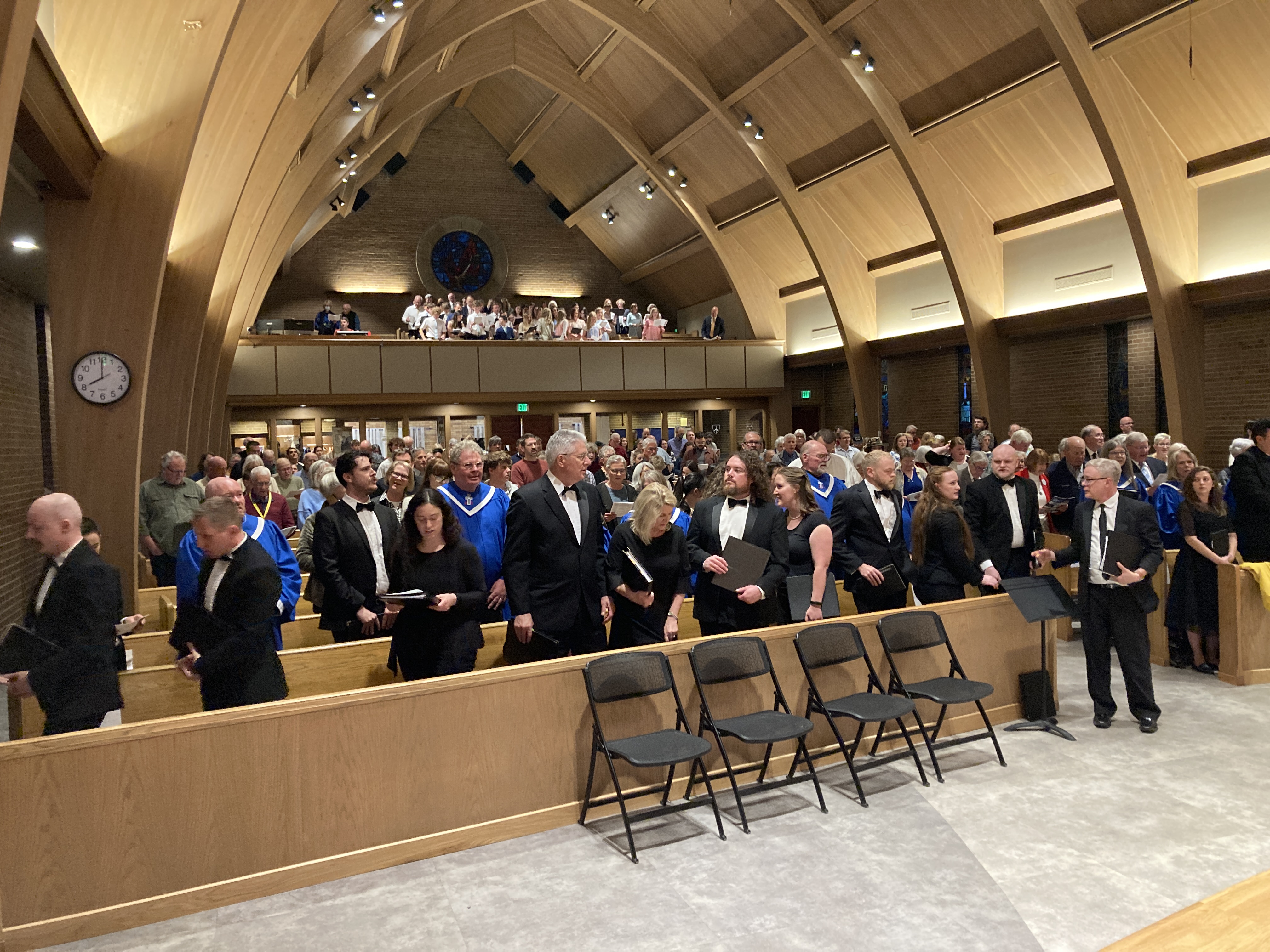
Choirs getting into new position during a hymn
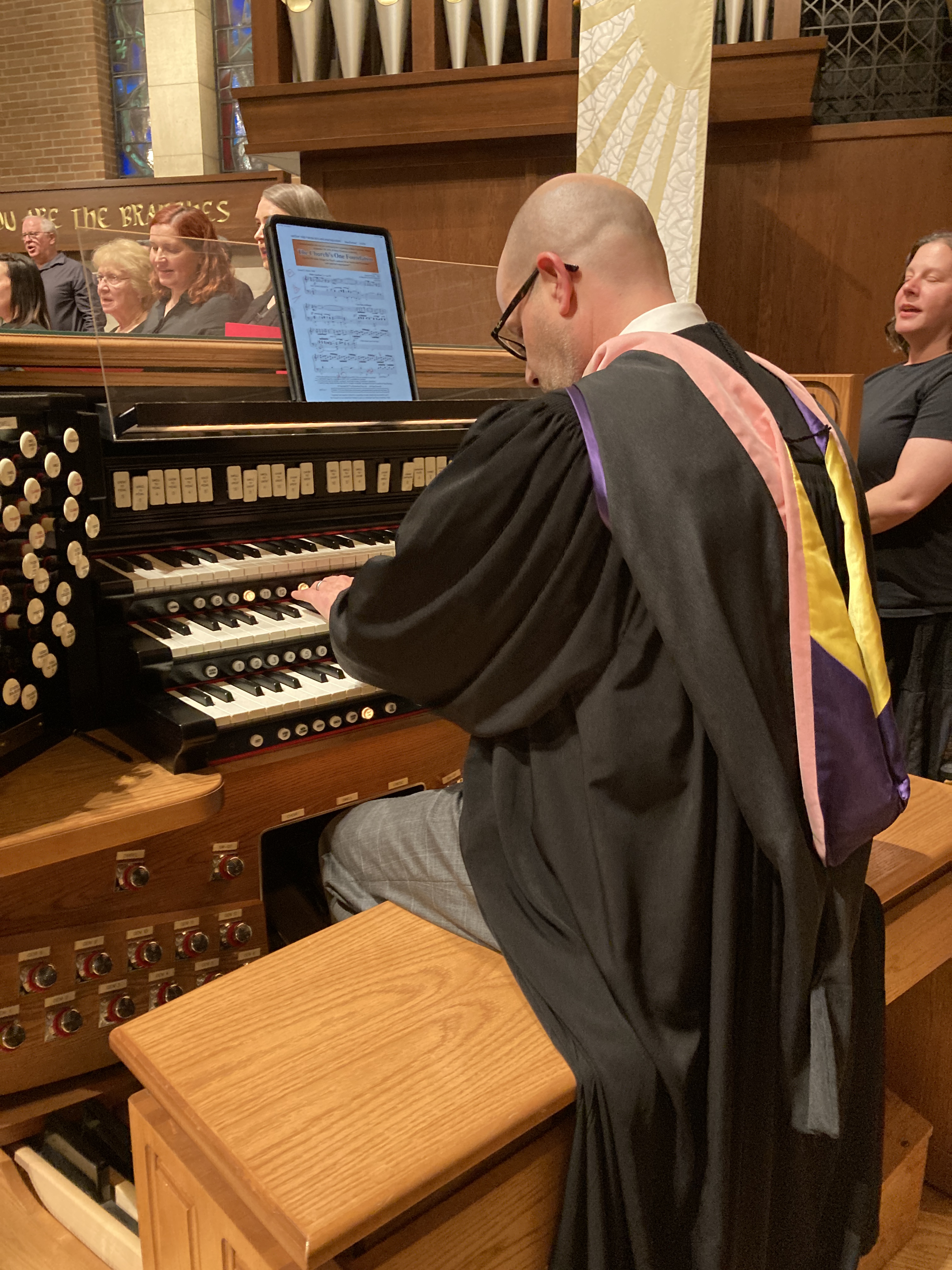
Ryan Dye, First Presbyterian Musician and organizer of the Worship Service
Today Jesus builds on his simple metaphor: he is the vine, and we are the branches. The imperative is quite clear: love. I find that there is so much in the passage from John’s gospel that is corrective to what ails the world, balm for our wounded communities, a tonic that could clear our vision.
A few weeks ago, I noticed that one of the youth who was part of the Treasure Valley Confirmation Co-op became an Eagle Scout. There is one line in that ceremony that always makes me tear up: “I charge you to be among those who dedicate their skills and ability to the common good.” The notion of the common good is beautiful. I starting thinking about the common good in relation to John 15.
Jesus says, “My Father is glorified by this, that you bear much fruit and become my disciples.” In this specific case he is referencing, at least metaphorically, a specific kind of fruit—grapes. How do we know this? Because the first seven verse of the chapter are all about how Jesus is the vine, and we are the branches. The fruit we will bear if we abide in God is love, pure and simple.
How are the vine and branches related to the common good, besides the obvious command to love? The metaphor of the vine is non-hierarchical. There is no me getting ahead. There is not even room for church hierarchy—bishops, pastors, laypeople. The vine and branches metaphor is also stark in its anonymity. What I mean is that the visual image of the branches lacks any and all distinctions in appearance, character, or gifts. The question of “how do I look out for #1?” just does not fit into the picture.
The anonymity is also a contrast to other metaphors in the New Testament itself. First Corinthians 12, with its church as the body metaphor, is irresistible in the anatomical fantasy it puts before the early church: talking feet and ears, entire bodies composed exclusively of ears or eyes or noses. The Apostle Paul points to the place that his or her individual gifts occupies in the body. Paul holds together the oneness of Christ and the diversity of gifts and members of the body. And that metaphor can be helpful and life-giving. I know. I have preached and taught this metaphor a lot.
But that’s not our focus today, and I am ever grateful for the vine metaphor. It undercuts any celebration of individual gifts in exchange for a clear focus, a directive for absolutely everyone. There is only one measure of one’s place in the faith community—to love as Jesus has loved—and everyone, great and small, ordained and lay, young and old, male and female are equally accountable to that one standard.
What would happen if the church were to live as the branches of Christ? Well, individual distinctiveness would give way to the common embodiment of love. The distinctiveness of the community would derive solely from our relationship to God and Jesus, not the characteristics or even gifts of its members. And the mark of the faithful community would be how it loves, not who are its members. There is only one gift, to bear fruit, and any branch can do that if it remains with Jesus.
A follower of Jesus is someone who, in every situation, tries to respond to other people with the love of Jesus. There may be responses to the world which, in the world’s eyes, “Make sense,” or which can simply be justified by reference to, “everyone else is doing it.” But Christians are those who, through baptism, have signed on, have publicly committed themselves, to obey Jesus. And Jesus has commanded us to love.
The practice of obedience can make us Lutherans bristle when it sounds like we are obeying so that we will be loved and forgiven. But in fact, we are all about obedience; we obey God’s commands because God has already claimed and loved us.
Whether our obedience to Jesus’ command will make the world a better place, or lead to deeper human understanding, or help to win friends and influence people, we don’t know. We only know, in today’s scripture as well as so many other places in the New Testament, that this is clearly what Jesus commands us to do.
It is not always easy to know exactly what loving one another means. This is where community, those other branches, can be helpful with discernment and accountability. There are some times our love needs to be that sort of “tough love.” Yet hate, violence, revenge, and the other means through which the world gets what it wants, are not options for Jesus’ people, people who are commanded to love, to bear fruit. Whatever it looks like, love remains the imperative.
There is a second wonderful corrective that this passage from John addresses. Sometimes, especially in the Treasure Valley, we face a binary when it comes to following Jesus. There are Christians who will ask me, “are you a believer?” For them, I think, faith is completely a matter of the heart or mind. It is about where we put our trust, or in the words of our text today, what we abide in.
If I am feeling just a little self-righteous, I want to respond to these Christians by asking them, “are you a fruit-bearer?” What I mean is, have you put your faith into action by feeding, clothing, visiting people in prison, welcoming the foreigner? How have you been bearing fruit?
But the truth is neither of these approaches is fully faithful and today’s gospel gets right to the heart of it. We cannot bear fruit if we are not abiding with Jesus. If we only bear fruit without abiding in Jesus, we will dry up and die OR our fruit will not resemble Jesus. And, if we only abide in Jesus, without bearing fruit, we are not actually abiding.
However, if we truly abide in Jesus, which means abiding in God’s love, we will not be able to help ourselves. Fruit will come. Acts of love will be spontaneous. The love of God will simply spring forth like a big juicy grape.
Today we celebrate an invitation to extended service to Father Larry. We celebrate a new relationship between a shepherd and a flock and the fruit bearing that will occur because of this mutual ministry. We celebrate that years ago, Lutherans and Episcopalians recognized that our branches were similar enough, and maybe our fruit could be tastier and more abundant if we recognized how intertwined we already were. And we celebrated all along that we got our nourishment from the same Lord Jesus Christ.
I trust that Grace Lutheran will find new ways to abide in Jesus’ love. You may also discover that there are rhythms or habits that have not been helping you abide together in Jesus; you can prune them. Be mindful of what helps you abide and what helps you bear fruit. Be mindful of love, not sentimentality or romance, but that sustaining abundant love that come from God. It will naturally become love of neighbor and yes, even love of self.
We are part of a big world and it is easy to feel quite small and insignificant. But maybe especially when we feel powerless, the Holy Spirit reminds us through scripture passages like this one that all of us are already fruit bearers because we abide in the love of God through Jesus.
“We would be stewards true, holding in trust from you all that you give; help us in love to share, teach us like you to care for people everywhere, that all may live.” (All Creation Sings 1063 v. 2)
May 1, 2024
Dear Friends in Christ,
In the middle of Lent, staff and cluster deans gathered at St. Gertrude’s Monastery in Cottonwood, Idaho for a two-night retreat. We heard from Sister Theresa Jackson about how the Center for Benedictine Life is adapting on the Camas Prairie and we prayed daily with the sisters. We also heard updates on every congregation and ministry in our synod. This time of deeply connecting our clusters and ministries and dreaming for the future is possible because of Mission Support given to the synod.
Thanks to all of you who have registered for one of our Regional Gatherings. By the time this letter goes out, our first event will be over. We are looking forward to praying together, building relationships, and hearing speaker Grace Pomroy lead us in exploring how God might be calling our congregations to use the assets entrusted to their care to create a more sustainable and faithful future, all so more people can experience the love of God in Jesus Christ. Your Mission Support allows the staff to work with Grace and create three wonderful days of gathering across our synod.
In mid-April your synod council met in Spokane in person! We had an agenda full of worship, business items, partnering with an ELCA Churchwide guest, and hearing from several working groups. It is no small thing in our geographically large synod to pull the council together in person twice each year, but the synod is healthier and stronger for this time of connection. The generosity of your congregation makes possible these opportunities to gather and work in partnership for our shared mission.
Anticipating the Festival of Pentecost (May 19) always means simultaneously anticipating summer camp! Thank you also for your support of our Lutheran Outdoor Ministries—helping recruit summer staff, giving camperships through the camps or your local congregation, signing up for work weekends and family and adult programming, praying, and sending words of encouragement. We recognize our LOM sites as vital to the ministries of our congregations and the synod as a whole.
Today’s gospel text, with its wonderful imagery of the vine and branches, poses challenging questions to the contemporary Christian community. It asks, what does it mean for the church to live as the branches of Christ the vine? What would “church” look like if we embraced this model for its corporate life? I am speaking of the whole church because Troy Lutheran is connected, through the vine and branches, to the cluster, local ecumenical partners, the Northwest Intermountain Synod, the ELCA, and the greater Christian Church.
The image of community that emerges from this imagery is one of interrelationship, mutuality, and indwelling. To get the full sense of this interrelationship, it is helpful to visualize what the branches of a vine actually look like. In a vine, branches are almost completely indistinguishable from one another. It is impossible to determine where one branch stops, and another branch starts. All run together as they grow out of the central vine.
What this vine image suggests about community is that there are no free-standing individuals in community, but branches who encircle one another completely. The fruitfulness of each individual branch depends on its relationship to the vine, nothing else. What matters is that each individual is rooted in Jesus and therefore gives up individual status to become one of many encircling branches.
The communal life envisioned in the vine metaphor raises a strong challenge to individual autonomy and privatism. The vine metaphor is counter cultural. At the heart of this model is interrelationship and corporate (or communal) accountability. The vine and branches exhort the community to steadfastness in its relationship to Jesus, a steadfastness that is measured by the community’s fruits. To bear fruit—to act in love—is a corporate act.
It is “rooted” in Jesus’ love for the community. To live as the branches of the vine is to belong to an organic unity shaped by the love of Jesus. The individual branch is subsumed into the communal work of bearing fruit, of living in love. In bearing fruit the branch reveals itself to be one of Jesus’ disciples.
To live according to this model, the church would be a community in which members are known for the acts of love that they do in common with all other members. It would not be a community built around individual accomplishments, choices, or rights, but around the corporate accountability to the abiding presence of Jesus. It would be a community built around the enactment of the love of God and Jesus. It would also be a community inextricably connected to other communities of faith, all bearing fruit.
The vine and branches also suggest a radically non-hierarchical model for the church. No branch has pride of place; no one branch can claim precedence or privilege over any other. “He cuts off every branch in me that bears no fruit, while ever branch that does bear fruit he prunes.” Fruitfulness is the only thing that distinguishes branches. And the discernment of fruitfulness falls to God the gardener alone, not to any of the branches.
It is the gardener’s role to prune and shape the vine to enhance fruitfulness. All branches are then the same before God, distinguishable only by their fruit. There is neither status nor rank among the branches. Hierarchy among the branches of the vine is precluded. All members grow out of the one central vine and are tended equally by the one gardener.
The vine and branches metaphor is stark in its anonymity. The visual image of the branches lack any and all distinctions in appearance, character, or gifts. The anonymity of this image is brought into sharp relief when compared with another metaphor, Paul’s metaphor of the church as the body of Christ.
First Corinthians Chapter 12 is irresistible in the anatomical fantasy it puts before the Corinthians: talking feet and ears, entire bodies composed exclusively of ears or eyes or noses. Unlike our metaphor this morning, Pauls’ image does not remove the differences among the various members of the body, but actually points to the differences as definitional of what it means to be a body. Each member is able to see the place that his or her individual gifts occupies in the corporate body. Paul holds together the oneness of Christ and the diversity of gifts and members in the body metaphor.
I think the Northwest Intermountain Synod has room for both metaphors. Ministries, congregations, and individuals bring unique God-given gifts to the whole. And we are all interconnected, grafted to the vine that is Jesus Christ.
What does this look like, really? Since our inception as a synod, we have supported three campus ministries: at Eastern Washington University in Cheney, at Wazoo in Pullman and University of Idaho in Moscow. ELCA Deacon Karla Newman-Smiley has been campus minister at University of Idaho for over twenty years.
For over twenty years, Karla has been showing up for students, faculty, and staff in Moscow, Idaho. She has again and again been a voice of welcome on that campus and in that community. She has continued to hone her skills, becoming a spiritual director, and she has participated in many campus committees and ecumenical endeavors.
In the fall of 2022, the University of Idaho campus was rocked in a way it had never been, when four students were murdered. Life for the campus had finally returned to normal after the pandemic academic years and suddenly there was this tragedy of four deaths. What’s more, there was deep fear and anxiety.
In the early hours of Monday, Nov. 14, the University of Idaho’s Office of the Dean of Students contacted various student ministries in an effort to provide counseling and other services to over 10,000 University of Idaho students. Karla noted in an interview that she found her “purpose to be supporting the Dean of Students and keeping The Center (formerly the Campus Christian Center) open as a space for students, faculty and staff, even though right now it feels like a suspended space.”
Fast forward past the Thanksgiving Break. On Dec. 1, the University of Idaho held a candle vigil for the community. A few university staff spoke, and members of the victims’ families shared words. One campus minister was invited to pray—ELCA Deacon Karla Newman-Smiley. Karla’s words led me to shed tears of hope in the God whose welcome is constant and steady, the God whose welcome never tires, never wavers.
I wish I could tell you the impact Karla’s prayer had on the students and families but it would only be conjecture. But what I want to say is to you today is thank you for being part of the Lutheran Campus Ministry story in this synod. Thank you for supporting a deacon who has welcomed people into various spaces for over twenty years.
It should not surprise any of us that Karla was then invited and welcomed to offer words of prayer when tragedy struck. She, like you and me, is a theologian of the cross. She was able to name in truthful, loving, accessible language that the God of Jesus Christ is in the hidden, unexpected, and broken spaces of life, like Moscow, Idaho in the fall of 2022.
Karla and Lutheran Campus Ministry of University of Idaho bore fruit through their individual gifts. And at the same time, they were the branches of the vine so connected to the love of God in Jesus Christ. The mark of the faithful community is how it loves, not who are its members. There is only one gift, to bear fruit, and any branch can do that if it remains with Jesus. Through campus ministry, our entire synod was able to love deeply those most in need.
Last November I was not in Moscow but across the globe in our companion synod in the southern part of Tanzania. This companion synod goes back at least thirty years and people we met remembered many visitors from our synod and some told stories of coming here. This is called accompaniment—the recognition that we have as much to learn and receive from our companion synod relationship than we have to give. We use the Swahili phrase, bega kwa bega, translated shoulder to shoulder. This metaphor has similarities to the intertwined branches coming out of the vine. Everytime we gather with our siblings from the Ulanga Kilombero Diocese, we remember that we are all connected to the branch that is our Lord Jesus Christ, the author of life.
The metaphor of the vine and branches reminds you that the most important gift, the equalizing gift, the vocation that we all share is to continue to bear fruit wherever you go. I often name campus ministry and the relationships with the Ulanga Kilombero Diocese, but the truth is that every congregation in our synod is fruit-bearing branch. To gather around the Word and Sacraments and offer those gifts for the world is an act of love. And all of our congregations are finding old and new ways to extend that love beyond their walls. What’s more, when you doubt, when you do not bear fruit, the vine gardener, full of limitless grace, will wait patiently for you to return to the vine to bear fruit for the community of believers and for the world.
This last week was full, so full, of conversations and moments and beauty and all the things I love about this chapter of my life. My mom and I flew into Spokane from Phoenix and Boise respectively and drove over to Coeur d’Alene Monday. We stayed in a VRBO for two nights in between downtown and another older part of town. The weather Tuesday was gorgeous (unlike today’s snow). We walked around part of Tubbs Hill and then ate lunch at a place along the Spokane River. Phone calls and video conferencing are great but it was so good to have time together in person.
Wednesday and Thursday were filled with meetings and time with staff and making final preparations for the first of our three Regional Gatherings. We also briefly reviewed our online special synod assembly from Sunday evening, which now seems like a year ago.
Friday, mom and I got together with DEM Liv and her parents (in town for their grandson’s theater production). Mom and I went to REI where I bought this great poster for my office.
Then we went to lunch with Regional Gathering speaker Grace Pomroy and Luther Seminary representative Lisa–such a rich conversation.
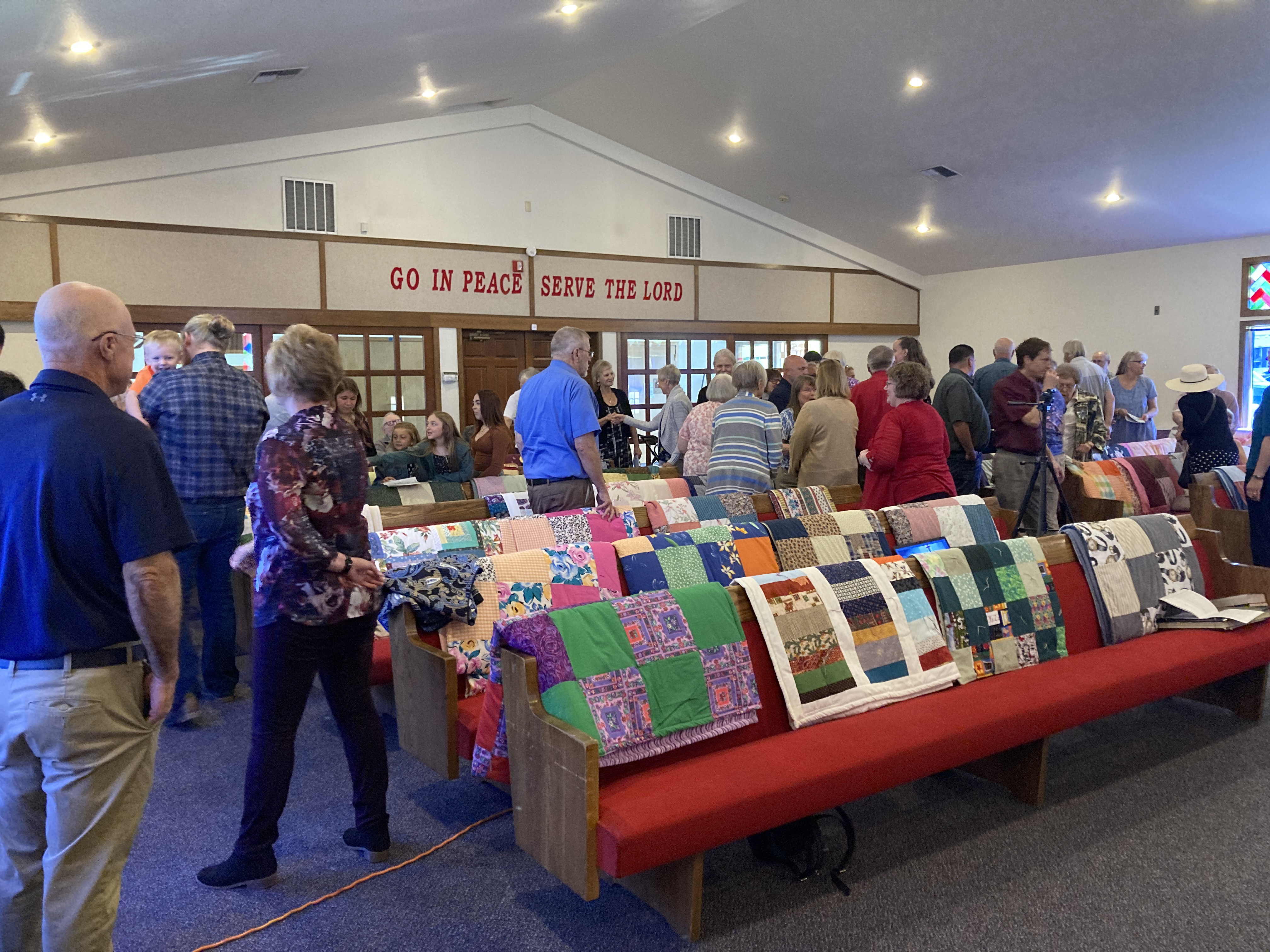
Advent Lutheran in Spokane Valley did a wonderful job hosting our first Gathering. Grace exceeded my expectations. Everyone participated. It was lovely to be at a church and the icing on the cake was that the pews were covered with quilts soon being packed up and distributed through Lutheran World Relief. They made the sanctuary colorful and cozy. The worship elements were just right. Our staff and participants had time to make plenty of wonderful connections. Our special guest from the PCUSA Land Stewardship Program was fabulous and many people connected with him.
Sunday morning, Mom and I drove down through the Palouse to Troy, Idaho. I preached and Pastor Pat Kailey presided. Worship included blessing of many LWR quilts and was followed by a delicious Annual Fish Fry. During the Q and A I was asked great questions that made it clear Troy Lutheran is now in a good season of discernment about what is next. They already have a great foundation of meaningful worship, meaningful partnerships in the community, and a dedicated group of lay folks.
What a journey you have had Hope Lutheran. First, with everyone else, you came through the global pandemic. You said goodbye to a pastor and then welcomed an interim and two bridge pastors. You decided to give part of your building a makeover for your food pantry ministry. Outside your doors and down highway 44 in both directions your building watches tremendous construction and development. And you have continued, every week, to gather faithfully around Word and Sacrament.
It is wonderful to be here today and celebrate this beginning of pastoral and mutual ministry with you all and with members of the Treasure Valley Cluster of the Northwest Intermountain Synod. On an installation day, our deepest hope is for a pastor to faithfully shepherd, equip disciples, preach, and preside over the sacraments. They do all this so that a community is shaped by God’s love and also sent forth to share with the world the love made known in Jesus Christ.
With both the Jeremiah and John scripture passages, we get to continue this morning’s Good Shepherd Sunday theme, maybe give it another look. I will always remember the Concordia Christmas concert when the Jeremiah text was read aloud by the baritone voice instructor. I guarantee that during none of our concerts in Moorhead or Minneapolis did anyone in the assembly want to be accused of being one of those shepherds. It is a reminder today, if we need it, of the sin and brokenness in our world and in each of us. All of us, not just leaders, need the gifts of forgiveness and grace given freely by God.
At the end of John’s gospel, our passage today, Jesus joins Peter beside a charcoal fire—the same kind of fire around which Peter had denied his connection to Jesus. We do well to remember that in John’s Gospel, the inquiry posed to Peter around that previous charcoal fire was, “are not you one of his disciples?” Peter’s response was, “I am NOT.”
In today’s post-resurrection scene, we read that Jesus broke the bread, passed it around and asked Peter, “Do you love me?” Three times Jesus asked. Three times Peter replied, “Lord, you know I love you.” Jesus said, “Feed my lambs. Tend my sheep.”
In today’s scene, Jesus restores Peter’s identity and renews his calling. In response to each of Peter’s confessions, Jesus responds by giving him good work to do, feed my sheep. Be a leader. Look out for these others. Devote yourself to this community. Peter is reinstated into the community of the faithful. He is given renewed identity, and then he is given good work to do.
I understand why these verses are fitting for an installation. We rightly call the pastor the shepherd of a flock. But with each sermon, meal of bread and wine, baptism, Bible Study and caring conversation, the pastor gets to point to the love of God in Jesus Christ. And, thanks be to God, it is the love of God shown forth in Jesus that gives penultimate shape to our communities, not a pastor, not even a bishop.
This text and this day is for all of us. Peter, at least in John chapter 20 if nowhere else in the gospels, is a model of what it means to live out one’s love of Jesus. He is a model not just for pastors and deacons, but for all followers of Jesus Christ, that means each of you.
I can point to all the saints who have taught about following Jesus, reminded me of God’s abundant love, and nudged me in discipleship. Many of them were lay people—teachers, mentors, my friends, longtime family friends, and my parents. But some of them were parish pastors, people called to lead specific communities of faith for a period of time. Through their preaching and presiding they bestowed the gifts of God’s grace.
We sometimes say that a preacher preaches the sermon they most need to hear. That was my experience preparing for today. The world, and with it the church, is changing, and we need to live more fully into the priesthood of all believers and our ecumenical relationships. Also, the world, and with it the church, is changing, and we still need pastors to shepherd faith communities, to gather us around the means of grace so we can be sent forth to share God’s love, the love Peter confessed so adamantly. And as Pastor Mark and I discussed a few weeks ago, the world, including each of us, still needs grace-filled proclamation central to our worship—proclamation that reminds us we are nothing without the grace of God, but that with that gift of grace we have everything.
Today, Pastor Mark will specifically promise to preach and teach, to study the holy scriptures, love, serve, and pray for God’s people, and give faithful witness in the world that God’s love may be known. You will make these promises not in a vacuum, but in this community of faith.
Today we celebrate mutual ministry—pastor and congregation together remembering the story of the risen Christ showing up where we least expect him; remembering God’s love for us and for the whole world; together remembering again that the love of God is deeper than any of our denials; trusting that the calling of God on all of us is stronger than our failures to live up to it.
Our synod council meets three times each year. Our fall meeting was cut a little short by my installation on Saturday. Our January meeting has stayed online coming out of the pandemic (due to potential snow storms disrupting travel). So this was my first ever normal meeting; I never served on council pre-election. The Executive Committee (officers, staff and a few other members of council) gathered for dinner Thursday evening. We were joined by Nick Kiger from the ELCA Mission Support staff. We met as Exec Committee at Salem Lutheran in West Spokane Friday morning. After lunch Friday, the room filled up with the entire council. Volunteers from Salem served us dinner Friday evening. We were all back for Saturday morning. We got to meet our new volunteer synod attorney who joined us for coffee and rolls. Nick gave us two hours of presentation time–so our main theme of the meeting–and it was great for everyone to get to know him better and for him to get to know our synod a bit. Saturday I went to lunch with the Southern Idaho council members and then helped with transporting them to the airport.
Nick is presenting down there by the television screen
Among our business were appointments, adoptions of policies and statements, receiving many reports, electing new executive committee members, and preparation for our special synod assembly.
Here’s a great summary from our Synod Vice President Lisa Terrell of other items:
Other Important Topics:
Nick Kiger from Churchwide was with us to help us understand increasing Mission Support, including trends in our synod. Bishop Manlove followed up with her strategies for our synod including participation in a synod development pilot project, sharing stories, offering training opportunities, and thanking congregations. She encouraged synod council members to go back to their churches and share.
Regional gatherings are coming up! It is now time for individuals to register. This is important in order to plan for how many will be in attendance, order lunches, etc. The Regional Gatherings are about financial stewardship, but more importantly about “what God is doing in the church right now.” How we are “outposts of God’s love and compassion.” And in the words of Rev. Liv Larson Andrews—“Come for a day to be inspired about who we are as a church in the face of challenges. We will go forward in joy and not fear.”
Bishop Manlove shared staff goals that came out of a staff retreat, and then had synod council reflect back the pieces that energize them and the questions that come up. Learn more about staff goals here March 4, 2024 NWIM Synod E-News (constantcontact.com)
The draft social statement “Civic Life and Faith” is accepting public comments until September 30. This draft statement is especially timely for this election year, and would be a good topic for an adult forum or hearing. Civic Life and Faith – Evangelical Lutheran Church in America (elca.org)
Sunday April 21, 2024 is a virtual Special Synod Assembly to elect one more voting member for the 2025 churchwide assembly and to approve synod bylaw changes. (7:30 pm Mountain Time, 6:30 Pacific Time)
SHARE grant awards were decided by the Synod Executive Committee and announced to synod council. This year a SHARE grant review subcommittee recommended how to award the 63k in available funds. 98k was requested by applicants. Grant awards will be announced to the synod as soon as possible.
Synod Council Working Groups shared updates.
Service of the Word (with some hymns) from All Creation Sings in Salem’s sanctuary Friday evening
Even though this was not a travel week for me, it was full. I cannot believe last Sunday was Easter Sunday. Last week I had regular Zoom meetings, plus an ecumenical Zoom facilitated by Spokane Presbyter Sheryl Kinder-Pile. It rained Monday. We heard from one of her PCUSA colleagues in South Carolina about the four current church shifts they talk with and help congregations with: Evaluating Property, Pastoral leadership, Funding, Courageous Conversations. I went to Buffalo Wild Wings to watch the Iowa-LSU basketball game.
Thought the week, I was able to connect in person with a few Treasure Valley pastors/ministry partners–always fun. Our DEM Pr Liv Larson Andrews went to Chicago for a training and it was fun to follow along and hear about it from her via text. I had my first Mutual Ministry Meeting online. It kept raining here in the Treasure Valley.
Thursday evening I drove through the rain to Boise to hear Sister Simone Campbell (Nuns on the Bus) speak at the Stueckle Sky Center. It was a hope-filled evening. I also ran into some friends there. This is one of many events put on by Boise State University’s Institute for Advancing American Values, run by Professor Andrew Finstuen, who is a member of Redeemer Lutheran in Boise.
Friday was more rain and more women’s basketball and more connections with friends.
Saturday, the same Institute had a community fair in Nampa at College of Western Idaho. I caught up with Toni Belknap-Brinegar, Boards and Commissions Coordinator for Conservation Voters for Idaho (c3). The Fellowship program provides “education and encouragement for Idaho’s aspiring leaders, building representation of these underserved communities [women, people of color, members of the LGBTQ+ community, and individuals with disabilities] and creating the foundation of a democracy that represents all Idahoans.” Because I serve on the Nampa Building Design Commission, Toni asked if I’d be a mentor. Of course I said yes.
I was invited to attend one of the Institute’s Idaho Listens events this coming week–really looking forward to it.
Saturday also included a webinar on ELCA Domestic Hunger Grants put on by the Southwestern Washington Synod-ELCA. Pastor Ethan Bergman and I both sat in on the webinar. I now have a much better sense of what ELCA World Hunger wants to fund and am excited to help congregations apply for the grants.
Instead of watching a baseball game, a bunch of my friends celebrated spring training Saturday by watching the classic film Bull Durham–always so good.
Sunday included presiding in worship at Redeemer Lutheran in Boise and Grace Lutheran in Horseshoe Bend. Among other things, Redeemer has been a long time partner with the Idaho Diaper Bank, actually doing the work before the Diaper Bank became what it is today. Grace (noon worship) is the one mainline/ecumenical congregation in Horseshoe Bend. I had preached at Grace once before, when the former pastor was on sabbatical in maybe 2018–fun group then and yesterday. The snow covered hills/mountains were gorgeous to view as Pastor Mariah Mills and I drove up the big hill together. Fun to connect with synod council members at both churches (Terri at Redeemer and Jeff at Grace). These two congregations have shared a pastor for some time. It’s always Redeemer’s worship service that is streamed for both congregations. They are planning to worship together twice this next year. Not shown, the Redeemer parsonage which has a pastor living in it (rather than being a rental) for the first time in many years.
Sadly I had the women’s championship game time wrong in my calendar so I turned up at Buffalo Wild Wings just as South Carolina’s win was becoming indisputable. I still call the whole tournament a victory for women’s basketball that ten-year old Meggan hardly could have imagined! And the sun is finally out.