Originally published in the Northwest Intermountain Synod e-newsletter.
As I write this, we are a few days from the election. Presiding Bishop Elizabeth Eaton has excellent words about Casting Ballots as People of Faith in THIS VIDEO, which I encourage you to watch. The other two ELCA Washington bishops and I WROTE about WA 2117 from a Lutheran perspective and I WROTE about ID Proposition 1 from a Lutheran perspective. It is an honor and privilege to vote, and I implore you to prayerfully consider what it means to vote with a Christian lens or ear. Director for Evangelical Mission, Pr. Liv Larson Andrews is collecting prayers for election day from across our synod and they will be shared on Facebook and YouTube every hour beginning at 8:00 am Pacific.
And yet there is more I want to say about this season. Oct. 14-16, about 90 of our pastors and deacons gathered in Walla Walla for Bishop’s Fall Convocation under the theme Leviticus and the Land: Stewardship and Sabbath. Our presenter, Dr. Rachel Wrenn from Trinity Seminary in Columbus, Ohio, said that “Being in relationship with the deity means being linked to raw, unadulterated divine power. That’s holiness.” Wow! Later, talking specifically about the book of Leviticus (Wrenn completed the footnotes for the NRSV Updated Edition of the Lutheran Study Bible), she said that “the goal of Leviticus is to establish healthy boundaries in the divine-human relationship so that the people can safely steward divine presence and power.”
This notion of divine presence and power has me wondering what is grounding me and you and the many ministry sites across our synod during this season? By season, I mean the election season, the season of fall holidays, the season of big family gatherings, the season when the days become shorter, and the church season of Advent, all of it.
As I listened to Dr. Wrenn, I was reminded that one of the greatest gifts the body of Christ, which we call the church, can give to its members and our larger communities is the opportunity to take a breath, the gift of making space, and not just space but sacred space, space where we can bring our deepest longings to God and then be silent. In our singing and praying we make space. This is one way we safely steward divine presence and power. Around the table of Holy Communion, we make space for all who want to feast on mercy and grace. When we read scripture as community and let it speak to us, we make space to encounter the holy.
What scripture passage or prayers or sacred songs are grounding you and your congregation in this season? How are you making space for yourself and your community of faith to take a deep breath? What are your individual or collective prayers to the triune God? Finally, when we encounter the Jesus of the Gospels, God’s love can take on many different forms, but ultimately it looks like compassion. Where are you witnessing compassion?
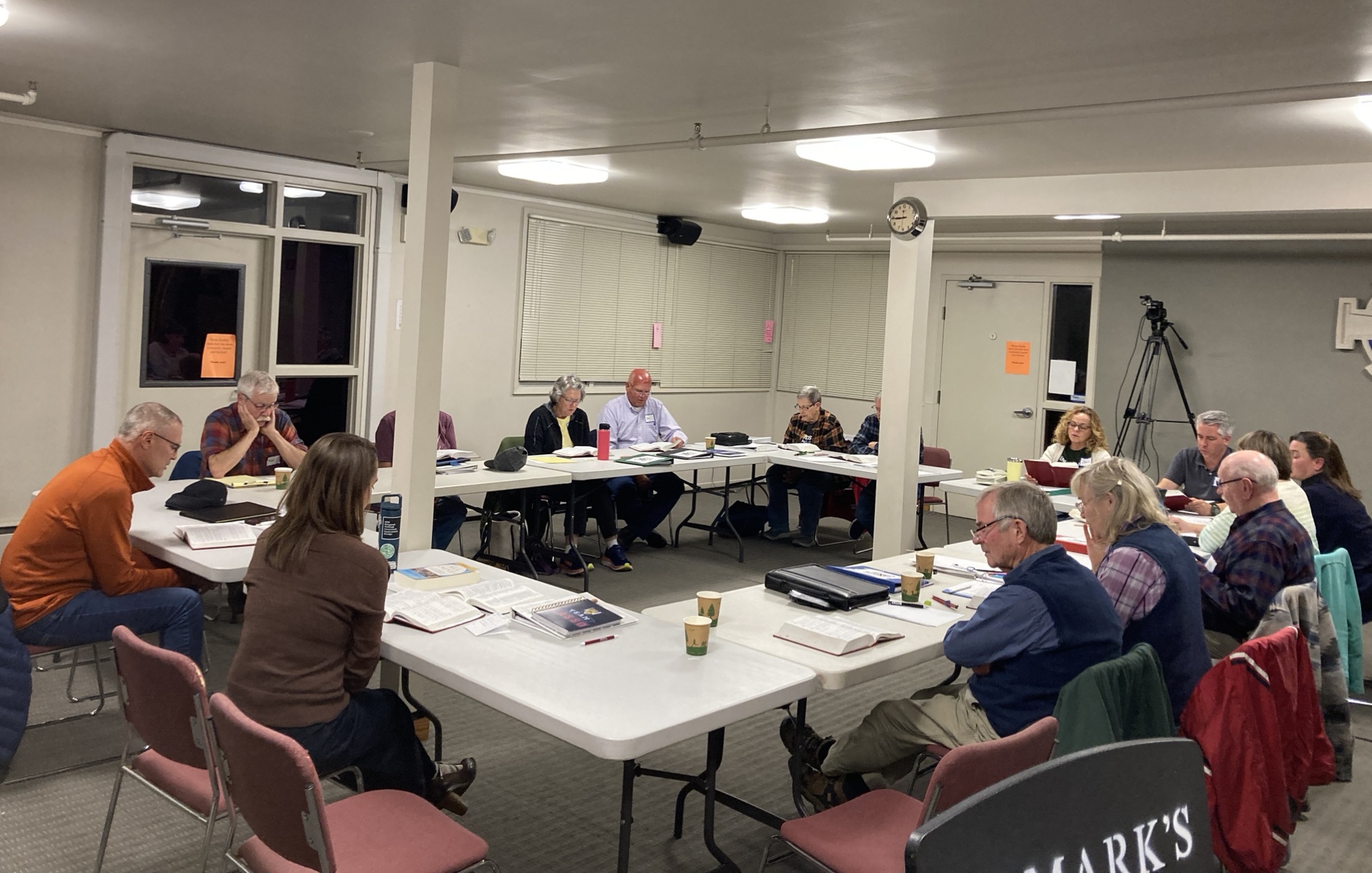
This past weekend, 11 lay people from across the northern part of the synod, three pastor teachers, and two synod staffers came together for prayer, learning, and building relationships. We titled the event Preach, Pray, Preside. Six of the participants are currently enrolled in the Montana Synod’s Lay Ministry Associate two-year online program. I handed over responsibility of shaping this retreat to our Director for Evangelical Mission Pastor Liv Larson Andrews. The retreat exceeded my expectations, largely because of the riches in the room.
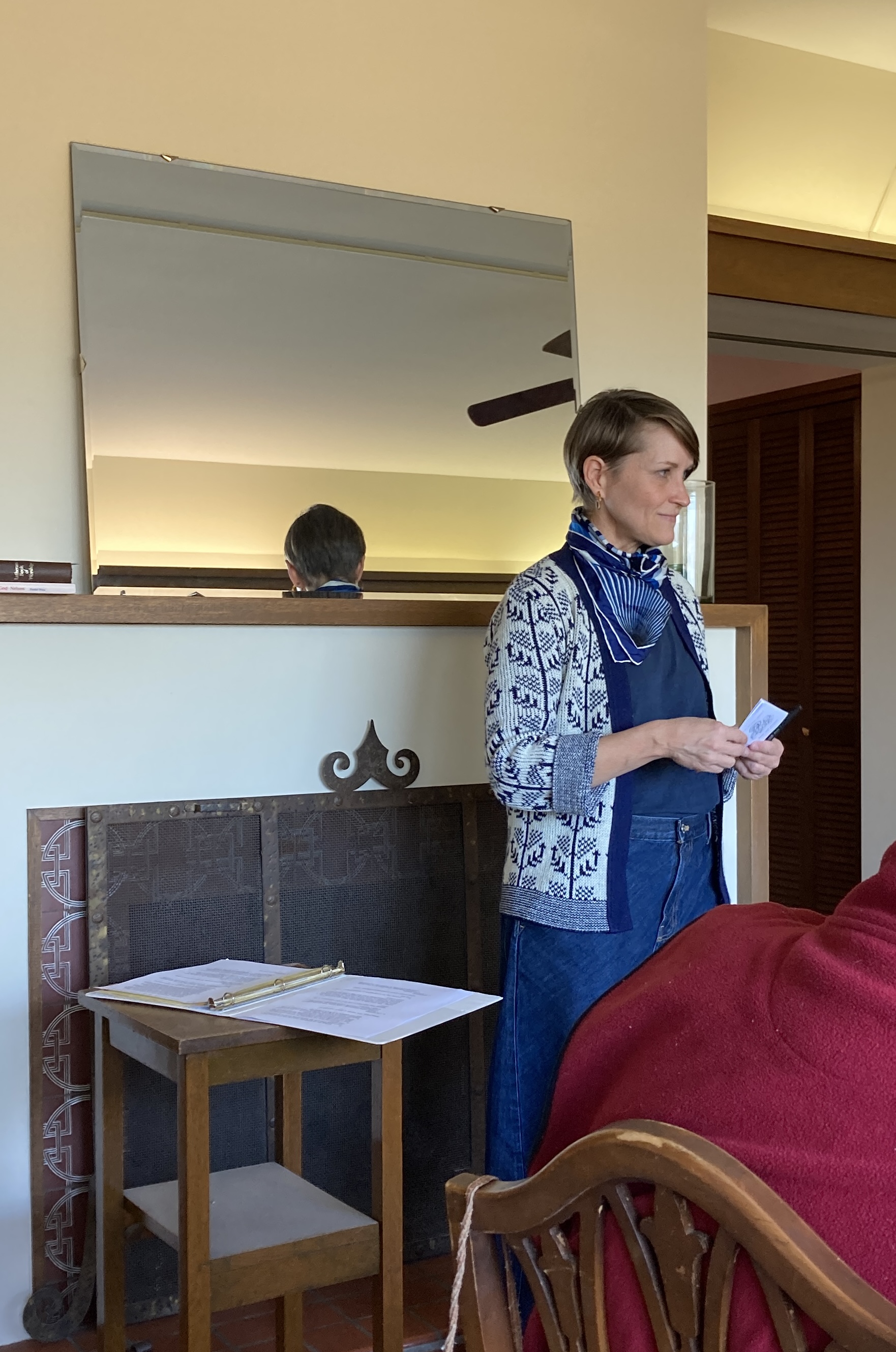
Thanks to St. Mark’s Lutheran, Spokane for use of their space!
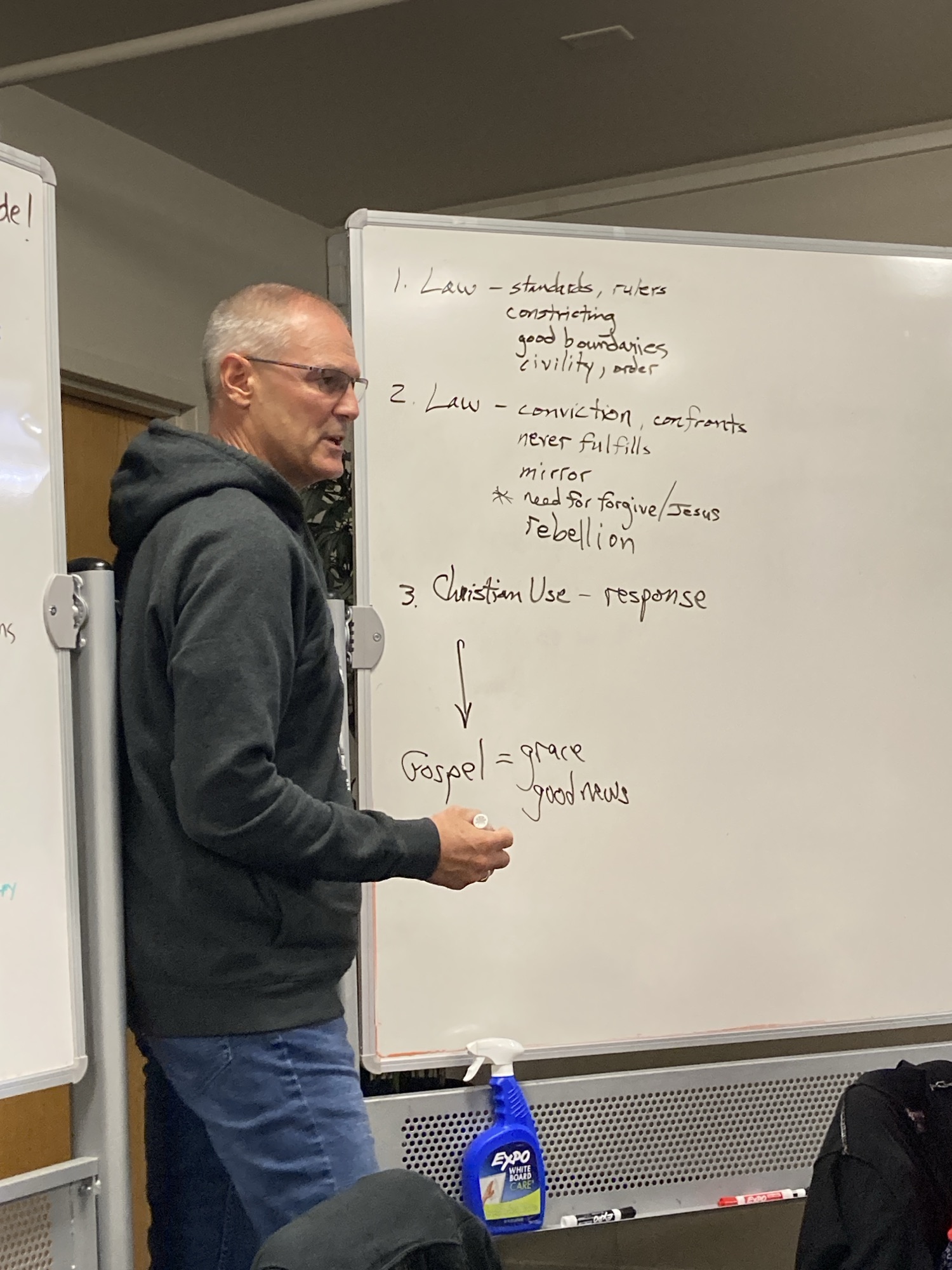
Pastor Jim Johnson (St. Luke, Spokane) taught the preaching sessions and the first evening he simply invited everyone to share their context and, if they are preaching, why them? The stories were so honest, the individuals so passionate about the gospel of Jesus Christ, the eagerness to grow was so palpable. After Compline, we retired for the evening. Following Morning Prayer on Saturday, Pr. Jim did a great job teaching/leading a conversation on Lutheran proclamation and preaching.
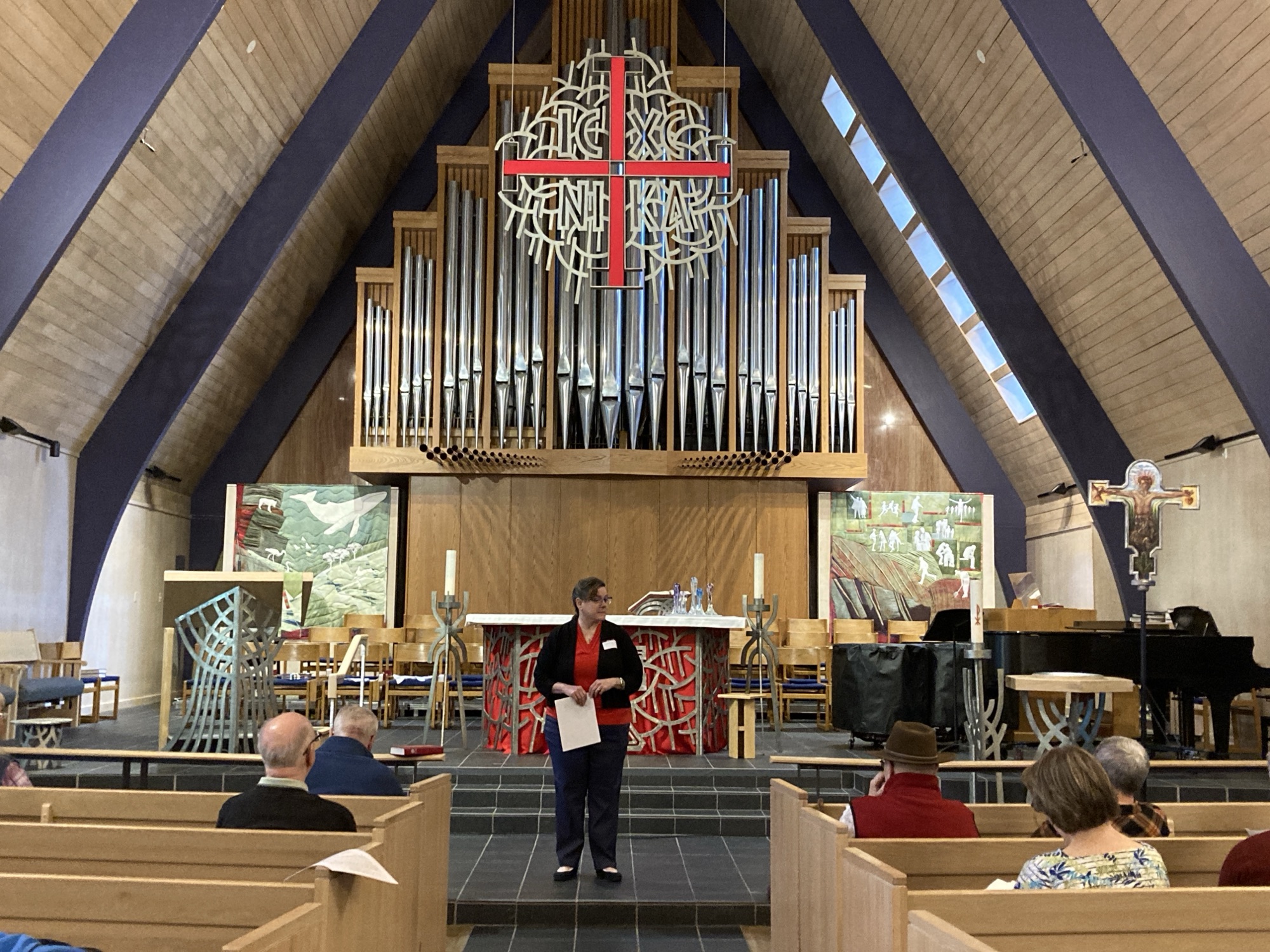
Pastor Kimmy Meinecke (an ELCA pastor serving St. David’s Episcopal Church) took us into the St. Mark’s Lutheran Church sanctuary for a session on worship leadership–again wonderful–a balance of theology and the practical. We moved to the synod office for lunch and were reminded that the synod office does not always show up on GPS maps the way we want it to. A few folks got turned around.
Pastor Yvette Schock (Chaplain at Riverview Retirement Community and daughter of Holy Trinity, Ephrata) led a session on prayer, specifically leading prayers publicly but also praying with individuals. Intentionality, reading a context, and hospitality were all themes Yvette wove throughout her session. Liv then had Pastors Kimmy, Yvette, and I answer general questions (as a panel).
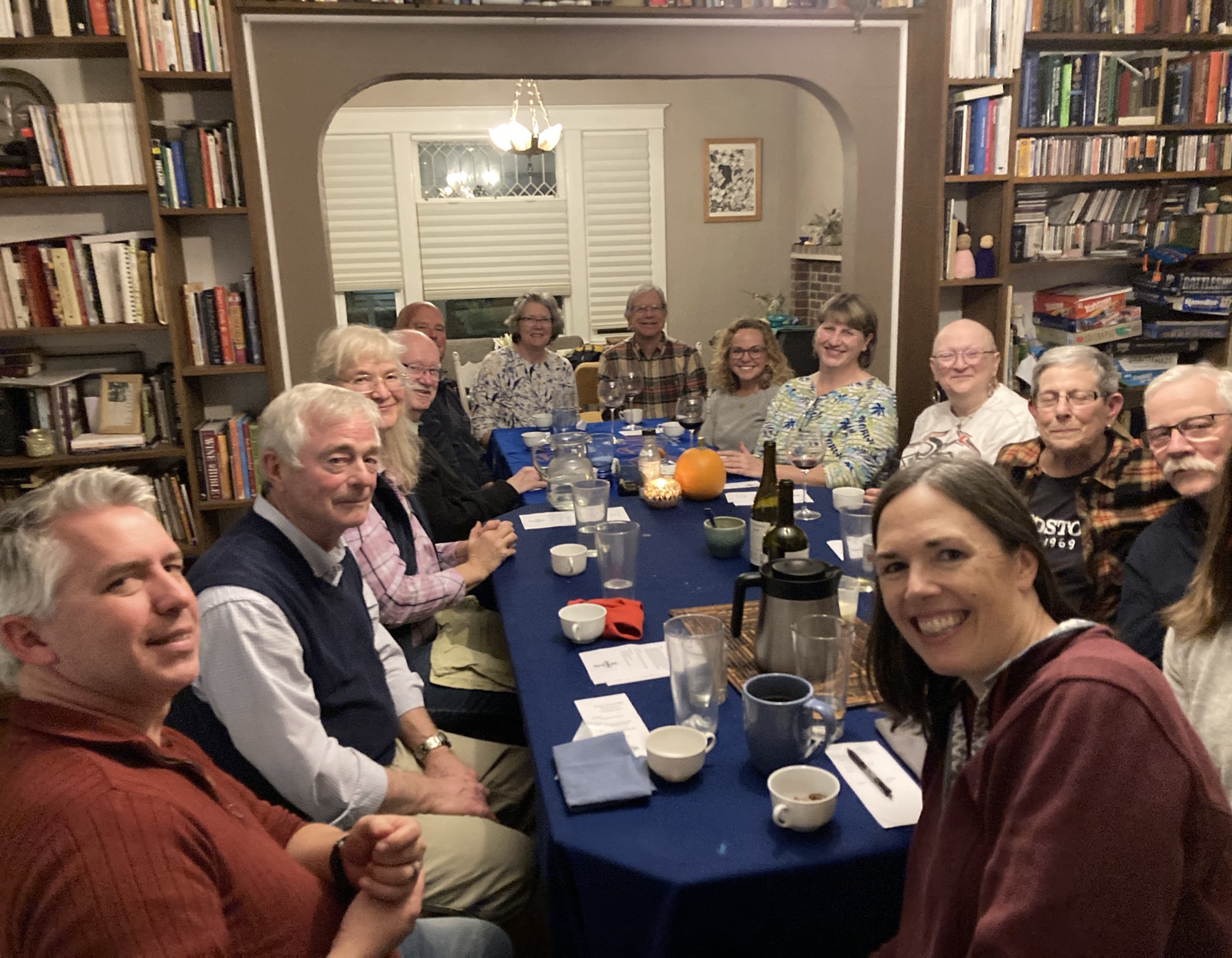
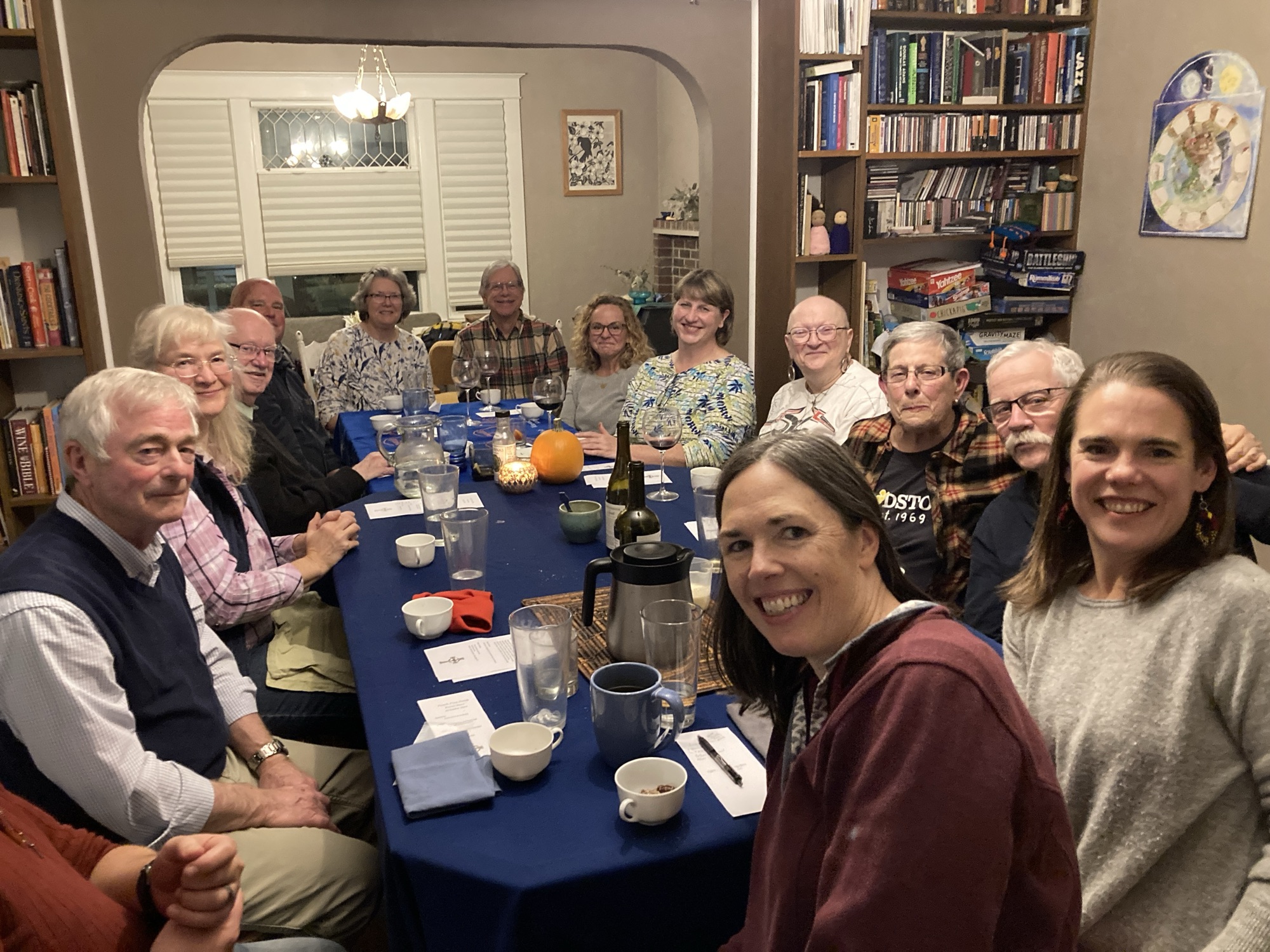
We had a nice afternoon break and then gathered at Liv’s home in Spokane, where her husband Casey cooked and served us a delicious dinner. This group had, by then, been together for some time and the pre-dinner and dinner conversation rolled with stories, questions, pondering, and laughter.
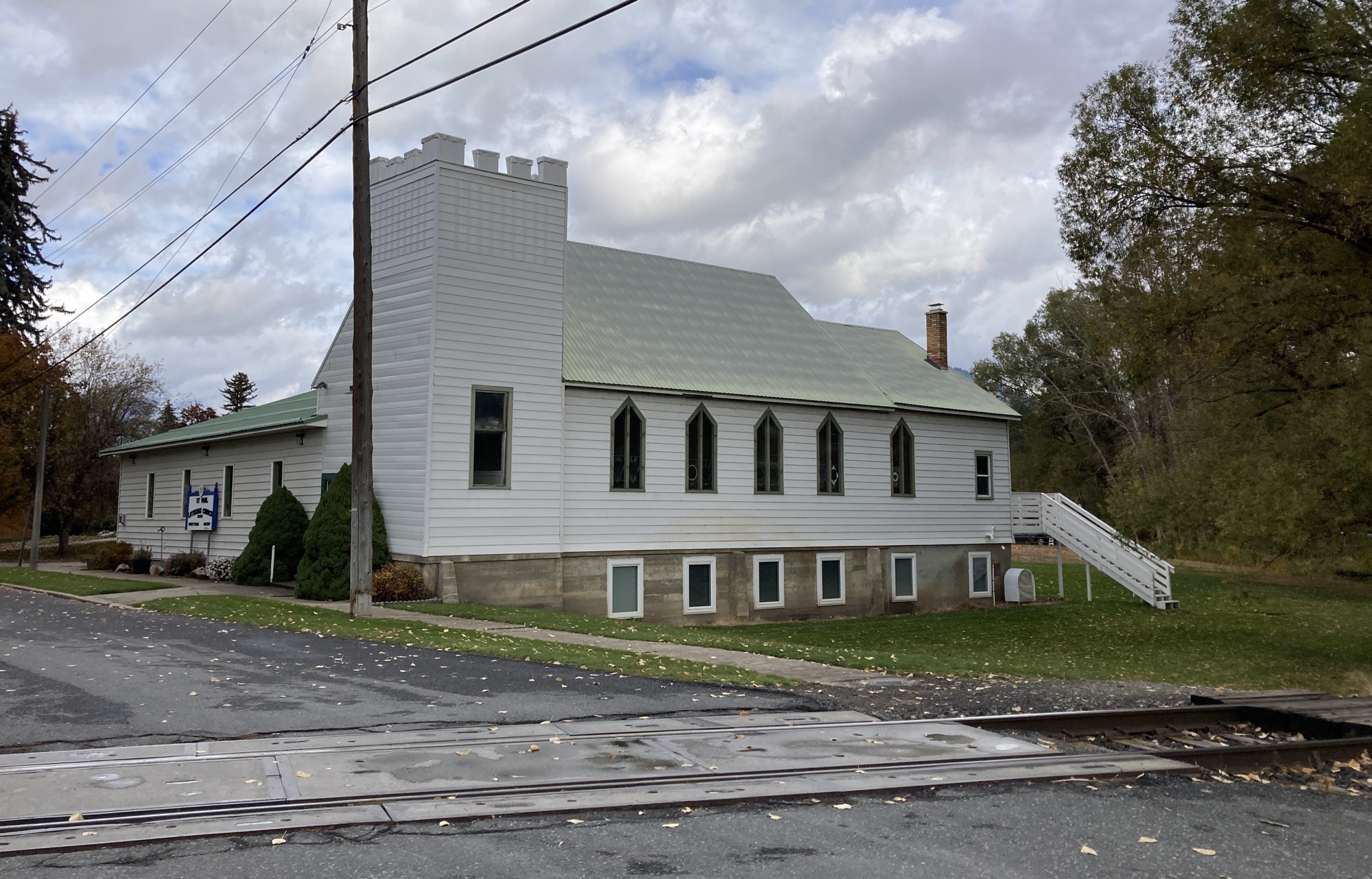
Sunday morning I went up to St. Paul, Chewelah (home church of one LMA student) and almost everyone else disbursed to different ELCA Lutheran and Episcopal churches for worship. Pastor Liv gathered them all at a restaurant and debrief over lunch and then people headed home.
I am making my way through a backlog of blog posts I could not post in real time because this time up in Spokane has been so full!
Was trying to get a pix of the new balcony, but it’s clearly around the corner
Yesterday, Reformation Sunday, I preached at St. Paul Lutheran in Chewelah, WA. This congregation has been served most recently by two retired pastors, Linda Webster and Bob Edwards, who come on alternate Sundays to preach and lead worship. They are just beginning the process of developing their ministry site profile. One of their members had been part of our our Preach, Pray, Preside Retreat in Spokane (see a future blog post) and it was nice to see Peter’s friendly face and hear his impressions of the weekend. After a lovely worship service in the sanctuary we gathered in the fellowship area for a Q and A. After answering a few questions I asked for any newer members to share why they started attending St. Paul and why they remained. It became clear that even in a small town with many many churches (reminding me a lot of my home town of Custer, SD), that St. Paul has a niche and understands what it is–a unique combination of sermons based in scripture and with a grace filled message, a place welcoming to women pastors, and a place with an open Communion table. After the Q and A I received a tour of the parsonage next door. As with many places I visit, we also ended up talking about the housing crisis in town. It may not be as bad as it is in Leavenworth and Jackson, but Chewelah’s housing market has been negatively impacted by more and more homes becoming VRBOs. It was also fun to hear the parishioners excitement for all the ways different people are stepping up, “thanks to so and so for leading or doing this” was a refrain throughout the morning. I am excited to keep walking alongside this congregation.
It’s an honor to be with you for this Reformation Sunday. Grace to you and peace from God our Father and the Lord Jesus Christ. Amen. In the world of grant writing, when you approach a foundation about funds for additional staff there is an industry term—capacity building. It’s called capacity building because the foundation hopes that instead of returning to its well of financial resources, your organization will hire a staff person who will raise money and create programs. He or she will increase your capacity.
Reformation Sunday lends itself well to considering what capacity building does the Lutheran church, specifically the ELCA and churches like St. Paul, have at its disposal for the next 5-10-50-100 years? We can provide safe places for people to ask questions and have discussions—about scripture, faith, science, economics, literature. This is pure gift for a community, the nation, and the world. And it is a natural part of who we are. At the same time, we are not a place where anything goes. Like Martin Luther, there are still some non-negotiables we confess and then declare, “Here we stand.”
Also, part of our capacity is our affinity to Ecumenism. Breaking up the church 500+ years ago is not something to celebrate. We continue to build relationships nationally and locally with other Protestant denominations. This coming week the Lutheran World Federation will celebrate the 25th anniversary of the signing of the Joint Declaration of Justification, the culmination of rich Roman Catholic-Lutheran dialogue. Several years ago, Pope Francis and the leader of the Lutheran World Federation celebrated a Service of the Word together in Sweden.
A leader in our church says that the second great gift of the Reformation, after being saved by grace through faith, is the understanding of vocation. People who encounter Jesus want to connect their faith, with their daily living and our tradition gives us the language. Every person has multiple callings—parent, child, mentor, teacher, doctor, accountant, custodian and others.
And, our greatest capacity lies in the text from this morning’s gospel. Jesus said, “You will know the truth and the truth will make you free.” These are well-known and oft-cited words, though increasingly people do not know the source. They are literally inscribed in stone on many educational buildings, including the Bond Chapel attached to my alma mater—the Divinity School of the University of Chicago, but also the headquarters of the CIA. These words have sometimes been turned into a kind of loyalty oath in Christian circles. But using Jesus’ words as a motto for knowledge and power or as a demand for right belief completely misses the mark. We can easily fall into the trap of believing our effort and our understanding will bring life. We hear a demand for our work and miss God’s word of promise.
What does Jesus mean by “truth” and “freedom”? Does it mean, if we just know enough and behave well enough, we will attain freedom? And isn’t freedom the problem after all? We have been given free will, the argument goes, and that is what has gotten us into trouble. Free will is blamed as the source of evil. Salvation is found in somehow escaping from freedom, as “surrendering to God’s will” which usually becomes a set of moral obligations. It can force us into trusting only right knowledge…right doctrine…right behavior.
But the Gospel of Jesus Christ has a different way of telling the human story: Humankind is not free despite what it might think about its proud lineage or powers. Humankind is deeply, hopelessly in captivity to sin and death. Jesus and his promise open a way to freedom, forgiveness, grace, and life. It is God who makes you free. It is not up to you. You do not have to live your lives constantly in fear of punishment, constantly trying to do the right thing. Paralyzed by your own fruitless, exhausting attempts at self-justification. Always looking over your shoulder.
A favorite scholar [Robert Capon] writes this about freedom, “If we are ever to enter fully into the glorious liberty of the children of God, we are going to have to spend more time thinking about freedom than we do. The church, by and large, has a poor record of encouraging freedom. She has spent so much time inculcating in us the fear of making mistakes that she has made us like ill-taught piano students: we play our songs, but we never really hear them, because our main concern is not to make music, but to avoid some flub that will get us in trouble.”
Think of the systems we have erected, and been trapped in to keep us all in line. We can’t hear the music. And what heavenly music do we miss because we cannot hear? The promise of freedom. You miss the reality that your freedom has been realized through the death and resurrection of Jesus. In our bondage, it has become all about us. Luther’s definition of sin, “the soul curved in on itself” traps us in our own echo chamber.
Pontius Pilate famously asked, “What is truth?” By our definitions, the truth Jesus announces that sets us free leads us to ask the same question. Is truth right doctrine? Is truth right knowledge? Is it something we must attain? The truth that comes through Jesus is not moral instruction or the right thing to do or even behavior, but God love and mercy. When Jesus promises that you will know the truth and the truth will make you free, he was speaking of a person who is true, who remains true.
The one who remains true is merciful, forgiving love brings life and freedom to the world. This truth is not information that can be taken and used to exploit and betray others, nor is it a secret code. It is Jesus’ promise to be true – true to God’s love and true to you despite all of your betrayals. When Jesus announces, “I am the way, the truth and the life,” Jesus is telling you that he is the embodiment of God’s compassionate mercy, true to the very end. Even truer than death.
Here is the good news. Here is the Gospel that Martin Luther discovered and that set him free. This is the truth that forms you into God’s liberated people. It is God’s promise that the former things are past. That the new covenant means not just a fresh start or another try for humankind, not just a little tweaking or a new page on a report card, no keeping account of future sins, but a sovereign promise pure and simple. In Christ, the one who is true, you are free.
Breathe that in for a moment. Free from the domination of sin, free from self-justification and self-righteousness, free from excluding people, free even from being Lutheran. And, since this freedom has been given by the one who is truer than death – you are free from death and freed for life. You are free to live in this truth and dare – dare anything – dare everything. And listen…you can hear the music of the one who loves us and is true.
I am writing to you today to draw your attention to Proposition 1 on the ballot this November. It is my privilege to share that our church is on record for unrestricted participation in all matters related to the ballot box. As you bring your faith-informed thoughts into the voting booth, I ask you to consider this.
As you may know, Idaho has, since 2011, had closed primaries. Put succinctly, Proposition 1 will create a non-partisan primary election, open to all voters. The top four will advance to the general election. In the general election, voters will pick their top candidates and also have the option to rank additional candidates in order of preference.
Why does this matter to people of faith? Lutherans care about government, including elections, because it is a gift from God intended for the safety and flourishing of human life. This Lutheran view of orderly government as “created and instituted by God” was formalized in our Lutheran Confessions back in 1530! (Augsburg Confession, article XVI.)
The ELCA social message on Government and Civic Engagement in the United States: Disciples in Democracy(Adopted by the Church Council of the ELCA 2020) reminds us “that all of us have a responsibility to make government function well. For us Lutherans, this responsibility is a calling from God, expressed in the discipleship described in our baptismal promises. When we consider how well government is doing its work, Lutherans ask one question: is the neighbor being served?” www.elca.org/socialmessages
That same social message also points to 14 guides for assessing the performance of government. Proposition 1 seeks to address #2: Unrestricted participation, “Efforts to restrict access to voting should be condemned and resisted. Examples include requiring voters to show identification without issuing identification to all eligible voters, purging voter rolls of those who have not voted recently, denying access to voting by mail, or closing polling places so that voting becomes more difficult for eligible voters. Active suppression robs voters of a key means of participation.”
Do closed primaries belong to this list of voter restrtictions? Beginning in 2011, a law went into effect in Idaho that restricts an elector to voting only in the primary election of the political party for which they are registered, unless a party notified the Secretary of State in writing that the political party elects to allow additional voters (unaffiliated voters and/or voters registered with another party) to participate in the party’s primary election. (See Idaho Code § 34-904A.)
Is voting yes on Proposition 1 a vote for unrestricted participation by you and all the neighbors God has called us to serve? Pray on this and vote accordingly.
In churches and sanctuaries across Washington State, faithful voices are singing about the beauty of creation in these Sundays of autumn: Giving thanks for the harvest, praising God for nature’s glory, and committing ourselves to care for the Earth.
We, the three Lutheran bishops of Washington State, join this anthem as we cast our ballots in this election. We urge voters to vote “No” on Initiative 2117, which attempts to repeal our state’s Climate Commitment Act.
The Bible calls us to love our neighbor and to take action to protect God’s creation for future generations. As the Evangelical Lutheran Church in America’s 2023 policy message “Earth’s Climate Crisis” states, this is a critical time when “God is leading us into decisive action” to protect the Earth and its climate.
We believe this is a moment for great hope. Our best scientists assure us that it is not too late: there is still time to avert the worst health consequences of global warming pollution, if we act now to reduce fossil fuel burning and transition to a clean energy economy. As Christians and followers of the teachings of Jesus, we must ensure that the poor and those on the margins are not disproportionately affected.
Washington State’s Climate Commitment Act sets a national example for decisive action to respond to dangerous global warming pollution. In its first year, the law has raised $2 billion, with funds directed toward transportation, clean air, renewable energy, conservation, and emissions reductions efforts, in every county across Washington State. It also sets aside money to help the poorest and most vulnerable.
For these reasons, we ask voters of faith and all who support a cleaner environment
to vote “No” on Initiative 2117. Repealing Washington’s landmark Climate Commitment Act would be a mistake. Going backwards on protecting the planet has steep, even deadly, costs for everyone—plants, animals, and people. While the Climate Commitment Act may not be perfect, we believe it should be modified rather than repealed.
Signed,
The Reverend Richard Jaech, Bishop, Southwestern Washington Synod
The Reverend Meggan Manlove, Bishop, Northwest Intermountain Synod
The Reverend Shelley Bryan Wee, Bishop, Northwest Washington Synod
Sermon preached for Bishop’s Fall Convocation Closing Worship.
Mark 10:32-45
It is easy to be hard on James and John in this morning’s scripture passage. Jesus has just predicted his death for the third time, the most detailed description, and they ask about being seated at his right and left hand, in Jesus’ glory. What are they thinking?
The truth is that this is not strange behavior, even or maybe especially for revolutionaries. Remember, that’s what they believe they are witnessing–a revolution, a change in power, and they are not completely wrong. It’s just that Jesus’ way of turning the world upside down is not what they anticipate, even when he has just spelled it out for them.
Consider those jockeying for power shortly after this country’s revolution. If you have seen Hamiltonon stage or on the screen, picture everyone in the first act. They may have their differences, but they are all so passionate about the revolution, being finished as colonies and continuing the American experiment. Act One ends with Alexander Hamilton and Aaron Burr both on stage singing to their newborn babies: “You will come of age with our young nation. We’ll bleed and fight for you. We’ll make it right for you. If we lay a strong enough foundation. We’ll pass it on to you, we’ll give the world to you.” There seems to be so much unity.
Alas, Act Two is all about Hamilton, Burr, and Thomas Jefferson jockeying for power. There is palpable tension between their love for the new nation, the vision for what could be, and who is going to leave the greatest legacy, or as the song goes, “who’s gonna be in the room where it happens.”
We could think it’s just revolutionaries like James and John and the Founding Fathers who get caught up in the desire for glory. On careful reflection, this passage always hits a little close to home. I remember the first year Trinity New Hope affordable housing participated in the Avenues for Hope campaign, a state-wide online fundraiser for nonprofits involved in housing and homelessness. Prize money is given to organizations who have the most dollars or most unique donors statewide and by region.
There were a few days towards the end of that first campaign that Trinity New Hope was neck and neck with a nonprofit from Boise, for third place in our region. Getting third would have meant another $1000. I got just a little obsessed with the glory of third prize. I finally laid back on my pillow and decided it was ridiculous. We were all working to impact housing and homelessness after all! It was a strong reminder of the allure of glory.
James and John are not the only disciples enticed by visions of their own glory or of a triumphant reign. The other ten disciples fume over the brothers’ bid to be the most prominent. Jesus corrects their vision by holding up the conventions of the Roman Empire’s political authorities as negative examples. They regularly “overpower” and “tyrannize” others. They rely on coercion and control to maintain their dominance.
Earlier in Mark we read the story of John the Baptizer’s death. In John’s case, the authorities’ self-interest, and self-protection trump justice to ensure John’s death. Jesus’ trial will display a similar kind of strong-armed political theater.
In absolute contrast, greatness among Jesus’ followers is measured by their ability to live as servants. That life will probably also include suffering oppression at the hands of those who wield power. Jesus will embody weakness in his trial and death. He will affirm the promise of his glorification and at the same time relinquish the power to prevail over others.
Jesus says, “For the Son of Man came not to be served but to serve, and to give his life a ransom for many.” Jesus’ death will be an example for such a way of living. His death will exemplify a radical rejection of authority and privilege. What makes the rejection so radical is the identity of the one who does it. It is Jesus, God’s own uniquely authorized agent.
Consider all that that one word means—ransom. Jesus’ mention of a “ransom” means that his death will be more than just an inspiring example or a martyr’s tragic protest against an unjust system. The word suggests that his death does something; it secures a release. “Ransom” does not mean a specific type of payment, as this passage has often been interpreted, especially when paired with the RCL complimentary text from Isaiah 53.
Here, Jesus is talking with his disciples about power and servanthood. A ransom is a liberation created by divine strength, not by payment. Jesus declares that God, through Jesus’ death, will free people from oppression and captivity to another power. We had a foreshadowing of this earlier in the gospel, “No one can enter a strong man’s house and plunder his goods unless the strong man is first bound; then indeed his house may be plundered.” Well, here comes the plundering and liberation, but not in the way anyone anticipated.
The baptism he is baptized with is the way of the cross. The cup he drinks is the way of crucifixion by a world ruled by domination. Jesus has come to serve and to give his life away for you and the entire cosmos. Through Jesus’ death, God frees you from oppression and captivity to another power.
The disciples’ misunderstandings would make us think that they never did learn the discipleship Jesus was teaching. We might thing they never did understand that Jesus freed them to serve others. But the disciples did learn. The early church did preach Jesus’ gospel and upside-down way of life where the first are last and the last are first. And such discipleship has been carried down through the centuries.
Consider our hymn of the day. So often poetry and art and music can say more than a well-formed essay. In the first verse, Pastor Susan Briehl names God’s glory multiple times. In the second verse we sing, “power without peer, you bend to us in weakness, emptied, you draw near.” Then, “beauty unsurpassed, you are despised, rejected, scorned, you hold us fast.” And then in the final verse, “life that never ends, you show your love by dying, dying for your friends, and we behold you living.” We sing succinctly the paradox of Jesus crucifixion and resurrection which liberates you and me from the forces of evil and liberates us for the servanthood Jesus modeled.
This liberation that you know so well as leaders in the church is like nothing else. It’s why you are all still in this. You trust the promises of the font and altar, the promises for you and those in your care. And you and I get to be the stewards of this liberating message the world still so desperately needs. What a calling and what a gift. Thanks be to God.
Yesterday afternoon I drove up through the Blues in Northeast Oregon to Kennewick. Thanks to Heidi and Dan Cryer for their always warm hospitality.
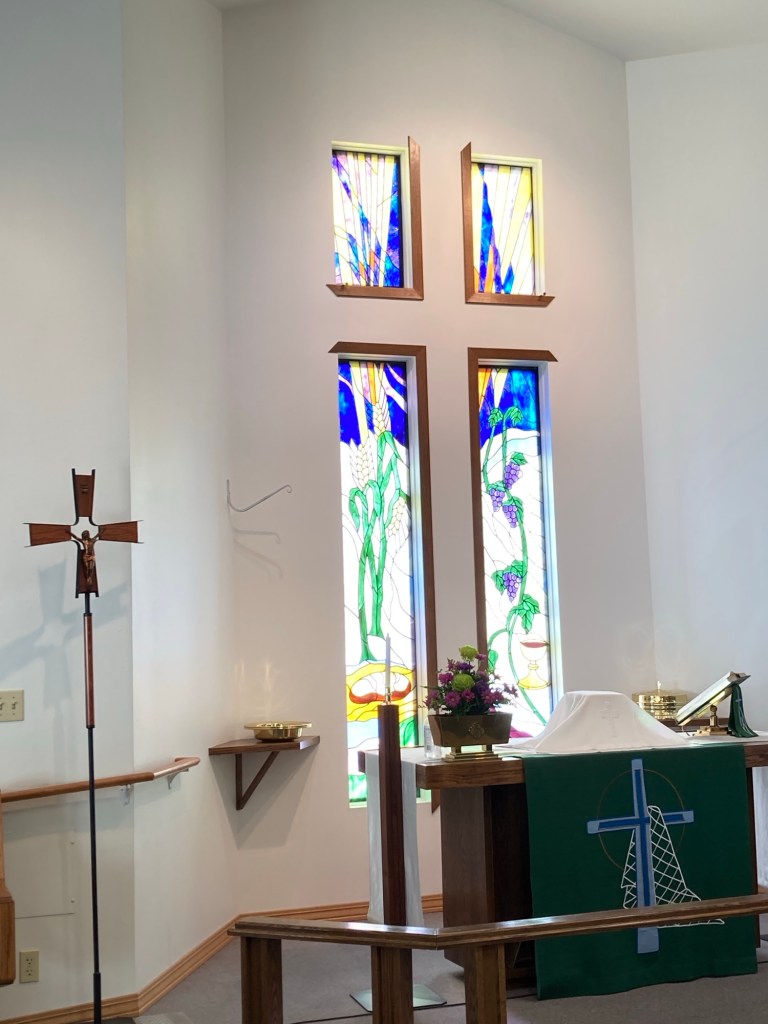
This morning I drove to Our Saviour Lutheran in Sunnyside, WA. This congregation has been sharing their pastor, Tim Carnahan, with Faith Lutheran in Toppenish. As Faith has sold its building and is closing, Our Saviour is entering a season of transition, wondering what is next.
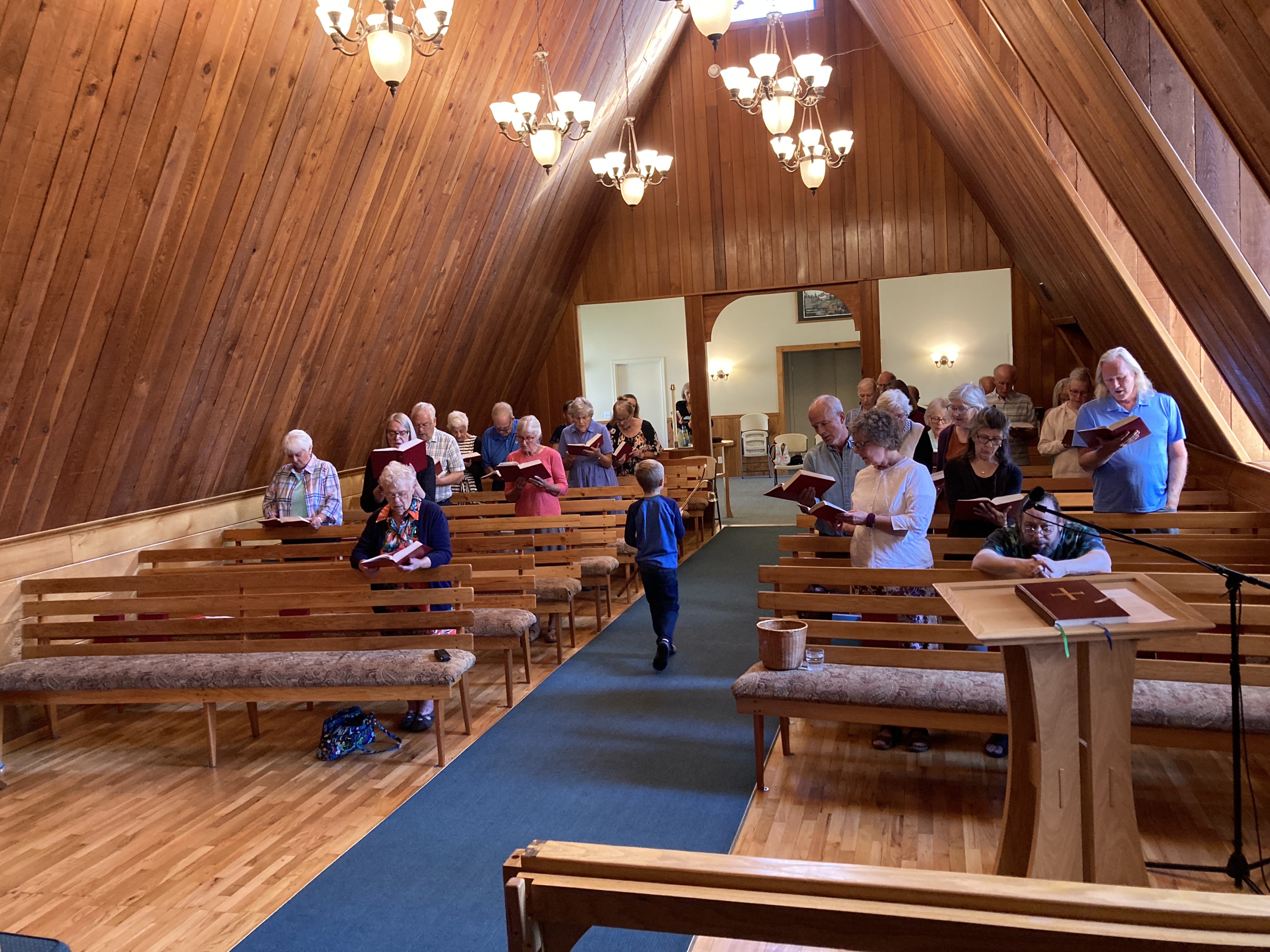
The sanctuary we worshipped in was built in 2000. I love the cross formed by the lovely stained glass windows.
The church has both a food pantry and free library. So many monetary donations have come in for the food pantry in the last few years that the church just bought a freezer to enhance its feeding ministry.
I adapted the following from a portion of my D.Min. dissertation Equipping Lutherans for Faith Storytelling.
I grieved when I realized the people in my congregation did not feel that they had a grace-filled faith story to tell other people. We were a group of people who were collectively walking the talk of Christian discipleship. We were living out the gospel of Jesus Christ through feeding and housing ministries. We strived to practice authentic hospitality, and our worship reflected both tradition and communal creativity. When I went out of town, I often talked about my congregation with words expressing love and joy, but most members felt ill-equipped to talk about the congregation and their faith. In response to this grief and after a great deal of research, I created a faith storytelling workshop for my congregation.
I began my theological exploration convinced that the two perspectives my Lutheran tradition has to offer the ecumenical conversation about faith storytelling are the priesthood of all believers and our being theologians of the cross. Both are confirmed as gifts in the tradition. Through the daily task of ministry and my reading, I also discovered a third gift, the room for mystery in the Lutheran tradition. Room, or openness, to mystery may not be unusual in all contexts, but I believe it is in southwestern Idaho, where I live.
Have you ever said to someone, “I don’t think we’re on the same page”? It’s a description of a frustrating conversation. There seem to be similar words and concepts but also a clear disconnect. Finally, you pause, and you realize you are talking about two completely different things. It happens in our passage from Mark’s gospel today.
Simon Peter had a moment of brilliance earlier. Jesus asked his disciples “Who do you say that I am?” And Peter answered, “You are the Messiah.” He was on the same page as Jesus. And Peter’s conclusion was logical. Peter had been up on the Mountain of Transfiguration and been blinded by a radiant Jesus. Jesus had healed countless people. Jesus seemed like a savior, the Messiah. So, topping off these great moments was Peter’s confession.
On the other hand, there have been disturbing moments. Jesus speaks several times about his future suffering and death. Peter rebukes him for these unpleasant predictions. And Jesus scolds Peter for this rebuke. They are still talking about Jesus, the Messiah, but Peter’s idea of what a Messiah is, how he acts, is not in sync with Jesus. Jesus says, “The Son of Man is to be betrayed into human hands and be killed.” Jesus and the disciples are not on the same page.
Then, as they enter the town of Capernaum, Jesus turns and asks the disciples what they were arguing about. They must have been embarrassed. Their awkward silence is palpable. One writer [Eugene Peterson] calls the silence “deafening.” We have all been in that position.
Imagine—some kids make a raucous in the basement. A parent calls down the stairs, “What’s going on down there?” The response is “Nothing, nothing!” The disciples have been discussing who among them is the greatest. Jesus has been talking about his death and they are talking about who is the greatest. Who would not be embarrassed? Of course, Jesus, like a parent, already knew what was going on.
We should not think ourselves superior to the disciples. We would probably feel similarly uncomfortable in their place. This is not an exercise in attacking their flawed ideas about discipleship. We could easily become distracted by judging ourselves greater than the disciples—more faithful, more aware, more on the same page as Jesus. Today’s stories are about how we, so many years later and with the full narrative of Jesus in mind, might follow Jesus.
After interrupting the argument about who is the greatest, Jesus sits down like a teacher. We know this is not casual conversation. He is going to say something crucial. Jesus often uses more than words to teach his lessons. This case is not different. This time his illustration is a little child. We have several stumbling blocks to go over before we can truly understand this illustration.
A child in our culture is deeply valued and put first in our priorities. At least we would like to think so, in spite of the number of children in poverty. We coo over babies. We cheer on kids when they sing and play. And youthfulness is glorified just about everywhere.
And artists through the ages have not helped us. Can you pull up in your memory a painting over an altar or in a church narthex portraying children? They were often, at least in the last century portrayed as pure and angelic. More importantly, there seem to be lacking in nothing. It is easy for us to sentimentalize Jesus’ action of picking up a small child and telling his followers to do likewise. It is a sweet scene—Jesus tenderly cuddles a child and appeals to the soft hearts under the tough exterior of these big rough disciples.
But that is not what is going on here. Instead of a sweet moment, the disciples are experiencing a radical up-ending of the way they think things should be. In the time of Jesus, a child was lowest on the priority list. Children had no status. They were subject to the authority of their father. Often, they were expendable. And so Jesus gesture here is potent.
The child that Jesus reaches out to is similar to many of the children in Charles Dickens’ novels, except for Tiny Tim, the star of the famous story “A Christmas Carol.” When I hear Jesus tell his disciples, “Whoever welcomes one such child in my name welcomes me,” I imagine characters like Jo from the great novel “Bleak House.”
Dickens writes that “Jo lives in a ruinous place, known to the like of him by the name of Tom-all-Alone’s. It is a black, dilapidated street avoided by all decent people, where the crazy houses were seized upon when their decay was far advanced by some bold vagrants who, after establishing their own possession, took to letting them out in lodgings.”
Jo and other child characters in Dickens’ works are often referred to as urchins, small raggedly children who do their best to survive in an adult world. The root of the word comes from the Latin for hedgehog, a rather prickly unkempt-looking animal. The good news is that in the novel there are people who not only look out for Jo but who bring him into their home.
Jesus’ disciples are not there yet. This is a radical up-ending of the way they think things should be. This is not what they hope life will be like when Jesus comes into their idea of glory. They want to find their way to the top. They want to claim greatness. And he tells them to lay claim to the last and lowest place and people. When they welcome a child, they welcome him. They even welcome the one who sent him. Picture the urchin child Jo again.
Jesus’ command makes no sense to the disciples. Welcome someone who does not have the power or ability or place to welcome them in turn? No expectation of reciprocity? No return on our investment. First, our teacher keeps talking about suffering and dying instead of victory and glory. Now we must welcome and even value small, insignificant, powerless people, the least among us?
Every generation of Christians in every geographic context gets to translate “the least among us” for our time and place. What does that look like in 2024 in Chelan, WA. The truth is that I have followed your congregation since becoming a pastor in the synod in 2010 and I know that you have been quite attentive to the least—be they veterans, people from all walks of life who might have died alone without this congregation, other congregations struggling for whom you have prayed faithfully.
But the world keeps turning and there are always new people on the margins of the notebooks of our lives. Who are you being beckoned to welcome today? What are the hurdles?
Remember that the original argument in this morning’s gospel text is all about greatness. The promise for you and me today is that Jesus’ becoming human, the incarnation, overturned the world’s understanding of greatness. Because God becoming human decided that greatness is not about separation, it’s about solidarity. Greatness is not about being better; it’s about relationship. Greatness for God is about being with—Immanuel—which means God with us.
Strength comes in weakness. Glory is found in the death on a rugged cross. Welcoming children is like welcoming Jesus. And thanks be to God, you do not have to fully understand in order to follow Jesus. You can be a bit like those early disciples who couldn’t always put the pieces together, were not always on the same page as Jesus, but kept stumbling after him anyways.
Faith is about trusting the promise of God’s love and all the promises encompassed by that love. Full comprehension is not required for you to hear the words of forgiveness and love. Full comprehension is not event required for you to participate in the Lord’s Supper. You simply have to put out your hand and receive. We follow Jesus as the disciples did, because we know that Jesus is the only place worth being. In him there is love and abundant life for the world.
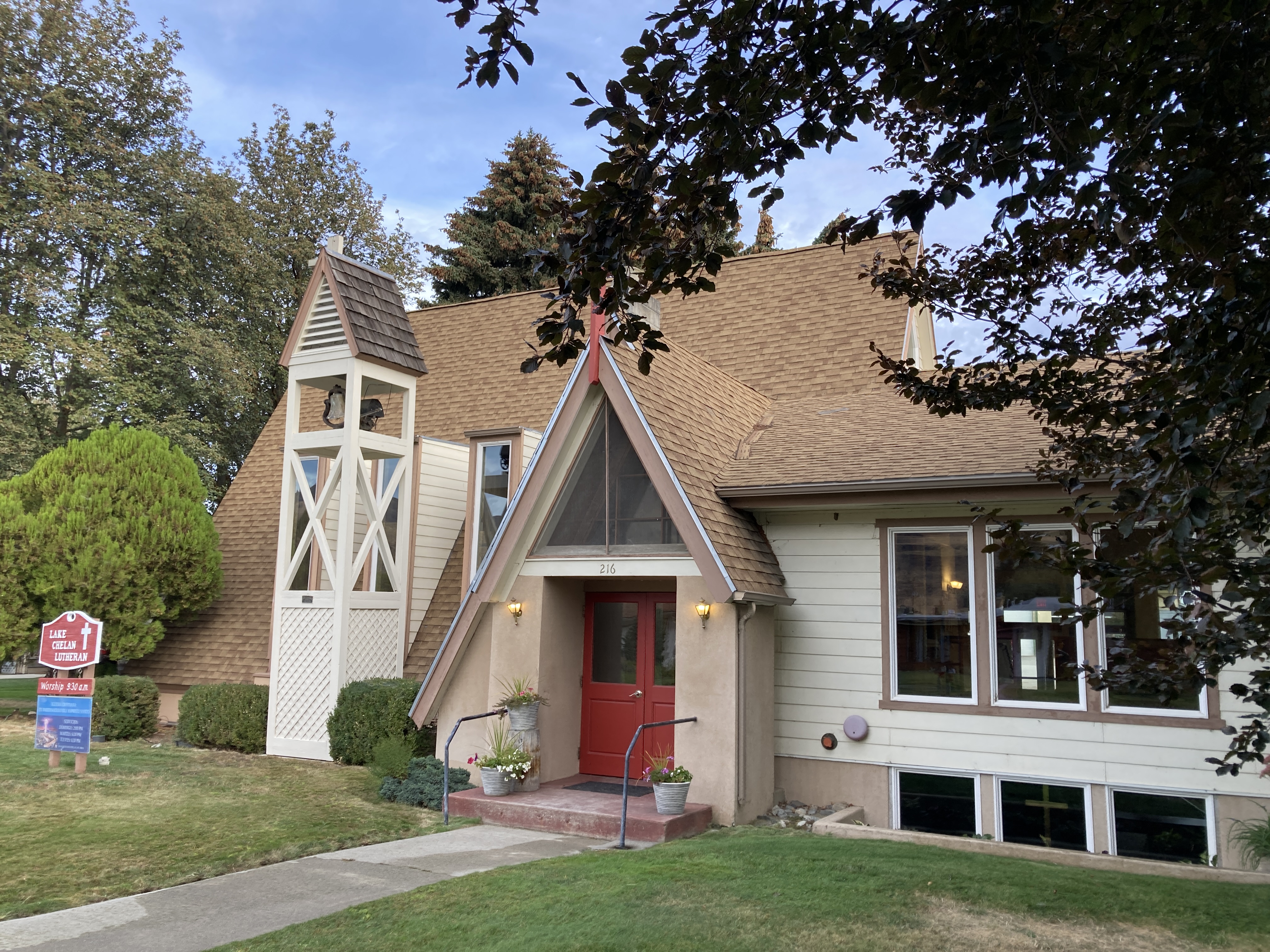
Lake Chelan Lutheran-host of soooooo many seminary interns over the years!


 Op Ed – Evangelical Lutheran Church in America