Regional Board Meetings

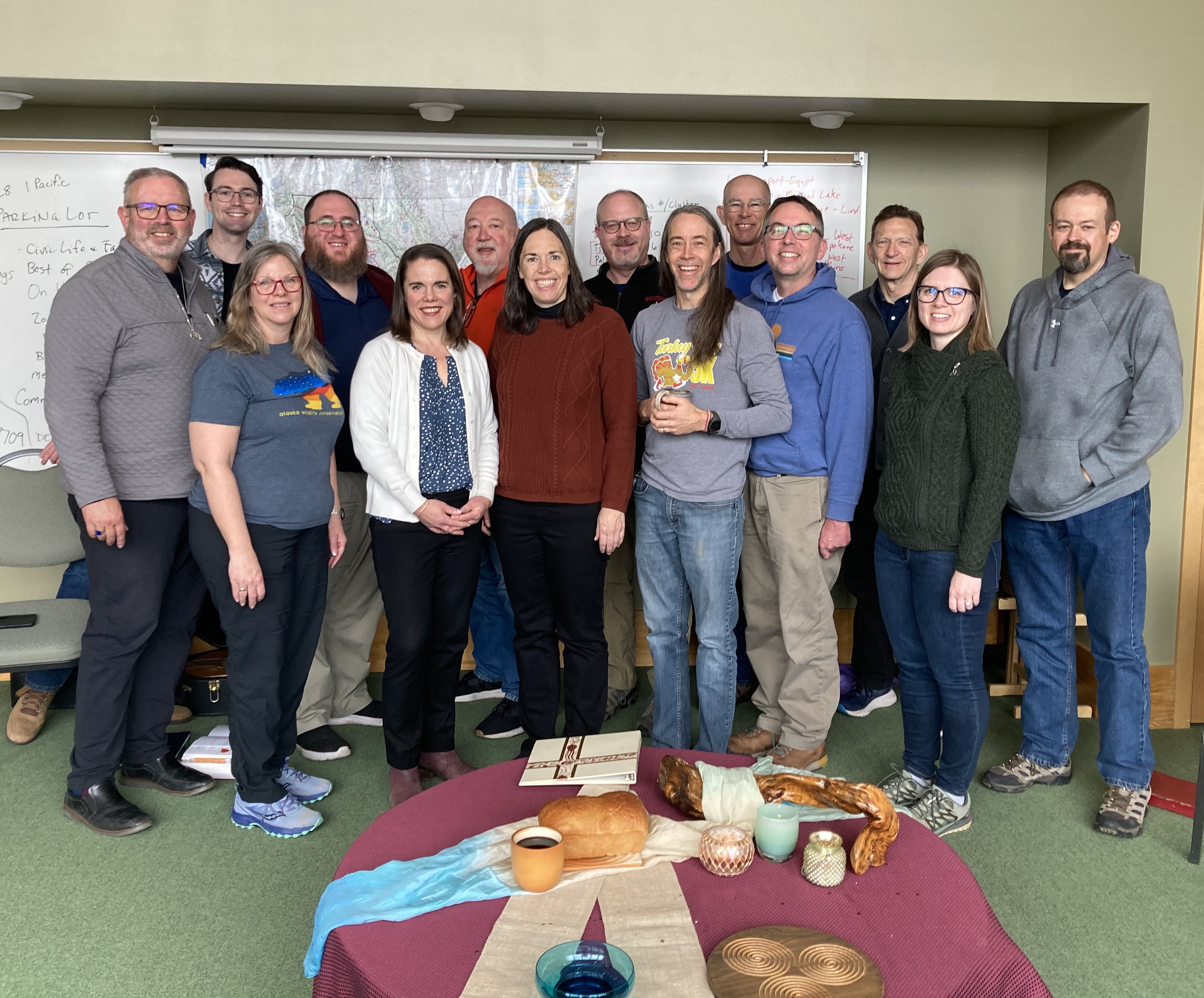
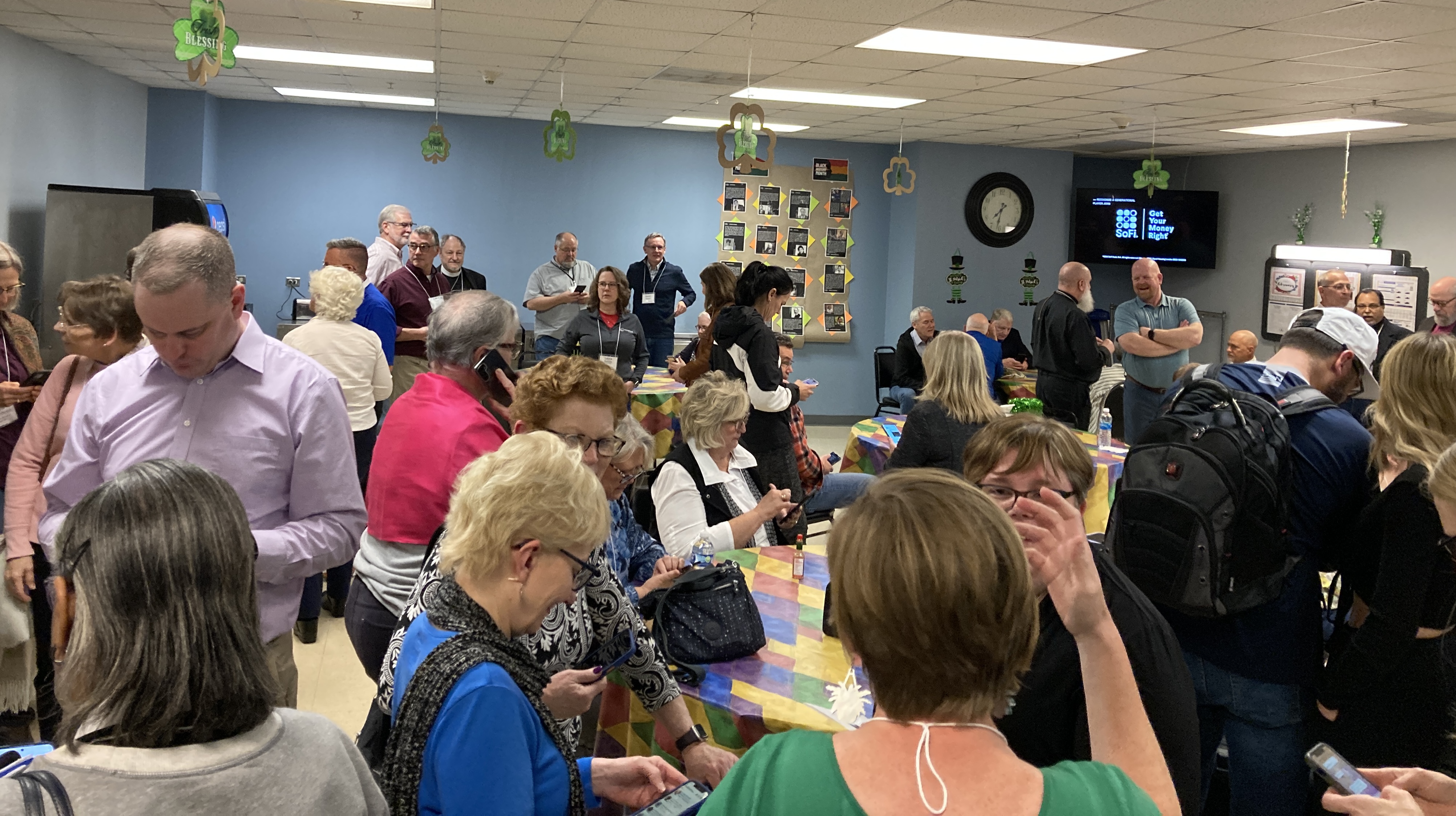
Yesterday I was on the Pacific Lutheran University Board of Regents meeting from 9am to 4:30pm Mountain Time. As I think I blogged before, when I went to my first Region 1 bishops meeting, I was offered the choice of being on the Luther Seminary board or the PLU board and I jumped on PLU, mostly because it’s closer. Three of us bishops from Region 1 sit on the PLU board at one time and right now it’s Bishop Laurie Larson Caesar (Oregon), Bishop Shelly Bryan Wee (NW WA), and me. Bryan Wee also took on the Luther Seminary Board. She’s an alum so that made all sorts of sense. Bishop Rick Jaech (SW WA) is now on the California Lutheran-PLTS board. Bishop Laurie Jungling (Montana) sits on the ELCA church council; recently took that from Bishop Shelly Wickstrom (Alaska). We are all doing our part and I am grateful for my assignment which includes two in-person meetings each year in Parkland and yesterday’s online meeting.

One thinks the middle-judicatory (synod) of the mainline church is a tough place to be and then you get a peek into higher education and you realize what a challenging arena it is right now. The big news out of PLU is the announcement of brand new partnerships:

Partnership for Health Innovation

Pacific Lutheran University is home to a new health education and care district in Parkland, Washington, powered by PLU, MultiCare, and Washington State University’s Elson S. Floyd College of Medicine. This collaborative partnership will work to address health care inequities and provider shortages in Pierce County and beyond. read more

I serve on the Student Life Committee and in our break out room, we got to hear about J-term experiences, which was fun.

I was reminded that a few PLU professors helped author So That All May Flourish: The Aims of Lutheran Higher Education

We heard about the FAFSA disasta and learned what PLU is doing to help families navigate this mess.

The Free Application for Federal Student Aid (FAFSA) is the annual application to apply for financial aid at Pacific Lutheran University. For the 2024-25 academic year, the FAFSA is undergoing significant changes, a process known as FAFSA Simplification that was enacted by Congress in 2021. The FAFSA typically opens on October 1st, but for 2024-25, it will not be open until December 2023. In the meantime, we will be sending email communications to students and families with information about the changes you can expect to see with the new FAFSA and the 2024-25 financial aid application process. If you have questions, please email us at sfs@plu.edu or call 253-535-7161.

We also learned about how NCAA Division 3 schools are addressing the NIL discussion; which was fascinating after recently watching the film Air (about Nike signing Michael Jordan). The Athletic Director told us PLU has partnered with Opendorse.

It was a long day with hard discussions but I am honored to be in the room with such great minds and to be on the board of institution with a compelling mission.

This morning, Bishops Larson Caesar, Bryan Wee, and I were back online for a Lutheran Community Services Northwest meeting, just missing Bishop Jaech. I was reminded what vital work they are doing around the region, including in the Tri-cities, Spokane, and Boise. This is a pan-Lutheran organization and so we were also joined by the Missouri Synod District President, who recently announced his retirement after 15 years. I am so glad I got to meet him, even if just this once, because my colleagues hold him in high regard. My take away from this meeting is the simple but important reminder that we are never in this work alone.

Posted in NWIM Synod | Tagged , , , , | Leave a comment

Quick trip to Tri-Cities and Walla Walla

Saturday afternoon I drove up through the Northeast corner of Oregon to Lord of Life Lutheran Church in Kennewick, WA. I got to the church early and took a short walk to get the blood flowing. I was helped on the drive there and back by finally listening to Atul Gwande’s best seller Being Mortal: Medicine and What Matters in the End. Listening to this book made me so proud of our synod’s work around Estate Planning for the Heart.

I didn’t end up needing my new snow tires, but I was glad to have them just in case the weather turned.

Cluster Dean, Pastor Kirsten Sauey Hoffma hosted a conversation with retired and active pastors and deacons in the Tri-Cities: leaders and members of Lord of Life; Kennewick First Lutheran; and First Lutheran Church, Pasco. We talked about Tri-cities Latino Ministries starting up again, joint events among the three congregations, and generally what’s going well and what’s a challenge right now. It was a great few hours together.

I drove over to Walla Walla to retired Pastor Joel and retired Deacon Margaret Ley’s home. Joel retired from Christ, Walla Walla in the spring and last fall Margaret retired from chaplaincy in the Tri-Cities. It was so wonderful to catch up with these two.

Sunday morning I preached and presided at Christ Lutheran. We often have opening worship and the first plenary at Christ Lutheran whenever Bishop’s Fall Convocation is in Walla Walla, as it will be Oct 14-16, 2024. So the sanctuary was sort of familiar and stepping in brought a little nostalgia. The nave filled in and it was a wonderful worship service.

But I was invited to Christ for what came after worship: a conversation about the housing crisis in town and an invitation to tell the story of Trinity New Hope, the housing connected with my former congregation. Next week, Christ’s Social Justice team is beginning a series after worship using the ELCA World Hunger’s study: “Housing: A Practical Guide for Learning, Advocating and Building” It’s is an outstanding resource and I am a bit embarrassed I have not been promoting it more.

More resources and things I mentioned during my presentation and afterwards during the Q and A:

Avenues for Hope Video, skip to testimonies by two residents.

Summary of this work that I wrote for Luther Seminary’s Faith+Lead: https://faithlead.org/blog/land-to-live-on

Spokane Presbytery Grant  Reach out to Drew Peterson. drew@presbyinw.org, 509-496-2916

Book Gone for Good by Mark Elsdon. Here’s his WEBSITE.

Synod’s Regional Gatherings this spring. This topic will be tangentially part of the day. 

My book review on Homeless Is a Housing Problem

My book review on two books about zoning

Check out the work of Christ Lutheran’s Social Justice Team below:

After the conversation about housing, Interim Pastor Mike Ostrom and I headed to brunch at Bacon and Eggs. I love downtown Walla Walla! Talking with Mike, I realized that Walla Walla is about the size Rapid City, SD was when I was growing up in Western South Dakota. We talked about the changing church, the Mountain West, the ELCA, thinkers and writers and theologians we are paying attention to these days. Then I headed home to the Treasure Valley.

If you want to SUBSCRIBE to my blog and get email notifications, there are a couple ways to do it.

  • If you are reading this on a mobile device, there may be a Follow button at the bottom that you can simply click on and type in your email.
  • Or, go to the menu on top (three lines). Click About. Scroll to the bottom where in fine blue print (within a blue background) it says View Full Site. Click on those words. Over in the right column you can type in your email address and hit Follow.
Posted in NWIM Synod, Reflections | Tagged , , , , | Leave a comment

Feb. 4, 2024 at Christ Lutheran, Walla Walla

Christ Lutheran, Walla Walla

Mark 1:29-39

29As soon as they left the synagogue, they entered the house of Simon and Andrew, with James and John. 30Now Simon’s mother-in-law was in bed with a fever, and they told him about her at once. 31He came and took her by the hand and lifted her up. Then the fever left her, and she began to serve them.

32That evening, at sundown, they brought to him all who were sick or possessed with demons. 33And the whole city was gathered around the door. 34And he cured many who were sick with various diseases, and cast out many demons; and he would not permit the demons to speak, because they knew him. 35In the morning, while it was still very dark, he got up and went out to a deserted place, and there he prayed. 36And Simon and his companions hunted for him. 37When they found him, they said to him, “Everyone is searching for you.” 38He answered, “Let us go on to the neighboring towns, so that I may proclaim the message there also; for that is what I came out to do.” 39And he went throughout Galilee, proclaiming the message in their synagogues and casting out demons.

I love the beginning of Mark’s gospel so much. It is so clear, in every incident and story, that God, who has come in the flesh in Jesus Christ, is a God of life and wholeness. The God we worship cares about human bodies, yes, as well as our souls. This is a God who wants the world teaming with belonging, beloved community, and deep joy.

We are still in the season after Epiphany, the season of manifestations, of learning who this Jesus is. Today we see and hear that Jesus cares about bodies and souls, not one or the other. Jesus is also a teacher and leader who uses both words and actions, and his words and actions are aligned. His primary task is the preaching of the good news of God, the news that God is breaking into human reality. But there is more, as we read this morning. In Jesus’ present preaching, what he proclaims, the future intervention of God, actually occurs.

In our passage today, we encounter the first person to be resurrected. And this is a very big deal in Mark’s gospel. You see, the word used for lifted her up is the same one translated as raised her up – as in resurrection! This is what new life looks like – not just for this woman, but for all of us. When Jesus takes your hand, and raises you up, you are meant to use your renewed life to serve others: Women, men, children, all followers of Jesus! 

This word will show up repeatedly in the Gospel of Mark, as Jesus heals people; he’s bringing the resurrection into their lives. There’s no account of Jesus’ actions after his own resurrection in the Gospel of Mark. However, the disciples are instructed to go to Galilee, where Jesus did all these acts of healing to remember what resurrection looks like. But this woman’s story is the first resurrection story of all of them! 

Let’s consider her for just a minute. We know she’s a mother-in-law, so imagine, probably past the age of bearing or raising children herself. She is possibly past the age of being pursued by men who find her attractive. But she is certainly not past contributing to the good of her community and the work of God in it.  

I assume many of you have been through a serious illness or injury, or perhaps childbirth, and healed to the point of returning to your previous life. Well, resurrection might ring true to your experience. Just to be able to do the most mundane things for yourself again is like a breath of new life. 

But other times we don’t spring back. Maybe your condition is chronic and is not going to get better.  Or consider a new parent who struggles with postpartum depression. We don’t know if the woman in our text sprang back into action without any side effects. 

Jesus still extends a hand to raise you up to new life, but instead of returning to the old one, it is to a new normal, and we have to learn to navigate what service to others looks like for us now. Part of your new way of interacting could include a new-found empathy with those who are suffering. The new normal is new life, it’s just different because we have been transformed by our suffering. 

Nonetheless, after Jesus raised her up, the woman “served” them (not just Jesus, but a whole group of them). The word for “served” is the same one we use for ministeringdiakonia, from which we get “deacons” those rostered leaders who are ordained to “Word and Service” instead of Word and Sacrament. 

This woman is not only the first resurrection story, but the first minister. Serving epitomizes Jesus’ own ministry: “For the Son of Man came not to be served but to serve, and to give his life a ransom for many.” (Mark 10:45). Serving also epitomizes following Jesus. In the waters of baptism we are not just freed from sin and death, but freed for neighbor love, for service, in its many beautiful manifestations.

To be released from illness and restored to oneself means one can fulfill responsibilities to others. Repairing the bonds of family and community is a dimension of resurrection. In Mark’s gospel there is no “individual” healing, only those that repair relationship: son to father, daughter to mother, and here, mother to children. 

The resurrection life that Jesus proclaims here at the opening of Mark’s gospel and that Christians experience, is not unambiguous or uncomplicated in the world in which we live. The verses that follow this story of resurrection suggest the enormity of the suffering (“the whole city was gathered around the door”) and the toll the ministry takes on Jesus. Mark’s gospel is honest about the opposition to and the cost of healing people.

The summary of Jesus’ healing in today’s text shows us Jesus’ compassion for the poor and so many who are ailing. There is a socio-economic character to this story. From the very beginning Jesus the healer experiences the incessant press of needy masses. The way he responds to the destitute subjects despite continual opposition dramatizes his preferential ministry to the poor.

Economic and political deterioration had dispossessed significant portions of the First Century Palestinian population, especially in the densely populated rural areas of Galilee. Disease and physical disability were an inseparable part of the cycle of poverty (a phenomenon still true today despite modern medicine). For the day laborer, illness meant unemployment and instant impoverishment. Jesus’ healing ministry is an essential part of his struggle to bring concrete liberation to the oppressed and marginalized of society. 

Jesus and all healers of that period could only perceive illnesses and not diseases. Notice the little regard for symptoms. Jesus heals. He does not cure. Illness was associated with impurity or sin, a state that mean exclusion from full status in the community. 

Jesus always seeks to restore the social wholeness denied to the impure by the social order. This is why his healing is interchangeable with his social interactions with them. His acts defy the order that segregates those who lack bodily integrity. He was constantly challenging the prevailing social boundaries and class barriers. This is why Jesus the healer was a threat to civic order. And so, his miracles were not universally embraced. Depending on one’s status in society, one either perceived Jesus’ miracles as a real threat or as pure liberation. 

The implications of Jesus’ preaching and healing, the inbreaking of the reign of God, intersected forcefully with real life Thursday morning as I sat in the Idaho State Capital. I sat there and listened to the reading of a bill which could repeal Medicaid Expansion, my adopted state’s effort to insure those in the health insurance gap. The explanation and argument for the bill was made by an out-of-state lobbyist. Only two other people spoke in support of the bill.

For two-and-half hours the committee and those of us in the hearing room listened to two-minute in-person and remote testimony overwhelmingly arguing against the bill. Again and again, we heard stories about how, since the ballot initiative in 2018, when hundreds of signatures were collected from across the state, people’s lives have changed for the better. Yes, they have received medical care previous not available to them. But that was never where the stories ended. 

What followed medical care of diseases and, equally as important, preventative measures, was entrepreneurship, people better able to parent their children, employees able to work in small businesses. My favorite was the doctor who called in from Couer d’Alene to tell us about his small engine mechanic patient now able to control his diabetes. What is so beautiful about the Medicaid Expansion Initiative in Idaho is that it was not just a new law that changed people’s lives. It was a movement across the entire state, a movement that said we collectively believed in this expansion and what it stood for—wellness and wholeness of body, mind, and spirit. I have no idea how many of those who testified confess the faith we do. It doesn’t matter. We saw and heard the inbreaking of the reign of God in words and actions. Side note—the bill stayed in committee. Which in Idaho we take as a win. Liberation and new life will continue. 

Posted in Sermons | Tagged , , , , | Leave a comment

Beginning & Ending at Julia Davis Park

I started this beautiful day with a hike along the Boise Greenbelt with Luther Heights Exec Director Kelly Preboski. We said, as I repeated all day, that we were grateful for the lovely weather even if it was a bit odd for late January, even in the high desert of the Treasure Valley. It’s always good to catch up with Kelly.

Then I drove over to the Episcopal Diocese of Idaho offices to meet with Bishop Jos Tharakan and Canon to the Ordinary Rev. Emily Van Hise. We each had a list of collaborative efforts to discuss but our conversation also wandered into how we faithfully cover the geography that is the mountain west. I am so grateful for these partners in ministry.

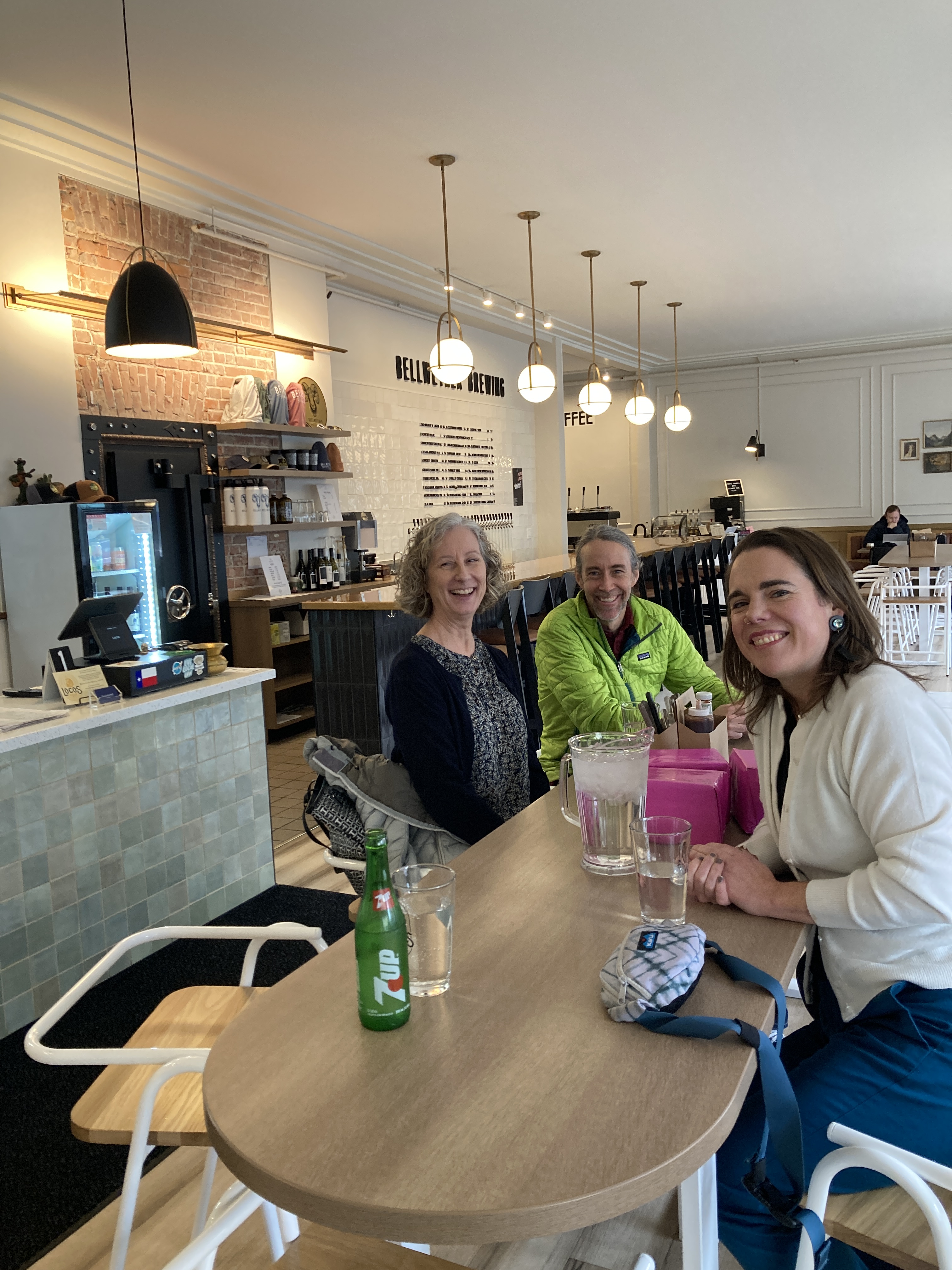
Then I headed off to my new friend Traci’s home for lunch. Traci Lofthus and I met through the Idaho Nonprofit Leadership program back in May. This lunch, on the schedule for a while, was great timing because our Northwest Intermountain Synod Assembly passed a resolution last April encouraging more congregations to create diaper banks and Saturday during the synod council meeting we started strategizing about carrying out the resolution. Traci is the Exec Director of the Idaho Diaper Bank! So in addition to all the things of life and learning how the Bank’s warehouse just moved, we brainstormed a bit about how she could equip and inform our congregations in the Treasure Valley and all across the synod. We’re thinking a Zoom open house of sorts.

After lunch I set off to Hyde Perk Coffee House, near the next appointment, for a Zoom call with Assistant to the Bishop Pr Phil Misner and Pr Laura Teriyaki, Executive Presbyter of the Northwest Coast Presbytery. If you think the NWIM Synod has some big geography, check out this territory, which includes the Tri-cities, central Washington, skips Seattle, and then goes up to Alaska. Laura started a few months before I did, so we’re kind of in a similar stage of figuring out a new call. We were also joined by Stated Clerk Pr Lillian Park, who serves part-time the UCC church in Colville, WA. Small world as Colville is in our NWIM Synod. It was a generative and fun conversation about partnerships and sharing resources.

Next was an appointment with my coach, something that also came out the Idaho Nonprofit Leadership program. I have bought into the ELCA’s coaching culture in large part because of my own experience as a recipient/participant in coaching. It’s not always comfortable, but the struggle is worth the clarity I gain.

Finally I headed back to Julia Davis Park and the Idaho State History Museum, site of the annual Avenues for Hope celebration, for the housing nonprofits across the state. I came in after the speeches and hoopla and got to connect with the staff of Leap Housing, whose board I sit on, AND my pal Stephanie Day, exec director of CATCH, who I have known for 13 years. Stephanie is one of those people I can pick up a conversation with even if we haven’t talked in person for a few years.

Posted in Housing, NWIM Synod | Tagged , | Leave a comment

Report for Synod Council

Bishop Manlove’s Report to Northwest Intermountain Synod Council

Jan. 27, 2024

“For by grace you have been saved through faith, and this is not your own doing; it is the gift of God.” (Ephesians 2:8)

We exist first and foremost to proclaim this life-giving gospel. What does this look like for an ELCA synod bishop? I am using the introduction to the election, read by ELCA Secretary Sue Rothmeyer at Synod Assembly 2023, to frame this report. A bishop is….

A Pastor: It has been a privilege and honor (and quite fun) to preach and/or preside at Emmanuel, Moscow (Installation); Grace, Mountain Home; Faith, Caldwell; Zion, Spokane Valley; LCM Cheney/Spokane (Installation); Our Savior, Pinehurst; St. John’s, American Falls; and at Bishop’s Fall Convocation since our October meeting. I also dedicated foundation stones and participated in an ordination during the trip to the Ulanga Kilombero Diocese of Tanzania. 

A Servant: I attended my first meeting of Pacific Lutheran University’s Board of Regents (three of the six Region 1 bishops sit on this board). I helped plan and carry out First Call Theological Education; five synods in Region One all together at Camp Lutherhaven with our pastors and deacons (those serving in their first thru third years of ministry). I sit on the synod Candidacy Committee and am working with the seminaries on internship sites and general support for our candidates. With the entire staff, we continue to plan our spring Regional Gatherings.

A Symbol of Unity: I have begun to build relationships with LuAnn Ferguson of the Mission Investment Fund (taking over Region 1 for Joel Wudel), Nick Kiger from ELCA Stewardship and Mission Support (taking over our synod from Victoria Flood), and Josh Kerney from the ELCA Foundation (filling in until Beth Adam’s successor is hired). I invited Vance Blackfox, ELCA’s Director of Indigenous Ministries and Tribal Relations, to be our Fall Convocation speaker. I continue to build relationships across the synod with Episcopalian bishops, Methodist district superintendents, Presbyters, and others. 

The CEO: We had a wonderful staff development retreat in December. One of many outcomes was creating our staff purpose: serve, accompany, and equip ministry sites and leaders of the NWIM of the ELCA so they can point to and participate in the gracious work of Jesus. Part of my work with Nick Kiger (see above) was on an end-of-year appeal letter to decrease our projected deficit. I will convene a Stewardship Team for the synod in 2024 to help congregations with their own financial and all-around stewardship. During the pandemic we lost track of several congregations, but we are slowly re-connecting and re-engaging with each of them. I have chaired the Synod Authorized Ministers task force of the synod council, and we have definite goals for 2024.  

Bishop Meggan Manlove

Posted in Uncategorized | Leave a comment

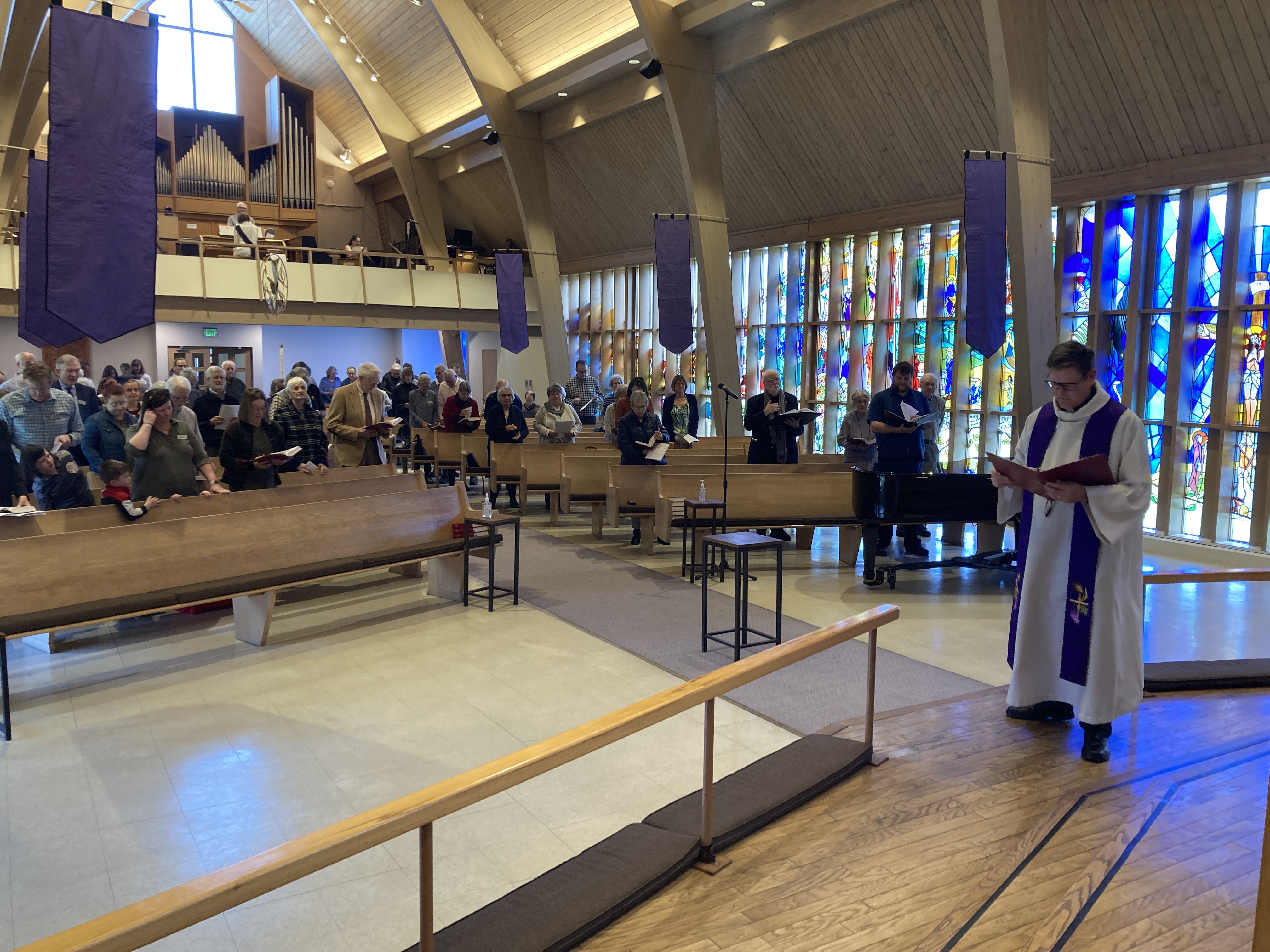
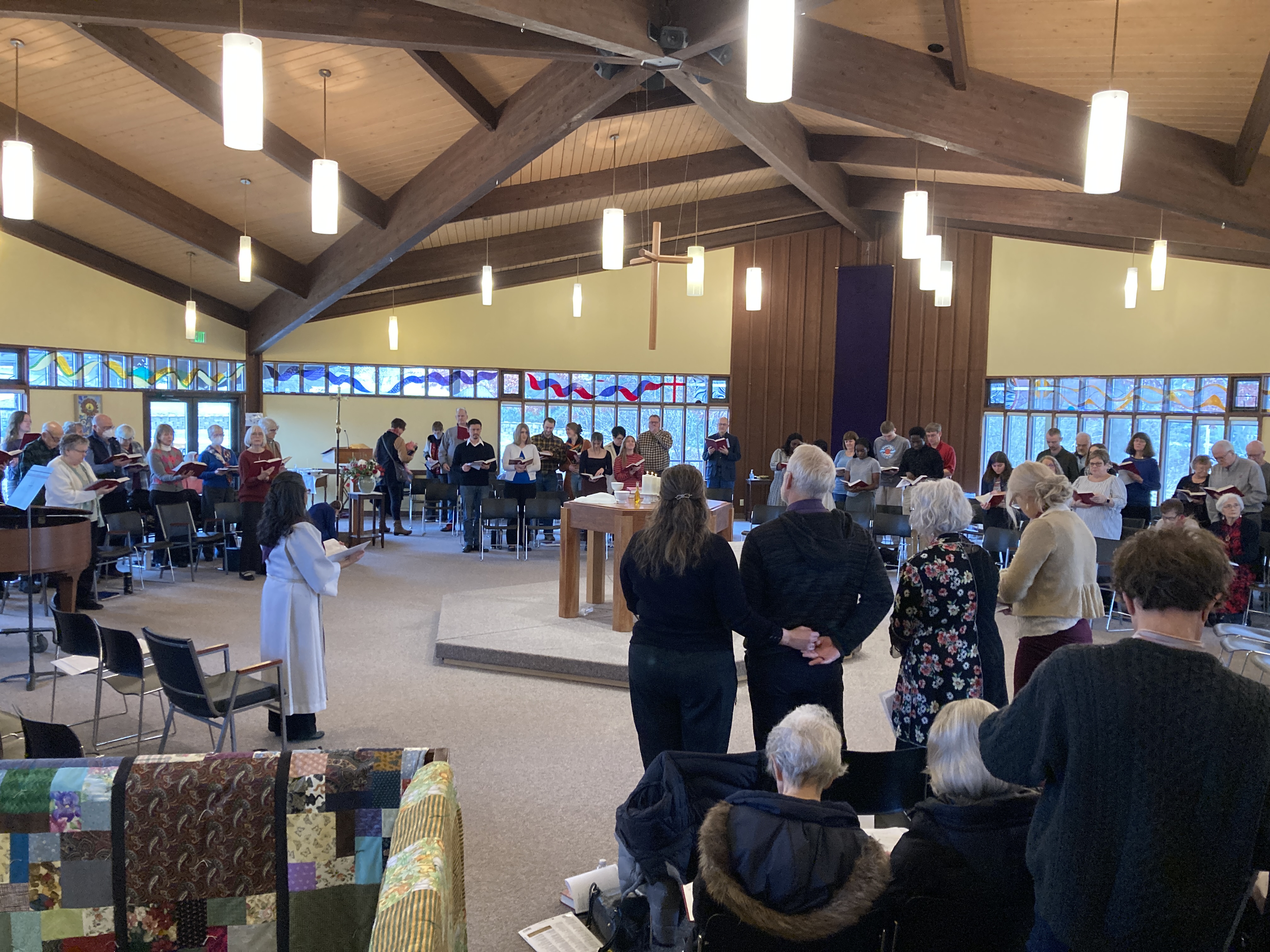
Installation at Immanuel, Boise

Immanuel, Boise – Jan. 28, 2024

Mark 1:21-28

21They went to Capernaum; and when the sabbath came, he entered the synagogue and taught. 22They were astounded at his teaching, for he taught them as one having authority, and not as the scribes. 23Just then there was in their synagogue a man with an unclean spirit, 24and he cried out, “What have you to do with us, Jesus of Nazareth? Have you come to destroy us? I know who you are, the Holy One of God.” 25But Jesus rebuked him, saying, “Be silent, and come out of him!” 26And the unclean spirit, convulsing him and crying with a loud voice, came out of him.27They were all amazed, and they kept on asking one another, “What is this? A new teaching—with authority! He commands even the unclean spirits, and they obey him.” 28At once his fame began to spread throughout the surrounding region of Galilee.

Happy Installation Sunday Immanuel Lutheran! Thank you for your faithfulness to the gospel these past nearly three years, for patience, for love, for good Spirit led discernment. I know it was hard because as cluster dean I walked alongside several council presidents and one deliberate and steadfast call committee chairperson. Today we finally get to celebrate a new pastor called to the corner of Fort and 7th and a new chapter of Lutheran ministry near downtown Boise, Idaho. Alleluia!

Preparing an installation sermon was an easier assignment a few weeks ago when the appointed gospel text was the calling of the disciples, that was before a snowstorm delayed today’s festivities. In a way, today’s gospel calls us all back to why we are here. Rather than focusing on the relationship between pastor and congregation, we have to point to the life and ministry of Jesus Christ, who you all and Pastor Lewis will bear witness to together, in what we call mutual ministry. In this next chapter of Immanuel Lutheran’s, you will point to and share the good news of a God who came to dwell with us and bring new life.

At the heart of today’s gospel passage is Jesus’ first public act. We should take note because this is his first. It might seem strange to our 21st century ears and eyes when we first hear or read about Jesus’ exorcism of the demon. I have done lots of blessings, but no exorcism. But let’s not let that fact distract us. 

What is Jesus really doing to this man? He is liberating him. First Jesus rebukes the demon, “Be silent.” Then he casts the demon out, “come out of him!” And the unclean spirit comes out. The man if free and his life is changed forever. 

We can barely count the ways that Jesus has changed this man’s life. His physical body is changed, no longer possessed by the demon. Yes. Jesus cares about actual physical bodies. The man’s social standing is forever altered, for the better. This means his mind and spirit are going to be changed as well. He can be part of community now. Through the exorcism, Jesus has liberated the man in so many ways.

In Jesus, God is doing something new, but it is not entirely out of character. Remember that the central story of the Hebrew Peoples’ past is the liberation from Egypt, through the Red Sea. The Passover is still celebrated by Jews every year. Each year, on Maundy Thursday, Christians remember Jesus and his disciples celebrating the Passover.  

Then, on Mount Sinai, God gave the 10 Commandments to the liberated Israelites. We think about rules confining us, limiting us, but these rules were given so every single person in the community could live an abundant life. Over and over, God has been a God of life and liberation for all people. 

The story of the exorcism continues this theme and makes it new. As one pastor said, “Jesus has come to oppose all the forces that keep the children of God from the abundant life God desires for all of us.” Let me say that again, “Jesus has come to oppose all the forces that keep the children of God from the abundant life God desires for all of us.”

Is that not a message we still need to hear? Is it not a message people need to hear in Boise, the Treasure Valley, in Idaho? Of course, it is, because there are still forces that bind us, forces that keep the world from experiencing the abundant life God desires for all creation. Such binding forces include systemic racism, polarized worldviews that demonize one another, loneliness, and environmental disregard, just to name a few big ones. 

What does this look like for our personal embodied lives? Each one of you can probably name forces that bind you. I know that some of the strongest forces in my life that go against God’s desire for abundant life, are simple and every day. Chiefly, these forces include the deep need to continually produce and the desire to be perceived as enough. 

I do not mean to imply that productivity and quality are inherently bad, but when they are not checked, they can bind me and others in destructive ways. I believe we are pushing our individual selves, our systems, and our natural resources too hard and too fast. It is destructive for our communities, the earth itself, and our embodied selves.

“And yet,” those are our words of promise and hope. And yet, the kingdom of God breaks in through Jesus Christ and offers a new way—a way of abundant life and liberation. And Jesus comes as one with authority. As we hear in our scripture passage from Mark this morning, this authority seems to permeate everything he does and speaks. Jesus’ authority, I would contend, comes from those two things aligning. Jesus’ actions align with his words. 

The scribes, who Jesus is contrasted with, depend only on words and teaching. We read that Jesus entered the synagogue in Capernaum and taught. The text says, “They were astounded at his teaching, for he taught them as one having authority, and not as the scribes.” Jesus is not teaching something new. He comes from and follows the same tradition as the scribes. 

But he is giving a different interpretation. The scribes’ teaching has not liberated the people. It has, instead, oppressed and enslaved them. Jesus brings a new interpretation. And Jesus not only teaches this liberation with his words. He also pairs it with his actions by exorcising the demon.

Where does this leave us, those of us who are trying to faithfully follow Jesus today? Rev. Dr. Wil Gafney says, “We can no longer pretend that we can follow [Jesus] without following him into the broken places of the world. We can no longer pretend that we can follow Christ without paying an exorbitant price at some point. We can no longer claim we follow Christ if we never leave our places of safety and never raise the ire of those who construct and benefit from the systems that impoverish and imprison.” We all are both liberated from and liberated for.

Today is not only Installation Sunday for Immanuel, but also annual meeting Sunday. I assume that your annual meeting packet includes many words attempting to tell the story of how individual members and the entire congregation tried to follow Jesus and bring life and liberation to the broken places of our community. 

Certainly, you have brought life to the hurting and bound places in the community through the ministry of Food Fellowship, Quilts, and Feed My Sheep. Celebrate also the worship, bible studies, and Messy Church that nourishes you to be sent forth. Consider too the many ways each of you shows neighbor loves in hundreds of individual actions and decisions.

When we are wavering about what to do, where our own authority comes from, we need only look to the life and ministry of Jesus, who came “to oppose all the forces that keep the children of God from the abundant life God desires for all of us.” Whenever we need a reminder of this life, we come again to the meal. It is this banquet, thousands of years after the exorcism in Mark 1 that reminds me that God sees and loves me, embodied as I am. Here we feast together on bread and wine, which become gifts of Jesus Christ’s life and healing. We are liberated once again and given new life. As we will pray after Communion this morning, Giver of every gift, Christ’s body is our food, and we are Christ’s body. Raise us to life by your power for the benefit of all and to your glory, now and forever. Amen.

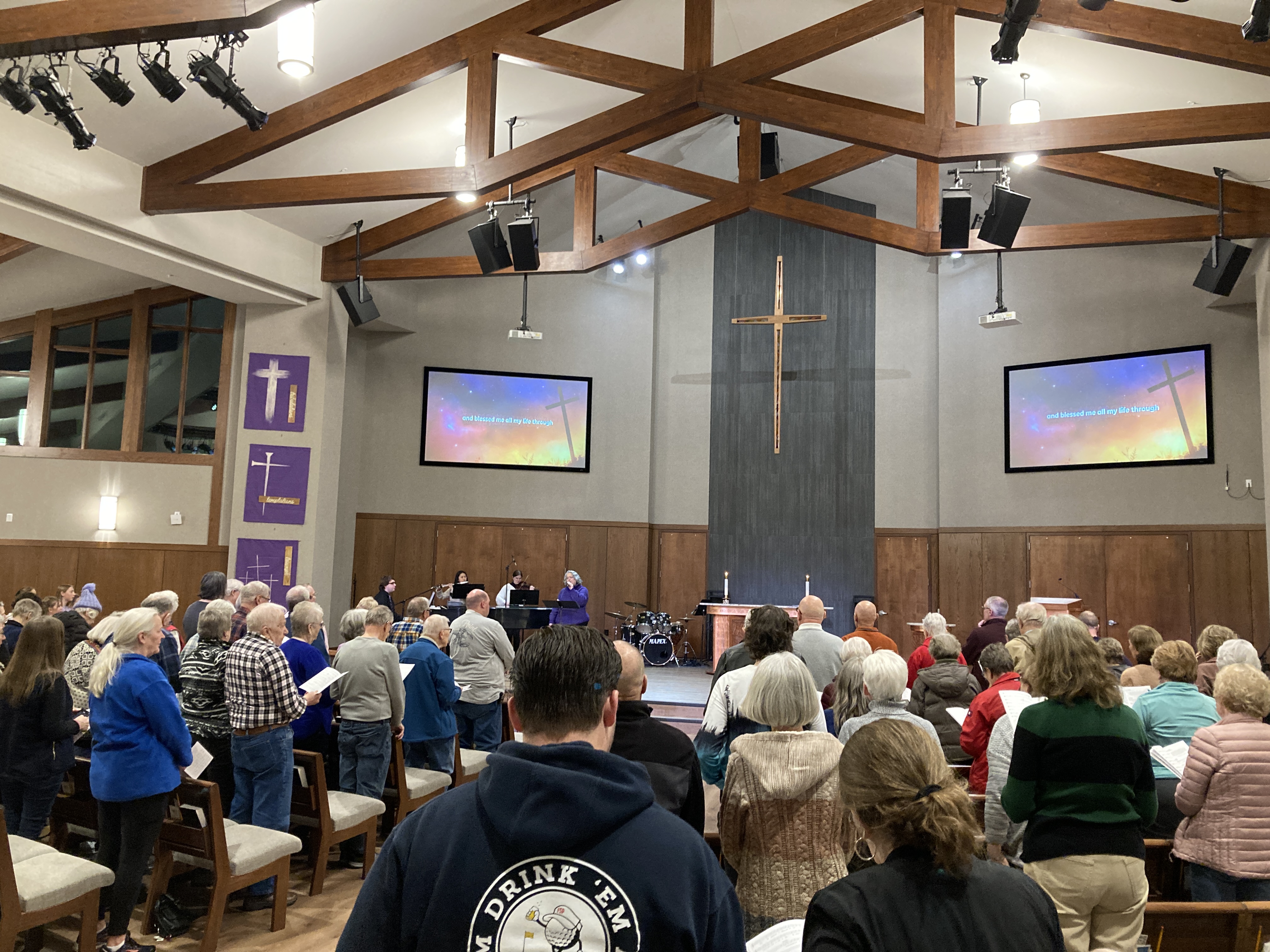
Augustana Chapel (8:15am worship) an updated and bigger sanctuary (10am worship) and . The full installation service took place during the 10am service but we did include a prayer of blessing at 8:15.

Posted in NWIM Synod, Sermons | Tagged , , , | Leave a comment

Camp, Congregation, and Home

I spent all day Saturday with an incredible group of people talking about camps, congregations, families, and faith. From the Rhythms of Faith website:

“The Rhythms of Faith Project seeks to empower parents and caregivers in family faith formation by leveraging the power of camp experiences to establish rhythms of faith through regular Christian practices.”

And, “This project is a 5-year, nationwide, cross-denominational initiative coordinated by Wheaton College’s Center for Leadership Development (HoneyRock), in partnership with Sacred Playgrounds, and generously funded by Lilly Endowment Inc. The project seeks faith formation through partnership: partnership among parents/caregivers; partnership among camps, congregations, and the home; partnership among practitioners and the academy; partnership among different Christian traditions. We bring together scholars and practitioners from Lutheran, United Methodist, and Evangelical traditions, drawing experience from camp, clergy, and academia.”

This round of Lilly grants was, in large part, kick-started by Christian Smith and Amy Adamczyk’s book Handing Down the Faith. You can read about all of the grant recipients following this LINK.

I first got to know Jacob Sorenson from Sacred Playgrounds when I was serving on the Lutheran Outdoor Ministries national network board. We attended an ecumenical camp board gathering (Outdoor Ministry Connection) at a Methodist camp in Florida a number of years ago. Jake led the task group coordinating empirical research about the impact of camp and I co-led a group that created an ecumenical interim camp director training. A few years ago, when Sorenson finished his book Sacred Playgrounds, I wrote a review of it for The Christian Century magazine. .

Advisory Team

I love that this project brings together two of my favorite things: outdoor ministries and ecumenism!! I also am passionate about this project because the synod I serve as bishop includes three Lutheran Outdoor Ministries sites: Luther Heights Bible Camp, Lutherhaven, and Holden Village.

A bonus of serving on this advisory team, was getting to visit historic Wheaton College for the first time ever. Even though I attended graduate school in Hyde Park, Chicago for three years, I never made it to Wheaton.

Harbor House at Wheaton, our home for the day.

If you want to SUBSCRIBE to my blog and get email notifications, there are a couple ways to do it.

  • If you are reading this on a mobile device, there may be a Follow button at the bottom that you can simply click on and type in your email.
  • Or, go to the menu on top (three lines). Click About. Scroll to the bottom where in fine blue print (within a blue background) it says View Full Site. Click on those words. Over in the right column you can type in your email address and hit Follow.
Posted in Reflections | Tagged , , , , | Leave a comment

Bishop’s Snow Day, Jan. 14

I was scheduled to preach and preside at an installation in Boise this Sunday. That installation at Immanuel, Boise was postponed by Wednesday and will now happen Jan. 28. My second plan was to worship at Faith, Caldwell, my new church home. My presbyterian friend Kevin was surprised this week to learn that ELCA bishops join churches, as he has only ever had membership, while a paster, in the local presbytery. My plan has been to follow Alaska Synod Bishop Shelley Wickstrom’s example of joining a different congregation every year.

At 7:30am, Pastor Lucas Shurson texted that it sounded like the snow storm had made the roads pretty bad, and he would send me the Zoom link or 9am worship. I responded that that would be great. If a pastor who went to college and seminary in Minnesota suggested me staying home, that was worth paying attention to. Faith, Caldwell is currently worshiping using All Creation Sings Setting 12, which I love.

I haven’t been able to get to the Lower Central Washington cluster yet in my term, so at 10am Mountain I went to Central Lutheran, Yakima’s YouTube Channel and joined them for worship. Retired Pastor Ginny Krekling was filling in as preacher and presider for Pastor Ann Murphy. The choir sang a few pieces. At the end of worship, the musician announced that Central would be hosting an MLK service that afternoon. I heard two quite different sermons on John 1:43-51 (Shurson and Krekling) but they were both so faithful to the text and the day–such a gift.

I got outside to do some shoveling. About two-thirds of the way through shoveling my parking pad and sidewalk, my neighbor and his dog joined me. Rich has lived two doors down from me since I moved into this home in 2011. He and his wife are getting ready to go on the adventure of a life time (involving race cars and travel) and it was fun to catch up.

The other cluster I wanted to visit was Big Bend, so I went back inside and hopped on the Facebook page for Emanuel Lutheran, Ritzville for their 11am Pacific worship. They follow the Narrative Lectionary, so I got to hear Pastor Nathaniel Christman (who leads Emanuel and St. John, Sprague with his wife Pastor Tricia Christman), preach on Mark 4:1-34. Well, I got to hear most of the sermon, because the live feed dropped for a bit. Emanuel was using Marty Haugen’s liturgy Now the Feast, so it was fun and easy to follow along.

I am grateful for all of the pastors, deacons, and council members who had to make decisions about what to do on this Sunday. I loved reading the Facebook messages, which I assume were echoed in emails and texts, encouraging everyone to be safe and do what’s best for your own health and safety. As I was as a parish pastor, I give thanks for those who plowed, shoveled, and handled worship streaming technology. This snow storm that hit the Boise area is something we have not seen since Snowmaggedon 2016-2017. Happy shoveling everyone and thanks to all who proclaimed the gospel on this winter morning.

Posted in NWIM Synod | Leave a comment

Annual Report Letter

Originally sent to the congregations of the Northwest Intermountain Synod to be included with 2023 congregational annual reports.

“13 Now on that same day two of them were going to a village called Emmaus, about seven miles from Jerusalem, 14and talking with each other about all these things that had happened. 15While they were talking and discussing, Jesus himself came near and went with them…” (Luke 24)

Dear Friends in Christ,

Welcome to annual meeting season! I hope that in addition to doing the important work of electing leaders and/or approving budgets, your congregation’s annual meeting is a time to celebrate the way the Holy Spirit is working through your congregation and the many ways God’s love is shared in your larger community, across the Northwest Intermountain (NWIM) Synod, and around the world. I am writing this letter in early January, after reading Christmas cards full of laments for Israel and Palestine, Ukraine, and so many other places where violence harms the innocent. But the letters also spoke of the deep hope that comes from trusting in the abundant love and life that comes from the Triune God we worship. I encourage you to rejoice in this hope during your meetings even as you pray for peace.

At the end of April, the NWIM Synod Assembly gathered under the theme Bega Kwa Bega (shoulder to shoulder). We use this Swahili phrase because Swahili has no word for accompaniment, the term the ELCA uses to describe companion synod relationships (like our relationship with the Ulanga Kilombero Diocese of Tanzania) and the many other relationships in our neighborhoods and communities. The scripture story at the heart of our understanding of accompaniment is the Road to Emmaus from Luke Chapter 24, which begins with Jesus walking should to shoulder with two disciples who do not recognize him. The teaching document on accompaniment states, “We, and our acquaintances on the road, are all part of the body of Christ. We walk the Emmaus road every day and the people with whom we share the journey accompany us and we accompany them. The Emmaus road story helps to illuminate Accompaniment, a theology of mission. We see that mission is a journey, and that this journey, taken with many companions, shows us the unexpected and sometimes unrecognized Christ who walks with us. In this journey, we break bread together, we move toward Christ’s mission of reconciliation between us and God, between us and one another.” 

Now, anything can become an idol, even a theology. I am not inviting us to worship at the altar of accompaniment, but I do find it a helpful theme and thread for our mission as a synod. Our rostered leaders leaned into accompaniment when we heard from Vance Blackfox at Bishop’s Fall Convocation. Accompaniment will be in the background during our three spring regional gatherings (Spokane Valley, Twin Falls, and Ellensburg) where we will talk about Funding Forward and stewardship. Most important, accompaniment is what each of our congregations and ministries do locally—you are accompanied by your neighbors, and you accompany them. Accompaniment is sometimes hard, other times joyful, and occasionally puzzling. Our synod staff also seeks to accompany you, whether in the call process, a new adventure, or a time of struggle. The English word synod combines two Greek words that literally mean a way together.

In the life of the church, the other place the word accompaniment arises is of course in worship, during which the instrumentalist accompanies the assembly in singing. This may not be shoulder to shoulder, but what joy we have when the instrument and assembly are in sync! All our accompaniment in the world is grounded in worship. We are both sent from worship to serve, and we return to be fed and nourished. Thank you, finally, for your faithful worship of a God whose love in boundless.  

Bishop Meggan Manlove

A number of other resources are available to tell about the impact of your partnership and generosity. We hope you include these in your annual reports or as part of your annual meeting, and share the story of our life together!

Annual Report Cover : (Single page and cover spread available)

NWIM Synod Together in Ministry

Stories of Faith in Action

The Road to Emmaus by Gisele Bauche
Posted in NWIM Synod | Leave a comment

Baptism of of our Lord, 2024

St. John’s American Falls – Jan. 7, 2024

Mark 1:4-11

4John the baptizer appeared in the wilderness, proclaiming a baptism of repentance for the forgiveness of sins. 5And people from the whole Judean countryside and all the people of Jerusalem were going out to him, and were baptized by him in the river Jordan, confessing their sins.6Now John was clothed with camel’s hair, with a leather belt around his waist, and he ate locusts and wild honey. 7He proclaimed, “The one who is more powerful than I is coming after me; I am not worthy to stoop down and untie the thong of his sandals. 8I have baptized you with water; but he will baptize you with the Holy Spirit.”

9In those days Jesus came from Nazareth of Galilee and was baptized by John in the Jordan. 10And just as he was coming up out of the water, he saw the heavens torn apart and the Spirit descending like a dove on him.11And a voice came from heaven, “You are my Son, the Beloved; with you I am well pleased.”

Yesterday was Epiphany, the day the church celebrates the magi’s bringing gifts to infant Jesus. That day served as a bridge between the short Christmas Season and the Time after Epiphany, a season of manifestations of who Jesus is. We who follow the three-year cycle of scripture passages find ourselves back in Mark’s gospel.

There is no prelude to this gospel where you will read about shepherds, angels, magi, a star or a stable. There’s not a word about Mary and Joseph. Mark’s story of Jesus begins at the river: “In those days Jesus came from Nazareth of Galilee and was baptized by John in the Jordan.” We do not even hear the cosmic wonder that opens John’s Gospel: “In the beginning was the Word and the Word was with God and the Word was God.” Mark is far more ordinary and direct” “In those days Jesus came from Nazareth of Galilee and was baptized by John in the Jordan.” Jesus entered the river with others to be washed in a baptism of repentance for the forgiveness of sins. 

Does it seem strange that Jesus submits to a baptism of repentance? It’s okay if you wonder about that. Just remember this is where Jesus will spend his earthly life–in the midst of sinners–eating with them, talking with them, healing them, calling them. Why should his baptism be any different? Jesus went under the waters of the Jordan as the others had–under the waters his ancestors crossed after 40 years of wilderness wandering. Historic waters, even though they looked quite ordinary. 

Did Jesus look up at the sky before he went under the water? The narrator doesn’t say. But we do read that when Jesus came up out of the water, wet from the Jordan, he did look up, and he saw the heavens torn apart and the Spirit descending on him like a dove. 

There’s no indication that others saw this–only Jesus. He saw the heavens torn apart. The Greek word there is a form of the verb schitzo as in schism or schizophrenia. It is not the same word as open. I open the door. The door looks the same. But something torn apart is not easily closed again. Picture in your mind’s eye the ragged edges that will never go back together as they were. The use of schitzo is deliberate. It recalls the prophet Isaiah’s plea centuries before when he cried out to God, “Oh, that you would tear the heavens open and come down to make your name known to your enemies and make the nations tremble at your presence.” 

Now Jesus stood in the Jordan, dripping wet, without a hint that anyone else saw the heavens torn apart or saw the dove or heard the voice. We have no indication that the nations were trembling. But that did not mean that nothing had changed. It does not mean that the world was about to turn, to quote Jesus’ mother Mary. Though we usually imagine God speaking in a booming voice, resonant and deep, that voice is more often heard in movies than in Scripture. God’s voice can be a whisper, a breath, quiet as the still small voice that reached Elijah hiding in his cave. 

At the Jordan River the voice that came from heaven spoke to Jesus alone. I like to imagine that it was intimate and direct. “You are my Son, the Beloved. With you I am well pleased. In you my Spirit will be present on the earth in a new way.” The heavens were torn apart, and they would never close again. 

Sometimes that’s how I feel about the world right now. When I was in high school, the Berlin Wall came down. The Cold War that shaped so much of my youth seemed to be ending. I didn’t understand it all, but I heard about real Peace Talks in the Middle East. I remember watching the film of Rodney King being beaten but there seemed to be so much progress in race relations in our country. National and state politics consisted of a two-party system, but there were regular stories about compromise. All of that feels torn apart to me and I can’t see how we’re going to piece things back together.


And yet, and yet I know that the torn place is where God comes through, the place that never again closes as neatly as before. One pastor [Barbara Lundblad] reminds us that from the day he saw the heavens torn apart, Jesus began tearing apart the images of who people thought the Messiah was supposed to be– 

Tearing apart the social fabric that separated rich from poor. 
Breaking through hardness of heart to bring forth compassion. 
Breaking through rituals that had grown rigid or routine. 
Tearing apart the chains that bound some in the demon’s power. 
Tearing apart the notions of what it means to be God’s Beloved Son. 

Nothing would ever be the same, for the heavens would never again close so tightly. 
At the end of his life Jesus hung on a cross between heaven and earth. When he breathed his last, the curtain of the temple was torn in two from top to bottom, torn apart as the heavens had been torn apart. The holy of holies no longer separated the sanctuary from the people. That curtain could never be repaired either. There was no voice from the darkened heavens that day. God was silent, not even a whisper. 

But there was a voice not far off but close. A centurion soldier stood at the foot of the cross keeping order, marking time, waiting to pronounce death. When he saw that Jesus had breathed his last, he said, “Truly this man was God’s Son.” Who gave him that word? We are never told. That soldier had somehow heard for himself the words whispered to Jesus alone at the Jordan. The word came through the torn place in the sky, through the torn curtain: “This is my Son, the Beloved, with whom I am well pleased.” 

Is there a torn place in your life: relationship that ended, an addiction finally confronted, the loss of a job, a lifelong dream that’s shifted? Or maybe it’s watching the American Falls community change as growth continues—new jobs but also new people and a crunch when it comes to housing? Whatever life looks like going forward, it may be more like a true crazy quilt or it may be full of patches, still beautiful, but not what it was before it was torn apart.

Jesus stepped into all of this when he was baptized, an act of solidarity with the rest of the community, with all of humanity. What a gift, what good news for each of us who is called Child of God. The same Spirit that entered him, entered each of us in our baptism, not the entrance to a special club, but as an inauguration to abundant life. This abundant life is not without pain or brokenness. If we truly follow Jesus, there will in fact be difficulties.

 But it is a life with hope and companion and a God who loves us. And God continues to enter into the torn places and moments. It truly is God’s method of operation. “You are my own Beloved Child.” You likely have had or have now a torn place, but God is in it. The same is true for your neighbor and me, for this community of faith, for the larger Upper Snake River Valley. Even as we leave the season of Christmas, we remember that Jesus remains Immanuel, God with us.

Posted in Sermons | Leave a comment