Campus Ministry Installation – Nov. 26

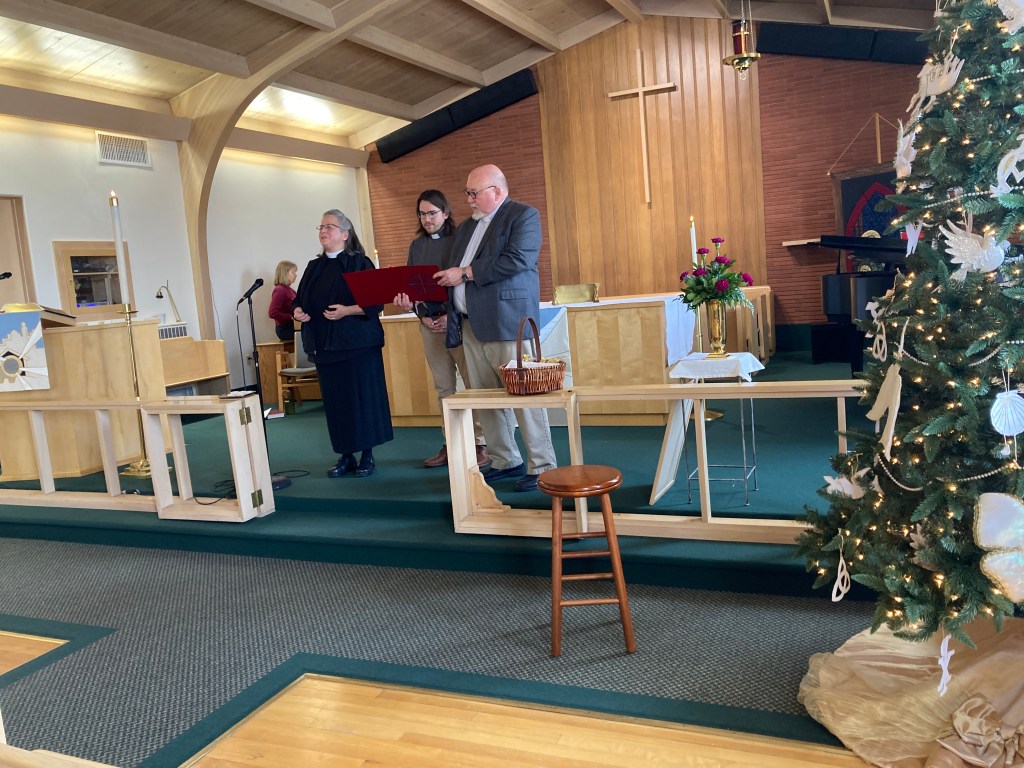
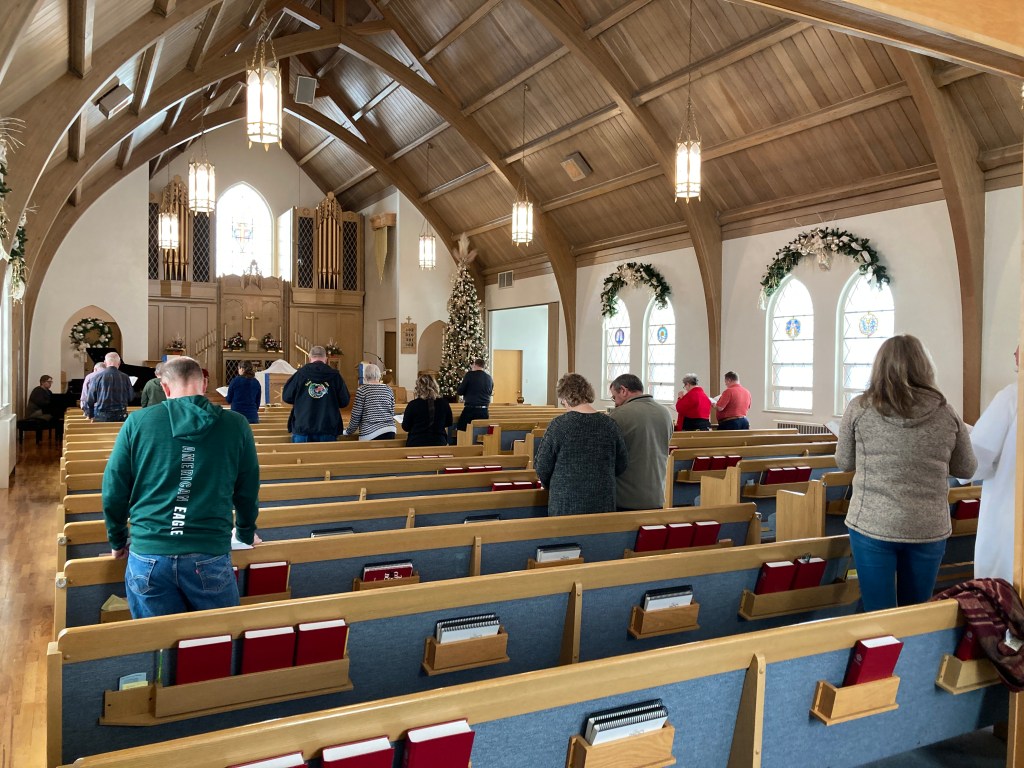
Installation of Emily Kuenker as Pastor of Greater Spokane Campus and Young Adult Ministry

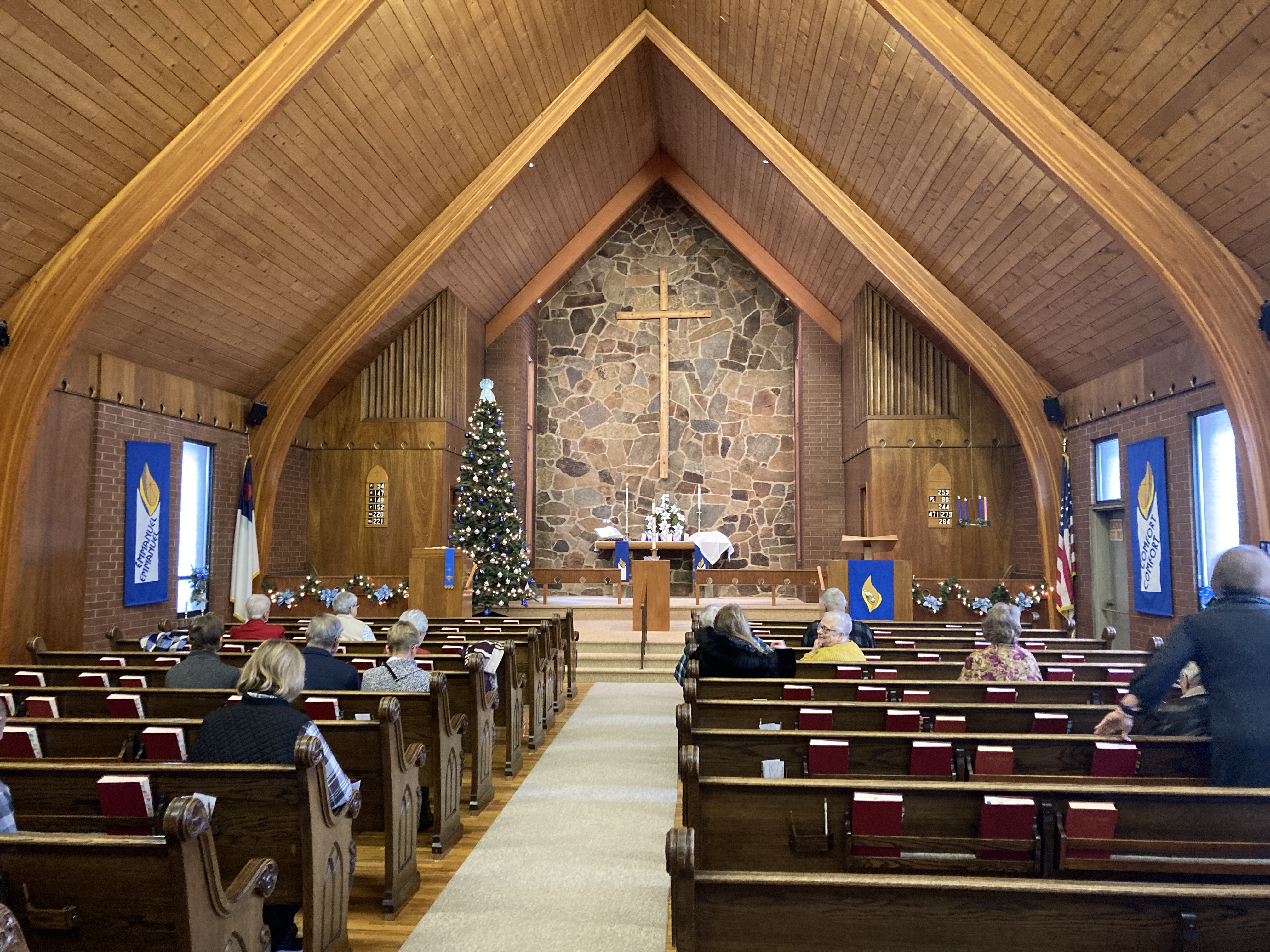
St. Mark’s Lutheran, Spokane, WA

Ezekiel 37:1-14, Galatians 3:23-29

With gratitude to Mpls Synod Bishop Ann Svennengson for her sermon at fall 2023 Conference of Bishops, in which her thread was O God, you know from Ezekiel 37.

I love this passage from Ezekiel for so many reasons. It is raw and earthy. It has a storied history of interpretation in this country and around the world. After Easter morning and the Exodus, it is one of the most powerful images of new life and new creation in all of scripture. It is a wonderful passage for a ministry embarking on something new, full of hope and possibilities, recognizing that what we become will be similar but not identical to what we have been.

And God asked, “Mortal, can these bones live?” And Ezekiel replied, “O God, you know.” “O God, you know.” That may be the phrase I like best about this story in this season of my life. As in, O God you know if students, faculty, and staff will resonate with what we are doing. O God, you know if our alumni and constituents can bear this big change in direction. O God, you know if we are on the right path, making the right decisions. You all can fill in the blanks yourselves. O God, you know.

Ezekiel had lots of reasons to say “O God, you know. Only you.” How could he, or any of the Israelites know if a valley of dry bones could live? They had lost everything. Everything had been stripped away from them—nation, temple, community, and land. How could this have happened? 

We know that the first half of Ezekiel tries to explain why the bones are dry—why the exile occurred. We read some of it this morning for Reign of Christ Sunday. It was judgment—for Judah’s idolatry and sin. God, who is holy, responded to this unholiness and corruption. Leaders in particular, the shepherds of God’s people were called out for their part. There’s a particular judgement again the leaders, the shepherds, people like me.

But in chapter 37 something shifts, and God asks Ezekiel to imagine, to see the bones coming to life. What’s more, God asks Ezekiel to prophecy, to speak new life into being. God said, “Prophecy to these bones, saying God will cause breath to enter you, and you shall live.” 

To envision and imagine new life, is that not the call of Lutheran Campus Ministry? It was certainly my own lived experience. I am rightly known for my fierce commitment to outdoor ministry, but my commitment to campus ministry is just as robust, not because of my four years on a church college campus or because of my internship with Lutheran Campus Ministry in Cheney. 

Two campus ministries in Hyde Park Chicago were vital to my Christian imagination and formation and general well-being. Knowing very little about where I was going to earn my M.Div., except that Rockefeller had built a gorgeous campus in Chicago, I did not pay as much attention to my living quarters as I should have. 

My first year at the Univ of Chicago Divinity School I lived in a tiny room in the International House—full of graduate students studying every discipline, half from the United States and half from across the globe. There was no dining service and community events were sporadic. Add to this that Hyde Park was like nowhere else I had ever lived. And oh, that first year was the year my body decided to have more seizures in public than in any other year of my life. 

Lutheran Campus Ministry housed at Augustana Lutheran and Brent House, the Episcopalian campus ministry, were the communities that helped me put so many pieces together. They provided actual daily bread but also nourishment for my soul. They gave me space to connect ideas in the classrooms with this new neighborhood.

Those famous verses from Galatians came to life in campus ministry. Without the sternness of the Divinity School classrooms, I was free to ask questions, wonder, and build relationships with people different than myself—different in their interests, background, sexual orientation, ethnicity.

On our recent trip to the Ulanga Kilombero Diocese in Tanzania, I read two books: The Power of Ritual (which the LCM board is reading) and The Forgotten Creed: Christianity’s Original Struggle against Bigotry, Slavery, and Sexism. In the latter, Christopher Patterson, a specialist in early Christianity, argues that these words were already well-known when Paul wrote Galatians. They were an early Christian baptismal creed. 

It was a bit surreal to read this book while traveling through our companion synod in East Africa, but it was just as humbling to think back over all the experiences that have shaped my understanding of the other, including my three years in campus ministry. 

I had not thought so much about the Roman Empire since those years in graduate school, and Patterson’s scholarship is impressive, though I am sure there has been resistance. At the end, Patterson concludes about those verses now in Galatians, “the creed must have been, finally, about imagining a world in which female slaves could be leaders of free men, where foreigners and native bon stood with equal power and equal rights. ‘You are all one’ signifies solidarity.”

It’s ironic and tragic that later, baptism became one more way to separate people, those who were or were not baptized. Patterson writes, “Our ancient baptismal creed speaks a very clear word: there is no us, no them. Everyone is a child of God, made one in a common kinship….” 

For me in the rituals of campus ministry, in the words from the Lutheran tradition, in the neighboring words from the Anglican/Episcopal Book of Common Prayer, I was also reminded of my baptismal identity, child of God. This made me no better or worse than those I was breaking bread with. But in a new urban environment, with my body not cooperating on a daily basis, with no old friends nearby, I clung to the rituals and words that reminded me I was God’s beloved child. The words of Ezekiel were true then too. O God, you know, you know that we are your children. O God, you know me and love me regardless. 

Will the next iteration of Lutheran Campus Ministry in the Spokane/Cheney area look like my experience 20 years ago? No. The world and the church have changed so much from when I walked onto the campus in the fall of 1999. Many of the students we hope to encounter may never have been baptized or they may have walked away from the church where that ritual took place. 

But I will bet everything I have that the words of the Forgotten Creed from Galatians will ring true to students. We are as hungry for real solidarity and common kinship as Jesus’ first followers, and for good reason. They are ingredients to the reign of God that is always being reimagined.

But even those high hopes of mine are no guarantee. O God, you know. You know the future. You also know each one of us. You call us beloved. You hold us in life and love. You will never let us go. Amen.

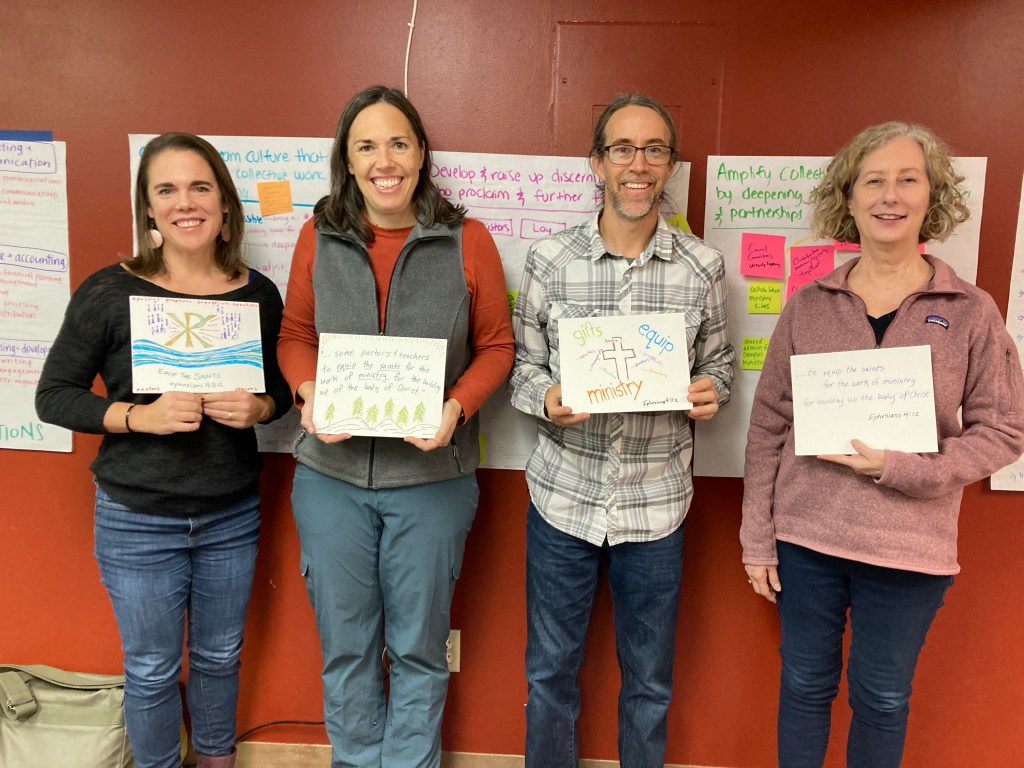
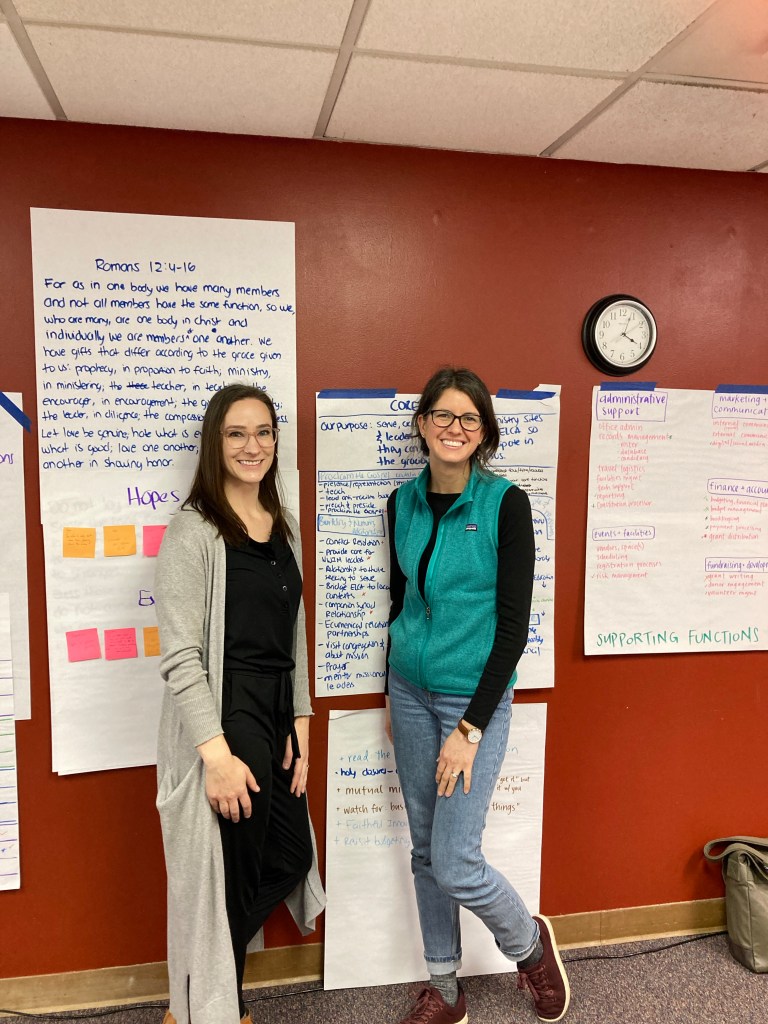
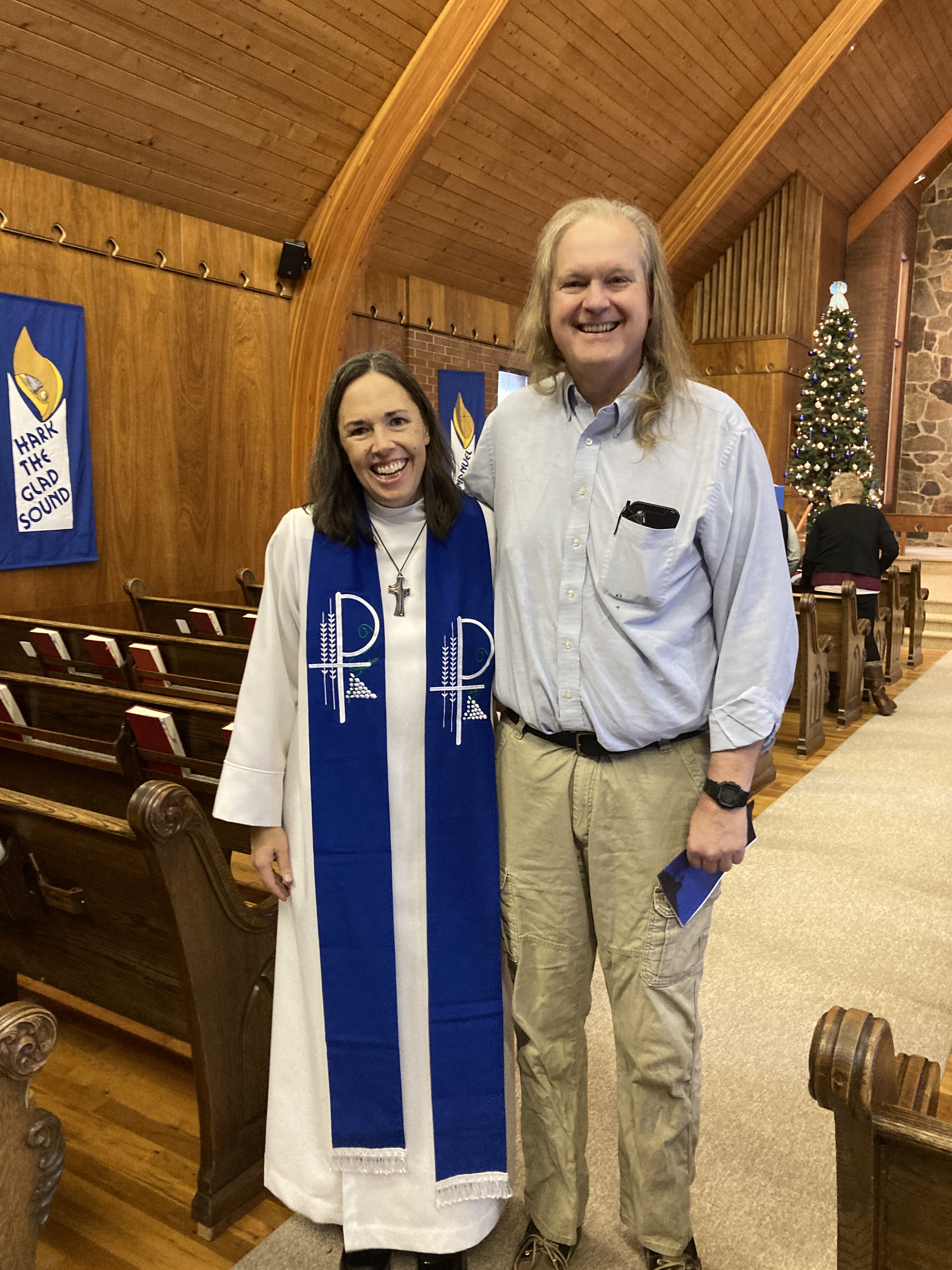
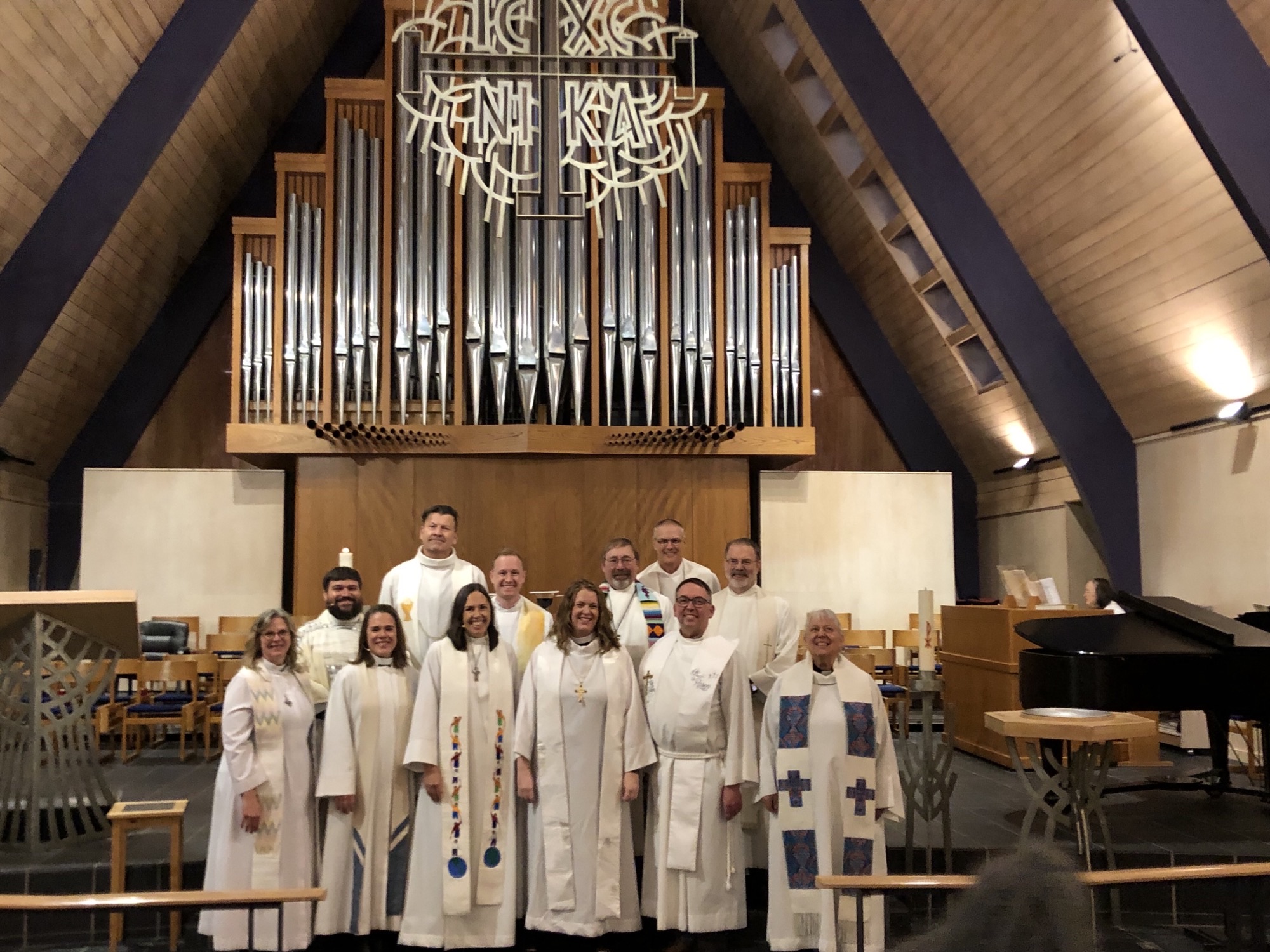
Pastor Emily with Board Members
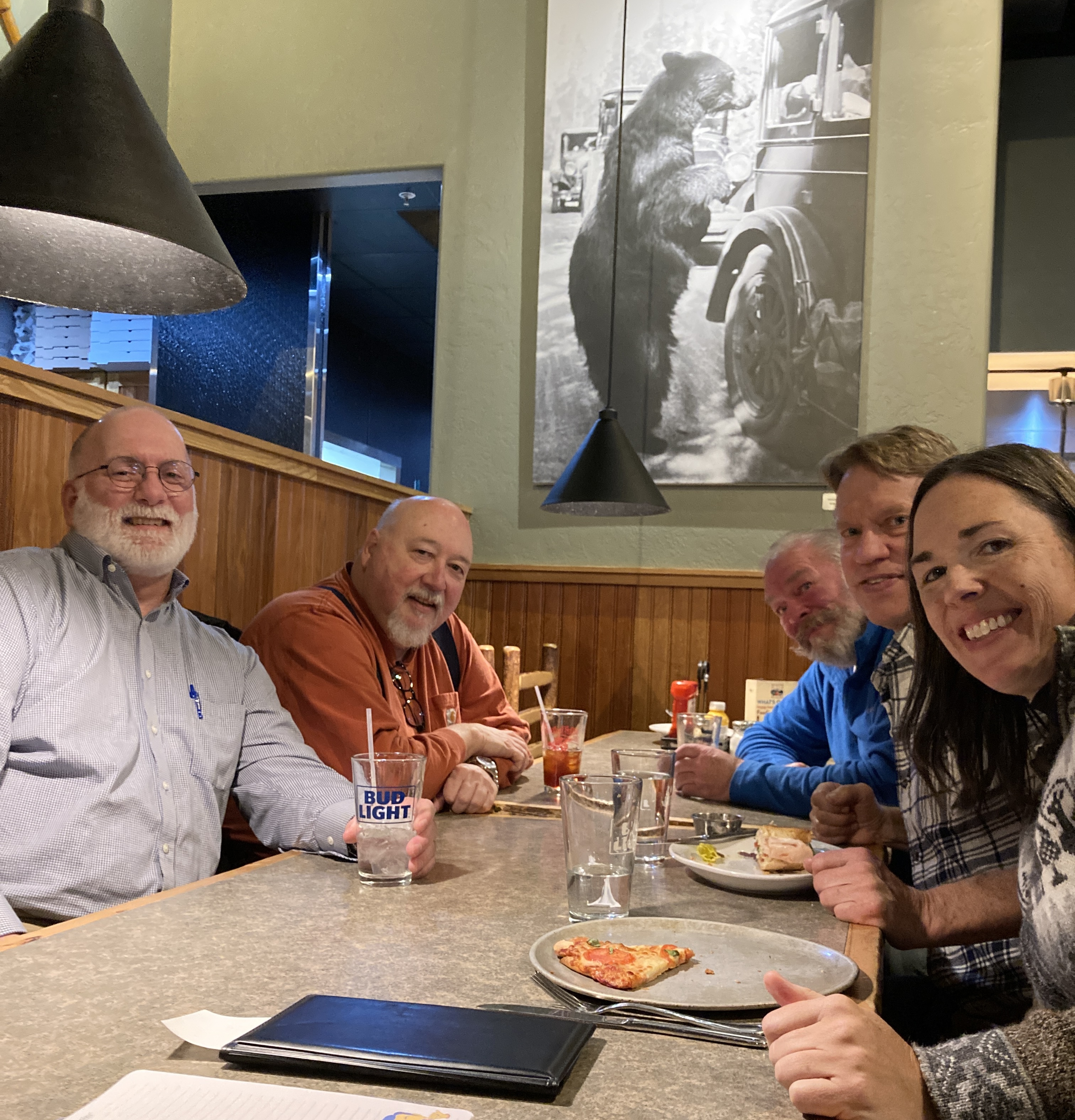
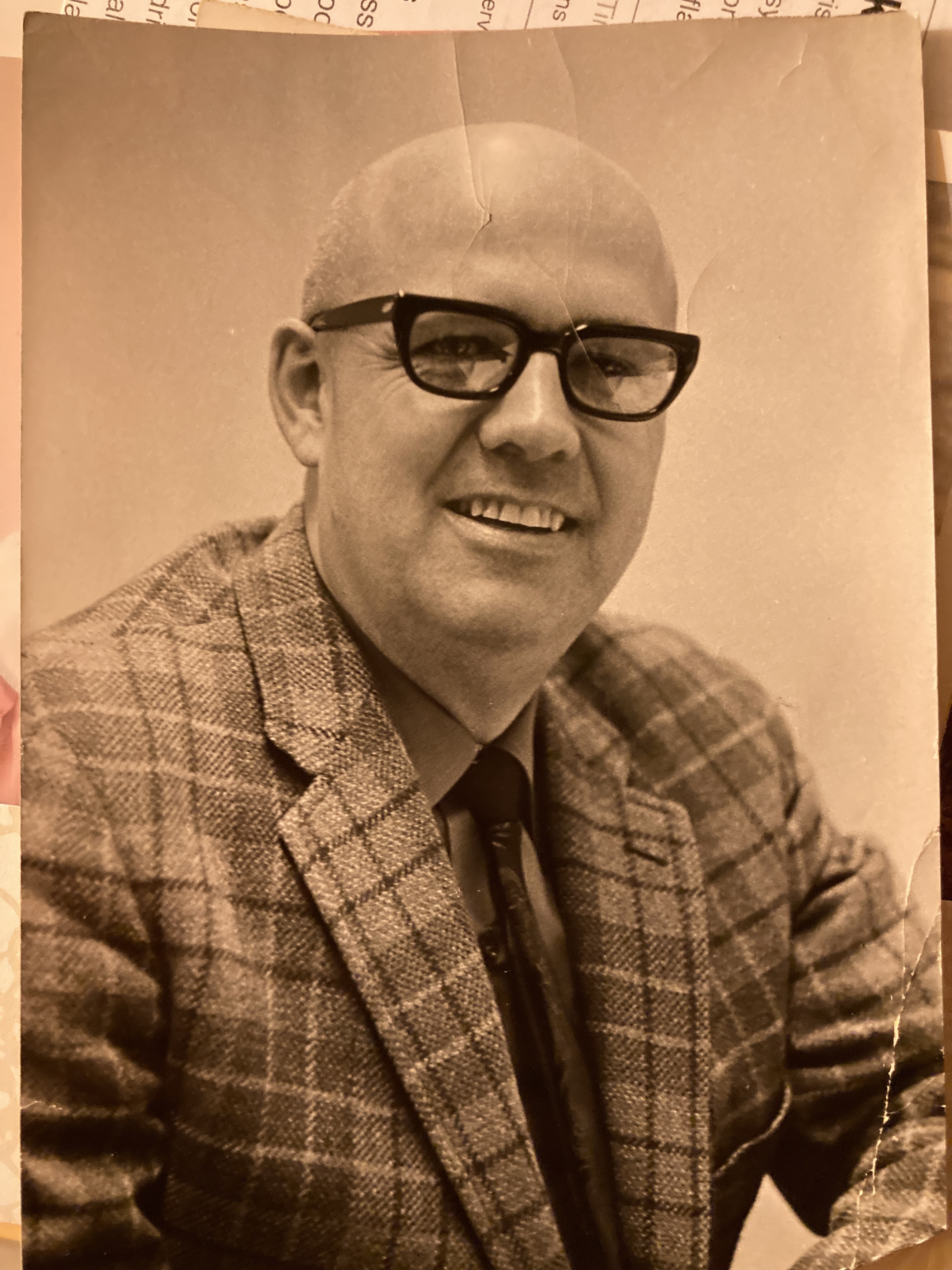
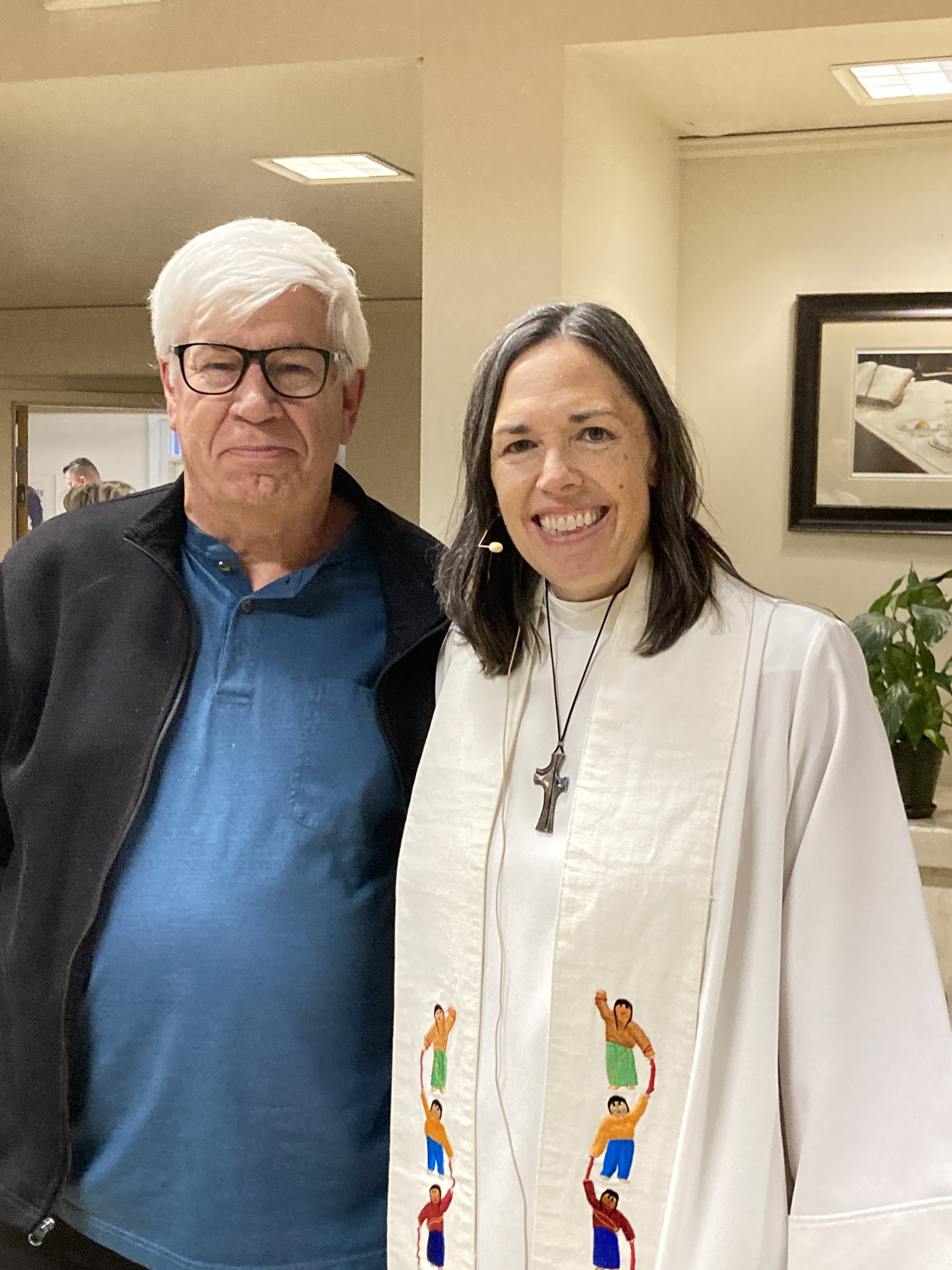
Me with one of my two internship supervisors, former Eastern WA Univ. Lutheran Campus Pastor Mike Nelson
Posted in Uncategorized | Leave a comment

Reign of Christ Sermon, Zion, Nov. 26, 2023

Zion, Spokane Valley – Nov. 26, 2023, Matt. 25:31-46, Zion Lutheran’s 75th Anniversary

It’s the end of the church year, Reign of Christ Sunday. At the beginning of Matthew’s gospel, we heard the lineage of Jesus—linking Jesus to King David, the most famous king in Israel’s history. We heard the story of wise men from the east following the star, searching for the new king so they could pay homage.  

Again, and again, we have listened in as Jesus described the new kingdom, not the kingdom of David and Solomon. God is doing something new. It is not a far-off kingdom but a kingdom here and now in which everything is turned upside down—the poor, the meek, the merciful are blessed; we are to love our enemies; and Jesus is king above all others. It started with the strangest upside-down story of all—a king born in a barn and laid in a feeding trough.  

Like all trials, today’s passes judgment not on thoughts, but on actual deeds–in this case, deeds done to the judge: feeding him when hungry, giving water to him when thirsty, welcoming him as a stranger, clothing him when ragged, comforting him when sick, and empathizing with him when in prison. 

Those judged are equally surprised, whether rewarded or condemned. “When did we do such deeds to you?” The reply, “when you did these things to the marginalized, the outcasts, the weakest and neediest in society.” Christians see Jesus in the least, if they see him at all.

What your own love of neighbor looks like might reflect today’s passage. You might actually feed people, clothe people, care for people in prison, or care for the sick. It might be neighbor love with a different expression. Most people we admire who love their neighbor do it so naturally. Like the characters in the parable, they wonder when they served Jesus. When was it? They ask. They have already been embodying what one scholar called “joyful living in mercy without calculation.”

The thing about today’s parable that I find fascinating is that it actually is not about the kind of individual acts of love I have mentioned. Those actions certainly fit a reading of Jesus’ parable of the Good Samaritan, and certainly our individual actions matter. But today’s text starts this way, “When the Son of Man comes in glory, and all the angels with him, then he will sit on the throne of his glory. All the nations will be gathered before him…” All the nations. 

So, we might say that this is just addressed to the leaders of the nations, and we are off the hook. But in this particular nation, we all get to participate, not just on election day, but every day. Systems are made up of individuals. Individuals make up neighborhoods, communities, and systems.

Jesus, it seems to me, is not only concerned with how we care for our neighbor individually. How we do it communally matters too. It is always unfortunate, when reading scripture, that the English singular “you” is the same as the plural “you,” but it is especially unfortunate with today’s passage from Matthew. The parable would read more accurately if the king answered, “Truly I tell you, just as you nations did it to one of the least of these who are members of my family,” or “just as you all did it to one of the least of these.”

What precisely does this communal neighbor love look like? What does the reign of God look like for an entire community or country? It certainly makes us curious about the statutes, practices, laws and systems that create problems in the first place. 

Neighbor love expressed by an entire community, not just one person, not only helps someone move out of homelessness, it asks, “what is causing the affordable housing crisis right now?” Neighbor love expressed by a community wonders why the income gap has gotten so wide? Are the poorer people lazy, because it sure does not look like it—not when they are working three jobs. What laws and practices need to be changed to create more equity, more flourishing for all people? What needs to change so that all people are blessed, not just spiritually but physically?   

These are the questions and framework used by German Lutheran theologian Dietrich Bonhoeffer. The church, and really the entire German country, were basking in God’s grace and needed to be reminded of how to faithfully respond to that grace. Bonhoeffer wrote “Cheap grace is grace without discipleship, grace without the cross, grace without the living, incarnate Jesus Christ.” In contrast, costly grace is the hidden treasure in the field. “It is costly, because it calls to discipleship; it is grace, because it calls us to follow Jesus Christ. It is costly, because it costs people their lives; it is grace, because it thereby makes them live.”

We might still wonder what costly grace will actually looks like in daily living. Bonhoeffer asks, “But how should disciples know what their cross is? They will receive it when they begin to follow the suffering Lord. They will recognize their cross in communion with Jesus.”  Discipleship is not about looking for the triumphs of Christianity or of Jesus. We look to the suffering of Jesus. Bonhoeffer writes, “The cross is at once what is necessary and hidden, and what is visible and extraordinary.” We are completely dependent on God for grace and mercy. There will always be conflict between the way of the world and the reign of God. The cross, including why Jesus ended up there, and resurrection remain central. 

Immediately following our gospel passage Jesus says to his disciples, “You know that after two days the Passover is coming, and the Son of Man will be handed over to be crucified.” This is a king who continues to surprise. What kind of god shows power by dying on a cross? The same one who leaves the 99 for the one lost sheep. The same one who heals and feeds and restores the outcast to community. The God we worship is loving and tenacious. God’s reign is going to break in; it is in fact already happening. It is always both already and not yet here.  

In a variety of ways, you and your predecessors at Zion Lutheran have been part of this already and not yet for 75 years. You have shared the love of Jesus in Millwood and beyond by fostering pastoral interns in the 1960s, partnering with Habitat for Humanity, and hosting the Zion Zoo Crew Preschool for over 30 years, just to name a few.

We celebrate all of your history today, a history of the Holy Spirit moving through this congregation as it serves the larger Millwood community. We also celebrate that this has been a place and will continue to be a place for people to hear about the radical love of the Good Shepherd, that love that through this congregation has comforted the afflicted, brought peace to the grieving and broken-hearted, given hope to hopeless, provided welcome to the outcast. 

Christ the King or Reign of Christ is often referred to as the end of the church year. But it is also the prelude to the season of Advent, that time of hopeful waiting and anticipating. What a perfect day then for an anniversary celebration. What will the future be? None of us can be sure. But knowing that Jesus Christ has come and will come again, we wait full of hope and expectation.

Today our calling is not to cringe before an angry Judge who will wreak apocalyptic havoc on a creation gone bad. Instead, we have responsibilities as agents-in-Christ of God’s reign for a renewed creation. We are encouraged to look toward a hope whose vision is perhaps best realized when it is set to the glorious music from George Fredrich Handel’s oratorio The Messiah: “the kingdoms of this world have become the kingdom of our God and of his Christ, and he shall reign for ever and ever. Halleluiah.” 

Posted in Sermons | Leave a comment

Zion Lutheran, Millwood’s 75th Anniversary

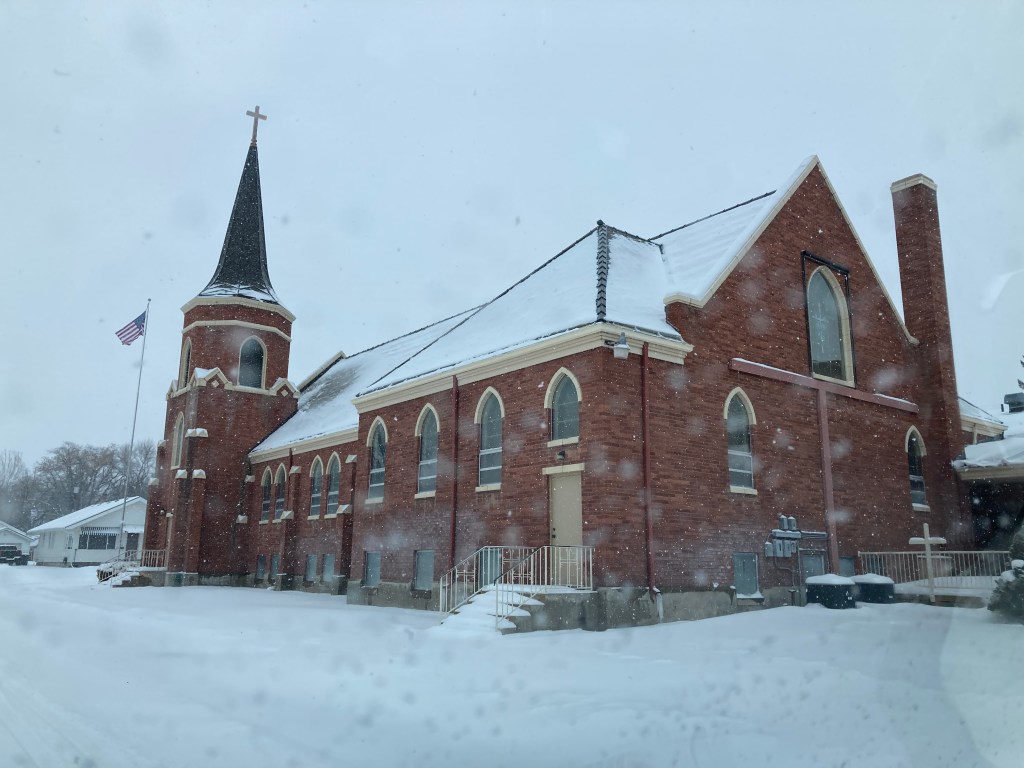
Good to be with the people of Zion Lutheran, Millwood for the 75th Anniversary today. This is one of our congregations in Spokane Valley, west of Spokane. They had a guest organist whose prelude was a setting of Gabriel’s Oboe from Ennio Morricone’s soundtrack to The Mission. The organist also pulled out all the stops for the hymns. You can find my Reign of Christ sermon for this morning in another post. During a celebratory lunch following worship we heard the early history of the congregation and I was able to share greetings from the synod office. Zion is served by Pastor Tyler Gubsch, pictured with me below. Thank you for the hospitality Zion.

Posted in NWIM Synod | Leave a comment

Women’s Ordination-ELCA and UKD

Nov. 22 is the day we celebrate the anniversary of Lutheran women’s ordination. The ELCA created a celebratory post and many people have shared it on social media. It feels like a good time to finally put into words my time with women pastors (and one woman pastor to-be) in the Ulanga Kilombero Diocese (UKD) in Tanzania.

First, my big thanks to a few people. I met Alison Richard in May when I attended my goddaughter’s high school graduation in College Station, TX. Alison is the Youth and Family Minister at Celia’s church. But Alison also coordinates the ELCA companion synod relationships! So, when I was eating graduation cake, Alison sat across from me and got me up to speed on companion synod relationships. She highly recommended that I set up a zoom call with some ELCA women pastors from Northwest Ohio who had just returned from a trip to their companion synod in Tanzania. In late July I zoomed with three of these pastors and they gave me all sorts of encouragement and advice, chief among them was to ask for time with the women pastors and a woman translator.

And so, part way through our trip, when we were at the UKD headquarters in Ifakara, Carla, Heidi, and I sat with five of women pastors and one woman who will begin the process quite soon. I began by telling them how important it was for me, even though women had been ordained since six years before I was born, to see and know women pastors before my imagination could really be opened. I simply asked the women to share their call stories. They are not my stories to share but they were amazing, at times heart-breaking, holy, and ultimately hopeful. Each of us listening was reminded of the power of representation. Some of the women there had already been inspiration for the younger women gathered. I am so incredibly grateful for their vulnerability and honesty.

After lunch and call stories. The women are holding glass crosses made by Pastor Wayne Shipman.

After hearing the stories, Carla, Heidi, and I brought out gifts from congregations and pastors back home. These included women’s clergy shirts, one alb, and many stoles. What delight we all had watching shirts made for women be tried on. I remember my own gratitude when I discovered the companies catering to women clergy.

A great joy of the journey was that the following day, Pastor Faith, the first woman to be ordained in the UKD, traveled with us to Kiberege. We saw most of the women at Frank’s ordination. At the end of our time in the diocese, we went to Pastor Susana’s church.

With Pastor Faith
Posted in NWIM Synod | Leave a comment

Faith Lutheran, Caldwell

My body is still recovering from Tanzania followed quickly by First Call Theological Education, so I stayed close to home this morning. I worshiped at Faith Lutheran, Caldwell, the congregation my former congregation Trinity partnered with for years on campership fundraisers, potato bars for many years and then followed by trivia nights, the last one at Trinity in February 2020. As former cluster dean, I installed first-call Pastor Lucas Shurson about a year ago. Today Pastor Lucas preached on a tough parable and I simply presided at Holy Communion. It was fun to see many familiar faces and meet new people. The congregation took a big step before calling Pastor Lucas. With housing costs rising, they refurbished their parsonage, which had been used as a food pantry and storage for many years. Faith Caldwell is also unique in that it is part of a cooperative with Treasure Valley Christian Church. The co-op meets quarterly about the shared building. Thanks for the hospitality Faith and have a blessed hanging of the greens next Sunday.

Posted in NWIM Synod | Leave a comment

First Call Theo Ed

The Evangelical Lutheran Church in America requires pastors and deacons serving in their first three years of ministry to participate in First Call Theological Education (FCTE). Five of the six synods in Region 1 (everyone but Montana in the Northwest and Alaska) have done FCTE together. This year we were at Camp Lutherhaven on beautiful Lake Coeur d’Alene. Dr Carmelo Santos was our speaker. Santos is director of theological diversity and ecumenical and inter-religious engagement for the ELCA. He wrote the study on Martin Luther’s Freedom of a Christian which our synod studied this fall.

Dr Santos
Group photo on a rainy afternoon
View from the dining hall
Finally catching up with camp exec Rebecca Smith
Two Univ of Chicago MDiv grads

There was a different ministry director each of my three years at the Div School. My last spring I was with a group of students who interviewed candidates, including Dr Cynthia Linder, who is still there as the director.Every student who came after me, including Luke (above) has sung her praises.

Posted in Uncategorized | Leave a comment

Kilombero District

We left our lodge in Mang’ula yesterday morning and traveled to one of the newest parishes in the UKD: Katarukila, led by Pastor Susana. Her parish met us with wonderful singing and dancing. We heard the history of the parish and saw the pastor’s house, still being built. We had a conversation with members.

Then we drove on to the Ruaha Parish home church. They are hosting us (read feeding us) and hosted our farewell event this evening. We are staying in another lodge last night and tonight. Yesterday afternoon we drove to Kitete to see the new dispensary (like a clinic at home, but one where children can be born and other care given). This has been a huge undertaking by the parish and now diocese. It is so needed in its area and they are only waiting for their government registration to come through. We stopped briefly at the church in Ketete.

This morning we met with the Kilombero District staff, some council members, and more pastors from the parish. We visited a kindergarten connected with the Ruaha Church. We saw a district pastor’s house, almost completed. This house was near the Mkamba Church. Ruaha Parish is the largest parish in the UKD.

Tonight was a wonderful time first with the Ruaha Parish leadership-hearing the history, projects they are working on, reviewing the history of our partnership, asking and answering questions. I’ll try to write more about repeated themes of these conversations later. Then Ruaha hosted a lovely Goodbye celebration for us with music, dancing, gifts, and a delicious meal.

Lodge at Mang’ula
Katurukila Church
Pastor Susana and Parish
Pastor’s future house in Katurukila
Dispensary Tour
Pharmacy at Dispensary
After Presentation with Dispensary behind us
Kitete church; note the sign above
Turn off cell phone
Kindergarten kiddos
Food prep for Kindergarten kids
District pastor’s future house
Inside the house

Mkamba Parish church building-Group Photo with Kilombero District

Answering questions at the Ruaha home church
Receiving gifts on our final night in the UKD
One of three Ruaha choirs we heard from at our Goodbye
Posted in Uncategorized | 1 Comment

Ordination of Frank Mauyo

Wow! Today we participated in the ordination of Tumaini headmaster Frank Mauyo. The service was preceded by the laying of the foundation stone for an expanded building. There were tarps set up in case of rain but they ended up blocking the sun.

Fun facts (compiled by our delegation):

The entire service lasted a mere 6.5 hours.

There were three offerings.

Mauyo, the ordinand, preached after the laying on of hands.

33 pastors were present, about half of the diocese’s pastors

A group of teachers, students (including Sophia), and staff attended from Tumaini. Their drive was made longer by the rain yesterday.

There were at least 10 choral pieces, which all also included dancing

One of the gifts given to Mauyo was a chest freezer, brought into the worship space

Announcements lasted 45 minutes and included many places and events we’ve learned about on our trip.

General Secretary Philorian estimated attendance of 400-500 people.

Each person in our group had a scripture verse to read during either the foundation stone dedication or ordination

I couldn’t guess all of the questions Mauyo answered but I definitely recognized one about the Lutheran Confessions

When we arrived last night we were able to sit in a circle of diocese pastors sharing words of advice and encouragement to Mauyo, and we were invited to share our own words too-quite a wonderful practice.

Dedication of Foundation Stone
Assembly
Pastors reading many scripture verses, Heidi representing all deacons
View inside the circle
Mauyo answering the bishop’s questions
Bishop Mtenji and me after one of the offerings

Pastors I sat with, just missing Paulson who was my wonderful translator

After worship with Moses-our stoles match thanks to Moses and Tami McHugh!
Posted in NWIM Synod, Uncategorized | Leave a comment

Cathedral, Strobelt, Kiberege

This morning we went back to the Cathedral, where we sat in on the wedding last week. Being a Saturday morning, we were greeted warmly by students, teachers, and staff from the diocese’s Strobelt school and the Cathedral chaplain and leadership.

Strobelt, named after the original German woman volunteer who started the kindergarten in 1996, is now a pre and primary school. Many of the students also participate in Compassion for Children (started in 2016) on Saturdays.

Chaplain Ezekiel welcomes us and gives a history of the Cathedral
Teacher Lakia talks about the school
Feeding the children 2 meals a day, 6 days a week is a big part of the school’s mission
Produce from the school’s garden
School Buildings

There were many kids there for Compassion for Children and we were treated to singing, dancing, and some reciting of Bible verses.

The staff have dreams of helping more kids in the area and of Strobelt being a place which prepares students who will go on to Tumaini for secondary school.

After our tour we ate lunch, rested, packed up, and said goodbye to the Martin Luther Center. We followed the bishop’s car to Kiberege Parish, which has 6 sub-parishes.

Inside the church building at Kiberege
Each member of our group was gifted a Maasai cloth. One of the evangelists serves a sub parish in an area where Maasai herd cattle.
Saying goodbye

Posted in NWIM Synod | Leave a comment

Foundation Stone at Ebenezer

Last night our group stayed at Mbingu Sister’s Spiritual Centre, run by Catholic sisters. It rained before we left and the road was pretty rough.

This morning we went to Ebenezer Parish to dedicate a foundation stone, even though the walls of the new church building are already up. Bishop Mtenji has been ill and was not able to attend but his assistant Pastor Paulson and Pastor Faith, who we met yesterday, also joined us, an opportunity to do some more interviews with parishioners for her PHD research. We got to reconnect with Pastor Eliud, who visited our synod twice in the past and was representing the district pastor who couldn’t be there. The choirs and singing were again a highlight.

Team is ready
During the dedication
Getting ready to cut the ribbon
Addressing the congregation after the dedication
One more photo with Faith, back in Ifakara

Posted in Uncategorized | Leave a comment