My head is so full of connections, notions, and wonderings. My heart is full of joy and awe.
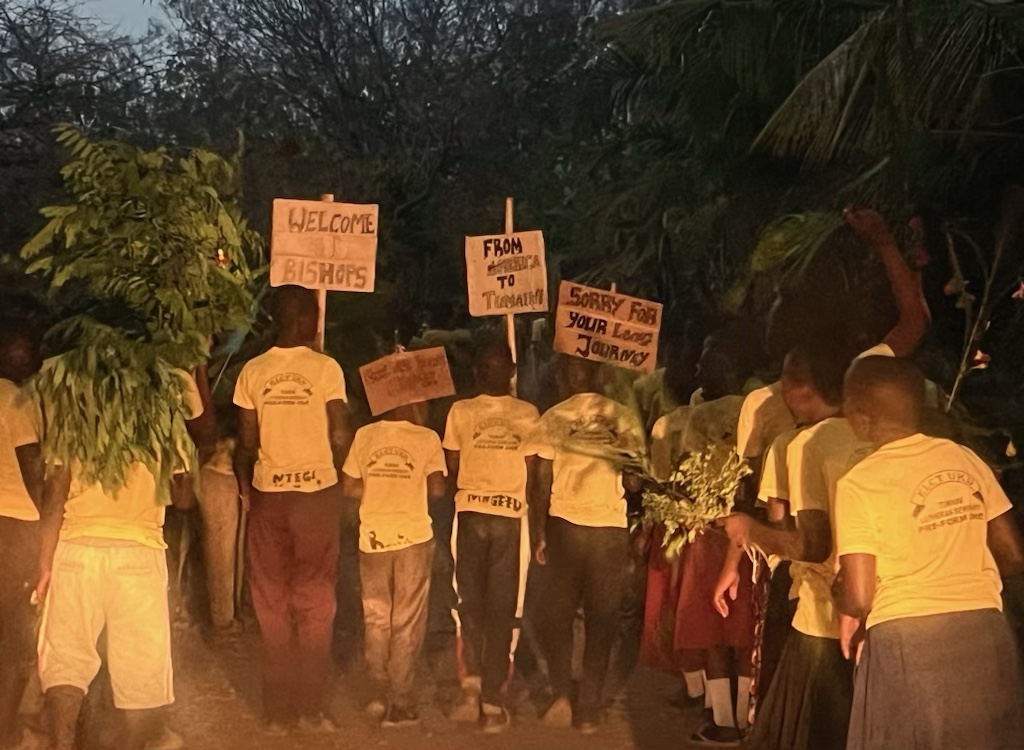
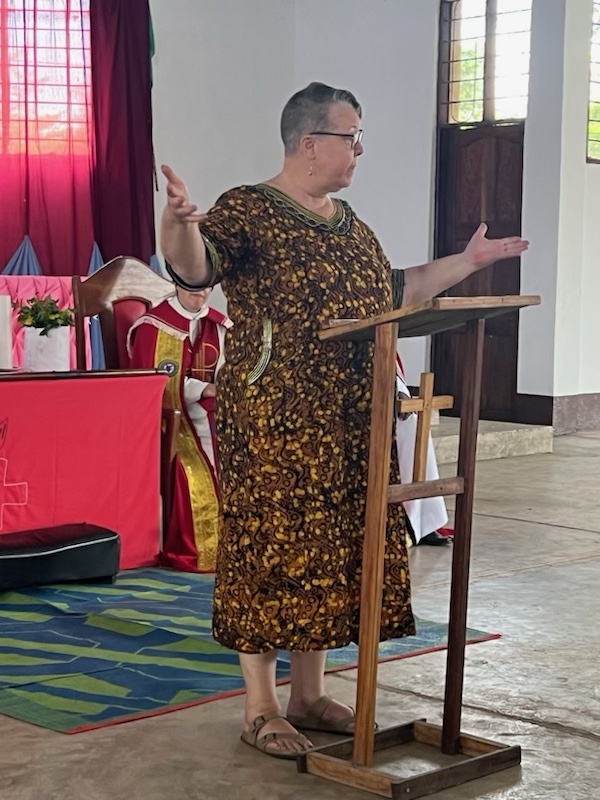
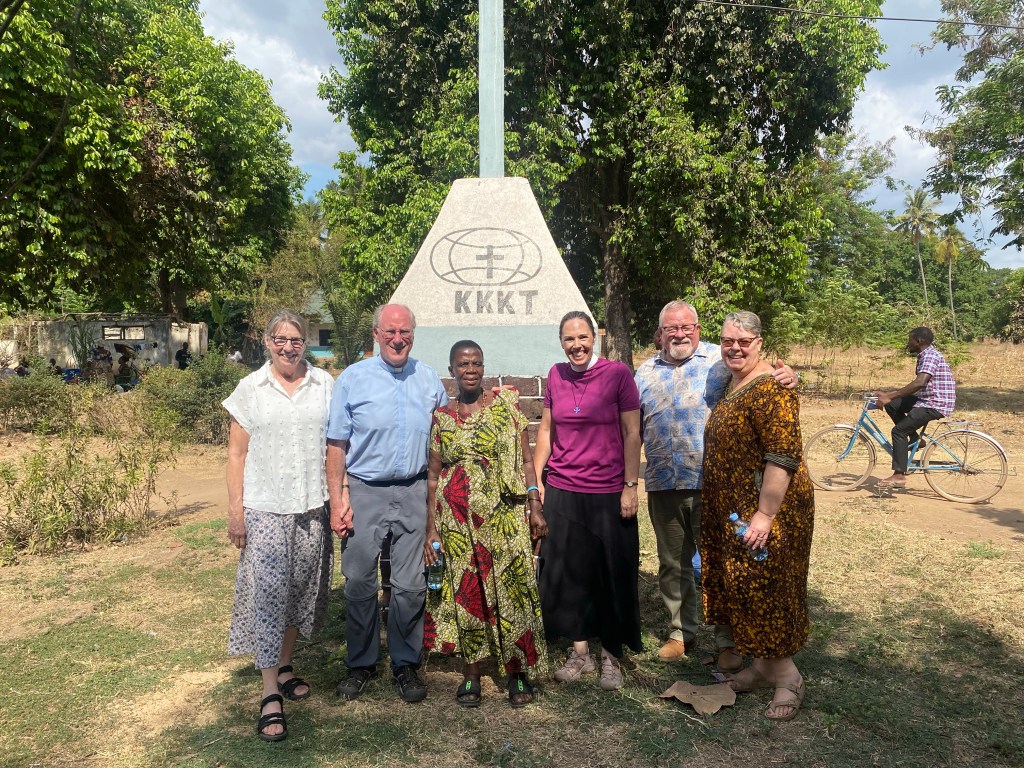
Our delegation (Deacon Heidi and Dan; Pastor Ethan and Carla; and me) and Bishop Mtenji of the Ulanga Kilombero Diocese (UKD) arrived at dusk to a party and choir. The whole Tumaini Seminary, a secondary school and Bible school run by the UKD, came out to greet us.
Yesterday our group heard from the bishop and staff about the growing church in Tanzania. They have more of a Catholic model-parishes consisting of several congregations. Is that the direction the ELCA should go? Should we be recruiting Lutheran pastors from Tanzania? Why or why not? The UKD is encouraging Saturday small groups in the home (prayer and reflection on scripture with guided questions-provided by the Evangelical Lutheran Church in Tanzania). What can we learn from that? Anything, or are our contexts too different?
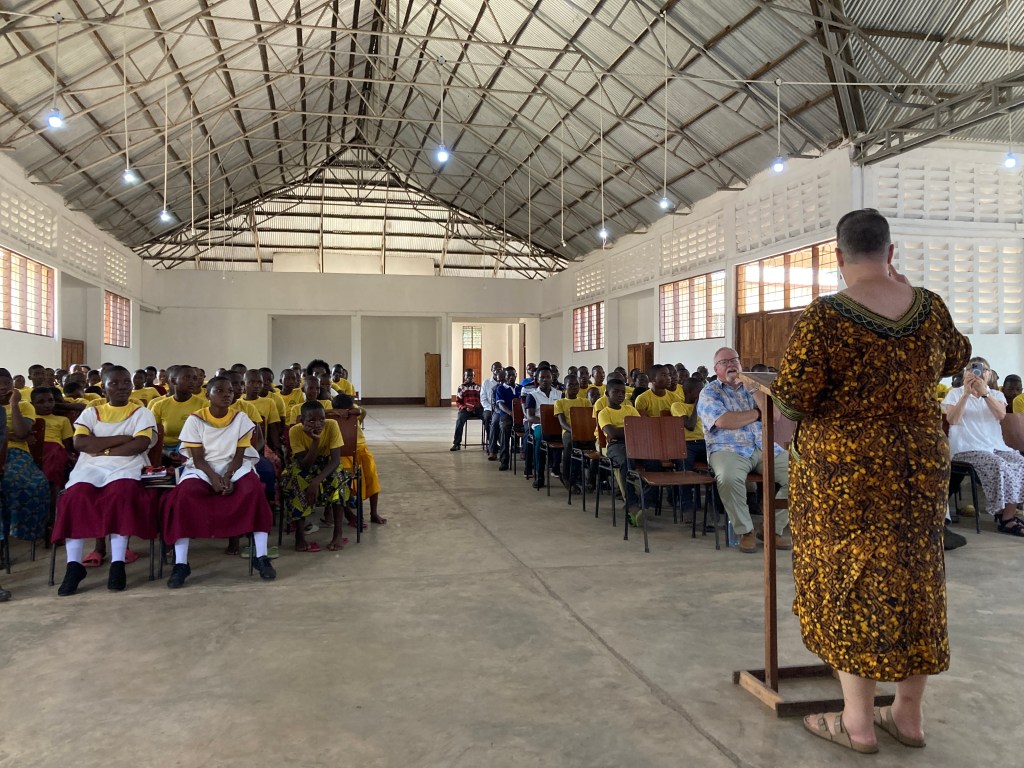
Back to today. I was in the Northwest Intermountain Synod on internship in 2003-2004, served in Iowa, and came back to the synod in 2010. We were giving and still give scholarships to girls who attend the secondary school. I remember former bishop Pastor Martin Wells talking pretty early on about the need for the dining hall at Tumaini. The synod started raising money. Then the ELCA decided to do its first capital campaign and synods were invited the have a campaign alongside it. Wells, the staff, and synod council made the decision to do a campaign and the dining hall was one of maybe three components. Making the long, often bumpy, ride yesterday makes the completion of this project all the more remarkable to me. There are almost 200 students.
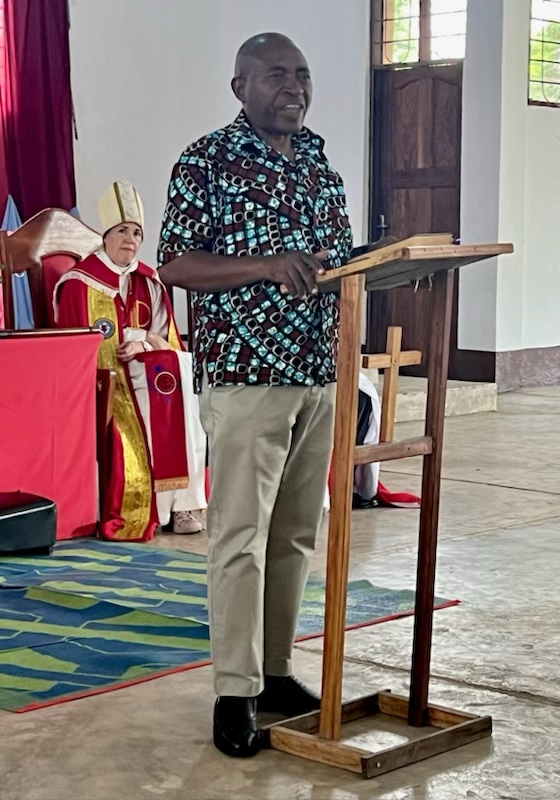
Four of our delegation read scripture this morning and Heidi and I both brought greetings from our synod once inside. The singing was a highlight.
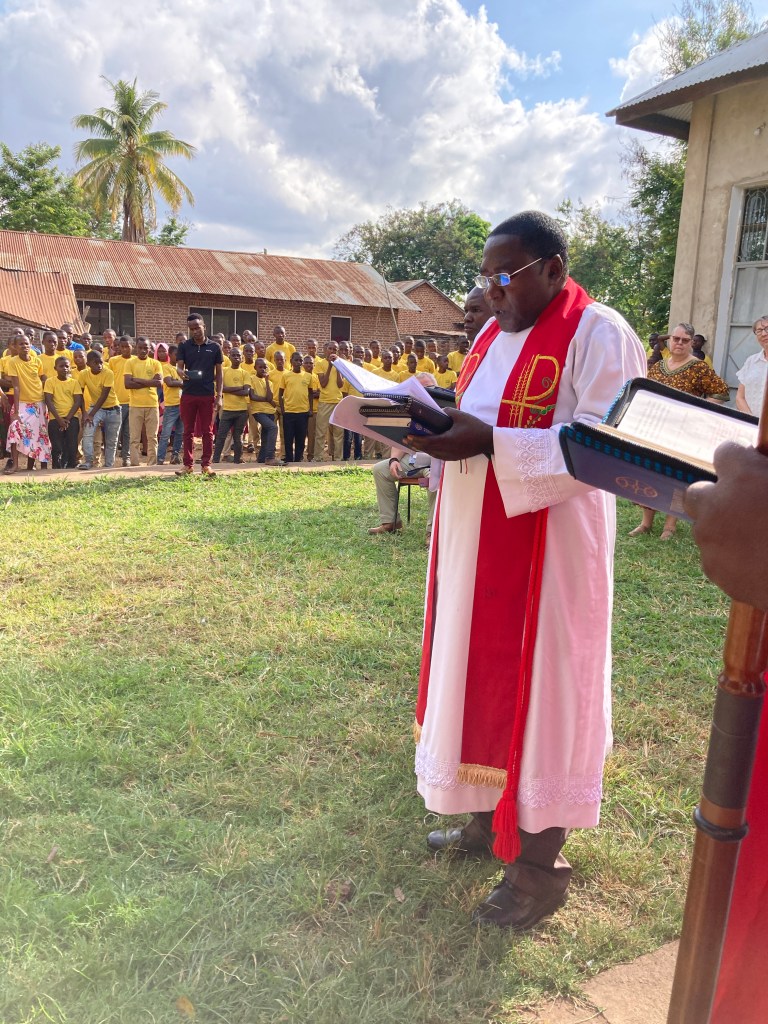
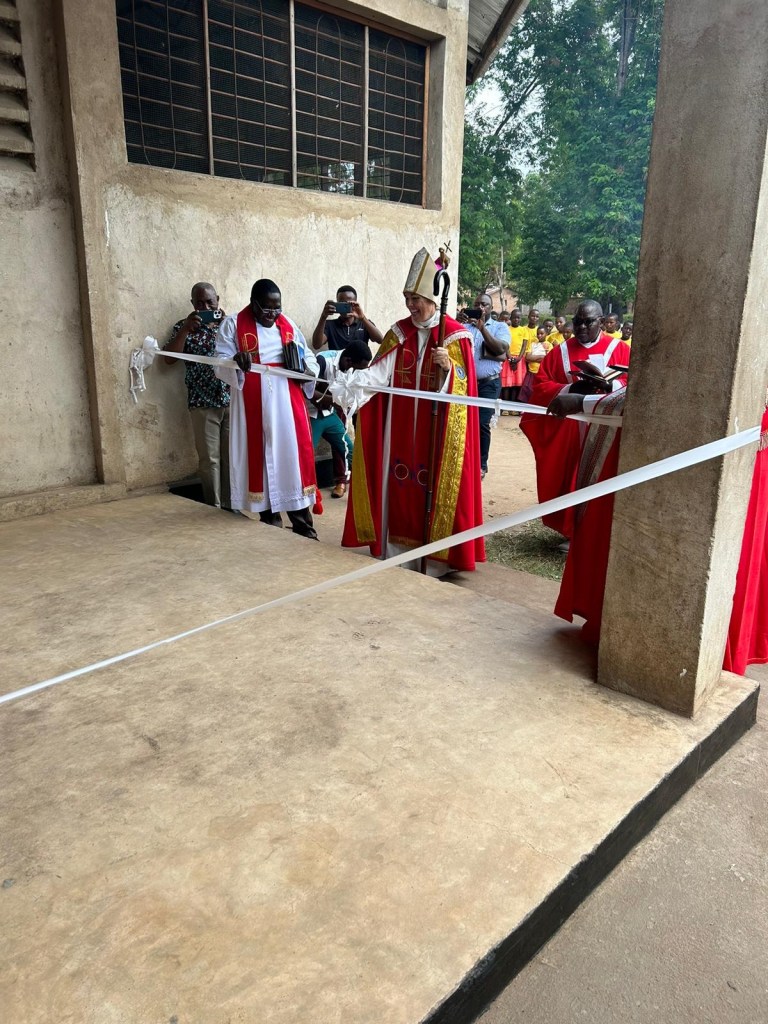
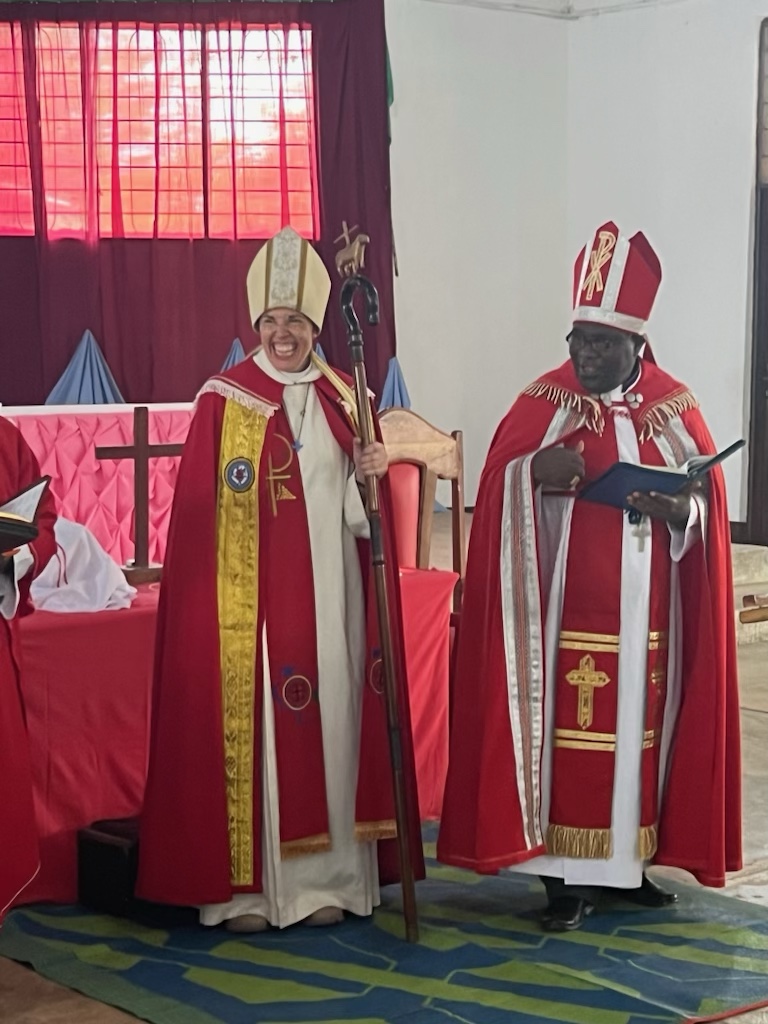
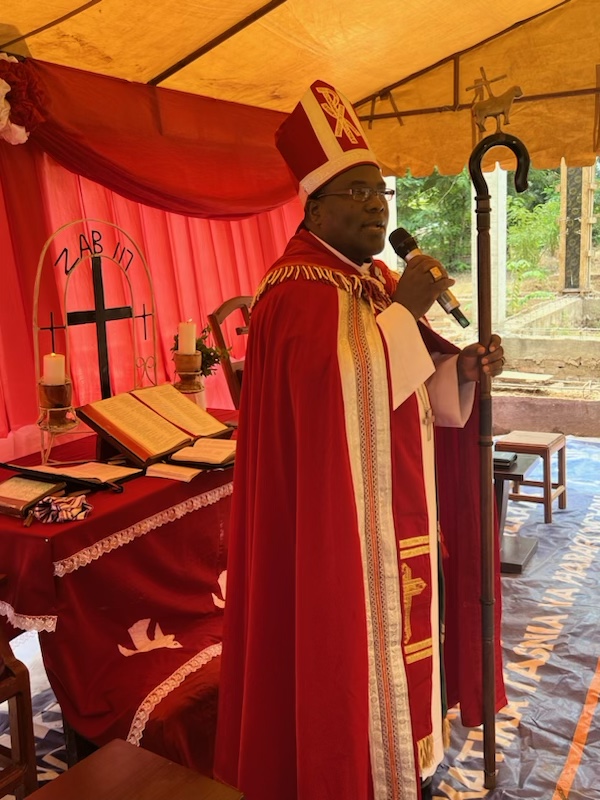
Moses, Director of Tumaini Me cutting the ribbon!Inside the dining hallHeidi shares some history and brings greetings. Matthew Matimbwi, the amazing engineer, shares reflections.Two bishops
We think the staff saw Bishop Jaech in a cope for my installation. When they found out our synod did not own a cope, they made one for our visit. Bp Mtenji loaned me one of his miters.
After the Inauguration, we all got in our cars and traveled to a nearby parish (Kipingo) for their Sunday worship. They are raising money for a new church building. The bishop preached on David building the temple.
After worship we met Angela, now in Kipingo and at worship. She was a visitor to our synod some years ago when she was the head of the UKD Women’s Ministry.
We continue to walk shoulder to shoulder, bega kwa bega.
All of our flights were on time and we landed as scheduled late at night in Dar es Salaam. My checked bag’s didn’t arrive but our driver was there and after exchanging money and visiting the ATM, our group was off to the Crown Plaza and some vertical sleep. We gathered for breakfast the next morning and then started the journey south and west.
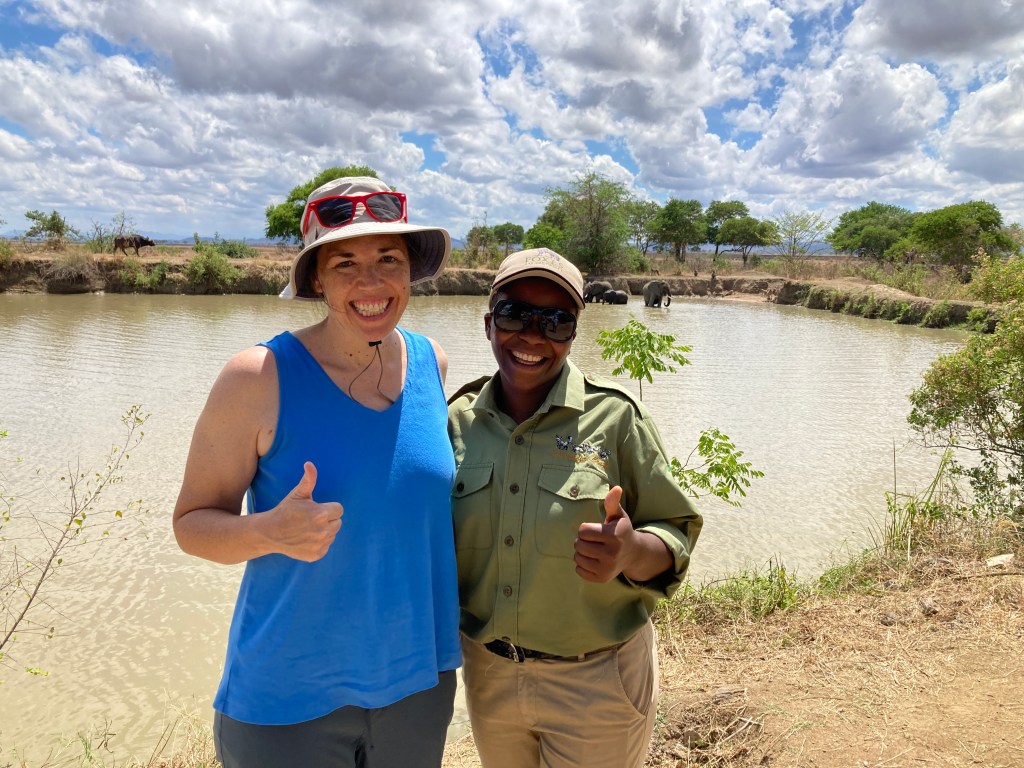
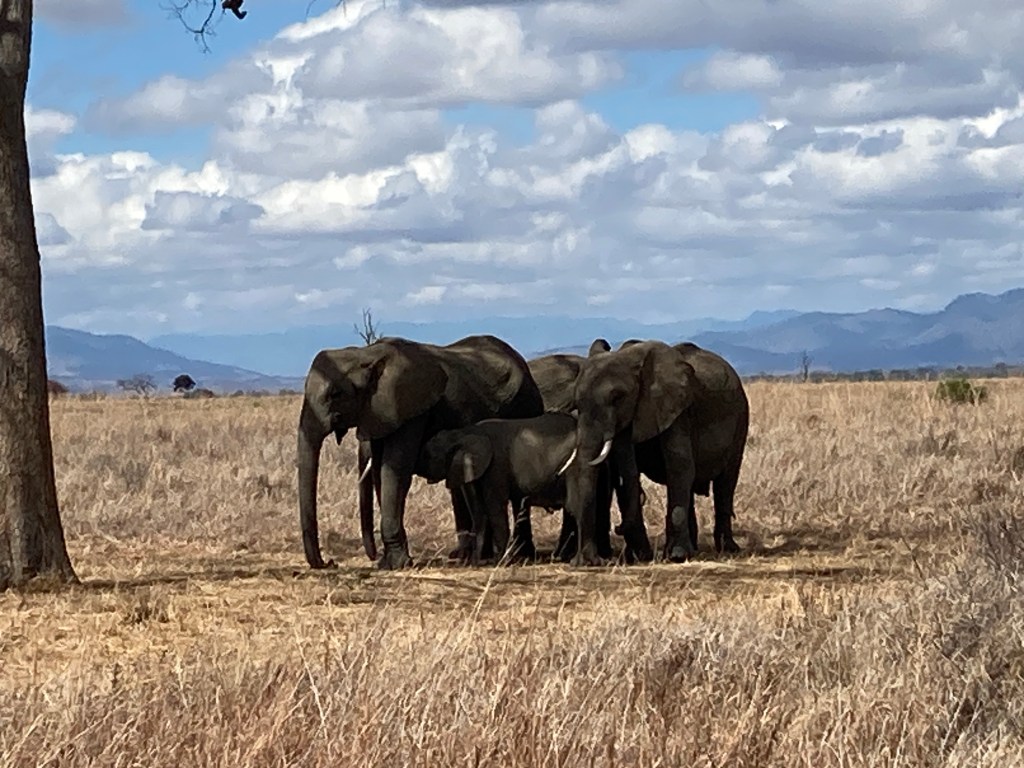
We had lunch around Morogoru. Heidi, making her fifth or sixth trip to the Ulanga Kilombero Diocese (UKD) commented on the increased semi-truck traffic, which slowed down our travel. The roads are also better. We made it to Vuma Hills, near Mikumi National Park, around dusk. I slept so well and felt refreshed the next morning, yesterday. One of our group of five didn’t feel well so had to miss our safari. The rest of us had an amazing morning with an incredible guide, Fraida, and driver, Andrew. Fraida talked with us about Tanzania’s history, the animals, how many women are safari guides, environmental issues and more. We came back for lunch and a nap and then went out a second time. The highlight of the morning was watching a family of five elephants under a tree. The highlight of the afternoon was watching a stand off between some lions and Cape buffalo. I have a new appreciation for the peaceable kingdom image from Isaiah.
Monday thru Wednesday our synod held our Bishop’s Fall Convocation (fall theological conference for pastors, deacons, and interns). Here are some highlights:
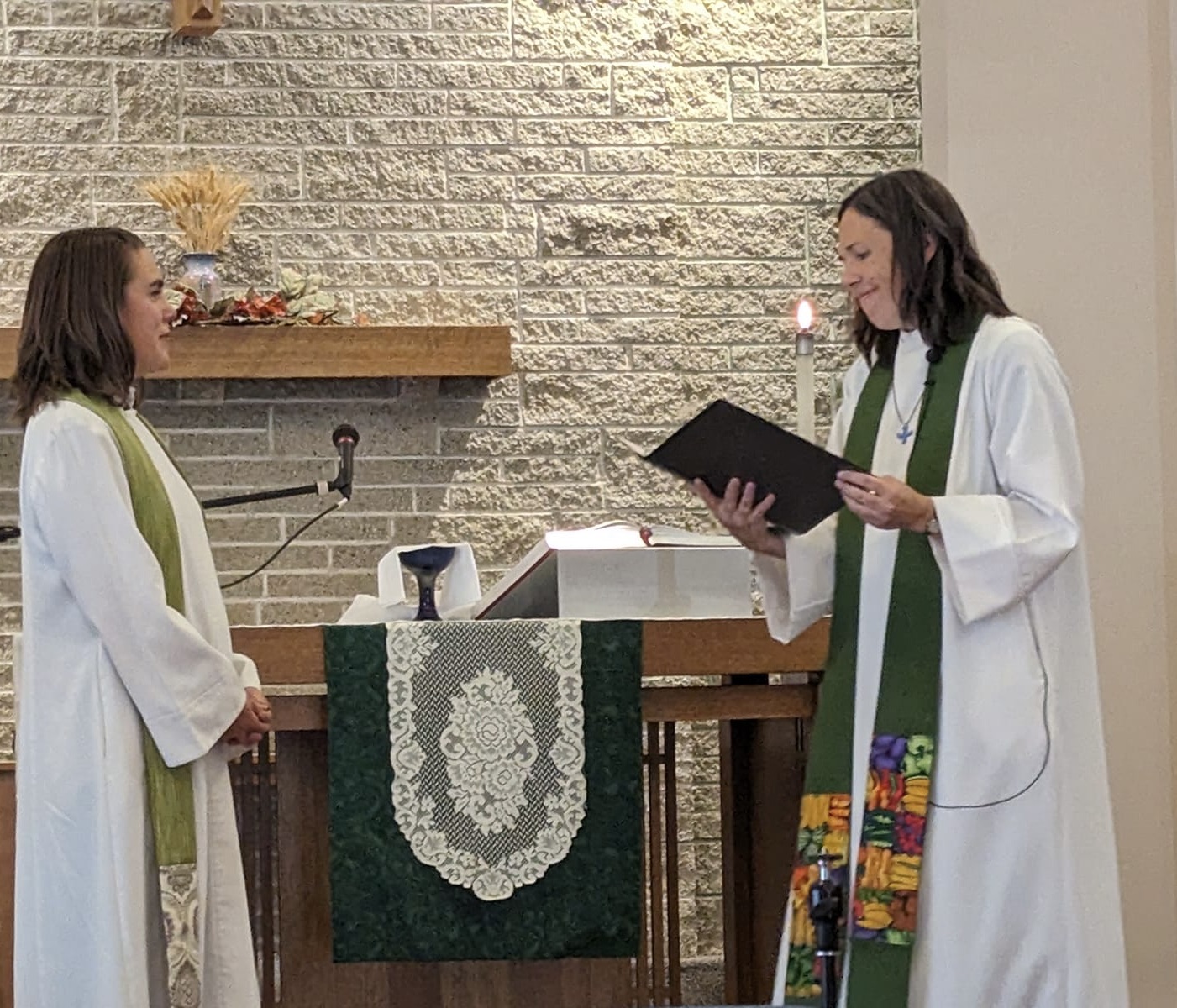
Installing our new Director for Evangelical Mission Pastor Liv Larson Andrews during opening worship:
Welcoming all of the new people to out synod. I have been listing these leaders in my state of the synod addresses this summer and fall but to meet them and watch them get to know our synod was a gift.
Assistant to the Bishop Pastor Phil Misner leads a lunch discussion for all the pastors serving congregations in pastoral transition.
Vance Blackfox was our keynote speaker and led us through The Blanket Exercise and presented Indian 101. Monday night we watched the documentary Covenant of the Salmon People and then we were honored to hear from NezPerce tribal Chairman Shannon Wheeler.
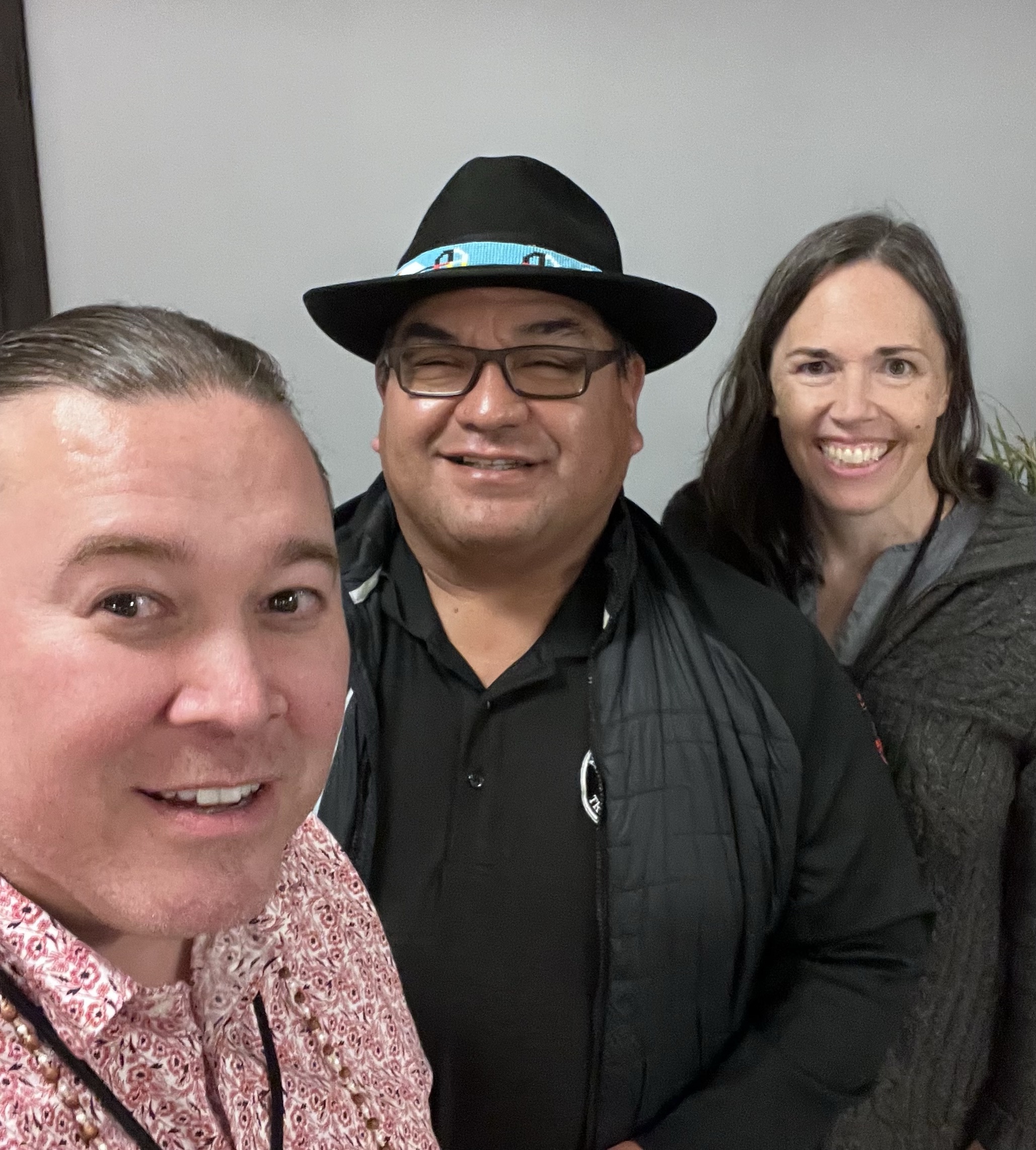
Vance Blackfox, Chairman Wheeler, and Me Monday evening.
We tried out a new vespers service created at Holden Village: Bless this Night.
Wednesday morning I was able to interview Rachel Wilson, Communications Manager for the NezPerce.
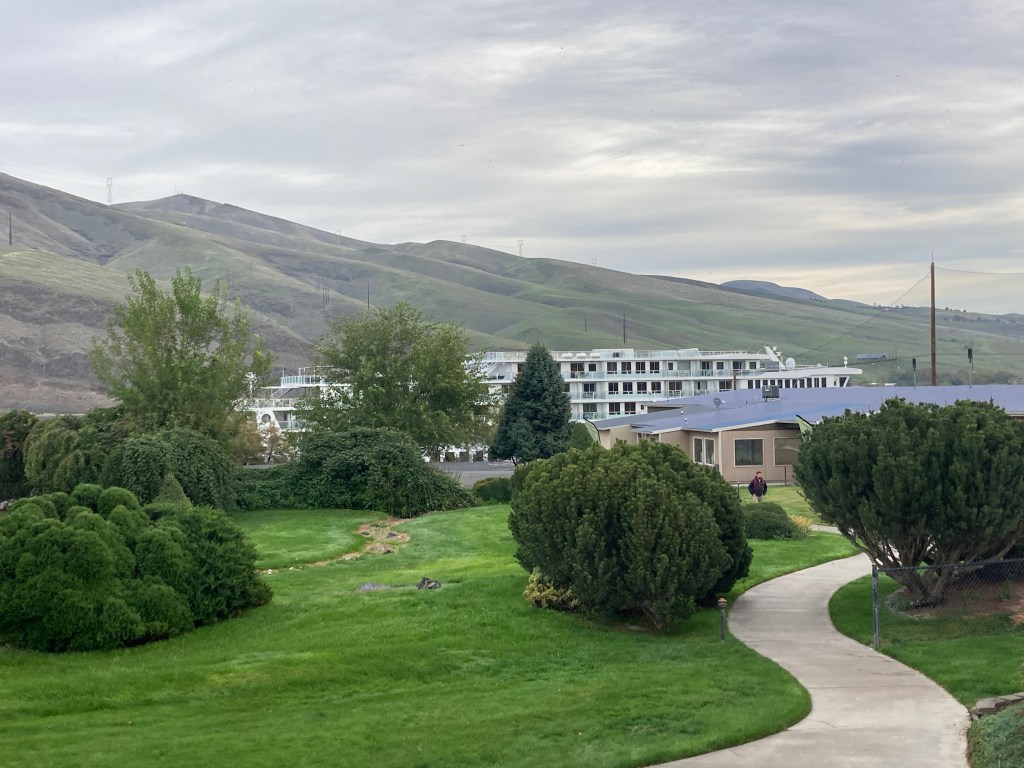
The Holiday Inn, Clarkston has been remodeled and the venue and staff were fabulous. The hotel is a popular lodging spot for people embarking on Snake/Columbia River Cruises.
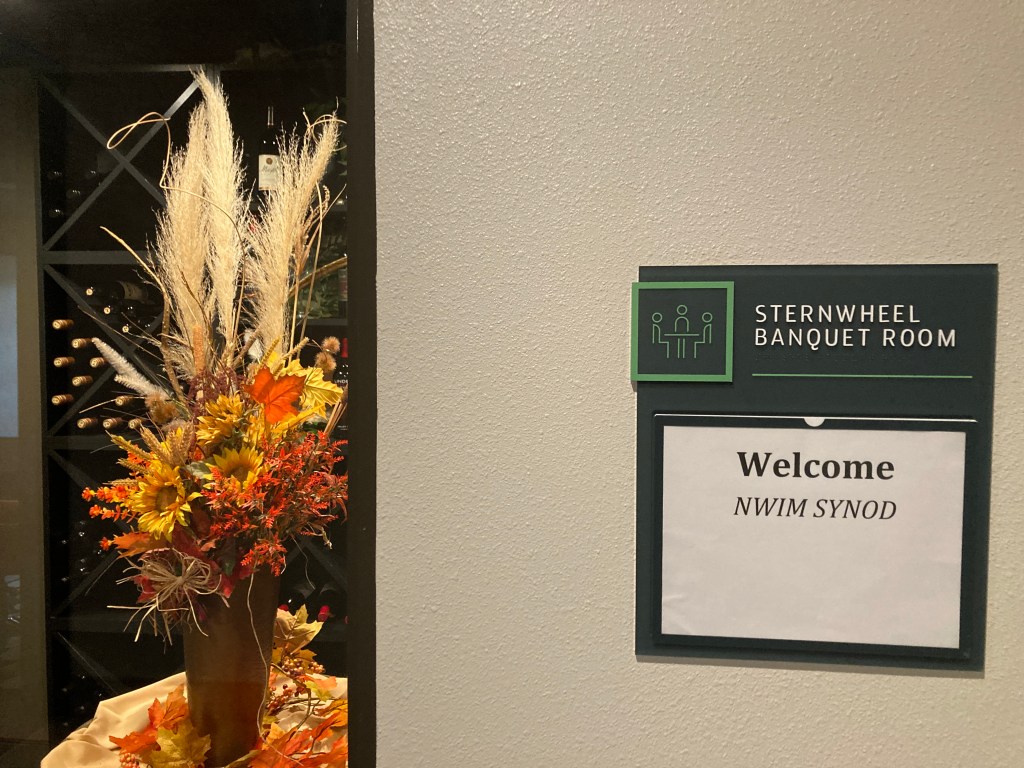
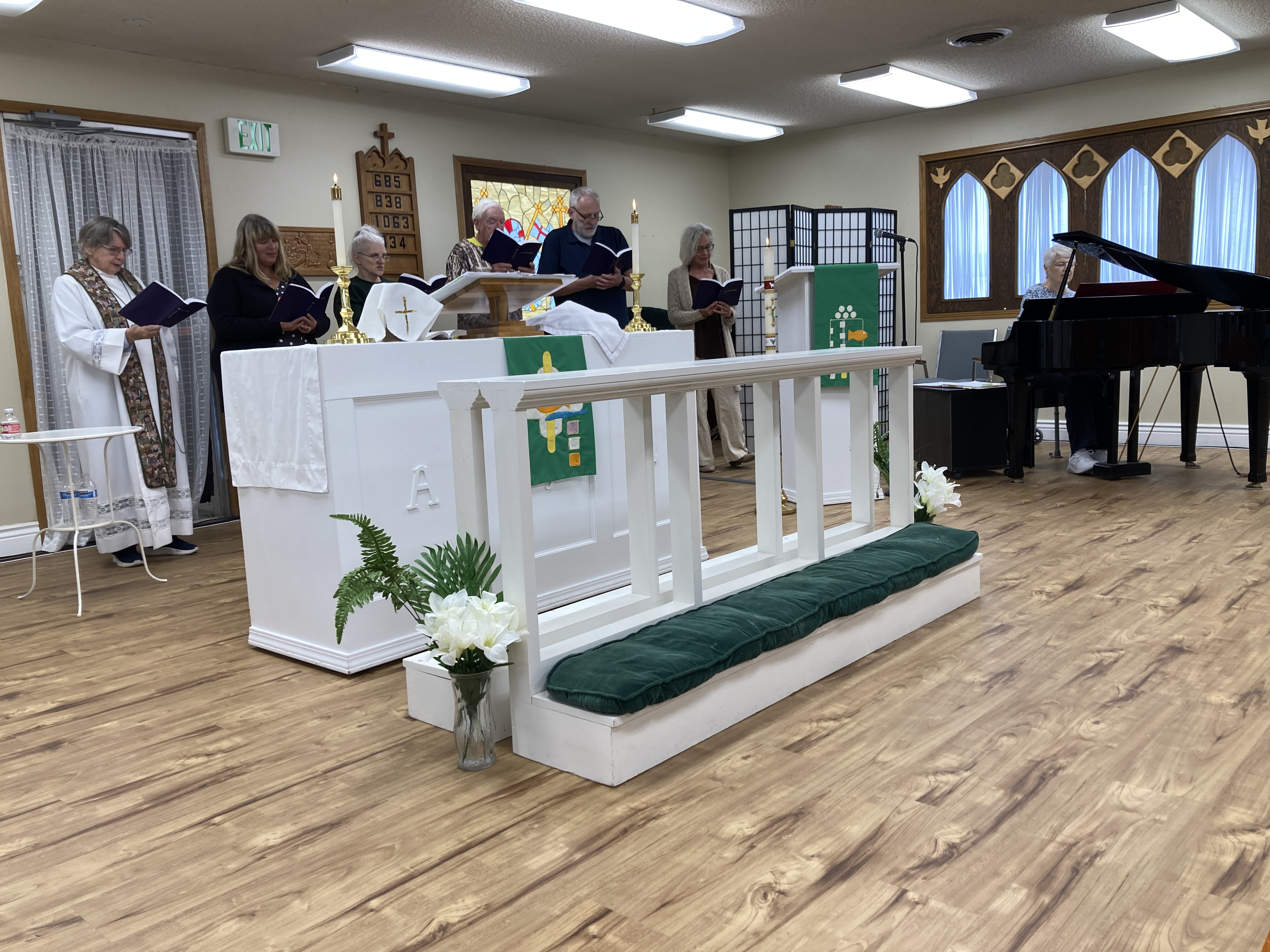
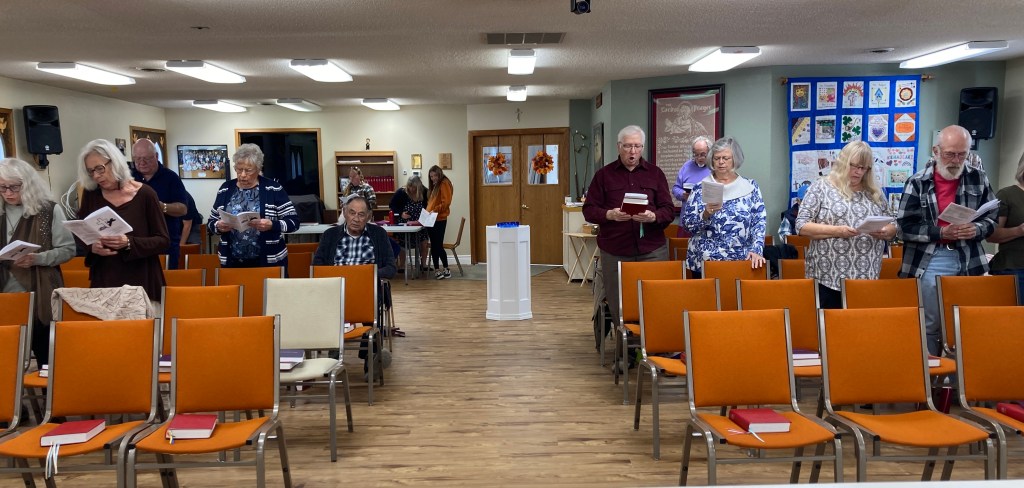
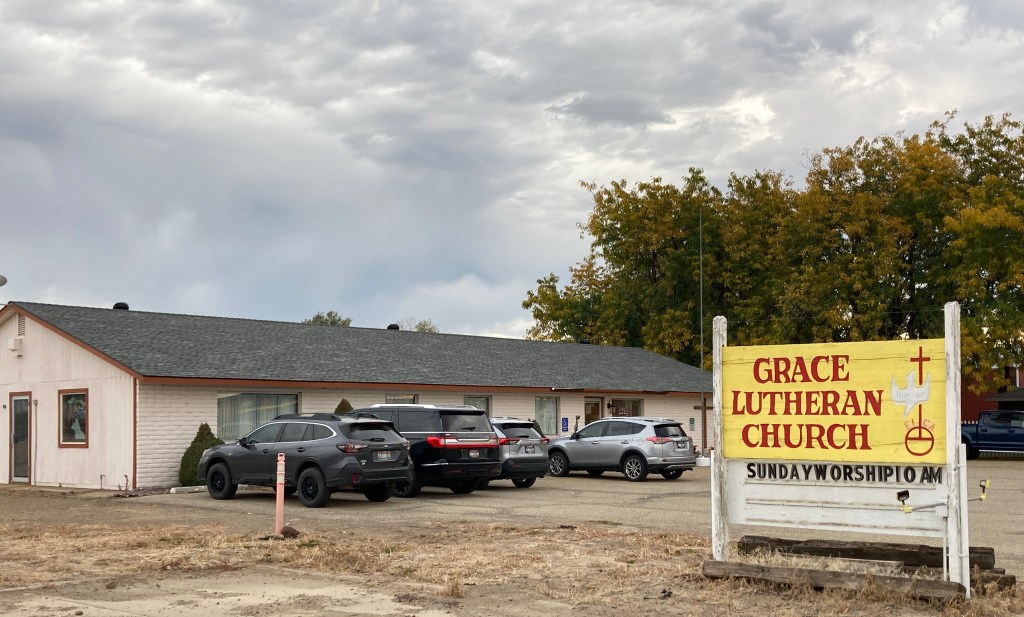
Fall Convocation – Oct. 16 (Grace Lutheran, Lewiston, ID)
Isaiah 25:1-9
Did you all figure out a life-giving way to preach on the gospel text yesterday? I might go back and listen to a few of your sermons for inspiration. I looked up Sunday’s lectionary text in June and just groaned. I looked at a few old sermons. I read Father Capon and Dr. Richard Swanson. Where is the good news? I asked when I called a friend who was with me in text study for six years in rural Iowa. We laughed.
This afternoon we are obviously turning to the other banquet or feast passage from the prophet Isaiah. Isaiah had plenty of harsh words of judgment up until this point, but not in the portion we read today. God is a refuge and shade; in other words, God absorbs violence and brings peace. Our minds might wander to other passages of promise in Isaiah: the prince of peace or the wolf and the lamb lying down together.
Oh, how we long for peace on days like today, in the Holy Land most especially. But I also in so many other parts of the world that are not front and center but where violence rages. We long for peace in our own communities, maybe in our own families. And we know that we are called to be peace makers, in our calls as pastors and deacons to be sure, but we can reach further back to the waters of the font. The outcome of all the promises made is so that the baptized will, “proclaim Christ through word and deed, care for others and the world God made, and work for justice and peace.”
There is more to Isaiah’s feast. The prophet also makes it plain that God will invite all to the rich feast God prepares on this mountain. The text layers adjectives to evoke a lavish banquet filled with food and drink. You hear an echo of Jesus’ invitation to come and feast with him at the marriage supper of the Lamb (Matthew 22:1-14; Revelation 19:6-8). The Eucharist is but a foretaste of this final feast for the nations. God invites all to come and dine.
This scripture passage always reminds me of the table grace we sang at big family dinners, a table grace which brought together so many of the biblical feasts: Come and dine the master calleth come and dine. There is plenty at God’s table all the time. He who fed the multitude, turned the water into wine, to the hungry calleth now. Come and dine. Amen.
Like so many major biblical scenes, the feast Isaiah describes takes place on a mountain. Usually, it’s only on Transfiguration Sunday when I talk about mountain top experiences, but Isaiah 25 lends itself to a similar exploration. Moments of spiritual high are rightly critiqued when they are paired with manipulation or never lead to actual discipleship. But when someone or a group of people truly experiences the love of God in Christ Jesus in an authentic way, that is something to celebrate.
As a lifelong proponent of outdoor ministry, I’m used to the critique that a week at camp is too unrealistic. Nothing can replicate it down the mountain. It sets the bar too high for what beloved Christian community looks like. My response is something like, How else are we supposed to help bring in the reign of God if we’ve never had a glimpse of it.
We get into trouble when we think our feast experience, our glimpse of the reign of God is the only one. In my twenties I learned that Lutherans don’t one-up each other through born-again stories, we one-up each other through feast stories—camp, college, mission trip, whatever. We could have just said, isn’t it great we all have some idea of what the Holy Spirit is trying to usher in!
An amazing gift of being on the synod staff is hearing and seeing the variety of mountain top feasts in our synod. Sometimes a glimpse of the reign of God is being welcomed into one of the recovery groups so many of our churches host. Sometimes it’s reconciliation with a family member. Sometimes it is a meaningful worship service. And a glimpse of the reign of God may come by reading scripture passages like this one from Isaiah where God, through a prophet, paints the actual picture.
I will fully admit that when I consider the ELCA’s Truth and Healing Movement, which we are participating in this week, I hear a real call to discipleship, to speak the truth in love to one another and maybe to our communities. I also see another glimpse of the reign of God, another feast.
Part of why Vance Blackfox is with us is because so many of us are in proximity to Indigenous populations. Our whole synod can enter into this movement. But another reason he is here is because you elected a bishop from Western South Dakota and when I began digging into my own anti-racism work, so much of my childhood bubbled up.
As I have written, there is a strange dissonance that comes with growing up in a town called Custer down the hill from Crazy Horse Mountain. Pine Ridge was the poorest county in the nation, the very worst piece of land we could give to anyone, as if it was ours to give. Wounded Knee (both of them) occurred only hours from my home, but I never visited until I was in my twenties.
There were other stories too, good stories mostly around high school basketball. Because our high school boys basketball coach was commited to reconciliation with the Indiginous people, Custer High School was the one white school invited to the Lakota Nation Basketball Tournament in Rapid City. The tournament was amazing to behold. More importantly to me was SuAnne Big Crow, a member of the Oglala Sioux, and a member of the 1989 state champion Pine Ridge Team. She was more than a great ball player; she was an amazing human and so proud of her heritage. Then she died tragically in a car accident in 1992.
As a teenager, the adults in my life generally did not talk about the roots of all the obvious inequity and certainly no one had a plan for truth and healing. The one exception perhaps being New Jersey Senator Bill Bradley and his bill to return 1.3 million acres of federal land, most of it in the Black Hills, to the Sioux Nation. For me, the ELCA’s Truth and Healing movement, it was another feast, another glimpse of the reign of God. It continues the long feast, the long story we already know.
I always loved that Barbara Brown Taylor called the long commentary series she edited Feasting on the Word. The Word, the story we find in holy scripture, may be the biggest feast of all. We will perhaps be reminded this week that the story has been used in terrible ways to harm people, but I still think it’s redeemable because it is so full of stories of God’s faithfulness and promises and visions for the world.
What’s more, it is the story you and I are part of. At some point each of you was brought into this story, maybe at the very beginning of creation or maybe in the waters of baptism (metaphysics were never my strong suit). What I do know for sure is that you are part of the feast already here and now because you each bear the name Child of God.
Each of you in your fullest, authentic, beautiful, and broken self – are loved. Embraced and forgiven, you are set free from all the self-talk and other-talk that binds you with names that are not your true name. You are God’s beloved child.
This morning I was with the saints of Grace Lutheran, Mountain Home, Idaho. Grace is the eastern most congregation in the Treasure Valley Cluster so I knew several people there through various cluster events the past twelve years. (they have a new floor since I was last there pre-pandemic!) They have been served faithfully for almost the last three years by interim retired Pastor Caryl Miller. Mountain Home is home to Mountain Home Air Force Base and the majority of the congregation served in the Air Force sometime. After worship I spoke with the call committee about possibilities for their future. I listened to them explain why they think Grace’s presence is important: they are a caring church–caring for people both within the church community and beyond. For many years they hosted a huge monthly food distribution in partnership with the Idaho Food Bank. An older membership made them give up this labor intensive ministry, but they are pivoting to a free monthly lunch for their neighbors. When you look across the street, you see that their current neighbors are construction workers building a new credit union, car wash, and a few other businesses. The church sits near one of the Mountain Home exists and the two buildings (sanctuary and kitchen in one and former food bank building) were originally Boise National Forest administrative offices. It was wonderful to be with the people of Grace, even for a few hours.
I will confess that when I first read this passage from Exodus, I thought I would focus on the first half of the passage, during which the Israelites go astray. Later I supposed I would focus on Moses’ conversation with God. I never really planned to spend much time on God’s anger, right there in the middle. But eventually I came to see that the entire narrative has much to say to us today, and not necessarily because we are installing a pastor, though I’ll address that later, but simply because this is a word we always seem to be in need of hearing.
God giving the commandments on Mt Sinai was a high point in Israel’s story. It was a gift, the beginnings of God’s vision for community. Despite having those commandments, the Israelites fell into chaos and apostasy. It all happens as they wait for Moses to return from the mountain. We are left wondering, how did the relationship between God and Israel go so wrong?
Aaron is Moses’ brother and helper. Moses is the go-between for the people and God. 40 days seemed to be too long for the people. Aaron is left to lead the people during Moses’ absence and what happens could be described as a failure in leadership. Reading different translations and commentaries, it is hard to say if the people end up worshiping another god, altogether, one formed for them out of gold, or a replica of the one true God. Either way, false god or false image of God, they are breaking the commandments.
It is easy to criticize the Israelites with our perspective, and yet I know that idolatry is something I easily fall into. We may not think of it as worship, but we surely put our trust into material things, systems, and even people. It is much easier to point at others far away and critique their worship of idol, authoritarian leaders worshiping power or billionaires worshiping wealth.
In our individual daily lives, we are offered opportunities to put our trust in all sorts of other idols: power, material possessions that make us feel powerful, money, things that give a sense of security. Some of those things can actually be helpful tools. But they can also all become idols.
A piece of the Exodus 32 story that I find fascinating, is how one particular phrase gets repeated but with slight changes: “brought us up out of the land of Egypt.” The first time the phrase is uttered, it is by the people, complaining to Aaron. They say, “Come, makes gods for us, who shall go before us; as for this Moses, the man who brought us up out of the land of Egypt.” Perhaps this should have been our first clue that something was amiss. The Israelites have forgotten that is God who delivered them. Yes, Moses led the way through the Sea, but God was the deliverer. Is it just a slip of the tongue, “This Moses, the man who brought us out of the land of Egypt”? I do not think so.
Before I leave for Tanzania I will need to receive and submit my mail-in ballot. How easy it is to turn human beings into our idols or gods! Or maybe that is just something I do. How do I know when I have turned a human into an idol? Usually about the time they disappoint me and what I feel is not just disappointment but utter heart break. How could they let me down this way? It is like I have temporarily forgotten that God alone is the redeemer of my life.
I am speaking about this with a little humor, in part because this is such a fabulous story. But worshiping idols is no small thing. And if we needed a reminder, just feel the anger from God in verses 7-10. After unleashing on go-between Moses, who has not even been down there with the disobedient people, God finishes, “Now let me alone, so that my wrath may burn hot against them and I may consume them; and of you I will make a great nation.”
To be sure, this is not the Great Flood. God is not destroying the cosmos, but God does seem okay with starting over with another group of people, so long as Moses is their human leader. God goes so far as to deny God’s own people by saying, “Your people, whom you brought up out of the land of Egypt, have acted perversely.” Clearly worshiping a false god or creating a false image of god stir up God’s anger.
God’s seemingly resolute behavior makes it even more shocking when Moses can change God’s mind. He does so by reminding God that it was God who brought the people out of the land of Egypt. He reminds God of God’s power and might. Moses reminds God of God’s promise to Abraham, Isaac, and Israel to multiply their descendants. Killing the Israelites now would not foster offspring and certainly would give the Egyptians the edge. Moses’ threefold imperative — “Turn from your wrath,” “Change your mind,” “Do not bring disaster on your people” — is bold and effective. God does change God’s mind.
I wonder who we need to intervene on our behalf. I wonder if in our impatience we have bowed to more tangible, accessible, and shinier gods rather than relying on the one who brought us out of the power of sin, death, and the devil. And sometimes I wonder how God quells God’s anger at such atrocities.
Nearly every day in the news we are reminded that as humanity we collectivelyfall short of God’s will for us. That is not shocking news anymore. I do not want to minimize the depth of our idolatrous tendencies. Still, I do think the more shocking and profoundly hopeful news here is that God sticks with us. God continues to claim us as God’s own despite it all. Instead of God’s wrath burning hot against us and consuming us, God the Father’s beloved son Jesus reminds us there is joy when even one sinner repents (Luke 15:10).
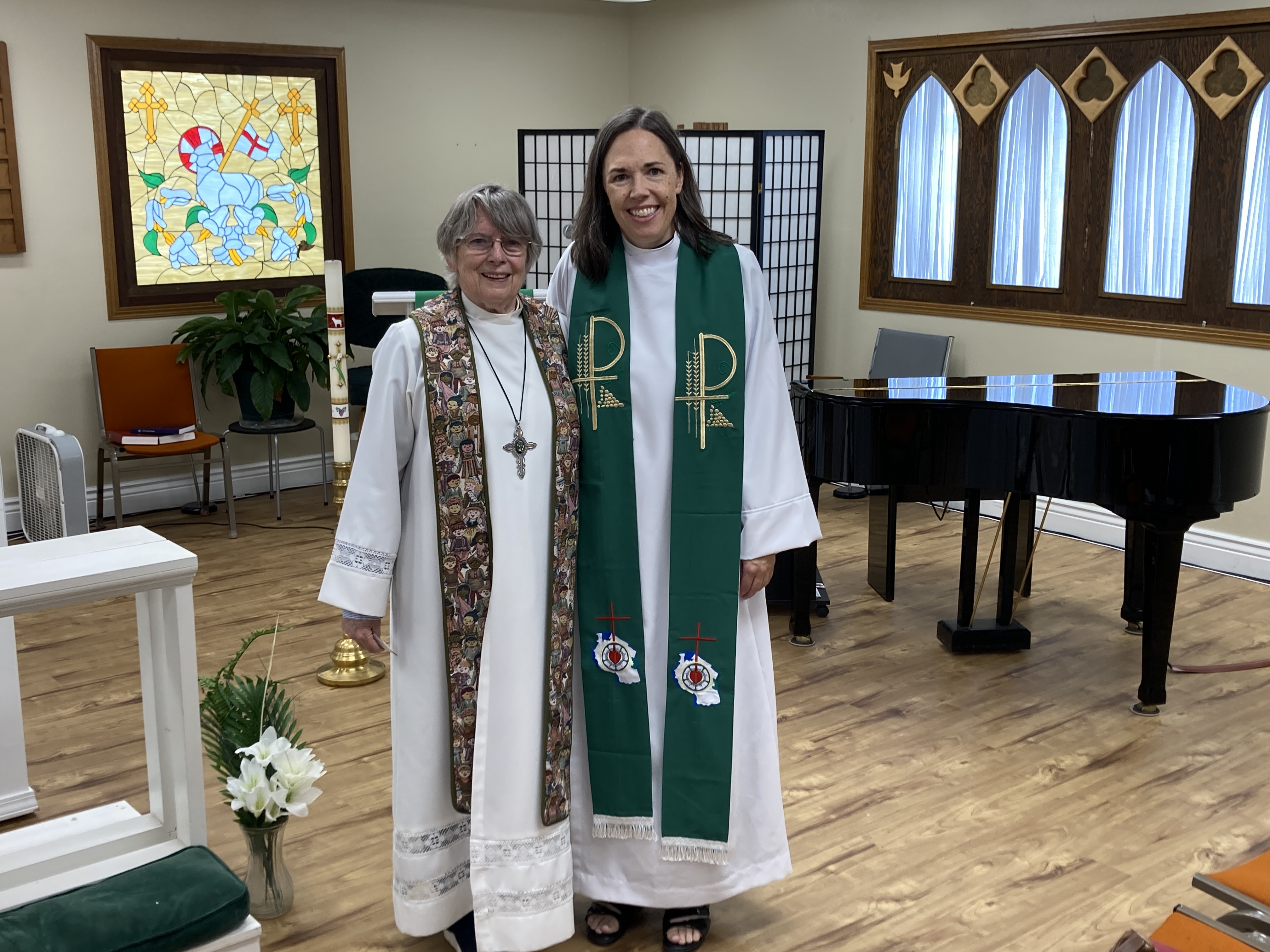
This congregation, not completely unlike the Israelites, has been through its ups and downs, many times of discernment, some conflict, but you are hear today still proclaiming the gospel to a larger community, a community that needs the message more than ever. God has already created new beginnings through and with you. Now one more chapter begins with this mutual ministry with Pastor Sierra.
You have known and know that what never changes is God’s presence and steadfastness. On God’s own, sometimes hearing the cries of God’s children, occasionally with the help of a prophet, God remains a God of promises. We worship a God of promises. We will hear promises today, promises about the life of pastor and people and your life together. All of those promises can be traced back to the promises made at the font as well as the covenants God made with people and all of creation. Those promises come down to the unwavering truth that you are loved, and God will not let you go.
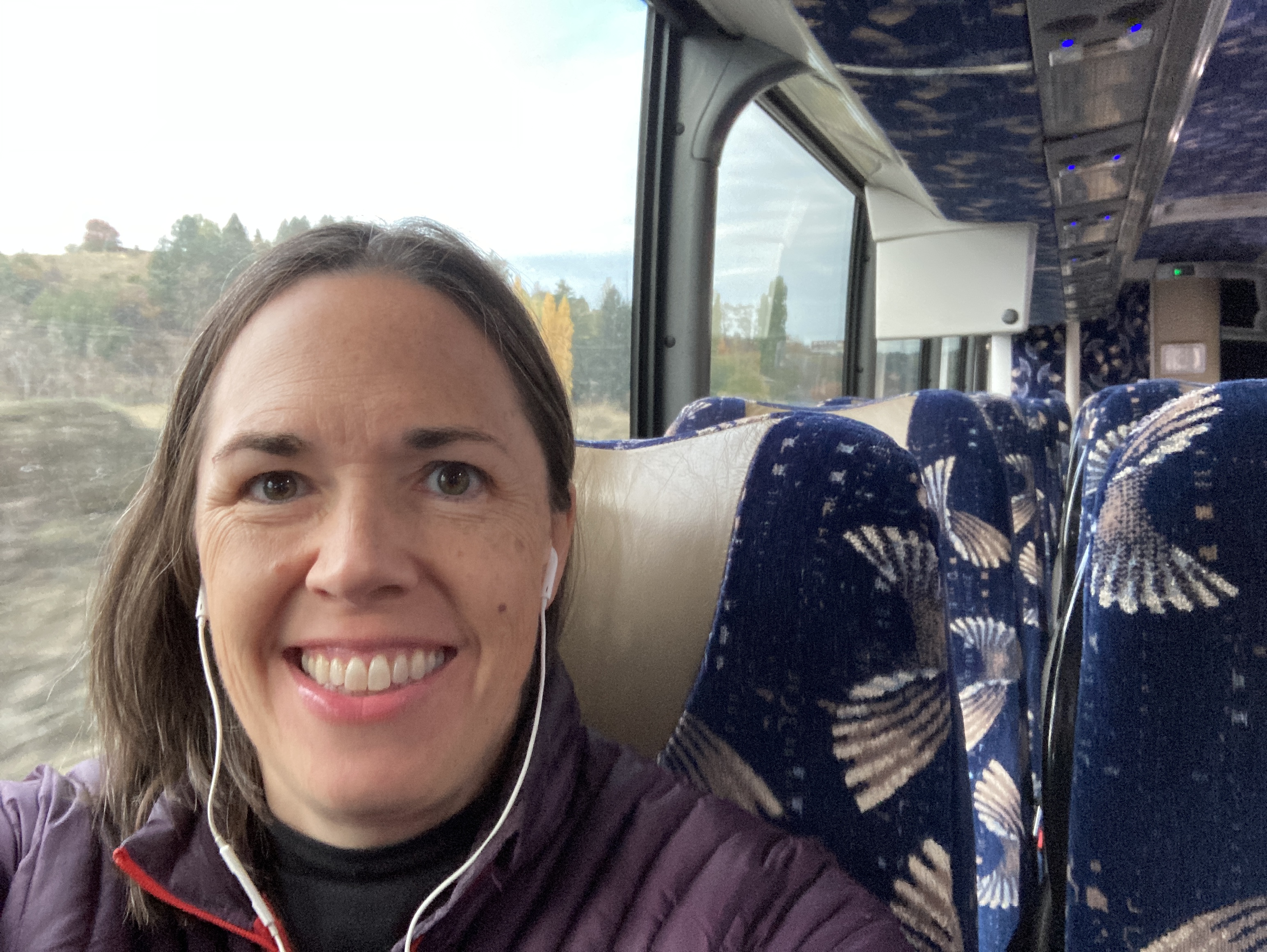
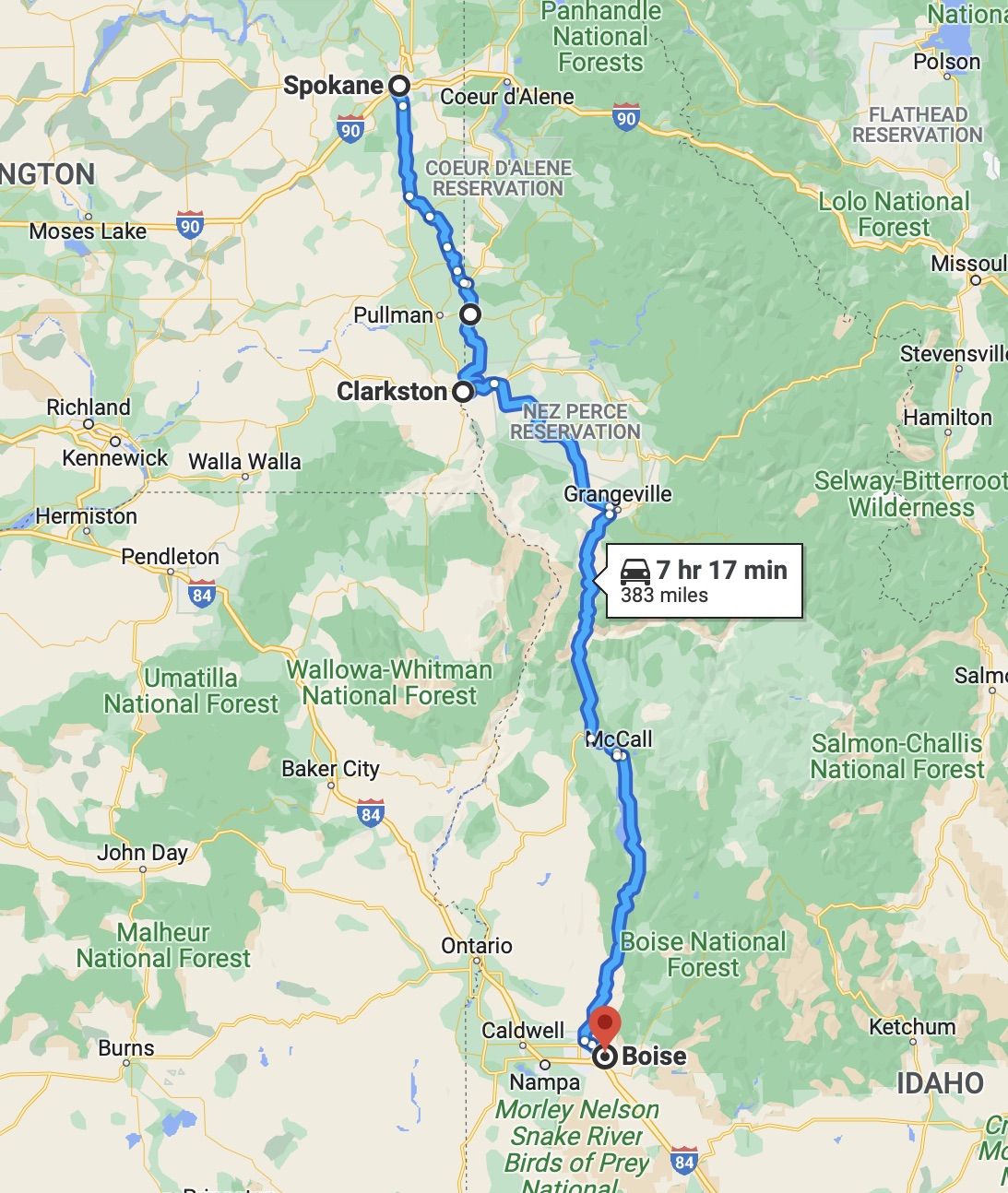
A friend wanted a selfie of me on a bus when I told her it was going to be one of my many modes of transportation in the next week. I remember looking at my October calendar back in August and wondering, “how will this work?” I was scheduled to do an Installation at Emmanuel, Moscow the day before Bishop’s Fall Convocation (fall theological conference for pastors, deacons, and interns) began down the road in Lewiston/Clarkston. Getting from Moscow to Clarkston seemed doable and I found a ride. Getting home to the Boise area also seemed manageable and the two deans from southern Idaho (who would be staying an extra night for a cluster deans retreat) assured me one could drive me the five hours back to my car. My car was scheduled to be at a friend’s house, just a few miles from the Boise Airport.
The dot to the right of Pullman is Moscow
I was scheduled to fly to Seattle/Tacoma for a Pacific Lutheran Board meeting Oct. 11, attend orientation and a board meeting Thursday and Friday and fly late Friday night over to Spokane to be in person for a Synod Candidacy meeting at the Synod Office in Spokane. It was that leg of the trip from Spokane to Moscow that I wasn’t sure about. I hated to rent a car and leave it at a different donation–so much more expensive. But Moscow is a college town so I wondered if there was a bus. There was! It left Spokane at 7am and stopped in Colfax/Endicott, then Pullman, WA (most of our passengers seemed to WSU Cougers because they got off there), Moscow at 8:50am, and then all the way to Boise. Worship at Emmanuel was scheduled to begin at 9:30am. The bus ride cost less than my cab ride from the Spokane airport to where I was staying in Spokane, but the synod still came out ahead. Thanks Greyhound.
It was a great installation of Pastor Sierra Westerman, who grew up at Grace Lutheran in Wenatchee and then served her first call in Northeast Minnesota. Another highlight of the day was meeting the parents of Allie McIntosh, who worked at Luther Heights Bible Camp and whose camp blessing was sung at my Installation last week
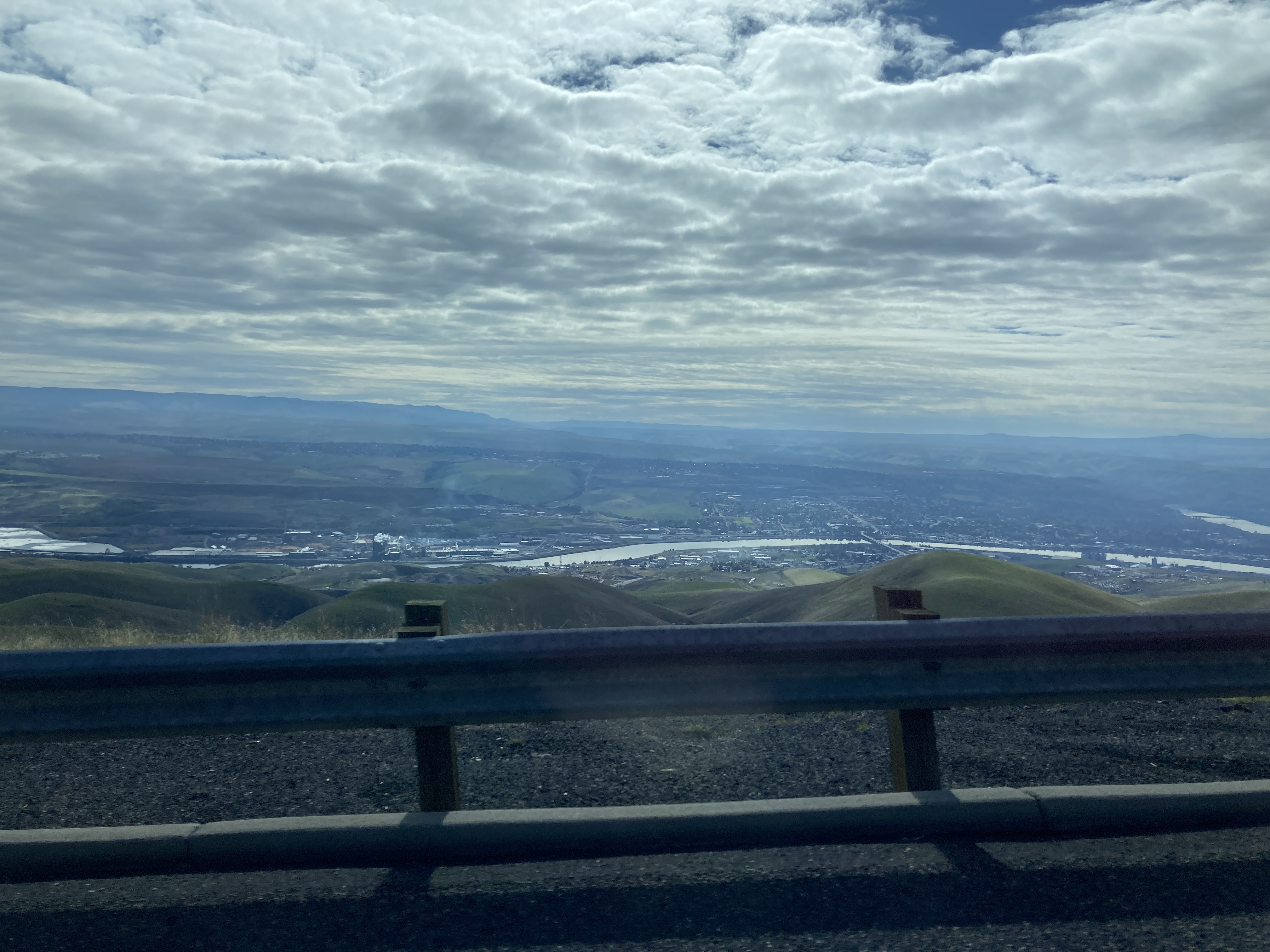
The last leg of the trip was Emmanuel Lutheran council president and synod council member Gwen Sullivan driving me from Moscow to Lewiston/Clarkston. I snapped this photo driving down. The Snake River snakes through much of our synod, all the way from Jackson, WY to the Tri-Cities in southern Washington where it joins the Columbia. Here it is in Lewiston/Clarkston.
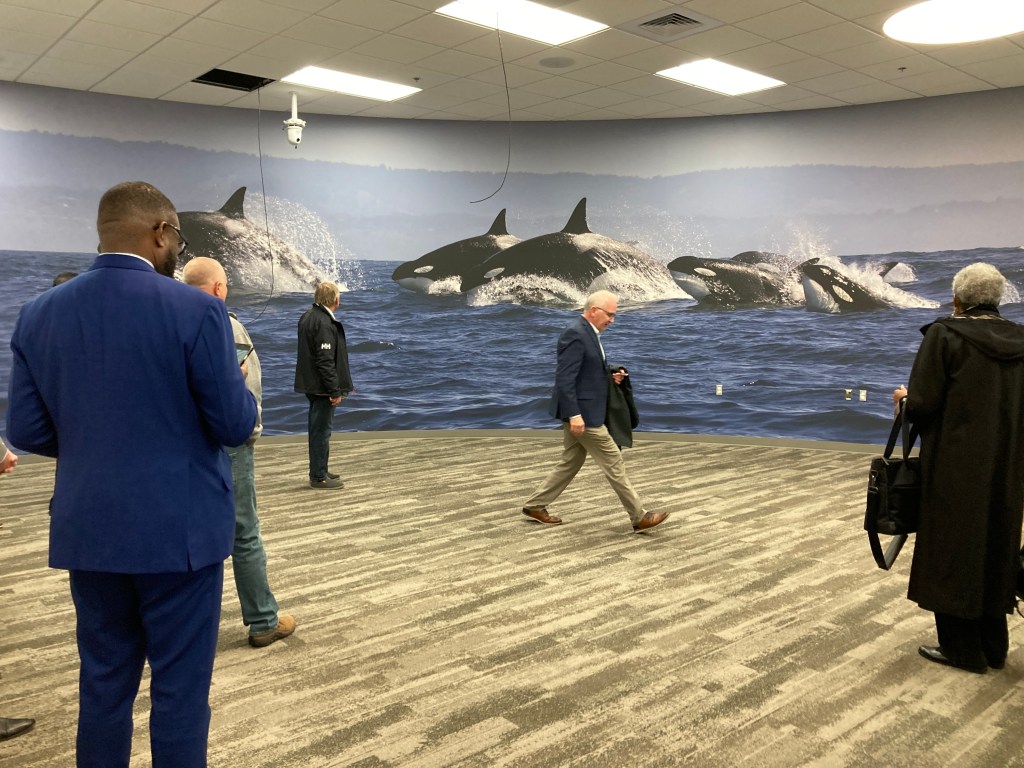
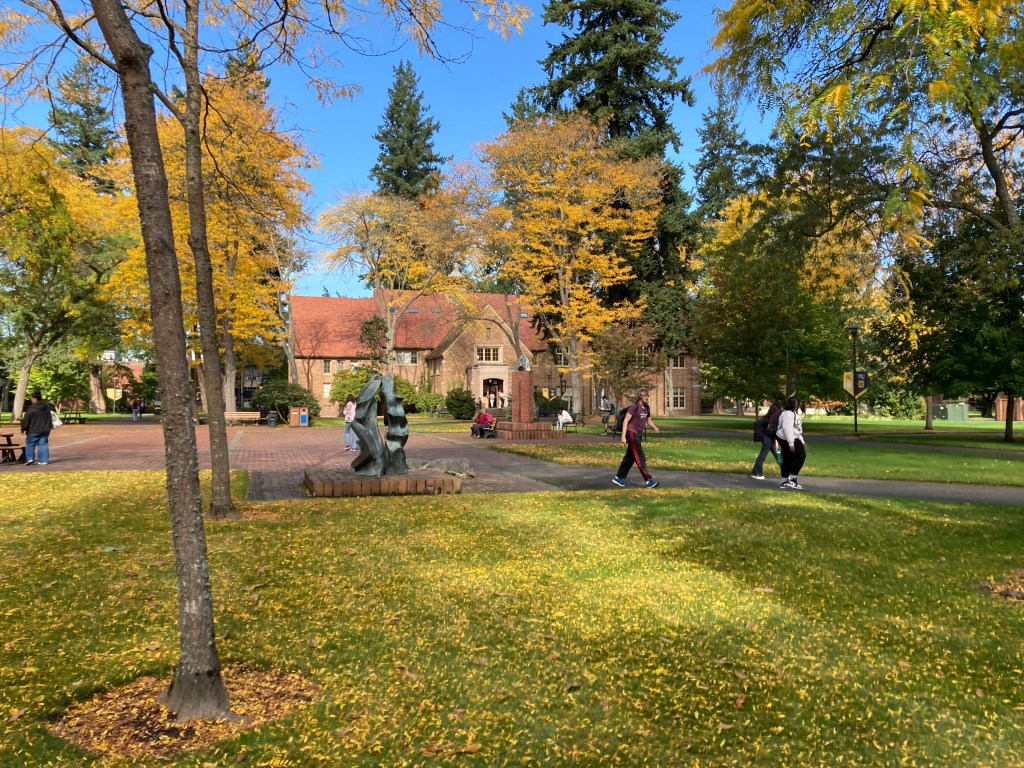
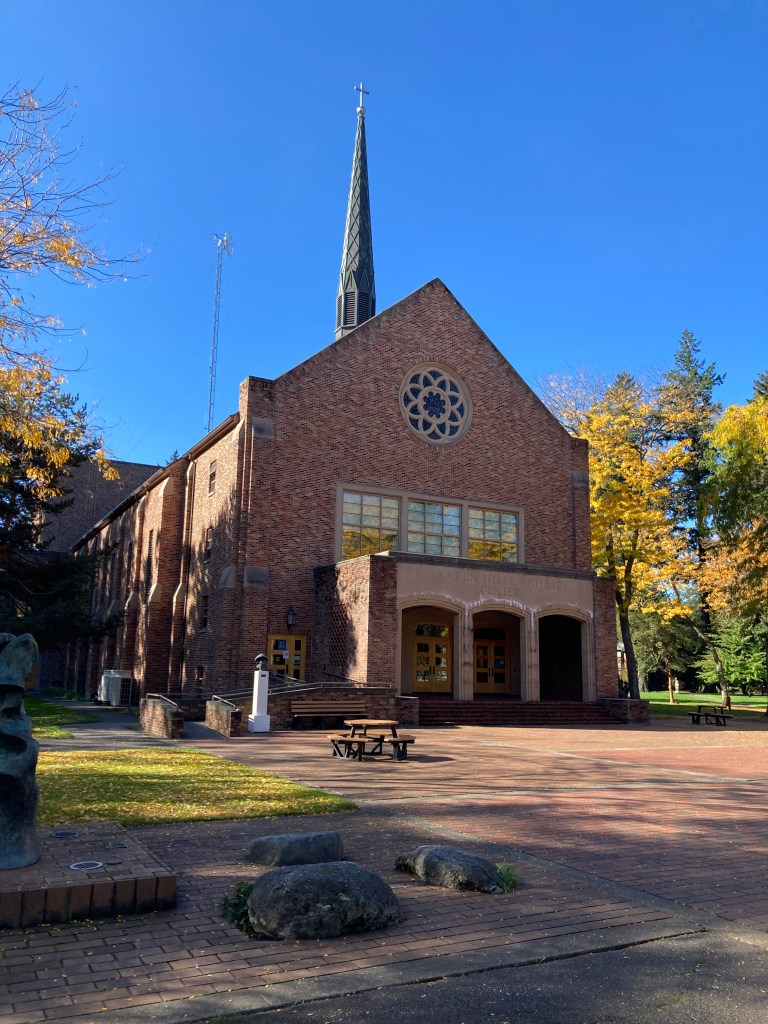
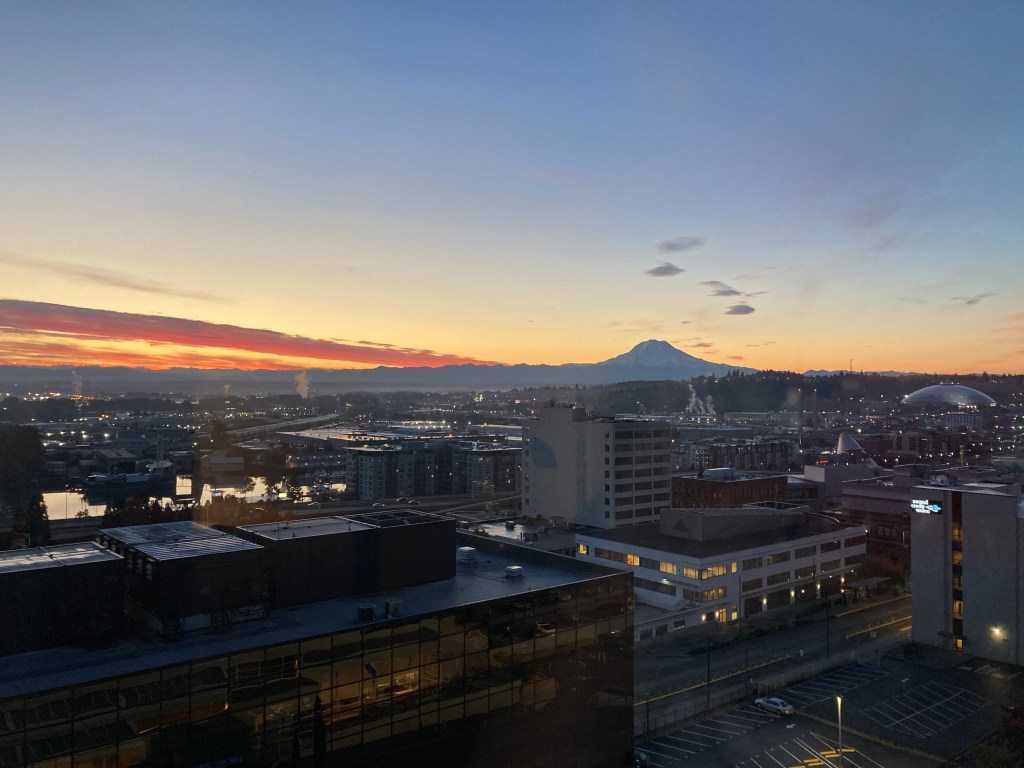
There was a time last spring when I thought I would spend Oct. 13, 2023 flying to Moorhead, Minnesota for my 25th college reunion at Concordia. But the Northwest Intermountain Synod Candidacy Committee needed a Saturday to meet (tomorrow) and then I got appointed/volunteered to sit on the Pacific Lutheran University Board of Regents, which met yesterday and today. Three bishops from ELCA Region 1 always take three seats on the board. I honestly cannot believe that I have been a pastor in Region 1 (Alaska, Montana, Washington, Oregon, Idaho, and a little of Wyoming) for almost 13 years and had never been on the PLU campus before Thursday. The first summer I served as the resource pastor at Luther Heights Bible Camp, at least half of the staff was from PLU. Families from my former congregation have sent children to PLU. For Lutherans in the west, PLU and California Lutheran University are the big two options for Lutheran colleges.
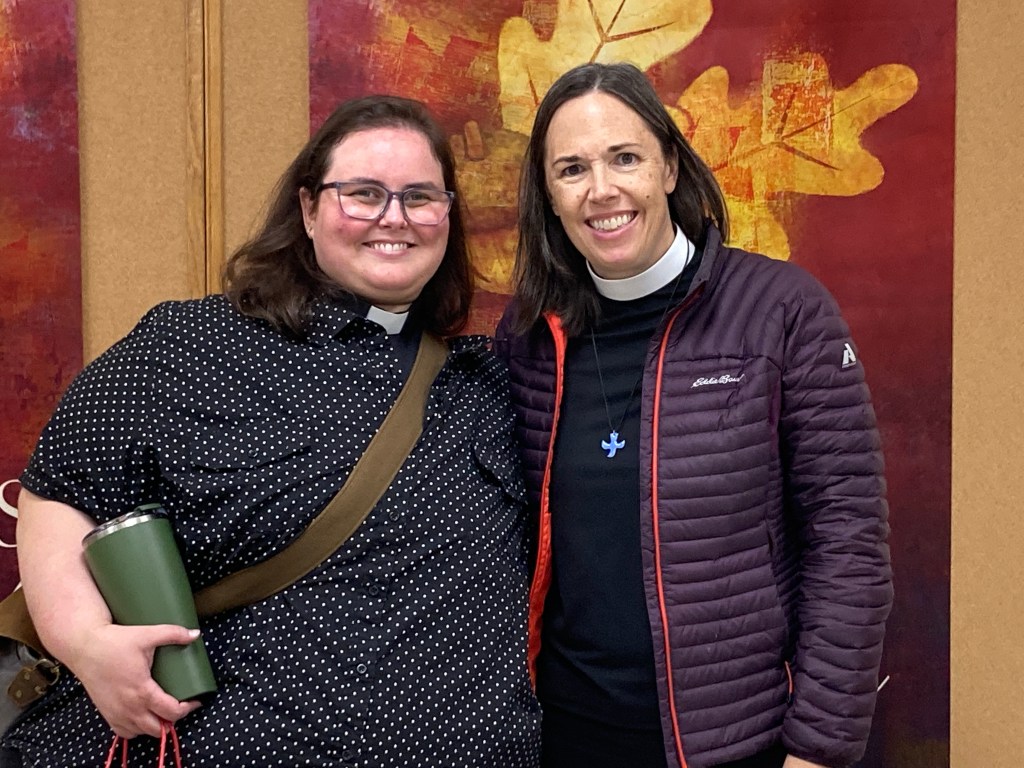
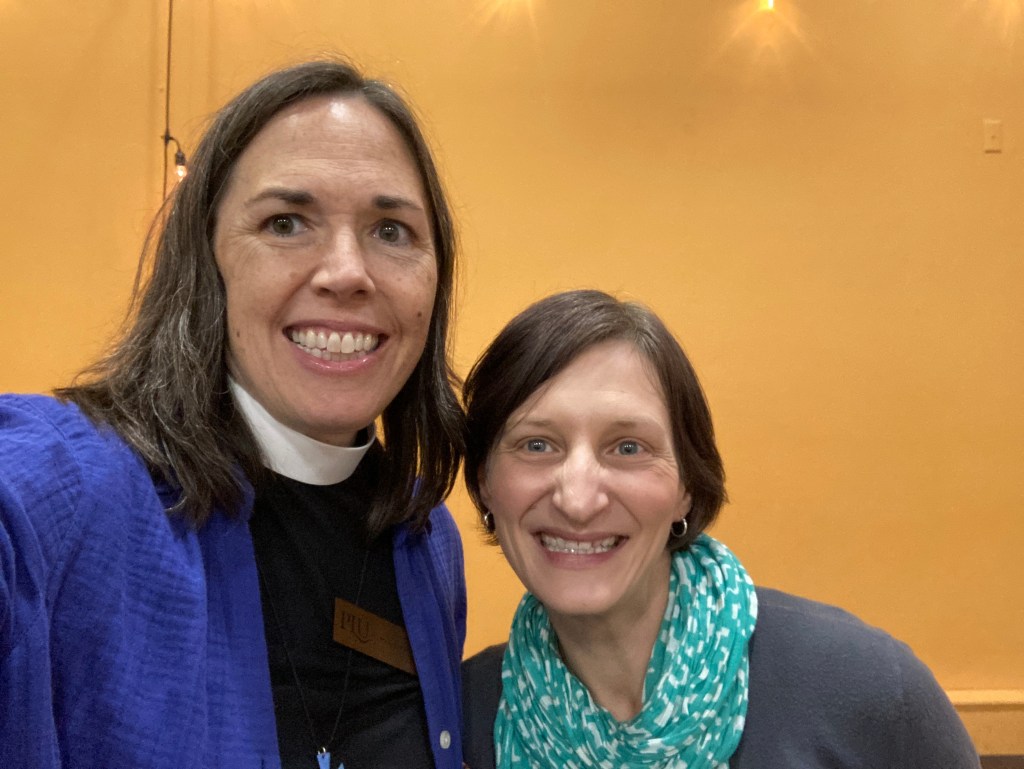
There were three of us new regents who had an orientation Thursday. Other regents, the veterans, were able to spend Thursday morning sitting in classes. We got a sneak peak of the Rieke Classroom Renovation (previously a big lecture hall). We all got to hear from faculty and this morning I had breakfast with religion professor Dr. Marit Trelstad. I also reunited with a few other ELCA colleagues: PLU Campus Pastor Jen Rude (who was in a Thriving Leadership Cohort with me a few years ago but we’d never met in person) and Pastor Lamont Wells, executive director of the Network of ELCA Colleges and Universities (Lamont and I were in the Lake Institute Certificate in Religious Fundraising online small group together back in 2021).
The strangest part of the two days was how much I ended up talking about my alma matter Concordia, Moorhead. There are very loyal Cobbers (yes–that’s really our mascot if you didn’t know, let the jokes commence) and there are Cobbers who go to every Christmas Concert and do all the things. I have some Concordia swag in my closet but I haven’t even started wearing my ring again, which I took off near the beginning of the pandemic. But these last two days I spoke with quite a bit of pride and gratitude for my two religion classes, the percentage of our student body involved in musical ensembles, the classes in disciplines I was not crazy about but had to take, my history courses, and the bibliographies in my English literature and writing classes. Those two departments of History and English, which were home to my two majors, opened my world up in ways that I have only truly appreciated in the last few years.
Having just come from my first Conference of Bishops, I also told people with a little pride that there are five women in the COB right now who are Concordia graduates. I have no definitive conclusion about what that says about Concordia past, present, or future, but think it is, as a Luther college grad friend would say, intriguing.
I returned from my first Conference of Bishops Sept. 30. This several day meeting was preceded by my second in-person bishop formation event (often called baby bishop school). Below this paragraph is the press release summarizing our COB time together. What the press release covers our official agenda. It was full. We heard from ELCA staff and elected officers, task groups, and we had time to discuss a great deal at round tables. We also worshiped together each day in the chapel, which I found life-giving. We ate together and there was often a chance for a conversation on the walk between our hotel and The Lutheran Center. I knew some bishops through previous church experiences but many were new to me and I relished building both new and old relationships. When I introduced myself at the beginning of our time together I mentioned that a good conversation starter would be camp and in the end I talked with many bishops about the outdoor ministry sites in or near their synods.
A highlight of the week was hearing Minneapolis Synod Bishop Anne Svennenson preach and then catching up with her. Svennenson was the lead pastor at Trinity Lutheran down the street from Concordia, Moorhead, when I was a college student. Listening to her preach then opened my imagination to being a woman pastor. I really still can’t believe I stood in the same room with her this week. And she preached yet one more great sermon yesterday.
I stayed an extra night in Chicago to catch up with my former grad school roommate and her family. We went to a PTA fundraiser walk, talked for our hours about books, laughed a lot and ate delicious Chinese food. Perhaps by watching my parents, perhaps out of shear necessity, I feel a deep need to nurture friendships not just with new colleagues but with those who know much more of my story.
CHICAGO — The Conference of Bishops of the Evangelical Lutheran Church in America (ELCA) met Sept. 26-30 at the Lutheran Center in Chicago. The conference, an advisory body of the ELCA, comprises 65 synod bishops, the presiding bishop and the secretary.
The Rev. Yehiel Curry, bishop of the ELCA Metropolitan Chicago Synod, was elected to a four-year term as chair of the conference. The Rev. Deborah K. Hutterer, bishop of the ELCA Grand Canyon Synod, was elected to a four-year term as vice chair. Both positions are effective Dec. 1. The Rev. Tracie L. Bartholomew, bishop of the ELCA New Jersey Synod, has served as conference chair since 2020, and the Rev. Patricia A. Davenport, bishop of the ELCA Southeastern Pennsylvania Synod, has served as vice chair since 2020.
In her report to the conference, ELCA Presiding Bishop Elizabeth A. Eaton addressed Future Church: God’s Love Made Real, a movement in the ELCA that envisions a world experiencing the difference God’s grace and love in Christ make for all people and creation.
“The world doesn’t even know it needs to know Jesus,” said Eaton. “We take very seriously the reality of human brokenness, and we also take very seriously that Jesus was raised from the dead, and that makes all the difference in the world.”
In other business the conference:
Approved recommendations from the Roster Committee granting extensions of leave, granting of nonstipendiary calls, and exceptions to the bylaw that requires an initial three years of congregational service for ministers of Word and Sacrament.
Engaged in conversation about the Commission for a Renewed Lutheran Church (CRLC), focusing discussions on the organizational principles and statements of purpose for the church. The commission was established as called for in the memorial “Restructure the Governance of the ELCA,” adopted by the 2022 Churchwide Assembly.
Received updates from the candidacy leadership development working group and engaged in conversation on a proposed process put forward by that group. Established during the conference’s spring 2022 meeting, the working group is a diverse collection of 12 leaders from across the ELCA who will explore ways to adapt the church’s candidacy process to the church’s current and future needs.
Engaged in conversation around Holy Communion practices, led by Deacon John Weit, executive for Worship, and the Rev. Laurie Jungling, bishop of the ELCA Montana Synod. The ongoing discussions are called for in the memorial “Holy Communion Practices in Unusual Circumstances and in Pandemic Times,” approved by the 2022 Churchwide Assembly.
Received a presentation from Rachel Wind, executive for Development, on a pilot proposal for the synods that would focus on identifying a new and collaborative way for the synods and the churchwide organization to work together on development.
Received an update from the task force addressing the disciplinary concerns of leaders of color, presented by Judith Roberts, senior director for ELCA Diversity, Equity and Inclusion and co-convener of the task force, and the Rev. Paul Erickson, bishop of the ELCA Greater Milwaukee Synod and a task force member. Discussions centered on the role of an ombudsman in helping resolve conflict and the benefits and challenges of this role in an organization. The creation of a Diversity, Equity and Inclusion office to receive discrimination complaints was recommended in the strategy toward authentic diversity, adopted by the 2019 Churchwide Assembly. The task force made recommendations to the current process for discipline, considered a process for community healing and grief, and made recommendations for an office to receive complaints of harassment and discrimination.
Engaged in conversation on racial justice work taking place in the synods, led by Jennifer De Leon, director for racial justice.
Received reports from the ELCA secretary, treasurer and vice president, and updates from the conference’s various committees and from home areas of the churchwide organization.
– – – About the Evangelical Lutheran Church in America: The ELCA is one of the largest Christian denominations in the United States, with 3 million members in more than 8,700 worshiping communities across the 50 states and in the Caribbean region. Known as the church of “God’s work. Our hands.,” the ELCA emphasizes the saving grace of God through faith in Jesus Christ, unity among Christians and service in the world. The ELCA’s roots are in the writings of the German church reformer Martin Luther.
If affordable housing has become a watercooler conversation of our time, zoning reform is one of the next logical topics of interest. In their new books, Nolan Gray and Robert Ellickson take up the topic of zoning. Both assign the bulk of solving the broken system to the same group of people, but the books have quite different audiences and styles.
It might be helpful to pause here and provide a dictionary definition of zoning. Merriam-Webster defines it as “the act or process of partitioning a city, town, or borough into zones reserved for different purposes (such as residence or business); also : the set of ordinances by which such zones are established and regulated.” Why zoning was created is, perhaps surprisingly, a question with more than one definitive answer. There are also multiple answers to whether zoning is good or bad and whether it can be reformed. Gray and Ellickson’s books can help launch important discussions about where we started with zoning and where we might go as municipalities and as a country.









 A Place at the Table