What Shall I Pray?

Originally published on tvprays.org.

Psalm 19

1The heavens are telling the glory of God; and the firmament proclaims his handiwork.

2Day to day pours forth speech, and night to night declares knowledge.

3There is no speech, nor are there words; their voice is not heard;

4yet their voice goes out through all the earth, and their words to the end of the world. In the heavens he has set a tent for the sun,

5which comes out like a bridegroom from his wedding canopy, and like a strong man runs its course with joy.

6Its rising is from the end of the heavens, and its circuit to the end of them; and nothing is hid from its heat.

7The law of the Lord is perfect, reviving the soul; the decrees of the Lord are sure, making wise the simple;

8the precepts of the Lord are right, rejoicing the heart; the commandment of the Lord is clear, enlightening the eyes;

9the fear of the Lord is pure, enduring forever; the ordinances of the Lord are true and righteous altogether.

10More to be desired are they than gold, even much fine gold; sweeter also than honey, and drippings of the honeycomb.

11By them also is your servant enlightened, and in keeping them there is great reward.

12Who can detect one’s own offenses? Cleanse me from my secret faults.

13Above all, keep your servant from presumptuous sins; let them not get dominion over me; then shall I be whole and sound, and innocent of a great offense.

14Let the words of my mouth and the meditation of my heart be acceptable in your sight, O Lord, my strength and my redeemer.

The poetry of the psalms continues to free my imagination—to dream, to have vision, to allow creativity to well up in me. At the same time, I am comforted knowing that there is language for my prayers when I feel speechless. When I get caught up in the spin and the news cycle, the psalms ground me in ancient words and perspective. At once they humble and empower me. Most importantly, they point me to the God who creates, guides, and redeems us. 

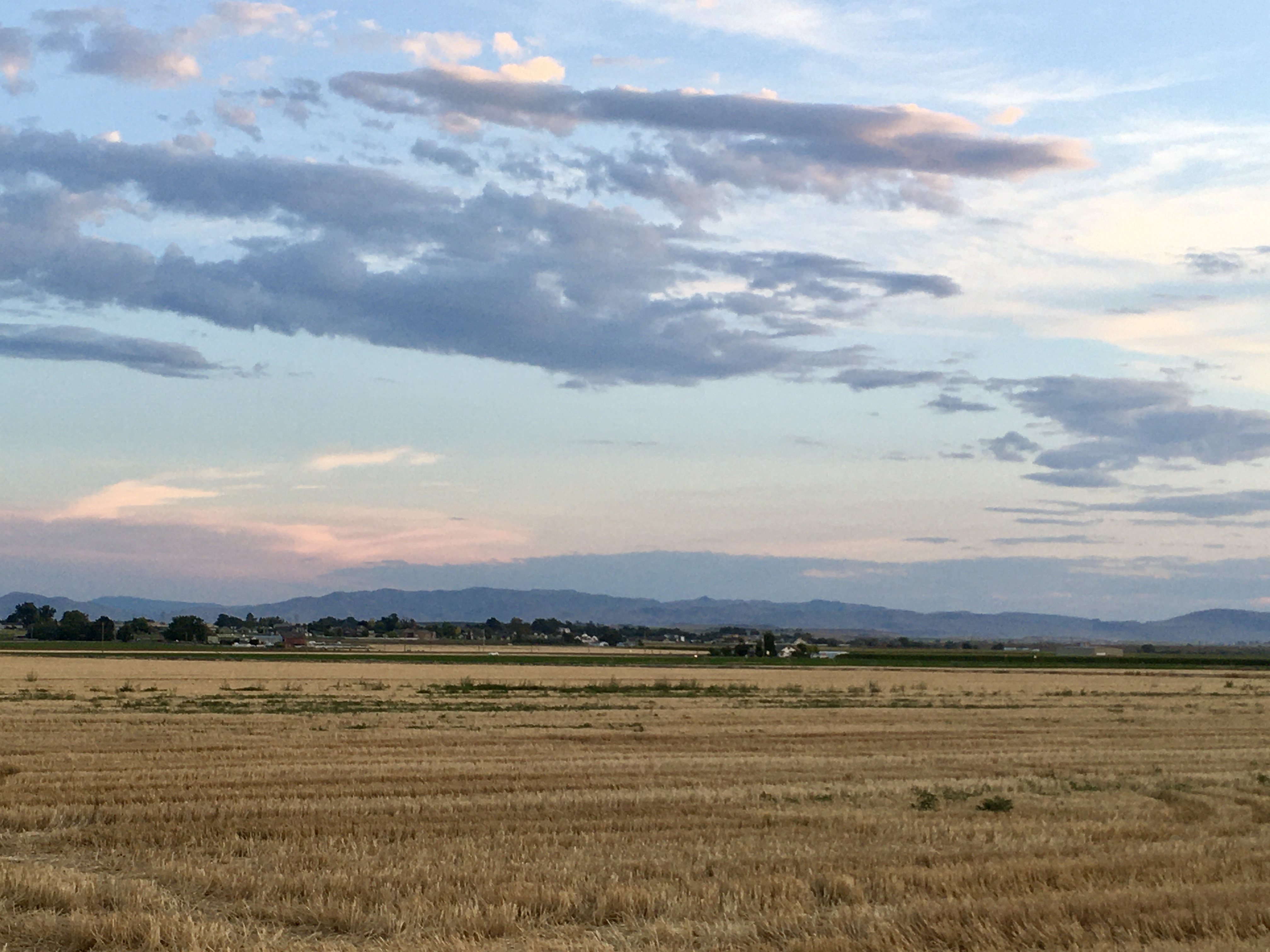
The first part of Psalm 19 portrays the wonder of creation, the beauty of the natural world. It is a song to the creator God. I love that creation itself is, according to the psalmist, doing to the work of praising God and telling of God’s glory. I am again made mindful that I am small in contrast to the firmament, but I am also created by God. I too am embodied. I praise God for the wonders of creation, and I get to enjoy those wonders—the big sky of the Mountain West, the Aspen and Birch showing off their colors against the crisp blue, the laughter of friends, the Earl Gray tea helping me greet each new morning. Small and large wonders point me to God, creator of all. 

But not everything goes in this big beautiful world. The same God who created has given the Law. If creation reveals God’s glory, perhaps the law helps me hear God’s voice, God’s desires, God’s relationality. We are not left to wander this world aimless. God gives ordinances, guidance, instruction, a vision for how we might live together. What’s more? These are compared to drippings of the honeycomb. In other words, it is pure gift to have guidance on how to be in relationship with God, other creatures, and even myself.

I will never be able to follow this guidance perfectly. Who could? We are works in progress. This is why I remember my baptism each morning. We have always been works of progress. I am not the first or last to pray the words of Psalm 19, to adopt this prayer as my own. I pray for God to guide us, knowing it is only through God’s pardon and love that I am well, whole, beloved, and able to extend that embodied care to my neighbors. It is God, the psalmist declares, who is my strength and redeemer.

Prayer: Faithful God, you sent your incarnate Word as the sun of justice to shine upon all the world. Open our eyes to see your gracious hand in all your works, that, rejoicing in your whole creation, we may learn to serve you with gladness, for the sake of him through whom all things were made, Jesus Christ, our Savior and Lord.

Amen. (Psalm 19 Prayer from ELW)

Posted in Reflections, Trinity Lutheran | Leave a comment

Sept. 27, 2020

Prayer of the Day

God of love, giver of life, you know our frailties and failings. Give us your grace to overcome them, keep us from those things that harm us, and guide us in the way of salvation, through Jesus Christ, our Savior and Lord. Amen.

Exodus 17:1-7

1 From the wilderness of Sin the whole congregation of the Israelites journeyed by stages, as the Lord commanded. They camped at Rephidim, but there was no water for the people to drink. 2 The people quarreled with Moses, and said, “Give us water to drink.” Moses said to them, “Why do you quarrel with me? Why do you test the Lord?” 3 But the people thirsted there for water; and the people complained against Moses and said, “Why did you bring us out of Egypt, to kill us and our children and livestock with thirst?” 4 So Moses cried out to the Lord, “What shall I do with this people? They are almost ready to stone me.” 5 The Lord said to Moses, “Go on ahead of the people, and take some of the elders of Israel with you; take in your hand the staff with which you struck the Nile, and go. 6 I will be standing there in front of you on the rock at Horeb. Strike the rock, and water will come out of it, so that the people may drink.” Moses did so, in the sight of the elders of Israel. 7 He called the place Massah and Meribah, because the Israelites quarreled and tested the Lord, saying, “Is the Lord among us or not?”

Psalm 78: 1-4, 12-16

1Hear my teaching, O my people; incline your ears to the words of my mouth. 2I will open my mouth in a parable; I will declare the mysteries of ancient times—

3that which we have heard and known, and what our forebears have told us, we will not hide from their children. 4We will recount to generations to come the praiseworthy deeds and the power of the LORD, and the wonderful works God has done.

12God worked marvels in the sight of their ancestors, in the land of Egypt, in the field of Zoan, 13splitting open the sea and letting them pass through; making the waters stand up like walls;

14leading them with a cloud by day, and all the night with a glow of fire; 15splitting the rocks in the wilderness and giving them drink as from the deep;

16bringing streams out of a rock, making them flow down like a river.

Philippians 2:1-13

1 If then there is any encouragement in Christ, any consolation from love, any sharing in the Spirit, any compassion and sympathy, 2 make my joy complete: be of the same mind, having the same love, being in full accord and of one mind. 3 Do nothing from selfish ambition or conceit, but in humility regard others as better than yourselves. 4 Let each of you look not to your own interests, but to the interests of others. 5 Let the same mind be in you that was in Christ Jesus,

6 who, though he was in the form of God, did not regard equality with God as something to be exploited, 7 but emptied himself, taking the form of a slave, being born in human likeness. And being found in human form, 8 he humbled himself and became obedient to the point of death — even death on a cross.

9 Therefore God also highly exalted him and gave him the name that is above every name, 10 so that at the name of Jesus every knee should bend, in heaven and on earth and under the earth, 11 and every tongue should confess that Jesus Christ is Lord, to the glory of God the Father.

12 Therefore, my beloved, just as you have always obeyed me, not only in my presence, but much more now in my absence, work out your own salvation with fear and trembling; 13 for it is God who is at work in you, enabling you both to will and to work for his good pleasure.

Matthew 21:23-32

23 When he entered the temple, the chief priests and the elders of the people came to him as he was teaching, and said, “By what authority are you doing these things, and who gave you this authority?” 24 Jesus said to them, “I will also ask you one question; if you tell me the answer, then I will also tell you by what authority I do these things. 25 Did the baptism of John come from heaven, or was it of human origin?” And they argued with one another, “If we say, ‘From heaven,’ he will say to us, ‘Why then did you not believe him?’ 26 But if we say, ‘Of human origin,’ we are afraid of the crowd; for all regard John as a prophet.” 27 So they answered Jesus, “We do not know.” And he said to them, “Neither will I tell you by what authority I am doing these things.

28 “What do you think? A man had two sons; he went to the first and said, ‘Son, go and work in the vineyard today.’ 29 He answered, ‘I will not’; but later he changed his mind and went. 30 The father went to the second and said the same; and he answered, ‘I go, sir’; but he did not go. 31 Which of the two did the will of his father?” They said, “The first.” Jesus said to them, “Truly I tell you, the tax collectors and the prostitutes are going into the kingdom of God ahead of you. 32 For John came to you in the way of righteousness and you did not believe him, but the tax collectors and the prostitutes believed him; and even after you saw it, you did not change your minds and believe him.

Sermon – Pastor Meggan Manlove

Every profession has its own medium. Farmers have crops and livestock.   Engineers have mathematical equations. Teachers have the minds and emotions of children and teenagers. Carpenters have wood. Worship planners have poetry. As we have become better equipped to tell our faith stories the past few years through workshops and training and practice, I have become so aware of the power of language and words. I am ever thankful for the language in Scripture and the language in our liturgy.

What of the music?  Yes, the music adds texture.  But the music, both in the liturgy and in the hymns we sing, is secondary to the words, the phrases, the poetry.  What is liturgy?  It literally means “work of the people.”  It is the work of the people put together in a certain order–an order that has been passed down from the early church.  The poetry of the liturgy and hymns is our medium as worshipers.   It instructs our week. As we learn more and more about the dangers of singing, I am thankful that we can still have music and we can still have poetry in this new season. When worship ends, we are called to our words into action.

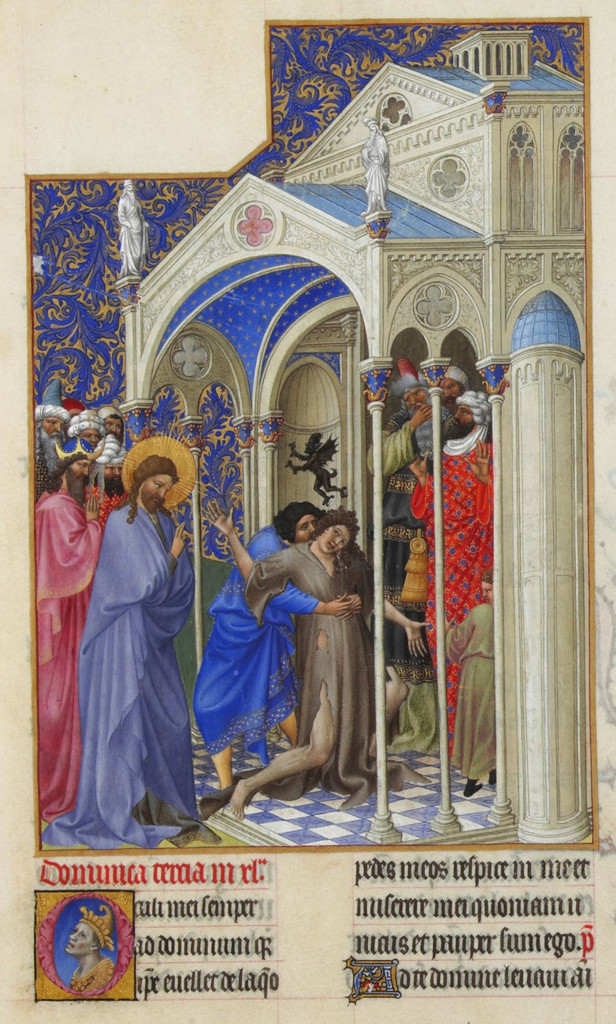
Jesus told the scribes and Pharisees a parable about a man who had two sons.  He sent the older son to work in his vineyard, but the son refused to go, then later changed his mind and headed for the fields.  Not knowing this, the father sent his second son to do the work his older brother had refused to do.  This son said he would go, but then changed his mind and never set foot in the fields.  “Which son did the will of the Father?” Jesus asked.  Which of the two boys obeyed?

The chief priests and the scribes knew the answer to the question–it was the son who headed for the fields.  But Jesus interpreted his own parable for them.  He told them that prostitutes and tax collectors would enter the kingdom before they did.  Why?  Because as religious leaders, the priests and scribes were known for their words, but were short on deeds. Jesus says that the tax collectors and harlots who believed John the Baptist repented of their sins and underwent baptism.

Jesus’ parable of the two brothers points out that we answer yes and no with our actions as well as with words. We can say yes with our mouths, but live a no, as the one brother did. A person might say no, but in the end discover that she has lived a yes, as the other brother did.

The chief priests and scribes wanted to use words as a way to trap Jesus with embarrassing questions. Jesus can play that word game, too. But Jesus does more than speak with authority; he lives it! He places his entire life behind his words. He walked the path of obedience to a cross and through an open tomb. His yes and no can be poured into a chalice, broken as bread, authenticated in a cross and empty tomb.

Accompanying our gospel text from Matthew is a beautiful text from Philippians—seriously, read the text again. It is often referred to as “The Christ Hymn,” supposing that the Apostle Paul is quoting at least in part a very early hymn from the worship of the church. It ends with these verses:

12 Therefore, my beloved, just as you have always obeyed me, not only in my presence, but much more now in my absence, work out your own salvation with fear and trembling; 13 for it is God who is at work in you, enabling you both to will and to work for his good pleasure.

What does it look like to “work out our salvation with fear and trembling?”   As one pastor says, “it means going about our everyday tasks and duties with the conviction that the gospel is true—that is, that love is stronger than hate, that life is stronger than death, and that God’s promised future is bigger and better than either the past we’ve created or the future we deserve.  And because the gospel is true, we are free to regard others, treat others, and care for others as Christ did.”

We are loved so much—so much that Jesus came and lived as a human being—flesh and bone—experiencing all that we experience. Hearing this, knowing this, how is it possible, Paul wonders, that we would not regard others in the same way—brothers and sisters deserving our love. What’s more, he writes, “It is God who is at work in you, enabling you both to will and to work for God’s good pleasure.”

Every Sunday we hear echoes of the “Christ Hymn” in our own worship service.  We begin every service with the Confession and Forgiveness. Our Confession ends with us asking God to “renew us, and lead us, so that we may delight in your will and walk in your ways, to the glory of your holy name.” How will we live renewed?  How will we walk in God’s ways?

In the Kyrie, we pray for the peace of the whole world.  How will we bring peace to our small corners of the world–in communities, in the workplace, in the home, in the schools?

When we confess our faith in the words of the Creed, we say we believe in one God?  How will we put our trust only in God and not in something society tells us to worship like power or wealth?

Every week we pray the Lord’s Prayer together.  This prayer alone can inform our whole lives.  We pray that we will keep God’s name holy.  We will be ready for opportunities when we can bring God’s kingdom into the here and now.  We will forgive one another.

We read the Psalm responsively nearly every Sunday. I do not know about you, but for me the poetry of the Psalms has been especially helpful/comforting/relatable (I am not sure what word best describes it) during the pandemic. I am not necessarily ready for prose or narrative. The language of the prose frees my soul and imagination and connects me to the thousands of people who have prayed to God using these same psalms or songs. They are our most ancient songs. The psalms are filled with action words like worship, trust, turn again, endures.

We have a treasure of hymns written more recently, and the words found in them also give us guidance for our living. In our hymn of the day today we will plead, “As you, Lord, in deep compassion healed the sick and freed the soul, by your Spirit send your power to our world to make it whole.” That phrase reminds us that when we try to walk the talk, when we attempt for our actions to match our words, we are never alone. The Holy Spirit moves through our actions. God truly is at work—redeeming our world, equipping you and me both to will and word for God’s good pleasure.

Prayers of Intercession – Adopted from Sundays and Seasons by Mary Braudrick

Drawn together in the compassion of God, we pray for the church, the world, and all those in need. 

Gracious God, In all the world, give your church unity. Inspire all the baptized, everywhere, with the grace-filled mind of Christ. Where the church is powerful and where it struggles, shape us with humility and obedience so that your love may be at work in us. Lord in your mercy, HEAR OUR PRAYER

Creator God, Your Son took on all bodily life in our world, even to death. Preserve and keep your perfect creation, O God. Mend and redeem places that are polluted and damaged, so that all of creation confesses you as Lord. Empower us each to do our part to protect our precious, unique environment. Lord in your mercy, HEAR OUR PRAYER

Loving Holy Spirit, Turn all the nations toward life. Where our ways are unfair, give us clear vision, new hearts and new spirits. Where sin permeates our cultures and institutions, change and enlighten our minds and teach us to trust your authority. Lord in your mercy, HEAR OUR PRAYER 

Our lives are yours, O God of healing. Relieve the suffering of those who are ill in body, mind or spirit. Bring light to those who are dealing with the very real darkness of depression in these difficult days of pandemic, fires and floods. May they reach out for help, but also look to BE helpers, as that can bring light, too. Defend the lives and welfare of children who are abused or neglected, hungry or exploited, bullied or lonely. Lord in your mercy, HEAR OUR PRAYER 

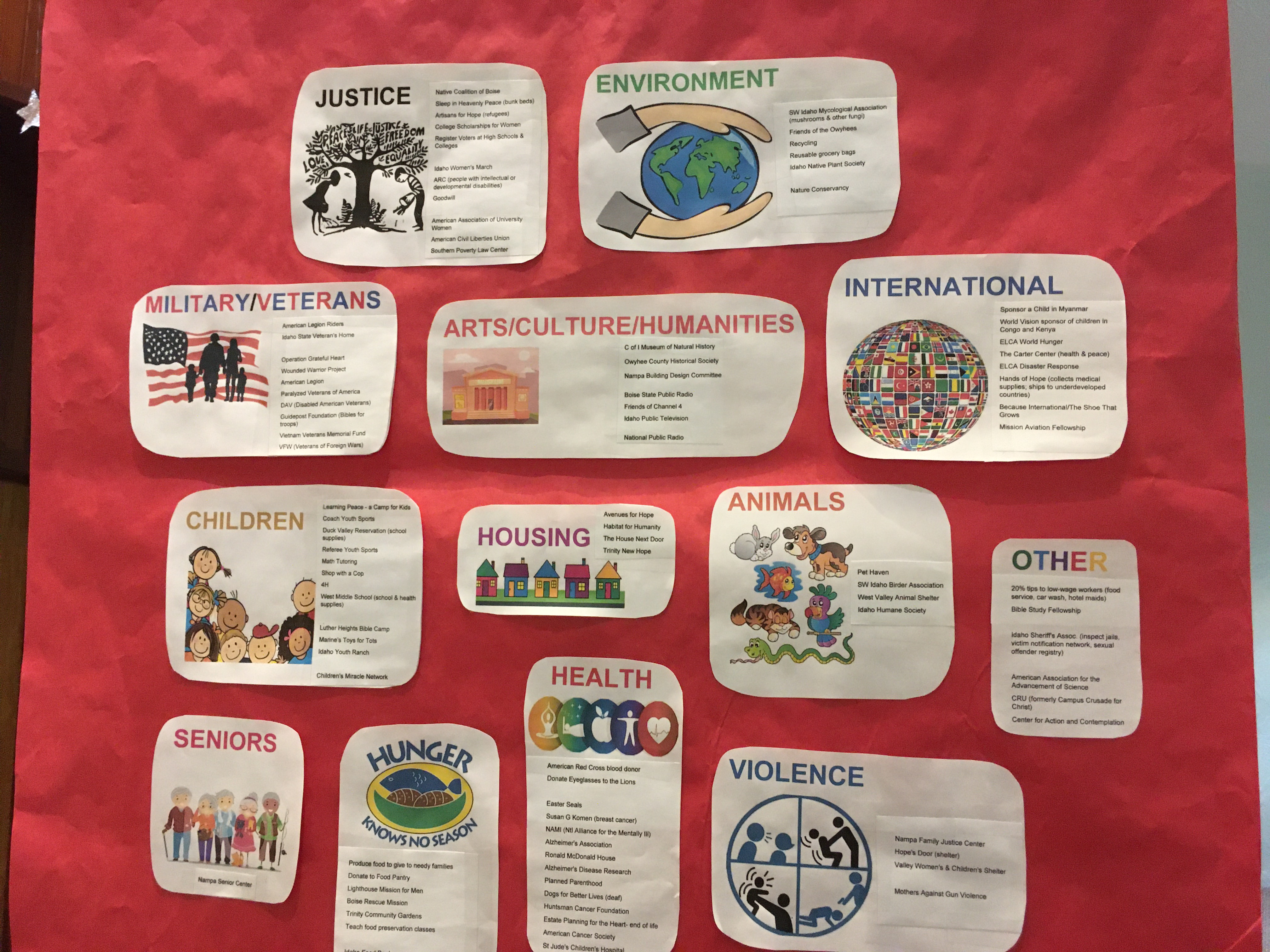
O God our helper, Turn this congregation away from our self interests toward the interests of others. Fill us with your compassion and sympathy. Bless ministries of care in our community, especially through Trinity Gardens, the residents of New Hope Housing and our connections to the children of West Middle School. Make us into signs of your mercy and justice for our neighbors. Lord in your mercy, HEAR OUR PRAYER

Giver of Grace, Thank you for those who have gone into the kingdom ahead of us: tax collectors, prostitutes, the likely and the unlikely, obedient and slow to learn, faithful and not. By their witness, teach us to confess Jesus Christ as Lord in this life and in our death. Lord in your mercy, HEAR OUR PRAYER 

All these things, and whatever else you see that we need now, or will need, We entrust to your mercy; Through Christ our Lord. AMEN

Posted in Sermons, Trinity Lutheran | Leave a comment

Affordable Housing – Through the Pandemic

Originally published on tvprays.org.

“The home is the center of life. It is a refuge from the grind of work, the pressure of school, and the menace of the streets. We say that at home, we can ‘be ourselves.’ Everywhere else, we are someone else. At home, we remove our masks.” Matthew Desmond, Evicted: Poverty and Profit in the American City

Desmond’s book came out in 2016, about a year after Trinity New Hope, Inc. (TNH) was started, long before masks took on new importance. TNH is an Affordable Housing neighborhood of 16 3-bedroom single family homes in West Nampa. We celebrated our five-year anniversary in April 2020, right as we were all hunkering down.

For all of the hardships and struggles we have dealt with as the TNH team (board and staff), stuff I should not publish for probably another ten years, I would not trade this work for anything. It has brought us close to those who are experiencing homelessness. It has taught me that as many stories as filled up Trinity’s sanctuary pre-pandemic, that is how many stories fill up the homes. There are of course threads and we all have learned how complex affordable housing is and how difficult it is to make systemic changes. But each family or individual also brings their own unique background, trials, and hope. And when I wonder, “where is God in all this?” the Holy Spirit often responds, “right here—where sinfulness and brokenness are most apparent,” whether they belong to me, another individual, the community, or the world.

Posted in Reflections, Trinity Lutheran | 2 Comments

Sept. 20, 2020

Prayer of the Day

God of abundance, you have poured out a large measure of earthly blessings: our table is richly furnished, our cup overflows, and we live in safety and security. Teach us to set our hearts on you and not these material blessings. Keep us from becoming captivated by prosperity, and grant us in wisdom to use your blessings to your glory and to the service of humankind; through Jesus Christ our Lord. (ELW p. 80)

Exodus 17:1-7

1 From the wilderness of Sin the whole congregation of the Israelites journeyed by stages, as the Lord commanded. They camped at Rephidim, but there was no water for the people to drink. 2 The people quarreled with Moses, and said, “Give us water to drink.” Moses said to them, “Why do you quarrel with me? Why do you test the Lord?” 3 But the people thirsted there for water; and the people complained against Moses and said, “Why did you bring us out of Egypt, to kill us and our children and livestock with thirst?” 4 So Moses cried out to the Lord, “What shall I do with this people? They are almost ready to stone me.” 5 The Lord said to Moses, “Go on ahead of the people, and take some of the elders of Israel with you; take in your hand the staff with which you struck the Nile, and go. 6 I will be standing there in front of you on the rock at Horeb. Strike the rock, and water will come out of it, so that the people may drink.” Moses did so, in the sight of the elders of Israel. 7 He called the place Massah and Meribah, because the Israelites quarreled and tested the Lord, saying, “Is the Lord among us or not?”

1 Peter 4:8-11

8Above all, maintain constant love for one another, for love covers a multitude of sins. 9Be hospitable to one another without complaining.10Like good stewards of the manifold grace of God, serve one another with whatever gift each of you has received. 11Whoever speaks must do so as one speaking the very words of God; whoever serves must do so with the strength that God supplies, so that God may be glorified in all things through Jesus Christ. To him belong the glory and the power for ever and ever. Amen.

Interviews of Trinity members and staff conducted by our Stewardship Team

Prayers of Intercession

Drawn together in the compassion of God, we pray for the church, the world, and all those in need.

A brief silence.

Generous God, you make the last first, and the first last. Where this gospel challenges the church, equip it for its works of service. Strengthen those who suffer for Christ (especially). Lord, in your mercy, hear our prayer.

Sun and wind, bushes and worms, cattle and great cities—nothing in creation is outside your concern, mighty God. In your mercy, tend to it all. Give us a spirit of generosity toward all you have made. Lord, in your mercy, hear our prayer.

Where we find envy and create enemies, you provide enough for all. Bring peace to places of conflict and violence. Inspire leaders with creativity and wisdom. Bless the work of negotiators, peacekeepers, and development workers. Lord, in your mercy, hear our prayer.

Reveal yourself to all in need as you are gracious and merciful, slow to anger, abounding in steadfast love, ready to relent from punishing. Accompany judges and lawyers, victims of crime and those serving sentences. Give fruitful labor and a livelihood to those seeking work. Lord, in your mercy, hear our prayer.

Even beyond our expectations, you choose to give generously. Grant life, health, and courage to all who are in need. Grant safety to all firefighters, consolation to all who have lost property, and love and hope to those whose loved ones have died in the fires across the west. Lord, in your mercy, hear our prayer.

We praise you for the generations that have declared your power to us. Give us faithfulness to follow them, living for Christ, until you call us to join them in the joyful song around his throne. Lord, in your mercy, hear our prayer.

All these things and whatever else you see that we need, we entrust to your mercy; through Christ our Lord. Amen.

Posted in Sermons, Trinity Lutheran | Leave a comment

Sept. 13, 2020

Prayer of the Day

O Lord God, merciful judge, you are the inexhaustible fountain of forgiveness. Replace our hearts of stone with hearts that love and adore you, that we may delight in doing your will, through Jesus Christ, our Savior and Lord. Amen.

Exodus 14:19-31

19 The angel of God who was going before the Israelite army moved and went behind them; and the pillar of cloud moved from in front of them and took its place behind them. 20 It came between the army of Egypt and the army of Israel. And so the cloud was there with the darkness, and it lit up the night; one did not come near the other all night. 21 Then Moses stretched out his hand over the sea. The Lord drove the sea back by a strong east wind all night, and turned the sea into dry land; and the waters were divided. 22 The Israelites went into the sea on dry ground, the waters forming a wall for them on their right and on their left. 23 The Egyptians pursued, and went into the sea after them, all of Pharaoh’s horses, chariots, and chariot drivers. 24 At the morning watch the Lord in the pillar of fire and cloud looked down upon the Egyptian army, and threw the Egyptian army into panic. 25 He clogged their chariot wheels so that they turned with difficulty. The Egyptians said, “Let us flee from the Israelites, for the Lord is fighting for them against Egypt.” 26 Then the Lord said to Moses, “Stretch out your hand over the sea, so that the water may come back upon the Egyptians, upon their chariots and chariot drivers.” 27 So Moses stretched out his hand over the sea, and at dawn the sea returned to its normal depth. As the Egyptians fled before it, the Lord tossed the Egyptians into the sea. 28 The waters returned and covered the chariots and the chariot drivers, the entire army of Pharaoh that had followed them into the sea; not one of them remained. 29 But the Israelites walked on dry ground through the sea, the waters forming a wall for them on their right and on their left. 30 Thus the Lord saved Israel that day from the Egyptians; and Israel saw the Egyptians dead on the seashore. 31 Israel saw the great work that the Lord did against the Egyptians. So the people feared the Lord and believed in the Lord and in his servant Moses.

Phillip Ratner

Psalm 114

1Hallelujah! When Israel came out of Egypt, the house of Jacob from a people of strange speech,
2Judah became God’s sanctuary and Israel God’s dominion.

3The sea beheld it and fled; Jordan turned and went back.
4The mountains skipped like rams, and the little hills like young sheep. 

5What ailed you, O sea, that you fled, O Jordan, that you turned back,
6you mountains, that you skipped like rams, you little hills like young sheep?7Tremble, O earth, at the presence of the Lord, at the presence of the God of Jacob,
8who turned the hard rock into a pool of water and flint-stone into a flowing spring. 

Matthew 18:21-35

21 Then Peter came and said to him, “Lord, if another member of the church sins against me, how often should I forgive? As many as seven times?” 22 Jesus said to him, “Not seven times, but, I tell you, seventy-seven times. 23 “For this reason the kingdom of heaven may be compared to a king who wished to settle accounts with his slaves. 24 When he began the reckoning, one who owed him ten thousand talents was brought to him; 25 and, as he could not pay, his lord ordered him to be sold, together with his wife and children and all his possessions, and payment to be made. 26 So the slave fell on his knees before him, saying, “Have patience with me, and I will pay you everything.’ 27 And out of pity for him, the lord of that slave released him and forgave him the debt. 28 But that same slave, as he went out, came upon one of his fellow slaves who owed him a hundred denarii; and seizing him by the throat, he said, “Pay what you owe.’ 29 Then his fellow slave fell down and pleaded with him, “Have patience with me, and I will pay you.’ 30 But he refused; then he went and threw him into prison until he would pay the debt. 31 When his fellow slaves saw what had happened, they were greatly distressed, and they went and reported to their lord all that had taken place. 32 Then his lord summoned him and said to him, “You wicked slave! I forgave you all that debt because you pleaded with me. 33 Should you not have had mercy on your fellow slave, as I had mercy on you?’ 34 And in anger his lord handed him over to be tortured until he would pay his entire debt. 35 So my heavenly Father will also do to every one of you, if you do not forgive your brother or sister from your heart.”

Sermon – Pastor Meggan Manlove

I’m turning to Dan Erlander’s wonderful summary of the events up to this point. Once upon a time God was vexed with a nation called Egypt.  In this nation a big deal Pharaoh was on top.  In the middle were various big deals and ordinary citizens.  On the bottom were the slaves who lived under heavy oppression.  The slaves were descendants of early believers in God—Abraham, Sarah, Rebecca, Isaac, Leah, Rachael, and Jacob.  It was Sarah and Abraham who received the promise that their offspring would bless all nations.

Because of the slave labor, the big deals of Egypt lived in ease and luxury.  The Pharaoh, who thought he owned everything, depended upon the priests and the military to keep the whole system going and to maintain the status quo.  Everyone, including the slaves, considered Egypt to be eternal.  God detested this system.

God did not plan the Exodus of the Israelites from Egypt as it was happening.  There was a goal and a plan.  God wanted the Israelites and Egyptians to see that Israel’s God is Lord of all the earth.  And so, God performed a creative and cosmic act which led the Israelites to praise God.

Creation of the dry land leads to freedom of the oppressed.  The Israelites are liberated.  The work of God as creator effects the redemption of a people. The Egyptians oppose what God has newly brought into being. The Egyptians’ anti-creation activity turns the creation against them, and they suffer at its hands.

Then Moses stretches forth his hand over the sea again and the dry land disappears.  The Egyptians drown in the midst of a chaos of their own making.  But Israel walked through the sea on dry land and was safely standing on the opposite shore. The created order is once again established.

The Egyptians said, “Let us flee from the Israelites, for the Lord is fighting for them against Egypt.”  This confession is a grudging admission of defeat.  We hear something like it in the Gospel of Mark.  Jesus breathes his last breath on the cross and the curtain of the temple was torn in two.  The centurion confesses, “Truly this man was God’s son.”  The power of the Roman Empire at long last concedes to the power of Jesus.

The abundance of creation language indicates that something more than military victory has been achieved with the Exodus. A new creation has occurred, offering Israel a future that is free from the dominating reign of Pharaoh. Drawing on images from both the Bible and the ancient Near East, our story today assumes that creation and chaos are in conflict.

God’s victory over the Egyptians is not simply a matter of defeating ancient chaos monsters. Human costs are involved: “The water flowed back and covered the chariots and horsemen—the entire army of Pharaoh that had followed the Israelites into the sea. Not one of them survived … and Israel saw the Egyptians lying dead on the shore.”

The rabbis were particularly insightful in naming this reality. One commentary explains ministering angels desired to sing a song of praise before God in response to the decisive victory over the Egyptians. God, however, said to them: “My handiwork [the Egyptians] are drowning in the sea, and you are reciting a song before me?”

A quick reading might suggest that Exodus 14 is nothing more than a tribalistic, us-vs-them story. But in highlighting the impact of Pharaoh’s policies on the bodies of Egyptian soldiers, the story shows that the Israelites are not the only victims of Pharaoh’s hard(ened) heart. The Egyptian system of domination and violence also drew Egyptian soldiers into its orbit, as enforcers of the pharaonic will.

One scholar I heard talk about this story said that it was an unrepeatable event. In other words, this story’s liberation and new creation are beautiful themes but the loss of so many Egyptian lives makes in unrepeatable. I think he is right.

As a friend and I talked through the story earlier this week she said this was a good place to use the phrase, “Kill the crown, but keep the head.” Said another way, throw over pharaoh, empire, oppression, exploitation, but keep the human life which God can surely redeem.

As long as human beings are running them, systems of oppression will need to be drowned in the waters of the sea, or flood, or elsewhere. The Israelites themselves serve as an example. They sang and danced with their liberation on the shores, rightly so. Generations later, in possession of land and serving kings, they collectively embodied an empire that acted similar to Pharaoh and the Egyptians.

Last Monday, as our country celebrated Labor Day, I thought of all the amazing labor movement stories and protections that came about through various movements—child labor laws, safety measures, overtime, benefits, fair wages, non-discrimination. It is quite impressive and something to celebrate. But I would also be the first to admit that unions, at the heart of many of those stories, can become corrupt and greedy. Why? Because they are made up of human beings and human sin is tenacious.

It is why Martin Luther insisted that we remember our Baptism daily. Every day, we remember that we too came through waters, our sin was drowned, we were washed clean and given new life, our own liberation from sin and death. We might do well to remember that in the service of Baptism we are asked three questions: Do you renounce the devil and all the forces that defy God? Do you renounce the powers of this world that rebel against God? Do you renounce the ways of sin that draw you from God? We reply, I renounce them. How precisely does this happen? Where are we give opportunities to live out our baptismal covenant?

There is a sort of line drawn in through  our country right now that this renouncing of the devil is either done by each one of us in our daily life, through acts of kindness, or we renounce the devil by changing the big policies that guide us. Today’s Scripture passages from Exodus and Matthew show us just how ridiculous a choice the media and politicians have given us.

Jesus tells us to forgive those close to us and also those distant from us. Forgiveness itself brings liberation for the transgressor and the one offering forgiveness. And the Exodus story shows us that a whole policy and system—Pharaoh’s system of slavery and exploitation of the Israelites, needed to be overthrown—tossed in the sea, drown forever.

Please do not think that this is an Old and New Testament distinction. There were plenty of times before Jesus’ birth when God gave instructions about how we are to treat one another up close and personal—see exhibit A—the Ten Commandments. And there were times when Jesus turned whole systems upside down—see exhibit B—his crucifixion and resurrection.

We need policy changes and we need changes of minds and hearts. It is always both/and not either/or.

I personally see the pandemic, the protests this summer, and the economy exposing policies and systems that are unjust, exploitative, and in need of reform. White bodies are valued, still, over black and brown bodies in this country in so many ways. This disparity, this many years after the Civil Rights Movement, should fill us with compassion and the drive to transform society. Racial inequalities are surely not the only part of our society that is broken, but it permeates everything—housing, income, jobs, schools, healthcare.

I certainly don’t think we need to burn it all down or, sticking with the metaphor of the day, drown it all. But change needs to happen. And as much as I would like to get everyone on board first, sometimes policy needs to come first.

What if law makers had waited for every CEO to sign-on before enacting child-labor laws? We might still be waiting. What if Lutherans had waited for every pastor and lay person in the country to be okay with ordaining women before the governing body voted for change? I might still be waiting. What if no one had thought to protect big plots of land? The west would sure look different. This year is the 30th anniversary of the Americans with Disabilities Act? What if every employer was required to approve before it became law?

Policies, and enforcing policies is part of how we get better as large bodies of people. And often living into the policy is how we discover that we all are better—all have more life—all experience liberation.

But just as important and valuable as policies are to our life together, so are human encounters. Remember, it’s always both/and. We all know that transformation happens, dry land appears, when we stop and truly see each other—in line at the grocery store, on the sidelines of a soccer match, while making small talk before the meeting begins, in the school cafeteria or playground.

Somehow, when we see another human being as a child of God, there are new possibilities for relationships, for the community, for the world.  There is hope for a new creation.  Oppression, domination, and exploitation begin to crumble.

Gathered together around this simple meal of Christ’s body and blood we remember the first Passover, God’s redeeming work at the sea, and the new covenant. Through words, bread, and wine we receive forgiveness of all we have done and left undone.  We are free in the most marvelous way—free to praise God and free to take the hand of those we know well and those who are strangers—with the Holy Spirit before us and behind us—we can walk across dry land.

Prayers of Intercession

Drawn together in the compassion of God, we pray for the church, the world, and all those in need.

A brief silence.

You welcome us when we are weak in faith. Uphold your church throughout the world; make it a place of welcome. Strengthen faith through Bible studies and Sunday schools, confirmation classes and youth ministries. Nurture new ministries of education and growth (especially). Lord, in your mercy, hear our prayer.

The heights of the heavens show us the vastness of your steadfast love. Have compassion on your creation. Where human selfishness has brought ruin and destruction, we look to you to heal, renew, and redeem your world. Lord, in your mercy, hear our prayer.

Make your ways known to the nations. Speak kindness to our bitter grudges. Settle our hearts when we want to settle accounts with violence. Bless our leaders with patience and wisdom (especially). Lord, in your mercy, hear our prayer.

Bring healing and justice wherever harm is dealt. Provide vindication for all who are oppressed. Free victims of human trafficking and forced labor; deliver all who are bound by debt. Feed all who hunger, and guard refugees fleeing famine, poverty, and war. Lord, in your mercy, hear our prayer. 

Teach us to forgive. Remind us that you do not always accuse us. Still our tongues when we are tempted to pass judgment and argue over opinions. Make this congregation a community of mercy for one another and for all our neighbors. Lord, in your mercy, hear our prayer.

Whether we live or whether we die, we are yours. We thank you for those who have showed us faithfulness, for the knees that taught us how to bow to you and the tongues that taught us to praise you (especially John Chrysostom, Bishop of Constantinople, whom we commemorate today). Lord, in your mercy, hear our prayer.

All these things and whatever else you see that we need, we entrust to your mercy; through Christ our Lord. Amen.

Posted in Sermons | 1 Comment

Not Expendable

Originally published on tvprays.org

“They make us sound so expendable,” was a comment made a few months ago by several people in my congregation and in my family/friend circle. What did they mean? These elderly people were repeating the sentiment they have read or heard that they are old and that their potential deaths from COVID-19 are just part of how we, as a global community, will get through the pandemic. This all made me think about my reaction to the  2015 film, The Second Best Exotic Marigold Hotel, a follow-up to the 2011 Best Exotic Marigold Hotel. First, let me say that I love the all-star cast. Who would not? From a film-critic perspective, I also appreciated that the film is set in India and mostly shot outdoors. Many scenes are set in the daytime, so the screen is saturated with sunlight and all colors of the spectrum. The film also has a vibrant musical score. Continue reading

Posted in Reflections | 1 Comment

Aug. 30, 2020 (Healing Service)

Prayer of the Day

Our Lord Jesus healed many as a sign of the reign of God come near and sent the disciples to continue this work of healing–with prayer, the laying on of hands, and anointing. In the name of Christ, the great healer and reconciler of the world, we now entrust to God all who are in need of healing. Amen. (From ELW Pastoral Care)

Exodus 3:1-15

Continue reading

Posted in Sermons, Trinity Lutheran | 1 Comment

Service of Lament

August 26, Service of Lament

Trinity Lutheran Church

Facebook Live worship Sundays at 10 am

Find a recording of this service on our YouTube channel

More information at http://www.nampatrinity.org

Prelude: Singing Bowl

Opening: Lamentations 3:1-24

3I am one who has seen affliction
under the rod of God’s wrath;
2 he has driven and brought me
into darkness without any light;
3 against me alone he turns his hand,
again and again, all day long. Continue reading

Posted in Trinity Lutheran | Leave a comment

What Is Ours To Do

Column for Trinity’s September Epistle/Newsletter

Dear Friends in Christ,

I suppose there is some danger in comparing our times to eras in sacred scripture because no metaphor or comparison is perfect. Still, knowing that people of faith have together gone through trials before gives me comfort and hope. Our Sunday morning scripture passages from the Old Testament will come from Exodus this later summer and fall. This is the story of God liberating the Israelites from slavery in Egypt and then teaching them in the wilderness to be a community of faith. Everything they learned in the Wilderness School, so named by Dan Erlander, is how they survived their next exile in Babylon, many generations later. During the Babylonian Exile they had the Ten Commandments, the story of God delivering them through the sea, rituals reminding them of God’s faithfulness. The prophet Jeremiah wrote the exiles a letter with instructions for their time of disorientation. He wrote, “Build houses and live in them; plant gardens and eat what they produce. Take wives and have sons and daughters…seek the welfare of the city where I have sent you into exile, and pray to the Lord on its behalf, for in its welfare you will find your welfare…Do not let the prophets and the diviners who are among you deceive you.” Continue reading

Posted in Reflections, Trinity Lutheran | 4 Comments

Aug. 23, 2020

Prayer of the Day

God of all peoples, your arms reach out to embrace all those who call upon you. Teach us as disciples of your Son to love the world with compassion and constancy, that your name may be known throughout the earth, through Jesus Christ, our Savior and Lord. Amen.

Exodus 1:8–2:10

8 Now a new king arose over Egypt, who did not know Joseph. 9 He said to his people, “Look, the Israelite people are more numerous and more powerful than we. 10 Come, let us deal shrewdly with them, or they will increase and, in the event of war, join our enemies and fight against us and escape from the land.” 11 Therefore they set taskmasters over them to oppress them with forced labor. They built supply cities, Pithom and Rameses, for Pharaoh. 12 But the more they were oppressed, the more they multiplied and spread, so that the Egyptians came to dread the Israelites. 13 The Egyptians became ruthless in imposing tasks on the Israelites, 14 and made their lives bitter with hard service in mortar and brick and in every kind of field labor. They were ruthless in all the tasks that they imposed on them. 15 The king of Egypt said to the Hebrew midwives, one of whom was named Shiphrah and the other Puah, 16 “When you act as midwives to the Hebrew women, and see them on the birthstool, if it is a boy, kill him; but if it is a girl, she shall live.” 17 But the midwives feared God; they did not do as the king of Egypt commanded them, but they let the boys live. 18 So the king of Egypt summoned the midwives and said to them, “Why have you done this, and allowed the boys to live?” 19 The midwives said to Pharaoh, “Because the Hebrew women are not like the Egyptian women; for they are vigorous and give birth before the midwife comes to them.” 20 So God dealt well with the midwives; and the people multiplied and became very strong. 21 And because the midwives feared God, he gave them families. 22 Then Pharaoh commanded all his people, “Every boy that is born to the Hebrews you shall throw into the Nile, but you shall let every girl live.” Continue reading

Posted in Sermons | 1 Comment