March 29, 2020

Prayer of the Day

Almighty God, your Son came into the world to free us all from sin and death. Breathe upon us the power of your Spirit, that we may be raised to new life in Christ and serve you in righteousness all our days, through Jesus Christ, our Savior and Lord, who lives and reigns with you and the Holy Spirit, one God, now and forever. Amen. (ELW p. 28)

Ezekiel 37:1-14

37The hand of the Lord came upon me, and he brought me out by the spirit of the Lord and set me down in the middle of a valley; it was full of bones. 2He led me all round them; there were very many lying in the valley, and they were very dry. 3He said to me, ‘Mortal, can these bones live?’ I answered, ‘O Lord God, you know.’ 4Then he said to me, ‘Prophesy to these bones, and say to them: O dry bones, hear the word of the Lord. 5Thus says the Lord God to these bones: I will cause breathto enter you, and you shall live. 6I will lay sinews on you, and will cause flesh to come upon you, and cover you with skin, and put breath in you, and you shall live; and you shall know that I am the Lord.’

So I prophesied as I had been commanded; and as I prophesied, suddenly there was a noise, a rattling, and the bones came together, bone to its bone. 8I looked, and there were sinews on them, and flesh had come upon them, and skin had covered them; but there was no breath in them. 9Then he said to me, ‘Prophesy to the breath, prophesy, mortal, and say to the breath: Thus says the Lord God: Come from the four winds, O breath, and breathe upon these slain, that they may live.’10I prophesied as he commanded me, and the breath came into them, and they lived, and stood on their feet, a vast multitude.

11 Then he said to me, ‘Mortal, these bones are the whole house of Israel. They say, “Our bones are dried up, and our hope is lost; we are cut off completely.” 12Therefore prophesy, and say to them, Thus says the Lord God: I am going to open your graves, and bring you up from your graves, O my people; and I will bring you back to the land of Israel.13And you shall know that I am the Lord, when I open your graves, and bring you up from your graves, O my people. 14I will put my spirit within you, and you shall live, and I will place you on your own soil; then you shall know that I, the Lord, have spoken and will act, says the Lord.’

Valley of the Dry Bones by James Nesbitt

Psalm 130

1 Out of the depths I cry to you, O Lord.
2   Lord, hear my voice!
Let your ears be attentive
to the voice of my supplications!


3 If you, O Lord, should mark iniquities,
Lord, who could stand?
4 But there is forgiveness with you,
so that you may be revered.


5 I wait for the Lord, my soul waits,
and in his word I hope;
6 my soul waits for the Lord
more than those who watch for the morning,
more than those who watch for the morning.


7 O Israel, hope in the Lord!
For with the Lord there is steadfast love,
and with him is great power to redeem.
8 It is he who will redeem Israel
from all its iniquities.

Romans 8:6-11

6To set the mind on the flesh is death, but to set the mind on the Spirit is life and peace. 7For this reason the mind that is set on the flesh is hostile to God; it does not submit to God’s law—indeed it cannot, 8and those who are in the flesh cannot please God.

But you are not in the flesh; you are in the Spirit, since the Spirit of God dwells in you. Anyone who does not have the Spirit of Christ does not belong to him. 10But if Christ is in you, though the body is dead because of sin, the Spirit is life because of righteousness. 11If the Spirit of him who raised Jesus from the dead dwells in you, he who raised Christ from the dead will give life to your mortal bodies also through his Spirit that dwells in you.

John 11:1-45

11Now a certain man was ill, Lazarus of Bethany, the village of Mary and her sister Martha. 2Mary was the one who anointed the Lord with perfume and wiped his feet with her hair; her brother Lazarus was ill. 3So the sisters sent a message to Jesus, ‘Lord, he whom you love is ill.’ 4But when Jesus heard it, he said, ‘This illness does not lead to death; rather it is for God’s glory, so that the Son of God may be glorified through it.’ 5Accordingly, though Jesus loved Martha and her sister and Lazarus, 6after having heard that Lazarus was ill, he stayed two days longer in the place where he was.

Then after this he said to the disciples, ‘Let us go to Judea again.’ 8The disciples said to him, ‘Rabbi, the Jews were just now trying to stone you, and are you going there again?’ 9Jesus answered, ‘Are there not twelve hours of daylight? Those who walk during the day do not stumble, because they see the light of this world. 10But those who walk at night stumble, because the light is not in them.’ 11After saying this, he told them, ‘Our friend Lazarus has fallen asleep, but I am going there to awaken him.’ 12The disciples said to him, ‘Lord, if he has fallen asleep, he will be all right.’ 13Jesus, however, had been speaking about his death, but they thought that he was referring merely to sleep. 14Then Jesus told them plainly, ‘Lazarus is dead. 15For your sake I am glad I was not there, so that you may believe. But let us go to him.’ 16Thomas, who was called the Twin, said to his fellow-disciples, ‘Let us also go, that we may die with him.’

17 When Jesus arrived, he found that Lazarus had already been in the tomb for four days. 18Now Bethany was near Jerusalem, some two milesaway, 19and many of the Jews had come to Martha and Mary to console them about their brother. 20When Martha heard that Jesus was coming, she went and met him, while Mary stayed at home. 21Martha said to Jesus, ‘Lord, if you had been here, my brother would not have died. 22But even now I know that God will give you whatever you ask of him.’ 23Jesus said to her, ‘Your brother will rise again.’ 24Martha said to him, ‘I know that he will rise again in the resurrection on the last day.’ 25Jesus said to her, ‘I am the resurrection and the life. Those who believe in me, even though they die, will live, 26and everyone who lives and believes in me will never die. Do you believe this?’ 27She said to him, ‘Yes, Lord, I believe that you are the Messiah, the Son of God, the one coming into the world.’

28 When she had said this, she went back and called her sister Mary, and told her privately, ‘The Teacher is here and is calling for you.’ 29And when she heard it, she got up quickly and went to him. 30Now Jesus had not yet come to the village, but was still at the place where Martha had met him. 31The Jews who were with her in the house, consoling her, saw Mary get up quickly and go out. They followed her because they thought that she was going to the tomb to weep there. 32When Mary came where Jesus was and saw him, she knelt at his feet and said to him, ‘Lord, if you had been here, my brother would not have died.’ 33When Jesus saw her weeping, and the Jews who came with her also weeping, he was greatly disturbed in spirit and deeply moved. 34He said, ‘Where have you laid him?’ They said to him, ‘Lord, come and see.’ 35Jesus began to weep.36So the Jews said, ‘See how he loved him!’ 37But some of them said, ‘Could not he who opened the eyes of the blind man have kept this man from dying?’

38 Then Jesus, again greatly disturbed, came to the tomb. It was a cave, and a stone was lying against it. 39Jesus said, ‘Take away the stone.’ Martha, the sister of the dead man, said to him, ‘Lord, already there is a stench because he has been dead for four days.’ 40Jesus said to her, ‘Did I not tell you that if you believed, you would see the glory of God?’ 41So they took away the stone. And Jesus looked upwards and said, ‘Father, I thank you for having heard me. 42I knew that you always hear me, but I have said this for the sake of the crowd standing here, so that they may believe that you sent me.’ 43When he had said this, he cried with a loud voice, ‘Lazarus, come out!’ 44The dead man came out, his hands and feet bound with strips of cloth, and his face wrapped in a cloth. Jesus said to them, ‘Unbind him, and let him go.’

45 Many of the Jews therefore, who had come with Mary and had seen what Jesus did, believed in him.

Sermon – Meggan Manlove

Dear friends in Christ, grace to you and peace from God our Father and Lord Jesus Christ. Amen.

I’ve always loved the story of the dry bones.  Many of us hearing today’s reading from Ezekiel, that rich and vivid story about the valley of dry bones, instantly remember the old African American spiritual: “Them Bones, Them Bones, Them Dry Bones.”  There can be little wonder why it emerged out of the experience of African Americans in the southern United States. It welled up from the midst of a people trapped in that dark period of our history when slavery still prevailed.  Whites stole the labor of captive Africans, who as slaves mostly embraced the Christian religion of their masters.

It is easy to understand why those who had, against their wills, been removed to North America found in the stirring words of Ezekiel great cause for hope. They translated that imagery into a song. The song, in turn, could help them walk as human beings in the cotton fields of oppression. They understood the experience of Ezekiel’s people.

The Israelites of old, Ezekiel’s audience, were also a people enslaved by foreign masters. They had been forcibly removed from their native land into exile.  They were far from their beloved home, compelled to toil in the service of a conquering empire. Though alive, they felt like they were dead. They were a people without hope. Like a nation of dry bones, they cried out in their misery as all oppressed people must. Israel cries out, “Our bones are dried up, and our hope is lost; we are cut off completely.”

It is no wonder that so many of us who follow the same three-year cycle of scripture readings were drawn to the valley of dry bones this week. Not being able to gather together in person, in a church building or anywhere else, we resonate with the exiles. Here in Idaho, we had our first reported Coronavirus deaths this past week. Though it’s true that people continue to die by many other means, these deaths bring the world-wide pandemic closer to our doorsteps. And woven into all of this is a new kind of communal stress—a weight that we are sometimes aware of and sometimes not, but which has us saying things like, “I have started regulating how much news I take in. Why do I need more sleep? I am sad for our world.” We are all experiencing grief in real time, mourning the loss of life as we knew it. We are also experiencing what is called anticipatory grief; our body is anticipating grief for what we will lose individually and communally.  All of that impacts our capacity for hope.

So, let’s return to the prophet Ezekiel and his imaginative vision. It is, after all, a vision given for a people who have lost heart, who are suffering a death of the spirit, a living death in exile in a foreign land. Their temple has been destroyed, their holy city plundered, their leaders maimed and put in chains, their soldiers put to the sword, their young men and women either killed or dragged off into a foreign land. Ezekiel witnesses the soul of his people gradually wither and die, becoming as lifeless as a valley of dry bones.

Ezekiel’s vision begins when God transports the prophet by means of the Spirit and brings him to a valley. Pay attention to the role of Spirit in this story. The valley is full of bones, which have lain on the ground long enough to be stripped of their flesh and dried by the sun.  A valley of dry bones, of dead warriors is a shameful image.  Bones left unattended, bones not gathered up and cared for by the family were disgraced.

God asks the prophet if the bones can be made to live again.  His response is the only line of his own in the story–the only line in which he breaks from narrating and speaks his mind.  “O Lord God, you know,” he replies.  Ezekiel knows that only God can answer the question.

Ezekiel prophesies and the bones begin to array themselves with flesh.  “There was a noise, a rattling, and the bones came together, bone to its bone.  I looked and there were sinews on them, and flesh had come upon them, and skin had covered them; but there was no breath in them.” Then the wind/spirit enters the bones and supplies the life-breath that reanimates them.  Bones and sinews were repaired, but the work is not complete without the Spirit of God–God’s breath which gives life, as it did at the beginning of creation when God breathed into the first human being.

God will give the house of Israel a new heart and a new spirit.  Israel’s heart has become like stone, like bones dried up, and God will replace it with one of flesh.  The restoration of Israel will be like that of the bones’, not complete until God’s spirit enters in and generates faithful obedience.  There is breath and new creation for the Israelites.

Ezekiel prophesies to the breath and the slain bodies “lived, and stood on their feet.”  We know that the pieces never get put back together in the same way.  God’s people are going back to the land of Israel, back to their own soil, but their relationship with God is changed.  “You shall know that I am the Lord … you shall know that I, the Lord, have spoken and will act,” God says.

This vision reminds every generation that God not only gives life but restores life. This vision reminds every generation that death will not have the last word, even when all signs of life have been taken away. This vision reminds every generation that God is the Creator of life.

Our call then is to welcome God’s breath of life.  As change occurs, it is our responsibility to tune our senses to how the Holy Spirit is and could be working in our community and world, even during an international pandemic.  Restoration of life for Israel was not simply a return to a corrected state of pre-exilic life.  Ezekiel’s prophecy was restoration to the knowledge of and trust in God.  But this knowledge and trust were not former things.  Israel would know God’s faithfulness to God’s promises, which creates new life.  The valley of dry bones illuminates God’s actions, God’s heart, and God transforming death into life.

In scripture this morning we hear that Jesus is the resurrection and the life.  When I hear that God has the power to bring Lazarus back to life, when I hear that God has the power to breathe life into skeletons in the desert, I know that God has the power to breathe life into our valley.

This year, my Lenten devotional has been Luke Powery’s book, “Were You There: Lenten Reflections on the Spirituals.” We had no idea on Ash Wednesday that we would be sheltering in place on the Fifth Sunday in Lent. When I started reading devotionals based on the Spirituals, I had no idea how deeply they would resonate with our current circumstances. I do not want to equate the pandemic with the institution of slavery. At the same time, I do believe that we can learn something powerful about suffering and faith and hope from the people who wrote and sang the Spirituals.

In his preface to the book, Powery writes, “Suffering is always present like the paparazzi. It seems to stalk its human prey. Suffering is a part of the broken, sin-sick world. And if there is a theo-musical genre that reminds us of this, it is the Spirituals. They are musical memorabilia created on the anvil of misery by enslaved Blacks. They are sorrow songs. They are suffering songs. However, to sing can be a sting to the reality of suffering. It can be a sign of hope and the presence of God in the midst of agony. This is why they are called the ‘Spirituals” because they are the Spirit’s song and the Spirit will not be stopped and will blow through every season of life, even liturgical seasons like Lent.”

May we trust this day that the Spirit of God will not be stopped in the Treasure Valley, in our state, and around the world. God’s spirit/breath has been creating new life since the dawn of creation. There is every reason to believe that the Spirit’s work will continue, new life will come forth. In this particular moment, we may need to take a cue from those who composed the Spirituals. We may need to be singing sorrow songs. Even so, we can trust that the Spirit is working through our sorrow. As Powery says, “to sing can be a sting to the reality of suffering. So, let our songs be signs of hope and witness to God’s love in our lives.

Prayers of Intercession (written by Trinity member Steve VanAtter)

With the whole people of God our Creator, in the name of Jesus Christ, let us pray for the church, those in need, and all of creation.

Let us pray for the church universal, its ministry to all of creation and the mission of the gospel to all people. Lord, in your mercy, hear our prayer.

For the well being of your creation, for rain, for sunshine, for the life giving water and nutrients you provide that helps creation bloom and thrive. Lord, in your mercy, hear our prayer.

For peace and justice around the world to all people, especially those that suffer from economic disadvantages, political abuse and corruption, famine and war. Lord, in your mercy, hear our prayer.

For those in authority, that why will remember the weak and make decisions that will serve the least among us and not their own political and economic self interests. Lord, in your mercy, hear our prayer.

For the poor, oppressed, sick, bereaved, and lonely. Lift them up and comfort them. Bring them wholeness and abundant life. Lord, in your mercy, hear our prayer.

For all who suffer in body, mind, or spirit. Up lift them and give them strength to live in dignity. Give them a sense of well being and joy. Lord in your mercy, hear our prayer.

For the congregation of Trinity Lutheran Church, that we will see the glory of your creation and experience love from those around us. Lord, in your mercy, hear our prayer.

Lord God, you are the giver of life to all things, we ask for guidance, compassion, love, and healing for all of your creation.

We give thanks for your saints (especially). Join us together with them as your children in this world and the next. Lord in your mercy, hear our prayer.

According to your steadfast love, O God, hear these and all our prayers as we commend them to you; through Christ our Lord. Amen.

A Spiritual, for your listening pleasure:

Posted in Sermons, Trinity Lutheran | Leave a comment

Lent – March 25

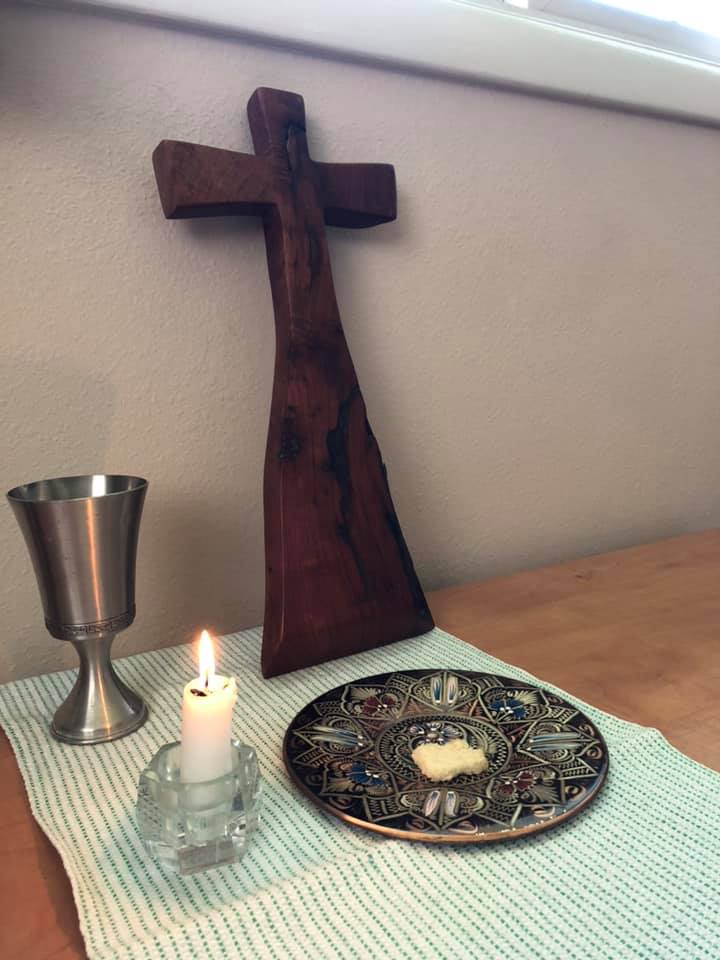
Wednesday night, March 25, we encourage all members of Trinity Lutheran Church, Nampa to pray this devotional at 7pm. You may wish to light a candle as a way of inviting the light of Christ into your sacred space.

Our theme for midweek Lent evening prayer is Open our Lives.

Photograph by Trinity member Mary Braudrick

March 4 was “Open our Eyes.”

March 11 was “Open our Hands.”

March 18 was “Open our Ears.”

March 25 is “Open our Hearts.”

Psalm 141 (Song of Forgiveness and Protection)

1 I call upon you, O Lord; come quickly to me;
give ear to my voice when I call to you.
2 Let my prayer be counted as incense before you,
and the lifting up of my hands as an evening sacrifice.

3 Set a guard over my mouth, O Lord;
keep watch over the door of my lips.
4 Do not turn my heart to any evil,
to busy myself with wicked deeds
in company with those who work iniquity;
do not let me eat of their delicacies.

5 Let the righteous strike me;
let the faithful correct me.
Never let the oil of the wicked anoint my head,
for my prayer is continually
against their wicked deeds.
6 When they are given over to those who shall condemn them,
then they shall learn that my words were pleasant.
7 Like a rock that one breaks apart and shatters on the land,
so shall their bones be strewn at the mouth of Sheol.

8 But my eyes are turned towards you, O God, my Lord;
in you I seek refuge; do not leave me defenceless.
9 Keep me from the trap that they have laid for me,
and from the snares of evildoers.
10 Let the wicked fall into their own nets,
while I alone escape.

Litany (Sundays and Seasons)

Open our hearts, Lord, to behold your laws. Teach us to walk in your commandments.

Grant us grace to know and understand your will, for all that we are in body and soul is a gift from you.

Lord, you are the everlasting Truth, the one who speaks the words of eternal life.

Open our hearts, Lord, to behold your laws. Teach us to walk in your commandments.

(Based on Thomas à Kempis, 1380–1471, The Imitation of Christ, trans. Richard Whitford, ca. 1530)

Prayer (Sundays and Seasons)

Open our hearts, Lord, and fill us with your love. Grant us strength and courage, remove our hard-heartedness, and turn us always to you. In Jesus’ name we pray. Amen.

Readings

2 Corinthians 6:1-13

6As we work together with him, we urge you also not to accept the grace of God in vain. 2For he says,
‘At an acceptable time I have listened to you,
and on a day of salvation I have helped you.’
See, now is the acceptable time; see, now is the day of salvation! 3We are putting no obstacle in anyone’s way, so that no fault may be found with our ministry, 4but as servants of God we have commended ourselves in every way: through great endurance, in afflictions, hardships, calamities, 5beatings, imprisonments, riots, labours, sleepless nights, hunger; 6by purity, knowledge, patience, kindness, holiness of spirit, genuine love, 7truthful speech, and the power of God; with the weapons of righteousness for the right hand and for the left; 8in honour and dishonour, in ill repute and good repute. We are treated as impostors, and yet are true; 9as unknown, and yet are well known; as dying, and see—we are alive; as punished, and yet not killed; 10as sorrowful, yet always rejoicing; as poor, yet making many rich; as having nothing, and yet possessing everything.

11 We have spoken frankly to you Corinthians; our heart is wide open to you. 12There is no restriction in our affections, but only in yours. 13In return—I speak as to children—open wide your hearts also.

Acts 16:11-15

11 We set sail from Troas and took a straight course to Samothrace, the following day to Neapolis, 12and from there to Philippi, which is a leading city of the district of Macedonia and a Roman colony. We remained in this city for some days. 13On the sabbath day we went outside the gate by the river, where we supposed there was a place of prayer; and we sat down and spoke to the women who had gathered there. 14A certain woman named Lydia, a worshipper of God, was listening to us; she was from the city of Thyatira and a dealer in purple cloth. The Lord opened her heart to listen eagerly to what was said by Paul. 15When she and her household were baptized, she urged us, saying, ‘If you have judged me to be faithful to the Lord, come and stay at my home.’ And she prevailed upon us.

Open Hearts

What do loving hearts look like during a pandemic when we are asked to practice physical distancing? Love looks like an empty sanctuary, because when we do not gather in large groups we do not put one another at risk and we slow down the spread of the virus, which in turn helps everyone working in healthcare.

Love looks like an empty church

Love looks like participating in the census online so that dollars are allocated correctly, so that infrastructures can serve the people.

Love looks like brightening up your corner of the world with some color, using a coloring book or Chalking the Walk.

Love looks like sending cards to people in your lives who may be isolated or overwhelmed.

Prayer

O God, from whom come all holy desires, all good counsels, and all just works: give to us, your servants, that peace which the world cannot give, that our hearts may be set to obey your commandments; and also that we, being defended from the fear of our enemies, may live in peace and quietness; through Jesus Christ our Savior, who lives and reigns with you and the Holy Spirit, God forever. Amen. (ELW p. 317)

Lord’s Prayer

Our Father in heaven,
hallowed be your name,
your kingdom come,
your will be done,
on earth as in heaven.
Give us today our daily bread.
Forgive us our sins
as we forgive those
who sin against us.
Save us from the time of trial
and deliver us from evil.
For the kingdom, the power,
and the glory are yours,
now and forever. Amen.
Posted in Reflections, Trinity Lutheran | Leave a comment

Finding Our Way

April Newsletter Column

Dear Friends in Christ,

As I sat down to write my April column for the Epistle, these words of the Apostle Paul washed over me: “For now we see in a mirror, dimly, but then we will see face to face. Now I know only in part; then I will know fully, even as I have been fully known. And now faith, hope, and love abide, these three; and the greatest of these is love.” (1 Cor. 13:12-13).

One could make a pretty good argument right now that hope is the greatest but I know that love has been the strongest guidepost and will remain so for me and our congregational leadership. Love is why we suspended in-person gatherings, including worship. Love is why people are calling one another and checking in with one another. Love is why so many of us are learning new technologies that help us stay connected in this digital age. Love is why we are finding new ways to care for our neighbors (those next door and those across the globe). Most important, God’s love for us is something we can continue to depend on.

Love will continue to guide our discernment. Our council will meet via Zoom Meeting on Monday, March 30. We will make final plans for Holy Week (more inside this Epistle) and the Season of Easter. Please know, I am planning ahead as though we will be in this for a while. The other ELCA Treasure Valley Cluster leaders and I have a  deep love for one another and for the Body of Christ that is our cluster. We are trying new ways to be church together (more inside the Epistle).

Know that God’s deep abiding love for the entire cosmos is not going to waver. It is a love that is steadfast and abundant, both personal and far-reaching. It continues to free us both from something (shame, guilt, participation in unjust systems) and for something (love of our neighbors, transforming the world into God’s reign). Thanks for your companionship and prayers as we navigate together through this pandemic.

Peace, Pastor Meggan


Posted in Reflections, Trinity Lutheran | Leave a comment

Outdoor Ministries and Zoom

Who would have thought that a bunch of camp professionals helped prepare me to serve my congregation in a time of physical distancing? I’m not sure I would have. My council’s executive committee decided to cancel in-person gatherings through March 31 on March 13. The first thing I did on March 14 was purchase a Zoom account for myself. I was pretty sure we would use Facebook Live for worship since our congregation has a decent following and presence on Facebook. But what about small group gatherings and meetings and other random conversations? I knew of no better tool than Zoom meeting and the reason I knew about Zoom was because of my two terms on the Lutheran Outdoor Ministries (LOM) board of directors.

I always thought it was a bit fun and funny that it was outdoor ministry professionals who taught me the most about technology over the past eight years, everything from Dropbox (a while ago) to Zoom to Google Drive. It is funny, of course, because these are the same professionals who know the great value in getting unplugged. I make a huge push every summer to get all the kids (plus a good number of adults) from my congregation to Luther Heights Bible Camp. There are lots of reasons for my push, most important being the value in spending a week in intentional Christian Community. But I also know that one week being unplugged does them well. The youth know it too. On more than one ride home I have heard, “I love being unplugged. But there’s no way I can do it on my own.”

When I first served on the LOM board we used conference calls. You might think that an introvert like me would like those because there was no eye-contact. But being introverted is only one part of my identity. I am also the person who reads the room. I was told once, during an Emotional Intelligence training, that you could tell the temperature of the room by the look on my face. (I have no poker face). I don’t try to read the room; it’s just something I do instinctively and when I can’t, like when I’m on a conference phone call, it drives me crazy. So I absolutely loved when our board president introduced us to Zoom.

A few years later, when tasked with leading the search committee for Luther Height’s new executive director, I asked our synod if we could use their account. We drew together members from Nampa to American Falls. Geographic representation was key in gaining the trust of our loyal constituency. But some of us had never met until our first meeting. If I had not been able to read people’s facial expressions and body language it would have taken us all much longer to gel. Video conferencing was pure gift.

There are a few more things I really appreciate about Zoom, especially right now. One is that even though I have written a great deal about reading body language, my members who do not have computers or internet can still join in. Every time I send a link I specify that they can also call in with  a flip phone or land line. Finally, at least with the subscription, so far the connections have been quite stable, with is impressive considering how much traffic Zoom has right now.

I do not want to put Outdoor Ministry people up on a pedestal for their use of technology. I know that a variety of networks and coalitions of church people have been using video conferencing for a long time to do ministry. I just love that I was introduced to the technology by people who 1) have understand small-group ministry for forever, 2) who continually lift up whatever young adults bring to the table (which has included new ways of connecting through technology), and 3) who are the same people who would tell me to get off of all my devices and go get some Vitamin D.

Posted in Reflections | Leave a comment

March 22, 2020

Prayer of the Day

Bend your ear to our prayers, Lord Christ, and come among us. By your gracious life and death for us, bring light into the darkness of our hearts and anoint us with your Spirit, for you live and reign with the Father and the Holy Spirit, one God, now and forever. Amen.

1 Samuel 16:1-13

1 The Lord said to Samuel, “How long will you grieve over Saul? I have rejected him from being king over Israel. Fill your horn with oil and set out; I will send you to Jesse the Bethlehemite, for I have provided for myself a king among his sons.” 2 Samuel said, “How can I go? If Saul hears of it, he will kill me.” And the Lord said, “Take a heifer with you, and say, “I have come to sacrifice to the Lord.’ 3 Invite Jesse to the sacrifice, and I will show you what you shall do; and you shall anoint for me the one whom I name to you.” 4 Samuel did what the Lord commanded, and came to Bethlehem. The elders of the city came to meet him trembling, and said, “Do you come peaceably?” 5 He said, “Peaceably; I have come to sacrifice to the Lord; sanctify yourselves and come with me to the sacrifice.” And he sanctified Jesse and his sons and invited them to the sacrifice. 6 When they came, he looked on Eliab and thought, “Surely the Lord’s anointed is now before the Lord.” 7 But the Lord said to Samuel, “Do not look on his appearance or on the height of his stature, because I have rejected him; for the Lord does not see as mortals see; they look on the outward appearance, but the Lord looks on the heart.” 8 Then Jesse called Abinadab, and made him pass before Samuel. He said, “Neither has the Lord chosen this one.” 9 Then Jesse made Shammah pass by. And he said, “Neither has the Lord chosen this one.” 10 Jesse made seven of his sons pass before Samuel, and Samuel said to Jesse, “The Lord has not chosen any of these.” 11 Samuel said to Jesse, “Are all your sons here?” And he said, “There remains yet the youngest, but he is keeping the sheep.” And Samuel said to Jesse, “Send and bring him; for we will not sit down until he comes here.” 12 He sent and brought him in. Now he was ruddy, and had beautiful eyes, and was handsome. The Lord said, “Rise and anoint him; for this is the one.” 13 Then Samuel took the horn of oil, and anointed him in the presence of his brothers; and the spirit of the Lord came mightily upon David from that day forward. Samuel then set out and went to Ramah.

Psalm 23

1 The Lord is my shepherd, I shall not want. 2 He makes me lie down in green pastures; he leads me beside still waters; 3 he restores my soul. He leads me in right paths for his name’s sake. 4 Even though I walk through the darkest valley, I fear no evil; for you are with me; your rod and your staff— they comfort me. 5 You prepare a table before me in the presence of my enemies; you anoint my head with oil; my cup overflows. 6 Surely goodness and mercy shall follow me all the days of my life, and I shall dwell in the house of the Lord my whole life long.

Ephesians 5:8-14

8 For once you were darkness, but now in the Lord you are light. Live as children of light— 9 for the fruit of the light is found in all that is good and right and true. 10 Try to find out what is pleasing to the Lord. 11 Take no part in the unfruitful works of darkness, but instead expose them. 12 For it is shameful even to mention what such people do secretly; 13 but everything exposed by the light becomes visible, 14 for everything that becomes visible is light. Therefore it says, “Sleeper, awake! Rise from the dead, and Christ will shine on you.”

John 9:1-41

1 As he walked along, he saw a man blind from birth. 2 His disciples asked him, “Rabbi, who sinned, this man or his parents, that he was born blind?” 3 Jesus answered, “Neither this man nor his parents sinned; he was born blind so that God’s works might be revealed in him. 4 We must work the works of him who sent me while it is day; night is coming when no one can work. 5 As long as I am in the world, I am the light of the world.” 6 When he had said this, he spat on the ground and made mud with the saliva and spread the mud on the man’s eyes, 7 saying to him, “Go, wash in the pool of Siloam” (which means Sent). Then he went and washed and came back able to see. 8 The neighbors and those who had seen him before as a beggar began to ask, “Is this not the man who used to sit and beg?” 9 Some were saying, “It is he.” Others were saying, “No, but it is someone like him.” He kept saying, “I am the man.” 10 But they kept asking him, “Then how were your eyes opened?” 11 He answered, “The man called Jesus made mud, spread it on my eyes, and said to me, “Go to Siloam and wash.’ Then I went and washed and received my sight.” 12 They said to him, “Where is he?” He said, “I do not know.” 13 They brought to the Pharisees the man who had formerly been blind. 14 Now it was a sabbath day when Jesus made the mud and opened his eyes. 15 Then the Pharisees also began to ask him how he had received his sight. He said to them, “He put mud on my eyes. Then I washed, and now I see.” 16 Some of the Pharisees said, “This man is not from God, for he does not observe the sabbath.” But others said, “How can a man who is a sinner perform such signs?” And they were divided. 17 So they said again to the blind man, “What do you say about him? It was your eyes he opened.” He said, “He is a prophet.” 18 The Jews did not believe that he had been blind and had received his sight until they called the parents of the man who had received his sight 19 and asked them, “Is this your son, who you say was born blind? How then does he now see?” 20 His parents answered, “We know that this is our son, and that he was born blind; 21 but we do not know how it is that now he sees, nor do we know who opened his eyes. Ask him; he is of age. He will speak for himself.” 22 His parents said this because they were afraid of the Jews; for the Jews had already agreed that anyone who confessed Jesus to be the Messiah would be put out of the synagogue. 23 Therefore his parents said, “He is of age; ask him.” 24 So for the second time they called the man who had been blind, and they said to him, “Give glory to God! We know that this man is a sinner.” 25 He answered, “I do not know whether he is a sinner. One thing I do know, that though I was blind, now I see.” 26 They said to him, “What did he do to you? How did he open your eyes?” 27 He answered them, “I have told you already, and you would not listen. Why do you want to hear it again? Do you also want to become his disciples?” 28 Then they reviled him, saying, “You are his disciple, but we are disciples of Moses. 29 We know that God has spoken to Moses, but as for this man, we do not know where he comes from.” 30 The man answered, “Here is an astonishing thing! You do not know where he comes from, and yet he opened my eyes. 31 We know that God does not listen to sinners, but he does listen to one who worships him and obeys his will. 32 Never since the world began has it been heard that anyone opened the eyes of a person born blind. 33 If this man were not from God, he could do nothing.” 34 They answered him, “You were born entirely in sins, and are you trying to teach us?” And they drove him out. 35 Jesus heard that they had driven him out, and when he found him, he said, “Do you believe in the Son of Man?” 36 He answered, “And who is he, sir? Tell me, so that I may believe in him.” 37 Jesus said to him, “You have seen him, and the one speaking with you is he.” 38 He said, “Lord, I believe.” And he worshiped him. 39 Jesus said, “I came into this world for judgment so that those who do not see may see, and those who do see may become blind.” 40 Some of the Pharisees near him heard this and said to him, “Surely we are not blind, are we?” 41 Jesus said to them, “If you were blind, you would not have sin. But now that you say, “We see,’ your sin remains.

Sermon by Meggan Manlove on Psalm 23

Our Wednesday morning study group has been reading Rachel Held Evan’s work Inspired, her book about learning to love scripture again. She finishes one chapter recalling Jesus’ cry from the cross, “My God, my God, why have you forsaken me?” Evans writes, “It’s a cry straight from Psalm 22, the God to whom these words were first spoken, speaking them back in human form. Three days later, Jesus would rise from the dead, but in that moment, when all hope was lost and the darkness overwhelmed, only poetry would do.”

I’m not equating the Coronavirus to Jesus crucifixion, far from it. And, when it comes to looking for information about the virus itself, I am confident in my sources: the CDC and the World Health Organization. I have chosen to trust the scientists.  We can simultaneously trust scientists and also have moments when we feel completely overwhelmed by what could happen.  I want to claim this as a time that can seem void of hope and full of uncertainty.

When faced only with my own emotions, which have ranged from fear, anger, and uncertainty, often in the same hour, science is not as helpful. When I begin to worry about the isolation of some of our church members, or the long days of parents trying to work at home with several young kids, or when I consider people experiencing homelessness, the world gets pretty dark very quickly. In those moments, I agree with Rachel Held Evans and I turn to poetry.

It might seem like in these days of a pandemic, we should turn to a Psalms of Lament. Praying through the Lament psalms is a great spiritual practice, one I commend to you. But the lectionary, the series of readings our congregation follows, did not include a Psalm of Lament today. Instead we have a Psalm of Thanksgiving. Walter Brueggemann categorizes this as a song of confidence under the umbrella of psalms of reorientation.

What all of that means is that we, who feel the like the earth beneath us has shaken, are presented with a psalm written by someone who has had some specific experience of difficulty and has learned to trust God. It offers us a glimpse of faith and a life that come to a joyous trusting resolution. The relationship with the Lord has been tested and the Lord has been shown to be profoundly reliable and powerful. That, it turns out, is something to be celebrated.

The psalm begins with a metaphor, “The Lord is my shepherd.” It’s not a simile, “The Lord is like a shepherd.” It’s a metaphor. James Mays writes that “a metaphor used for theological purposes is very serious business.” In other words, we better pay attention.

When I think about shepherds and sheep in Idaho, I recall all of the images I have seen of the Trailing of the Sheep Festival held in Sun Valley each October. Now, the photos are usually pretty cute, and I love seeing everyone dote over the sheep. And I will watch a video of baby lambs when it comes across my feed, but Sun Valley does not have a festival because of how smart sheep are. Sheep need shepherds—no doubt about it.

The primary duties of the shepherd are to provide and protect the flock. The shepherd pastures the flock, leads them in the right way when they moved, fends off predators. The sheep are his responsibility, and he is accountable for their welfare and safety.

But there is even more going on in this beautiful psalm. There is much more to the metaphor, “the Lord is my shepherd.” In the ancient Near East, the role and title of shepherd were used for leaders, as a designation of their relationship to the people in their charge. And as a title, “shepherd” came to have specific royal connotations. Gods and kings were called the shepherd of their people. In stories and songs and prophecies, the Lord is called the shepherd of Israel. The people Israel are the flock. The Lord made King David his under shepherd. In the prophetic books of Jeremiah and Micah, the kings of Israel were judged as shepherds.

And so, to say “The Lord is my shepherd” draws all of this imagery to mind. Mays says, “The metaphor is not restricted to associations with what actual shepherds did; it is informed by what the Lord has done and what kings were supposed to do.”

What exactly does this particular shepherd do? What kind of leadership is exhibited? I confess that I am currently steeped in the language of best pracices. This is due to spending the week learning best practices for Zoom Meetings, Youtube Channels, Facebook Live, and all things in the digital age. So, I cannot help but look for the best practices of The Good Shepherd.

Most important seems to be the fact that “I shall not be in want.” There is also restoration of life and continued companionship. The psalmist also uses imagery which reminds people of The Good Shepherd, the Lord, has healed and saved the entire community in the past.

It is true that The Good Shepherd cares for the entire flock, but let’s be honest. What makes this metaphor so powerful is the focus of the shepherd’s care on one person; it’s intimate. The individual dimensions of trust and grace are lifted up. Our congregation, which cares a great deal about communal identity, might wonder if this intimacy is okay. It is more than okay.

I liken it to what happens in the waters of Holy Baptism. That Sacrament takes place in the assembly. There is nothing private about it. The community even has roles. But the sacrament of Hoy Baptism is also incredibly personal. One child, teenager, or adult hears the promises made specifically to him or her. Water is poured on her head. The sign of the cross is made on her forehead. Likewise, in Psalm 23, the psalmist makes claims that God’s accompaniment and comfort are for her, not her alone, but for her with certainty.

In an indirect way, the psalm prepares us for the story of the shepherd who does leave the flock to go on a search for one lost sheep. The earliest Christian said, “The Lord is my shepherd” and understood Lord to also be the title of Jesus. In John 10:11, Jesus says directly, “I am the good shepherd.”

In our rereading of the psalm, Jesus, as the shepherd is the one who restores our souls, leads us in the paths of righteousness, accompanies us through danger, spreads the holy supper before us in the presence of sin and death, and pursues us in his gracious love all the days of our lives.

Brueggemann writes that “it is God’s companionship that transforms every situation. It does not mean there are no deathly valleys, no enemies, [no COVID-19].” But we are not alone. We are still the Lord’s beloved. Our relationship with the Lord is transformative. Psalm 23 knows that evil and illness and brokenness are present in the world, but they are not feared. Confidence in God is the source of new orientation.

This does not mean that we can do whatever we want, and God will take care of us. It means that when we are on the other side, we will be able to see, that the Lord was The Good Shepherd even as we walked through this dark valley.  This week I started thinking and talking about this distinction using the language of stewardship.  That is, God has gifted each of us with abilities, relationships, and information. Putting all of those together, hopefully we can glean some collective wisdom.

We are meant to steward those resources to the best of our abilities. I believe that our collective wisdom, which is so much larger than the latest data I have grabbed off the internet, will actually become the rod and staff the psalmist speaks of. That is the posture I take when I am trying to faithfully do my work. Put another way, by the brilliant character Anna from Disney’s Frozen II, “You are lost, hope is gone but you must go on and do the next right thing.” I trust that God has given us everything we need to do the next right thing each day. And breaking it down in that way actually makes it seem achievable.

That’s how I have been operating when talking to parishioners, convening meetings online, working on communication with our office administrator. In other moments, truth be told, I feel overwhelmed. There were times this last week when I even began to have anticipatory grief for whoever in my life will become sick and perhaps die. I have experienced waves of sadness when I read about the people who have no home to shelter in or for people who are losing their jobs.

It is in those moments that I have clung to the metaphor, “The Lord is my shepherd.” On one day the green pastures and still waters give me rest; they come tangibly through the voice of a friend in the middle of the country who asks, “How is to be alone in your house?”

On another day I ponder the “paths of righteousness.” I read about acts of love and mercy in Nampa—people being fed, neighbors taking care of neighbors, and I am able to breath easier.

There are other times when I just sit on my most comfortable sofa and hear the words, “thou anointest my head with oil; my cup runneth over” from my grandmother Jenny’s King James Bible, and I am somehow able to trust that God’s love is bigger than everything else. It is abundant and every flowing and life-giving. The love of The Good Shepherd does not get divided into pieces as though there is a finite amount. There is more than enough of this love for all the sheep, every single one. I remain a beloved child of God and so do each of you. It is true that we will face dark valleys, but it is also true that we will never be alone.

Prayers of Intercession (adapted from Sundays and Seasons by Trinity member David Sheriff)

Turning our hearts to God, who is gracious and merciful, we pray for the church, the world, and all who are in need.

A brief silence. 

God of insight, strengthen and encourage us in this time of pestilence.  Rein in the virulence of this virus.  Grant us stamina and patience to endure the loneliness of isolation, quarantine and physical distancing.   Hear us, O God.  Your mercy is great.

God of insight, Ease suffering as this disease works its way through our midst.  Take those who will not survive swiftly into your arms.  Comfort us through our anguish and lamentation yet to come.   Hear us, O God.  Your mercy is great.

God of insight, Inspire leaders at every level to act wisely and effectively to mitigate the medical and economic consequences of this pandemic. Hear us, O God.  Your mercy is great.

God of insight, empower physicians, nurses and all healthcare workers.  Speed the work of scientists and researchers, guide them to develop effective treatments.   Hear us, O God.  Your mercy is great.

God of insight, We are denied the comfort of physical association and assembly in your name.  We hunger for your body and blood through the Lord’s Supper.  Help all of us use technology so that we may at least hear the gospel together.  Hear us, O God.  Your mercy is great.

God of insight, help this virtual assembly lift up the unique gifts of each person who participates, no matter their physical capacity, cognitive ability, or sensory deficit. Help us to be creative and brave in making our facilities and our ministries accessible to all. Hear us, O God. Your mercy is great.

God of insight, empower us to care for the land and all living things that dwell in it and beneath it. Provide rich soil for crops to grow. Bring rain to lands suffering drought. Protect hills and shorelines from damage caused by erosion and rising sea level. Hear us, O God. Your mercy is great.

God of insight, bring peace to all people and nations. Anoint leaders who seek goodness, righteousness, and truth on behalf of all. Frustrate the efforts of those who would seek to cause violence or terror. Hear us, O God.  Your mercy is great. 

God of insight, you care for our needs even before we ask. Come quickly to all who seek prayer this day (especially). Accomplish healing through the work of doctors, nurses, physical therapists, nutritionists, and all who tend to human bodies. Hear us, O God. Your mercy is great.

God of insight, you call out to those who are asleep and awaken them to new life with you. We give thanks for your saints (especially). Join us together with them as your children in this world and the next. Hear us, O God.  Your mercy is great.

According to your steadfast love, O God, hear these and all our prayers as we commend them to you; through Christ our Lord. Amen.

For your listening pleasure: The King of Love, My Shepherd Is

Posted in Sermons | Leave a comment

Lent – March 18

Wednesday night, March 18, we encourage all members of Trinity Lutheran Church, Nampa to pray this devotional at 7pm. You may wish to light a candle as a way of inviting the light of Christ into your sacred space.

Our theme for midweek Lent evening prayer is Open our Lives.

Photograph by Trinity member Mary Braudrick

March 4 was “Open our Eyes.”

March 11 was “Open our [thoroughly washed] Hands.”

March 18 is “Open our Ears.”

Psalm 141 (Song of Forgiveness and Protection)

1 I call upon you, O Lord; come quickly to me;
give ear to my voice when I call to you.
2 Let my prayer be counted as incense before you,
and the lifting up of my hands as an evening sacrifice.

3 Set a guard over my mouth, O Lord;
keep watch over the door of my lips.
4 Do not turn my heart to any evil,
to busy myself with wicked deeds
in company with those who work iniquity;
do not let me eat of their delicacies.

5 Let the righteous strike me;
let the faithful correct me.
Never let the oil of the wicked anoint my head,
for my prayer is continually
against their wicked deeds.
6 When they are given over to those who shall condemn them,
then they shall learn that my words were pleasant.
7 Like a rock that one breaks apart and shatters on the land,
so shall their bones be strewn at the mouth of Sheol.

8 But my eyes are turned towards you, O God, my Lord;
in you I seek refuge; do not leave me defenceless.
9 Keep me from the trap that they have laid for me,
and from the snares of evildoers.
10 Let the wicked fall into their own nets,
while I alone escape.

Litany (Sundays and Seasons)

As children, we hear: Don’t touch! Slow down!

As teenagers, we hear: Your curfew begins in an hour.

As adults, we hear: Cash or credit?

In the water and the word, we hear: You are loved, my precious child.

Prayer (Sundays and Seasons): Open our ears, Lord, to heed your will for our lives. Help us not only to hear, but to listen and understand with our hearts. In Jesus’ name we pray. Amen.

Readings

Isaiah 50:4-5

Matthew 13:10-17

Time for Listening (Two Options)

You are invited to participate in one or both of these:

Step outside and listen to the evening sounds. What do you hear? How is God present in the sounds you hear?

Most of us are now a few days into practicing physical distancing in an attempt to slow down the spread of the Coronavirus. We are attempting to “Flatten the Curve.” We are going to be creating and sustaining community in a new way. What might we be building? This recording of a song from the musical Godspell provides some hope and vision:

Prayer

O God, from whom come all holy desires, all good counsels, and all just works: give to us, your servants, that peace which the world cannot give, that our hearts may be set to obey your commandments; and also that we, being defended from the fear of our enemies, may live in peace and quietness; through Jesus Christ our Savior, who lives and reigns with you and the Holy Spirit, God forever. Amen. (ELW p. 317)


Lord’s Prayer

Our Father in heaven,
hallowed be your name,
your kingdom come,
your will be done,
on earth as in heaven.
Give us today our daily bread.
Forgive us our sins
as we forgive those
who sin against us.
Save us from the time of trial
and deliver us from evil.
For the kingdom, the power,
and the glory are yours,
now and forever. Amen.
Posted in Trinity Lutheran | Leave a comment

St Patrick’s Day

Eight months ago, my friend Joy and I hiked past Patrick’s Mountain. It was our last official day of hiking. We ended the hike in the beautiful town of Westport, in County Mayo. Who could have imagined that I would be spending St.Patrick’s Day 2020 on the phone and in multiple Zoom meetings talking about how to do ministry during the time of COVID-19. I love being outdoors, feeling the sun and wind on my face and earth under my feet. Today I am giving thanks that I can still do those things, even if Patrick’s Mountain is not in view.

Does Patrick have anything helpful to say to us today? Here are the famous words from his breastplate:

What exactly does it mean? Does it mean that we can do whatever we want and God will take care of us? No, I do not think so. God has gifted each of us with abilities, relationships, and information. Putting all of those together, hopefully we can glean some collective wisdom. We are meant to steward those resources to the best of our abilities, knowing that God journeys with us. Every time a parishioner asks, “Now, how are you doing pastor?” I assume they actually care and are not just being polite. I take the opportunity to be accountable to keeping myself healthy so I can continue to lead well. Occasionally I take the opportunity to share the load. We are all doing the best we can right now. A colleague posted this, written by a friend of hers, a few days ago, which now feels like a few weeks ago. It sums up well where most of us are at; trying to do the next best thing knowing that God is always with us.


Posted in Reflections | 2 Comments

Nampa Food Banks in the time of COVID-19

Largely because of Trinity Community Gardens leadership in food security, I have been part of email threads and Facebook groups wondering how people will get food during this chapter in our lives. Here is what we know:

Traveling Table – March 18

10-11:45am Lakeview Church Nazarene (608 14th Ave. North)

12:15-2pm Nampa Housing Authority (211 19th Ave. North)


Good News Food Pantry

1207 7th St. North

March 18, 4-6pm


Care House Partnerships Food Bank (1524 6th St. South)

Tuesday, Thursday, Saturday – 12:30-4pm


Family Community Resource Centers (connected with Nampa schools)

Monday-Friday – 8:30-4pm

Central Elementary (1415 5th Street, Blue Portable Building)

Iowa Elementary (626 W. Iowa)


St. Vincent DePaul Food Pantry

2920 E. Railroad

Tuesday and Thursday, 3-5pm


Seventh Day Adventist Food Pantry

1515 Checola Ave.

Wednesday, 12-4pm

Posted in Food | Leave a comment

Well Rooted

One of our church members, Sarah Henthorn, posed a question in a video on Facebook today, “What do we love about our congregation?” Though I know that anything can become an idol, even Christian community, I want to share that after talking with our executive committee members on Friday, working together with four other individuals Sunday morning to stream our first worship on Facebook Live, and then meeting with our entire council for about an our Sunday morning, I am so thankful for the deep roots that ground Trinity Lutheran Church. These roots consist of our faith in a loving and faithful God, our relationships with one another, and an ethos that consistently has us looking beyond our walls and ourselves.

I have loved seeing the many photos people are posting on Facebook of spring flowers coming up and today I enjoyed some of them in person on a walk around my neighborhood. But what I am most thankful for is my budding tree.

The arborists who treated it last year were not sure it would make it through the winter. If we had experienced Snowmaggeden again, the tree might not have made it. I trust that part of the reason it survived is because we tended its roots and the roots go deep. All of this is to say that our congregation will weather this time of uncertainty brought on by the Coronavirus because we are like that tree with its deep healthy roots.

Prayer for time of conflict, crisis, disaster from ELW: O God, where hearts are fearful and constricted, grant courage and hope. Where anxiety is infectious and widening, grant peace and reassurance. Where impossibilities close every door and windows, grant imagination and resistance. Where distrust twists our thinking, grant healing and illumination. Where spirits are daunted and weakened, grant soaring wings and strengthened dreams. All these things we ask in the name of Jesus Christ, our Savior and Lord. Amen.

Posted in Reflections, Trinity Lutheran | Leave a comment

March 15, 2020

Prayer of the Day

Merciful God, the fountain of living water, you quench our thirst and wash away our sin. Give us this water always. Bring us to drink from the well that flows with the beauty of your truth through Jesus Christ, our Savior and Lord, whoo lives and reigns with you and the Holy Spirit, one God, now and forever. Amen. (ELW p. 27)

Exodus 17:1-7

1 From the wilderness of Sin the whole congregation of the Israelites journeyed by stages, as the Lord commanded. They camped at Rephidim, but there was no water for the people to drink. 2 The people quarreled with Moses, and said, “Give us water to drink.” Moses said to them, “Why do you quarrel with me? Why do you test the Lord?” 3 But the people thirsted there for water; and the people complained against Moses and said, “Why did you bring us out of Egypt, to kill us and our children and livestock with thirst?” 4 So Moses cried out to the Lord, “What shall I do with this people? They are almost ready to stone me.” 5 The Lord said to Moses, “Go on ahead of the people, and take some of the elders of Israel with you; take in your hand the staff with which you struck the Nile, and go. 6 I will be standing there in front of you on the rock at Horeb. Strike the rock, and water will come out of it, so that the people may drink.” Moses did so, in the sight of the elders of Israel. 7 He called the place Massah and Meribah, because the Israelites quarreled and tested the Lord, saying, “Is the Lord among us or not?”

Psalm 95

1 O come, let us sing to the Lord; let us make a joyful noise to the rock of our salvation! 2 Let us come into his presence with thanksgiving; let us make a joyful noise to him with songs of praise! 3 For the Lord is a great God, and a great King above all gods. 4 In his hand are the depths of the earth; the heights of the mountains are his also. 5 The sea is his, for he made it, and the dry land, which his hands have formed. 6 O come, let us worship and bow down, let us kneel before the Lord, our Maker! 7 For he is our God, and we are the people of his pasture, and the sheep of his hand. O that today you would listen to his voice! 8 Do not harden your hearts, as at Meribah, as on the day at Massah in the wilderness, 9 when your ancestors tested me, and put me to the proof, though they had seen my work. 10 For forty years I loathed that generation and said, “They are a people whose hearts go astray, and they do not regard my ways.” 11 Therefore in my anger I swore, “They shall not enter my rest.”

Romans 5:1-11

1 Therefore, since we are justified by faith, we have peace with God through our Lord Jesus Christ, 2 through whom we have obtained access to this grace in which we stand; and we boast in our hope of sharing the glory of God. 3 And not only that, but we also boast in our sufferings, knowing that suffering produces endurance, 4 and endurance produces character, and character produces hope, 5 and hope does not disappoint us, because God’s love has been poured into our hearts through the Holy Spirit that has been given to us. 6 For while we were still weak, at the right time Christ died for the ungodly. 7 Indeed, rarely will anyone die for a righteous person—though perhaps for a good person someone might actually dare to die. 8 But God proves his love for us in that while we still were sinners Christ died for us. 9 Much more surely then, now that we have been justified by his blood, will we be saved through him from the wrath of God. 10 For if while we were enemies, we were reconciled to God through the death of his Son, much more surely, having been reconciled, will we be saved by his life. 11 But more than that, we even boast in God through our Lord Jesus Christ, through whom we have now received reconciliation.

John 4:5-42

5 So he came to a Samaritan city called Sychar, near the plot of ground that Jacob had given to his son Joseph. 6 Jacob’s well was there, and Jesus, tired out by his journey, was sitting by the well. It was about noon. 7 A Samaritan woman came to draw water, and Jesus said to her, “Give me a drink.” 8 (His disciples had gone to the city to buy food.) 9 The Samaritan woman said to him, “How is it that you, a Jew, ask a drink of me, a woman of Samaria?” (Jews do not share things in common with Samaritans.) 10 Jesus answered her, “If you knew the gift of God, and who it is that is saying to you, “Give me a drink,’ you would have asked him, and he would have given you living water.” 11 The woman said to him, “Sir, you have no bucket, and the well is deep. Where do you get that living water? 12 Are you greater than our ancestor Jacob, who gave us the well, and with his sons and his flocks drank from it?” 13 Jesus said to her, “Everyone who drinks of this water will be thirsty again, 14 but those who drink of the water that I will give them will never be thirsty. The water that I will give will become in them a spring of water gushing up to eternal life.” 15 The woman said to him, “Sir, give me this water, so that I may never be thirsty or have to keep coming here to draw water.” 16 Jesus said to her, “Go, call your husband, and come back.” 17 The woman answered him, “I have no husband.” Jesus said to her, “You are right in saying, “I have no husband’; 18 for you have had five husbands, and the one you have now is not your husband. What you have said is true!” 19 The woman said to him, “Sir, I see that you are a prophet. 20 Our ancestors worshiped on this mountain, but you say that the place where people must worship is in Jerusalem.” 21 Jesus said to her, “Woman, believe me, the hour is coming when you will worship the Father neither on this mountain nor in Jerusalem. 22 You worship what you do not know; we worship what we know, for salvation is from the Jews. 23 But the hour is coming, and is now here, when the true worshipers will worship the Father in spirit and truth, for the Father seeks such as these to worship him. 24 God is spirit, and those who worship him must worship in spirit and truth.” 25 The woman said to him, “I know that Messiah is coming” (who is called Christ). “When he comes, he will proclaim all things to us.” 26 Jesus said to her, “I am he, the one who is speaking to you.” 27 Just then his disciples came. They were astonished that he was speaking with a woman, but no one said, “What do you want?” or, “Why are you speaking with her?” 28 Then the woman left her water jar and went back to the city. She said to the people, 29 “Come and see a man who told me everything I have ever done! He cannot be the Messiah, can he?” 30 They left the city and were on their way to him. 31 Meanwhile the disciples were urging him, “Rabbi, eat something.” 32 But he said to them, “I have food to eat that you do not know about.” 33 So the disciples said to one another, “Surely no one has brought him something to eat?” 34 Jesus said to them, “My food is to do the will of him who sent me and to complete his work. 35 Do you not say, “Four months more, then comes the harvest’? But I tell you, look around you, and see how the fields are ripe for harvesting. 36 The reaper is already receiving wages and is gathering fruit for eternal life, so that sower and reaper may rejoice together. 37 For here the saying holds true, “One sows and another reaps.’ 38 I sent you to reap that for which you did not labor. Others have labored, and you have entered into their labor.” 39 Many Samaritans from that city believed in him because of the woman’s testimony, “He told me everything I have ever done.” 40 So when the Samaritans came to him, they asked him to stay with them; and he stayed there two days. 41 And many more believed because of his word. 42 They said to the woman, “It is no longer because of what you said that we believe, for we have heard for ourselves, and we know that this is truly the Savior of the world.”

Meggan Manlove – TLC – March 15, 2020

It’s no accident that we hear the story of Nicodemus one week and the very next Sunday we read about Jesus’ encounter with, in my opinion, one of the most remarkable characters in the entire gospel—the Samaritan woman at the well.  She has gumption, personality, conversation skills, and courage.  We never even learn her name.  And yet, Jesus’ conversation with her is longer than with any of his other conversations recorded in scripture.  This is an encounter worthy of our attention.

The Pharisee Nicodemus came to Jesus by night.  To Nicodemus, Jesus pronounced, “God so loved the world that he sent his only son.”  Now Jesus is walking the talk—crossing every possible boundary.  He speaks to a Samaritan, who by rule did not associate with Jews.  This Samaritan is a woman, another boundary.  And finally, this woman is ostracized by her own community.  We know this before getting her personal background because she can’t even draw water at normal hours, when respectable townsfolk come to the well.

Someone drew a comparison between this scene and storyteller Garrison Keillor’s Lake Wobegon.  In Lake Wobegon, like any small town, you can be reasonably sure that everyone knows your history as well as the latest news about you.  Maybe they know the news even before you know it yourself.  The second thing about small town life is that knowing the history or the latest news about someone is not the same as truly knowing them.

What do we really know about this woman at the well?  Five times she has been either widowed or abandoned.  Likely she was infertile, or perhaps too uppity.  We will never know.  But neither does it say, even though many interpreters have delighted to assume, that she was a tramp.

Jesus shows his knowledge of the woman’s former husbands and the man now in her life.  Notice that he does not attempt to shame or judge her.  Such judgment has been projected onto the text, but I don’t hear it.  No, instead Jesus expresses intimate knowledge of her pain—rejection, loss, vulnerability, impermanence.  He sees her, all of her, and he knows her.

Being seen is a powerful thing.  I love that moment when you hold an infant who is looking at everything around the room, suddenly your eyes lock, you both smile, and she knows in her tiny little heart that she is loved.  But the need to be seen does not end there.

Several colleagues in the Nampa ministerial association have recently become passionate about human trafficking, an issue it easy to ignore.  My colleagues are trying to find ways for those women to be seen.

I have witnessed people become invisible in their grief.  Grieving a death, a loss of a job, the end of a relationship, the sale of a home, people disappear literally or hide in themselves.  The truth is that if you live long enough you will go through some time when you believe no one on the planet truly sees you, truly knows who you are.

To know that another human being has truly seen you, understood you, received you for who you really are: that is pure grace. It is being seen.  Most of us would do anything for it. Human beings long for communion, for deep connection. When we don’t have it, we literally waste away—from isolation, anger, depression, addiction. To use Jesus’ own image from today’s text, we find no quenching for our thirst and we dry up.

Jesus and the Samaritan woman talk with one another about water. Their conversation always reminds me of the hand-dug wells I stared down into as a child.  They were pieces of art—perfectly shaped and lined with granite taken right out of the hillsides.  There were two of them on the ranch I grew up on in the Black Hills of South Dakota. One was up the valley that fed the horse tank and the other was in the pump house, which fed water up a hill to a five-hundred-gallon cistern.  The water from the cistern then flowed into the old log homestead house.  Ten years ago, I asked my dad about the depths of the wells—35 feet deep—and the cistern—only five feet deep.  I couldn’t believe him at first.  I was certain that cistern was at least 20 feet down.  Then he reminded me that things seem much larger when we are younger.

I can still recall quite clearly the sun glittering as dad and I carefully leaned over the edges of the wells and cistern.  More than anything I remember my dad’s relief and thankfulness that both the guests staying in the ranch house as well as our string of horses would have water.  I could actually see his body relax with such assurance.  Water is truly life giving—that’s what makes it such a powerful image.

The need for fresh water unifies living things.  It is necessary for life. The same is true about being truly seen.  Is there anything else so necessary for the health of our souls?  That is just what Jesus does—he sees her.  And I think we can confidently finish what the woman says to her townsfolk, “Come see a man who told me everything I ever did…and loved me anyway.”

It’s quite a contrast to the main character last week.  Nicodemus is a Pharisee—an insider, a leader of the Jews.  He is a man, he has a name, but he comes to Jesus by night.  The woman is a Samaritan—a religious, social, and political outsider.  She is a woman, she has no name, but she meets Jesus at noon, in full daylight.

No one introduced to these two individuals would assume that the woman at the well would be open to what Jesus has to say, for her to identify Jesus and then to converse with him.  And yet it is she who testifies to Jesus, she is the one who gives her testimony.  It is so easy to make assumptions about who is and who is not ready for Jesus’ living water, so easy to think we know who or who is not thirsting to know the Good News of Jesus Christ.

What conscious or subconscious assumptions do we make about people we would talk with about our faith, invite to worship or social events?  Do we seek out only those who look like us?  Are our eyes and ears open to other possibilities, people who can almost seem invisible?  From whose brokenness do we turn away even though he might be the one person who most needs to be seen?  What oddball has been on the outside for so long that he does not even notice his need to be seen and loved?

The truth is that each of us here is in some way broken, odd, has felt invisible in some way.  By the grace of God, we were told or shown that God sees us and loves us.  Maybe it happened long ago on a grandparent’s lap or in a Sunday School classroom or around a campfire.  Perhaps it took place recently in a conversation with a friend, in the solitude of a long walk, or when you came to the Table for the first time or for the first time in a long time.  Maybe it happened through something we simply cannot explain.

And now, in the time of the Coronavirus, we are going to experience being seen, or not seen in new ways. My heart ached when I sent out the email announcing that we were cancelling worship. I know it was the right decision, but congregational life is such an important space and time for people to be seen and loved for who they are.

But God is faithful and full of compassion and that faithfulness and compassion with carry us in the weeks ahead. We may make more phone calls and send more cards to one another than we have in a long time. And we might see one another in brand new ways. Relationships may be formed and strengthened in ways we cannot even imagine.

Furthermore, our neighbors will continue to need us. People who do get sick will need to be seen and cared for by us and by medical professionals. Our food pantry will need be accessed in the days and weeks ahead. Our relatives, friends, and neighbors may need help. We may become conduits of God’s mercy and compassion for individuals and families we do not yet know. Furthermore, people we do not even know may need to self-quarantine. They may feel isolated and may find us online and suddenly feel connected.

So, how do we respond to such a claim on us—of being seen by a loving God?  Our cast of characters this Lent gives us two contrasting possibilities. Nicodemus, at least initially, is unable to move beyond the confines of his religious system. Nicodemus cannot hear that Jesus is sent by God. Nicodemus’ last questioning words to Jesus expose his disbelief, “How can these things be?”

The Samaritan woman moves outside of her religious expectations to engage Jesus in a theological debate. The woman at the well hears the actual name of God, “I am.”   The last words of the woman at the well are “He cannot be the Christ, can he?” lead her to witness to her whole town.

When I speak with friends about preaching in this space, I acknowledge the wonder and challenge I experience.  I’m sure it’s true of most congregations but we come, each one of us, with such diverse stories.  Yes, there are of course some threads of similarity but our backgrounds, trials, celebrations, daily lives are quite varied.

What that means on a day like today is that some of you need to hear that Jesus sees you and loves you, just as he saw that Samaritan woman with her broken family.  Jesus loved her enough to journey to the cross and die. And then God defeated even death in the resurrection.  Others of you know this truth so well, it floods you, quenches your thirst.  You need to be reminded to share that gift.  “Come and See!”  Those are the words with which you can begin your testimony, your story of faith.  Most of you need to hear both of these things.  You are seen and you are loved just the way you are.  Now go tell someone else that the same is true for him.

Prayers of Intercession (Sundays & Seasons, 2020)

Turning our hearts to God who is gracious and merciful, we pray for the church, the world, and all who are in need.

God of living water, send your church beyond boundaries to proclaim your grace. May its witness be a source of refreshment for thirsty souls. Strengthen our voices, that all people can know and believe that Jesus is truly the savior of the world. Hear us, O God.

Your mercy is great.

God of living water, protect from pollution or misuse all rivers, lakes, oceans, and streams (local water sources may be named). Bless the work of those who dig wells and those who advocate for access to clean water, that all people and animals have enough to drink. Hear us, O God.

Your mercy is great.

God of living water, open the hearts of leaders and authorities, that they hear the cries of the suffering and act with compassion toward them. Bring peace to disputed lands and bring reconciliation to people divided by race, culture, or nationality. Hear us, O God.

Your mercy is great.

God of living water, mend the hearts of those who grieve broken relationships, whether by conflict, abuse, divorce, or death. Draw near to all who are ill (especially). Assure those questioning your presence in the midst of doubt or suffering. Hear us, O God.

Your mercy is great.

God of living water, renew us in the promises of baptism. Join us together in worship, fellowship, and sharing your good news. Embolden us to serve others and to work for justice and peace. Hear us, O God.

Your mercy is great.

God of living water, we thank you for those who endured suffering and who now boast in the glory of God (especially). Pour your Holy Spirit into our hearts and give us peace as we live in the hope of our salvation. Hear us, O God.

Your mercy is great.

According to your steadfast love, O God, hear these and all our prayers as we commend them to you; through Christ our Lord.

Amen.


Posted in Sermons | Leave a comment