Easter Sermon – St. John’s Lutheran

American Falls – April 20, 2025

Easter – John 20:1-18

Peter goes to the tomb, looks in, observes the linen wrapping neatly folded and placed to the side.  He sees but comes to no conclusion and goes home. The other disciple goes to the tomb, looks in, perceives the linen wrappings and, after waiting for Peter, goes in.  For a second time, we are told that he sees and now believes.  There we have the range of responses to this day: those who simply observe all the fuss of this day, but come to no earth-shaking conclusions, and those who come this day having been here before, see the events of the day and trust that Jesus is alive.

But this is just the set-up for the story. Peter and the other disciples simply set the stage for a divine comedy, a tragedy turned into comedy by the awesome and surprising power of God. God interrupts the dying-burial process with resurrection.  

The story begins with Mary Magdalene, who stands weeping outside the tomb.  Through her tears, she can only observe the events around her: two angels who ask her questions, an empty tomb that suggests a stolen body and possible trouble for the disciples, and one who looks, through her tears, to be the gardener.

Mary does not even enter the tomb.  She sees the stone rolled away and assumes the worst. “They have taken the Lord out of the tomb,” she tells the disciples, “and we do not know where they have laid him.” She is overcome with confusion.  She cannot begin to discover what has happened. How many of us have been there, overcome with confusion, maybe tears? My father died in December 2020. In January, I journaled the weeks of his dying and each week I would inevitably start crying at my kitchen table. It was cathartic and good, but I was also in a complete daze. I can easily say that I barely remember anything else from the first three months after his death.

But later, Mary bends over and looks into the tomb. She sees two angels sitting where the body has been laying. Mary again explains, “They have taken away my Lord, and I do not know where they have laid him.”  

She turns around and sees who she assumes to be the gardener. She explains herself again and then he speaks. The man addresses her by name, “Mary,” and she recognizes him, “Teacher.” How powerful it is to be addresses by name. I think of Thursday evening when many of us gathered around the baptismal font, and I spoke the name of each person being baptized. A favorite theologian said that baptism is incredibly personal, but it is not private. In a way, the same could be true about Mary’s encounter with the risen Christ. It is so personal, but the experience eventually extends beyond the garden.

Although Mary cannot hold on to Jesus, through the tears she comes to see in a new way. She is no longer just an observer. Now she perceives resurrection and life. She joyfully proclaims her new perception to the disciples, “I have seen the Lord!”

Each of our discoveries take different shapes. We are all witnesses to the resurrection, but the witnesses are different. Jesus has been made known to us in many ways. Like Mary’s discovery, it sometimes comes when we are least expecting it—in the voice of someone we expect to be the gardener; in a place as simple as a classroom, in the words of forgiveness spoken every week, in conversations with good friends. Jesus is made known to us in many ways. We cannot always see Jesus on our own. It takes time, just as it took time for Mary.

We do not want to fall asleep and miss the resurrection, but we do not go out and find Jesus and invite him in. We do not roll the stone away. This may be the biggest barrier to Easter, to resurrection, to receiving the gifts of God’s love and forgiveness—that we do absolutely nothing to earn them but only hear our name and then receive. God reached into the tomb and into history, lifting Jesus up to new life. God will do the same thing for us. The Holy Spirit enters our lives, sometimes shouting and pointing, “There he is!  See there is new life!  See there is hope!” We rejoice in recognition—teacher, savior, Lord.

Out of recognition comes a commission. Jesus tells Mary, “But go to my brothers and say to them, ‘I am ascending to my Father and your Father, to my God and your God.’” She goes. She is the first evangelist, the first apostle to proclaim the good news. Jesus has conquered death and is ascending to the Father.  Mary announces to the disciples, “I have seen the Lord.”  The discovery is complete. Mary did not just see Jesus. She knows Jesus and proclaims his resurrection. 

And you know the rest of the story. Jesus does indeed ascend to the Father. Then he sends the Holy Spirit to accompany you when you despair and are stuck on Good Friday, when the sting of death seems to go on and on and on. Like Mary, we have all shed our tears. Our perception is often impaired by the tragedies of our lives or the absorption of tragedies around the world. But the promise is that the risen Jesus speaks our name and brings you through the tears to perceive and believe that he is alive. 

Though the speaking of our name may be personal, the result is not. Your name was spoken in Baptism, and you became a part of the Body of Christ, the community of faith. In this community, gifts are given, discerned and employed, for the sake of the community’s mission—the witness of the Gospel. In Holy Communion, gifts are given for you. This is my body.  This is my blood for you.  In Holy Communion, we can hold Christ because he has risen and ascended into God’s being, and because, in this community, he descends to hold us.

Today we see the holy held in the ordinary. We, too, employ our physical sight.  We can observe the linen wrappings of the Communion table folded and laying to the side. We can observe ordinary bread broken and wine poured out. And through the faith that this community holds, you can perceive that it all adds up to resurrection—a new life, a new community.  

Through the tears, through the struggles of this life, through the doubts and fears of our hearts, we can only observe what goes on.  But as Jesus speaks your name and as you hold onto him through the community, he brings you through the tears, from tragedy to holy comedy, from blurred and blinded sight to this proclamation: Christ is risen, he is risen indeed. The risen Christ stands in our midst.

Posted in NWIM Synod, Sermons | Tagged , , , , | 1 Comment

Maundy Thursday at St. John’s

Apr. 17, 2025 – American Falls, Idaho

John 13:1-17, 31b-35, 1 Cor. 11:23-26

The name of our worship service, Maundy, comes from the commandment or mandate Jesus’ gives his disciples, “to love one another. Just as I have loved you, you also should love one another.” The world needs that love so much, always but maybe especially right now. Jesus has just demonstrated the love through the act of foot washing. 

Foot washing was the focus of Maundy Thursday worship services at Trinity Lutheran in Nampa, the congregation I served before becoming bishop. But in my first call in Solider, Iowa, Holy Communion was central because this was the night the fifth graders celebrated their first Communion. My theology around the Lord’s Supper became robust on the prairie of Western Iowa.

It was Thursday evening. The next day Jesus would die. He knew it and he told his disciples. They were at supper together, a farewell meal. As they were seated around the table, he took bread and wine and told them that this was his body and blood and that they should eat and drink.  He told them that after he was gone, they should continue to observe this supper, for forgiveness of sins and in remembrance of him. 

One time at Trinity, during the pandemic, I led a group of 7th and 8th grade confirmation students online through a discussion of the Last Supper as recorded in Mark’s gospel. The conversation lagged until I called on one student who usually contributes. “What strikes you in this story?” I asked. The student replied, “The story begins with Jesus saying someone will betray him and it ends with him saying Peter will deny him. Right in the middle of those two things, Jesus breaks the bread and shares the cup.” I was speechless with admiration for this young theologian. Yes, in the middle of betrayal and denial, Jesus shares this love feast with its gifts of forgiveness and mercy.

Ever since that night, the followers of Jesus the world over have observed or celebrated the Lord’s Supper as their most solemn act of worship. The Holy Spirit has used this simple meal to give the church some of the most profound and rich truths and gifts of God.

When we come to the Lord’s Supper, we come to remember him. We recall who Jesus is and what he has done, what he continues to do and what he yet will do. He is not visibly with us as he was with the disciples that evening. As we remember him, we dwell on his life, from his birth in Bethlehem to his ascension. Remember especially the cross, where his body was broken, and his blood was shed for you. When the bread is placed in your hands, when you receive the wine, you will hear those same amazing words, “For you!”

Whether we see him or not, our risen and ascended Lord is here in a living presence. He is with us, singularly in bread and wine, his body and blood. We not only have a memorial; we have a presence. And in the bread and wine he gives himself. This is the good news of the gospel in visible form.

And so, it is called a communion. Receiving life with him and in him, we are in fellowship with him, and through him in fellowship with each other. We are reconciled to God and to each other. We are the restored family of God.

Whenever and however we receive him, we come in repentance and faith. We come to receive the forgiveness of sins. We come in penitence, in sorrow for the sins that grieve him. And we come in glad confidence that he forgives us, as he has promised to do.

It is a sacrament of thanksgiving, called the Eucharist, the Greek word for thanksgiving.  When a Christian stands before the throne of God, when all sins are forgiven, all joy restored, then there is nothing left to do but to give thanks. Thanksgiving is our only full and real response to God’s creation, redemption, and the gift of heaven. All the motifs of the faith, like melodies in a great symphony, are brought together in the sacrament—repentance, faith, forgiveness, joy, love, hope, and thanksgiving.  

Pastor Al Rogness wrote, “The Lord’s Supper is God’s gift to us to strengthen our faith. The Christian who realizes this will want to receive this gift often, probably as often as it is offered…. No matter how often, communicants should prepare their hearts by careful self-examination and by prayer.  The Scriptures warn against coming casually as a matter of form without repentance and without faith in the Lord’s promise of forgiveness.”  Rogness lays out the balance that must be struck—receiving the gift of Communion as often as it is offered and receiving it with a prepared heart.  

Indeed, the Lord’s Supper is a gift we continue to learn about throughout our lives. We are never finished being reminded of the gift of the Lord’s Supper. In the midst of all the turmoil of the world right now, I come to this meal tonight with a renewed appreciation for the gifts of forgiveness and abundant life. I come exceedingly grateful to share it with each of you. I come with awe and wonder. Even though I believe Jesus’ promises are sure, I trust that the gifts are guaranteed, and I believe Jesus’ presence is real, I can never explain exactly how it all happens. In the end, I am comfortable not needing to explain or fully understand. There is just enough mystery in the Lord’s Supper to leave me bewildered by the mystery of it all. It is a mystery I love sharing with others. Amen.

Posted in NWIM Synod, Sermons | Tagged , , , , | Leave a comment

14 Baptisms, 5 Confirmations, Holy Week with St. John’s Lutheran

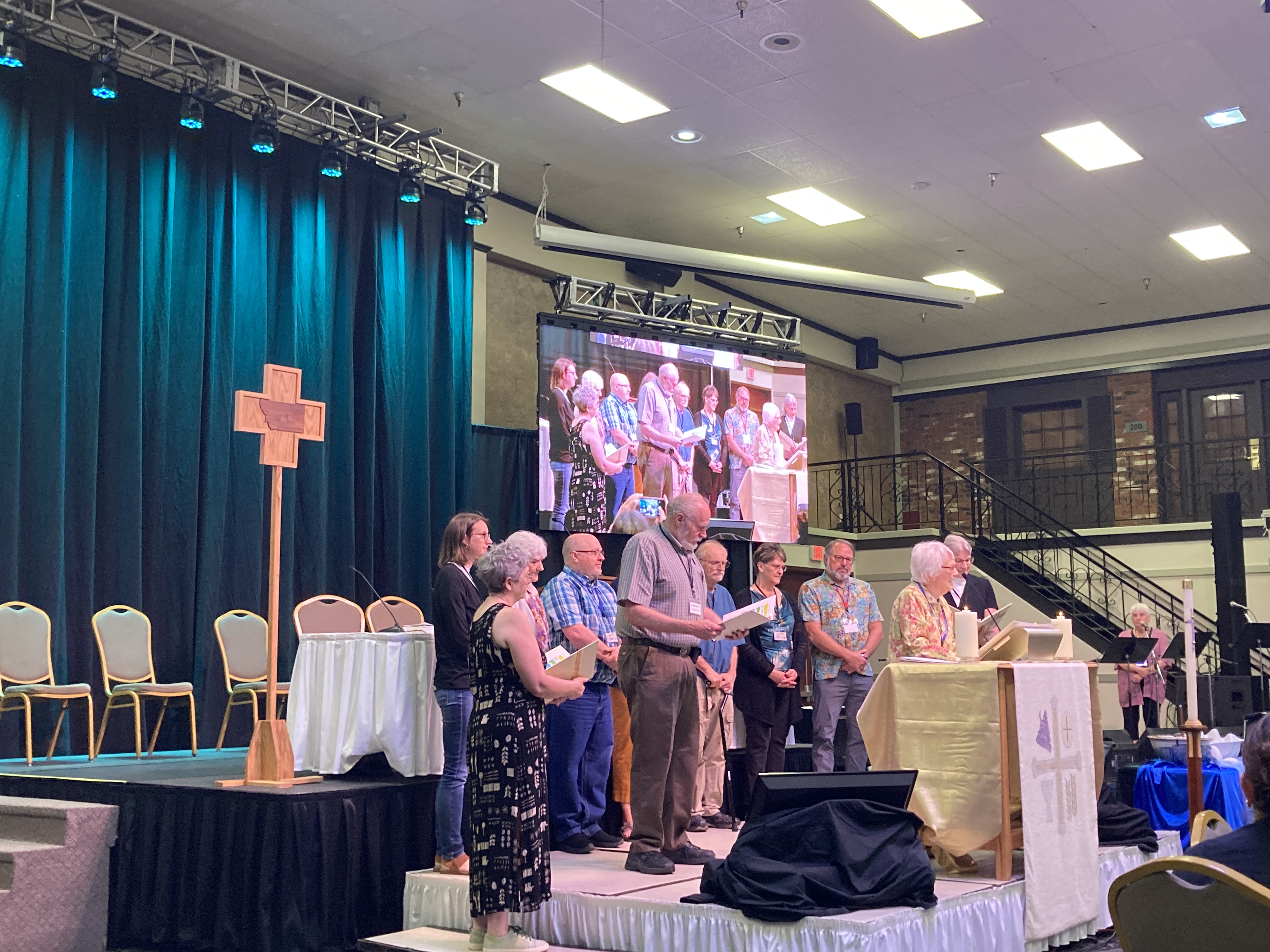
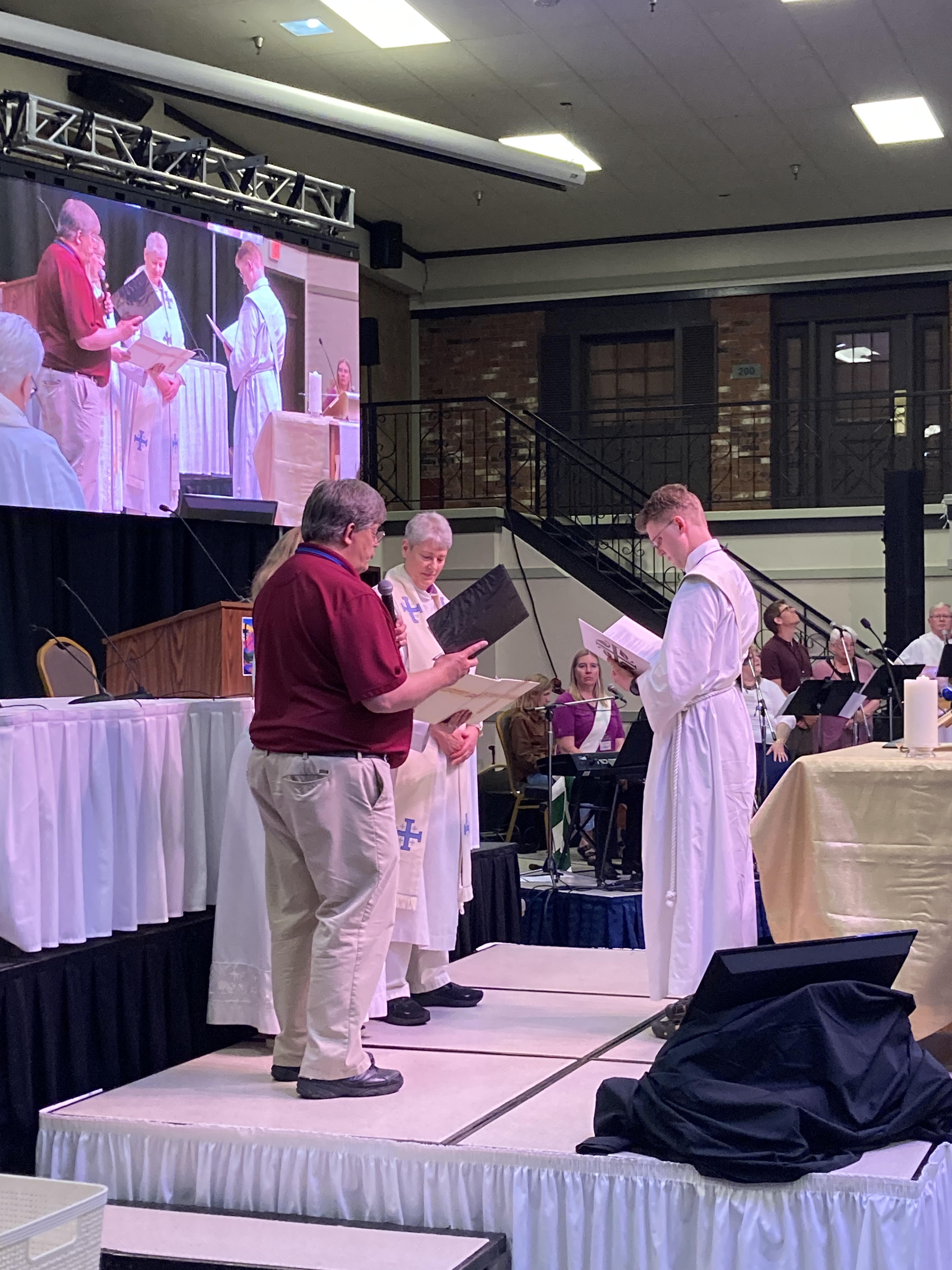
This latest adventure started when I realized that during my first spring as bishop of the Northwest Intermountain Synod, I missed serving a congregation during Holy Week. I have loved being with my mom during the end of Advent and over Christmas, in part because that’s when my dad died in 2020. Last year I visited a variety of congregations as a worshiper during Holy Week and I simply missed shepherding one community through the week. So, after talking with the rest of the synod staff, I decided to email St. John’s Lutheran in American Falls, ID, one of a number of congregations in the pastoral transition season (waiting to call their next pastor) in our synod. I explained that I did not know what their traditions were, but if my coming could be helpful, I’d be happy to be with them Maundy Thursday, Good Friday, Easter. Yes, was the reply, followed by the explanation that a retired teacher had been preparing five youth, all girls, for Confirmation/Affirmation of Baptism and could I confirm them on Easter Sunday? Absolutely, I said. The next time we emailed, the leadership wondered if I could baptize some people on Thursday. Sure, I said. How many? Around 14. What???!!!

2 adults, 1 infant, lots of kids, 9 families

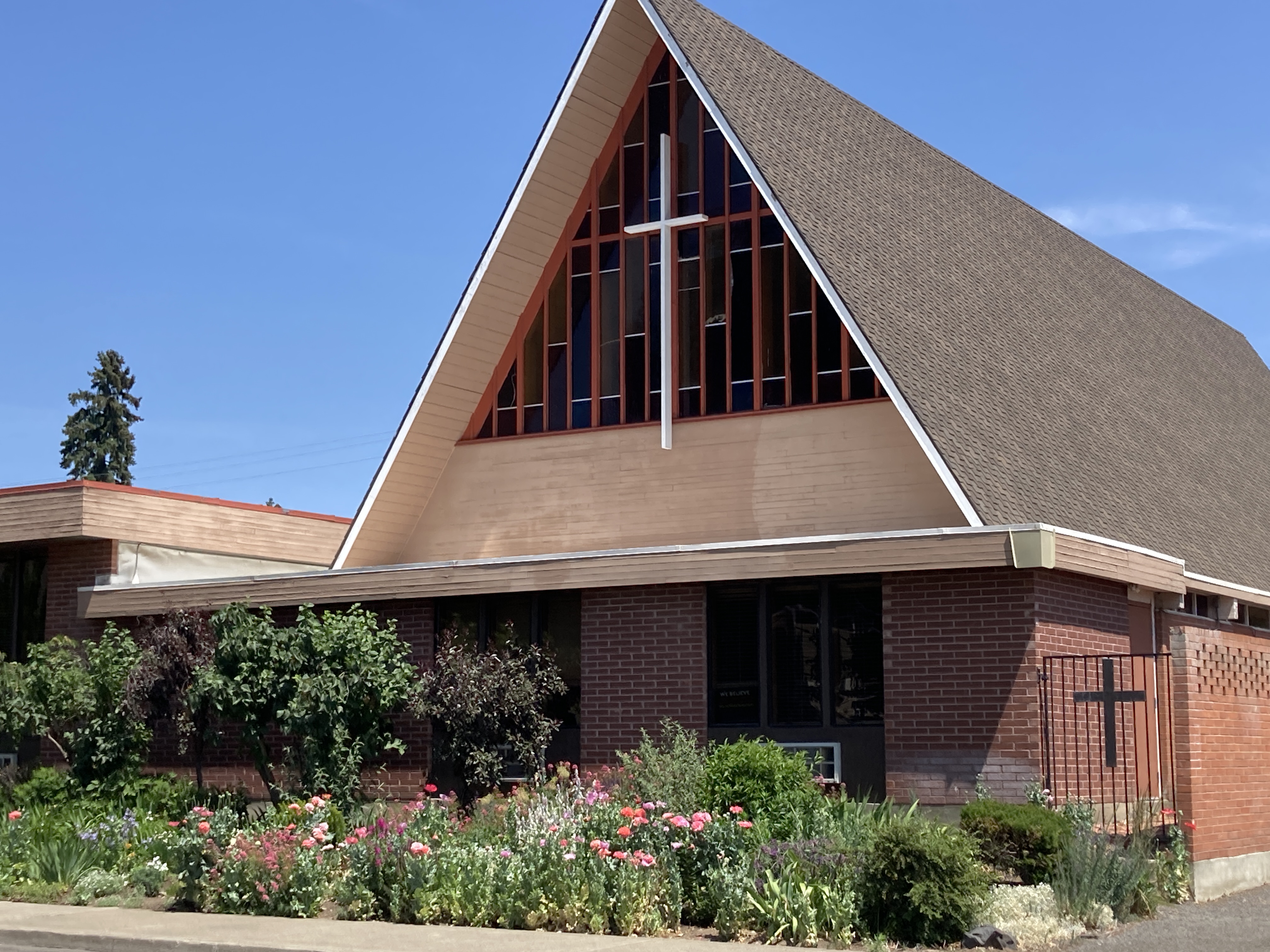
St. John’s, American Falls was served faithfully by Pastor Jon Beake from around 2008 until just about a year ago. The congregation experienced a split in 2010, like many ELCA congregations, and it was painful for so many. Pastor Beake and the leadership kept doing faithful ministry not just within the church but with and for the American Falls community. Beake was the town pastor, in the very best way. When he announced his retirement last January, lots of people who now have kids asked if he could baptize them before he left. He went to Oregon to look for a home for retirement and got really sick and never could make the trip back for a good goodbye. (He’s doing much better now and we had a great phone conversation a few weeks ago). All this is to say that when I said I could preside at the confirmations, the baptisms came up again.

I asked that they please do some preparation with the families. On an earlier trip through the area, I had stopped by the church and looked over the supplies in the pastor’s study (I think that was on my trip to Jackson, WY). I spotted many copies of Dan Erlander’s classic Baptized We Live and mentioned that those were worth saving or sharing. So apparently, all the baptism families got a copy of the book sometime early in Lent. With that many baptisms, the leadership decided to have a 5pm Maundy Thursday worship followed by a special 7pm Baptism Worship. I gave a short message on the gifts and promises of baptism and we sang few baptismal hymns. Several of the girls I confirmed today, I baptized Thursday evening. I explained about simply baptizing them as adults, but the leaders decided, rightly so in my opinion, that they wanted them all to go through the same ritual Sunday morning since they had done the learning together.

25-30 people for the Maundy Thursday Worship (a great organ)
Maybe 140 people for the Baptism Service
Simple but meaningful Good Friday worship

I am so very grateful to Pastor Beake for planting seeds over the years and loving the people. I am grateful to Pat, the retired teacher, who taught the confirmands. I am grateful to Lacy, the mom and lay woman who runs Sunday School on Thursday nights all year long. And I am grateful to current council president Patty, who is leading the congregation faithfully. I am praying for the pastor God is preparing to take the call to St. John’s Lutheran.

Easter Vigil with New Day Lutheran and St. Luke’s Episcopal, Idaho Falls

Meanwhile, it was such a gift to be with the congregation for Maundy Thursday, Good Friday, and Easter morning. I swung up to New Day Lutheran in Idaho Falls for Easter Vigil Saturday evening.

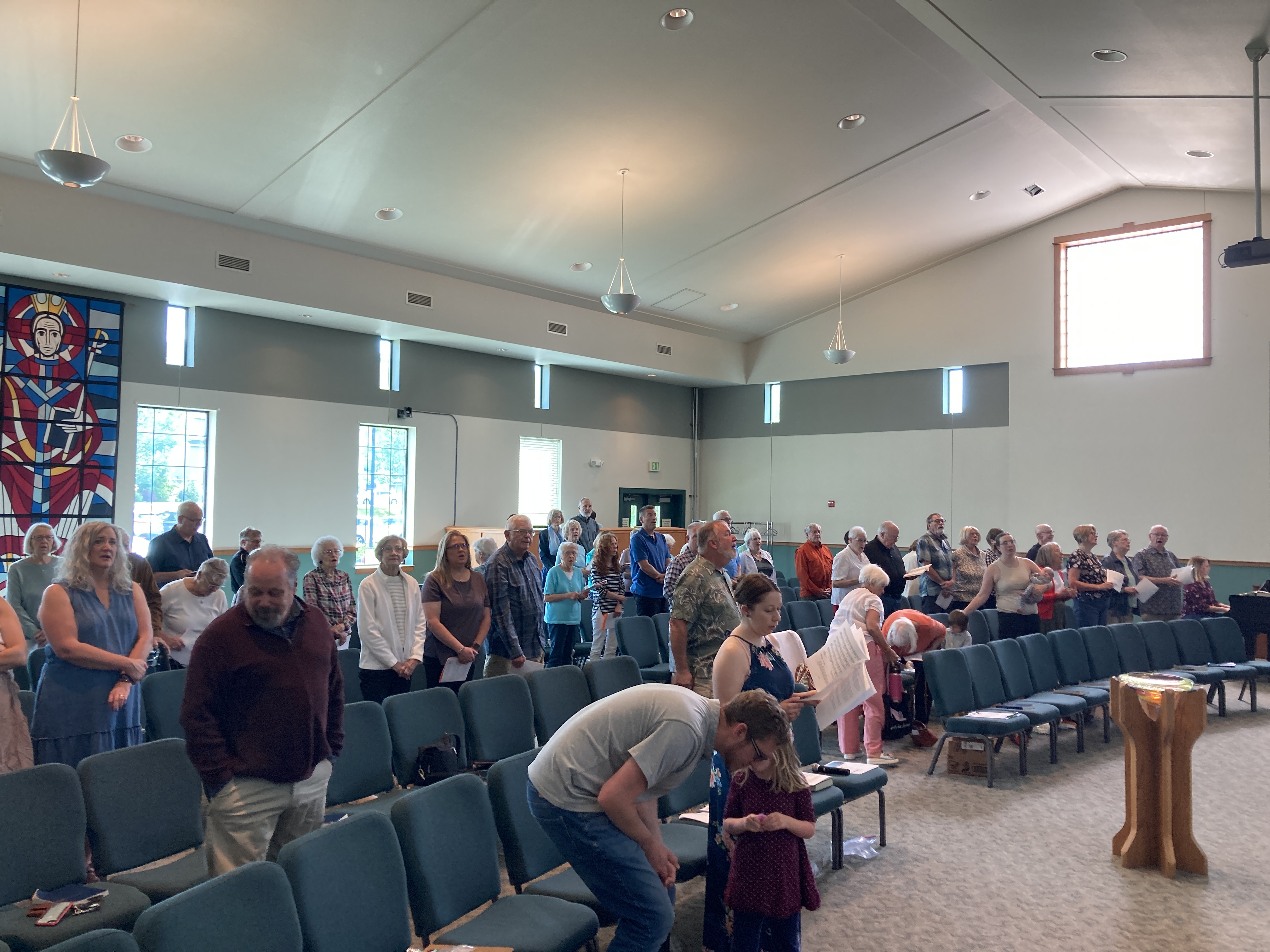
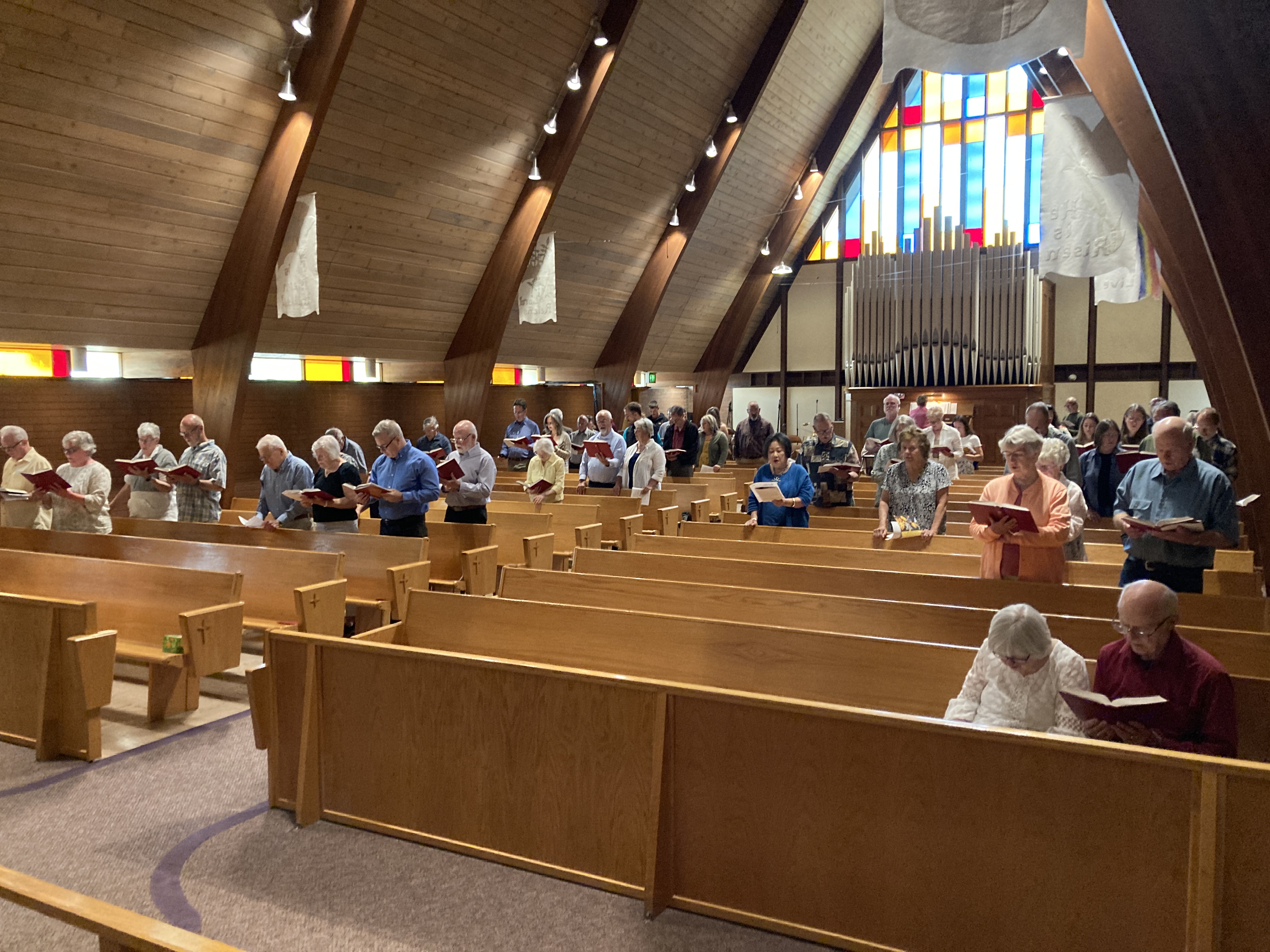
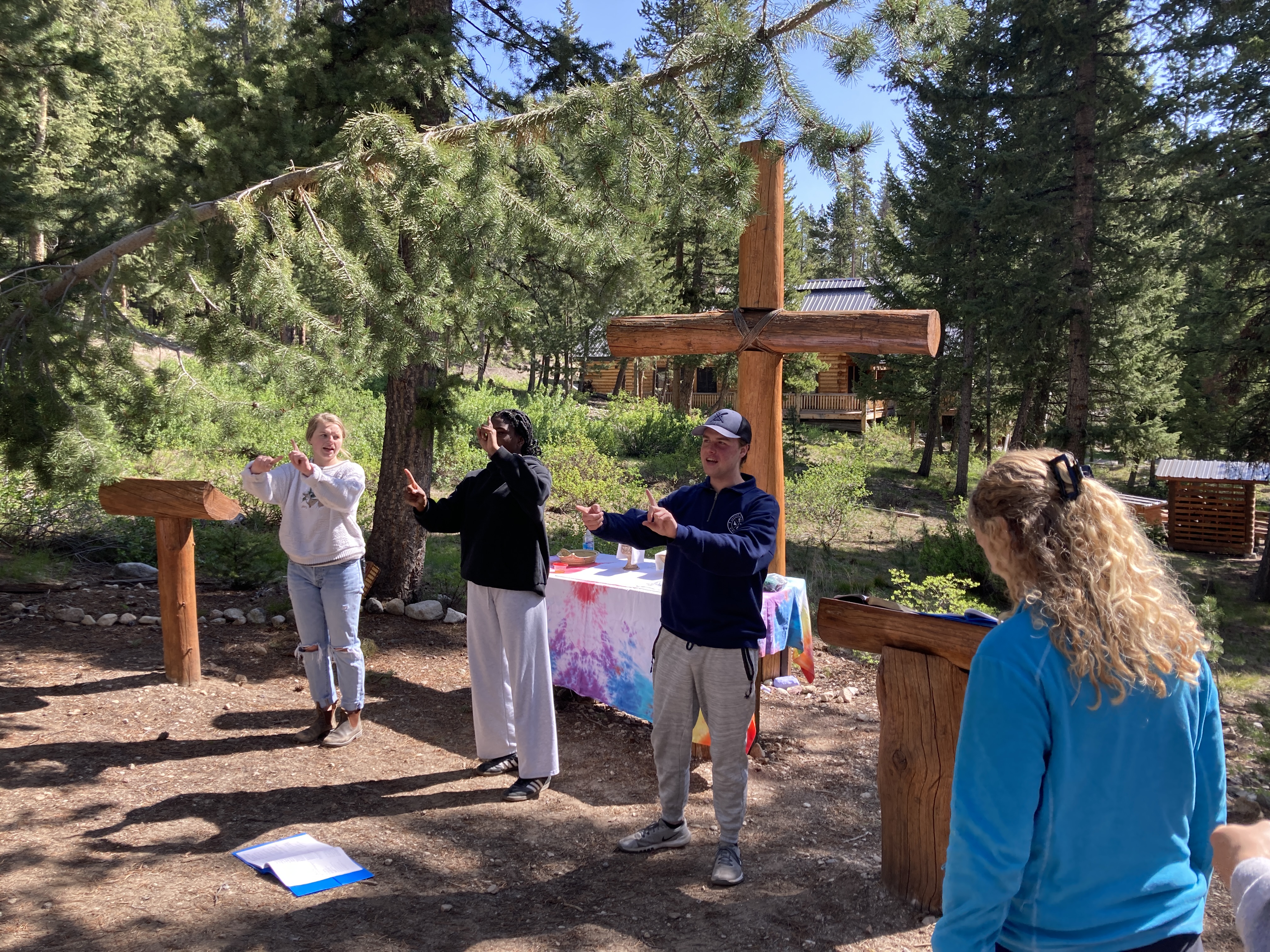
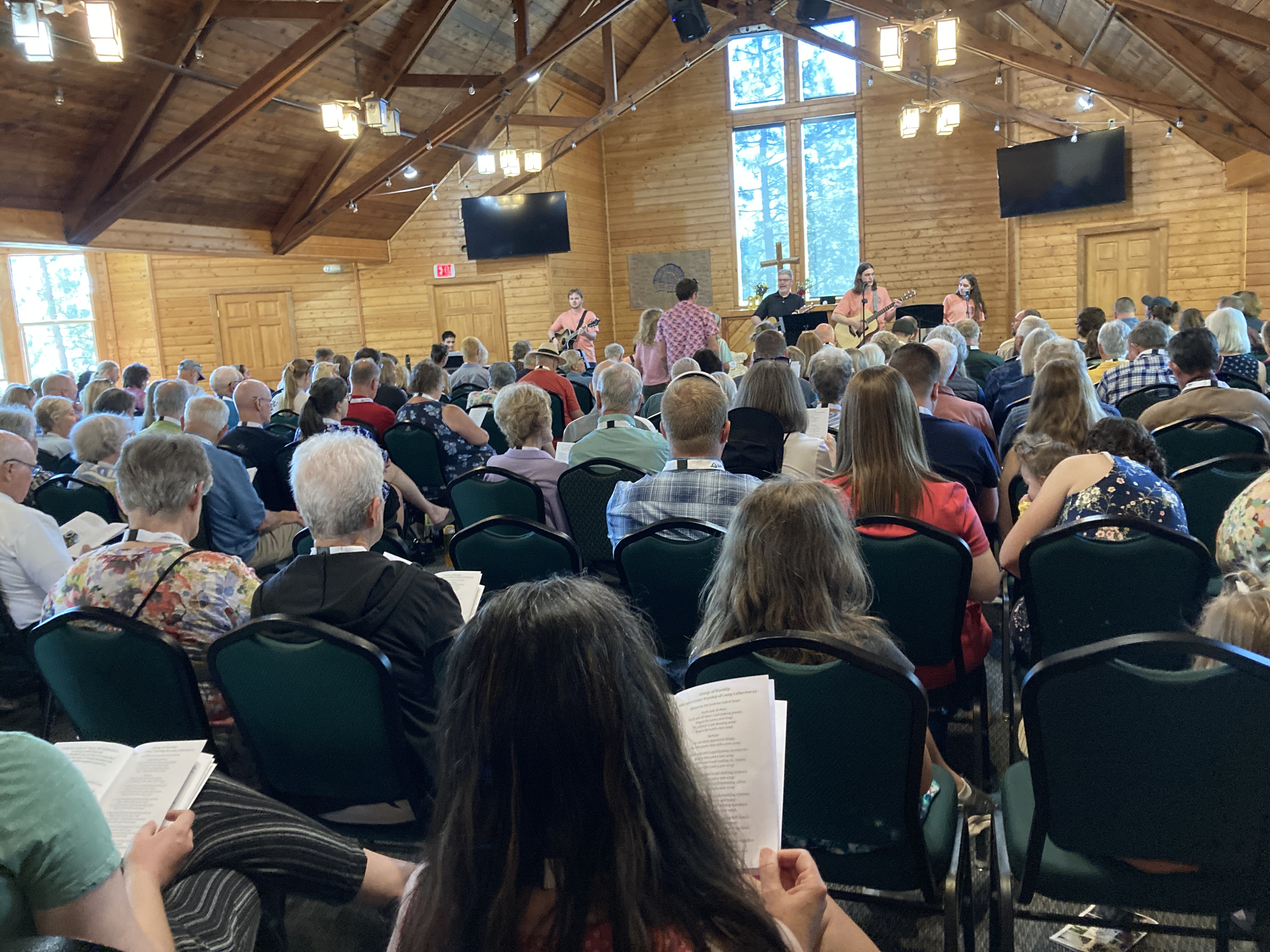
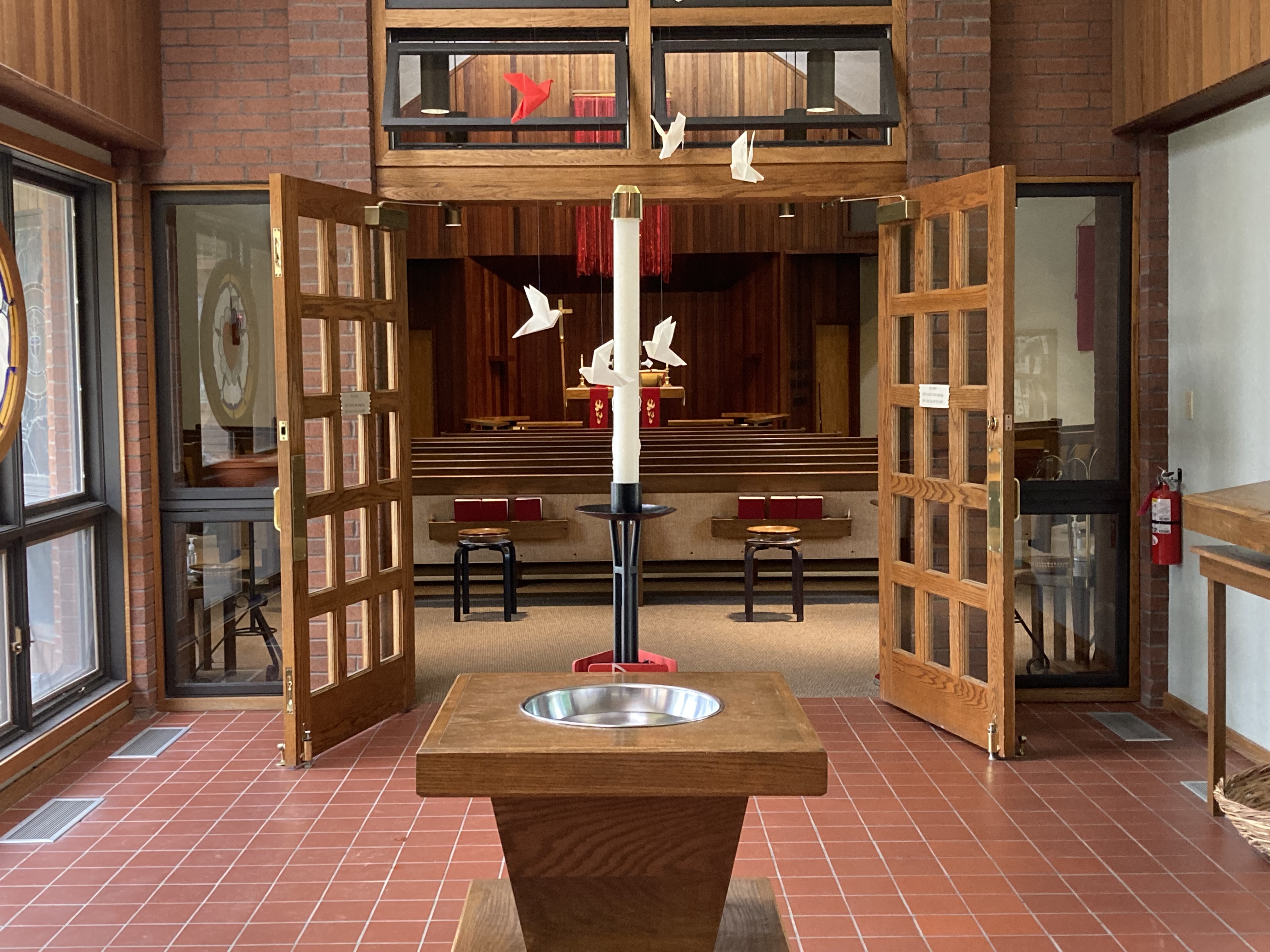
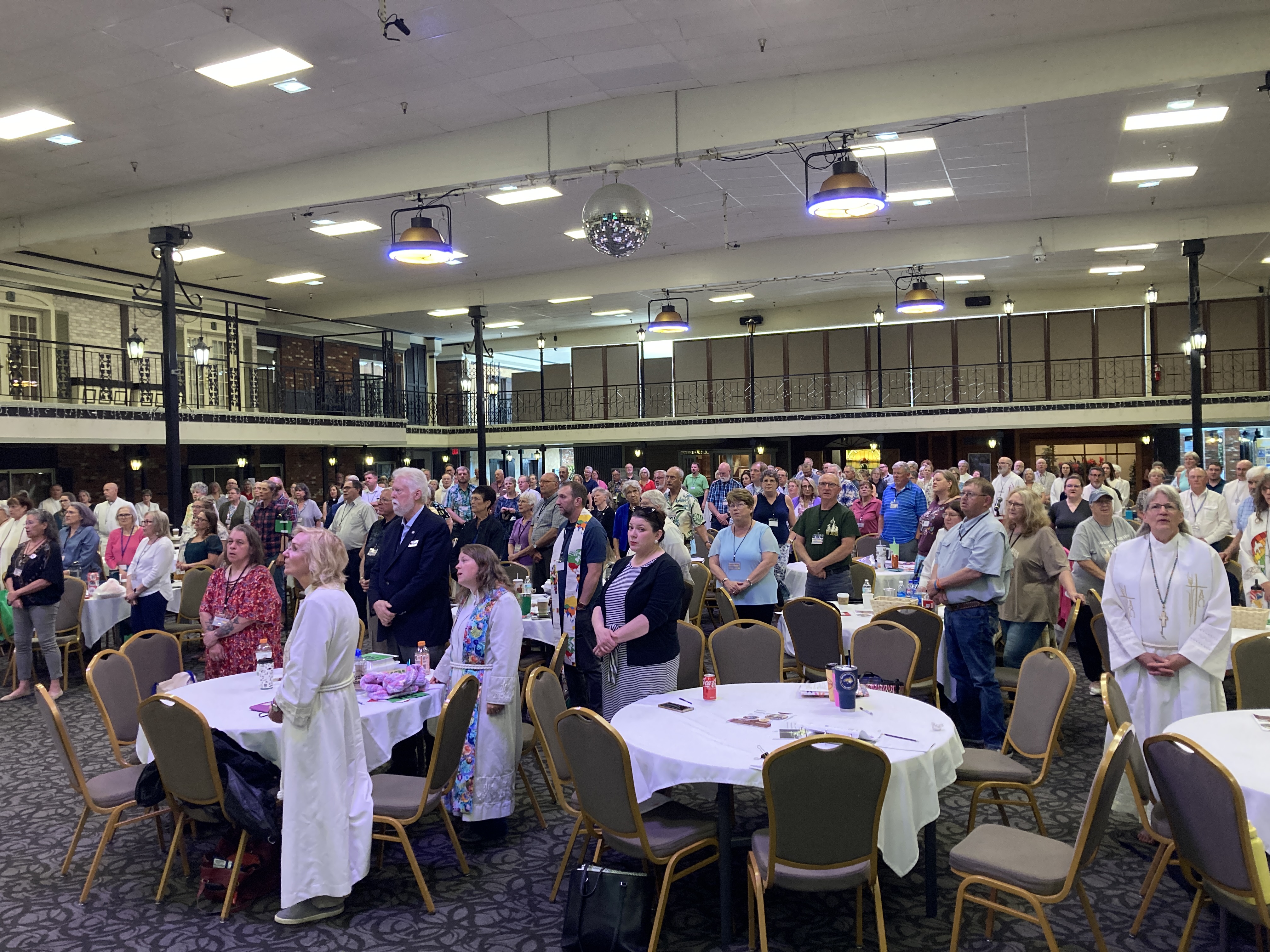
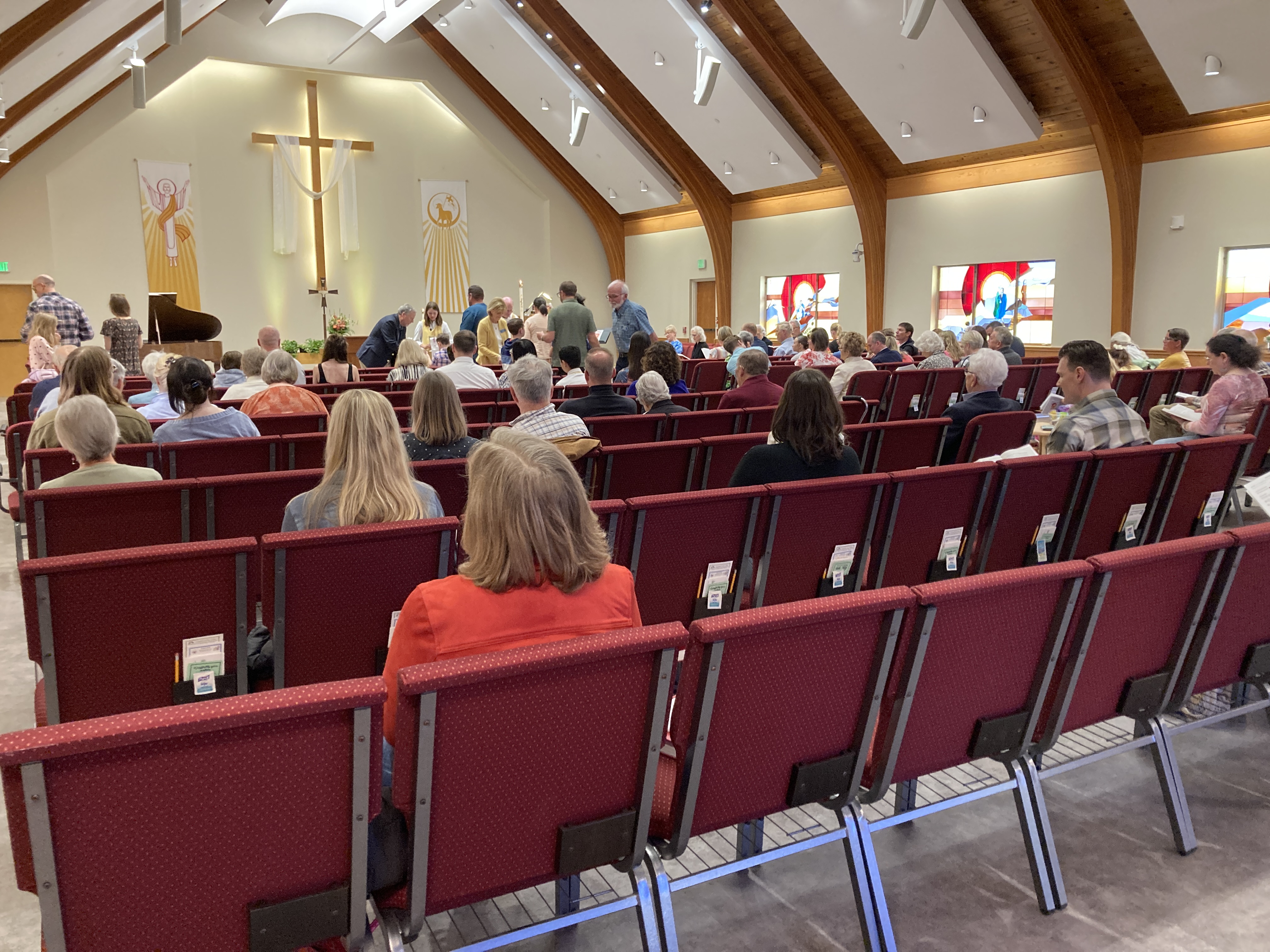
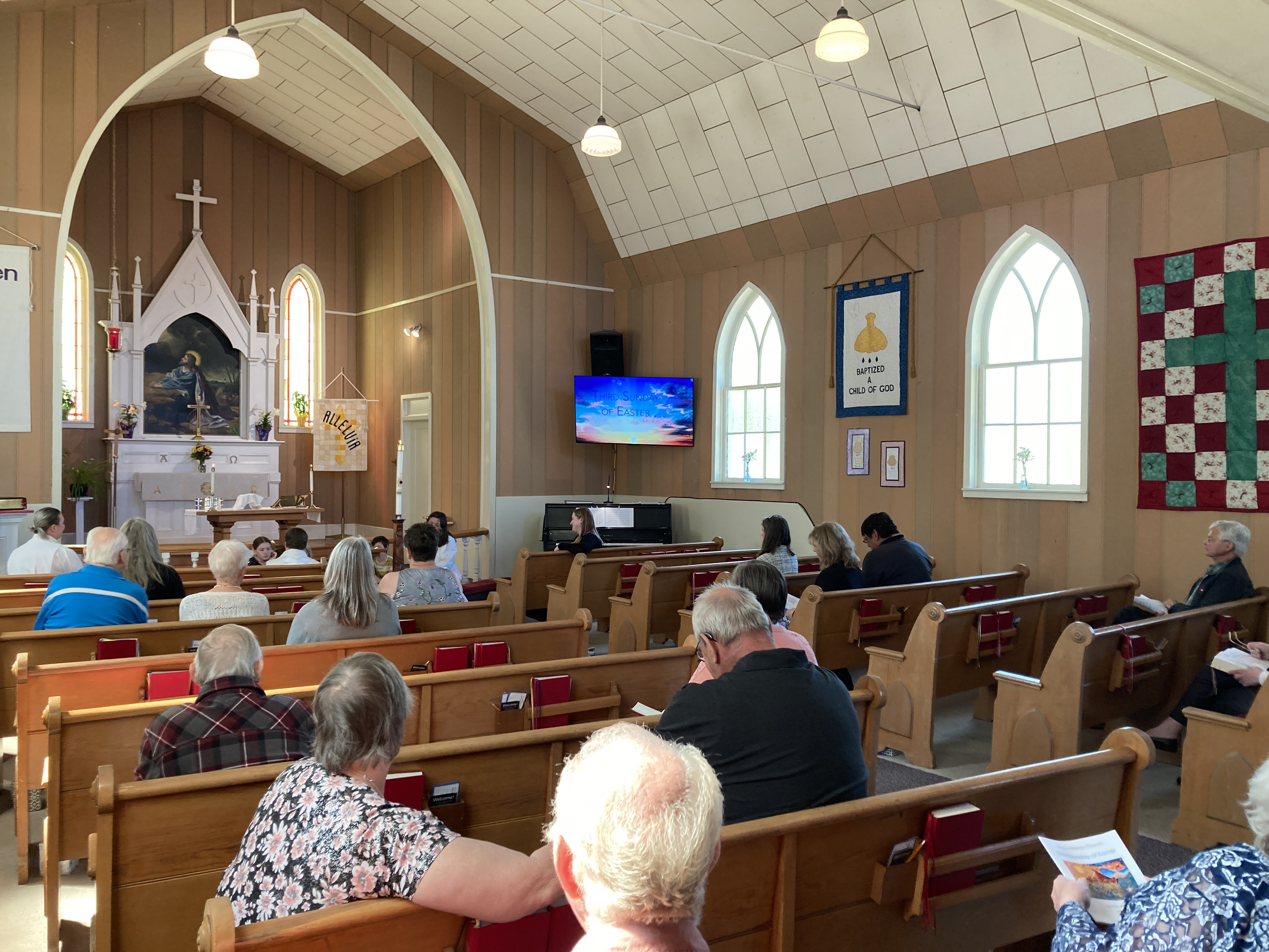
View from the altar Easter Morning

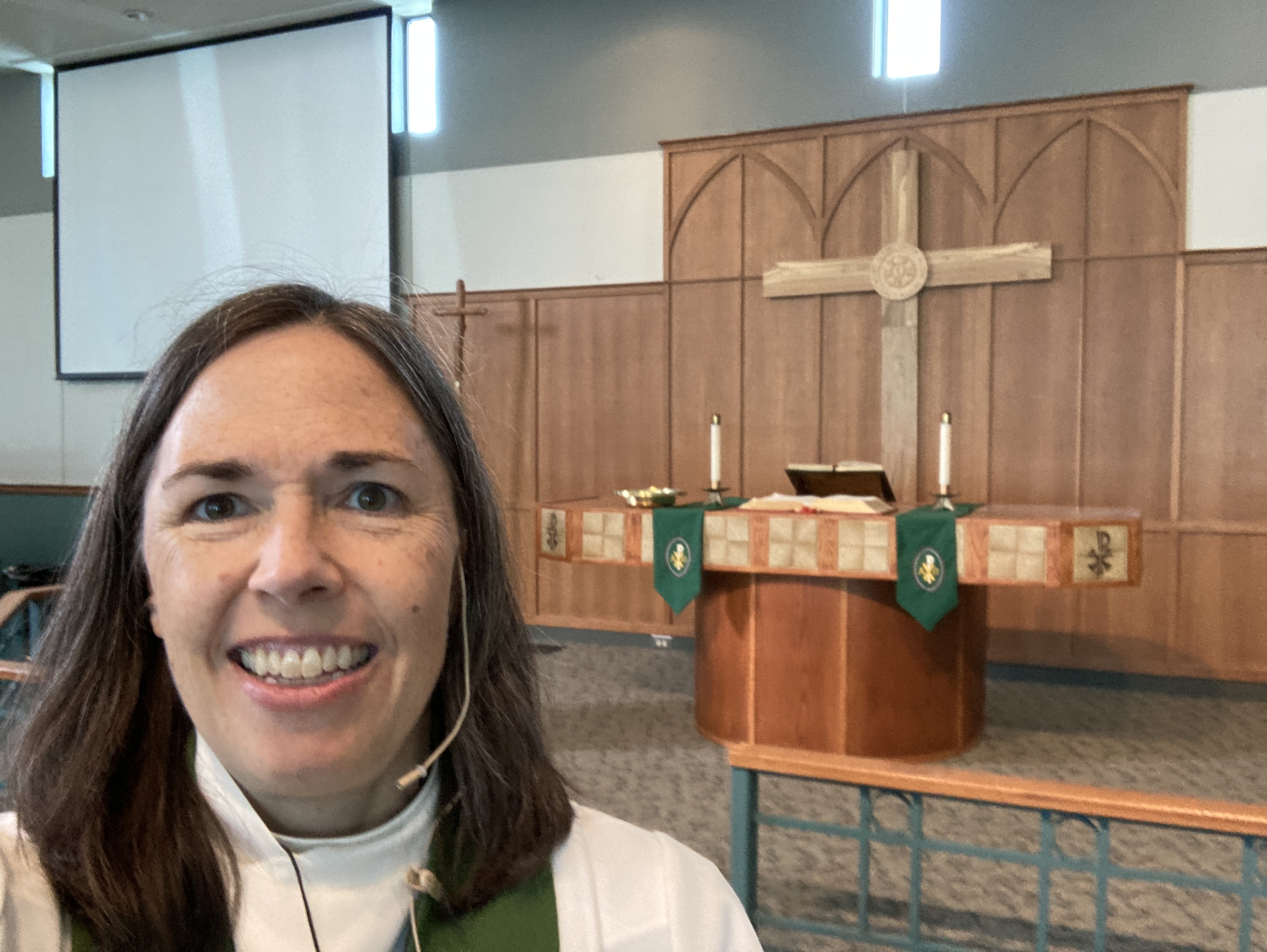
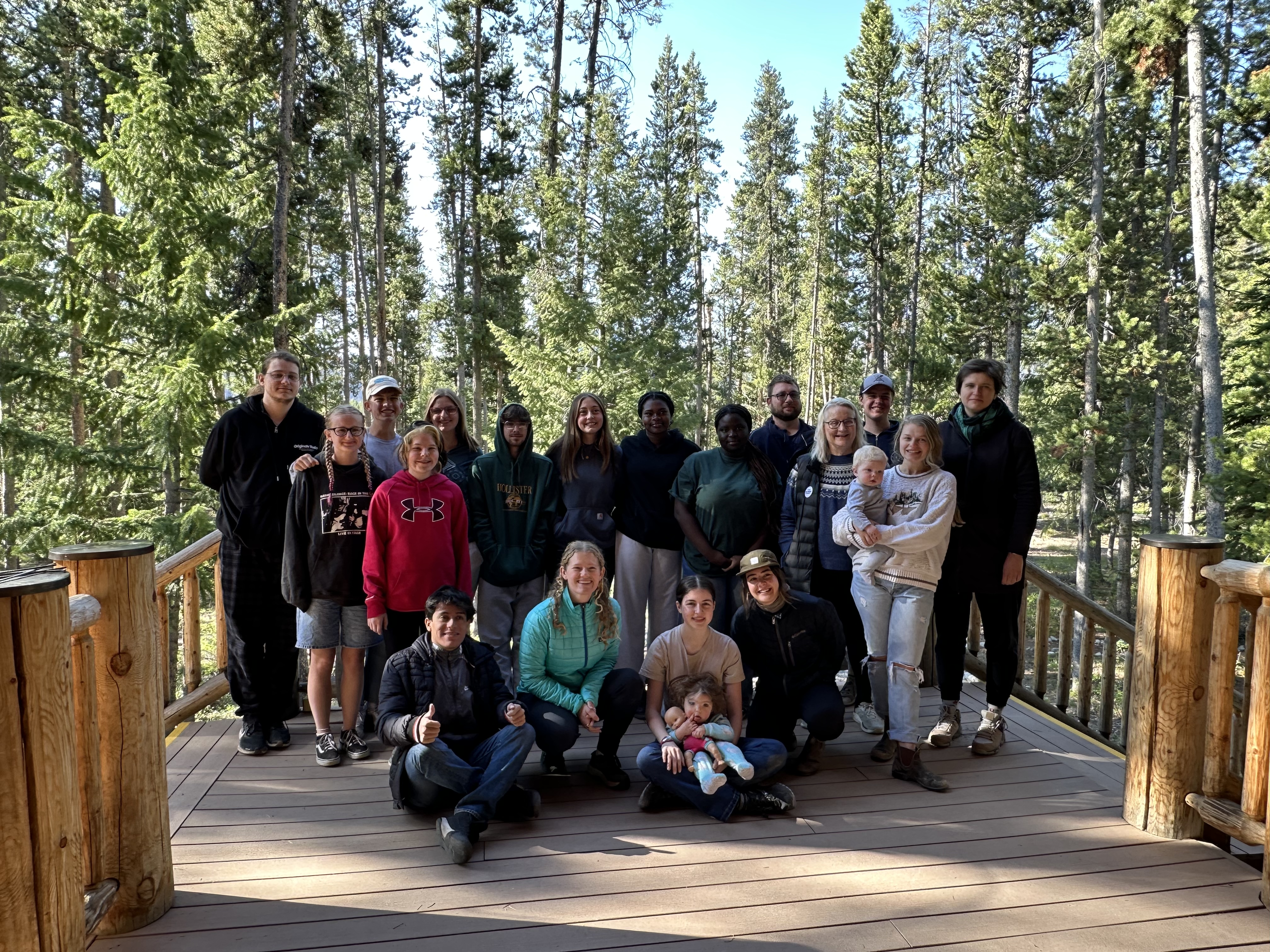
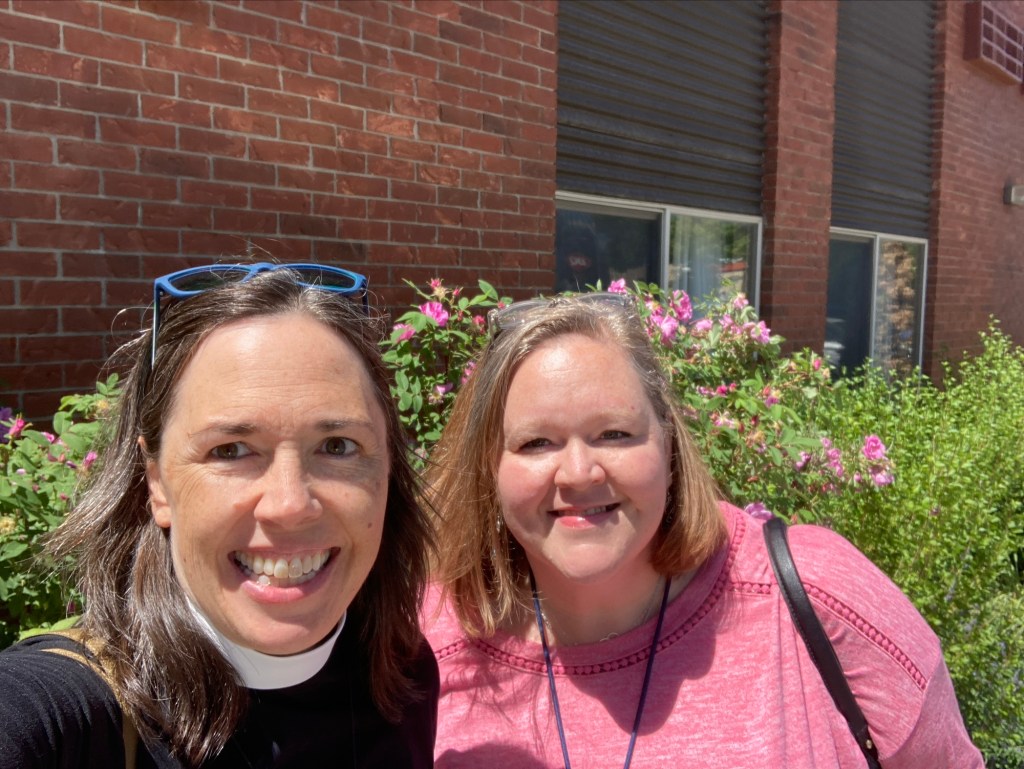
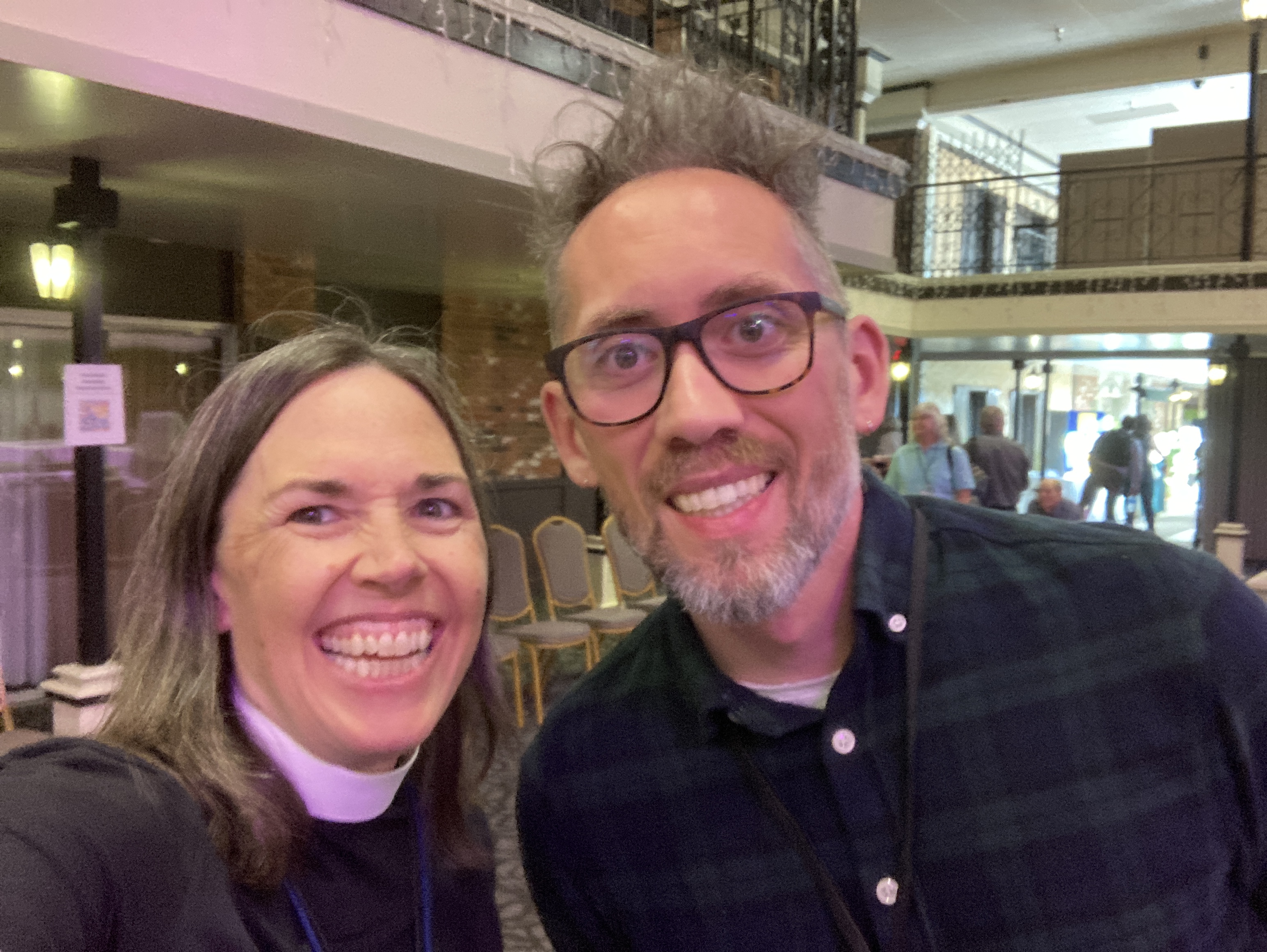
pre-worship photo
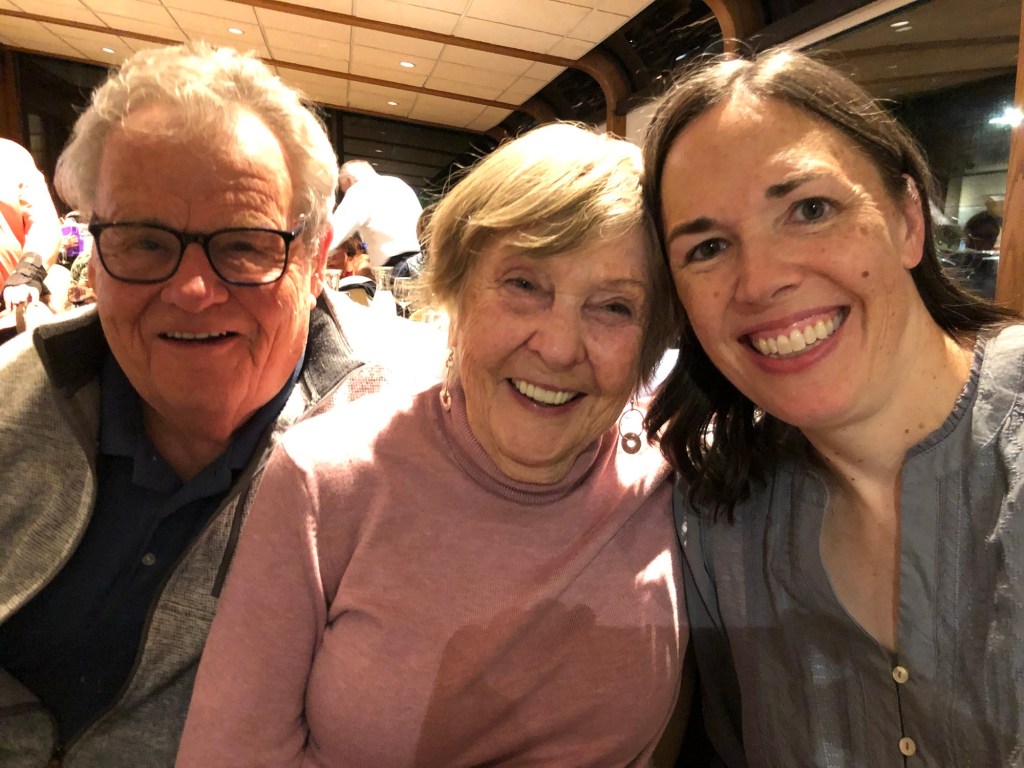
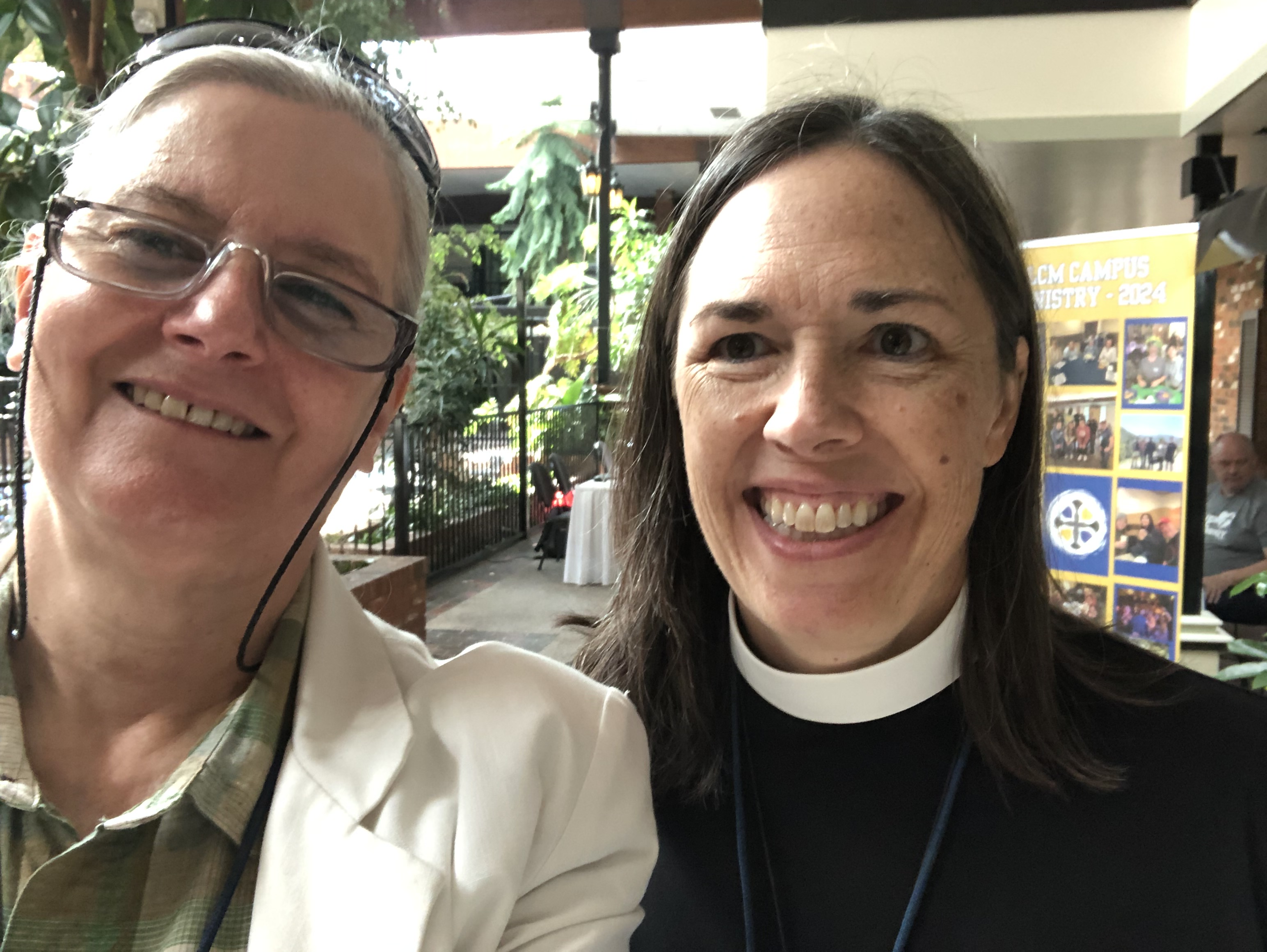
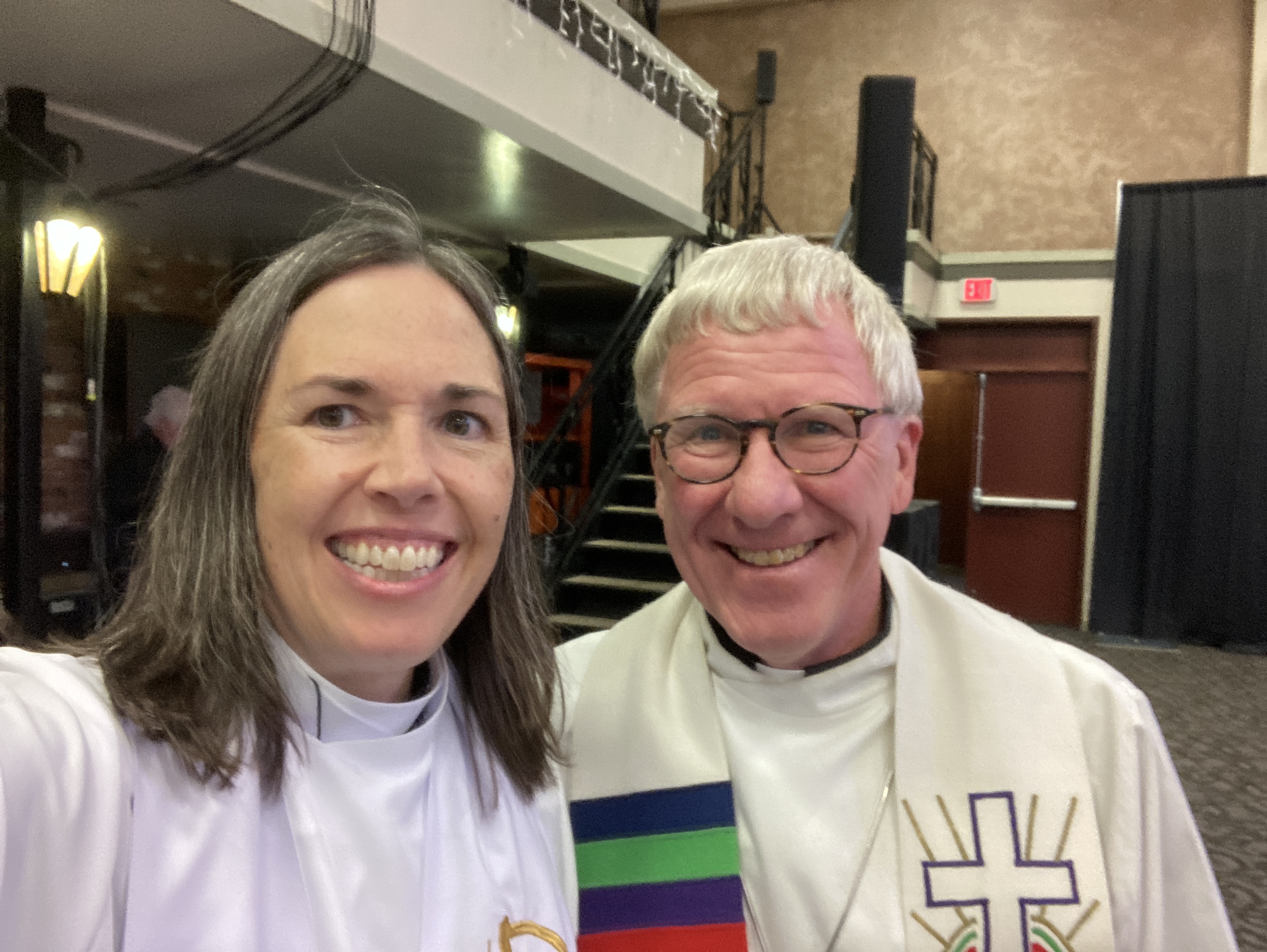
With Lacy and Patty
Posted in NWIM Synod | Tagged , , , , | Leave a comment

Time for Stories

Originally published in the Northwest Intermountain Synod e-newsletter.

Octopuses have had an excellent few years in pop culture. In 2020 there was the inspiring documentary, My Octopus Teacher. Two years later, Shelby Van Pelt’s novel Remarkably Bright Creatures became a best seller (I have not read it yet). My favorite story staring an octopus is a children’s picture book I adored as a kid, Herman the Helper by Robert Kraus. I thought of this book during our Synod Council meeting when our guest Karen Kretschmann, ELCA Coordinator for Storytelling Engagement, invited us to think of a story from our lives or a children’s story. The illustrations and characters came flooding back so clearly with her prompting. As the title implies, a youth green octopus named Herman spends his entire day helping sea creatures. I have been trying hard to figure out why I absolutely loved that book—so much so that eventually I was given my own copy, instead of going back to the library. Like many children’s books about young people or animals, the author simply invited young readers to relate to Herman. The surprising creatures Herman ended up helping also opened my own imagination.

Stories and storytelling can be tools for so many facets of ministry. Stories can help people heal from wounds, even trauma. Stories can help with financial stewardship. Stories can help us teach lessons or learn. Stories can be incorporated into the proclamation of the gospel. Stories can help us build new relationships and strengthen old relationships. Stories can give us hope and help us in imparting hope. Stories invite us to be part of something bigger than themselves. 

Storytelling can be professional, polished, poetic, and witty. On the one hand, telling stories is like other skills, meaning that we can practice and get better. I can absolutely identify several of the more gifted storytellers in my life. On the other hand, every single person has a story to tell and, often with simple questions, that story can be released to the listener. After all, stories go nowhere without a listener. One of my favorite questions that I ask around fellowship hall tables or in a narthex before worship begins is, “how did you end up worshiping with this community?” Sometimes the person I ask moved to a town or neighborhood and found the ELCA congregation. Then I ask a follow up about why they stayed or why they would invite a friend to this congregation. Much more often I get a story about their family’s needs, or a friend who invited them, or a unique ministry they noticed, or separation from another community of faith and landing here. These are holy stories, and I thank you if you have shared yours with me. Do you know how everyone in your congregation ended up there? How could knowing more of those stories deepen relationships with one another and with the God we worship?

We are about to encounter again a story central to our faith and discipleship—the story of Jesus Christ’s death and resurrection. I always find it humbling to ponder how much of this story to explain, how much to let it speak for itself, how much to correct misinterpretations, and what exactly to proclaim. During Holy Week, I was and am grateful that stories are not just in our heads. We embody the stories during Holy Week: processing, washing, feasting, baptizing, singing, reading aloud, praying together, and more. Blessings as you together encounter this amazing story anew this spring.

Peace,

Bishop Meggan

Posted in NWIM Synod, Reflections | Tagged , , , | Leave a comment

Ritzville, Staff Time, Synod Council, Kamiah

Last Wednesday I drove west from Spokane and joined Emanuel, Ritzville and St John, Sprague in Ritzville for Lent soup supper and Evening Prayer. These congregations are served faithfully by Pastors Nathaneil and Tricia Christman. Wednesday we celebrated the birthdays of their daughter and Pr Nathaneil!

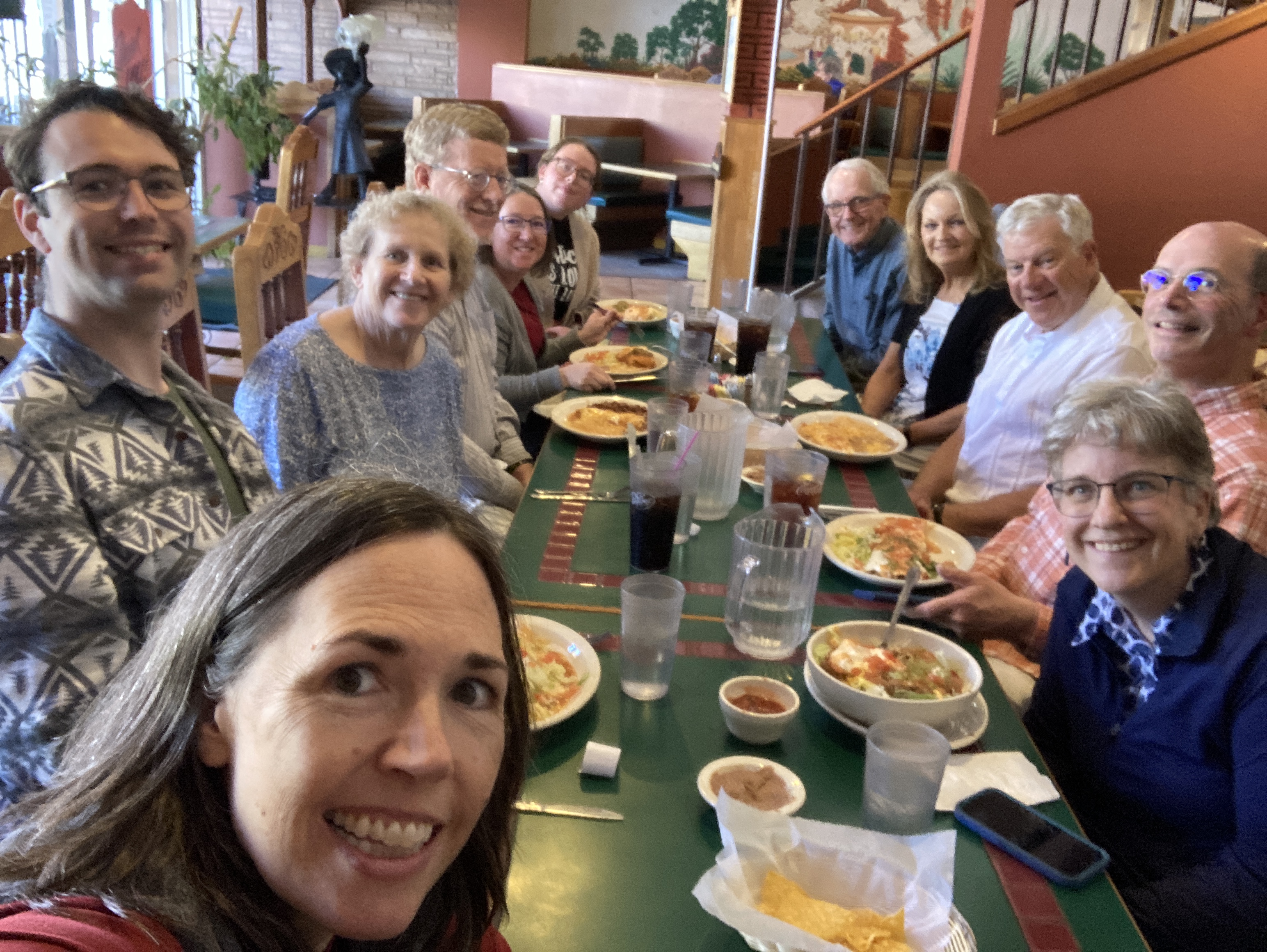
Monday-Thursday were great staff time days with some ecumenical conversations worked in too. We enjoyed a delicious lunch together at this Spokane restaurant.

Our Northwest Intermountain Synod Council met this past weekend at Camp Lutherhaven on Lake Coeur d’Alene. The Executive Committee of the Council began with dinner together Thursday evening in the North Garden Lodge. We met all Friday morning. The entire council joined us Friday after lunch through Saturday morning. A summary of our time together will be produced by Vice President Lisa Therrell. ELCA staffer Karen Johnson Kretschmann, Coordinator for Storytelling Engagement, provided the opening devotion and led us in learning to tell our stories. Director for Evangelical Mission Pastor Liv Larson Andrews led us in some conflict competency training. Assistant to the Bishop Phil Misner showed the Google Maps he’s been working with–a great way to see all the ministries in our synod and our vast geography. Executive Committee approved the SHARE Grant recommendations from our excellent task force. We had some small group conversations about stories and synod work. We worshiped together Friday evening and then heard from Lutherhaven staff about their vital ministries. Then many of us enjoyed campfires or cozy conversations in the North Garden Lodge. We gifted our out-going synod council members with artwork by retired Pastor Ladd Bjornby.

Following our meeting, I headed south through the Palouse and eventually caught the always beautiful Clearwater River. Sunday morning, it was wonderful to be with the saints of Faith Lutheran and Community Presbyterian in Kamiah, Idaho. These two congregations are served so well by PCUSA Pastor Luann Howard. Two Sundays each month they worship in the Presbyterian church building and the other two they worship at the Lutheran church building. (I neglected to ask about 5th Sundays). Yesterday morning we were at Community Presbyterian. Sunday afternoon, some members made their way to St. Gertrude’s Monastery to sing in or listen to the Valley Singers concert. Thank you Pastor Luann for a wonderful sermon and congregations for your warm hospitality this morning and the ways you are caring for neighbors in the Valley.

And just because the drive south was so gorgeous, here are a few more photos:

Posted in NWIM Synod | Tagged , , , , | Leave a comment

Zion, Davenport & Christ, Egypt-March 29

A joy to be with the saints of Zion Lutheran, Davenport and Christ Lutheran, Egypt for Pastor Tyler Gubsch’s installation (worship and lunch at Zion). Thanks to the members of Christ Lutheran who then gave me a tour of their church building. Join either of these congregations for midweek Lent worship (partnering with their UMC neighbors), Sunday worship, and midweek Bible Studies. Both congregations are deeply rooted in their local communities and serving their neighbors.

Zion, Davenport
Christ, Egypt

Luke 15:1-32 and 2 Cor. 5:16-21

“There was a man who had two sons.” It’s possible that with that one line I have lost you all, so familiar is Jesus’ parable. It makes its way into Sunday School curriculum, hospital rooms, funerals, and more. In a few weeks I’ll be with one of our synod’s congregations in Eastern Idaho for Holy Week. They are between pastors and, it’s a long story, but we are having a special service for several families who wish to have people baptized. I said I would choose a scripture passage for the occasion. I ended up going with verses from Galatians, but I almost chose this story—so powerfully is its portrayal of the grace of God—the same grace we receive through the waters of Holy Baptism. I also find it to be a wonderful passage for an installation.

This is the third lost parable in a series. All of them have perhaps been inappropriately named by scribes and people trying to include helpful headings in bibles. And yet, The Parable of the Lost Sheep is not about the lost sheep. All the sheep ever did was get lost.  The parable is about the passion of the shepherd who lost the sheep to find the sheep.  His passion to find is what drives the parable.  

Consequently, it isn’t the younger son’s lostness, wasting all his money on wine, women and song in the far country; and it isn’t the elder brother’s grousing and complaining and score keeping that stands against him. What counts in the parable is the father’s unceasing desire to find the sons he lost—both of them—and to raise both of them up from the dead.

If you were hearing this story for the first time, the actions of the father are most unexpected. He had been shamed by the younger son’s actions. Normally he would have disowned the son.  Instead, we hear that the father was waiting for his son’s return. We get the sense that the father had in fact kept vigil, praying for the day his boy would return. Like a shepherd searching for a lost sheep or a woman rummaging for his misplaced coin, the father remained hopeful that the seeds he had once sown in love might yet be harvested in the return of his child.

As soon as he saw his son, he ran out to meet him. He had been publicly shamed by this child. Yet he kissed him, gave him a robe and ring, and threw a party. This was completely out of character. The feast the father arranged was necessary to repair the damage caused by the son to his neighbors. They would have regarded his behavior as undermining traditional values and setting a terrible example. The banquet served to ease the younger son back into the good graces of the neighbors.

The economy of such love and grace surprises and offends us. It is so extravagant.  The ways of the world suggest that yes, the son might be welcomed home. It would have been reasonable—a ration of bread and water in answer to his great sin. But in the economy of God, rejoicing for the return of a child is simply not enough.  Joy must be made all the more complete by abundance: the best robe, the finest ring, the fatted calf.

While the banquet was going on, the elder son reappeared in the story. He was consumed by jealousy and resentment. But the father reaches out to him, just as he reached out to the younger son. The older son was in danger of becoming just as lost as his brother. So, the father abandoned his guests, a breach of etiquette. He reaches out to persuade the older son to rejoice at his brother’s return.  

As Jesus tells it, the father does not get all censorious with the elder brother. And he does not defend the younger brother. Instead, he shifts his way away from both brothers. The father turns attention to his own love and bounty. There is plenty to go around, he says. No one will run short. “All that is mine is yours.”  

This is not your younger brother’s party so much as it is my party, the party I throw for many.  I am on the lookout for my loved ones. The reconciliation between the father and younger son did not occur because of what the son did. The reconciliation happened because of what the father did.  

The older son is having none of this. For now, at least, he is full of resentment and self-righteousness. He flat out rejects his Father’s love. This son is lost too. In a few chapters, Jesus will have his conversation with the rich young many who wants to inherit eternal life. We never hear what happens to that young man. Some of us hold out hope that in the end, he sold his possessions and followed Jesus. 

Likewise, Jesus does not tie up this parable. He leaves room for the older brother to change his mind. Jesus always leaves room to change our mind, to change our words, to change our hearts, to ultimately change our actions. It can be at once infuriating and the one thing that gives true hope and life. We really don’t know the end of the story. Maybe someday the older brother will join the Father’s party too.

Behind the parable is the truth about God and God’s reign. We are all lost. We are all mired in sins of sensuality and greed and self-referential resentment. We are all hip-deep in pig slop of envy. Before we knew it, God reached out in the people of Israel and then in the life and death and resurrection of Jesus. God raised us up and called us home.  

I said I thought this was a great story for an installation day. That’s because the message of God’s grace here is at the heart of your mutual ministry as pastor and congregation. It is so good to be here today celebrating this installation after all you have been through. First, with everyone else, you experienced a global pandemic. You walked with Pastor Stacey so faithfully through his cancer diagnosis and death. You continue to live into shared ministry. Outside the walls of the church building the world continues to change at an accelerated rate. Then you welcomed Pastor Ty. And, through it all, you continued to faithfully gather around Word and Sacrament. 

The Word proclaimed, the life-giving gospel message of God’s love and mercy, and the Sacraments through which we receive God’s grace in water, wine, and bread remain central to ministry. And in Word and Sacrament you are showered with the grace portrayed in the parable of the two songs and their gracious father.

I also am partial to 2 Corinthians 5:17-18: “So if anyone is in Christ, there is a new creation: everything old has passed away; look, new things have come into being. All this is from God, who reconciled us to himself through Christ and has given us the ministry of reconciliation.”

No matter what you do, no matter how far away you feel from God’s love, God and god’s life-giving love and mercy and abundant life are for you. Over and over God’s stretching; searching, healing love finds someone and call that person back home.  But that does not mean there is less for the rest of us. It means there is more.  More wine.  More feasting. More music. It means another, and now bigger, party. Further, when you have been reconciled to God, you simply cannot help but offer reconciliation to another human being. And oh, how desperately the world needs this ministry of reconciliation right now, how much we need to hear that in Christ there is a new creation.

This morning, I give thanks to God for your two congregations continuing to be communities where people can partake of this feast and receive God’s mercy and forgiveness and then be sent forth for ministry of reconciliation in the world. And we all give thanks for the pastor who has been and will continue to shepherd you in this ministry. Just to pile on all the metaphors of the day, as a synod staff and council, we are now fond of calling all of our ministry sites Wellsprings of God’s love—that is truly what you are

In Holy Communion you eat and drink to this Jesus who reveals the heart of God to us. You eat and drink to his ministry. you eat the body of Christ that we might inexplicably become the Body of Christ. You are what you eat. We eat and drink this feast that rich and poor, black and white, male and female, prisoner and free, conservative and liberal, younger and older, might all be welcomed into that incredible party God is throwing without end.

Posted in NWIM Synod, Sermons | Tagged , , , , | Leave a comment

Through the Palouse to Spokane

After preaching at First Lutheran, Kennewick last Sunday, I drove to Trinity Lutheran, Endicott for the 75th anniversary of their historic church building.

From the church’s FB page: We were blessed to have these people back home with us to celebrate the 75th Anniversary of the Dedication. From left: Deacon Kathy Hannas Sebree, Pastor John Hergert, Pastor Phil Misner, Bishop Meggan Manlove, Rev. Dr. Ian McMichael, Pastor Phylis Stromme and Pastor Stan Jacobson. Pastor Stan and Pastor Phil both served here as our pastors and Pastor Phylis was an interim with us for several years. Deacon Kathy and Pastor John are both comfirmands from here and serve in ministry. Pastor Ian currently serves as our pastor. We celebrated the anniversary of the building, but also celebrate those who have had integral roles in our life here at Trinity. We are grateful for them.

Monday-Wednesday was the retreat for cluster deans at Immaculate Heart Retreat Center on the edge of Spokane. We heard about every congregation in the synod as deans gave updates and we also discussed what is and will be needed by our roster and lay leaders in the next few years. We also prayed, explored Spokane, sang, walked the Stations of the Cross, prayed and talked more.

Wednesday evening I dropped into St. Mark’s in Spokane for midweek Lent Soup Supper and Evening Prayer. I was able to catch up with a LCSNW board member, hunger ministry leaders, a synod council member, St. Mark’s pastors and others.

Thursday was a good day with staff in the office and I was able to connect with Episcopal Diocese of Spokane Bishop Gretchen Rehberg. Friday and Saturday was Candidacy Committee days–grateful for all those who serve on this committee, even though I forgot to take a photo.

Posted in NWIM Synod, Reflections | Leave a comment

First, Kennewick – March 23, 2025

State of the Synod during Announcements

Luke 13:1-9

I have always been a big fan of the show Law and Order. I loved this show in my late teens and would watch reruns for hours while home on college breaks. I still think the first four seasons are the best. Much has been written and discussed about the show’s appeal. I am confident that one factor is the dependable formula–solving the crime, making the case, and the District Attorney, representing the people, us, always wins. At the close of every episode someone is blamed and held accountable. Humans are prone to place blame. We certainly want to place blame when a tragedy is cause by other humans. We find comfort finding a cause or placing blame when there is a natural disaster. I actually don’t fault my teenage self for wanting to escape into the world of Law and Order, so long as I remembered that it is not reality.

Jesus brings an alternative perspective, outlook, and way of living. Instead of focusing on other people’s misbehaving, make sure you are producing good fruit. Instead of assigning causality to others misfortune, ensure that you are not ignoring your own missing fruit. Tragedies, unexplainable and mysterious though they maybe, call survivors to greater obedience. 

There is more. Jesus’ words suggest that tending to one’s own life and changing one’s own mind is the best strategy to prevent or even persevere through unexpected calamity. The call to repent, to change our perspective and actions, turns out to be life-giving.

The event that sparks Jesus’ response is Governor Pilate’s execution of Galileans during some ritual practice. In telling Jesus of the horrible thing that has happened to these Galileans, the people are raising the commonly held belief among Jews that Galileans were less faithful than other Jews. Maybe this is why Jesus responds: Do you think that these particular Galileans were worse sinners than other Galileans? Then he sharpens the question by bringing it closer to home: Those eighteen upon whom the tower of Siloam fell and killed them, do you think that they were worse offenders than all the others who dwelt in Jerusalem?

Jesus carries the matter one step further, and shows that we are posing the question in the wrong way. The surprising thing is not that so many die but that we still live. If it were a matter of sin, we would all be dead. Twice Jesus says: “Unless you repent, you will all likewise perish.” 

Jesus seems to honor his audience’s fear and the vulnerability that their fright has opened up in them. It is not a bad thing for them to feel the full fragility of their lives. It is not a bad thing for them to count their breaths in their fear–not if it makes them repent.

Don’t worry about Pilate and all the other things that can come crashing down on your heads. Jesus seems to tell his listeners that terrible things happen and you are not always to blame. But don’t let that stop you from doing what you are doing. That torn place your fear has opened up inside of you is a holy place. Look around while you are there. Pay attention to what you feel. It may hurt you to stay there and it may hurt you to see, but it is not the kind of hurt that leads to death. It is the kind that leads to life. To drive the point home, he tells a parable.

The parable of the fig tree has often been read allegorically, assuming that the landowner is God, and the gardener is Jesus. But nowhere else in this gospel do we find a picture of an angry, vindictive God that needs to be placated by a friendly Jesus. Think instead of the prodigal son being welcomed home by the gracious father. 

I liked how one scholar [Gonzalez] put the parable in the context of a vineyard. Remember what a vineyard looks like at the last possible time when one would normally come looking for figs on a fig tree. The vineyard would have already yielded its grapes and would have been severely pruned. It would all have been cut down, and one would see nothing by dry and gnarled stumps. In the midst of this scene of apparent desolation stands a verdant fig tree. It has never been pruned. Now it will receive even better treatment. The vinedresser will dig around it and give it an exceptional dose of fertilizer. 

To a casual observer, the tree would appear to be specially blessed, and the vines cursed and forgotten. One would think that the fig tree must be particularly valuable if it is treated with such care. This is what one would expect on the premises of the so-called gospel of prosperity: good things are a reward for faith and fruitfulness. But the truth is exactly the opposite. The fig tree is receiving special care because it has yet to give the fruit it was meant to bear. That’s because God keeps nurturing, forgiving, and loving.

I actually like to think about this parable more communally and less individually. That is, what does this parable say to the entire Northwest Intermountain Synod, all 85 congregations plus specialized ministries? Or what does it say to the congregation of First Lutheran in Kennewick, WA in March 2025? I’ll say more about this after worship, but your synod staff has started to use the phrase Wellsprings of God’s Love to describe our ministry sites, congregations like yours. That’s because so often when we are out in congregations on a Sunday or midweek and then report back at our staff meeting, we are bubbling over with stories of God’s love. We have so many fruit bearing stories. That was true last week when I visited Christ Lutheran, down the road in Yakima and it’s true today. 

Justo Gonzalez writes, “We tend to think that the fact that a church as many resources at its command is a sign that it has been faithful. But this parable raises the possibility it may be otherwise. Could it be that our own abundance  has been given to us in an effort to lead us to bear fruit, to share those resources, to share of ourselves, and that the reason we survive is not … [our greatness], but this miraculous grace of the Owner of the vineyard who has decided to give us one more chance?”

You all have said yes to that one more chance and fruit is obvious here through the welcome to stranger, the sense of belonging, your obvious partnership with local organizations like Lutheran Community Services and Sent to Serve. You share your building with 12 steps programs. Fruit bearing extends beyond Sunday morning and beyond your walls and, most importantly, your fruit bearing is aligned with the very gospel of Jesus Christ.

I actually think one of the most interesting or challenging parts of interpreting today’s passage is that Christianity is not of one mind when it comes to repenting and changing our perspective or fruit bearing. It is not the purity culture, it is not the prosperity gospel, it is not some form of Christian Nationalism. We do well to remember Jesus’ inaugural address when he quoted the prophet Isaiah, “The spirit of the Lord God is upon me, because the Lord has anointed me; he has sent me to bring good news to the oppressed, to bind up the broken-hearted, to proclaim liberty to the captives, and release to the prisoners;2 to proclaim the year of the Lord’s favor.” If there is any question about what perspective repentance ought to lead us to, there it is in Jesus’ first public address.

The Season of Lent gives us tools for repentance as well. We adopt the disciplines of Lent, all for the sake of our relationship with God and our neighbors. We remember that in the waters of Baptism we are reborn children of God and inheritors of abundant life. We are made members of the body of Christ. We live with Christ and with his people. We grow in faith, love, and obedience to the will of God. In Baptism we renounce the forces of evil, the devil, and all his empty promises. We are sealed with the Holy Spirit and marked with the cross of Christ forever. Part of repentance is remembering whose we are. 

Thank you for remembering, First Lutheran, for being fruit bearers. Know that the God who claimed you in the waters of baptism and brought you together as a congregation for this chapter of ministry, will never give up on you, will keep pruning and nurturing you, will keep offering you chances to bear fruit. Thanks be to God.

So grateful for a morning with the saints of First Lutheran in Kennewick, served by Pastor JJ Dygert. This congregation is bearing fruit through their generous welcome, their partnerships with Lutheran Community Services NW, Sent to Serve, and others, and the many AA groups they host all week. We had a baptism and I learned that First will keep the baptism banner in the sanctuary for a year-their reminder to pray for the newly baptized for the first year-lovely.

Posted in NWIM Synod, Sermons | Tagged , , , , | Leave a comment

South Central Cluster +

Tuesday: Drove to Yakima with a stop along the way for a pre-Approval conversation with one of our Word and Sacrament ministry candidates. Grateful for former Trinity, Nampa member Ruthann for hosting me.

Wednesday: Noon Lent worship at Central Lutheran in Yakima (with Ruthann playing cello) followed by soup lunch and conversation with Pastor Ann Murphy. We worshiped in their smaller (lovely!) chapel.

Evening soup supper and Lent worship at Immanuel, Grandview, led by Pastor Jake Schumacher.

Thursday: Day in Wenatchee – Our fourth retired rostered leaders gathering-this one at Celebration in East Wenatchee, catching up with Celebration’s pastor, a pre-Approval conversation with one of our synod’s ministry candidates, and seeing the construction at Grace, Wenatchee with Pastor James Aalgaard.

Friday: Cross Country Skiing with Cluster Dean Pastor Dennis Hickman and his brother in White Pass.

Saturday: Day Off which ended with a St. Patrick’s Day dinner at Christ Lutheran, Yakima.

Sunday: Wonderful morning with the saints of Christ Lutheran in Yakima. This congregation on the west side of town is served by Pastor Chris Peterson (celebrating 25 years of ordination Wednesday!) and Deacon Kathy Sebree. Neighboring and neighbor love are in the DNA and I loved hearing about their ministry with and for local veterans, working alongside Camp Hope (ministry for those experiencing homelessness in Yakima), and their summer VBS.

Posted in NWIM Synod, Reflections | Leave a comment

March 9, 2025 – Immanuel, Boise

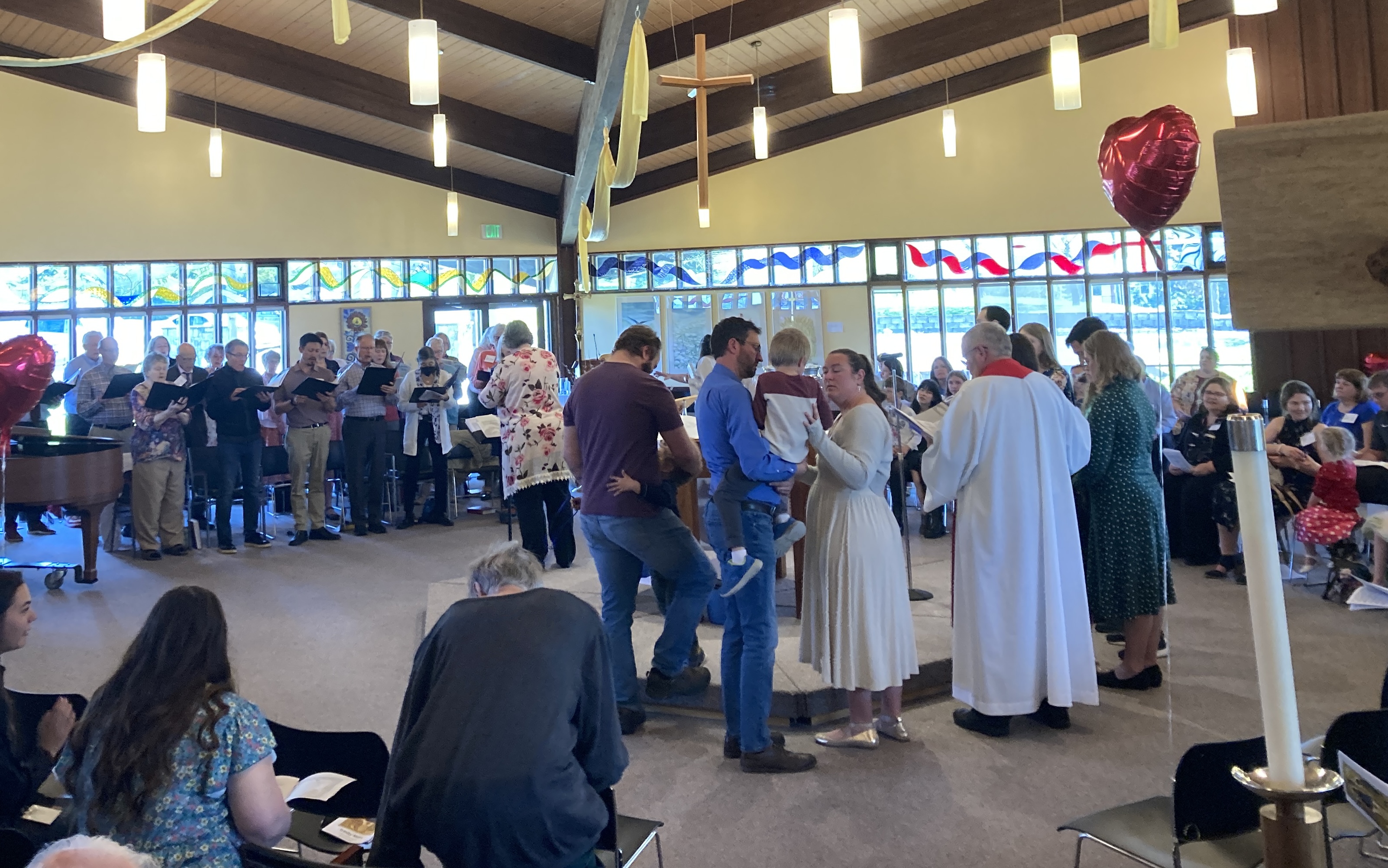
Above – 8:30 worship in the old Augustana Chapel

Immanuel Sanctuary (rearranged furniture, as people gather) 10am worship

Luke 4:1-13

Grace to you and peace from God our Father and the Lord Jesus Christ. And thank you for the invitation to be with you this First Sunday in Lent. The current practice of forty days of Lent recalls Moses’ forty-day fast on Mount Sinai, Elijah’s 40 days on the mountain, and of course Jesus’ 40 days in the wilderness after his Baptism.

Let’s go back briefly to his baptism. Then and there, God declared Jesus to be his Beloved Son, in whom God is well pleased. Jesus is marked as the Messiah, the Anointed One. The words of that address are taken up in today’s story of testing. This time they are on the lips of the adversary. Who exactly is this tester?

One scholar suggests that the diabolos in today’s scene is doing what the satan does in the Book of Job; he is carrying out his divinely ordained role by testing the durability of God’s creation. In this case, it is the Son of God who is being tested to see if he holds true. Two times the devil recalls God’s address at Jesus’ baptism. He calls it into question with the taunt, “If you are the Son of God.” 

These are not tests to do things that are desirable but not good for him (like our temptation to eat an extra piece of cake). These are tests to see whether even good things can lure Jesus away from his fidelity to God and God’s will.

The first test is to turn a stone into a loaf of bread. This would certainly ease Jesus’ hunger after 40 days of fasting. If Jesus can do that then he can also turn the many stones covering Israel’s landscape into food. He could feed the many hungry people in a land often wracked by famine. This sounds like the manna in the wilderness that fed the Israelites. 

Later Jesus will teach his disciples to pray, “give us this day our daily bread.” Bread is necessary for life. Martin Luther said bread is “Everything that nourishes our body and meets its needs.” So turning stones into bread sounds pretty good to me every time I read this passage, but this year it sounds very good!

Maybe it is serving as bishop and the size of my flock, maybe it’s 20 years as a pastor, maybe it’s the state of the world, maybe it is my gut telling me there could soon be great need in our synod, state, and country and my awareness of how much need there is in the world. 

Whatever the cause, I have never before so badly wanted Jesus to go ahead and fail this test. Jesus, just go ahead and make the bread. Feed your own hunger and everyone else’s. Or give that power to the church to do it on your behalf. I could never pass this test, so it’s a good thing I am not the one being tested. Jesus, the Messiah, the Son of God, responds, “Of course I am famished. I am fasting. There is more to life than food.” Such self-control is important in a human being, but in a messiah it is essential. Jesus’ fidelity to God is steadfast.

The second test portrays the tester in the role of “ruler of this world” who can manage the governance of the world’s kingdoms. The price is to worship or honor that authority. In return, the tester will hand it all to Jesus. Remember that most of the known world in our author Luke’s day was under the strong and oppressive control of the Roman Empire. A change in regime could only be for the world’s good, right?

And here again, as empire simply takes a different form in modern life, there is a part of me I am a little embarrassed by, that would just a soon Jesus fails this test. Wouldn’t it be better if Jesus ruled over all? He would get rid of all his enemies, who I am quite sure are also my enemies. It would be glorious for Jesus to have all the power, then we would all be safe.

Again, Jesus answers no. The price is too high. The test is about the desire for power, but the tester disguises this behind a call for Jesus to bow down. Jesus responds, “You are to worship the Lord your God.” The word Lord signals the presence of the unpronounceable divine name. The rabbis note that this name attributes mercy to God. The other name for God, Elohim (translated as God), names the justice attribute. So, Jesus brings both qualities together—justice and mercy. In other words, the justice of God is lived out in acts of mercy, not power. This is a clear rejection of our love of power. But the rejection also makes it possible for any human being (including the Messiah) to participate in the reign of God.

Let me say that again. In naming the Lord your God, Jesus brings together justice and mercy. The justice of God is lived out in acts of mercy, not power. This means all of us, all of you, can participate in the reign of God.

The final test is for Jesus to trade his calling, his destiny, his integrity for life above the law of gravity. This test offers the Messiah the chance to be absolutely free. And, as one scholar [Swanson] said, if the Messiah is free even from the law of gravity, then the Messiah is invulnerable. Which is precisely what it does not mean to be Messiah. Or a human being. Humans are vulnerable. 

I was reminded of this twice this weekend. The first time was Friday evening in Nampa when another car didn’t see or yield to me and crashed into my passenger front door while I was in a turn lane. The second time was Saturday morning, when hearing my friend’s voice on the phone suddenly released all the adrenaline and I was brought to tears, finally facing mortality. Even though no one was injured, and no airbags went off, there’s nothing like two vehicles colliding to remind us that we are in fact vulnerable.

God in Jesus takes on humanity and human vulnerability. For Jesus this leads to much more than a mere car accident. We, who know the end of the story, know that the Messiah must suffer and die. The Messiah must be subject to gravity and to the Roman power to torture and kill. Otherwise, the Messiah is not one of us at all. 

The three tests in the wilderness having concluded, we finally read, “When the devil had finished every test, he departed from him until an opportune time.” The devil came back. It happened during Jesus’ last week in Jerusalem. The devil entered Judas and set in motion the betrayal and arrest, the trial and the denial, the abandonment and the crucifixion. He spoke through a variety of voices. Religious leaders said, “Let him save himself if he is the Messiah.” A criminal asked “Are you not the Messiah? Save yourself and us.” Again, there is testing for proof, a sign, or some kind of power and action.

The devil always comes back. We will never pass the devil’s testing. And we do not look at Jesus to see how to do it. We are like the criminal on the cross. We are in captivity and cannot free ourselves, as we confess. But Jesus’ fidelity to God is steadfast, in the wilderness, throughout his ministry, on the cross. 

There are many voices in the wilderness today asking us to abandon who we have been called to be and to become something we are not. These voices lure us to give in to false promises of power, safety, and security. These voices tempt us to put our own self-interest ahead of the needs of others. These voices tempt us to trade in the cross for false glory. And, worse yet, many of these voices are doing so in the name of Jesus Christ.

You have been called by water and the word, claimed as a child of God, and united with Christ, the same Jesus Christ whose fidelity to God is sure. The service of Holy Baptism includes a three-part renunciation of “the devil and all the forces that deny God” reminiscent of Jesus’ encounter with the tester in the wilderness. You pledge our fidelity to God, knowing that your faithfulness depends on being bound to the life, death, and resurrection of Jesus Christ. 

Furthermore, that faithfulness depends on nourishment. And so, this morning, the same Jesus Christ feeds you at the table, not with stones turned into bread, but with his own broken body. You will be fed for justice and mercy in your neighborhood, your community, and this world we all inhabit. When you hear the words “given for you” and “shed for you,” hear Jesus’ fidelity not only to God but to this community of faith and to each of you. Amen.
Posted in NWIM Synod, Sermons | Tagged , , , , | 2 Comments