I am writing to you today to draw your attention to Proposition 1 on the ballot this November. It is my privilege to share that our church is on record for unrestricted participation in all matters related to the ballot box. As you bring your faith-informed thoughts into the voting booth, I ask you to consider this.
As you may know, Idaho has, since 2011, had closed primaries. Put succinctly, Proposition 1 will create a non-partisan primary election, open to all voters. The top four will advance to the general election. In the general election, voters will pick their top candidates and also have the option to rank additional candidates in order of preference.
Why does this matter to people of faith? Lutherans care about government, including elections, because it is a gift from God intended for the safety and flourishing of human life. This Lutheran view of orderly government as “created and instituted by God” was formalized in our Lutheran Confessions back in 1530! (Augsburg Confession, article XVI.)
The ELCA social message on Government and Civic Engagement in the United States: Disciples in Democracy(Adopted by the Church Council of the ELCA 2020) reminds us “that all of us have a responsibility to make government function well. For us Lutherans, this responsibility is a calling from God, expressed in the discipleship described in our baptismal promises. When we consider how well government is doing its work, Lutherans ask one question: is the neighbor being served?” www.elca.org/socialmessages
That same social message also points to 14 guides for assessing the performance of government. Proposition 1 seeks to address #2: Unrestricted participation, “Efforts to restrict access to voting should be condemned and resisted. Examples include requiring voters to show identification without issuing identification to all eligible voters, purging voter rolls of those who have not voted recently, denying access to voting by mail, or closing polling places so that voting becomes more difficult for eligible voters. Active suppression robs voters of a key means of participation.”
Do closed primaries belong to this list of voter restrtictions? Beginning in 2011, a law went into effect in Idaho that restricts an elector to voting only in the primary election of the political party for which they are registered, unless a party notified the Secretary of State in writing that the political party elects to allow additional voters (unaffiliated voters and/or voters registered with another party) to participate in the party’s primary election. (See Idaho Code § 34-904A.)
Is voting yes on Proposition 1 a vote for unrestricted participation by you and all the neighbors God has called us to serve? Pray on this and vote accordingly.
In churches and sanctuaries across Washington State, faithful voices are singing about the beauty of creation in these Sundays of autumn: Giving thanks for the harvest, praising God for nature’s glory, and committing ourselves to care for the Earth.
We, the three Lutheran bishops of Washington State, join this anthem as we cast our ballots in this election. We urge voters to vote “No” on Initiative 2117, which attempts to repeal our state’s Climate Commitment Act.
The Bible calls us to love our neighbor and to take action to protect God’s creation for future generations. As the Evangelical Lutheran Church in America’s 2023 policy message “Earth’s Climate Crisis” states, this is a critical time when “God is leading us into decisive action” to protect the Earth and its climate.
We believe this is a moment for great hope. Our best scientists assure us that it is not too late: there is still time to avert the worst health consequences of global warming pollution, if we act now to reduce fossil fuel burning and transition to a clean energy economy. As Christians and followers of the teachings of Jesus, we must ensure that the poor and those on the margins are not disproportionately affected.
Washington State’s Climate Commitment Act sets a national example for decisive action to respond to dangerous global warming pollution. In its first year, the law has raised $2 billion, with funds directed toward transportation, clean air, renewable energy, conservation, and emissions reductions efforts, in every county across Washington State. It also sets aside money to help the poorest and most vulnerable.
For these reasons, we ask voters of faith and all who support a cleaner environment
to vote “No” on Initiative 2117. Repealing Washington’s landmark Climate Commitment Act would be a mistake. Going backwards on protecting the planet has steep, even deadly, costs for everyone—plants, animals, and people. While the Climate Commitment Act may not be perfect, we believe it should be modified rather than repealed.
Signed,
The Reverend Richard Jaech, Bishop, Southwestern Washington Synod
The Reverend Meggan Manlove, Bishop, Northwest Intermountain Synod
The Reverend Shelley Bryan Wee, Bishop, Northwest Washington Synod
Sermon preached for Bishop’s Fall Convocation Closing Worship.
Mark 10:32-45
It is easy to be hard on James and John in this morning’s scripture passage. Jesus has just predicted his death for the third time, the most detailed description, and they ask about being seated at his right and left hand, in Jesus’ glory. What are they thinking?
The truth is that this is not strange behavior, even or maybe especially for revolutionaries. Remember, that’s what they believe they are witnessing–a revolution, a change in power, and they are not completely wrong. It’s just that Jesus’ way of turning the world upside down is not what they anticipate, even when he has just spelled it out for them.
Consider those jockeying for power shortly after this country’s revolution. If you have seen Hamiltonon stage or on the screen, picture everyone in the first act. They may have their differences, but they are all so passionate about the revolution, being finished as colonies and continuing the American experiment. Act One ends with Alexander Hamilton and Aaron Burr both on stage singing to their newborn babies: “You will come of age with our young nation. We’ll bleed and fight for you. We’ll make it right for you. If we lay a strong enough foundation. We’ll pass it on to you, we’ll give the world to you.” There seems to be so much unity.
Alas, Act Two is all about Hamilton, Burr, and Thomas Jefferson jockeying for power. There is palpable tension between their love for the new nation, the vision for what could be, and who is going to leave the greatest legacy, or as the song goes, “who’s gonna be in the room where it happens.”
We could think it’s just revolutionaries like James and John and the Founding Fathers who get caught up in the desire for glory. On careful reflection, this passage always hits a little close to home. I remember the first year Trinity New Hope affordable housing participated in the Avenues for Hope campaign, a state-wide online fundraiser for nonprofits involved in housing and homelessness. Prize money is given to organizations who have the most dollars or most unique donors statewide and by region.
There were a few days towards the end of that first campaign that Trinity New Hope was neck and neck with a nonprofit from Boise, for third place in our region. Getting third would have meant another $1000. I got just a little obsessed with the glory of third prize. I finally laid back on my pillow and decided it was ridiculous. We were all working to impact housing and homelessness after all! It was a strong reminder of the allure of glory.
James and John are not the only disciples enticed by visions of their own glory or of a triumphant reign. The other ten disciples fume over the brothers’ bid to be the most prominent. Jesus corrects their vision by holding up the conventions of the Roman Empire’s political authorities as negative examples. They regularly “overpower” and “tyrannize” others. They rely on coercion and control to maintain their dominance.
Earlier in Mark we read the story of John the Baptizer’s death. In John’s case, the authorities’ self-interest, and self-protection trump justice to ensure John’s death. Jesus’ trial will display a similar kind of strong-armed political theater.
In absolute contrast, greatness among Jesus’ followers is measured by their ability to live as servants. That life will probably also include suffering oppression at the hands of those who wield power. Jesus will embody weakness in his trial and death. He will affirm the promise of his glorification and at the same time relinquish the power to prevail over others.
Jesus says, “For the Son of Man came not to be served but to serve, and to give his life a ransom for many.” Jesus’ death will be an example for such a way of living. His death will exemplify a radical rejection of authority and privilege. What makes the rejection so radical is the identity of the one who does it. It is Jesus, God’s own uniquely authorized agent.
Consider all that that one word means—ransom. Jesus’ mention of a “ransom” means that his death will be more than just an inspiring example or a martyr’s tragic protest against an unjust system. The word suggests that his death does something; it secures a release. “Ransom” does not mean a specific type of payment, as this passage has often been interpreted, especially when paired with the RCL complimentary text from Isaiah 53.
Here, Jesus is talking with his disciples about power and servanthood. A ransom is a liberation created by divine strength, not by payment. Jesus declares that God, through Jesus’ death, will free people from oppression and captivity to another power. We had a foreshadowing of this earlier in the gospel, “No one can enter a strong man’s house and plunder his goods unless the strong man is first bound; then indeed his house may be plundered.” Well, here comes the plundering and liberation, but not in the way anyone anticipated.
The baptism he is baptized with is the way of the cross. The cup he drinks is the way of crucifixion by a world ruled by domination. Jesus has come to serve and to give his life away for you and the entire cosmos. Through Jesus’ death, God frees you from oppression and captivity to another power.
The disciples’ misunderstandings would make us think that they never did learn the discipleship Jesus was teaching. We might thing they never did understand that Jesus freed them to serve others. But the disciples did learn. The early church did preach Jesus’ gospel and upside-down way of life where the first are last and the last are first. And such discipleship has been carried down through the centuries.
Consider our hymn of the day. So often poetry and art and music can say more than a well-formed essay. In the first verse, Pastor Susan Briehl names God’s glory multiple times. In the second verse we sing, “power without peer, you bend to us in weakness, emptied, you draw near.” Then, “beauty unsurpassed, you are despised, rejected, scorned, you hold us fast.” And then in the final verse, “life that never ends, you show your love by dying, dying for your friends, and we behold you living.” We sing succinctly the paradox of Jesus crucifixion and resurrection which liberates you and me from the forces of evil and liberates us for the servanthood Jesus modeled.
This liberation that you know so well as leaders in the church is like nothing else. It’s why you are all still in this. You trust the promises of the font and altar, the promises for you and those in your care. And you and I get to be the stewards of this liberating message the world still so desperately needs. What a calling and what a gift. Thanks be to God.
Yesterday afternoon I drove up through the Blues in Northeast Oregon to Kennewick. Thanks to Heidi and Dan Cryer for their always warm hospitality.
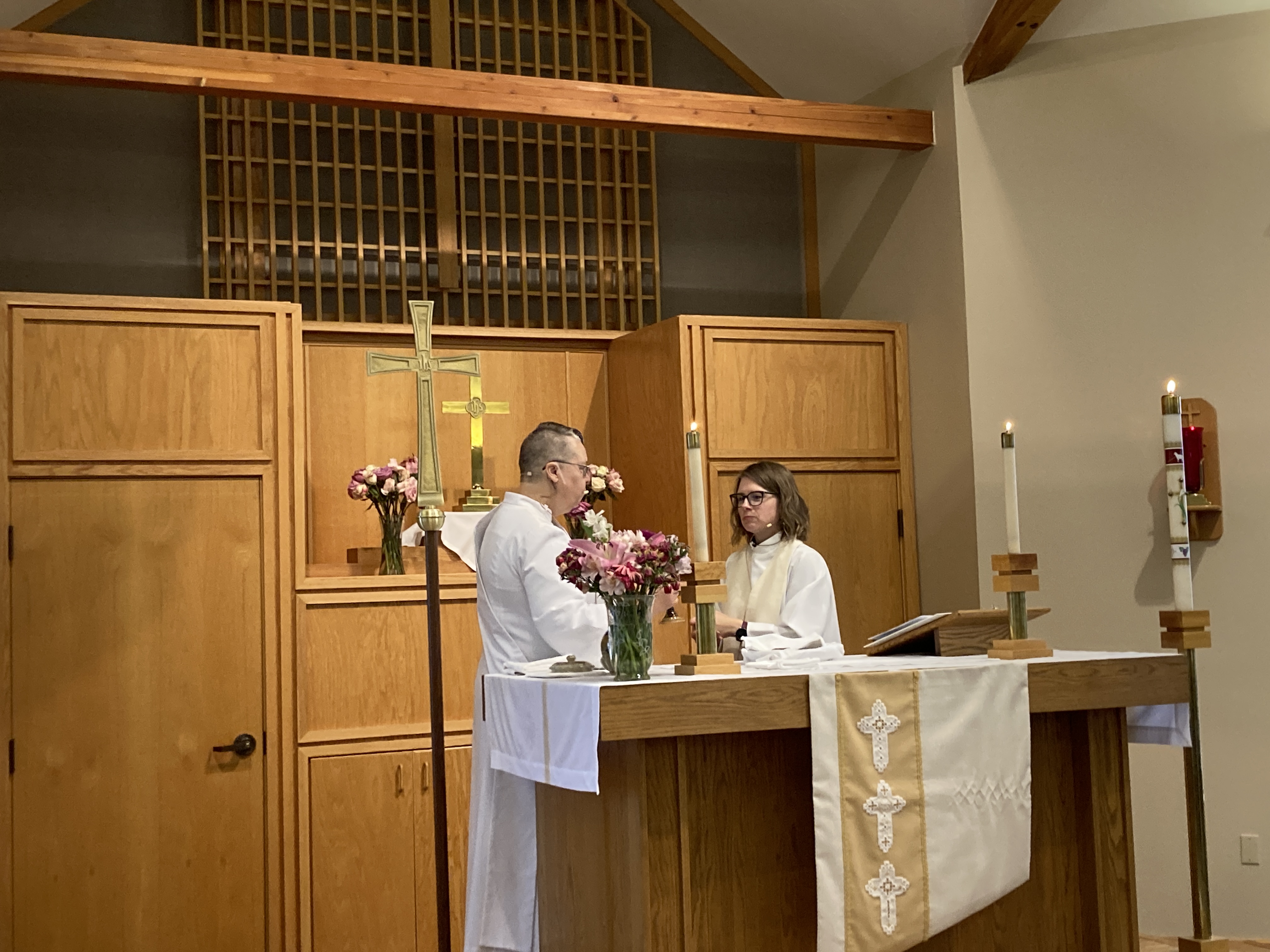
This morning I drove to Our Saviour Lutheran in Sunnyside, WA. This congregation has been sharing their pastor, Tim Carnahan, with Faith Lutheran in Toppenish. As Faith has sold its building and is closing, Our Saviour is entering a season of transition, wondering what is next.
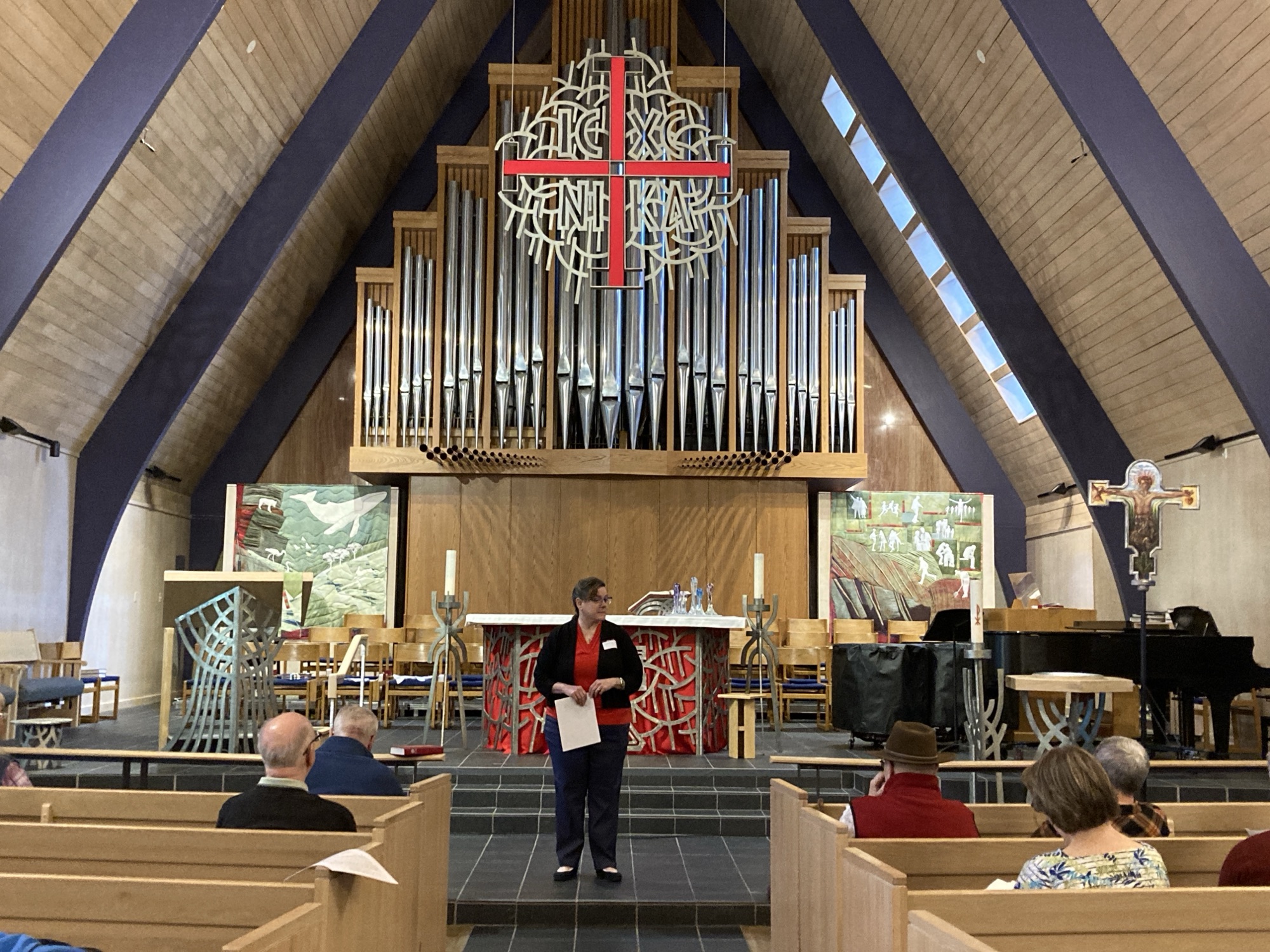
The sanctuary we worshipped in was built in 2000. I love the cross formed by the lovely stained glass windows.
The church has both a food pantry and free library. So many monetary donations have come in for the food pantry in the last few years that the church just bought a freezer to enhance its feeding ministry.
I adapted the following from a portion of my D.Min. dissertation Equipping Lutherans for Faith Storytelling.
I grieved when I realized the people in my congregation did not feel that they had a grace-filled faith story to tell other people. We were a group of people who were collectively walking the talk of Christian discipleship. We were living out the gospel of Jesus Christ through feeding and housing ministries. We strived to practice authentic hospitality, and our worship reflected both tradition and communal creativity. When I went out of town, I often talked about my congregation with words expressing love and joy, but most members felt ill-equipped to talk about the congregation and their faith. In response to this grief and after a great deal of research, I created a faith storytelling workshop for my congregation.
I began my theological exploration convinced that the two perspectives my Lutheran tradition has to offer the ecumenical conversation about faith storytelling are the priesthood of all believers and our being theologians of the cross. Both are confirmed as gifts in the tradition. Through the daily task of ministry and my reading, I also discovered a third gift, the room for mystery in the Lutheran tradition. Room, or openness, to mystery may not be unusual in all contexts, but I believe it is in southwestern Idaho, where I live.
Have you ever said to someone, “I don’t think we’re on the same page”? It’s a description of a frustrating conversation. There seem to be similar words and concepts but also a clear disconnect. Finally, you pause, and you realize you are talking about two completely different things. It happens in our passage from Mark’s gospel today.
Simon Peter had a moment of brilliance earlier. Jesus asked his disciples “Who do you say that I am?” And Peter answered, “You are the Messiah.” He was on the same page as Jesus. And Peter’s conclusion was logical. Peter had been up on the Mountain of Transfiguration and been blinded by a radiant Jesus. Jesus had healed countless people. Jesus seemed like a savior, the Messiah. So, topping off these great moments was Peter’s confession.
On the other hand, there have been disturbing moments. Jesus speaks several times about his future suffering and death. Peter rebukes him for these unpleasant predictions. And Jesus scolds Peter for this rebuke. They are still talking about Jesus, the Messiah, but Peter’s idea of what a Messiah is, how he acts, is not in sync with Jesus. Jesus says, “The Son of Man is to be betrayed into human hands and be killed.” Jesus and the disciples are not on the same page.
Then, as they enter the town of Capernaum, Jesus turns and asks the disciples what they were arguing about. They must have been embarrassed. Their awkward silence is palpable. One writer [Eugene Peterson] calls the silence “deafening.” We have all been in that position.
Imagine—some kids make a raucous in the basement. A parent calls down the stairs, “What’s going on down there?” The response is “Nothing, nothing!” The disciples have been discussing who among them is the greatest. Jesus has been talking about his death and they are talking about who is the greatest. Who would not be embarrassed? Of course, Jesus, like a parent, already knew what was going on.
We should not think ourselves superior to the disciples. We would probably feel similarly uncomfortable in their place. This is not an exercise in attacking their flawed ideas about discipleship. We could easily become distracted by judging ourselves greater than the disciples—more faithful, more aware, more on the same page as Jesus. Today’s stories are about how we, so many years later and with the full narrative of Jesus in mind, might follow Jesus.
After interrupting the argument about who is the greatest, Jesus sits down like a teacher. We know this is not casual conversation. He is going to say something crucial. Jesus often uses more than words to teach his lessons. This case is not different. This time his illustration is a little child. We have several stumbling blocks to go over before we can truly understand this illustration.
A child in our culture is deeply valued and put first in our priorities. At least we would like to think so, in spite of the number of children in poverty. We coo over babies. We cheer on kids when they sing and play. And youthfulness is glorified just about everywhere.
And artists through the ages have not helped us. Can you pull up in your memory a painting over an altar or in a church narthex portraying children? They were often, at least in the last century portrayed as pure and angelic. More importantly, there seem to be lacking in nothing. It is easy for us to sentimentalize Jesus’ action of picking up a small child and telling his followers to do likewise. It is a sweet scene—Jesus tenderly cuddles a child and appeals to the soft hearts under the tough exterior of these big rough disciples.
But that is not what is going on here. Instead of a sweet moment, the disciples are experiencing a radical up-ending of the way they think things should be. In the time of Jesus, a child was lowest on the priority list. Children had no status. They were subject to the authority of their father. Often, they were expendable. And so Jesus gesture here is potent.
The child that Jesus reaches out to is similar to many of the children in Charles Dickens’ novels, except for Tiny Tim, the star of the famous story “A Christmas Carol.” When I hear Jesus tell his disciples, “Whoever welcomes one such child in my name welcomes me,” I imagine characters like Jo from the great novel “Bleak House.”
Dickens writes that “Jo lives in a ruinous place, known to the like of him by the name of Tom-all-Alone’s. It is a black, dilapidated street avoided by all decent people, where the crazy houses were seized upon when their decay was far advanced by some bold vagrants who, after establishing their own possession, took to letting them out in lodgings.”
Jo and other child characters in Dickens’ works are often referred to as urchins, small raggedly children who do their best to survive in an adult world. The root of the word comes from the Latin for hedgehog, a rather prickly unkempt-looking animal. The good news is that in the novel there are people who not only look out for Jo but who bring him into their home.
Jesus’ disciples are not there yet. This is a radical up-ending of the way they think things should be. This is not what they hope life will be like when Jesus comes into their idea of glory. They want to find their way to the top. They want to claim greatness. And he tells them to lay claim to the last and lowest place and people. When they welcome a child, they welcome him. They even welcome the one who sent him. Picture the urchin child Jo again.
Jesus’ command makes no sense to the disciples. Welcome someone who does not have the power or ability or place to welcome them in turn? No expectation of reciprocity? No return on our investment. First, our teacher keeps talking about suffering and dying instead of victory and glory. Now we must welcome and even value small, insignificant, powerless people, the least among us?
Every generation of Christians in every geographic context gets to translate “the least among us” for our time and place. What does that look like in 2024 in Chelan, WA. The truth is that I have followed your congregation since becoming a pastor in the synod in 2010 and I know that you have been quite attentive to the least—be they veterans, people from all walks of life who might have died alone without this congregation, other congregations struggling for whom you have prayed faithfully.
But the world keeps turning and there are always new people on the margins of the notebooks of our lives. Who are you being beckoned to welcome today? What are the hurdles?
Remember that the original argument in this morning’s gospel text is all about greatness. The promise for you and me today is that Jesus’ becoming human, the incarnation, overturned the world’s understanding of greatness. Because God becoming human decided that greatness is not about separation, it’s about solidarity. Greatness is not about being better; it’s about relationship. Greatness for God is about being with—Immanuel—which means God with us.
Strength comes in weakness. Glory is found in the death on a rugged cross. Welcoming children is like welcoming Jesus. And thanks be to God, you do not have to fully understand in order to follow Jesus. You can be a bit like those early disciples who couldn’t always put the pieces together, were not always on the same page as Jesus, but kept stumbling after him anyways.
Faith is about trusting the promise of God’s love and all the promises encompassed by that love. Full comprehension is not required for you to hear the words of forgiveness and love. Full comprehension is not event required for you to participate in the Lord’s Supper. You simply have to put out your hand and receive. We follow Jesus as the disciples did, because we know that Jesus is the only place worth being. In him there is love and abundant life for the world.
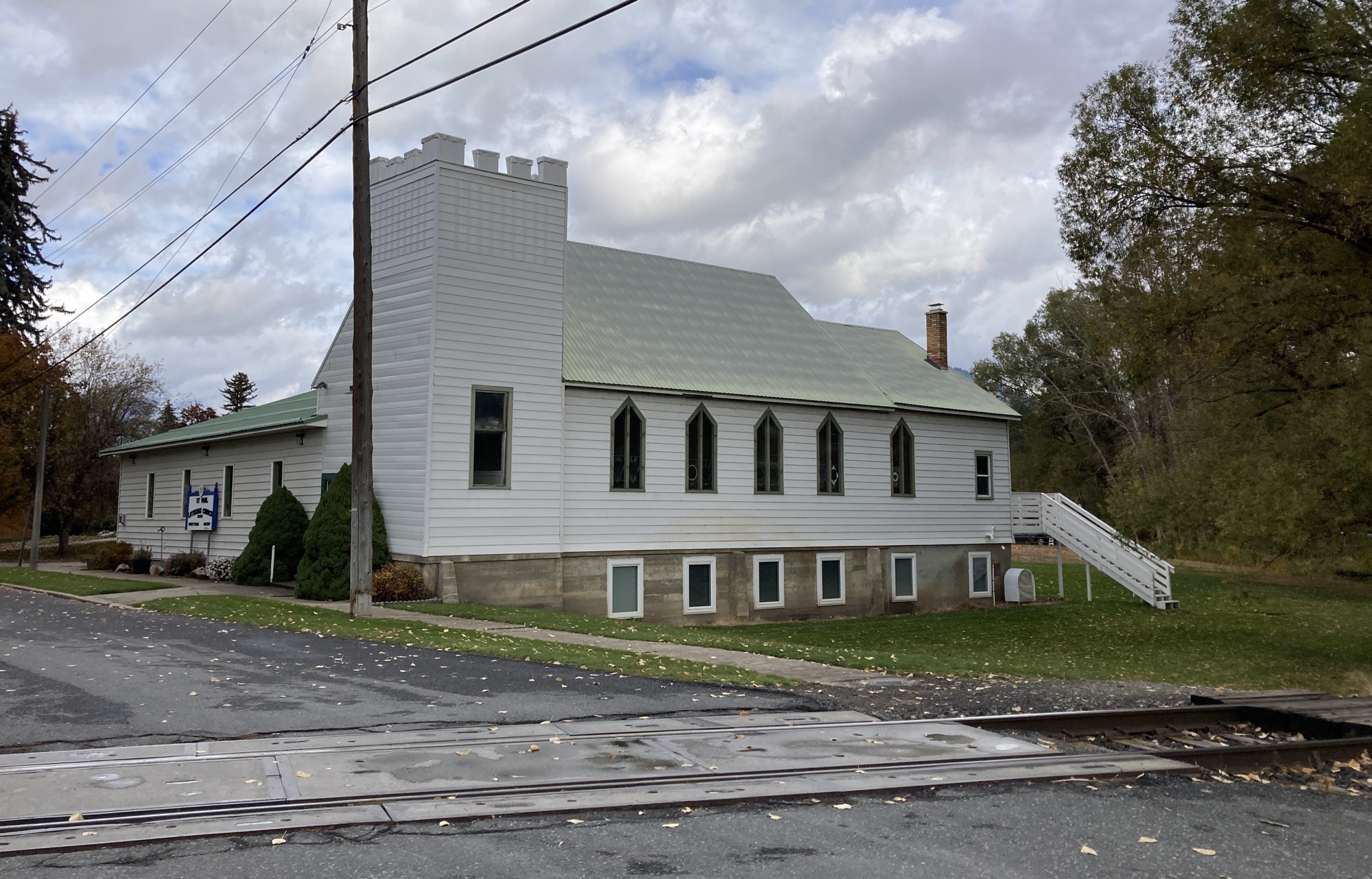
Lake Chelan Lutheran-host of soooooo many seminary interns over the years!
Last Saturday I flew from Boise through Seattle to Wenatchee. A retired pastor drove me from the airport to the bus station/train station where I took the FREE Link bus to Chelan. Roberta, host at the Holden Bed and Breakfast, picked me up and drove me to the B & B. I know Roberta from the Lutheran Outdoor Ministry network and it was fun to catch up. It was also great to watch her in action as an incredible host. The B & B was full Saturday night with people going to Holden for the first time and people who visit Holden often. Some of the Minnesotans had worked at Camp St. Croix in Hudson, WI (YMCA Camp) after my dad had been the director.
Sunday we all took the the boat up to Lucerne where we got on buses taking us to Holden Village. There were maybe 40 people registered for the Fall Sojourn. Pastors and deacons from the North Central Washington Cluster came up Monday-Wednesday (some retired leaders came up Sunday or stayed for the week) for their annual retreat. I preached at evening eucharist Sunday evening.
Village Center
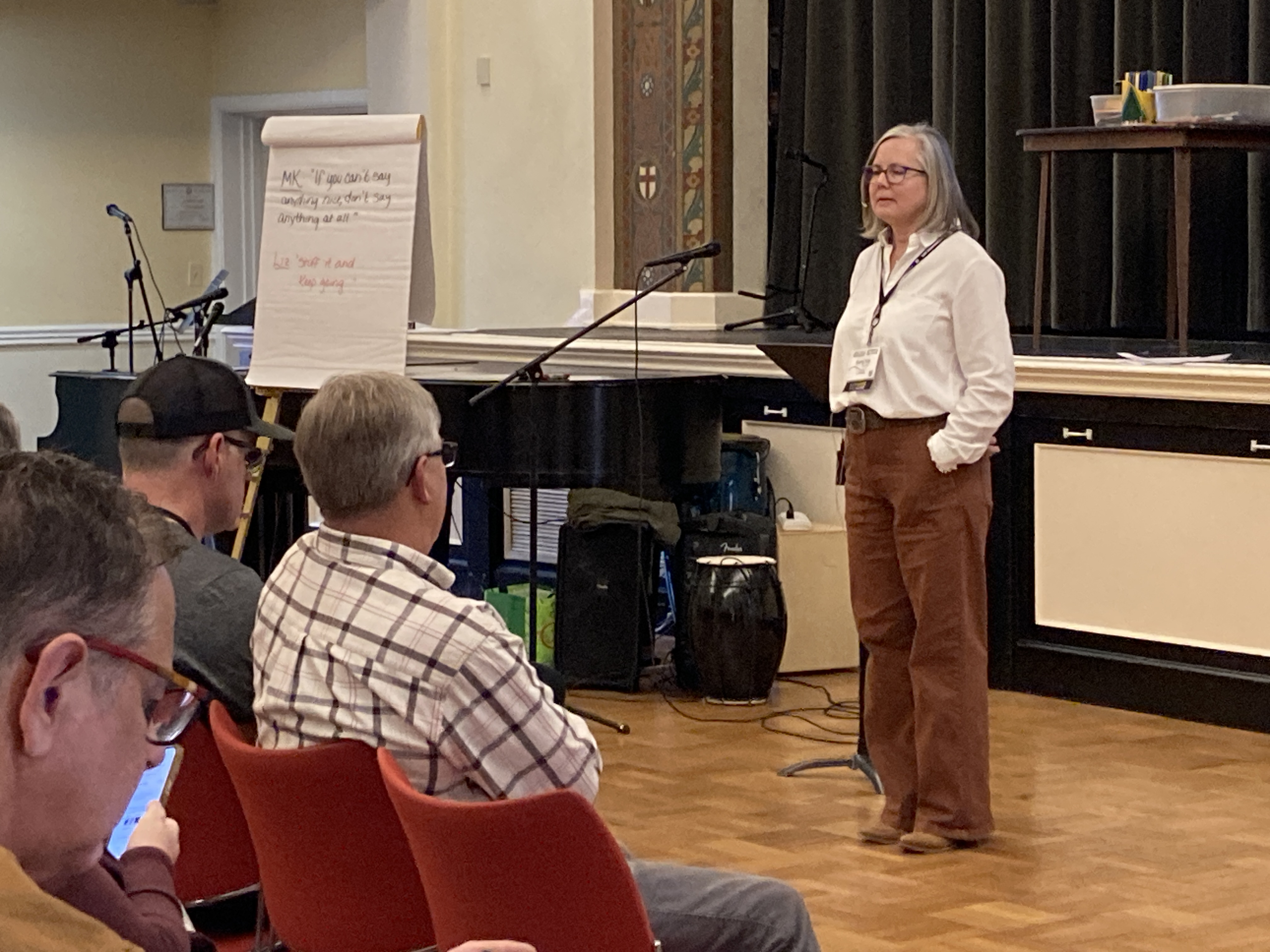
Monday through Thursday I led sessions mid-morning on story-linking. Retired Valpo professors Fred Niedner and Mark Schwahn were also on the teaching faculty–quite amazing to be on the team with them. And Jonathan Rundman was our musician for the week! It was great to have conversations with Jonathan and his wife Dawn, who works for Augsburg Fortress and is an expert in early childhood development. A highlight of the week for me was learning songs with Jonathan and the volunteer choir.
Faculty Team
I got some hiking in though my loyalty to the sessions kept me from getting out to Heart or Holden Lakes. It was wonderful to have time with the pastors and deacons from the synod up at Holden for the retreat or the entire Sojourn Week.
Grace to you and peace from God our Father and the Lord Jesus Christ. Amen.
I am a woman with no experience with childbirth. I have had the humbling experience of being in the room shortly after babies were born and I have grieved with those whose infants died. I have seen ranch animals born. But my most honest way into any metaphor about new life comes from the forests and river valleys I have known.
The fire currently burning near Stanley, Idaho brought connections with two of my high school classmates. Amy is a fire fighter who lives in the Black Hills but was flown out to be on the crew. She posted drone photos on Facebook when she got home. Anya works for Landsat and posted satellite photos on social media of the forest on fire. These connections reminded me of how deeply shaped we and our classmates were by the Galena Fire of 1988, one of the same years Yellowstone Park burned.
It was only around 17,000 acres and the fire didn’t burn for long, but it happened in an area of beloved Custer State Park that could easily be seen from the highway. More importantly, we were just kids. We witnessed death to a forest. More importantly, throughout our high school years, we watched the forest come back to life. It was amazing to my teenage and later 20-something self.
During my junior year at Concordia College in Moorhead, Minnesota, the Red River flooded, supposedly a 100-year flood, repeated just a few years later. I learned all about the history of the Red River Valley farmland, that periodic floods like this that cause havoc and death, were part of why that valley is so fertile. Whenever our ancient scriptures speak of birth pangs or childbirth, I am grateful for the natural world being my teacher about sorrow followed by joy.
In preparation for our time together, Dr. Schwehn and I had a Zoom call. We talked about our sessions but also about Holden Village, its long history including the tumultuous recent chapters. People who talk about this place and this ministry sometimes remark that after the trilogy of remediation, fire, and global pandemic, it’s amazing that we are gathered here tonight.
As a community I assume every metaphor for new life from sacred texts, sacred songs, and the natural world has been spoken aloud and leaned on in this space. It is, turning to John 16, the birthing labor that seems to never end. You were ready for new life after remediation. You were ready after the fire. You were ready after the pandemic. How long can one labor last? When will sorrow turn into joy, Jesus?
A favorite Johannine scholar says that particularly relevant when reading this passage are two texts from Isaiah. Isaiah 26 uses the childbirth metaphor to describe the experience of God’s people as they await God’s deliverance. In Isaiah 66, the childbirth metaphor is used to envision the restoration of Jerusalem. Key to both is that they are communal, a community moving from suffering to renewed joy.
I find such biblical metaphors helpful today when talking with many congregations and ministries about what God is doing, about how the Holy Spirit is at work. The metaphors provide reassurance that the church as the Body of Christ has experienced suffering before and God has brought new life and rebirth out of death, just as new life comes to a forest devasted by fire or a prairie that suffered flood waters.
The metaphors are helpful even, or perhaps especially, during what the church now calls holy closures. In the spring I was with a congregation having its final worship in its building, before it was sold. I will join another congregation for a similar final worship service in November. Those ministries, to varying degrees, have experienced suffering in their lifespans and at the end. Time will tell when joy will come to those communities, but we trust God’s faithfulness.
Bearing the suffering, crying out as a woman in labor, watching beloved landscapes transformed, can be excruciating. This is why I appreciate reading the metaphor of childbirth with a nod to the ancient Israelite communities. Suffering can be a solitary act but we know something as the church about bearing suffering together. When my dad died in December 2020, it was the Caring Bridge Community that buoyed me and reminded me I was surrounded by the communion of saints. The community of writers and readers reminded me the Holy Spirit was with us.
Outdoor ministry sites like Holden make space for community. They also leave space for suffering and waiting: long walks in the natural world, participating in embodied music and art making, long bible studies with time to listen. All of these are needed more than ever; not just for mental health but for equipping us with patience and the ability to wait—wait for the Holy Spirit to speak and move, and then for us to be attentive enough to notice when joy is breaking in.
Making space and waiting for the Spirit—these are still counterintuitive. Because my natural temptation, and maybe yours, is to trust only my actions to get the thing done, to bring the joy, rather trusting the triune God I claim to worship.
As in the Isaiah passages, the woman stands as a symbol for the community, suffering through tribulation in order to receive God’s awaited salvation and new life. Again, to be a passive recipient-oh, how challenging it can be to wait and receive, as those first disciples did.
For those of us reading this scripture so many years later, we know how the story ends. You know that upon the occasion of the Jesus’ resurrection, the disciples’ very real pain arising from his death turned to joy. Mary’s weeping dissolves into joy when she encounters the risen Jesus at the empty tomb. The disciples will see Jesus not crucified and dead, but living and by implication victorious.
And all this joy is not merely joy that follows relief from great pain. It is also the joy that belongs to the era of salvation or healing, pictured now as the rebirth of God’s people. The text tonight points you to Jesus, who is the savior, not a mere example for your action. He is speaking about his own death and resurrection.
Drawing upon an image from Christianity in the Nordic lands, Sam Giere writes, “This trustworthiness looks like a cross whose roots and branches envelop the whole of the cosmos, upon which hang all the sins of the world, upon which Christ took on these sins and our death, gifting the cosmos with His righteousness, freedom, and life. The cross of Christ is the tree of life. Trusting in Jesus invites us to see the world in this way—enveloped by this life-giving tree.”
We live in the already but not yet. The tree of life has already defeated death and ushered in an age of joy. The life of faith is living this daily reality. Joy comes after sorrow. Birth comes after anguishing labor. Green shoots come out of charred hillsides. Grass grows out of muddy prairies. New life, healing, and mercy will be received by you in simple gifts of bread and wine. As a community, we will pray come Lord Jesus, knowing God is already here among us. Amen.
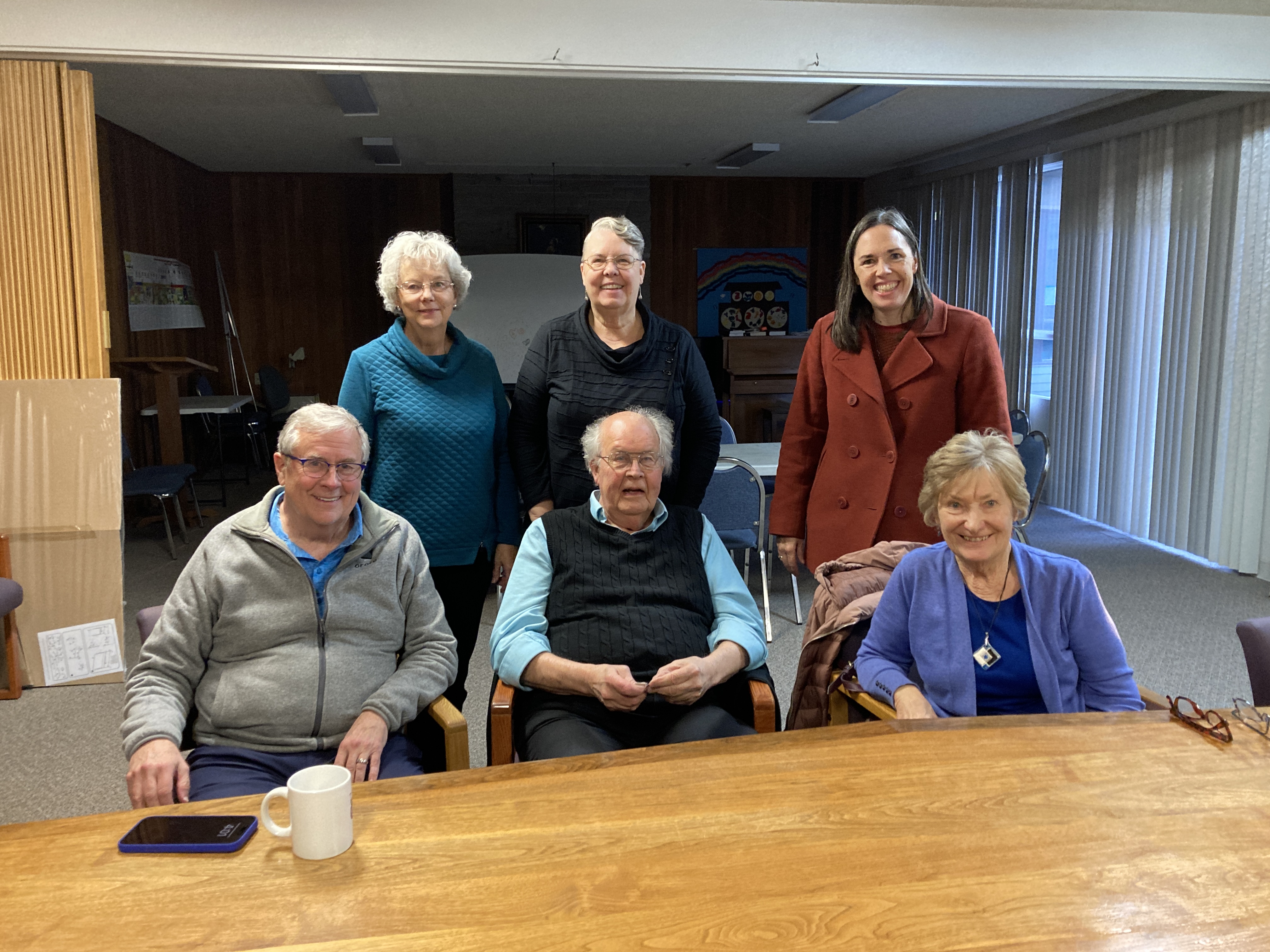
I arrived in Spokane Tuesday and attended the Lutheran Community Services Pastors Luncheon where we learned about all the things LCSNW is doing across Washington, Oregon, and Idaho, but especially Spokane.
Wednesday and Thursday were great staff days, and included time with Montana Synod Staff member Colter McCarty, doing part of his deacon internship with our synod, and Presbyterian Drew Peterson who heads up the Spokane Presbytery’s Land Stewardship Development initiative.
Our staff with Colter on Lake Coeur d’Alene.
Friday and most of Saturday were Synod Council and Executive Committee of Synod Council days at St. Mark’s Lutheran Church.
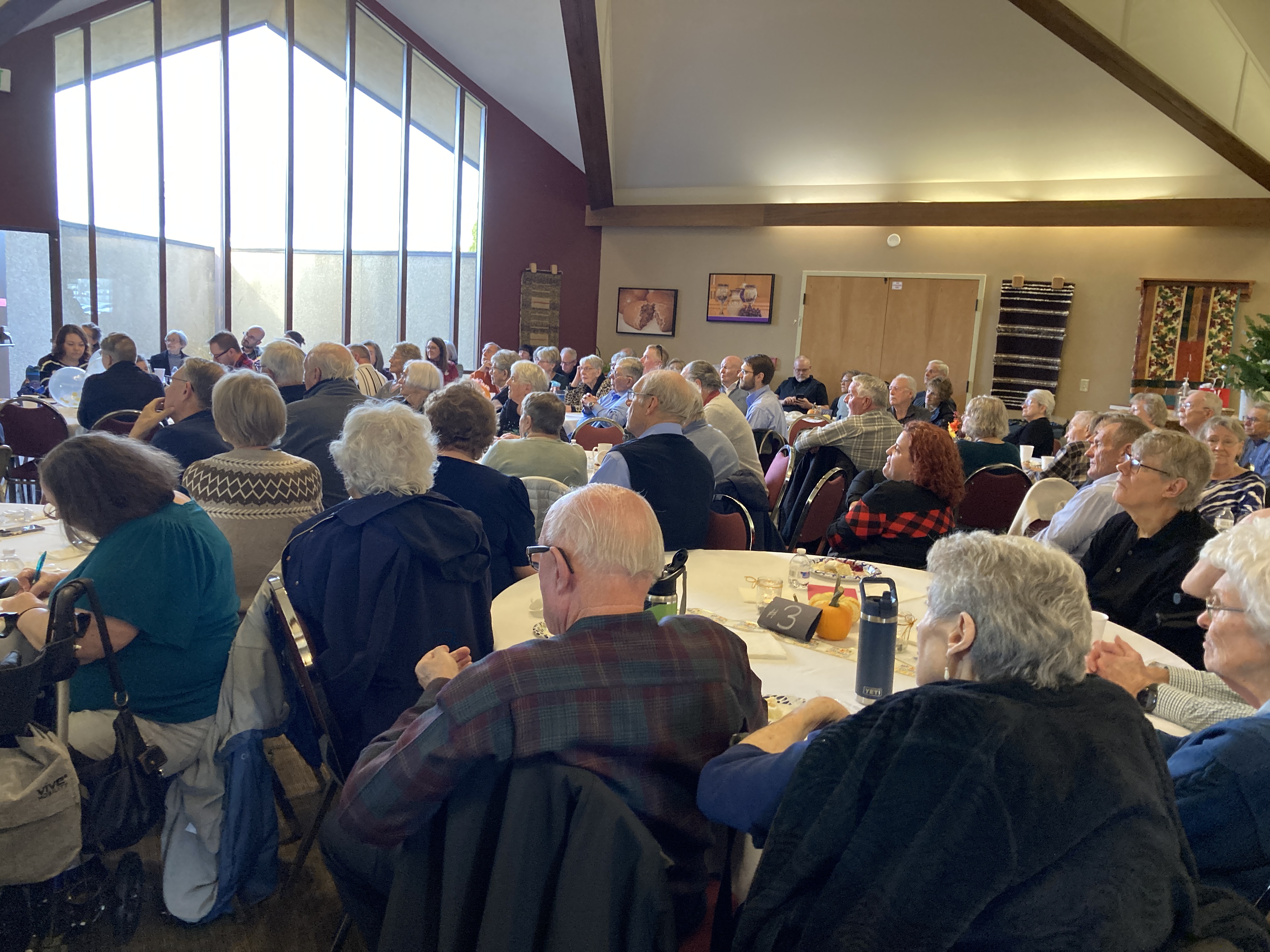
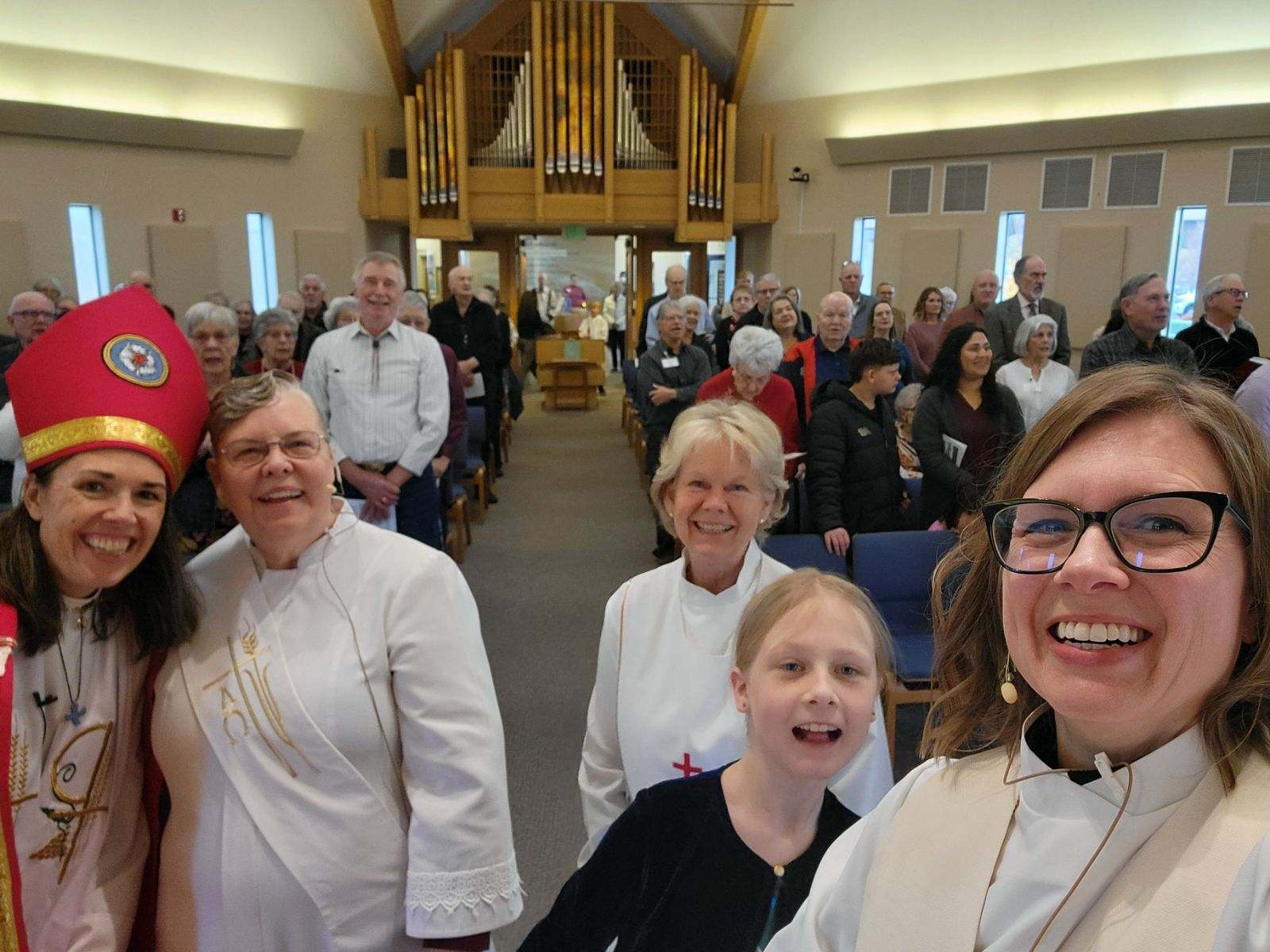
Today I preached at the tri-parish worship service in Kootenai County, Idaho (Calvary, Post Falls; Church of the Master, Coeur d’Alene; Trinity, Coeur d’Alene). Worship was followed by a potluck and assembling hygiene kits, all part of the ELCA’s God’s Work. Our Hands. Sunday. These congregations have a history of worshiping and collaborating together.
Worship service with Calvary, Post Falls; Trinity, Coeur d’Alene; Church of the Master, Coeur d’Alene
Mark 7: 24-37
Dear friends in Christ, grace to you and peace from God our Father and the Lord Jesus Christ. Amen.
My default way into this story is reflecting on my parents’ own desperation when I developed a seizure disorder as a grade school kid. We were living in Western South Dakota, not exactly a hub for pediatric neurologists and in the 1980s so much less was known about the illness. My mom knew me well enough to know that the meds I was put on automatically turned me into a different person. She knew herself well enough that she could rebuff local community members who asked, “what are you going to do about your daughter?”
Desperation can lead to heart ache and depression, but it can also open us up to possibilities and turn up the creative in us. My story has a happy ending because my parents kept searching for healing; also because we had some amazing resources and connections.
The woman in our gospel story falls at Jesus’ feet to petition a healing on behalf of her own daughter. The woman is Greek, a Syro-Phoenician—in other words, a gentile. One scholar names that her solicitation is an affront to the honor status of Jesus: no woman, and especially a gentile, unknown and unrelated to this Jew, would have dared invade his privacy at home to seek a favor.
A rebuff by Jesus is understandable and expected. And he proceeds to defend the collective honor of the Jews: “Let the children be satisfied first, for it is not right that the children’s bread be thrown to the dogs.”
It appears she recognizes — somehow — a certain abundance about the things Jesus is up to. Go ahead, children, eat all you want. But what if your table can’t contain all the food Jesus brings? Everyone in the room, including Jesus, recalls the leftovers when Jesus fed the great crowd. The excess must therefore start spilling to the floor — even now. Put plainly, she says “be who you are, Jesus.”
The woman also recognizes the potency of this “food.” She doesn’t demand to be treated as one of the “children.” Look, Mister, I’m not asking for a seat at the table. My daughter is suffering. All I need from you is a crumb or two. I know that will do the job. But I’m going to need it right now. Parents of really sick children don’t wait around.
The woman argues that dogs might at least be entitled to the crumbs. In the great twist, she seeks to defend the rights of her people to the liberating power of Jesus’ healing ministry. Given the social dynamics at play here, it is somewhat shocking that Jesus concedes her the debate. He heals her daughter, and not because of her faith but because of her talk, her faith-filled talk back. Jesus allows himself to be “shamed” in order to include this gentile woman in the new community of the kingdom.
Though not named in this story, I want to read between the lines here that the Holy Spirit is indeed active and present, working through the woman’s argument. The same Holy Spirit that was at Jesus’ baptism and who drove Jesus into the wilderness transformed the woman’s desperation into an interpretation of the Living Word, accelerating Jesus’ ministry to the gentiles. She embodies a living faith, or trust, in Jesus. She sees exactly who he is and trusts that in fact he can make her daughter whole.
Consider how suffering and desperation have shaped entire people’s interpretations of scripture. Enslaved African Americans saw their lives in the story of the Hebrew people in bondage in Egypt. They claimed the liberation in the story as their own. We take this interpretation for granted today, but it was surely the Holy Spirit embedding faith and trust in the triune God that helped them take a story from their slaveholders’ bibles and make it their own, giving them hope for freedom.
The Syrophoenician woman does something similar today. Her desperation for her daughter’s healing opens her imagination with the help of the Holy Spirit. Jesus heals not once, but twice, for he goes on to heal a deaf man with a speech impediment. He heals the man not just with words but with physical touch.
I feel some desperation for healing today, and perhaps you do too. I want healing for individual members of our synod whose lives have been shaken. As wars carry on in Israel-Palestine, Russia-Ukraine, and other parts of the world, as the poorest of the poor in our world suffer in different corners of the globe, I cry out to God for healing. I cry out on daily walks, in my dreams, and with others in worship services like this one.
I am grateful for the gift of faith, for trusting the triune God. I am grateful not because I think it makes me superior but because it’s how I keep living with glimpses of hope. And faith, or trust, lives in me only because it’s a gift from that same Holy Spirit. Part of what happens in worship is that my trust in God is renewed and nourished. And from worship we are sent out to love and heal and mend the world God created.
I love that today we will follow Jesus’ example of healing by assembling personal care kits for our neighbors, perhaps near and far. Across the Northwest Intermountain Synod and the entire ELCA people are helping mend the world with small acts of love for God’s Work. Our Hands. Sunday. It’s a good day to wonder who else needs healing nearby and far away? How might your tri-parish collaboration witness to the love and healing we know through Jesus Christ? What biblical story might inform your partnerships?
With so much hurting and brokenness in the world, including in Kootenei County, it is easy, even for those of us steeped in the Lutheran tradition, to think these acts of love will win us some favor with God.
God’s Work. Our Hands. Sunday, like the entire church year and one’s entire life of faith, is grounded in worship, worship in which we are reminded that faith or trust is itself a gift of God, given and nurtured by the Holy Spirit. In this space, soon we will be fed with the bread of life, connecting us to the woman in our text and to so many characters in scripture.
After another healing, the healing of Jairus’ daughter, Jesus instructed those present to “give her something to eat.” In like fashion, Jesus instructs his disciples in the first feeding of the multitude to “give the crowd something to eat.” The woman argues for the crumbs from the table and her daughter is healed. For us, crumbs might be enough but instead Jesus sets an abundant and life-giving feast for us this day where we will receive the bread of life and the cup of salvation or healing and wholeness. We are sent forth to bringing healing and wholeness to the world only by the grace of God.