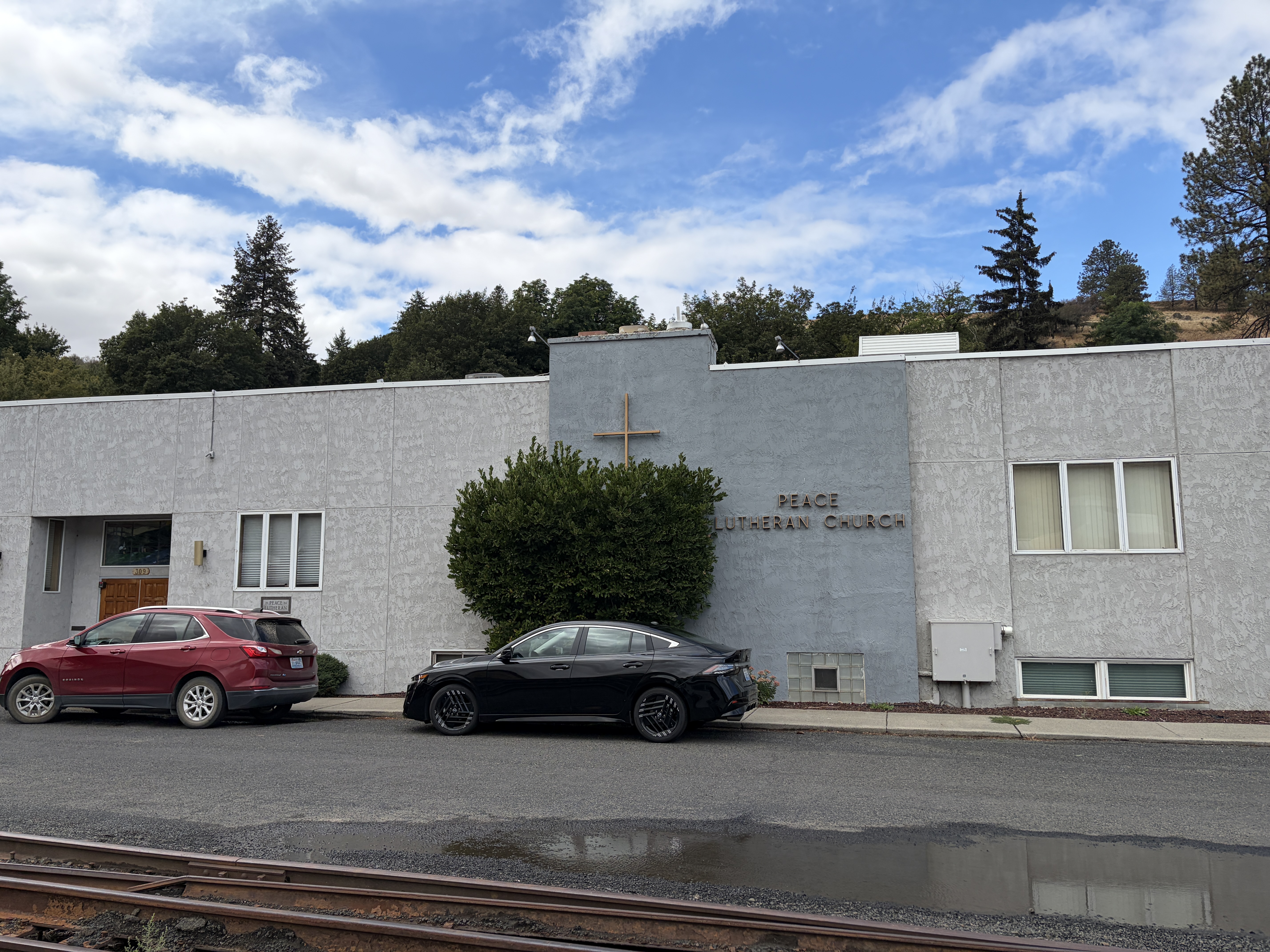
Honored to join the saints of Trinity, Endicott and Peace, Colfax. I preached and presided and then led a conversation after worship as these two churches live into a time of pastoral transition. Pastor Ian recently took the call to serve as campus pastor at Capital University in Ohio. Thanks for a wonderful morning!
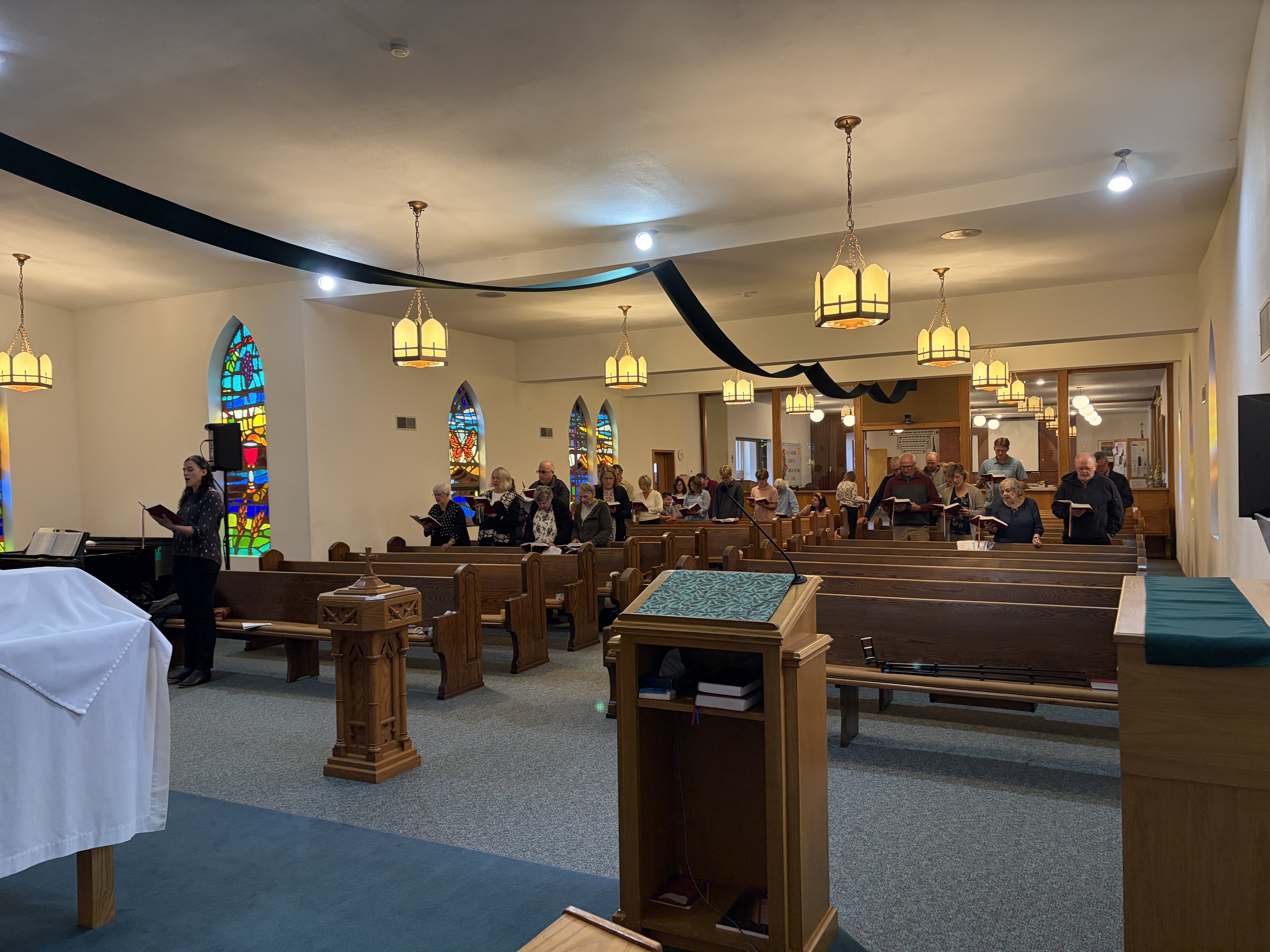
Peace, Colfax and Trinity, Endicott – in Colfax
Matt. 18:21-35
Grace to you and peace from God our Father and the Lord Jesus Christ. Amen. This is an awkward text for a bishop’s first sermon to congregations. I don’t know you and a few of you know me just a bit through Synod Assembly and email exchanges. And we are left to wrestle with the big, and I would say somewhat personal, topic of forgiveness. Nevertheless, could there be anything bigger than our understandings of the centrality of grace and forgiveness that unites the 85 ministry sites that make up the Northwest Intermountain Synod? Probably not. So with that shared appreciation for grace and forgiveness, let’s turn to this text from Matthew’s gospel.
“How many times should I forgive my brother when he sins against me? Up to seven times?” Peter asks Jesus. Peter’s proposal to forgive seven times sounds extravagantly generous. Jesus’ response is far beyond Peter’s proposal. He doesn’t simply extend the quantity. The difference between Peter’s proposal and Jesus’ pronouncement is not a matter of math. It’s about the nature of forgiveness. Whoever counts has not forgiven at all but is only biding his or her time. The kind of forgiveness called for is beyond all calculation.
A king wished to settle accounts with his slaves. The debt of the slave in question was earned through mismanagement of the king’s resources, not by personal expenditures. Even so, the figure is notrealistic. 10,000 talents owed?! One talent alone is the largest monetary unit, equal to the wages of a manual laborer for fifteen years. “Ten thousand” is the largest possible number. The amount is fantastic, beyond calculation.
How does this debt translate into our lives? Are our debts beyond calculation? Whether or not we are in debt ourselves, the systemic debt is real–ignoring the poor, mistreatment of the natural environment, extreme polarities on every issue with little interest in dialogue, abuses of power, neglect of the world’s children. The debt of the community is actual. As the story unfolds, it is clearly the community that is at stake in this parable.
The first servant’s debt is unpayable. Casting the servant into prison will be punitive. It will pay him back for his mismanagement. Still, is beyond the realm of possibility that the servant can ever repay his debt of 10,000 talents. It won’t matter how much time is given. Both the servant and the king know this. The servant’s situation is hopeless. He asks for mercy, and contrary to all expectation, the king responds with compassion. “Out of pity for him, the lord of that slave released him and forgave him the debt.” So great is God’s mercy.
The debt of the fellow servant is microscopic compared to the first servant’s debt. Yet it is still a significant amount. It represents 100 days’ wages for an ordinary laborer. There is an outrageous contrast between the way the first servant is treated by the king and the way the servant treats his fellow servant. It is not just a contrast of amounts owed.
In the first scene, there was no reasonable way to repay such a debt. One could only be condemned or receive mercy. The thrust of the parable is to bring the second scene in line with the first. This does not happen. The servant does not treat his fellow servant like he has been treated by the king. This outrages the other servants; it outrages the community. It even outrages us and we become sympathetic when the community reports the fellow’s conduct to the king.
“When his fellow slaves saw what had happened, they were greatly distressed.” They were not angry, they were sad, they were distressed, they mourned the welfare of the community. The slaves “went and reported to their lord all that had taken place. Then his lord summoned him and said to him, ‘You wicked slave! I forgave you all that debt because you pleaded with me. Should you not have had mercy on your fellow slaves, as I had mercy on you?’
In his anger his lord handed him over to be tortured until he would pay his entire debt.” Again, the unthinkable happens. The king takes back his forgiveness, and the servant is condemned to eternal torment.
This coda, this torture, needs a bit more explanation, I think. How can one who has been forgiven 10,000 talents be concerned with a mere 100 denarii? It is in this light that the final troubling verses should be read. Obviously, if God literally handed unforgiving people over to torturers, that would diminish the parable’s claim that God is outrageously merciful, the promise on which everything rests. It is hardly logical to assume that all sins can be forgiven except the sin of being unforgiving. It is also illogical to imagine that God takes human beings as role models and mimics their failings. The point is this: when we are tempted to withhold forgiveness, we might ask ourselves, “What if God were like this?”
What are the consequences today of not forgiving? God does not withhold mercy like the king in the parable. The results of not forgiving do not include hell and damnation. The torment comes from being separated from the community. They had nothing without the community. Like them, to truly be part of a community we must be willing to at least work on forgiveness.
Today’s parable is about a new economy. Jesus suggests that the new economy of the heart flows from an inner transformation generated by underserved love. Forgiveness is meant to create a chain reaction that not only changes who we are but also alters how we deal with others. In worship you experience the grace of God that welcomes sinners and fills them with Godself. How will you be changed by this encounter? How will your lives this week witness to the inner transformation of forgiven people who use God’s economy of underserved love to make a new world?
Great forgiveness is possible in our day and age is possible. We know how hard it is to forgive others. And there is also fear in forgiveness. Sometimes we are afraid that our unconditioned and repeated forgiveness may encourage evil. How does the world reflect on us when we put forth such protests, when we do not forgive each other? It shames God. It’s like the king in the parable who was shamed when the servant he forgave refused to forgive his fellow servant.
I know that when it comes to perfect forgiveness, I am in way over my head. Yet God has commanded me to do so and so I keep trying. This is what I believe God is hoping for, that we keep trying to forgive one another, and that we help one another in our forgiveness. To be sure, often a weight is lifted off our shoulders when we forgive. But ultimately, you forgive not for our own sake, but for the good of the community, for the building up of the Body of Christ. In doing so, you can trust that God’s forgiveness never waivers.